Macrium Reflect X is the best computer imaging software for most users, with the fastest imaging engine we found and a reliable restore at a fair yearly price. EaseUS Todo Backup is the best all-round pick, and SmartDeploy is the best choice for imaging whole fleets of PCs.
How we make this list: we compare pricing pages, product documentation and public user reviews, then re-check every price before each update. No product paid for a place. Disclosure.
Macrium Reflect X imaged a 240 GB SSD in two and a half minutes in PCWorld testing, at $49.99 a year.
EaseUS Todo Backup leads on G2 at 4.8 out of 5 and costs $39.95 a year with 1 TB of cloud storage.
Acronis True Image pairs imaging with antivirus and ransomware protection from $49.99 a year.
AOMEI Backupper has the strongest free tier, with system, disk and partition backup at no cost.
SmartDeploy images whole fleets from one golden image at $1,100 a year, with more than 1,500 driver packs.
What should computer imaging software get right?
Computer imaging copies a whole drive, bit by bit, so a failed disk can be restored to a new one with Windows, apps and files intact. That is different from file backup, which only saves selected folders.
Speed and restore reliability matter more than the feature list. A fast engine that writes a verified image is worth more than a slow one with extra tools, and a rescue disc you have booted once beats one you have not.
Free editions cover most home needs. AOMEI Standard, Veeam Agent and Paragon Community Edition all image a full PC without paying, so try one before buying a subscription.
Fleet imaging is a different job. Our image deployment guide covers tools that push one golden image to many PCs, while this list covers imaging and cloning for single computers first.
Macrium Reflect X is the imaging specialist's pick. It makes byte-for-byte copies of drives and partitions, runs full, incremental and differential backups in one job on separate schedules, and ships a full Windows PE recovery disc. In PCWorld testing a 240 GB SSD-to-SSD image took two and a half minutes.
The trade off is the price model. Reflect X Home is subscription-only at $49.99 a year, and it supports no online storage, so cloud copies need another tool. It suits Windows power users who value restore speed and reliability above all.
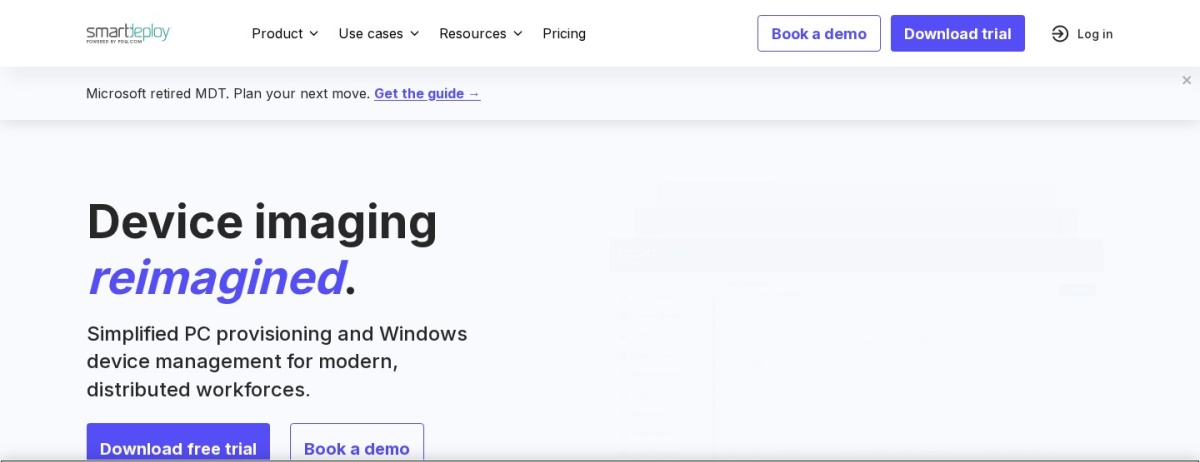
SmartDeploy is a Windows imaging tool built around one golden image that deploys to any hardware. Its Platform Pack library holds more than 1,500 prebuilt driver packs, so drivers are injected at deploy time instead of bloating the image, and layered imaging can reimage the OS without touching apps or user data.
The trade off is price and scope. The flat $1,100 a year covers the Starter plan with unlimited client installations, while Plus and Pro are priced by quote, so larger needs are hard to budget in advance. It suits IT teams imaging fleets of Windows PCs.
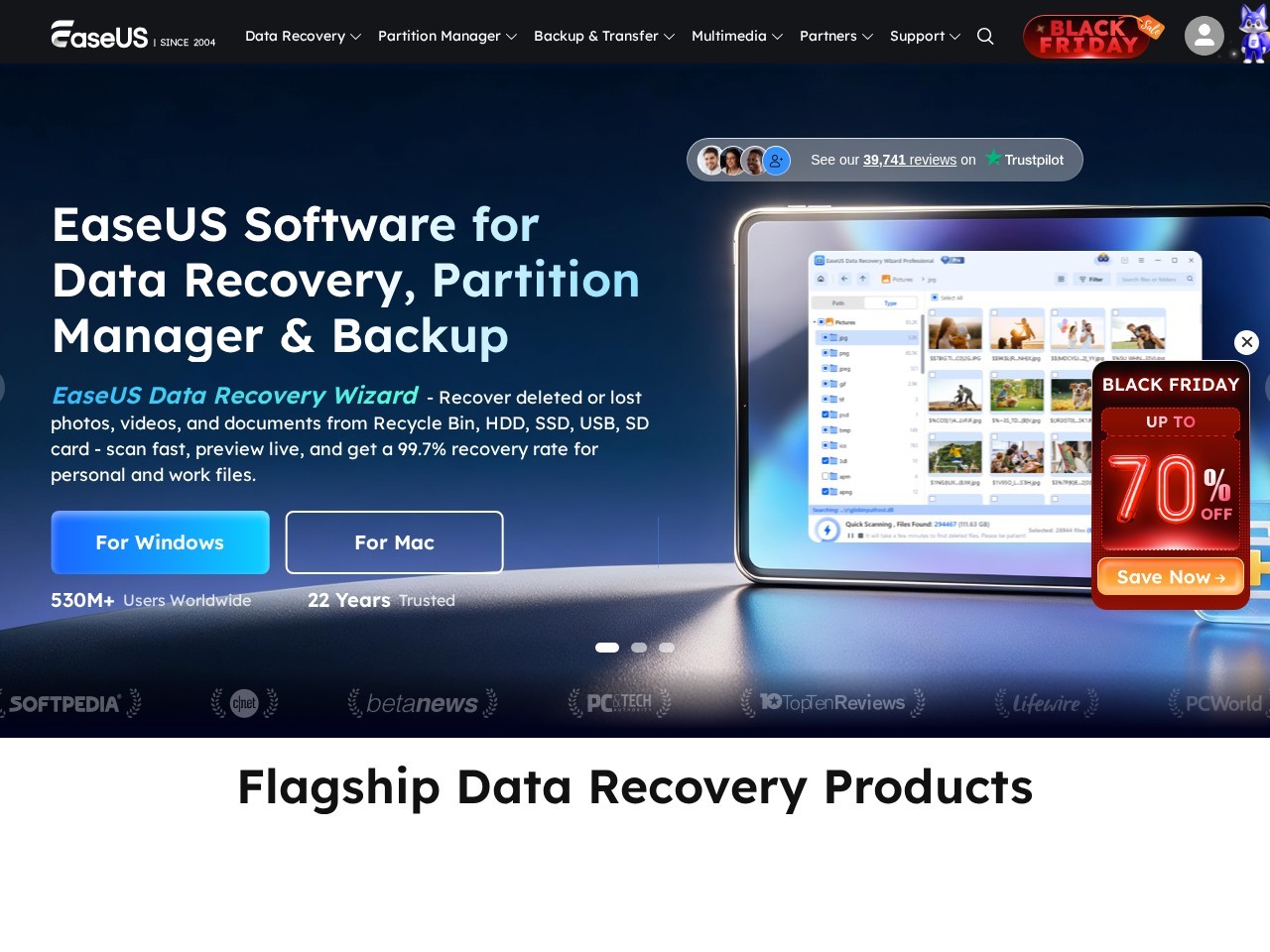
EaseUS Todo Backup is the best all-round home pick, with one-click system backup, disk and partition imaging, file backup and disk cloning in an interface a non-technical user can follow. The Home edition costs $39.95 a year for one PC and includes 1 TB of cloud storage.
The trade off is depth. EaseUS is simpler than Macrium and lacks its rapid delta restore, and some advanced features sit behind higher tiers. It suits households that want friendly imaging with an off-site copy included.
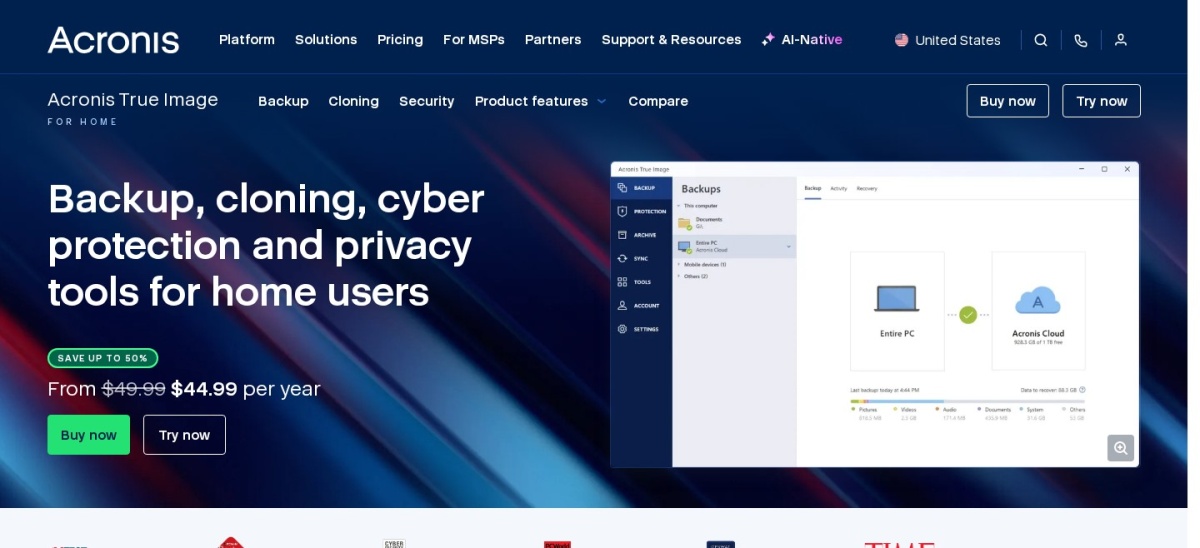
Acronis True Image is the only tool here that treats backup as a security problem. Essentials at $49.99 a year for one computer covers full-disk imaging, drive cloning and anti-ransomware protection, with backups to local disks, network shares or FTP.
The trade off is price for pure imaging. Buyers who only need images pay for antivirus and identity features they may not use. It suits users who want backup and security in one subscription.
AOMEI Backupper is the value pick of Windows imaging. The free Standard edition covers system, disk, partition and file backup with scheduling and bootable rescue media, which is enough for most home users. Professional costs $39.95 a year, or $69.95 once for a perpetual licence.
The trade off is polish. The interface is plainer than EaseUS and Acronis, and the G2 review base is small at 18 reviews. It suits budget buyers who like a strong free tier and the option of a one-time licence.
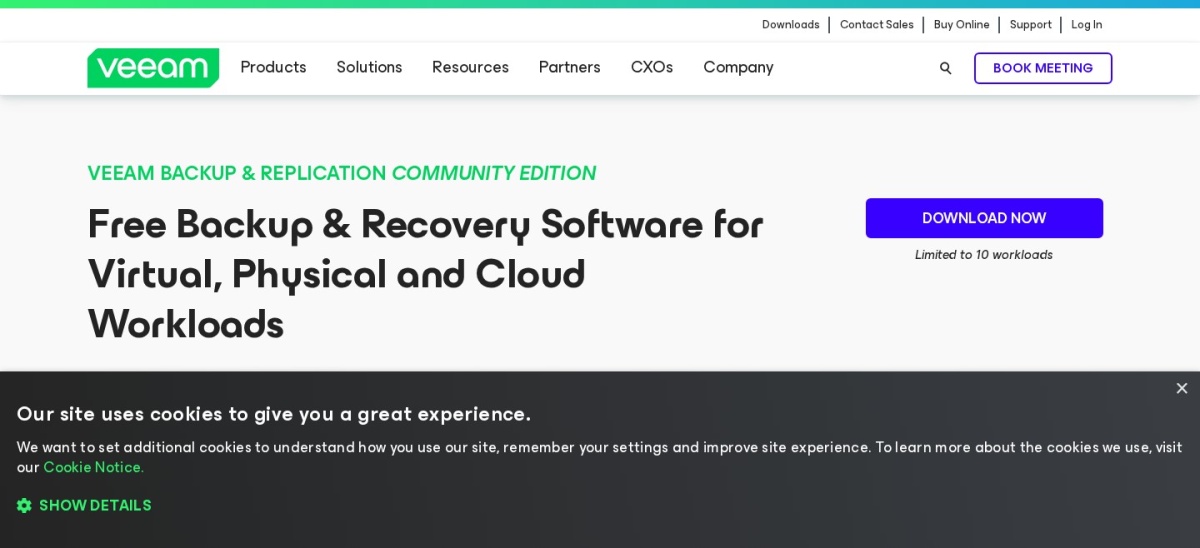
Veeam Agent is the professional's free imaging tool. The free agent handles entire-computer images, volume and file backup to local drives, network shares or a Veeam repository, with AES-256 encryption and bootable recovery media, at no cost for one PC.
The trade off is support and scope. The free agent has no support contract and no central management, so businesses need a paid Veeam platform. It suits home users and technicians who want enterprise-grade imaging free.
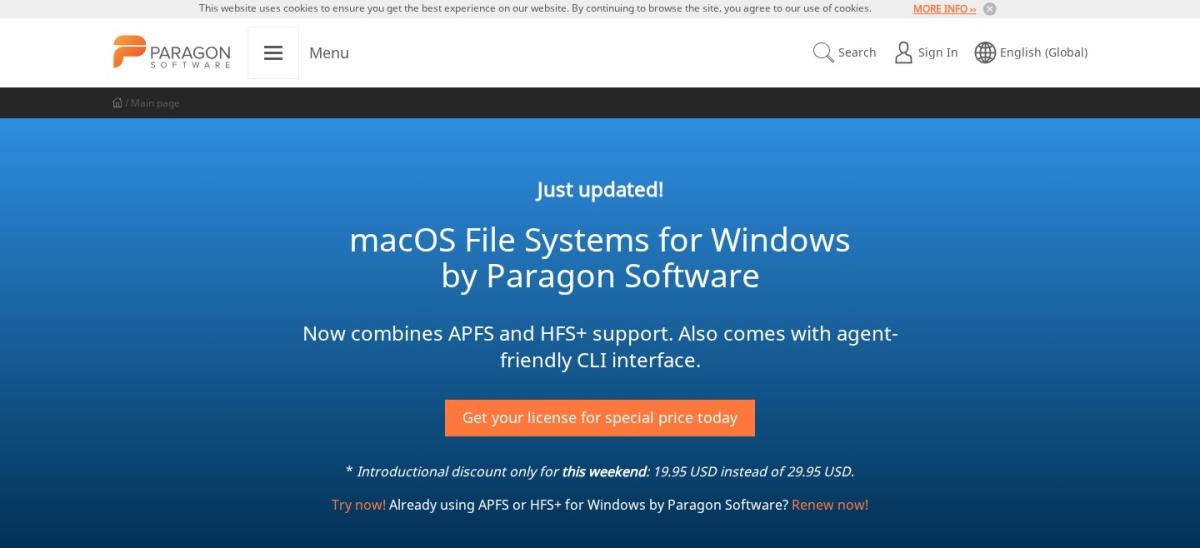
Paragon Hard Disk Manager homepage, captured Nov 2026.
Paragon Hard Disk Manager is a disk imaging tool paired with the partition management the company has built since the 1990s. The Community Edition images a full drive for personal use free with no account needed, while the paid Hard Disk Manager from $79.95 adds partitioning, migration and wiping in one toolkit.
The trade off is price. At $79.95 it is the most expensive paid plan in this list, and the G2 review base is small at 15 reviews. It suits users who want imaging and disk management together.
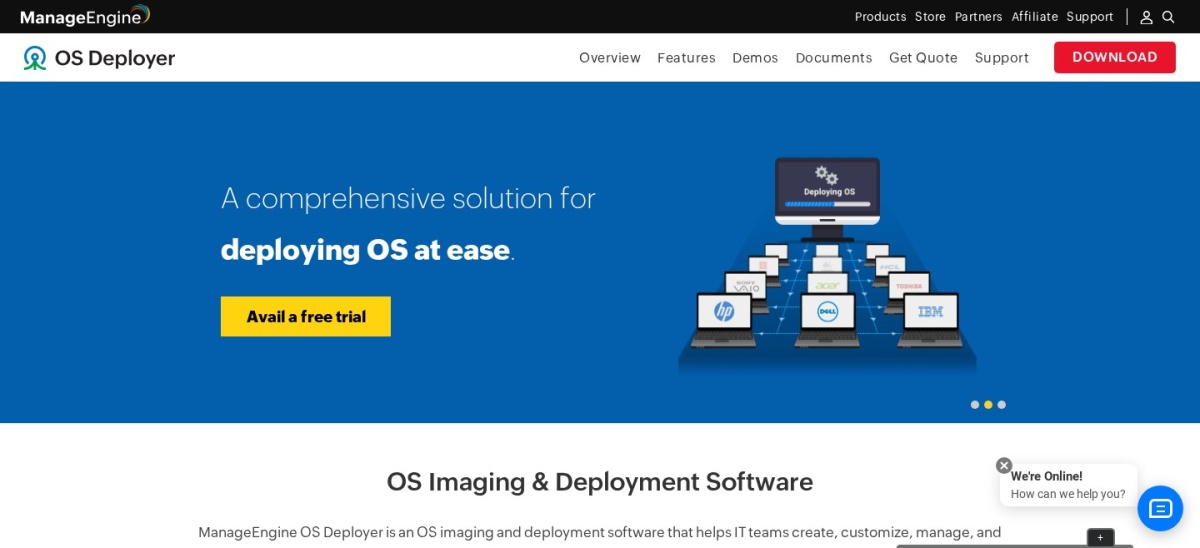
ManageEngine OS Deployer homepage, captured Nov 2026.
ManageEngine OS Deployer is a fleet imaging tool for IT teams that deploy Windows and Linux to many workstations at once. Professional costs $645 a year for 100 workstations, with a free edition for 4 workstations and multicast deployment to image many machines in one pass.
The trade off is the thin review base and the learning curve. It holds 4.4 out of 5 on G2 from only 8 reviews, and setup needs more IT skill than a home imaging tool. It suits IT teams imaging a fleet on a budget.
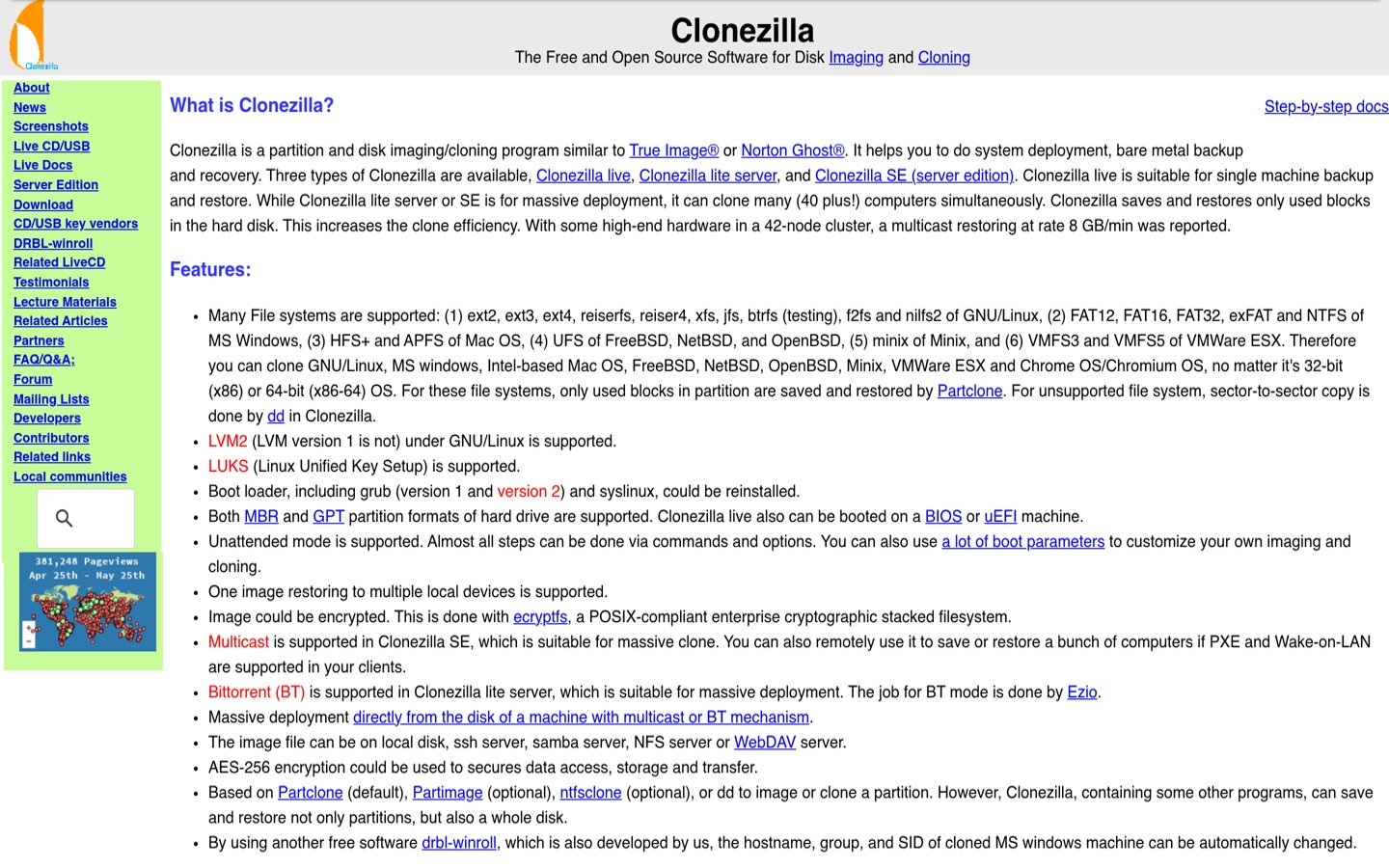
Clonezilla is the free open-source imaging tool for technicians and labs. It clones and images whole disks and partitions across Windows, Linux and macOS, supports multicast restores to many machines at once, and costs nothing, with no account or licence to manage.
The trade off is usability. Clonezilla runs from a text-based interface with no built-in scheduler, so it suits technicians rather than home users. It fits labs, schools and IT teams that image many machines the same way.
Free editions image and clone well. Veeam Agent, AOMEI Standard and Paragon Community Edition all make full system images with bootable rescue media.
Paid plans mostly add scheduling, incremental images, universal restore to different hardware and cloud storage.
EaseUS Home at $39.95 a year is the cheapest paid route that adds 1 TB of cloud storage, so an off-site copy needs no second subscription.
If you only need to clone one drive to a new SSD, the free editions are enough. Pay only for scheduling and advanced restore.
How we chose
We started from computer imaging tools with G2 listings and real imaging engines, then kept those with a published price or a genuinely free edition, including two fleet deployment tools for IT teams.
Prices come from each vendor's pricing page, checked in November 2026, and show the cheapest paid plan on annual billing. Ratings and review counts come from G2, including the sibling disc imaging guide checked on 25 November 2026.
We left out tools with no verifiable rating. No vendor paid for a place, and we do not claim hands-on testing for this list.
How to choose computer imaging software
Start with your restore plan, then pick the engine that fits it.
Decide what you are protecting. A whole PC needs system imaging, while a single drive swap only needs cloning. File backup alone will not restore Windows.
Test the rescue media before you need it. Create the boot disc or USB and boot from it once. An image you cannot restore from is not a backup.
Check incremental imaging. Full images every night waste time and disk space. Incremental and differential images keep daily backups fast.
Match the tool to the fleet size. One PC suits Macrium or EaseUS, while a fleet of PCs suits SmartDeploy or ManageEngine OS Deployer with central management.
FAQ
What is the best computer imaging software in 2026?
Macrium Reflect X is the best computer imaging software for most users, because its imaging engine is the fastest we found and restores are reliable, at $49.99 a year. EaseUS Todo Backup is the best all-round pick at $39.95 a year with 1 TB of cloud storage.
What is the cheapest computer imaging software?
Veeam Agent and Clonezilla are free and image a whole PC at no cost. Among paid tools, EaseUS Todo Backup and AOMEI Backupper are cheapest at $39.95 a year, and both have free editions for basic imaging.
Is Macrium Reflect X worth $49.99 a year?
Yes, for users who value restore speed and reliability above all. It imaged a 240 GB SSD in two and a half minutes in PCWorld testing, and includes Rapid Delta Restore and a full Windows PE rescue disc. There is no free edition, only a 30-day trial.
Can computer imaging software clone a drive to a new SSD?
Yes, every tool in this list clones a whole drive to a new SSD, and most include a system clone feature. Macrium, EaseUS, Acronis and AOMEI all handle disk cloning, and Clonezilla does it free from a boot disc.
What is the best free computer imaging software?
Veeam Agent is the best free option for Windows, with enterprise-grade imaging, AES-256 encryption and bare-metal restore at no cost for one PC. Clonezilla is the best free open-source option, with multicast restores to many machines at once.
What is the difference between imaging and cloning?
Imaging saves a compressed copy of a drive as a file you can restore later, while cloning copies a drive directly onto another drive. Imaging suits backups and fleet deployment, cloning suits a one-off drive upgrade to a new SSD.
SaaS SEO and WordPress specialist with about 8 years of experience. Rakib compares WordPress plugins, themes, hosting and software using public pricing, documentation and user reviews. See how we rank.