Make is the best Zapier alternative for most teams, at $9 a month billed yearly for 10,000 credits with a visual builder and routers that cost nothing. n8n suits technical teams that want self-hosting and per-run billing, while Activepieces is the open-source pick with a flat $20 plan.
How we make this list: we compare pricing pages, product documentation and public user reviews, then re-check every price before each update. No product paid for a place. Disclosure.
Make is the cheapest paid route to serious volume: Core costs $9 a month billed yearly for 10,000 credits.
n8n bills per workflow run, not per step, and its self-hosted edition is free with no execution cap.
Activepieces holds the highest G2 rating here at 4.8 out of 5, with a flat $20 a month Plus plan.
IFTTT is the cheapest paid plan at $2.09 a month billed yearly, but it only runs simple one-step Applets.
Every tool here has a free plan, and paid plans run from $2.09 to $20 a month at the entry tier.
How do you pick the right Zapier alternatives for your workflows?
Price per task is the first thing to check. Zapier charges for every successful step, so a four-step Zap that runs 2,000 times a month needs 6,000 tasks, and that pushes most teams onto a paid plan fast.
Billing units are not the same across tools. Make counts credits per module action, n8n counts one execution per whole run, and Pabbly Connect does not charge for triggers, filters or routers, so the same workflow can cost very different amounts.
App coverage decides whether a cheaper tool can replace Zapier at all. Zapier connects more than 9,000 apps, far more than any rival here, so check that your must-have apps are covered before you switch.
A free plan is only useful if it fits real work. Most free plans here cap tasks or credits at 100 to 1,000 a month, so a busy Zap outgrows them in days, while n8n self-hosted has no cap at all.
List prices in each vendor's currency, checked Nov 2026
IFTTTFREE$25
MakeFREE$108
BardeenFREE$120
Power AutoFREE$180
AlbatoFREE$180
PabblyFREE$192
IntegratelyFREE$240
n8nFREE€240
ActivepiecesFREE$240
The 9 best Zapier alternatives
01
Make
4.6/5on G2 (500 reviews, checked Nov 2026)
Paid from$9/mo
Best Zapier alternative overall
Free plan1,000 credits/mo
Paid planCore, $9/mo
Billing unitPer credit
Credits on Core10,000/mo
make.com
Make homepage, captured Nov 2026.
Make is a visual automation platform where workflows, called scenarios, are built on a drag-and-drop canvas with routers, filters and error handlers. The free plan gives 1,000 credits a month and 2 active scenarios, while Core costs $9 a month billed yearly for 10,000 credits and unlimited scenarios.
The trade off is that every module action costs a credit, including triggers and test runs, so a chatty scenario can burn through credits faster than expected. It suits teams that want Zapier-style ease with branching logic and a much lower bill.
What we like
Cheapest paid plan for high volume at $9 a month
Routers and error handlers cost no credits
Visual canvas makes branching easy to follow
Free plan covers 1,000 credits a month
Watch out for
Credits are spent on triggers and test runs too
App library is smaller than Zapier's 9,000+ apps
US list prices Core at $12 a month, not $9
Core adds unlimited scenarios and minute-level schedulingVisit make.com
02
n8n
4.7/5on G2 (327 reviews, checked Nov 2026)
Paid from€20/mo
Best for self-hosting and per-run billing
Free optionSelf-hosted, free
Paid planStarter, €20/mo
Billing unitPer execution
Executions on Starter2,500/mo
n8n.io
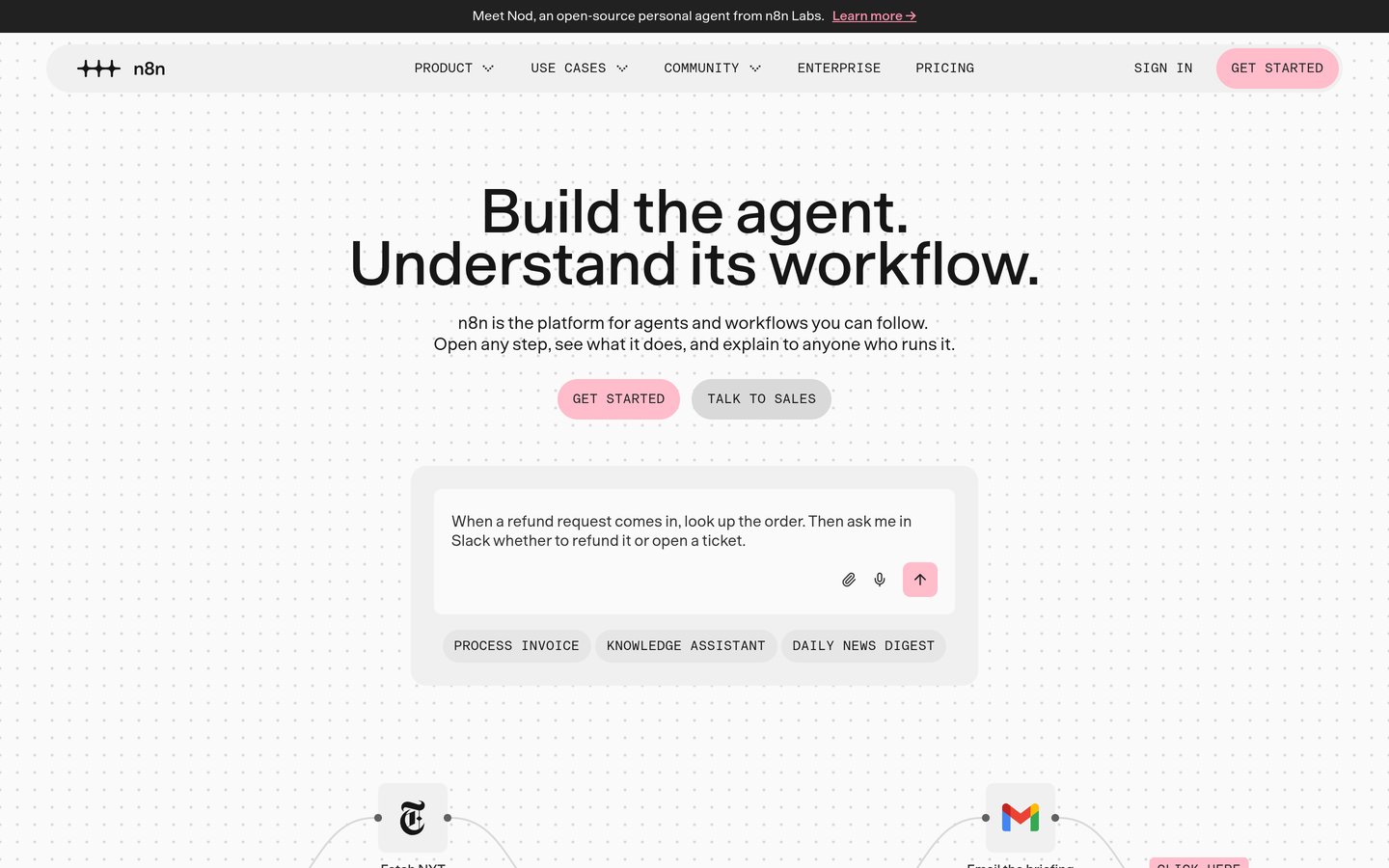
n8n homepage, captured Nov 2026.
n8n is a fair-code workflow automation platform with a node-based canvas, code steps in JavaScript and Python, and built-in AI agent nodes. The self-hosted Community Edition is free with no execution cap, while Cloud Starter costs €20 a month billed yearly for 2,500 executions.
The trade off is the euro price and the learning curve. Cloud Starter is €20 a month billed yearly, and building with code nodes takes more skill than a simple trigger-and-action builder. It suits technical teams that want full control over data and hosting.
What we like
One execution covers a whole run, however many steps
Free self-hosted edition with no execution cap
Code steps and AI agent nodes built in
400+ integrations, including databases and AI tools
Watch out for
Cloud plans are priced in euros, not dollars
Steeper learning curve than Zapier or Make
Self-hosting means you run updates and backups
Starter adds 2,500 cloud executions a monthVisit n8n.io
03
Activepieces
4.8/5on G2 (142 reviews, checked Nov 2026)
Paid from$20/mo
Best open-source Zapier alternative
Free plan1,000 credits/mo
Paid planPlus, $20/mo
Billing unitPer run
Integrations770+
activepieces.com
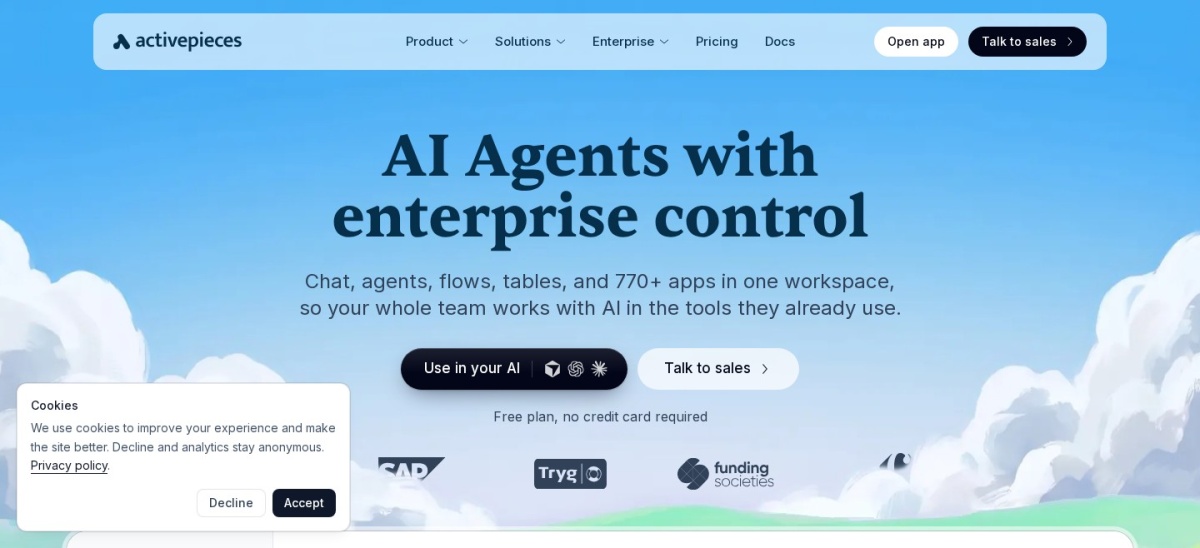
Activepieces homepage, captured Nov 2026.
Activepieces is an open-source automation platform with a drag-and-drop builder, AI agents and tables for storing data between runs. The free cloud plan covers 1,000 credits a month, and Plus costs a flat $20 a month for 10,000 credits with bring-your-own AI keys.
The trade off is a smaller app library than Zapier or Make, at 770+ integrations, and fewer ready-made templates. It suits teams that want open-source control, a flat price and no per-step billing surprises.
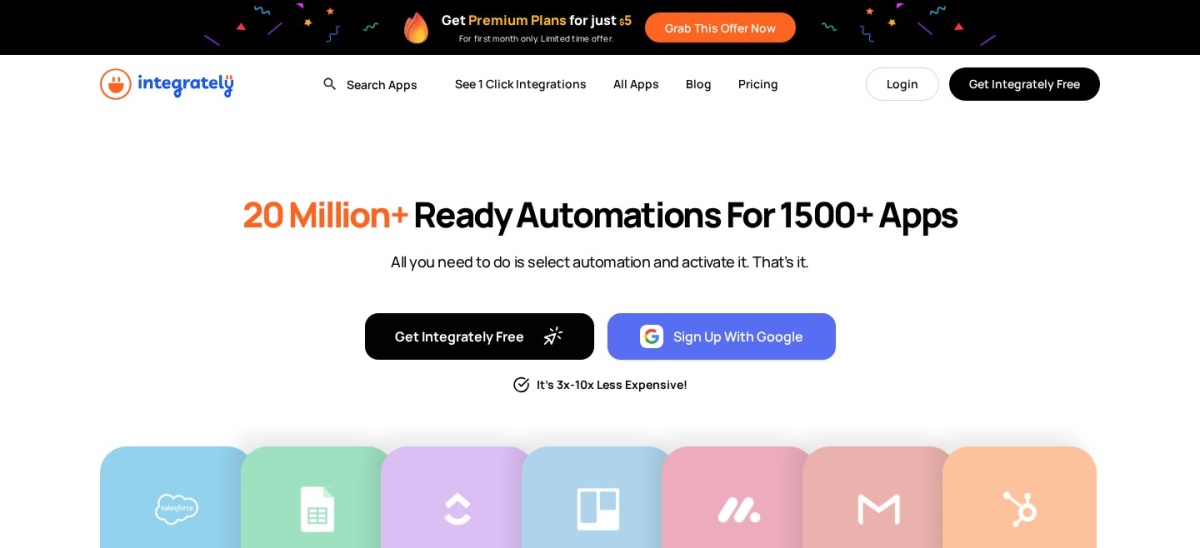
Integrately is a no-code automation platform built around ready-made, one-click automations across 1,500+ apps. The free plan covers 100 tasks a month and 5 automations, and Starter costs $19.99 a month billed yearly for 2,000 tasks and 20 automations.
The trade off is price. Starter costs about the same as Zapier Professional, so the saving comes from triggers being free, not from a cheaper plan. It suits teams that want automations running in minutes without building flows from scratch.
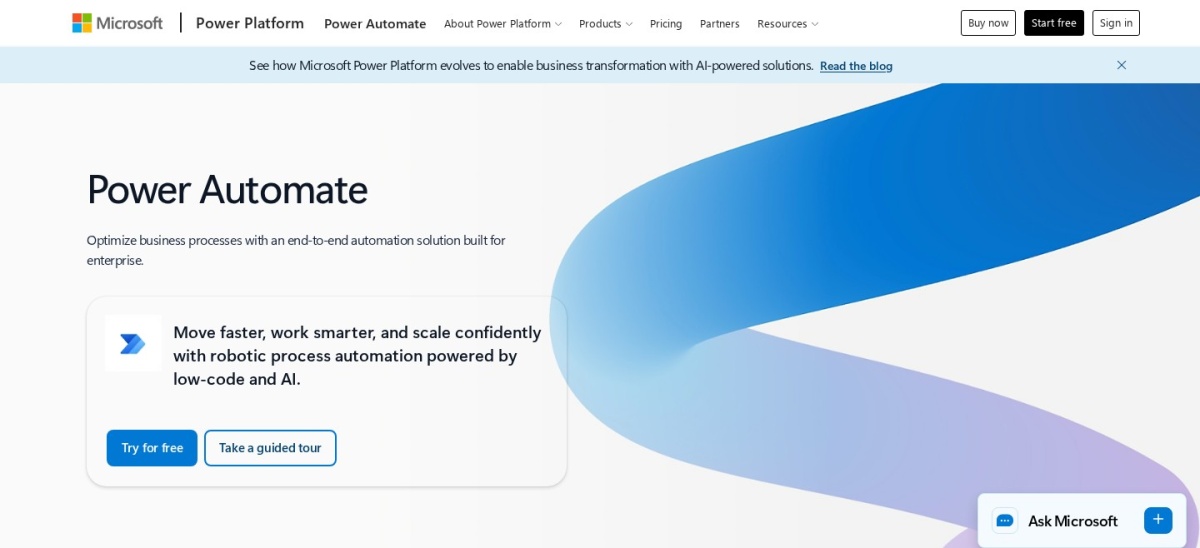
Microsoft Power Automate homepage, captured Nov 2026.
Microsoft Power Automate is the automation tool inside Microsoft 365, connecting Outlook, Excel, Teams, SharePoint and hundreds of other apps. Premium costs $15 per user a month and adds attended desktop RPA, premium connectors and 5,000 AI Builder credits a month.
The trade off is that it is priced per user, so a large team pays for every seat, and the best features sit behind Microsoft 365 licences. It suits teams already on Microsoft 365 that want automation inside the tools they use daily.
What we like
Deep links to Outlook, Excel, Teams and SharePoint
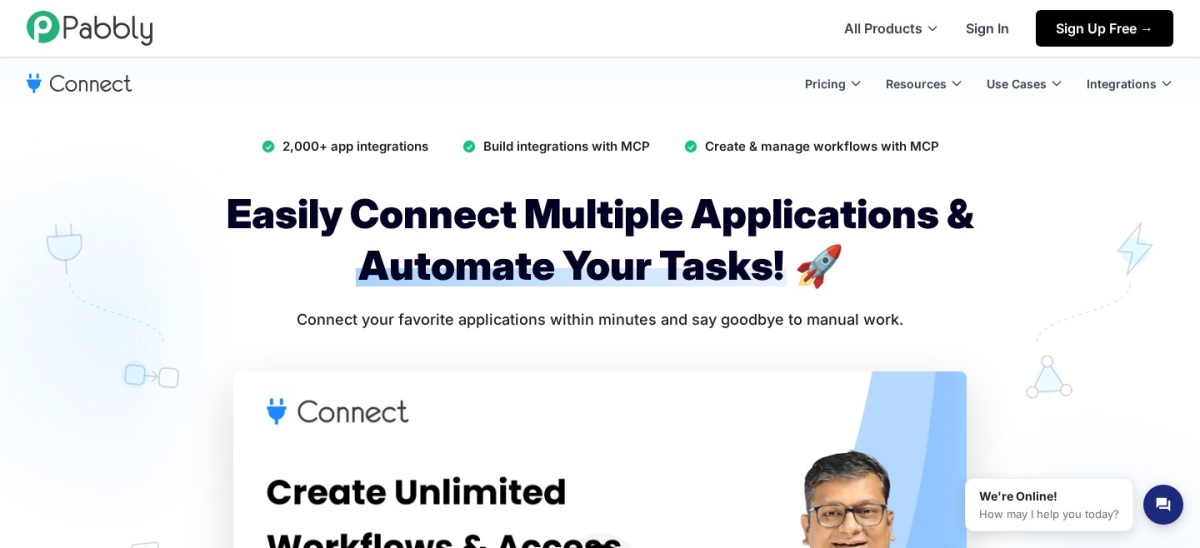
Pabbly Connect is a flat-rate automation tool with multi-step workflows, filters, routers and webhooks across 2,000+ apps. The free plan covers 100 tasks a month, and Standard costs $16 a month billed yearly for 10,000 tasks with unlimited workflows.
The trade off is that the app library and template depth trail Zapier and Make, even though triggers, filters and routers are free. It suits high-volume teams that want one predictable monthly price.
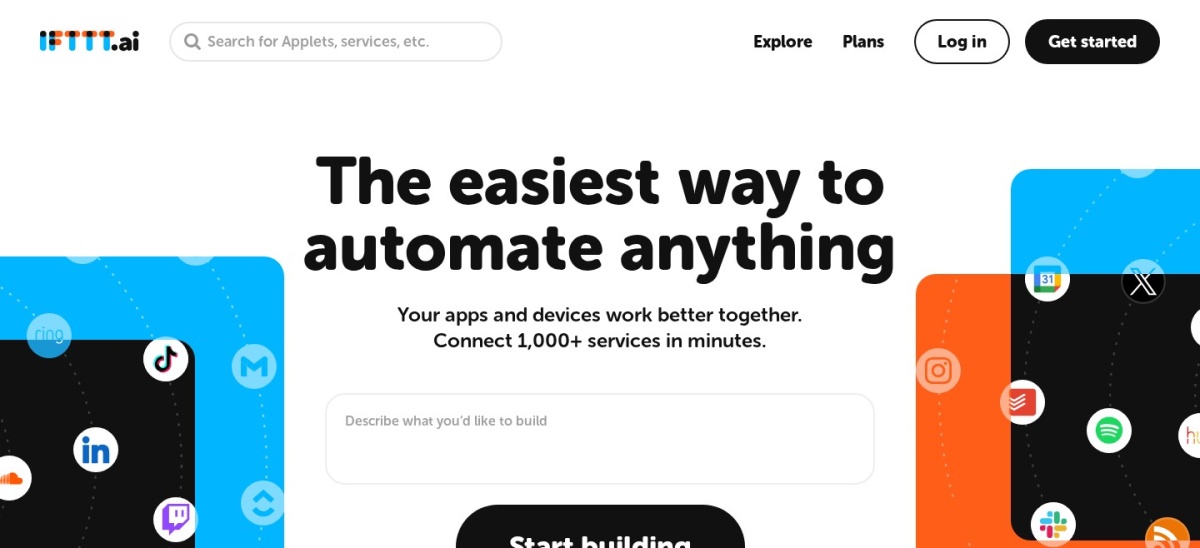
IFTTT is the simplest tool here, linking apps and smart home devices through Applets built on one trigger and one action. The free plan covers 1,000 credits a month with unlimited Applets, and Starter costs $2.09 a month billed yearly.
The trade off is depth. IFTTT runs simple one-step Applets, not multi-step business workflows with branching and filters. It suits personal automation and smart home routines, not team processes.
4.8/5on G2 (Not published reviews, checked Nov 2026)
Paid from$10/mo
Best for browser and lead automation
Free plan100 credits/mo
Paid planBasic, $10/mo
Billing unitPer credit
Browser automationYes, in Chrome
bardeen.ai
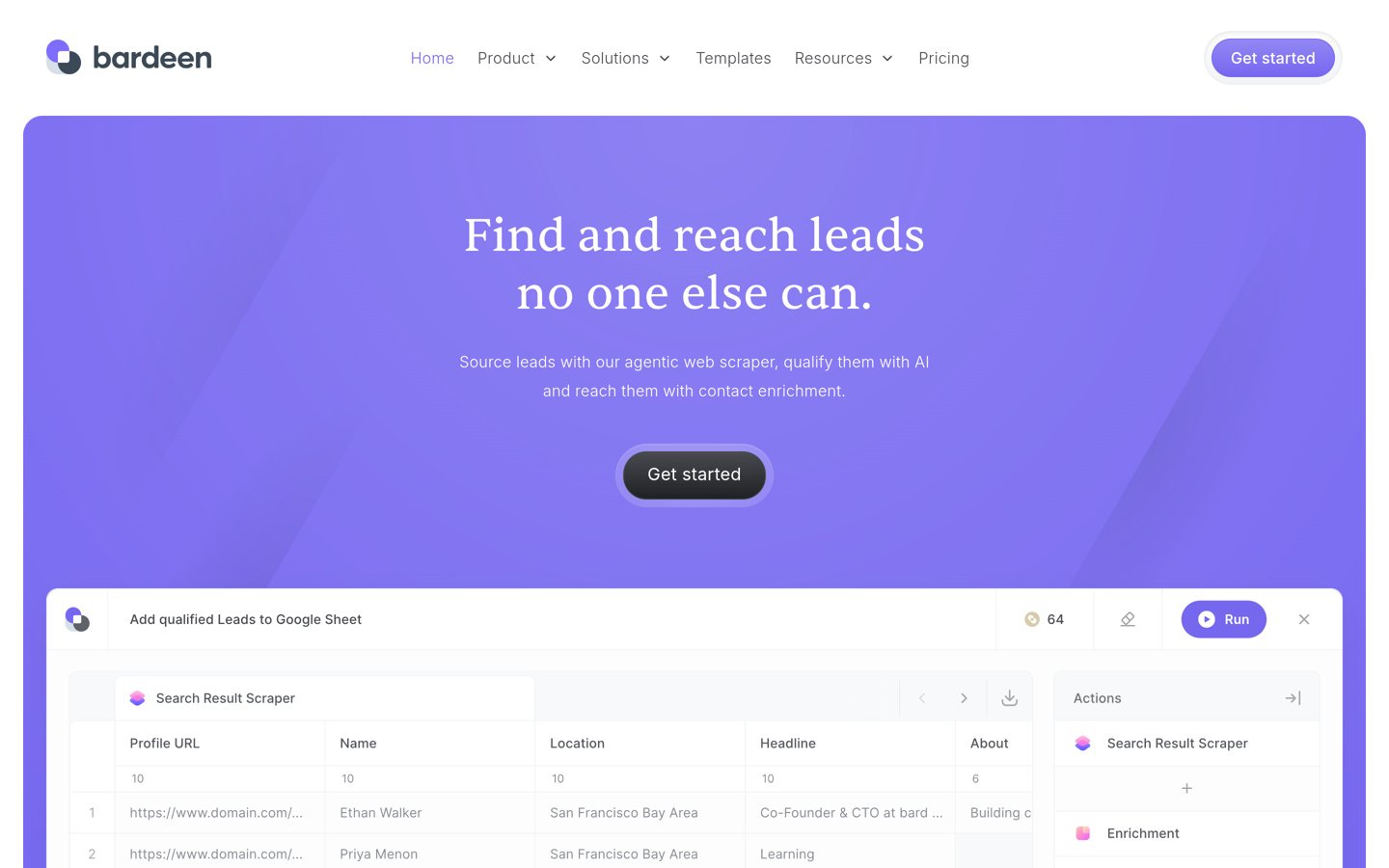
Bardeen homepage, captured Nov 2026.
Bardeen is a browser automation tool that runs inside Chrome, scraping pages, enriching lead lists and moving data between apps without leaving the browser. The free plan covers 100 credits a month, and Basic costs $10 a month.
The trade off is scope. Bardeen is built for browser work and lead lists, not for server-side workflows that run on a schedule. It suits sales and recruiting teams that live in the browser.
4.8/5on G2 (Not published reviews, checked Nov 2026)
Paid from$15/mo
Best low-cost pick for small teams
Free plan100 transactions/mo
Paid planPro, $15/mo
Billing unitPer transaction
AI agentsIncluded
albato.com
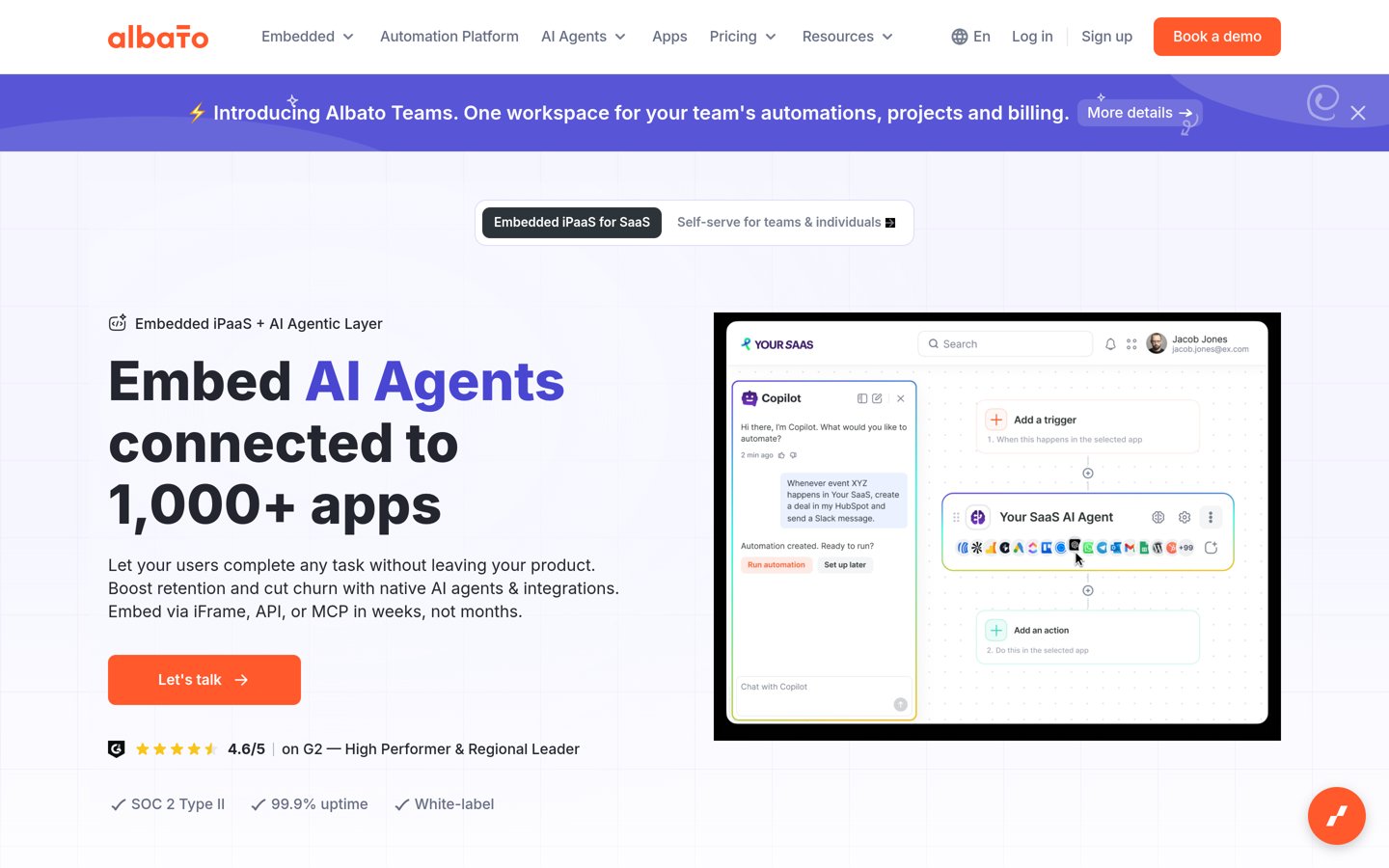
Albato homepage, captured Nov 2026.
Albato is a low-cost automation platform with a visual builder, ready-made templates and AI agents for small teams. The free plan covers 100 transactions a month, and Pro costs $15 a month billed yearly.
The trade off is a smaller integration library than the big names, and fewer advanced features for large teams. It suits small teams that want a cheap Zapier replacement without learning a complex canvas.
Free plans here are real but small. Most cap tasks or credits at 100 to 1,000 a month, which covers a couple of light workflows and little else.
Paid plans mostly add volume and depth. You get more tasks or credits, multi-step flows, premium apps and faster checks.
The exception is n8n. Its self-hosted edition is free with no execution cap, so the only cost is the server you run it on.
If one Zap runs hundreds of times a day, start on a paid plan. The cheapest paid tier that fits the volume is usually Make Core at $9 a month.
How we chose
We started from the automation tools that appear most often in 2026 Zapier alternative comparisons, then kept those with a verifiable rating on G2 or Capterra and a published price.
Prices come from each vendor's pricing page, checked on 29 November 2026. Ratings and review counts come from G2 or Capterra on the same day. Where a vendor shows two price lists, the list shows the lower one and notes the other.
We left out tools with no verifiable rating or no published price. No vendor paid for a place, and we do not claim hands-on testing for this list.
How to choose a Zapier alternative
Start with your busiest Zap, then match the tool to the way it bills.
Count what your busiest Zap really uses. A trigger plus three actions is 3 Zapier tasks a run, but 1 n8n execution or about 4 Make credits, so run the same maths on every tool.
Check your must-have apps first. Zapier connects more than 9,000 apps, so a cheaper tool that misses one key app costs more in workarounds than it saves.
Try the free plan on a real workflow. Free plans here run from 100 tasks to 1,000 credits a month, which is enough to test one live workflow end to end.
Watch the billing unit, not the headline price. A $9 plan that charges per step can cost more than a $20 flat plan once your workflows grow.
FAQ
What is the best Zapier alternative in 2026?
Make is the best Zapier alternative for most teams. Core costs $9 a month billed yearly for 10,000 credits, with a visual builder, routers and error handlers, and it is rated 4.6 out of 5 on G2 from 500 reviews.
Is there a free Zapier alternative?
Yes, every tool in this list has a free plan or a free edition. n8n self-hosted is free with no execution cap, while Make, Activepieces and IFTTT all offer free cloud plans with monthly credit limits.
What is the cheapest Zapier alternative?
IFTTT is the cheapest paid plan at $2.09 a month billed yearly, but it only runs simple one-step Applets. For real multi-step workflows, Make Core at $9 a month billed yearly is the cheapest paid plan in this list.
Is Make better than Zapier?
Make is better than Zapier on price and branching, with Core at $9 a month for 10,000 credits against Zapier Professional at $19.99 a month for 750 tasks. Zapier is better on app coverage, with more than 9,000 apps against a smaller library.
Can n8n replace Zapier?
Yes, n8n can replace Zapier for technical teams. It bills per workflow execution rather than per step, offers a free self-hosted edition, and covers 400+ integrations, but it needs more technical skill than Zapier's simple builder.
Which Zapier alternative is best for small teams?
Make is the best pick for most small teams, with a visual builder and Core at $9 a month. Albato at $15 a month and Pabbly Connect at $16 a month are cheaper flat-rate options if your workflows are simple and high volume.
SaaS SEO and WordPress specialist with about 8 years of experience. Rakib compares WordPress plugins, themes, hosting and software using public pricing, documentation and user reviews. See how we rank.