Todoist is our top productivity software recommendation for most people, with fast capture, a free plan for everyday lists, and Pro at sixty dollars a year. Notion suits people who also keep notes and docs in one workspace, while ClickUp is the pick for small teams that need shared projects.
How we make this list: we compare pricing pages, product documentation and public user reviews, then re-check every price before each update. No product paid for a place. Disclosure.
Todoist leads for most people: fast capture, a useful free plan and Pro at 60 dollars a year.
Notion is the best all-in-one workspace, combining notes, docs and tasks for 120 dollars per user a year on Plus.
TickTick is the best value paid app: tasks, habits and a calendar for 35.99 dollars a year.
ClickUp and Asana are the strongest team picks, with Core at 108 dollars and Starter at 131.88 dollars per user a year.
Slack is the communication pick in this list, with Pro at 87 dollars per user a year and the largest review base here.
How do you choose from the top productivity software recommendations?
Most productivity tools promise the same thing: fewer forgotten tasks and a calmer day. The difference is how much structure they add, and what they charge for it.
A simple to-do app suits most people. It should capture a task in seconds, show today clearly and remind you at the right time.
All-in-one workspaces suit people who also keep notes and docs. They take longer to set up, so pick one only if you will use the extra features.
Price matters more than features after the basics. The cheapest paid plan in this list is 35.99 dollars a year and the most expensive is 131.88 dollars per user a year, so check what each plan actually unlocks before paying.
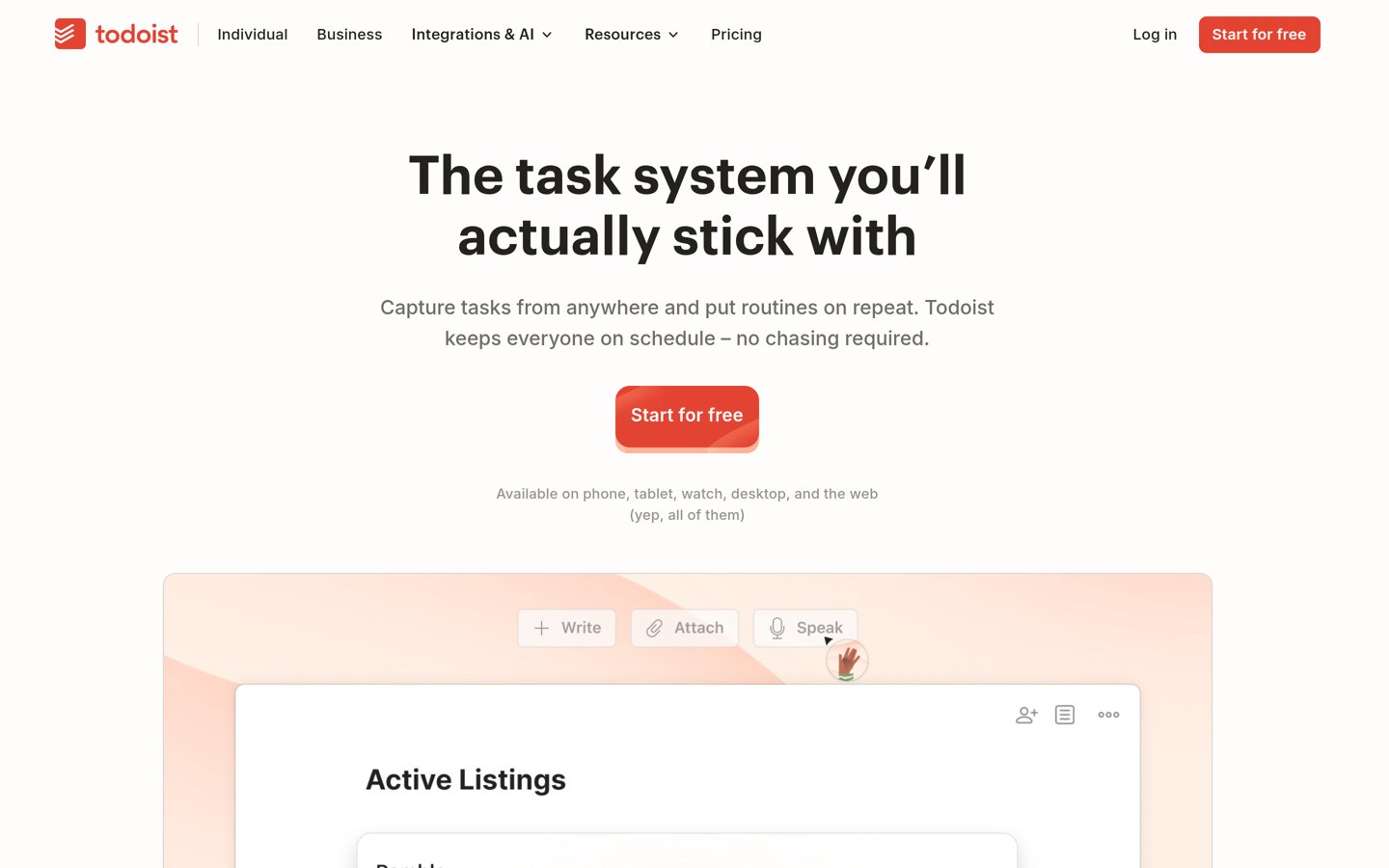
Todoist is a task manager built around fast capture and simple lists. The free Beginner plan covers 5 personal projects, reminders, list and board layouts, and 3 filter views. Pro lifts the cap to 300 personal projects and adds calendar and table layouts, task durations and custom reminders.
The trade off is that the best views and reminders sit behind Pro at 60 dollars a year, and the free plan caps projects at 5. It suits individuals who want one fast list for work and life, and small teams can step up to Business at 96 dollars per user a year.
Notion is an all-in-one workspace that combines notes, docs, wikis and databases in one place. The free plan covers notes and docs for individuals, with 10 guests and basic page analytics. Plus adds unlimited file uploads up to 5 GB, 30-day page history, 100 guests and charts.
The trade off is setup time. Notion starts as a blank page, so building a task system takes longer than opening a ready-made to-do app, and Plus costs 120 dollars per user a year. It suits people who want notes, projects and a wiki in one workspace.
ClickUp is a work platform that combines tasks, docs, goals, whiteboards and time tracking in one workspace. The Free Forever plan covers unlimited tasks and members with 60 MB of storage. Core adds unlimited storage, Gantt charts, custom fields, native time tracking and 1,000 automation actions a month.
The trade off is complexity. ClickUp packs in so many views and settings that setup takes longer than a simple to-do app, and Core costs 108 dollars per user a year. It suits small teams that want tasks, docs and goals in one place.
Asana is a work management platform for tracking tasks, projects and team goals. The free Personal plan covers unlimited tasks and projects for up to 2 users. Starter adds timeline and Gantt views, reporting dashboards, unlimited automations, forms and custom templates.
The trade off is price and limits. Starter costs 131.88 dollars per user a year with a 2-seat minimum, and time tracking sits on the Advanced plan. It suits teams that run structured projects with timelines, owners and reporting.
What we like
Clear timelines and project tracking
Unlimited automations on Starter
Strong reporting dashboards
Watch out for
Starter has a 2-seat minimum
Time tracking needs Advanced
Starter adds timelines, dashboards and automationsVisit asana.com
05
monday.com
4.7/5on G2 (17,182 reviews, checked Nov 2026)
Paid from$108/yr
Best for visual project tracking
Free planYes, up to 2 seats
Paid planBasic, $108/yr
Paid seats3-seat minimum
ViewsKanban, timeline, calendar
monday.com
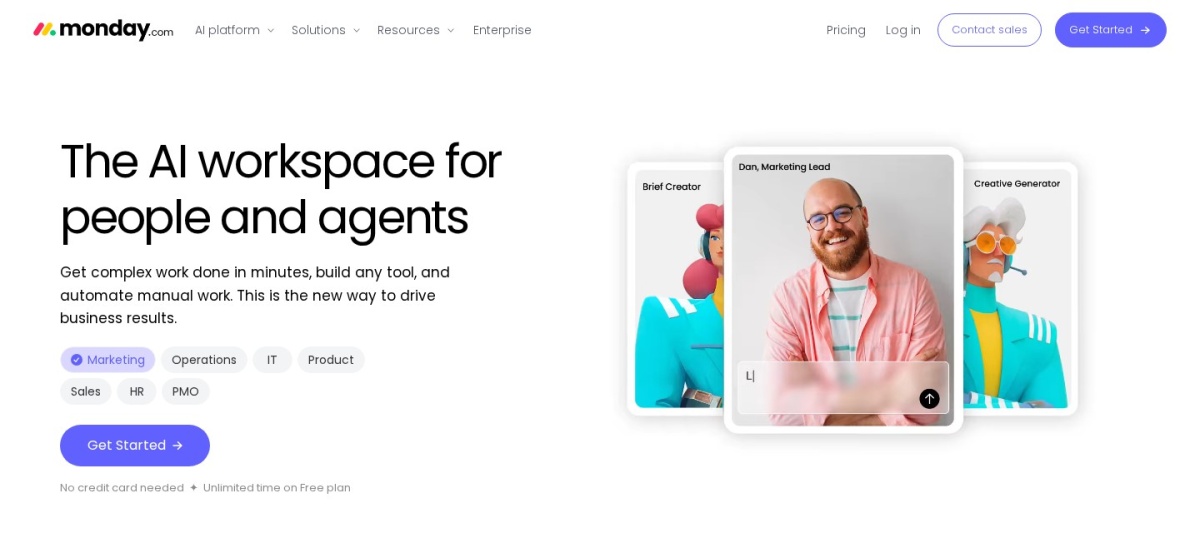
monday.com homepage, captured Nov 2026.
monday.com is a visual work platform built around boards that show tasks as rows and columns. The free plan covers up to 2 seats with basic boards and views. Basic adds unlimited boards, timeline and calendar views, and the visual layout makes it easy to see who owns what.
The trade off is the seat rule. Basic costs 108 dollars per user a year with a 3-seat minimum, so the smallest paid setup costs 324 dollars a year. It suits teams that like visual boards and want a tool that is easy to adopt.
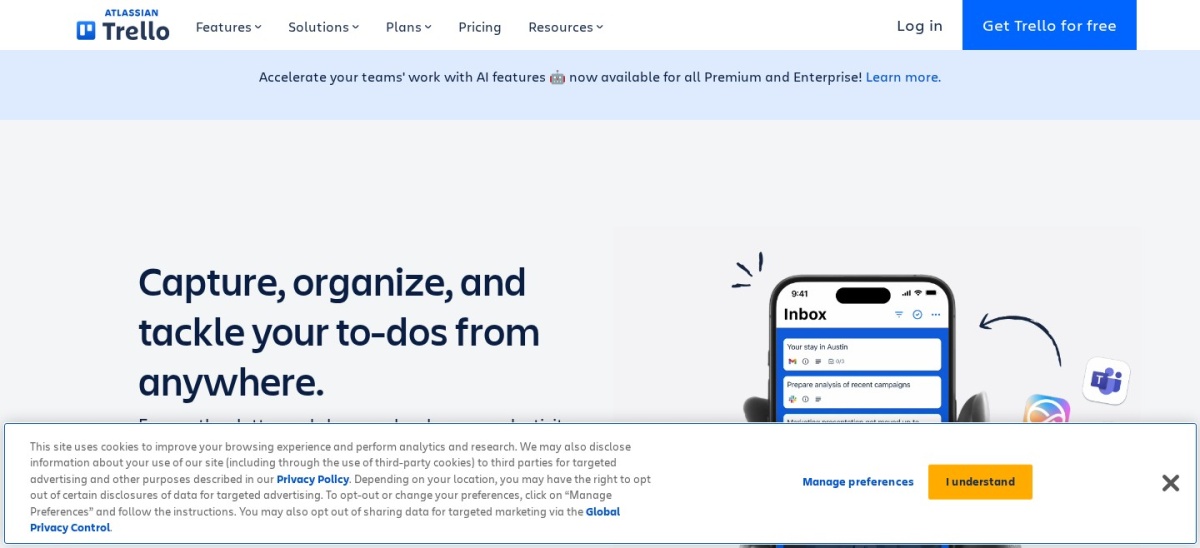
Trello is a visual task tool built around Kanban boards, with lists and cards that you drag from one stage to the next. The free plan covers unlimited cards and up to 10 boards per workspace. Standard adds unlimited boards, calendar and timeline views, custom fields and advanced checklists.
The trade off is depth. Trello stays simple, so complex projects with dependencies and reporting need workarounds or a heavier tool. Standard costs 60 dollars per user a year. It suits people and teams who think in boards and want a tool that is quick to learn.
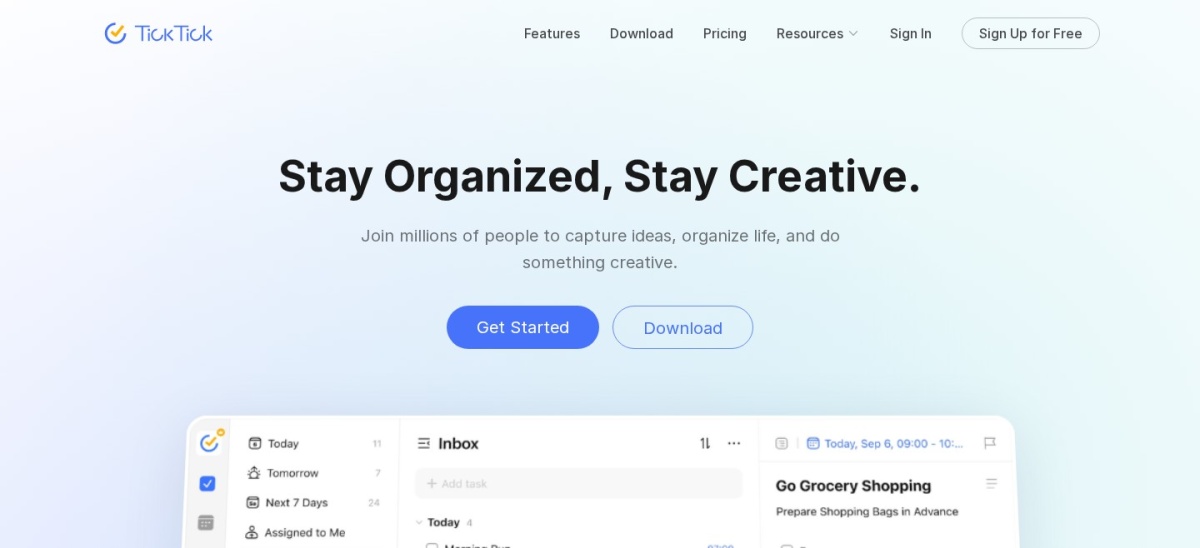
TickTick is a task manager with a built-in calendar, habit tracker and Pomodoro timer. The free plan covers lists, reminders, calendar views and habit tracking on every platform. Premium adds calendar subscriptions, custom smart lists, full habit statistics and larger file uploads.
The trade off is that Premium costs 35.99 dollars a year and the free plan limits list sizes and reminder options. It suits people who want tasks, habits and a calendar in one app without paying for a full project platform.
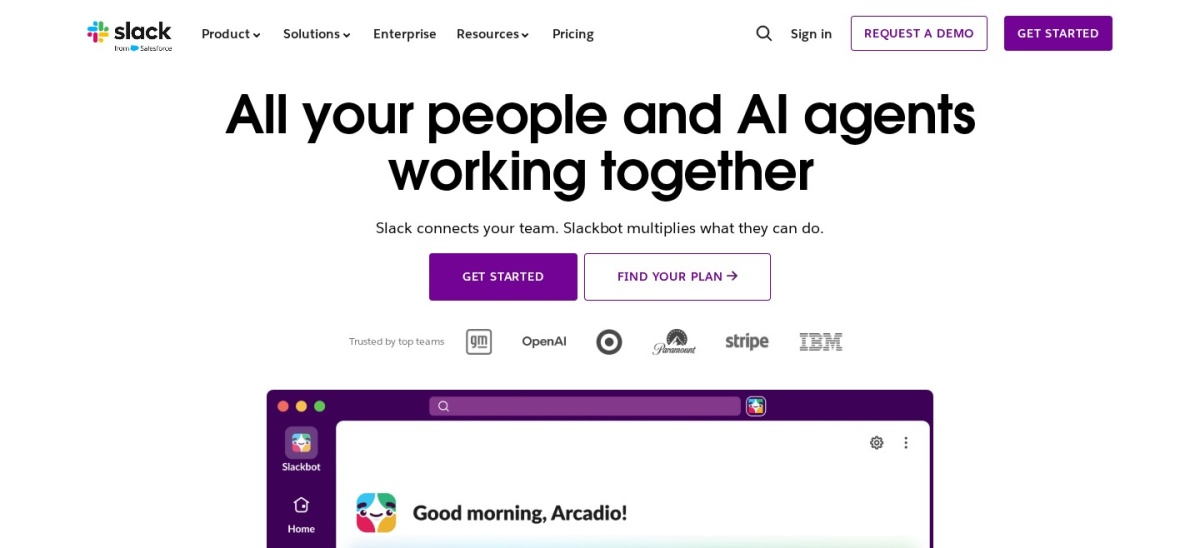
Slack is a team messaging platform built around channels, direct messages and searchable history. The free plan covers channels and messaging with a 90-day history limit. Pro adds unlimited message history, unlimited apps and integrations, group huddles and shared channels with other companies.
The trade off is that Slack is a chat tool, not a task manager, so work still needs a separate list or board. Pro costs 87 dollars per user a year. It suits teams that want fast communication beside their task tool.
Evernote is a note-taking app built for capturing and finding information fast. The free plan covers 50 notes, 1 notebook, 1 GB of storage and sync on 1 device. Starter lifts the limits to 1,000 notes, 20 notebooks, 5 GB of storage and sync on 3 devices, with AI search and editing.
The trade off is value. Starter costs 99 dollars a year while the free plan is capped at 50 notes, and Notion Plus costs little more for a wider workspace. It suits people with years of clipped articles and scanned documents who need strong search.
Free plans cover the basics well. Most include lists, reminders and a few projects or boards.
Paid plans mostly add views and history. You get calendar layouts, unlimited projects, longer history and team features.
If you work alone, a free plan can last a long time. TickTick Premium at 35.99 dollars a year is the cheapest paid step up in this list.
For a team, the per-user price is the real cost. monday.com needs 3 seats, so its smallest paid setup is 324 dollars a year.
How we chose
We started from the most-used task and productivity apps with public ratings on G2, then kept 9 with a useful free plan or a clear paid tier.
Prices come from each vendor's pricing page, checked on 29 November 2026. Ratings and review counts come from G2 on the same day. Where a vendor shows a sale, the list shows the regular price.
We left out apps with no public rating and apps that only sell to large teams. No vendor paid for a place, and we do not claim hands-on testing for this list.
How to choose productivity software
Start with how you actually plan your day, then match the app to that habit.
Decide how much structure you need. A simple list suits most people. Pick a workspace only if you also manage notes, docs and projects in one place.
Try the free plan first. Use it for a full week of real tasks before paying. If capture feels slow or today is hard to read, try another app.
Check what the paid plan unlocks. Reminders, calendar views and history are often paid features. Compare the cheapest paid plan, not the headline price.
Make sure it runs on your devices. Some apps are Apple-only or web-only. Pick one with apps for every device you use each day.
FAQ
What are the top productivity software recommendations in 2026?
Todoist is the best productivity software recommendation for most people. Its free plan covers everyday lists, Pro adds calendar layouts and reminders at 60 dollars a year, and it is rated 4.5 out of 5 on G2.
Is there a completely free productivity app?
Yes. Microsoft To Do is free with a Microsoft account, but it is not in this list. Of the tools here, Todoist, Notion, TickTick, ClickUp and Trello all have free plans, though each caps projects, boards or reminders until you pay.
Is Notion or Todoist better for productivity?
Todoist is better for pure task lists: faster capture, clearer today views and a cheaper Pro plan. Notion is better if you also want notes, docs and databases in one workspace, but it takes longer to set up and Plus costs 120 dollars per user a year.
What is the cheapest paid productivity app?
TickTick Premium is the cheapest paid plan in this list at 35.99 dollars a year, covering calendar subscriptions, smart lists and habit statistics. Todoist Pro and Trello Standard both cost 60 dollars a year.
Which productivity software is best for teams?
ClickUp and Asana are the strongest team picks here. ClickUp Core costs 108 dollars per user a year and adds docs, goals and time tracking, while Asana Starter costs 131.88 dollars per user a year and adds timelines, dashboards and unlimited automations.
Do I need a paid productivity app?
Most people do not. Free plans cover lists, reminders and basic views, so pay only if you need calendar layouts, unlimited projects, advanced reminders or a full history of completed tasks.
SaaS SEO and WordPress specialist with about 8 years of experience. Rakib compares WordPress plugins, themes, hosting and software using public pricing, documentation and user reviews. See how we rank.