PostgreSQL is our top database software for availability for most teams, because it costs nothing to self-host and pairs with Patroni for automatic failover. Amazon Aurora suits teams already on AWS, while MongoDB Atlas is the pick for document data with a free tier.
How we make this list: we compare pricing pages, product documentation and public user reviews, then re-check every price before each update. No product paid for a place. Disclosure.
PostgreSQL, MySQL and MariaDB all cost $0 to self-host, with no licence fee at all.
Amazon Aurora and Google Cloud Spanner move failover to the cloud provider, with usage-based pricing and no standby to manage.
MongoDB Atlas gives a free M0 tier forever, with Flex clusters from about $8 a month.
SQL Server Standard lists at $3,945 per 2-core pack and Oracle Enterprise at $47,500 per processor.
CockroachDB and YugabyteDB survive region failures by design, with no standby servers to manage.
How do you choose the top database software for availability?
High availability means the database keeps answering when a server, a disk or a whole region fails. The way it does that matters more than the brand name.
Replication is the classic route. PostgreSQL, MySQL and MariaDB copy data to standby servers, and a manager such as Patroni promotes a standby when the primary fails.
Distributed design is the newer route. CockroachDB, YugabyteDB and Spanner spread data across nodes, so the database survives node and region failures by default, with no standby servers to manage.
Managed cloud is the pragmatic route. Aurora, Spanner and MongoDB Atlas let the provider handle replication and failover, which suits teams that already live on that cloud.
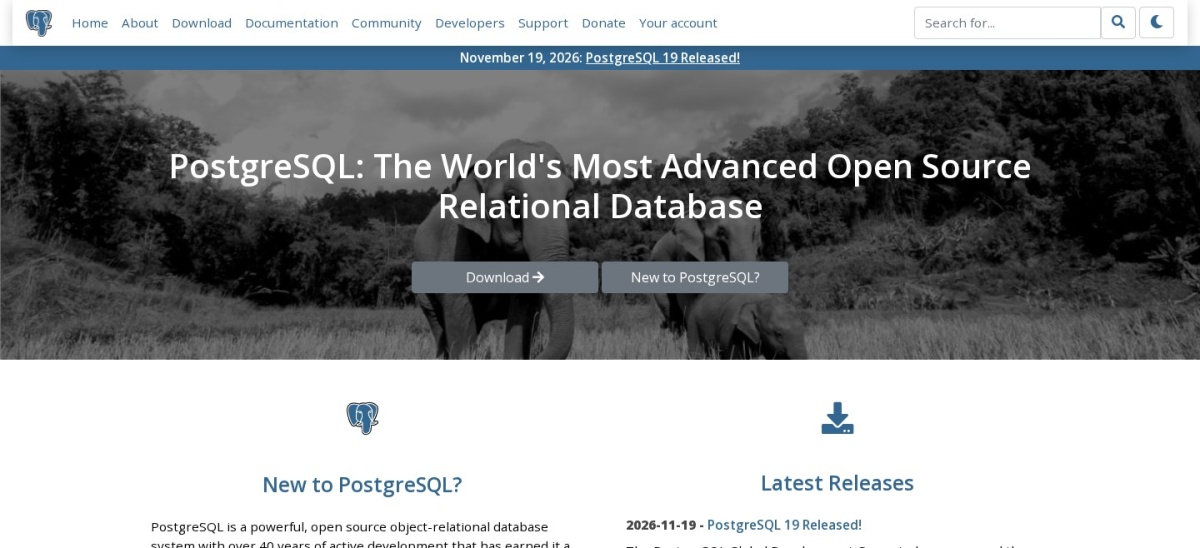
PostgreSQL is the most capable open-source database, free to self-host with no licence cost at all. It handles relational workloads, JSON, full-text search and extensions, and streaming replication to standby servers has been hardened in production for years. Add Patroni and you get automatic failover.
The trade off is that free means self-managed, so you pay in hosting and operations instead of licences. Managed Postgres adds a monthly bill, but the database itself stays free. It suits any application that needs a reliable, feature-rich database at zero licence cost.
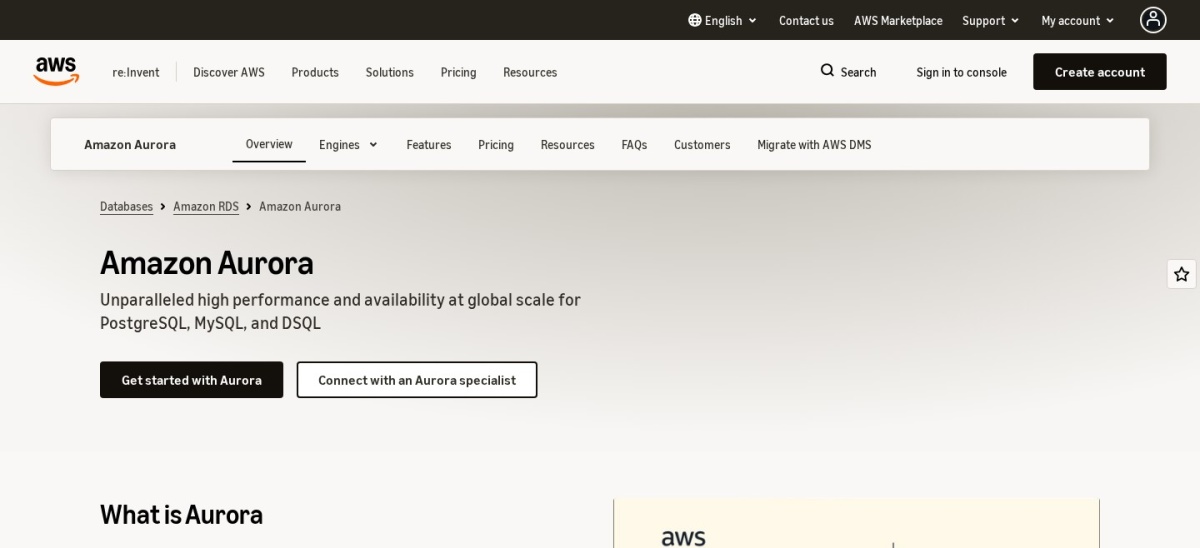
Amazon Aurora is a fully managed cloud database compatible with PostgreSQL and MySQL. AWS replicates storage across availability zones and handles failover for you, so a node failure does not need a standby server that you manage. It is rated 4.5 out of 5 on G2 from 458 reviews.
The trade off is usage-based pricing, so a busy app can cost more than a fixed server, and you are tied to AWS. It suits teams already on AWS who want the provider to handle replication and failover.
MongoDB Atlas is the fully managed cloud for document data, with a free M0 cluster forever, shared Flex clusters from about 8 dollars a month, and dedicated M10 clusters from 8 cents an hour. Replica sets keep copies of your data on several nodes, so a node failure triggers an automatic election.
The trade off is that document pricing is usage-based, so a busy app can outgrow the free tier fast, and the flexible schema needs discipline to stay clean. It suits apps with genuinely document-shaped data such as catalogs, logs and content.
MySQL is the default database of the web, with a free Community Edition under the GPL that costs nothing to run. Group Replication keeps several servers in sync and can elect a new primary when one fails. It is rated 4.4 out of 5 on G2 from 1,685 reviews, and the tooling is everywhere.
The trade off is Oracle's ownership, which some teams dislike, and the Enterprise Edition at 5,000 dollars per server per year for 1 to 4 sockets. It suits web applications and teams already fluent in MySQL.
MariaDB is the MySQL-compatible database that stays fully open source, with a free Community Server under the GPL. It runs MySQL workloads with Galera multi-master clustering for high availability, so any node can take writes and a lost node does not stop the cluster.
The trade off is a smaller ecosystem than MySQL itself, with fewer hosted options and less hiring depth. It suits teams that want MySQL compatibility with fully open-source licensing.
CockroachDB is a distributed SQL database with Postgres-compatible SQL that survives region failures by design. Data is spread across nodes and regions, so losing a whole region does not take the database down, and there are no standby servers to manage.
The trade off is that usage-based pricing is hard to forecast, and the G2 review base is small at 29 reviews. It suits companies running SQL across regions without downtime.
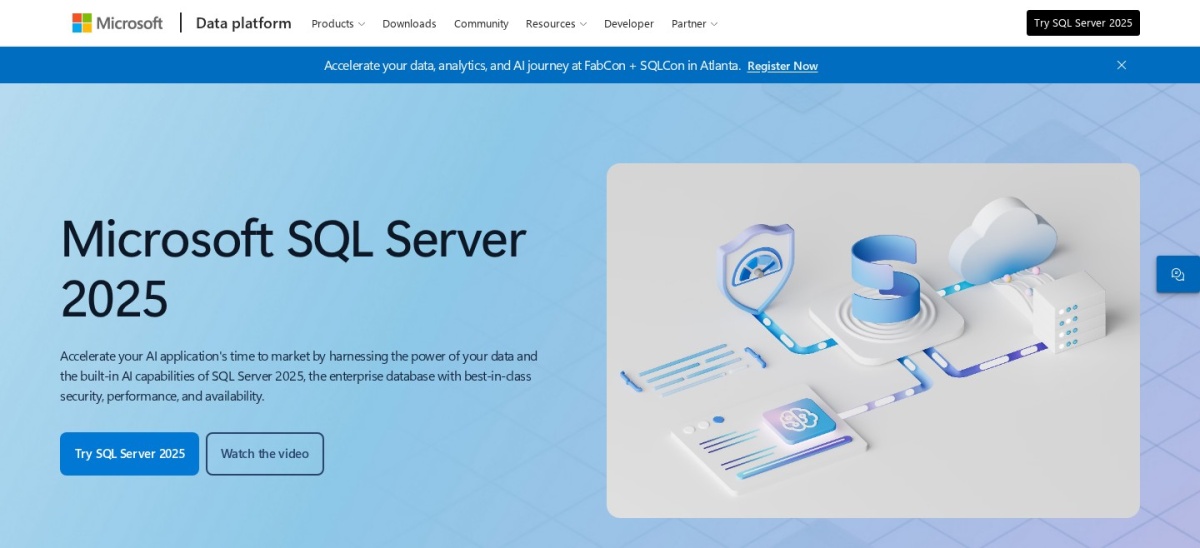
Microsoft SQL Server is the enterprise database for Windows-centric teams, with Always On availability groups that replicate to secondary servers with automatic failover. Express and Developer editions are free, and Standard lists at 3,945 dollars per 2-core pack, with Azure pay-as-you-go as the cloud option.
The trade off is per-core licensing that gets expensive fast on big servers, plus a Windows-first history that still shapes the ecosystem. It suits enterprises standardized on Microsoft, Azure and .NET.
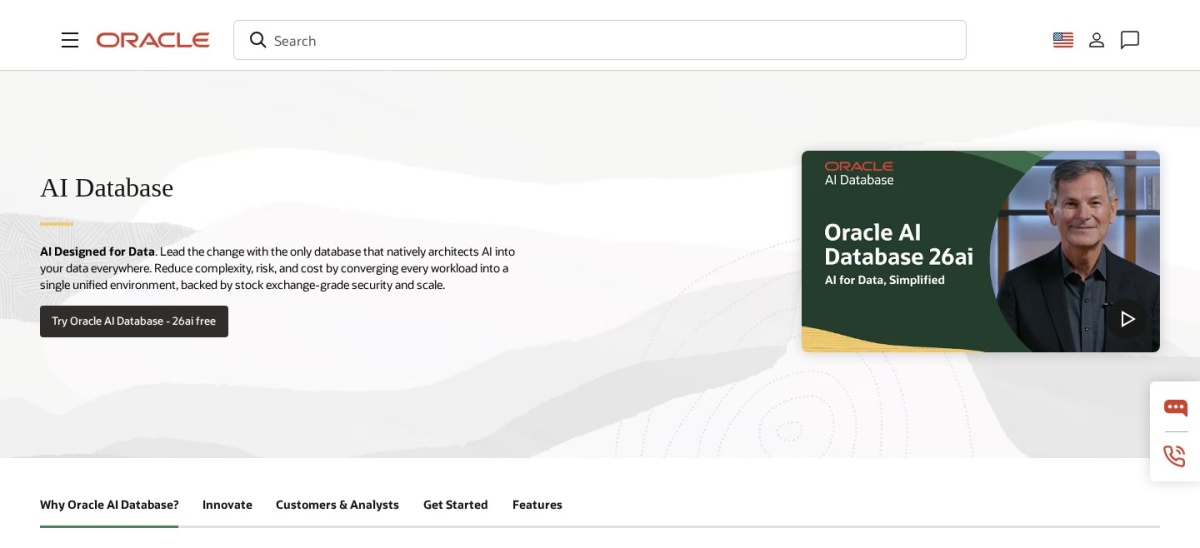
Oracle Database is the enterprise database for mission-critical transactional workloads, with RAC clustering and Data Guard for failover. The 23ai Free edition costs nothing, while Enterprise Edition lists at 47,500 dollars per processor, and it is rated 4.3 out of 5 on G2 from 1,023 reviews.
The trade off is the highest licence price in this list by far, plus custom enterprise licensing that needs a sales conversation. It suits large enterprises with Oracle estates that need contractual uptime guarantees.
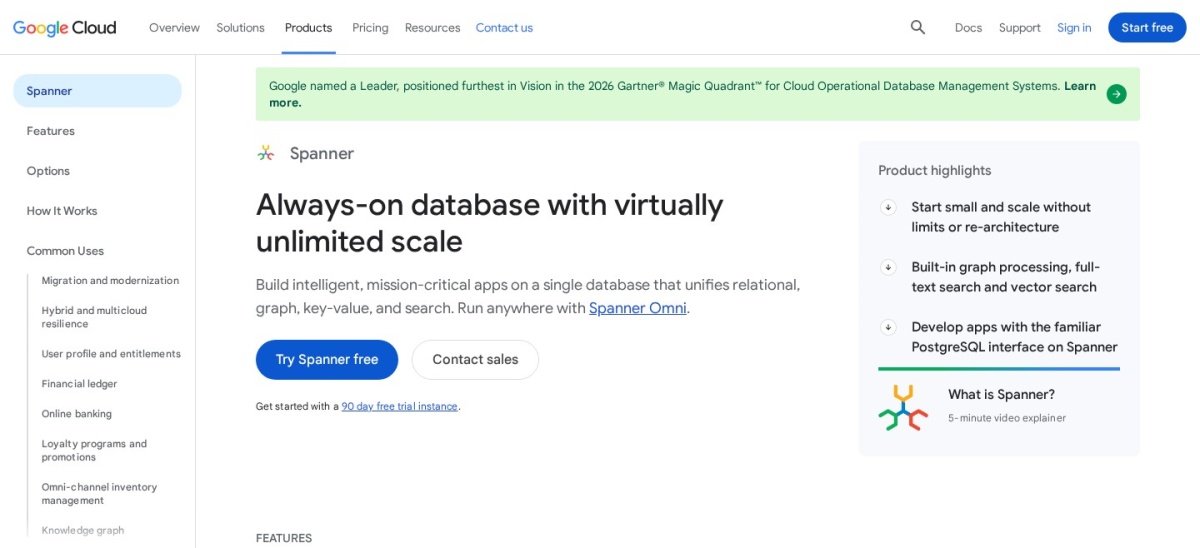
Google Cloud Spanner is a fully managed relational database with horizontal scaling and strong consistency across regions. It keeps one global database consistent without a standby layer, so an application can survive a regional outage without losing writes.
The trade off is cost and a small review base of 36 G2 reviews. Usage-based pricing is expensive for smaller workloads that do not need global scale. It suits global applications that need multi-region consistency.
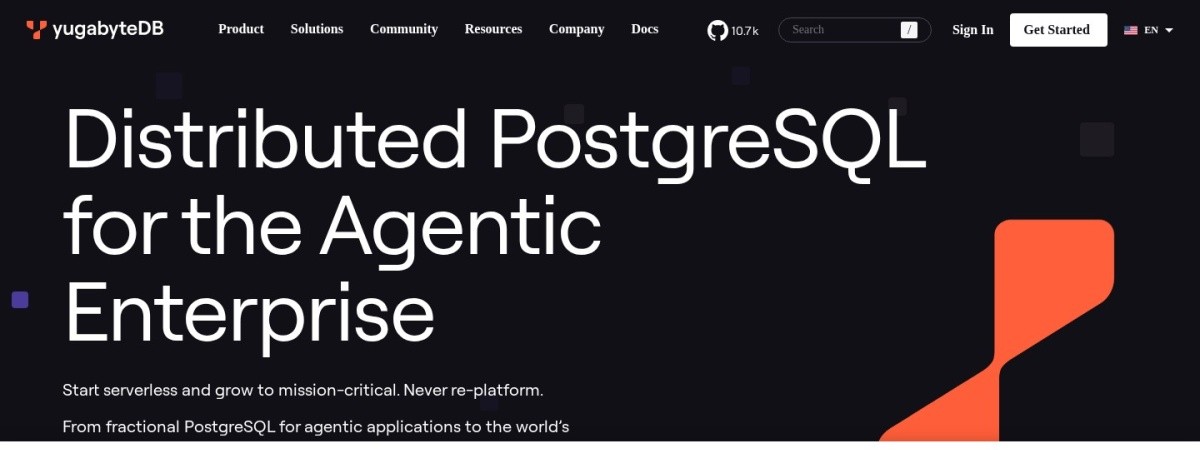
YugabyteDB is a distributed SQL database with PostgreSQL compatibility and a managed cloud offering. It spreads data across nodes and regions, so a node or region failure does not stop writes, and the free cloud tier lets a team start without paying.
The trade off is added complexity next to a single Postgres server, and the G2 review base is small at 65 reviews. It suits PostgreSQL shops that need their database to stay available across regions or clouds.
Free, usage and licence: how database pricing works
Free and open source is the cheapest model. PostgreSQL, MySQL and MariaDB cost $0 to self-host, and the only bill is your own hosting.
Usage pricing fits variable workloads. MongoDB Atlas, CockroachDB and Spanner charge by what you use, so a quiet app costs almost nothing and a busy one pays more.
Per-core and per-processor licences fit enterprises. SQL Server and Oracle charge by hardware, which is predictable but expensive on big servers.
The cheapest production database is usually usage-based serverless, not a fixed instance you pay for around the clock.
How we chose
We started from the most widely used database engines and managed services with a high-availability story, then kept 10 with a verifiable rating on G2 and a published price or free plan.
Prices come from each vendor's pricing page, checked on 29 November 2026. Ratings and review counts come from G2 on the same day. Where a vendor shows a sale, the list shows the regular price.
We left out tools with no verifiable rating or no published pricing information. No vendor paid for a place, and we do not claim hands-on testing for this list.
How to choose a database for availability
Start with the free tier, then do the math on your real workload before you commit.
Start with the free tier. PostgreSQL, MySQL and MariaDB cost $0 forever, and MongoDB Atlas and CockroachDB give free tiers that carry a real small project.
Do the math on your workload. Usage pricing looks cheap until traffic grows, so estimate queries, storage and users before you compare list prices.
Check the licence, not just the price. Per-core and per-processor licences punish big servers, while serverless pricing punishes busy ones.
Price the exit as well as the entry. Moving data out of a managed platform costs time and money, so check export and migration options before you sign up.
FAQ
What is the top database software for availability in 2026?
PostgreSQL is the top database software for availability for most teams. It costs $0 to self-host, streaming replication is proven in production, and Patroni adds automatic failover. It is rated 4.4 out of 5 on G2 from 682 reviews.
What is the cheapest database software for availability?
PostgreSQL, MySQL and MariaDB are the cheapest, because they cost $0 to self-host with no licence fee. MongoDB Atlas and CockroachDB also offer free tiers that carry a real small project before any payment.
How much does MongoDB Atlas cost?
MongoDB Atlas is free on the M0 shared tier, with Flex clusters from about $8 a month and dedicated M10 clusters from $0.08 an hour. The vendor pricing page lists all three tiers, so you can budget from the site.
Is Amazon Aurora better than PostgreSQL for availability?
Aurora is better if you already run on AWS and want the provider to handle failover, because it replicates storage across zones for you. PostgreSQL is better if you want zero licence cost and control over the setup, with Patroni handling failover.
How much does SQL Server cost?
SQL Server Standard lists at $3,945 per 2-core pack, while Express and Developer editions are free. Azure SQL offers pay-as-you-go pricing as the cloud alternative to buying licences.
How much does Oracle Database cost?
Oracle Database Enterprise Edition lists at $47,500 per processor, with custom enterprise licensing on top. The 23ai Free edition costs nothing and is the way to evaluate it.
SaaS SEO and WordPress specialist with about 8 years of experience. Rakib compares WordPress plugins, themes, hosting and software using public pricing, documentation and user reviews. See how we rank.