PostgreSQL is the best database pricing option for most teams, because it costs $0 to self-host and managed hosting starts at $0 too. Pick MongoDB Atlas for document data with a free tier, and Supabase if you want managed Postgres plus auth and storage for $25 a month.
How we make this list: we compare pricing pages, product documentation and public user reviews, then re-check every price before each update. No product paid for a place. Disclosure.
PostgreSQL, MySQL and MariaDB all cost $0 to self-host, with no licence fee at all.
MongoDB Atlas gives a free M0 tier forever, with Flex clusters from about $8 a month.
Supabase Pro costs $25 a month per organization, with auth, storage and APIs included.
PlanetScale starts at $5 a month for Postgres, with no free tier at all.
SQL Server Standard lists at $3,945 per 2-core pack and Oracle Enterprise at $47,500 per processor.
How database pricing works in 2026
Database pricing used to be simple: buy a server, buy a licence. In 2026 the menu reads more like a phone plan, with free tiers, serverless billing, per-seat tools and credit systems.
The free options are genuinely useful now. PostgreSQL, MySQL and MariaDB cost nothing to self-host, and MongoDB Atlas, Supabase and CockroachDB let you build and launch before paying anything.
Managed cloud is where the money goes. Supabase Pro at $25 a month and PlanetScale Postgres from $5 a month are the price-to-simplicity winners, while Snowflake and CockroachDB price for scale, and our guide on best database software compares the engines themselves.
Enterprise licences are a different world. SQL Server Standard lists at $3,945 per 2-core pack and Oracle Enterprise at $47,500 per processor, so budget by licence, not by month.
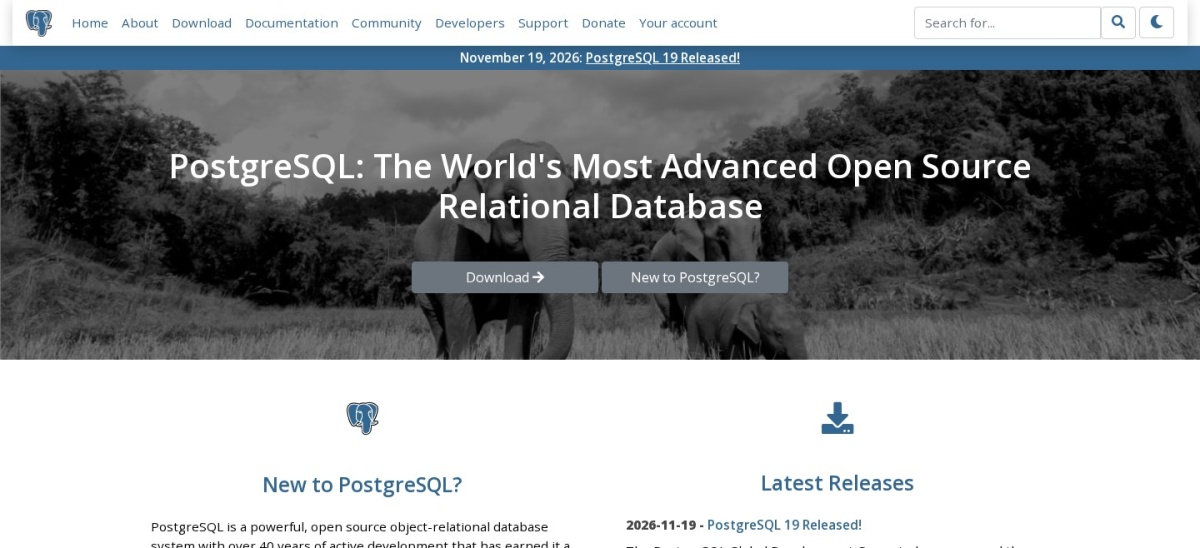
PostgreSQL is the most capable open-source database, free to self-host with no licence cost at all, rated 4.4 out of 5 on G2 from 682 reviews. It handles relational workloads, JSON, full-text search and extensions, and managed hosting starts at $0 on serverless platforms.
The trade off is that free means self-managed, so you pay in hosting and operations instead of licences. Managed Postgres adds a monthly bill, but the database itself stays free. It suits any application that needs a reliable, feature-rich database at zero licence cost.
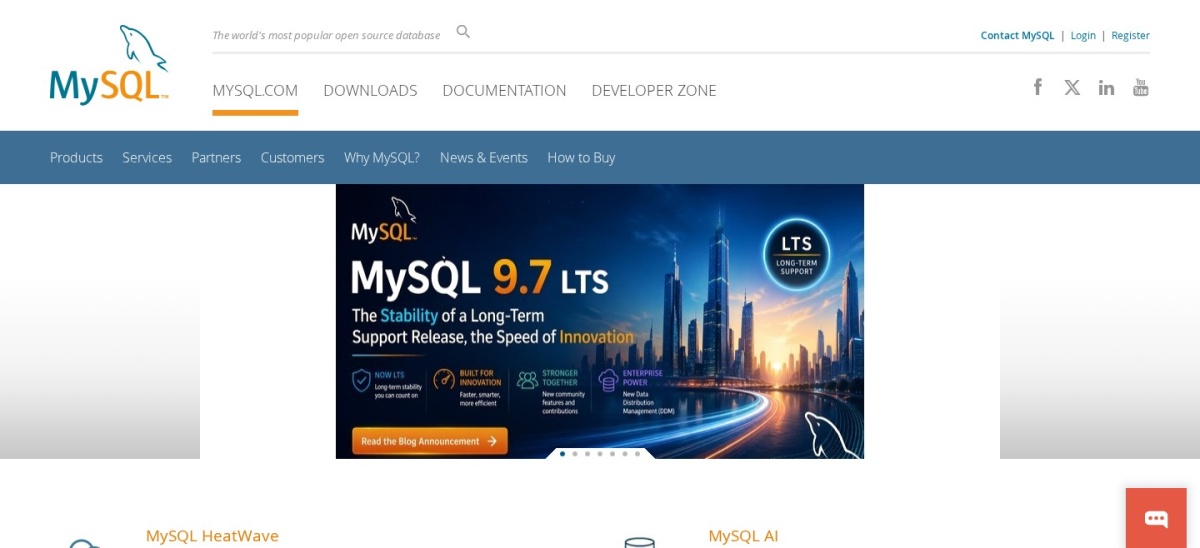
MySQL is the default database of the web, with a free Community Edition under the GPL that costs nothing to run. It is rated 4.4 out of 5 on G2 from 1,685 reviews, and the tooling is everywhere, from WordPress to Magento stacks.
The trade off is Oracle's ownership, which some teams dislike, and the Enterprise Edition at $5,000 per server per year for 1 to 4 sockets. It suits web applications and teams already fluent in MySQL.
What we like
Free Community Edition
Tooling is everywhere
Largest web deployment base
Watch out for
Enterprise Edition is $5,000 a server a year
Oracle ownership is a long-running debate
Enterprise Edition costs $5,000 per server a yearVisit mysql.com
03
MariaDB
4.4/5on G2 (226 reviews, checked Nov 2026)
PriceFree
Best MySQL-compatible free option
LicenceFree, Community Server
CompatibilityMySQL-compatible
Cloud optionsSkySQL, RDS
SupportMariaDB, paid
mariadb.com
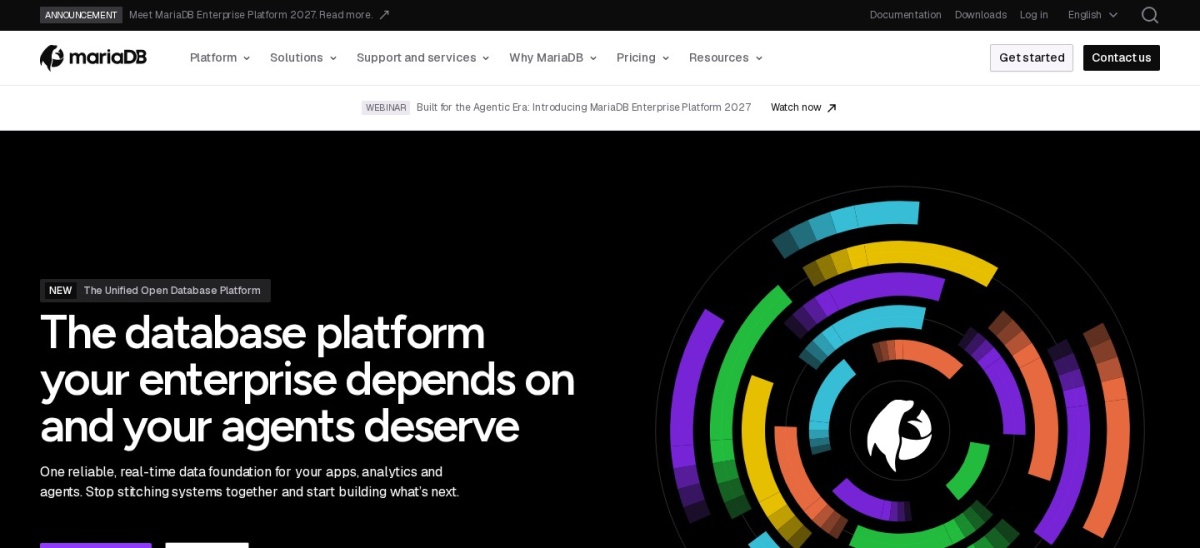
MariaDB homepage, captured Nov 2026.
MariaDB is the MySQL-compatible database that stays fully open source, with a free Community Server under the GPL. It is rated 4.4 out of 5 on G2 from 226 reviews, and it runs MySQL workloads with Galera multi-master clustering for high availability.
The trade off is a smaller ecosystem than MySQL itself, with fewer hosted options and less hiring depth. It suits teams that want MySQL compatibility with fully open-source licensing.
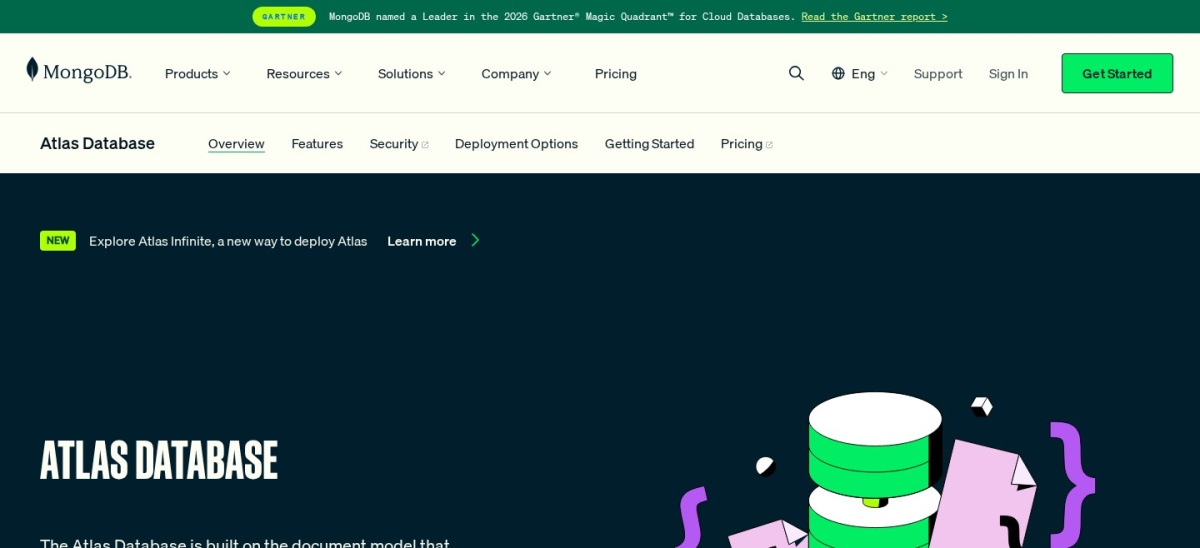
MongoDB Atlas is the fully managed cloud for document data, with a free M0 cluster forever, shared Flex clusters from about $8 a month, and dedicated M10 clusters from $0.08 an hour. It is rated 4.5 out of 5 on G2 from 904 reviews.
The trade off is that document pricing is usage-based, so a busy app can outgrow the free tier fast, and the flexible schema needs discipline to stay clean. It suits apps with genuinely document-shaped data such as catalogs, logs and content.
Supabase is a managed Postgres platform that adds auth, storage and APIs around the database, with a free tier covering a 500 MB database and 50,000 monthly active users. The Pro plan costs $25 a month per organization, and it is rated 4.6 out of 5 on G2 from 243 reviews.
The trade off is that it is a platform, not just a database, so teams that only need Postgres pay for more than they use. Usage beyond the free tier also adds up. It suits startups that want database, auth and storage in one place.
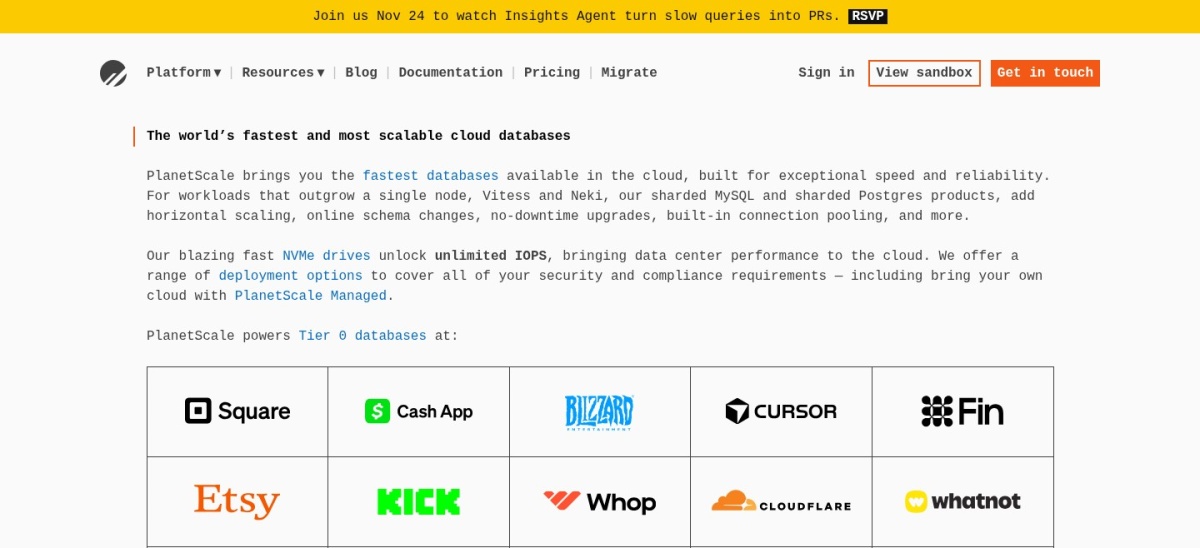
PlanetScale is a managed database platform with Git-like branching, priced from $5 a month for a single-node Postgres database and $39 a month for Vitess-backed MySQL. There is no free tier, so every user pays from day one, and the G2 review base is tiny at 6 reviews.
The trade off is the missing free tier and the small review base, plus branching adds a workflow to learn. It suits teams that want database branching like Git branching at a low monthly price.
Best for multi-region pricing that survives outages
Free tierYes, cloud free tier
PricingUsage-based cloud
Self-hostedEnterprise free under $10M
ModelPostgres-compatible SQL
cockroachlabs.com
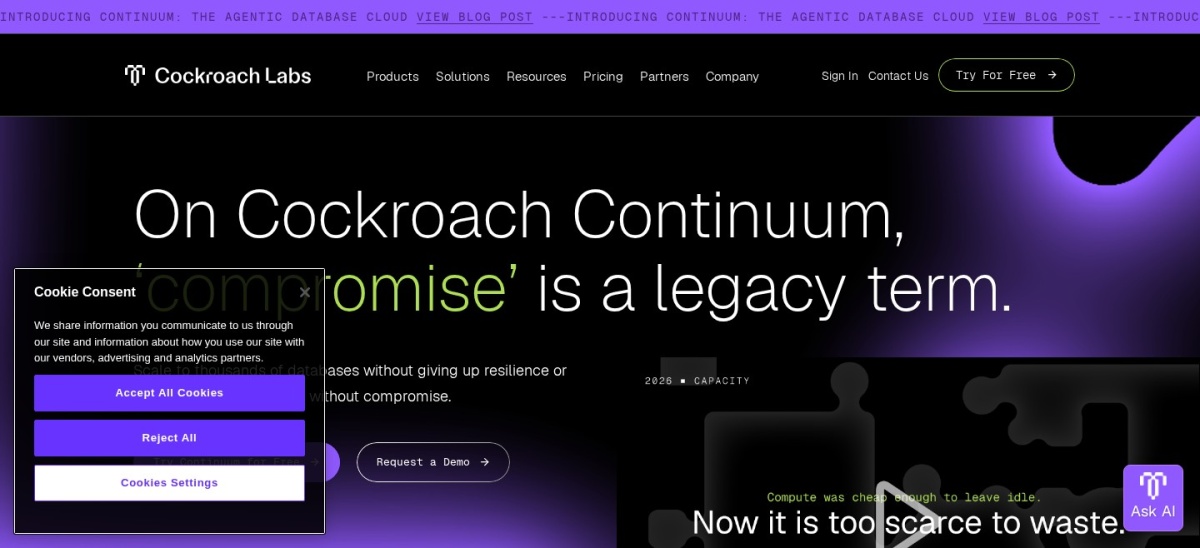
CockroachDB homepage, captured Nov 2026.
CockroachDB is a distributed SQL database with Postgres-compatible SQL that survives region failures by design. Cloud pricing is usage-based with a free tier, and the self-hosted Enterprise edition is free for companies under $10 million in revenue.
The trade off is that usage-based pricing is hard to forecast, and the G2 review base is small at 29 reviews. It suits companies running SQL across regions without downtime.
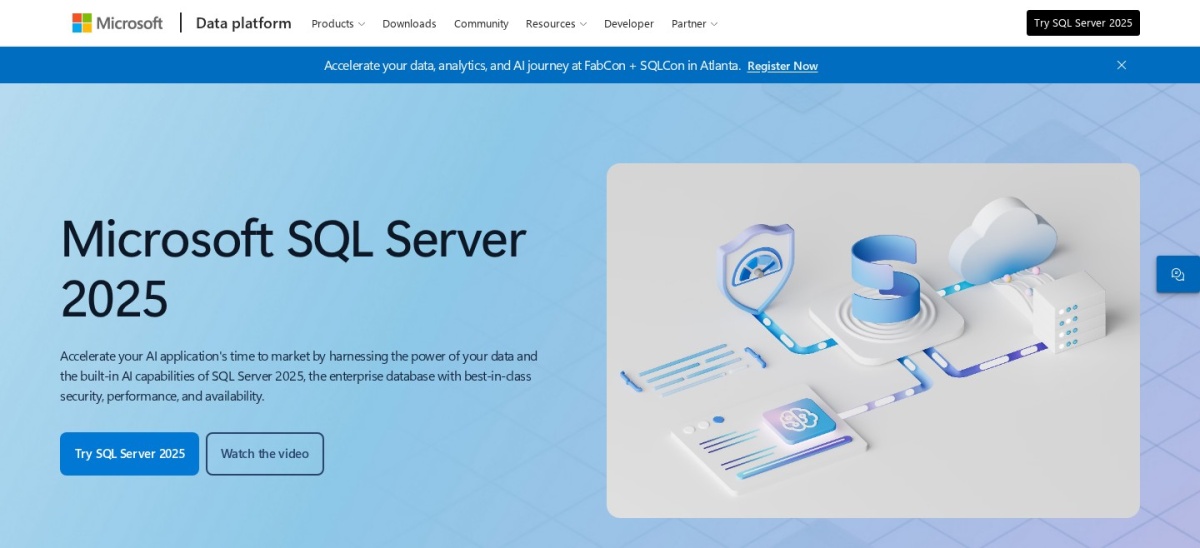
Microsoft SQL Server is the enterprise database for Windows-centric teams, with Always On availability and deep Azure integration. Express and Developer editions are free, and Standard lists at $3,945 per 2-core pack, with Azure pay-as-you-go as the cloud option.
The trade off is per-core licensing that gets expensive fast on big servers, plus a Windows-first history that still shapes the ecosystem. It suits enterprises standardized on Microsoft, Azure and .NET.
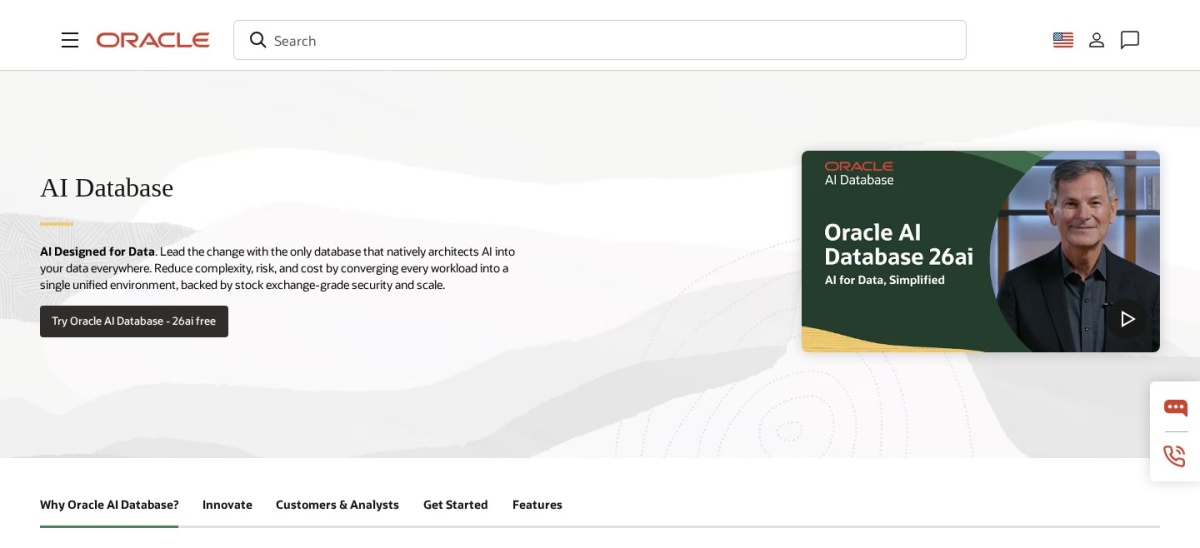
Oracle Database is the enterprise database for mission-critical transactional workloads, with RAC clustering and Data Guard for failover. The 23ai Free edition costs nothing, while Enterprise Edition lists at $47,500 per processor, and it is rated 4.3 out of 5 on G2 from 1,023 reviews.
The trade off is the highest licence price in this list by far, plus custom enterprise licensing that needs a sales conversation. It suits large enterprises with Oracle estates that need contractual uptime guarantees.
Free and open source is the cheapest model. PostgreSQL, MySQL and MariaDB cost $0 to self-host, and the only bill is your own hosting.
Usage pricing fits variable workloads. MongoDB Atlas, Supabase and CockroachDB charge by what you use, so a quiet app costs almost nothing and a busy one pays more.
Per-core and per-processor licences fit enterprises. SQL Server and Oracle charge by hardware, which is predictable but expensive on big servers.
The cheapest production database is usually usage-based serverless, not a fixed instance you pay for around the clock.
How we chose
We started from the most widely used database software pricing options tools, then kept those with a verifiable rating on G2, Capterra or Trustpilot and a published price or free plan.
Prices come from each vendor's pricing page, checked on 25 November 2026. Ratings and review counts come from the review site named on each tool on the same day. Where a vendor shows a sale, the list shows the regular price.
We left out tools with no verifiable rating or no published pricing information. No vendor paid for a place, and we do not claim hands-on testing for this list.
How to choose a database by its pricing
Start with the free tier, then do the math on your real workload before you commit.
Start with the free tier. PostgreSQL, MySQL and MariaDB cost $0 forever, and MongoDB Atlas and Supabase give free tiers that carry a real small project.
Do the math on your workload. Usage pricing looks cheap until traffic grows, so estimate queries, storage and users before you compare list prices.
Check the licence, not just the price. Per-core and per-processor licences punish big servers, while serverless pricing punishes busy ones.
Price the exit as well as the entry. Moving data out of a managed platform costs time and money, so check export and migration options before you sign up.
FAQ
What is the cheapest database software?
PostgreSQL, MySQL and MariaDB are the cheapest, because they cost $0 to self-host with no licence fee. MongoDB Atlas and Supabase also offer free tiers that carry a real small project before any payment.
How much does MongoDB Atlas cost?
MongoDB Atlas is free on the M0 shared tier, with Flex clusters from about $8 a month and dedicated M10 clusters from $0.08 an hour. The vendor pricing page lists all three tiers, so you can budget from the site.
Is Supabase free?
Supabase is free on its free tier, with a 500 MB database and 50,000 monthly active users. Pro costs $25 a month per organization and adds daily backups, more storage and higher limits.
How much does SQL Server cost?
SQL Server Standard lists at $3,945 per 2-core pack, while Express and Developer editions are free. Azure SQL offers pay-as-you-go pricing as the cloud alternative to buying licences.
How much does Oracle Database cost?
Oracle Database Enterprise Edition lists at $47,500 per processor, with custom enterprise licensing on top. The 23ai Free edition costs nothing and is the way to evaluate it.
What database pricing model is best for a startup?
A startup should start with a free tier or usage-based pricing, such as Supabase free, MongoDB Atlas M0 or PlanetScale from $5 a month. Fixed licences only make sense once traffic is steady and predictable.
SaaS SEO and WordPress specialist with about 8 years of experience. Rakib compares WordPress plugins, themes, hosting and software using public pricing, documentation and user reviews. See how we rank.