8th Wall is the top AR VR software pick for browser-based augmented reality, since its experiences open on a phone with no app to install. Unity leads for games and training, while ZapWorks gives small teams a cheaper way to publish web AR.
How we make this list: we compare pricing pages, product documentation and public user reviews, then re-check every price before each update. No product paid for a place. Disclosure.
8th Wall is the top pick for web AR: 4.6 out of 5 from 300 G2 reviews, free even for commercial work, and no app install for viewers.
Unity leads for games and training, with a free Personal plan for creators earning under $200,000 a year.
ZapWorks is the cheapest paid start at $64.99 a year, while Unity Pro costs $2,310 a year.
Lens Studio and Effect House are free, but their effects only run on Snapchat and TikTok.
Vuforia Engine suits industrial teams, with a free Basic plan and paid tiers priced by quote.
How do you choose the right top AR VR software?
AR and VR software splits into three kinds of tool: game engines like Unity and Unreal Engine, web AR tools like 8th Wall and ZapWorks, and social studios like Lens Studio and Effect House. The right pick depends on whether you build games, training, marketing or social effects.
The first question is where the experience runs. Web AR opens in a phone browser with no install, app AR needs a download, and social effects live inside Snapchat or TikTok. Our guide on best AR software covers the AR-only field in more depth.
Price is the second question. 8th Wall, Lens Studio and Effect House are free, ZapWorks costs $64.99 a year, and Unity Pro costs $2,310 a year, so the spread is wide. The price ladder below shows the cheapest paid plan for each tool.
The third question is who builds it. Engines need developers, drag-and-drop studios need none, and social studios sit in between with templates. Pick the tool your team can actually ship with, not the one with the longest feature list.
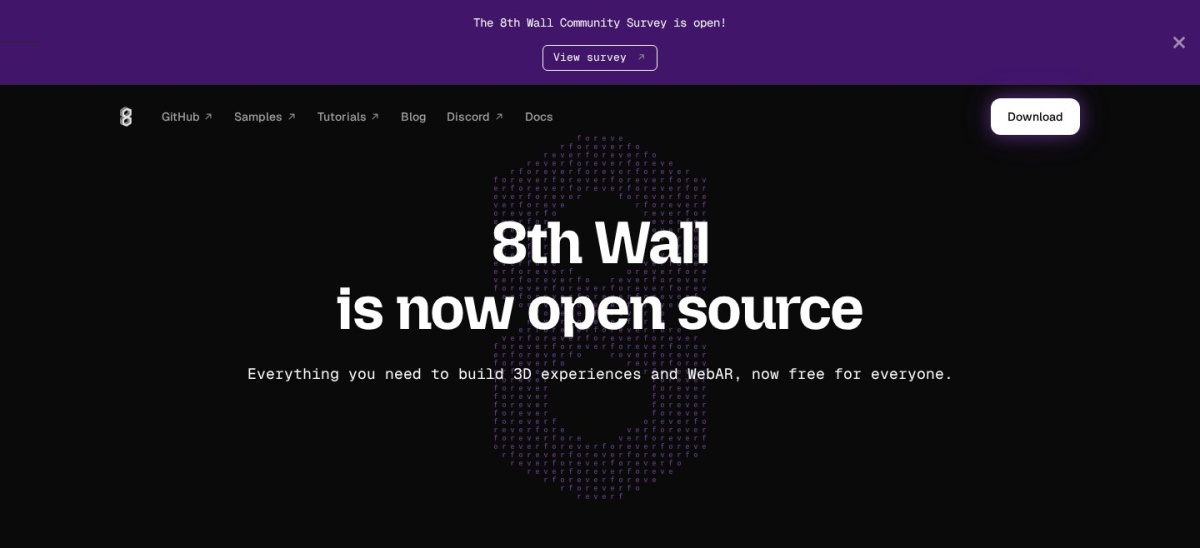
8th Wall is the best way to publish augmented reality that opens in a phone browser with no app to install. Niantic retired the hosted platform in February 2026 and the tools are now free, even for commercial work, so teams can build WebAR experiences without a subscription.
The trade off is the learning curve. WebAR development still needs a developer, and the hosted cloud features that once came with the paid platform are gone. It suits teams that want AR on the open web rather than inside an app store.
Unity is the standard engine for AR and VR games and training apps, with tools for every major headset and phone. The Personal plan is free for creators earning under $200,000 a year, and the Asset Store adds ready-made models, scripts and environments that speed up a project.
The trade off is the price of the paid plan. Pro costs $2,310 a year, so a small studio pays real money once it passes the free revenue cap, and the engine takes time to learn. It suits game studios and training teams building serious AR and VR.
What we like
Free Personal plan for small creators
Works on every major headset and phone
Huge Asset Store and community
Strong tools for training and simulation
Watch out for
Pro costs $2,310 a year
Takes time to learn properly
Free plan has a $200,000 revenue cap
Pro is $2,310 a year; Personal is free under $200KVisit unity.com
03
ZapWorks
4.5/5on G2 (250 reviews, checked Nov 2026)
Starts at$64.99/yr
Best cheap way to publish web AR
Free planNo, 14-day trial only
Cheapest paid planDeveloper, $64.99 a year
Needs an appNo, experiences run in the browser
EditorDrag-and-drop studio, no code needed
zap.works
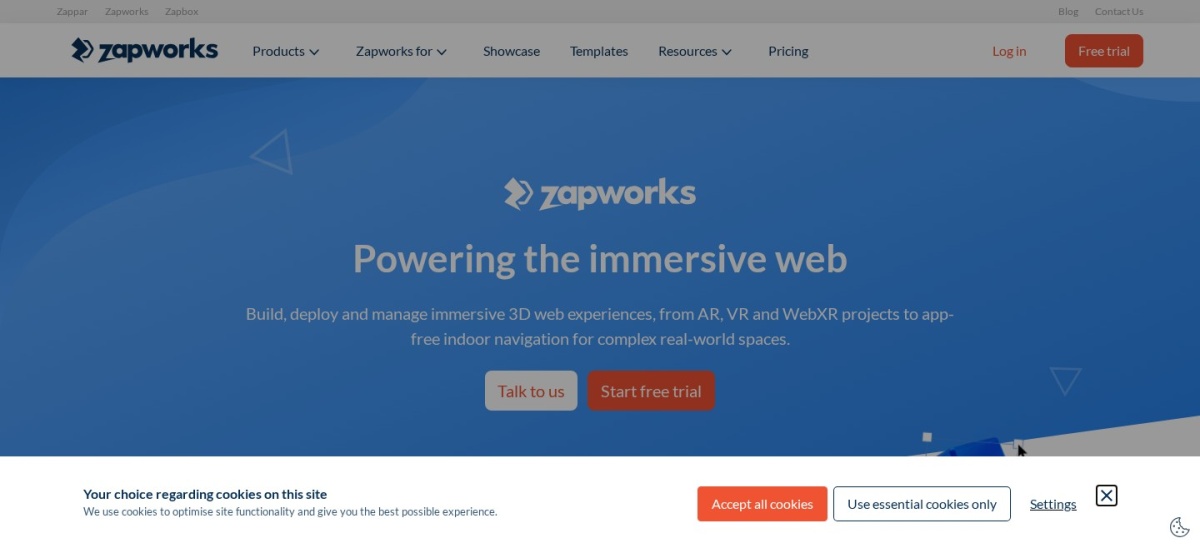
ZapWorks homepage, captured Nov 2026.
ZapWorks is the cheapest way for a small team to publish web AR, with a drag-and-drop studio that needs no coding. The Developer plan costs $64.99 a year, and experiences open in a phone browser, so there is no app to build or submit to a store.
The trade off is the price confusion. The vendor lists $64.99 a year for the Developer plan while other pages quote a monthly figure, and commercial use needs the higher Pro plan. It suits marketers and small teams that want quick AR campaigns.
Unreal Engine is the best pick when AR or VR has to look its best, with cinema-quality real-time graphics that no other engine here matches. It is free for individuals and small businesses earning under $1 million a year, and games pay a royalty only after $1 million in lifetime revenue.
The trade off is the seat licence for commercial work. Non-game use above $1 million a year costs $1,850 per seat per year, and the engine is heavy to learn. It suits studios building showcase experiences and high-end training.
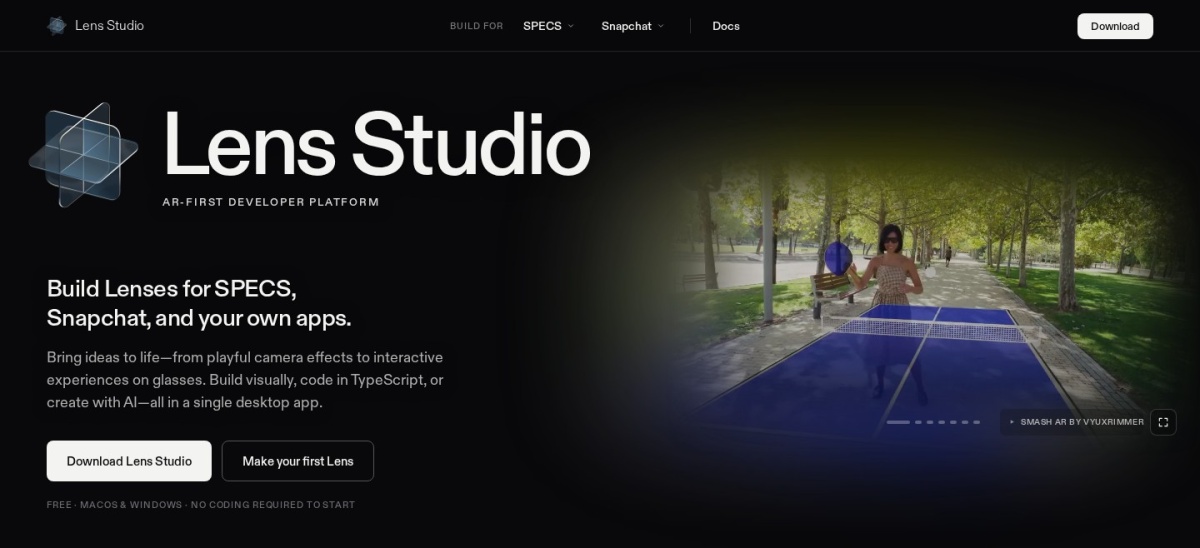
Lens Studio is Snap's free desktop studio for building augmented reality lenses. Creators publish to Snapchat and Spectacles, and the tool includes face tracking, world tracking and templates, so a first lens can be ready in an afternoon.
The trade off is the platform lock-in. Lenses live on Snapchat and Spectacles, so the audience is Snap's, and brands that want AR on their own site need another tool. It suits creators and brands already reaching people on Snapchat.
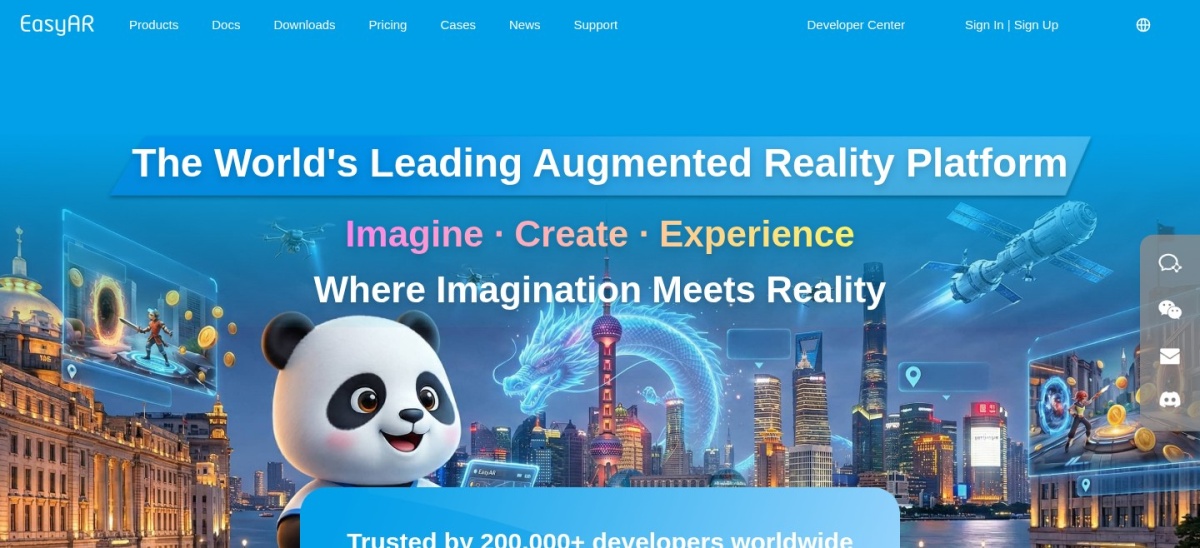
EasyAR is a budget AR toolkit for developers who want to add augmented reality to their own apps. The free tier covers basic projects, and the Pro plan costs $39 a month, which is far less than most enterprise AR platforms.
The trade off is that it is a developer toolkit, not a drag-and-drop studio. Building an experience means writing code and shipping an app, so non-developers will need help. It suits app teams that want affordable AR inside their own product.
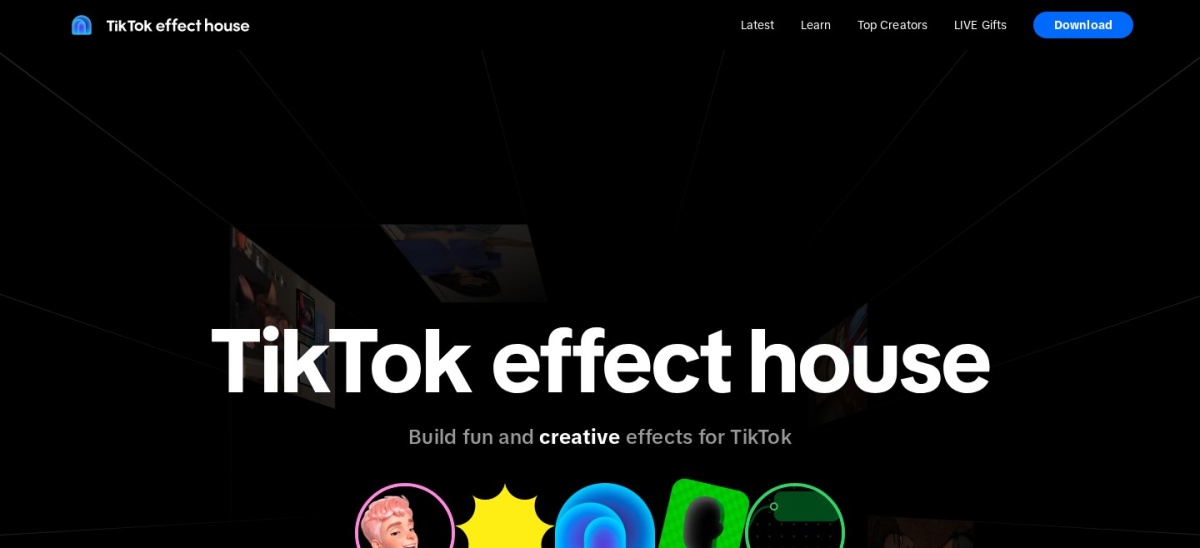
Effect House is TikTok's free studio for building augmented reality effects. Creators use templates, face tracking and interactive triggers to make effects that anyone on TikTok can try, and publishing takes minutes once an effect is approved.
The trade off is the single platform. Effects only run on TikTok, so brands that want AR on their own site or app need a different tool, and approval times can vary. It suits creators and brands chasing reach on TikTok.
Cheapest paid planApple Developer Program, $99 a year
PlatformsiPhone and iPad only
TrackingPlane, image, face and body tracking
developer.apple.com
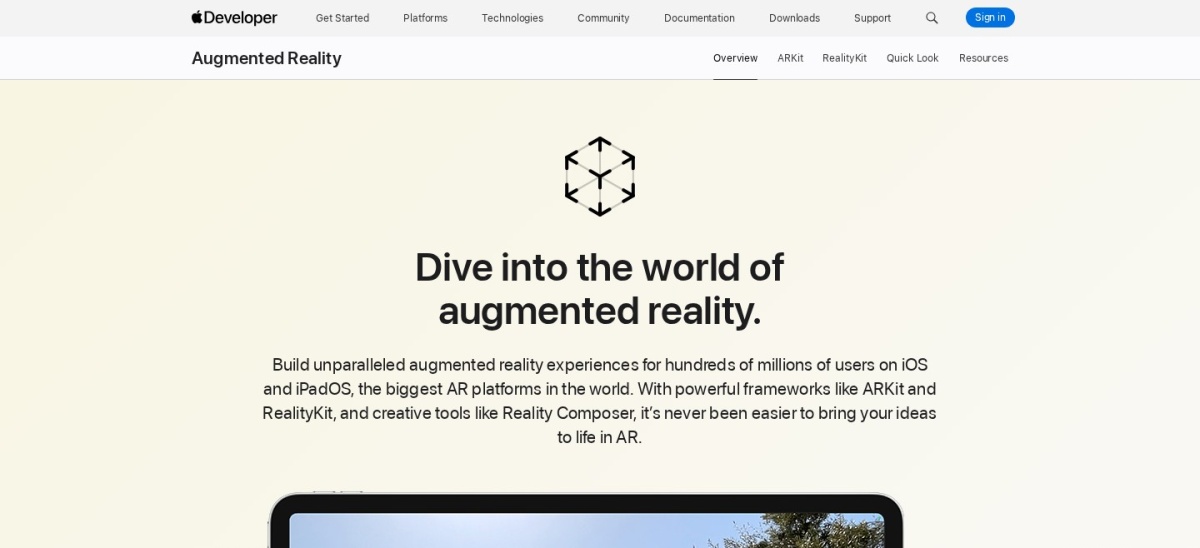
ARKit homepage, captured Nov 2026.
ARKit is Apple's free framework for building augmented reality on iPhone and iPad, with plane, image, face and body tracking built in. It is the only way to build native AR for iOS, and the tools integrate with Xcode and Swift, so iOS developers can start quickly.
The trade off is the Apple-only reach. ARKit apps run on iPhone and iPad only, and publishing to the App Store needs the Apple Developer Program at $99 a year. It suits iOS teams building AR for Apple users.
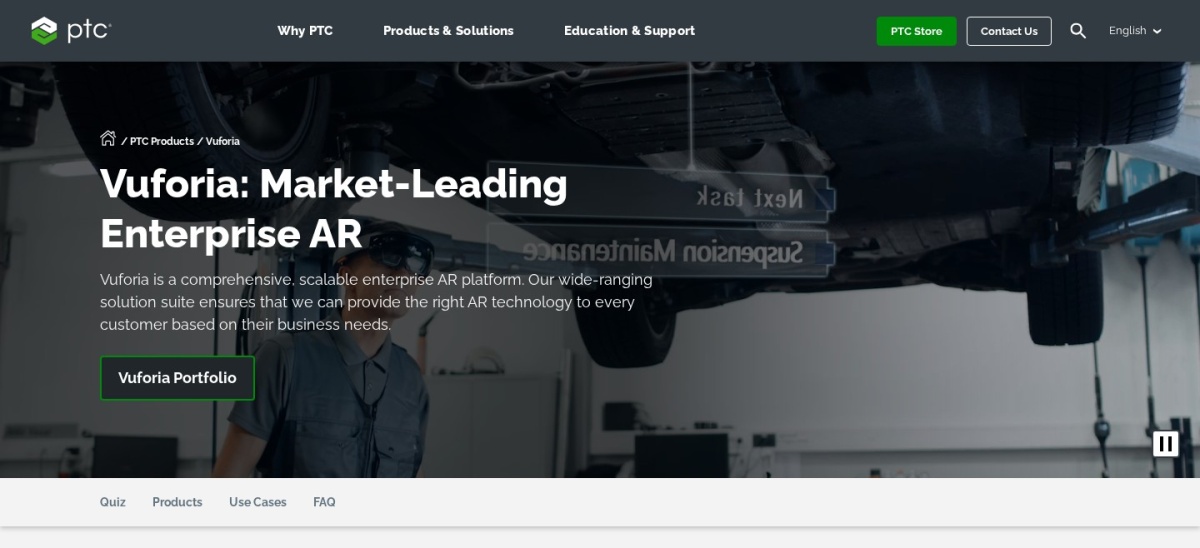
Vuforia Engine is the enterprise AR platform from PTC, built for factories, field service and training. The Basic plan is free and covers image, VuMark and ground-plane tracking, with 20 Model Target generations included, so small trials cost nothing.
The trade off is the price of the paid tiers. Premium and Enterprise are priced by quote, so a business cannot see the cost before talking to sales. It suits industrial teams that need model-based tracking at scale.
What we like
Free Basic plan for trials
Strong model-based tracking
Built for industrial and field use
Runs on phones, tablets and headsets
Watch out for
Paid plans are priced by quote
Enterprise focus, not for hobbyists
Smaller review base than the big engines
Basic is free; Premium and Enterprise by quoteVisit ptc.com
Web AR vs app AR vs social effects
Web AR opens in a phone browser with no install. 8th Wall and ZapWorks lead here, and the lack of friction is why marketers and retailers pick them for campaigns and packaging.
App AR needs a download but can do more. Unity, Unreal Engine, EasyAR, ARKit and Vuforia build experiences inside apps, with better tracking, offline use and headset support.
Social effects trade reach for control. Lens Studio and Effect House are free and fast, but the effects only run on Snapchat and TikTok, so the audience belongs to the platform.
Most teams end up with one tool per channel. A retailer might run web AR for shoppers, an app for loyal customers, and social effects for reach, all at once.
How we chose
We started from the AR and VR tools people actually build with: game engines, web AR platforms, social studios and industrial SDKs. Each tool had to run on real headsets or phones and carry a rating on G2.
Prices come from each vendor's pricing page, checked on 29 November 2026. Ratings and review counts come from G2 on the same day, and the cheapest paid plan is shown as a yearly figure so the tools compare fairly.
We left out tools with no verifiable rating and single-purpose demos. No vendor paid for a place, and we do not claim hands-on testing for this list.
How to choose the best AR VR software
Start with where the experience runs, then check who builds it before you pay.
Decide where it runs. Web AR needs no install, app AR needs a download, and social effects live inside Snapchat or TikTok. Pick the channel your audience already uses.
Match the tool to your team. Engines need developers, drag-and-drop studios need none, and social studios sit in between. Choose the tool your team can ship with.
Try the free version first. 8th Wall, Lens Studio, Effect House and the free tiers of Unity and EasyAR cost nothing to start. Build a small test before paying.
Check the paid price, not just the free tier. Unity Pro is $2,310 a year and Vuforia is priced by quote, so confirm the real cost before you plan a budget.
FAQ
What is the top AR VR software?
8th Wall is the top AR VR software for browser-based augmented reality, with a 4.6 out of 5 rating from 300 G2 reviews and no app install for viewers. Unity is the top pick for games and training, with a free Personal plan for small creators.
Is there free AR VR software?
Yes. 8th Wall, Lens Studio and Effect House are completely free, and Unity Personal, Unreal Engine and EasyAR all have free tiers. The free plans cover small projects, trials and social effects without paying.
Which AR VR software is cheapest?
ZapWorks is the cheapest paid start at $64.99 a year for its Developer plan. EasyAR Pro costs $39 a month, ARKit needs only the $99 a year Apple Developer Program, and Unity Pro costs $2,310 a year.
Do I need to code to build AR or VR?
It depends on the tool. ZapWorks, Lens Studio and Effect House have drag-and-drop studios and templates that need no code, while Unity, Unreal Engine, EasyAR, ARKit and Vuforia need a developer to build with.
What is the difference between AR and VR software?
AR software adds digital content to the real world through a phone or headset camera, while VR software builds a fully virtual world the user steps into. Unity and Unreal Engine cover both, while 8th Wall and ZapWorks focus on AR.
Which AR VR software is best for beginners?
Lens Studio and Effect House are the easiest starts, with free templates and publishing to Snapchat and TikTok. ZapWorks is the easiest paid option for web AR, while Unity is better once you want to build games or training.
SaaS SEO and WordPress specialist with about 8 years of experience. Rakib compares WordPress plugins, themes, hosting and software using public pricing, documentation and user reviews. See how we rank.