Best Cross Platform Development Framework in 2026: 7 Tools Compared
WLWPLegible EditorsLast verified 22 Nov 2026How we rank10 min read
★ Short answer
Flutter is the best overall cross-platform development framework in 2026, offering an open-source Dart SDK and Impeller rendering engine across mobile, web, and desktop with a 4.5/5 G2 rating. Choose React Native (4.5/5 across 144 G2 reviews) for JavaScript teams or Expo when you want managed cloud builds starting at $19/mo.
How we make this list: we compare pricing pages, product documentation and public user reviews, then re-check every price before each update. No product paid for a place. Disclosure.
Flutter, React Native, Ionic, Apache Cordova, and Framework 7 are free, open-source frameworks with no mandatory subscription fees.
React Native holds a 4.5/5 rating across 144 G2 reviews, while Ionic follows closely at 4.4/5 across 154 G2 reviews.
Expo adds managed cloud builds and over-the-air updates on top of React Native, starting at $19/mo ($228/yr) after its free tier.
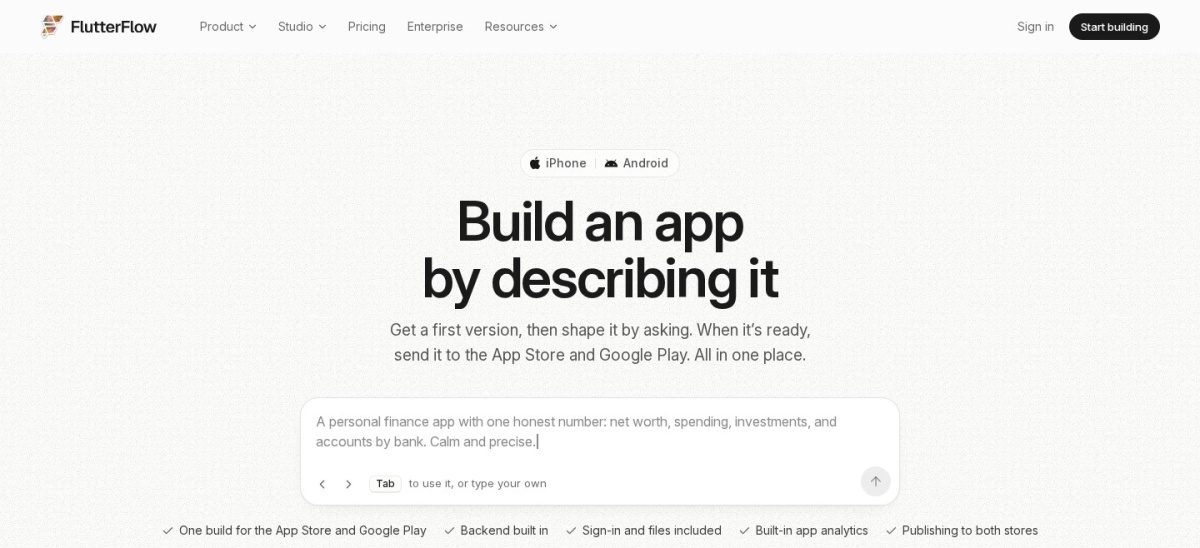
FlutterFlow provides a visual drag-and-drop layer on top of Flutter, with its Basic plan priced at $39/mo ($351 billed yearly).
Unity targets interactive 2D and 3D cross-platform apps, offering a free Personal tier and Unity Pro at $2,310/yr.
What to look for in a cross-platform development framework
Cross-platform frameworks let engineering teams ship applications to iOS, Android, web, and desktop from a single codebase. Instead of maintaining separate Swift and Kotlin repositories, developers share business logic and often user interface components across operating systems.
Rendering architecture is the biggest technical differentiator. Compiled UI toolkits like Flutter draw every pixel on a custom canvas for uniform visuals, React Native maps components to native platform widgets, and web-wrapper frameworks like Ionic and Apache Cordova render HTML, CSS, and JavaScript inside a native WebView.
Total cost of ownership goes beyond the framework license. While core SDKs are largely open-source under MIT or Apache licenses, commercial build pipelines, visual low-code builders, and enterprise game engines charge recurring fees that scale with team seats and build volume.
For 3D, AR/VR, and interactive cross-platform apps
$2,310/yr
Free plan
4.5/5
Price ladder: cheapest paid plan per year
List prices, USD, checked Nov 2026
FlutterFree
React NativeFree
IonicFree
Framework 7Free
ExpoFREE$228
FlutterFlowFREE$351
UnityFREE$2,310
The 7 best cross platform development framework
01
Flutter
4.5/5on G2 (20+ reviews, checked Nov 2026)
PriceFree
Best overall for custom cross-platform UIs
LanguageDart
TargetsiOS, Android, Web, Desktop
RenderingImpeller custom canvas
LicenseFree, open-source
flutter.dev
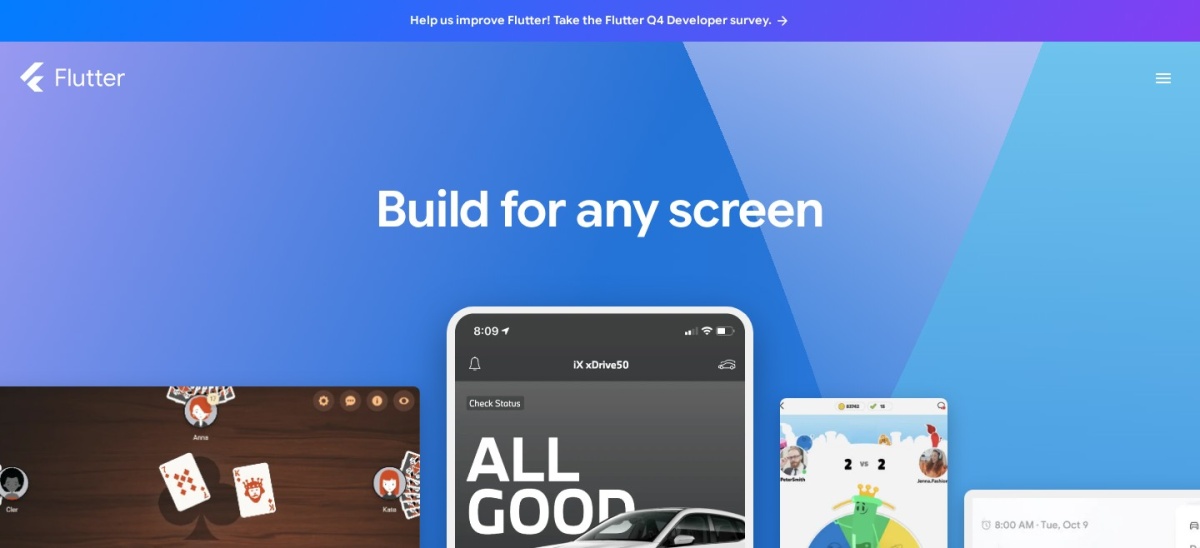
Flutter homepage, captured Nov 2026.
Flutter is an open-source UI software development kit created by Google that compiles a single Dart codebase into native machine code for iOS, Android, web, macOS, Windows, and Linux. It includes the Impeller rendering engine, hot reload, and extensive Material and Cupertino widget libraries at zero license cost.
The trade off is learning Dart, which has a smaller hiring pool than JavaScript, and larger compiled binary sizes compared to native apps. While the framework has no paid plan, App Store ($99/yr) and Google Play ($25 one-time) developer accounts apply, and it suits teams prioritizing visual consistency across platforms.
What we like
Compiles to native ARM machine code with consistent 60fps UI rendering
Supports mobile, web, desktop, and embedded targets from one codebase
Fast stateful hot reload speeds up interface iteration
Completely free and open-source with strong Google backing
Watch out for
Requires learning Dart rather than mainstream JavaScript or C#
Compiled app binaries are noticeably larger than native equivalents
No paid tiers exist; the full SDK and engine are free and open-source.Visit flutter.dev
02
React Native
4.5/5on G2 (144 reviews, checked Nov 2026)
PriceFree
Best for JavaScript and React engineering teams
LanguageJavaScript / TypeScript
TargetsiOS, Android (Web via React)
RenderingPlatform-native UI components
LicenseMIT open-source
reactnative.dev
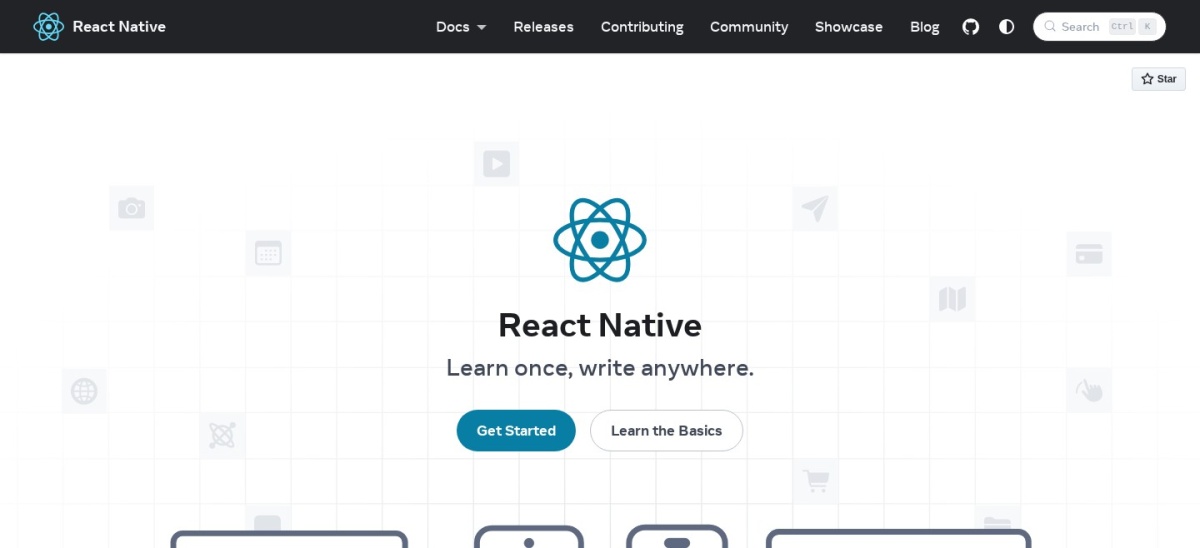
React Native homepage, captured Nov 2026.
React Native is Meta's open-source framework for building iOS and Android applications using JavaScript, TypeScript, and React. Unlike WebView wrappers, it renders genuine platform-native UI views and uses its New Architecture for synchronous native module communication, all under a free MIT license.
The trade off is managing native build dependencies and debugging bridge boundaries when integrating custom device hardware APIs. It has no paid plan itself, though teams often pair it with paid cloud build services, making it an ideal fit for organizations with existing React web developers.
What we like
Renders authentic platform-native UI components on iOS and Android
Massive npm package ecosystem and large pool of React developers
Enables sharing business logic and TypeScript types with React web apps
Free and open-source under the MIT license
Watch out for
Complex native hardware integrations require writing Swift or Kotlin bridges
Third-party npm library quality and maintenance vary widely
No paid tiers exist; Meta distributes the core framework free under MIT.Visit reactnative.dev
03
Ionic
4.4/5on G2 (154 reviews, checked Nov 2026)
PriceFree
Best for web developers building hybrid apps
LanguageHTML, CSS, JS / TypeScript
TargetsiOS, Android, Web, PWA
RenderingWebView with Capacitor runtime
FrameworksAngular, React, Vue, Vanilla JS
ionicframework.com
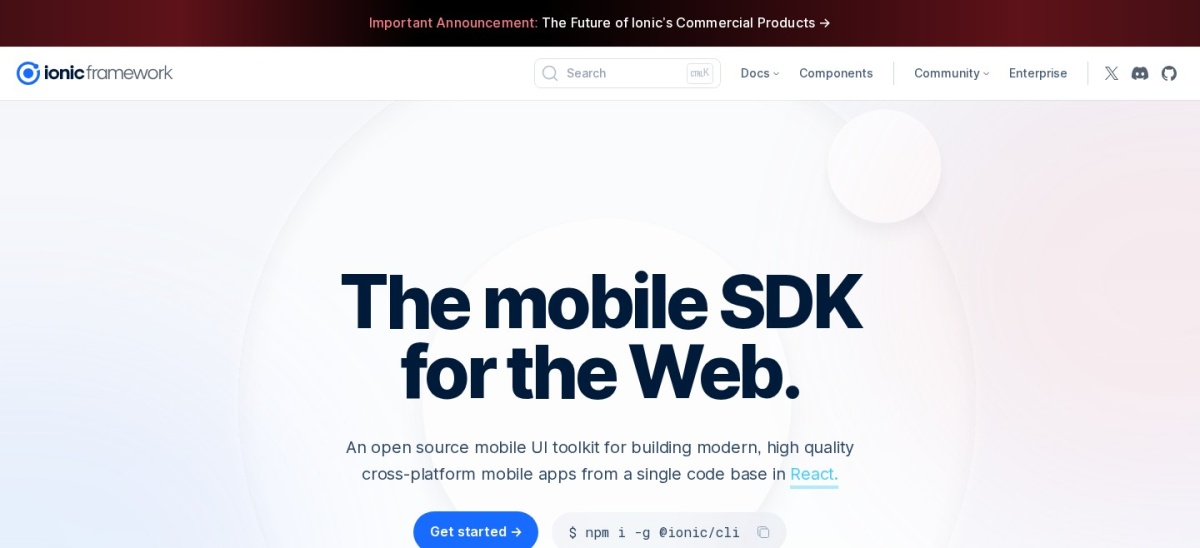
Ionic homepage, captured Nov 2026.
Ionic is an open-source mobile UI toolkit maintained by OutSystems that pairs adaptive web components with the Capacitor native runtime. Frontend developers can build iOS, Android, and Progressive Web Apps using Angular, React, Vue, or plain JavaScript, accessing camera, GPS, and file APIs for free.
The trade off is lower graphics throughput on animation-heavy or compute-intensive interfaces because apps execute inside a native WebView rather than compiling to native UI widgets. The core framework is free under an MIT license, suiting web teams shipping internal tools or content-driven apps quickly.
What we like
Works seamlessly with Angular, React, Vue, or standard JavaScript
Single codebase deploys to iOS, Android, and Progressive Web Apps
Capacitor runtime provides clean access to native device sensors and APIs
Watch out for
WebView rendering lags behind compiled frameworks on heavy 60fps animations
Small third-party native plugin ecosystem compared to React Native
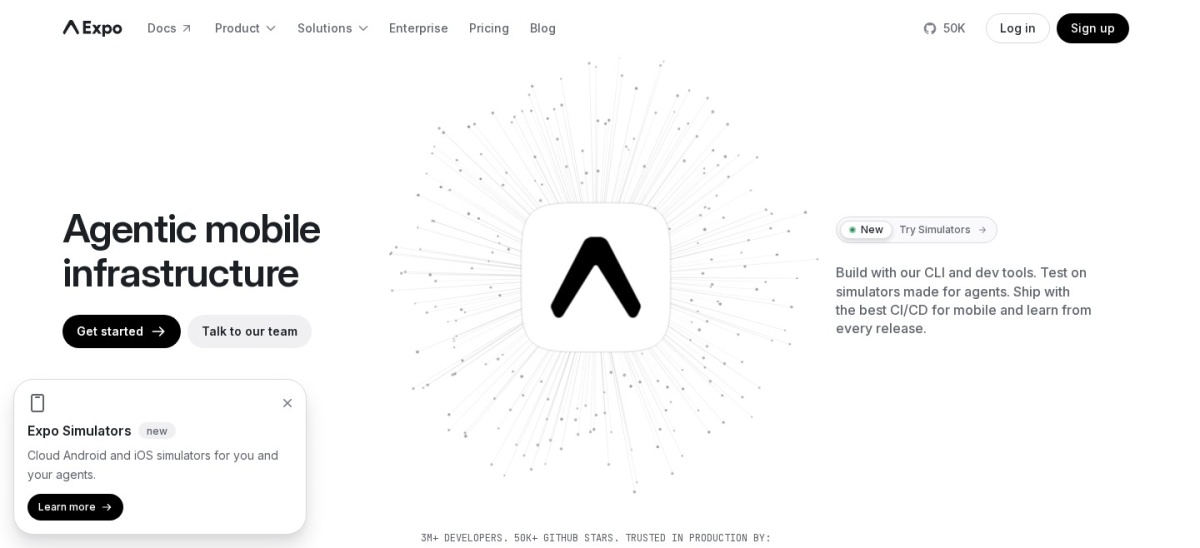
Expo is the officially recommended framework and cloud platform built around React Native, streamlining native configuration, app store submissions, and over-the-air updates. Its free tier includes 15 Android and 15 iOS cloud builds per month, 60 CI/CD workflow minutes, and updates for up to 1,000 monthly active users.
The trade off is usage-based cloud billing once your team outgrows local builds or free quotas, with the Starter plan priced at $19/mo ($228/yr) including $45 in build credit and 3,000 update MAUs. It suits React Native teams wanting managed cloud builds without maintaining macOS build servers.
What we like
Eliminates Xcode and Android Studio setup friction for React Native projects
Includes over-the-air JavaScript updates and automated store submission tools
Generous free tier covers 30 monthly cloud builds and local builds
Watch out for
Production plan jumps to $199/mo plus variable usage charges at scale
Cloud build queues on the free tier run at lower priority
FlutterFlow is a browser-based visual development environment that generates real Flutter and Dart applications for iOS, Android, and the web. Its free plan includes drag-and-drop UI building, up to two Studio projects, and a starter AI generation allowance with direct Firebase and API integrations.
The trade off is subscription lock-in for team collaboration and automated app store deployment, as the Basic plan costs $39/mo regularly or $351 billed yearly (25% off). It suits product teams and agencies that want rapid visual prototyping while retaining full ownership of exportable Flutter source code.
What we like
Exports clean, standard Flutter and Dart source code with no proprietary lock-in
Visual drag-and-drop canvas accelerates UI layout and API binding
Native integrations with Firebase, Supabase, and RevenueCat
Watch out for
Multi-editor team seats require Pro ($80/mo) or Max ($150/mo) plans
Complex custom business logic still requires writing Dart functions
Basic ($39/mo or $351/yr) unlocks unlimited projects, custom domains, and push notifications.Visit flutterflow.io
06
Framework 7
4.3/5on G2 (35 reviews, checked Nov 2026)
PriceFree
Best lightweight UI library for iOS/Android web apps
LanguageHTML, CSS, JavaScript
IntegrationsVue, React, Svelte, Vanilla JS
PackagingCapacitor, Cordova, PWA
LicenseMIT open-source
framework7.io
Framework 7 homepage, captured Nov 2026.
Framework 7 is a free, open-source HTML, CSS, and JavaScript framework designed to build hybrid mobile apps and Progressive Web Apps with authentic iOS and Material Design styling. It bundles ready-made mobile widgets like pull-to-refresh, infinite scroll, and action sheets alongside Vue, React, and Svelte integrations.
The trade off is a narrower platform focus limited primarily to iOS, Android, and web interfaces, paired with smaller community forums than Ionic or React Native. Because it is completely free with no paid plans, it suits front-end developers building lightweight PWAs or Capacitor-wrapped mobile apps.
What we like
Includes pixel-accurate iOS and Material Design UI components out of the box
Supports vanilla JavaScript as well as Vue, React, and Svelte
100% free and open-source under the MIT license
Watch out for
Smaller developer community and slower forum response times
Requires Capacitor or Apache Cordova to package for app stores
No paid tiers exist; all UI components and CLI tools are free.Visit framework7.io
07
Unity
4.5/5on G2 (364 reviews, checked Nov 2026)
Paid from$2,310/yr
Best for 3D, AR/VR, and interactive cross-platform apps
LanguageC#
Targets20+ mobile, desktop, console, XR
Free tierUnity Personal (revenue cap)
Paid entryUnity Pro from $2,310/yr
unity.com
Unity homepage, captured Nov 2026.
Unity is a real-time 2D and 3D cross-platform development engine programmed in C# that deploys to iOS, Android, Windows, macOS, WebGL, consoles, and XR headsets. Its free Unity Personal tier gives individual creators and small studios full access to the editor, physics engine, and asset pipeline.
The trade off is a steep jump in licensing cost once commercial revenue exceeds the Personal tier threshold, with Unity Pro starting at $2,310/yr per seat. It is overkill for standard form-based business apps, but unmatched for mobile games, spatial computing, and interactive 3D visualizations.
What we like
Deploys a single C# project across more than 20 mobile, desktop, and XR platforms
Industry-standard 2D/3D rendering, physics, and animation tooling
Massive Asset Store ecosystem for pre-built 3D models and SDKs
Watch out for
Unity Pro licensing starts at $2,310/yr once commercial thresholds are crossed
High battery usage and large app sizes for standard non-3D utility apps
Unity Pro ($2,310/yr) removes revenue caps and adds priority support and console deployment.Visit unity.com
Custom canvas vs. native widgets vs. WebView
Choosing a cross-platform framework comes down to how it draws pixels on screen. Flutter uses its Impeller engine to render every widget directly onto a hardware-accelerated canvas, guaranteeing identical layouts on older Android phones and modern iPhones.
React Native (and Expo) translates JavaScript component trees into genuine iOS UIKit and Android View primitives, giving apps native scrolling physics and accessibility behaviors automatically. WebView frameworks like Ionic and Framework 7 run inside an embedded browser shell, trading peak animation frame rates for instant reuse of existing web code.
How we chose
We evaluated leading cross-platform application development frameworks across mobile, web, and desktop workflows, focusing on actively maintained SDKs and visual builders with verified G2 user ratings.
All G2 ratings, review counts, and official vendor pricing tiers were checked and verified on 22 Nov 2026 against public G2 profiles and official vendor pricing pages.
We excluded legacy frameworks nearing end-of-life such as Xamarin, tools with fewer than 20 verified G2 reviews, and single-platform native SDKs. No vendor paid for a place, and we do not claim testing for this list.
How to choose a cross-platform development framework
Match your team's existing programming languages and UI performance targets to the right framework architecture before writing production code.
Audit your team's primary programming language. JavaScript and TypeScript teams ramp up fastest on React Native, Expo, or Ionic, whereas C# engineers gravitate toward Unity and teams willing to adopt Dart gain Flutter's unified widget tree.
Decide between native look-and-feel and custom branding. Pick React Native when your app must mirror each operating system's native controls, or choose Flutter when you want a custom brand design system rendered identically on every screen.
Factor in build infrastructure and CI/CD costs. Open-source SDKs cost $0 to download, but compiling iOS binaries without local Mac hardware requires cloud build services like Expo Starter ($19/mo) or third-party CI pipelines.
Verify native hardware and third-party SDK support. Confirm that critical device APIs such as Bluetooth, background geolocation, or in-app purchases have actively maintained plugins before committing to a framework.
FAQ
Are cross-platform development frameworks free to use?
Yes, core open-source frameworks including Flutter, React Native, Ionic, and Framework 7 are completely free under MIT or BSD-style licenses. You only pay for optional cloud build services like Expo ($19/mo), visual builders like FlutterFlow ($39/mo), or Apple ($99/yr) and Google Play ($25 one-time) developer accounts.
Is Flutter or React Native better in 2026?
Both hold a 4.5/5 rating on G2, so the right choice depends on your team. Flutter delivers faster, more consistent custom animations via its Impeller engine, while React Native lets JavaScript and TypeScript developers reuse existing React skills and render genuine native UI widgets.
Can one cross-platform codebase target web and desktop too?
Yes, several frameworks extend beyond iOS and Android. Flutter compiles to web, Windows, macOS, and Linux from the same Dart codebase, while Ionic and Framework 7 deploy directly as Progressive Web Apps alongside mobile builds.
Do cross-platform apps perform as fast as native apps?
For standard business, e-commerce, and social apps, compiled frameworks like Flutter and React Native's New Architecture deliver near-native 60fps performance. Apps requiring heavy 3D graphics or real-time physics should use a dedicated engine like Unity.
What is the difference between React Native and Expo?
React Native is the core open-source framework created by Meta, while Expo is a development framework and cloud platform built on top of React Native. Expo adds pre-configured native modules, over-the-air updates, and cloud builds starting with a free tier and a $19/mo Starter plan.