Dealroom is the best startup scouting software for corporates, with a database of more than 2 million startups and scaleups plus strong European ecosystem data. Wazoku suits teams that want a structured scouting workflow, while Crunchbase fits smaller teams on a budget.
How we make this list: we compare pricing pages, product documentation and public user reviews, then re-check every price before each update. No product paid for a place. Disclosure.
Dealroom is the strongest startup database in this list, rated 4.6 on G2 with the deepest European ecosystem data.
Seven of the nine tools price by quote only; only Crunchbase and Traction Technology publish an entry price.
Crunchbase Pro is the cheapest paid entry here at $79 a month billed yearly, after a $49 first-year offer.
Wazoku and Qmarkets manage the scouting workflow itself, from shortlist to pilot, rather than just the database.
StartUs Insights was left out: it has no public G2, Capterra or Trustpilot rating to check.
How do corporates choose startup scouting software?
Scouting fails when the search and the follow-up live in different places. A good tool covers both: a database wide enough to find the right startups, and a workflow that tracks each one from first call to pilot.
Database size is a starting point, not a verdict. Dealroom lists more than 2 million startups and scaleups, while Crunchbase covers more than 4 million private companies, so the difference is which ecosystems and funding signals each one tracks best.
Quote-only pricing is the norm. Seven of the nine tools in this list publish no price, so shortlist on fit first and get quotes from two or three vendors before comparing features.
Small teams should start with a database, not a suite. Crunchbase Pro or Tracxn Lite covers the search, and you can add a scouting workflow such as Wazoku once the pipeline grows. Our best competitive intelligence software guide covers the wider market-intelligence side.
The 9 best startup scouting software for corporates
01
Dealroom.co
4.6/5on G2 (27 reviews, checked Nov 2026)
PricingCustom/yr
Best startup database for corporates
Database2M+ startups and scaleups
StrengthEuropean ecosystem data
Free trial3 days, Premium
Entry priceQuote only
dealroom.co
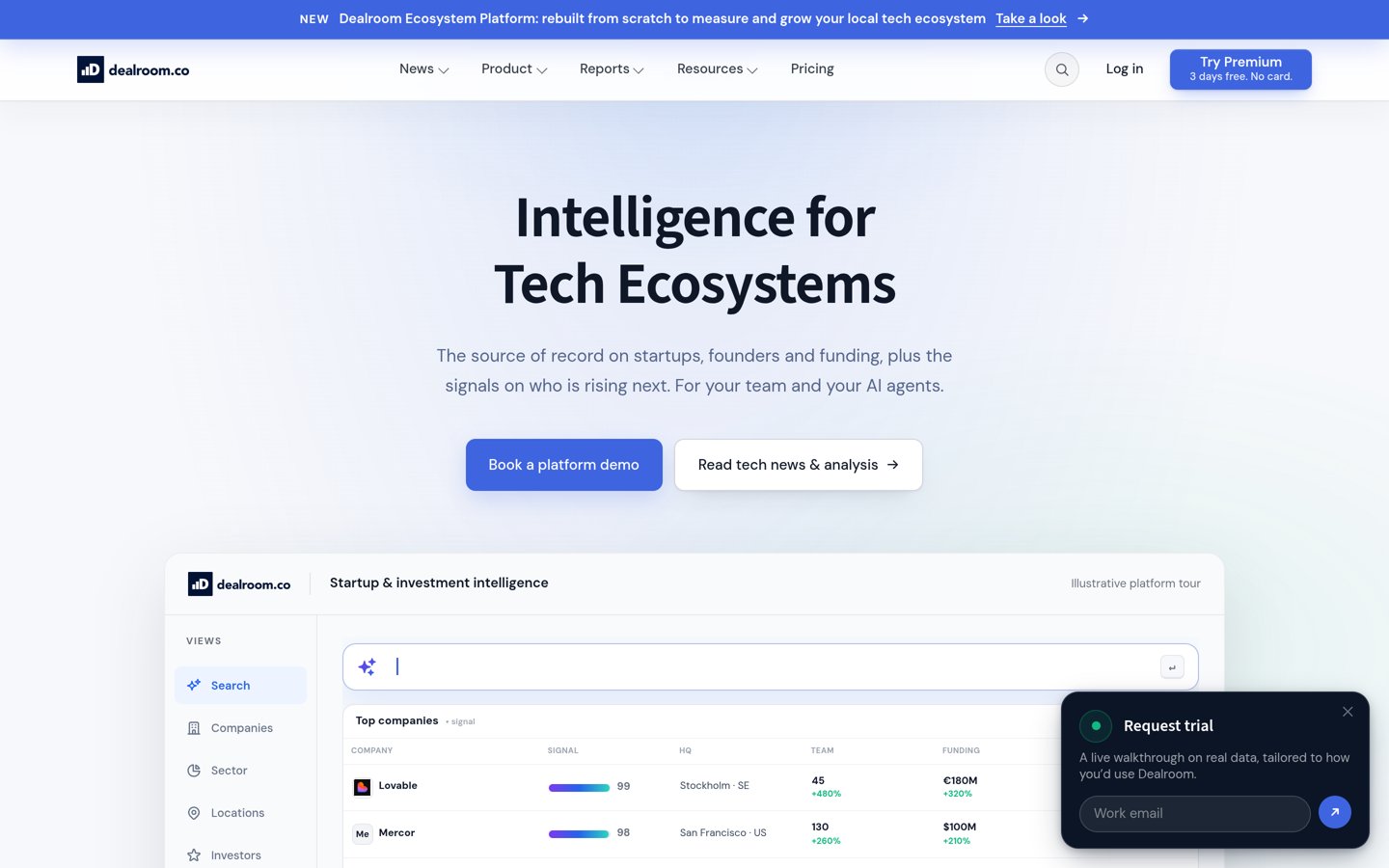
Dealroom.co homepage, captured Nov 2026.
Dealroom.co is a startup intelligence platform that tracks more than 2 million startups and scaleups, founders and funding rounds, with the deepest data on European ecosystems. Teams search, save lists and set alerts for companies that match their scouting brief.
The trade off is price and geography. Entry pricing is by quote and sits at the enterprise end, and the data is strongest in Europe. It suits corporate teams whose scouting briefs centre on European startups.
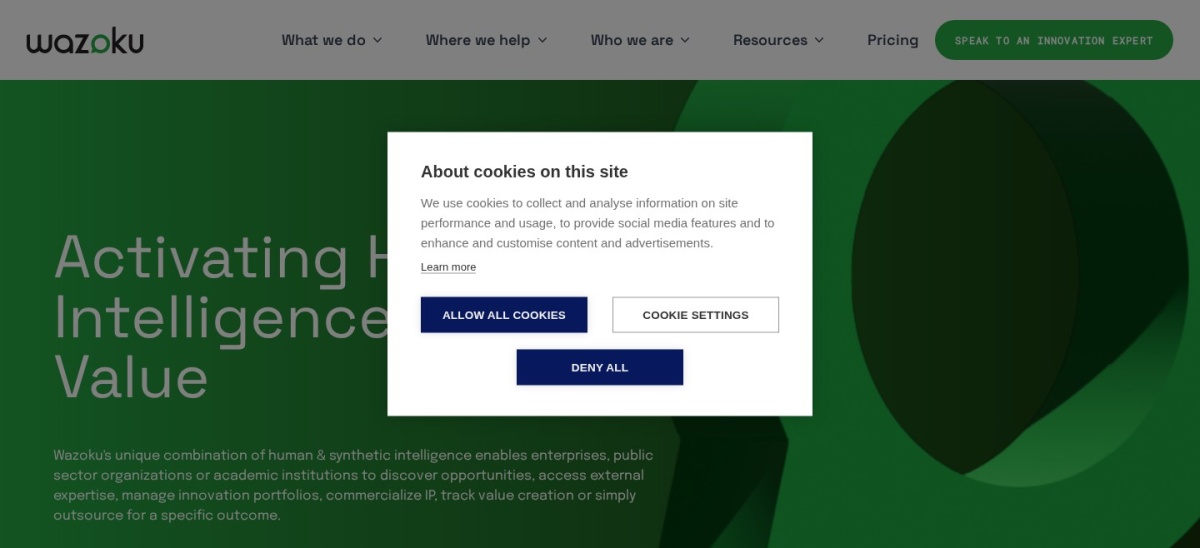
Wazoku is an innovation platform whose Scout product gives corporate teams a structured way to find startups, external technologies and partners around a defined business need. It supports discovery, shortlisting and partner evaluation in one scouting workflow.
The trade off is breadth. Wazoku is stronger on managing the scouting process than on raw database size, and pricing is by quote. It suits enterprise teams that lose track of startups between first call and pilot.
What we like
Structured workflow from brief to pilot
Solver network for defined technical problems
Strong G2 review base of 120 reviews
Watch out for
Quote-only pricing
Smaller company database than Dealroom or Crunchbase
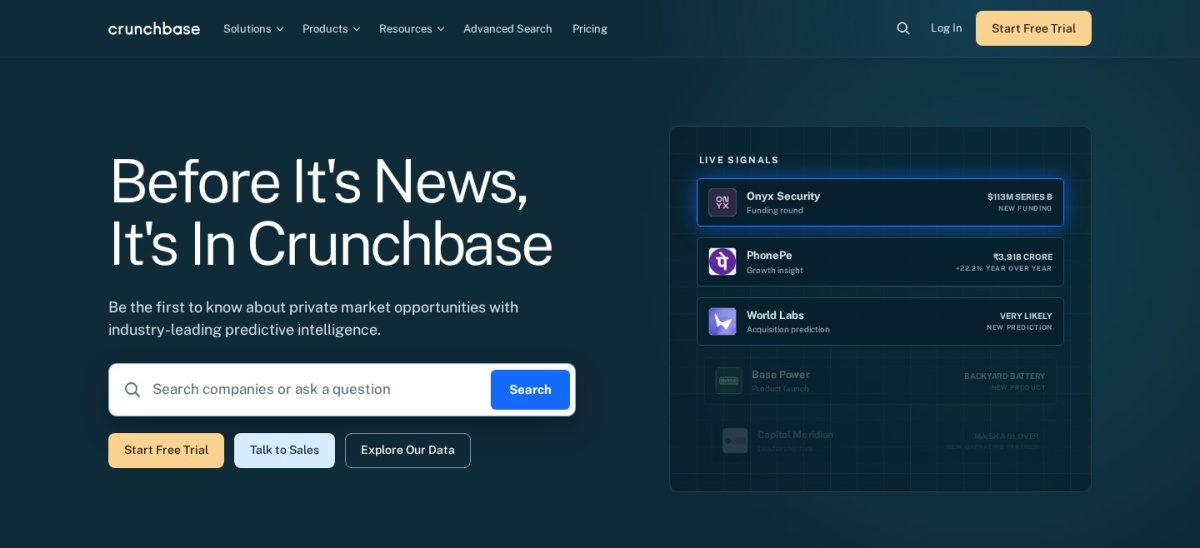
Crunchbase is a private company database covering more than 4 million companies, with funding data, growth signals and AI predictions on which startups are gaining traction. Pro adds full search results, saved lists and alerts for one seat.
The trade off is the first-year price. Pro lists at $79 a month billed yearly, but new buyers pay $49 a month in year one, and the renewal rate is not published. It suits small corporate teams that want to buy without a sales call.
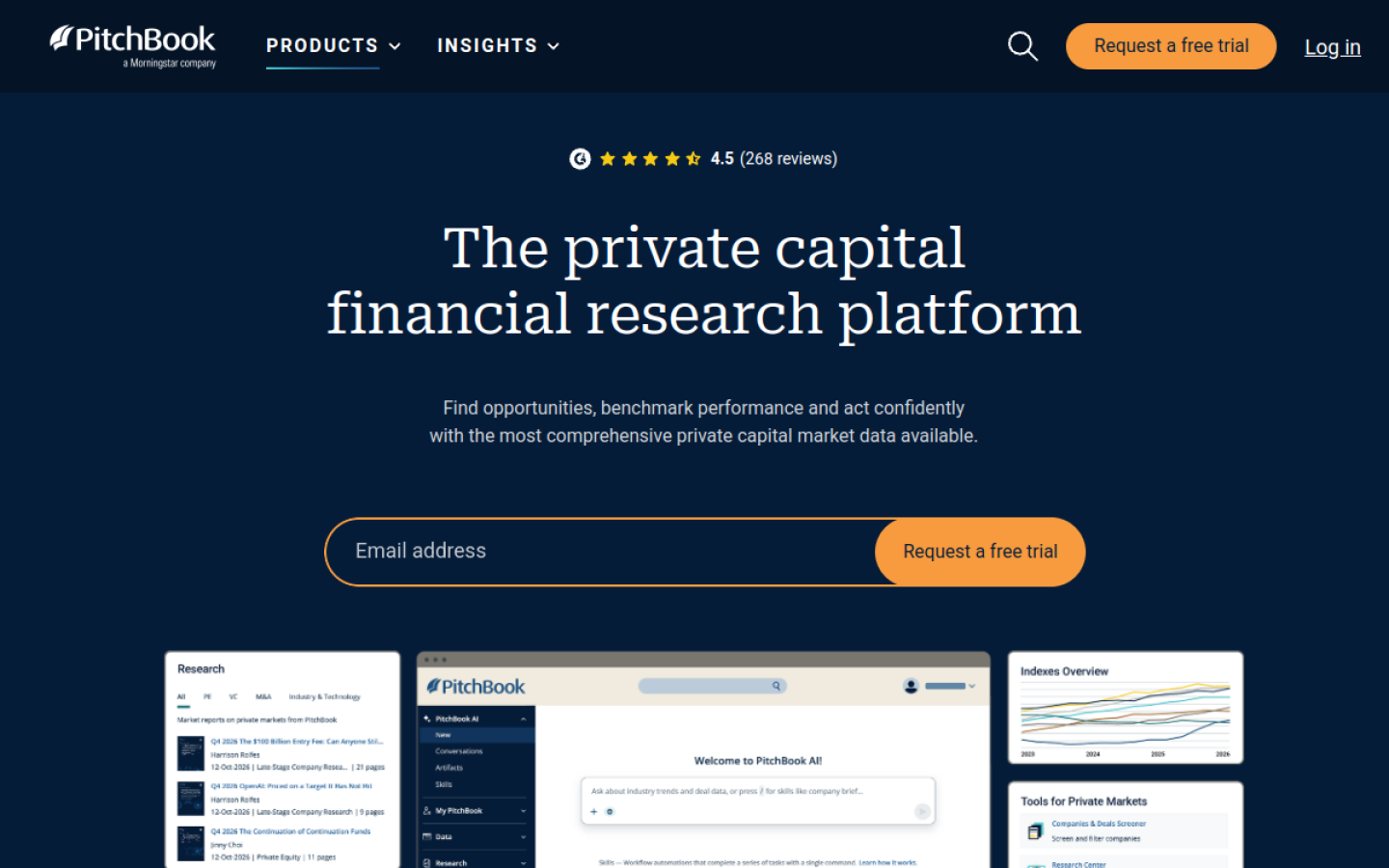
PitchBook is a venture capital and private equity data platform covering about 3 million companies and 1.6 million deals, with funding rounds, valuations and investor profiles. Corporate development teams use it to size markets and track who funds their future competitors.
The trade off is cost. Entry pricing is reported at about $12,000 a year, and there is no self-serve plan. It suits large corporates that need deal-grade data rather than a simple startup list.
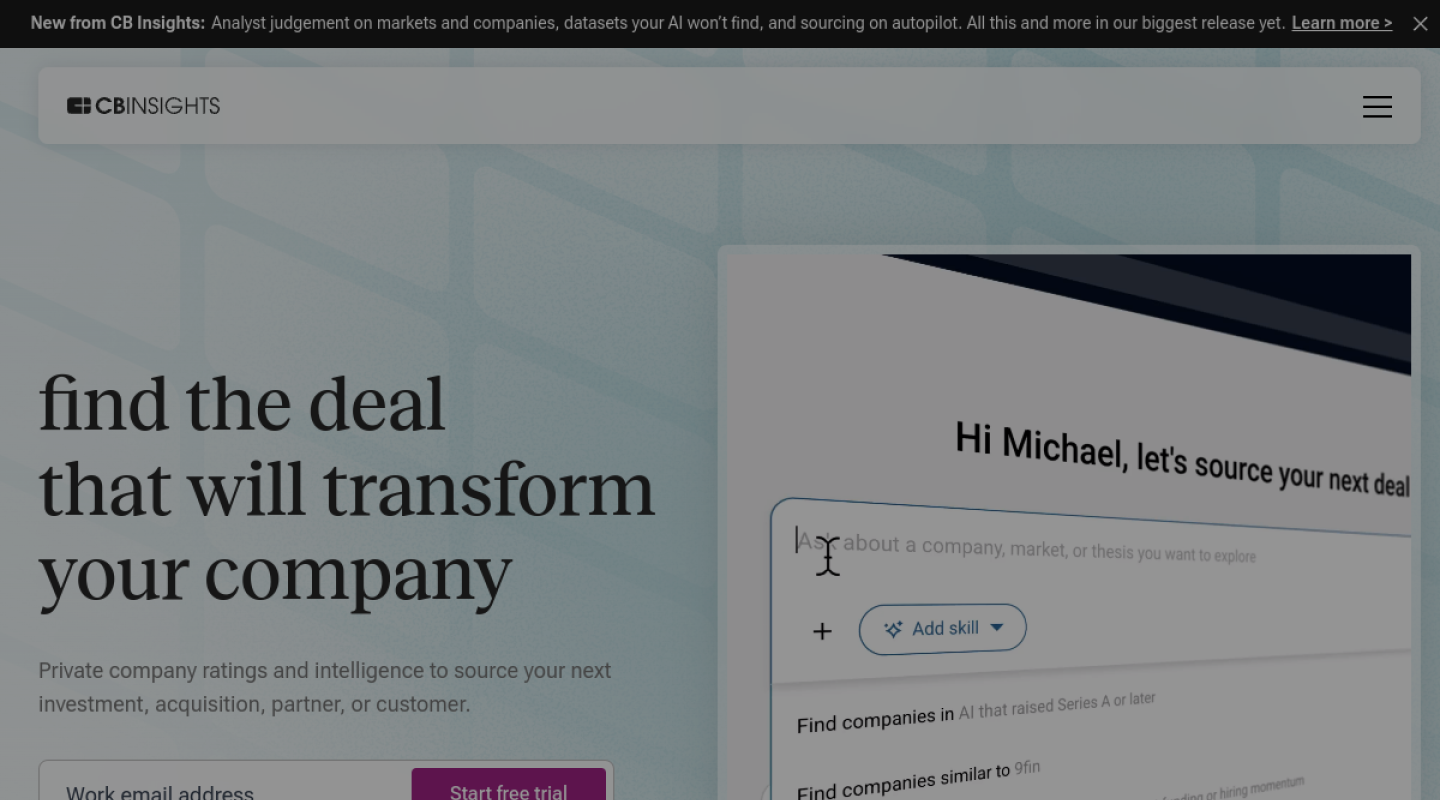
CB Insights is a technology market intelligence platform that analyses venture capital, startups, patents, partnerships and news to score companies and map markets. Its analyst research helps corporate strategy teams spot which technologies are gaining ground.
The trade off is review depth and price. Its G2 sample is only 16 reviews, and enterprise pricing is reported at $50,000 a year and up. It suits large corporate innovation teams with a six-figure data budget.
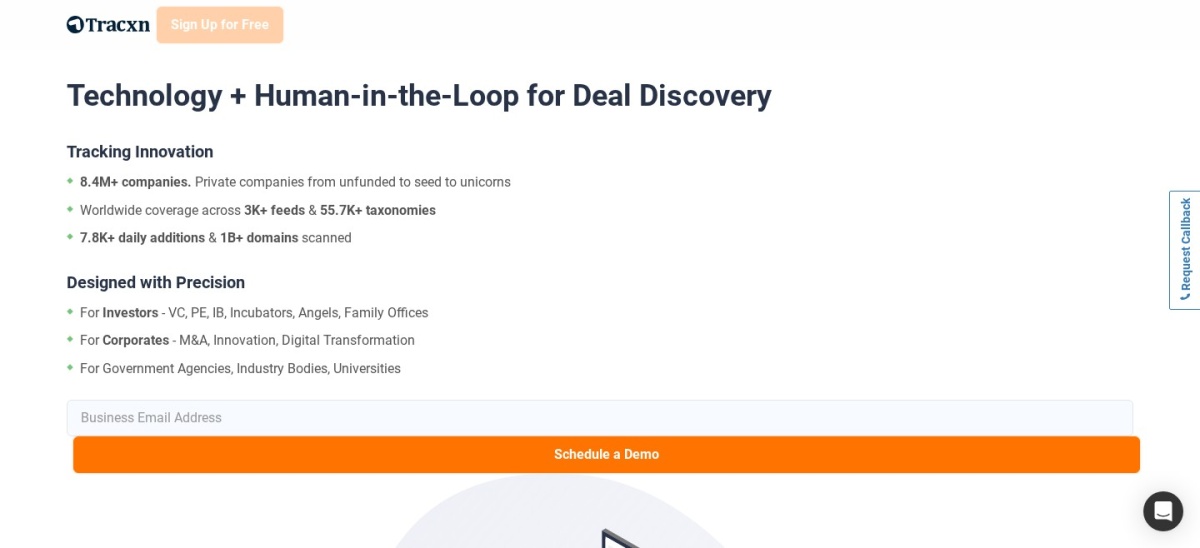
Tracxn is an analyst-led platform with curated profiles of more than 5.5 million companies across 2,900 sectors, built by a team of more than 150 analysts. Its free Lite plan is the cheapest way to start researching startups in this list.
The trade off is limits. Lite caps usage, and exports and alerts sit behind paid plans whose prices are not published. It suits investors and analysts doing sector research before committing to a paid database.
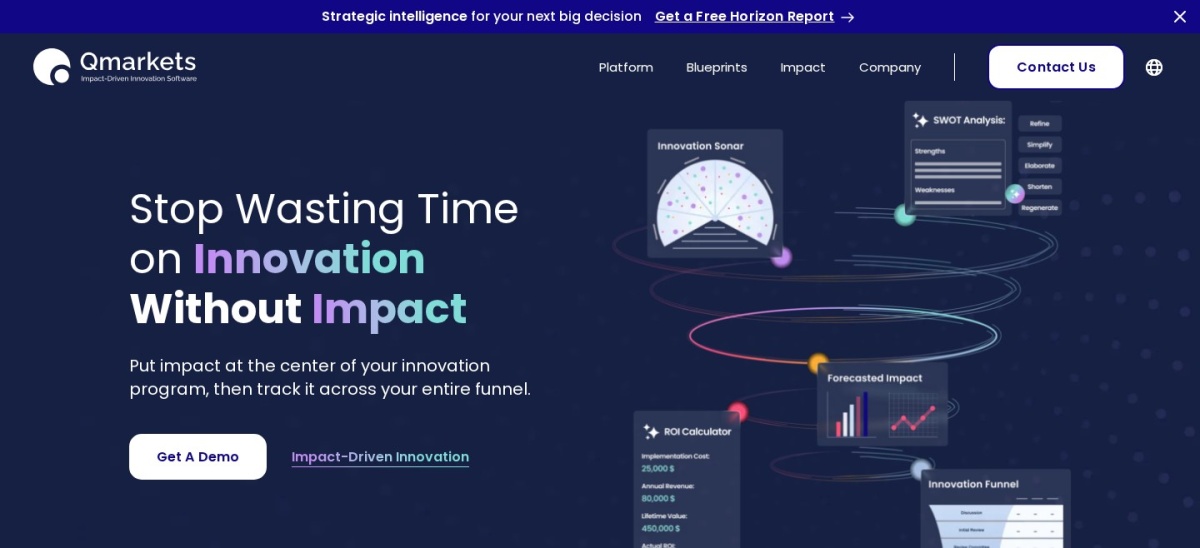
Qmarkets is an idea and innovation management platform with a scouting module, Q-scout, that records startup deal flow beside internal ideas and campaigns. Teams run challenges, collect submissions and track evaluations in one place.
The trade off is scope. Qmarkets is an idea platform first, so pure startup search is thinner than in a dedicated database, and pricing is quote-based. It suits companies that want scouting inside their existing innovation programme.
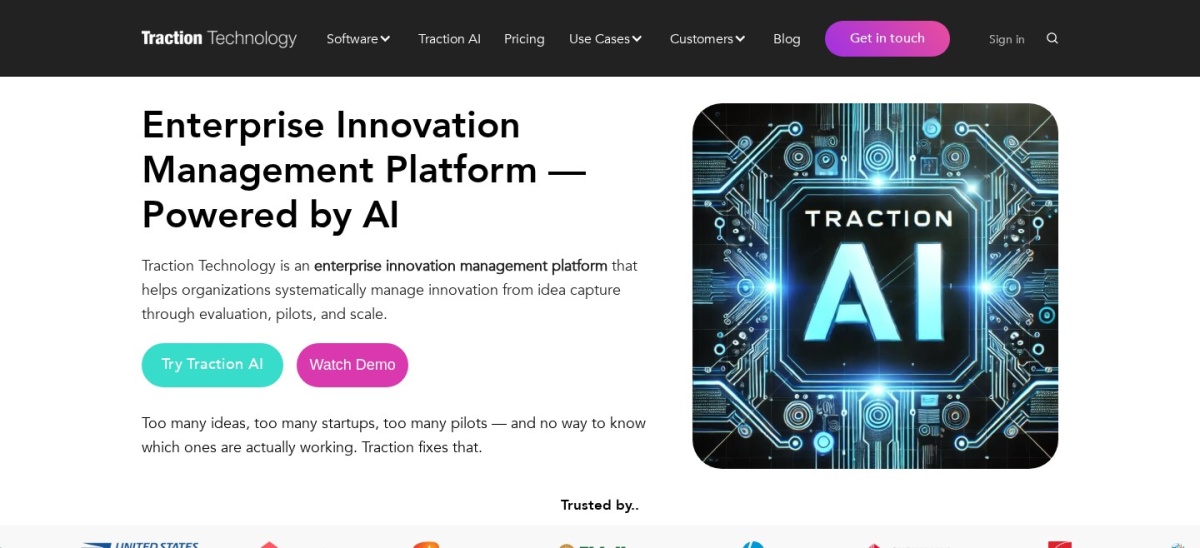
Traction Technology is a scouting pipeline platform for enterprise innovation, R and D and corporate venture teams. It covers AI-assisted company discovery, company snapshots, evaluation workflows, RFI management and pilot tracking in one place.
The trade off is review depth. Its G2 sample is only 10 reviews, and each extra Standard seat adds $4,000 a year. It suits teams that find plenty of startups but lose track of them between first call and pilot.
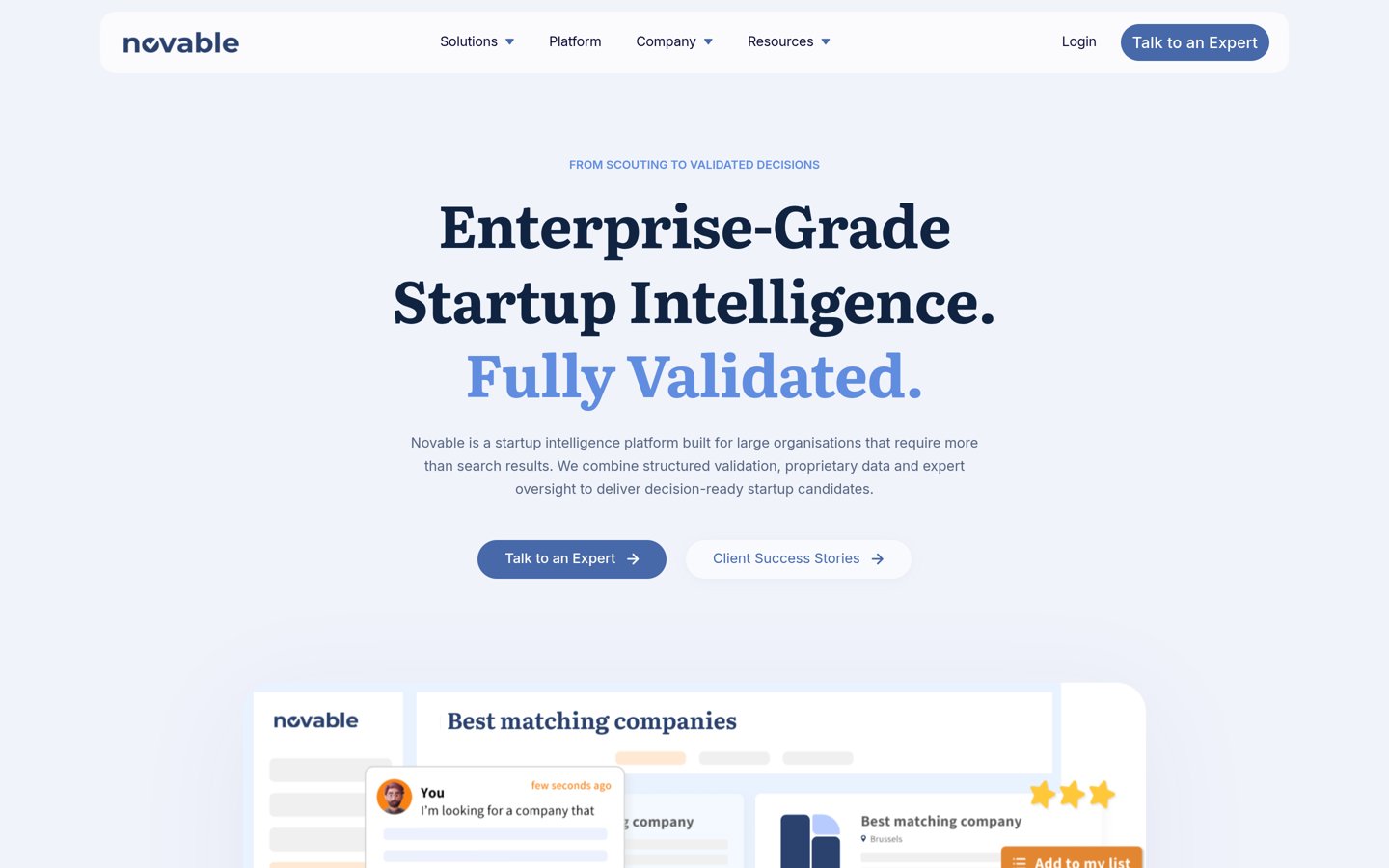
Novable is a startup scouting and validation platform that combines AI matching, expert validation and startup intelligence to build decision-ready shortlists. It is built for large organisations that want more than keyword search results.
The trade off is evidence depth. Its Trustpilot sample is 25 reviews and there is no G2 profile, and pricing is by quote. It suits corporate teams that need a validated shortlist for a specific business priority.
Databases answer the question of what exists. Dealroom, Crunchbase, PitchBook, CB Insights and Tracxn all sell company data first, and the differences are coverage, funding signals and price.
Workflow tools answer the question of what happens next. Wazoku, Qmarkets and Traction Technology track each startup from first call to pilot, so nothing stalls in a spreadsheet.
Most corporate teams end up with one of each. Start with the database, then add the workflow once the pipeline is too big to manage by hand.
How we chose
We started from the scouting databases and pipeline platforms most often shortlisted for corporate innovation teams, then kept the nine with a public G2, Capterra or Trustpilot rating. StartUs Insights was left out because it has no public rating on any of those sites, and Valuer was left out because it no longer sells a scouting product.
Prices come from each vendor's pricing page or vendor-provided G2 pricing, checked on 30 November 2026. Dealroom, Wazoku, PitchBook, CB Insights, Qmarkets and Novable publish no price and sell by quote; Crunchbase Pro lists at $79 a month billed yearly and Traction Technology at $4,000 a year per seat.
We left out tools without a public rating, even when they fit the topic, because a list without review evidence helps nobody. No vendor paid for a place, and we do not claim hands-on testing for this list.
How to choose startup scouting software for corporates
Start with the gap in your process: missing names, lost follow-ups, or unanswered questions.
Name the gap first. If you cannot find startups, buy a database; if you lose track of them, buy a pipeline platform; if you need answers to a technical problem, use a solver network.
Check the database where you scout. Dealroom is strongest in Europe, Crunchbase is widest overall, and Tracxn is deepest on sector taxonomy, so match the data to your geography.
Get quotes from two or three vendors. Most tools here price by quote, so compare the same seat count and scope before you judge features.
Pilot on one scouting brief. Run a single brief through search, shortlist and first calls, then decide whether the workflow or the data did the work.
FAQ
What is the best startup scouting software for corporates in 2026?
Dealroom is the best pick for most corporate teams. Its database covers more than 2 million startups and scaleups with the deepest European ecosystem data, and it is rated 4.6 out of 5 on G2.
How much does startup scouting software cost?
Most tools price by quote, with enterprise plans reported from about $4,000 a year per seat to six figures. The published exceptions are Crunchbase Pro at $79 a month billed yearly and Traction Technology at $4,000 a year per Standard seat.
Is there a free startup scouting tool?
Tracxn Lite is free with usage limits, and Crunchbase has a free account with usage limits. Neither free tier includes exports or alerts, so expect to pay for the features a corporate scouting team actually uses every week.
Which tool is best for a small corporate innovation team?
Start with Crunchbase Pro or Tracxn Lite. Both cover the search cheaply, and you can add a scouting workflow such as Wazoku or Traction Technology once the pipeline grows beyond a spreadsheet.
Dealroom vs Crunchbase: which is better for startup scouting?
Dealroom is better when the brief centres on European startups, with deeper ecosystem and funding signals there. Crunchbase is better for broad global coverage at a lower price, with more than 4 million companies and a published Pro plan.
Do I need a scouting platform or just a startup database?
A database is enough if the job is finding names. A scouting platform earns its place when the job is managing the follow-up: shortlists, evaluations, RFIs and pilots across a team that shares one pipeline.
SaaS SEO and WordPress specialist with about 8 years of experience. Rakib compares WordPress plugins, themes, hosting and software using public pricing, documentation and user reviews. See how we rank.