LaunchDarkly is the best Statsig alternative for most teams, with unlimited seats and flags on its free Developer tier and a 4.5 out of 5 G2 rating from 914 reviews. Pick GrowthBook for warehouse-native statistics at $40 per seat a month, or Flagsmith for open-source flags from $45 a month.
How we make this list: we compare pricing pages, product documentation and public user reviews, then re-check every price before each update. No product paid for a place. Disclosure.
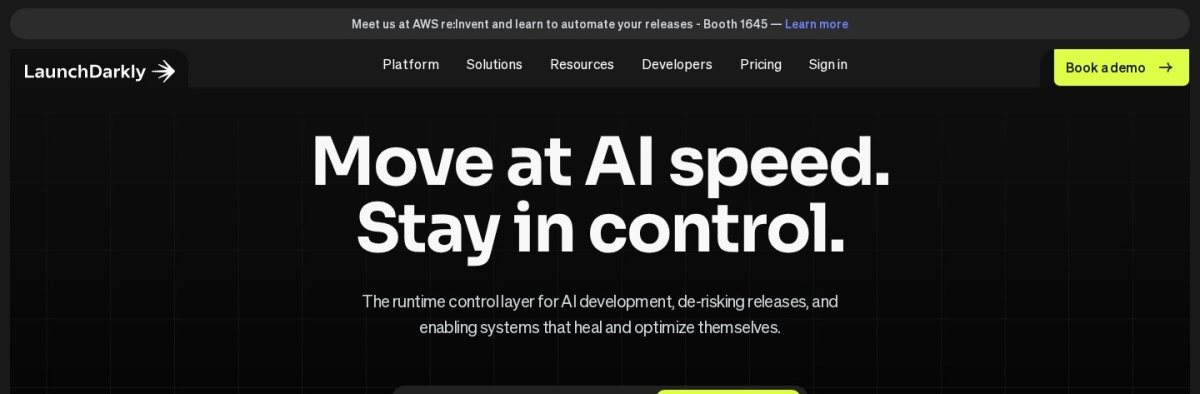
LaunchDarkly is the closest direct replacement: unlimited seats and flags free, 30-plus SDKs, and a 4.5 out of 5 G2 rating from 914 reviews.
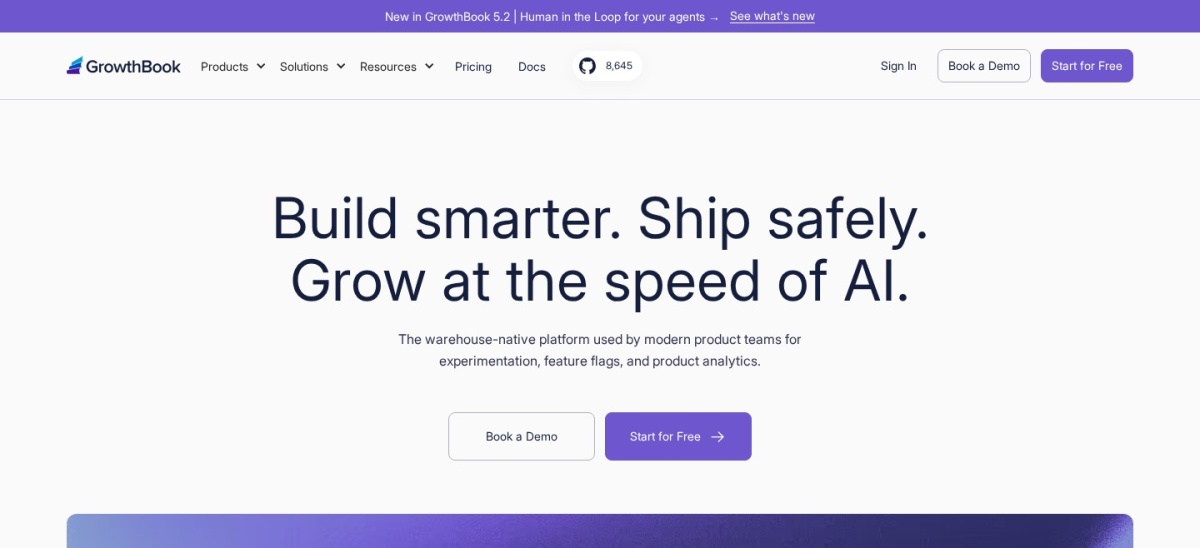
GrowthBook matches Statsig on statistics with Bayesian and Frequentist engines plus CUPED, and its free cloud plan has unlimited flags, experiments and traffic.
Flagsmith is the cheapest paid route at $45 a month, with unlimited flags on its free cloud plan and a free self-hosted edition.
PostHog is the only alternative that bundles flags, experiments, analytics and session replay, with 1,000,000 free requests a month.
Split and Optimizely publish no paid prices, so budget for a sales quote before you shortlist either of them.
How do you choose the best Statsig alternatives?
Statsig ties flags, experiments and analytics to metered events, so the first thing to check in an alternative is what actually gets metered. Some tools charge per seat, others per request, event or monthly active user, and the cheapest option at low volume is rarely the cheapest at scale.
A strong replacement keeps the two halves of Statsig together: safe rollouts and measured results. GrowthBook, PostHog and Split pair flags with a real statistics engine, while Flagsmith, ConfigCat and Unleash are flags-first and rely on another tool for analysis.
Free tiers vary just as much as prices. LaunchDarkly gives unlimited seats and flags free, Flagsmith gives unlimited flags with 50,000 requests a month, and PostHog gives 1,000,000 requests a month, so check the limit that matches how your app actually runs.
Self-hosting is the other real fork in the road. Flagsmith, Unleash and GrowthBook all ship a free self-hosted edition, which matters if flag data must stay inside your own infrastructure. Our guide on setting up a staging site for WordPress shows a safe place to trial a new flag setup first.
LaunchDarkly is the most established feature flag platform in this list, with 30-plus SDKs and unlimited flags on every plan. The free Developer tier includes unlimited seats, unlimited flags with targeting, 1 project and 3 environments, plus A/B tests and multi-armed bandits.
The trade off is price. Foundation is pay-as-you-go, listed at $10 per 1,000 client-side monthly active users a month, with service connections billed on top, so the bill moves with traffic. It suits large or regulated teams that need approvals, audit logs and governed rollouts.
What we like
Unlimited seats and flags on every plan
30-plus SDKs across server, web and mobile
Approvals, audit logs and guarded rollouts
Built-in experimentation with Bayesian and frequentist analysis
Watch out for
Usage-based bill is hard to forecast
SSO, custom roles and full audit history need Enterprise
Free tier allows only 1 project and 3 environments
GrowthBook is an open source feature flag and experimentation platform that analyses results in your own data warehouse. The free cloud Starter plan covers up to 3 users and 1 project with unlimited flags, experiments and traffic, and the self-hosted edition is free with unlimited users.
The trade off is seat pricing on cloud. Pro costs $40 per seat a month for up to 30 users and 3 projects, adding the visual editor, multi-arm bandits and safe rollouts. It suits warehouse-first teams that want strong statistics without per-user traffic charges.
What we like
Open source with a free self-hosted edition
Warehouse-native stats, including CUPED and bandits
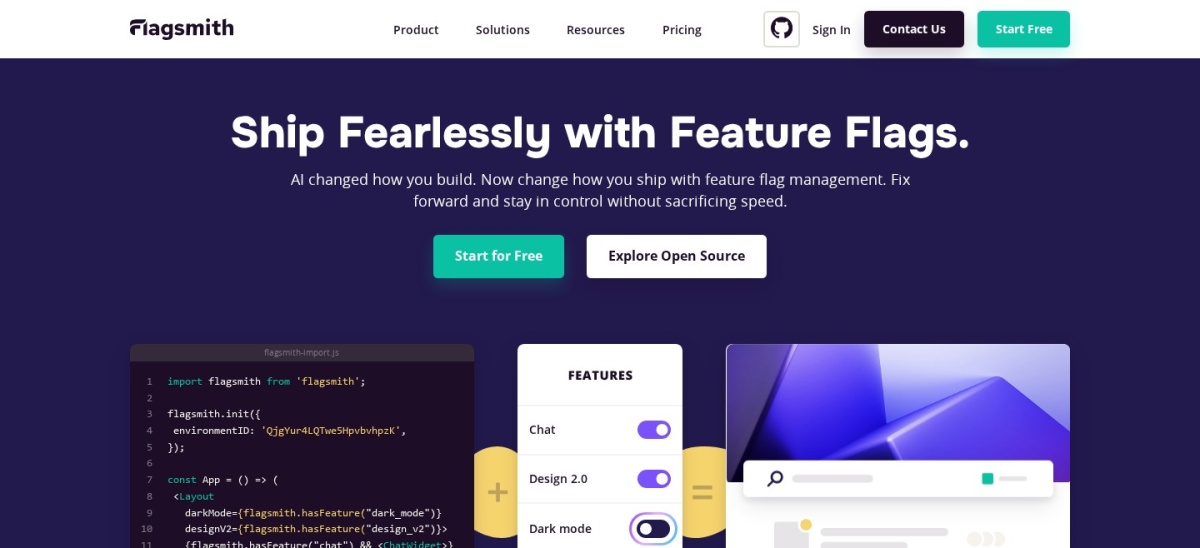
Flagsmith is an open source feature flag and remote config platform, licensed under BSD-3-Clause. The free cloud plan covers unlimited flags, environments and segments for up to 50,000 API requests a month, and the self-hosted edition has no request limit.
The trade off is experimentation depth. A/B and multivariate testing need the Start-Up plan at $45 a month, which raises the limit to 1 million requests, and there is no built-in stats engine. It suits small teams that want open source flags at a predictable price.
What we like
Open source with a free self-hosted edition
Remote config alongside boolean flags
Unlimited flags on the free cloud plan
Low $45-a-month starting price
Watch out for
A/B testing needs the paid Start-Up plan
No built-in experimentation statistics
Enterprise controls such as SSO sit on higher tiers
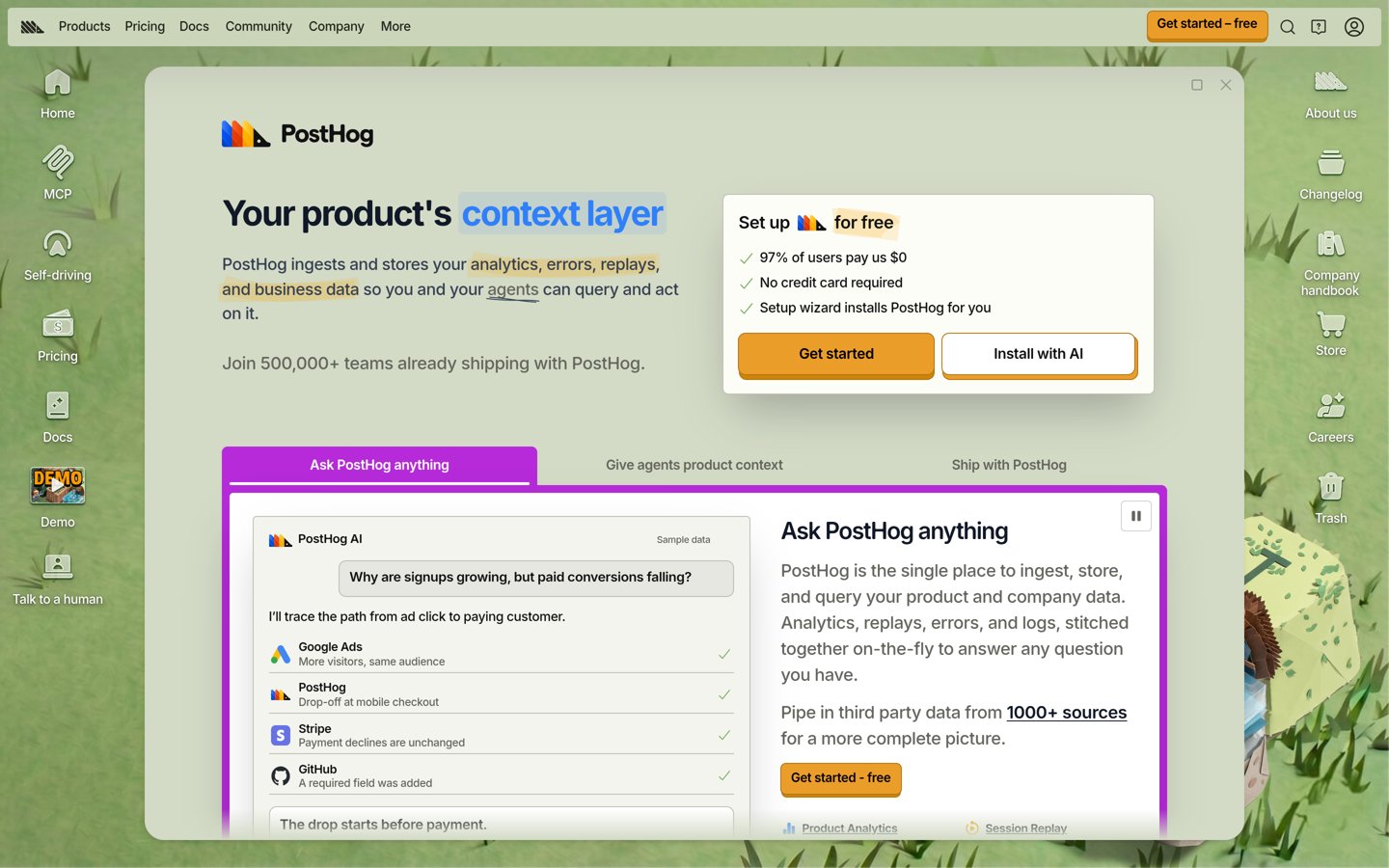
PostHog is an open-source developer platform that combines feature flags, A/B experiments, product analytics and session replay in one workspace. Its free tier resets monthly and includes 1,000,000 feature flag and experiment requests plus 1,000,000 analytics events, with native SDKs for iOS, Android, React Native and Flutter.
The trade off is usage-based billing. Once you pass 1,000,000 monthly requests, flag checks cost $0.0001 each, and identified user profiles carry separate event charges as volume grows. It suits product engineers who want to launch a flag, measure a funnel and watch session replays without wiring up separate vendors.
What we like
1,000,000 monthly requests free for flags and experiments
Experiment exposure tied to funnels, retention and replays
High-frequency flag checks can consume the request quota fast
Analytics events and person profiles are metered separately
Usage bill is harder to forecast at very high volume
Paid usage starts after 1,000,000 requests at $0.0001 eachVisit posthog.com
05
ConfigCat
4.7/5on G2 (46 reviews, checked Nov 2026)
Paid from$110/mo
Best flat pricing with unlimited seats
Free flags10
Free downloads5 million/mo
SeatsUnlimited, all plans
Paid planPro, $110/mo
configcat.com
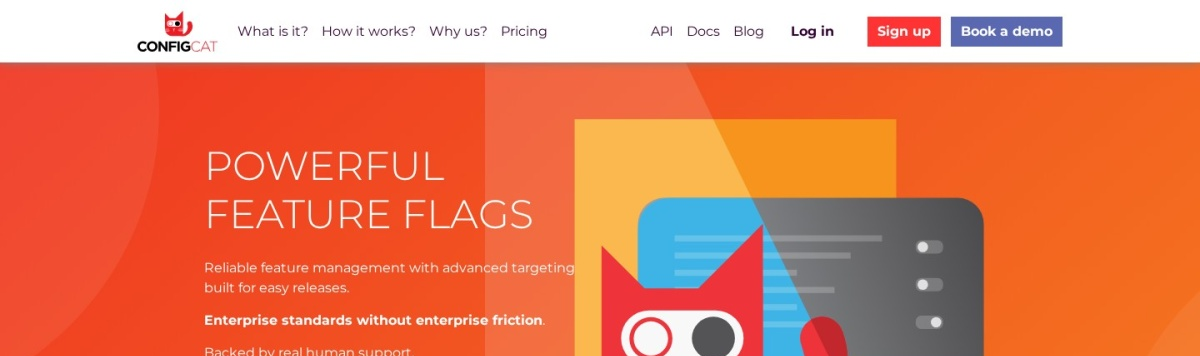
ConfigCat homepage, captured Nov 2026.
ConfigCat is a feature flag and remote config service with unlimited seats on every plan. The free plan includes 10 feature flags, 2 environments, 2 products and 5 million config downloads a month, with SDKs for JavaScript, .NET, Java, Go, Python and more.
The trade off is the free plan's caps. Ten flags and 2 environments cover a small product, but a growing team will need Pro at $110 a month for 100 flags and 25 million downloads. It suits teams that want flat, predictable pricing without per-seat billing.
What we like
Unlimited seats on every plan
Flat pricing with no per-user charges
Free plan includes 5 million downloads a month
SDKs for 19 languages and frameworks
Watch out for
Free plan allows only 10 flags
No built-in experimentation or stats engine
Smart plan at $325 a month is needed for unlimited flags
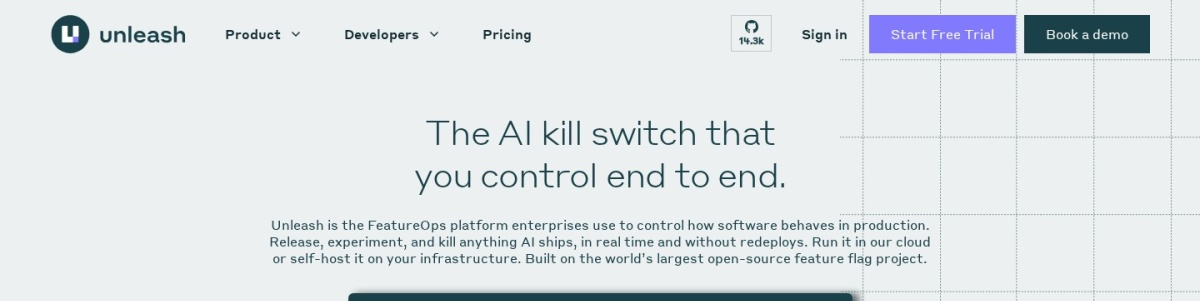
Unleash is the longest-running open source feature flag platform in this list, in use since 2014. The free self-hosted edition covers 1 project, 2 environments and 5,000 flags with no seat limit, and flags are evaluated locally in your apps by 25-plus SDKs.
The trade off is per-seat pricing on the managed plans. Pay-As-You-Go costs $75 per seat a month with a 5-seat minimum for self-hosted, and includes 53 million API requests a month. It suits regulated teams that need open source control and in-app flag evaluation.
What we like
Open source with a free self-hosted edition
Flags evaluated locally, so user data stays in-house
25-plus SDKs
Unlimited client-side users on paid plans
Watch out for
Paid cloud starts at $75 per seat a month
No native experimentation suite
Open source edition allows only 1 project and 2 environments
Pay-As-You-Go adds SSO, approvals and a 99.9% uptime commitmentVisit getunleash.io
07
DevCycle
4.5/5on G2 (36 reviews, checked Nov 2026)
Paid from$500/mo
Best flags-first tool for developers
Free MAUs1,000
Business MAUs100,000 included
Events500,000/mo (Business)
Paid planBusiness, $500/mo
devcycle.com
DevCycle homepage, captured Nov 2026.
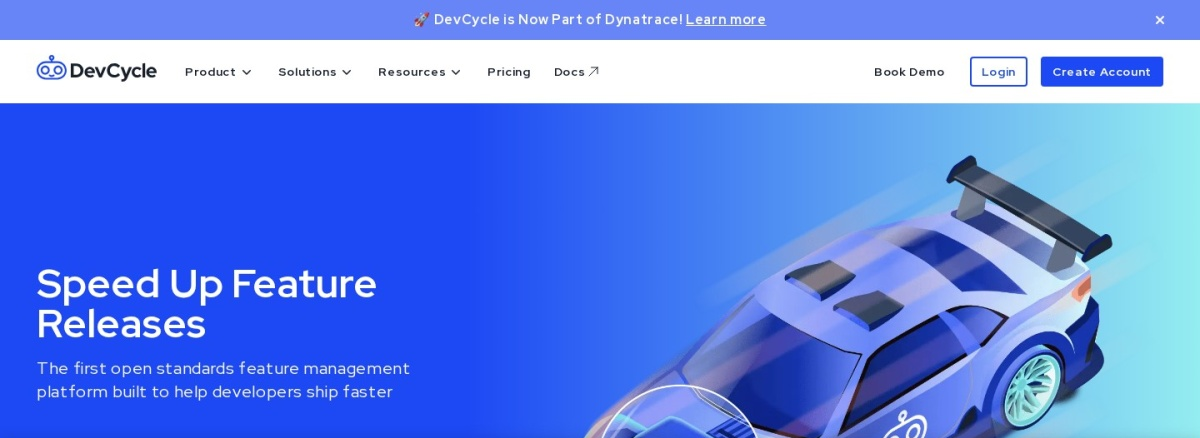
DevCycle is a feature flag platform with edge-based local evaluation and A/B testing on every plan. The free plan includes unlimited seats, flags, environments and projects for up to 1,000 client-side monthly active users, and Dynatrace acquired DevCycle in January 2026.
The trade off is the jump to paid. Business costs $500 a month billed annually, or $625 a month billed monthly, and includes 100,000 monthly active users and 500,000 events a month. It suits developer-led teams that want flags first with simple usage-based pricing.
What we like
A/B testing on the free plan
Unlimited seats, flags and environments
Edge-based flag evaluation
OpenFeature-native SDKs
Watch out for
Big jump from free to the $500-a-month Business plan
Statistics are limited to z-tests and t-tests
Business is $500 a month only on annual billing
Business adds roles, audit logging and 100,000 monthly usersVisit devcycle.com
08
Split (Harness FME)
4.7/5on G2 (145 reviews, checked Nov 2026)
PricingCustom/yr
Best for impact analysis with flags
Free flags50
Free seatsUp to 10
ExperimentationBuilt-in impact analysis
Paid planCustom quote
split.io
Split (Harness FME) homepage, captured Nov 2026.
Split is a feature management and experimentation platform, now sold as Harness Feature Management and Experimentation after Harness acquired Split in 2024. It pairs flags with impact analysis that ties a flag change to business metrics, with 15-plus open source SDKs.
The trade off is pricing transparency. The free tier covers up to 10 seats, 50 flags and 2 environments, but Harness publishes no paid dollar figure, and third-party reports put the Teams plan at $33 per seat a month. It suits teams already using Harness that want flags and experiments together.
What we like
Strong impact analysis tied to flag changes
Built-in experimentation with rigorous statistics
Free tier with 10 seats and 50 flags
15-plus open source SDKs
Watch out for
No published paid price; quotes only
Free tier caps at 50 flags
Direction is now tied to the wider Harness platform
Paid plans add SSO, audit logs and data exportVisit split.io
09
Optimizely Feature Experimentation
4.3/5on G2 (117 reviews, checked Nov 2026)
PricingCustom/yr
Best for rigorous stats at scale
Free planRollouts, unlimited flags
Experiments1 at a time free
SDKs12+
Paid planCustom quote, MAU-based
optimizely.com
Optimizely Feature Experimentation homepage, captured Nov 2026.
Optimizely Feature Experimentation is the server-side flag and experimentation product in the Optimizely platform. The free Rollouts plan includes unlimited feature flags with one experiment at a time, and paid plans add its Stats Engine with sequential, Bayesian and frequentist analysis.
The trade off is cost and opacity. Paid plans are billed by monthly active users and need a sales quote, with third-party estimates starting near $36,000 a year. It suits large, data-mature teams that need rigorous statistics and governance at scale.
Statsig Pro costs $150 a month for 5 million events, so an alternative only saves money if its meter fits your traffic. Per-seat tools such as GrowthBook at $40 and Unleash at $75 a month are easy to forecast from headcount, but the bill grows every time a new teammate needs access.
Usage-based tools such as LaunchDarkly from $10 a month, PostHog at $0.0001 a request and DevCycle at $500 a month charge by traffic or events instead, so a quiet month costs less and a busy launch costs more.
Flat tools such as ConfigCat at $110 a month and Flagsmith at $45 a month keep the bill steady, with limits on flags, requests or downloads instead of seats.
Quote-only tools such as Split and Optimizely need a sales conversation before you can budget at all, so ask for a written quote early and check what counts toward the meter.
How we chose
We started from the feature flag and experimentation tools that appear most often in G2, Capterra and developer comparisons of Statsig, then kept nine established products with a public free plan or free tier.
Prices come from each vendor's pricing page, checked on 25 November 2026. Ratings come from G2 on the same day. Where a vendor shows a sale or a monthly-versus-annual rate, the list shows the regular price.
We left out tools with no public pricing and no free tier, and tools that are only a small part of a wider suite. No vendor paid for a place, and we do not claim hands-on testing for this list.
How to choose a Statsig alternative
Start with what Statsig does for you today, then match the replacement to that job.
Count what Statsig meters for you. Check your monthly events, flag checks and seats. A per-seat tool wins if events are high and the team is small; a usage tool wins if the team is large and traffic is spiky.
Decide if you need experiments, not just flags. If every release needs a measured result, pick GrowthBook, PostHog or Split. If you only need safe rollouts, a flags-only tool such as ConfigCat or Flagsmith costs less.
Check the free tier's real limit. Some free plans cap flags, others cap requests, events or users. Trial new flags on a staging copy first; our guide on setting up a staging site for WordPress shows the setup.
Ask for the quote early. Split and Optimizely publish no paid prices. Get a written quote before you shortlist them, and check what counts toward the meter.
FAQ
What are the best Statsig alternatives?
LaunchDarkly is the best Statsig alternative for most teams. Its free Developer tier includes unlimited seats and flags, it is rated 4.5 out of 5 on G2 from 914 reviews, and it covers approvals, audit logs and guarded rollouts for large teams.
How much do Statsig alternatives cost?
Paid plans start at $10 a month for LaunchDarkly usage-based Foundation, $40 per seat a month for GrowthBook Pro and $45 a month for Flagsmith Start-Up. DevCycle Business costs $500 a month, while Split and Optimizely publish no prices and need a sales quote.
Is there a free alternative to Statsig?
Yes. Every tool in this list has a free plan or free tier. Flagsmith is the best free option for flags alone, with unlimited flags and a free self-hosted edition, while PostHog is the strongest free choice if you also want experiments, analytics and session replay.
Which Statsig alternative is best for small teams?
Flagsmith is the best pick for small teams that want open-source flags at a predictable price, starting at $45 a month. GrowthBook is better if the team already has a data warehouse and wants strong statistics without paying per event.
LaunchDarkly vs GrowthBook: which is the better Statsig alternative?
LaunchDarkly is better for governed rollouts at scale, with approvals, audit logs and 30-plus SDKs. GrowthBook is better for measurement, with warehouse-native Bayesian and Frequentist analysis plus CUPED, and its per-seat price stays flat as traffic grows.
Can I self-host a Statsig alternative?
Yes. Flagsmith, Unleash and GrowthBook all offer free self-hosted editions. Flagsmith is simplest for flags plus remote config, Unleash suits regulated teams that need local flag evaluation, and GrowthBook adds warehouse-native experimentation.
SaaS SEO and WordPress specialist with about 8 years of experience. Rakib compares WordPress plugins, themes, hosting and software using public pricing, documentation and user reviews. See how we rank.