Dash is the best Streamlit alternative for Python teams, rated 4.8/5 on G2, because it builds data apps in pure Python with Plotly charts and no JavaScript. Superblocks suits governed enterprise apps, while Retool is the fastest pick for polished internal dashboards.
How we make this list: we compare pricing pages, product documentation and public user reviews, then re-check every price before each update. No product paid for a place. Disclosure.
Dash is the only pick that matches Streamlit's pure-Python workflow, and it holds the highest rating here at 4.8/5 on G2.
Six of the 9 tools have a free plan, and the cheapest paid plans run from $10 to $36 a month.
Superblocks and DronaHQ both start at $100 a month on annual billing, the highest entry prices in this list.
Gradio, Shiny, Voila and Panel have no usable G2 or Capterra rating, so they could not be ranked under the brief's rules.
Dash Enterprise pricing is quote-only, so budget for a sales conversation if you need managed hosting and SSO.
How do you choose between Streamlit alternatives?
Streamlit turns a Python script into a shareable data app with very little code, so the first question is how much of that simplicity you are willing to give up. A pure-Python framework keeps your existing code and skills, while a drag-and-drop builder trades code for speed and a visual editor.
The second question is who the app is for. An internal dashboard for five analysts has different needs from a customer-facing app with permissions, audit logs and single sign-on. The governed picks in this list cost more because they carry those controls.
Price is the third filter, and it is rarely one number. Most builders charge per builder, per editor or per user, so a $10 seat can pass $100 a month once viewers count. Our guide on adding Google Analytics 4 to WordPress shows the same habit of checking what a free plan really covers before paying.
Finally, check the rating base behind each score. Dash leads on 36 G2 reviews while Hex rests on 433, so a high score on a small base is a weaker signal than the same score on hundreds of reviews.
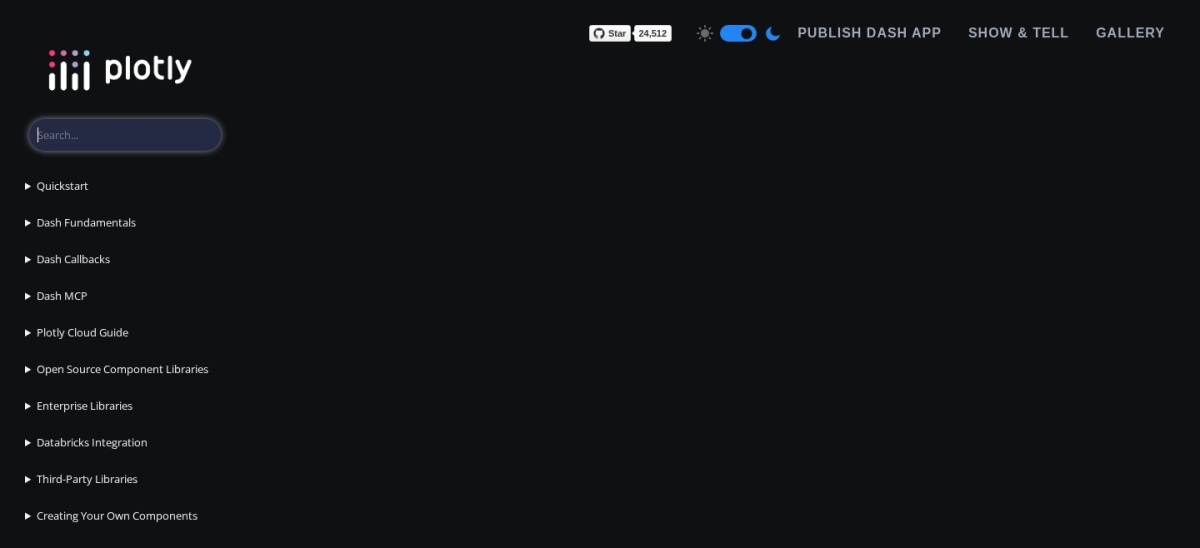
Dash is a free, open-source Python framework from Plotly for building analytical web apps. You define layouts as Python objects and wire interactivity with callbacks, and the built-in Plotly charts cover more than 50 chart types including maps, with no JavaScript required.
The trade off is structure and hosting. Dash apps are organised like conventional web apps, so a complex multi-page app takes more code than a Streamlit script, and managed hosting with SSO comes only through Dash Enterprise at a custom quote. It suits Python teams that outgrew Streamlit's script model.
What we like
Pure Python, so existing data code carries over
Highest rating in this list at 4.8/5 on G2
Free MIT-licensed framework you can self-host
Large component ecosystem, including AG Grid and Bootstrap
Watch out for
Managed hosting and SSO are quote-only
More boilerplate than Streamlit for simple apps
Rating rests on only 36 G2 reviews
Dash Enterprise adds managed hosting, SSO and scaling at a custom priceVisit plotly.com
02
Superblocks
4.7/5on G2 (190 reviews, checked Nov 2026)
Starts at$100/mo
Best for governed enterprise apps
BuildingClark AI agent plus visual
GovernanceRBAC, audit logs, SSO
Free planNo, 14-day trial
Paid planTeams, $100/mo annual
superblocks.com
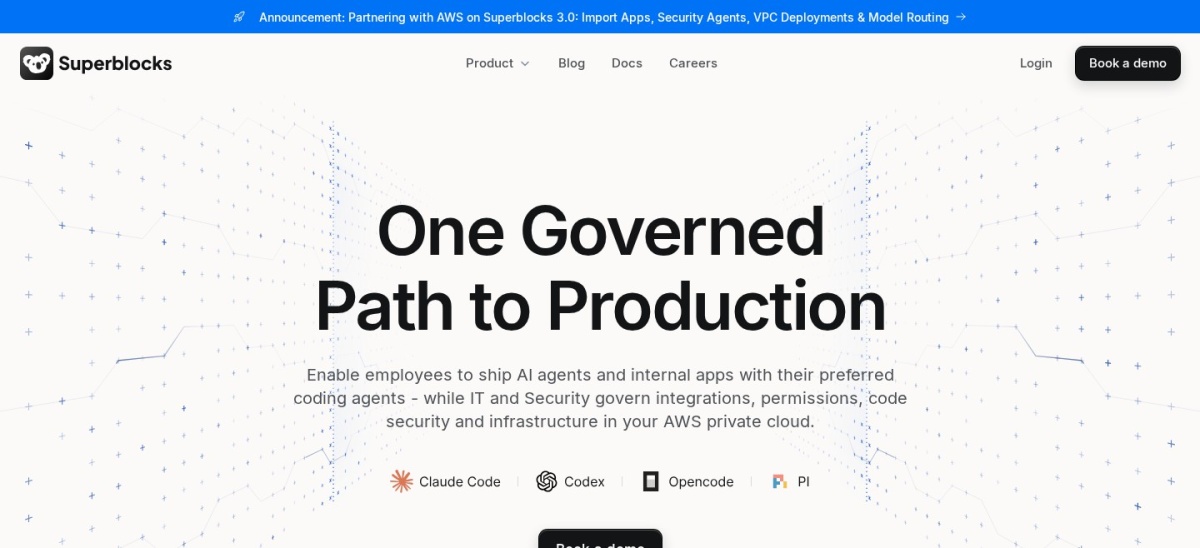
Superblocks homepage, captured Nov 2026.
Superblocks is an enterprise platform for building and governing AI-generated internal apps. Business teams prompt its Clark agent to generate apps on company data, while IT controls integrations, permissions and audit logs from one place, and apps can deploy inside your own cloud.
The trade off is price and process. Teams starts at $100 a month per AI builder on annual billing, with no permanent free plan, and the governance setup suits organisations rather than solo builders. It suits teams whose apps must pass a security review before they ship.
What we like
AI agent builds full apps from a prompt
Strongest governance in this list
Deploys in your own cloud or VPC
190 G2 reviews behind the 4.7/5 rating
Watch out for
No permanent free plan, only a 14-day trial
$100 a month per builder is a steep entry price
Overkill for a single simple dashboard
Enterprise adds VPC deployment, SCIM and dedicated support at a custom priceVisit superblocks.com
03
Retool
4.6/5on G2 (383 reviews, checked Nov 2026)
Paid from$10/mo
Best for polished internal dashboards
BuildingDrag-and-drop plus code
Data sources100+ databases and APIs
Free planYes, up to 5 users
Paid planTeam, $10/builder/mo
retool.com
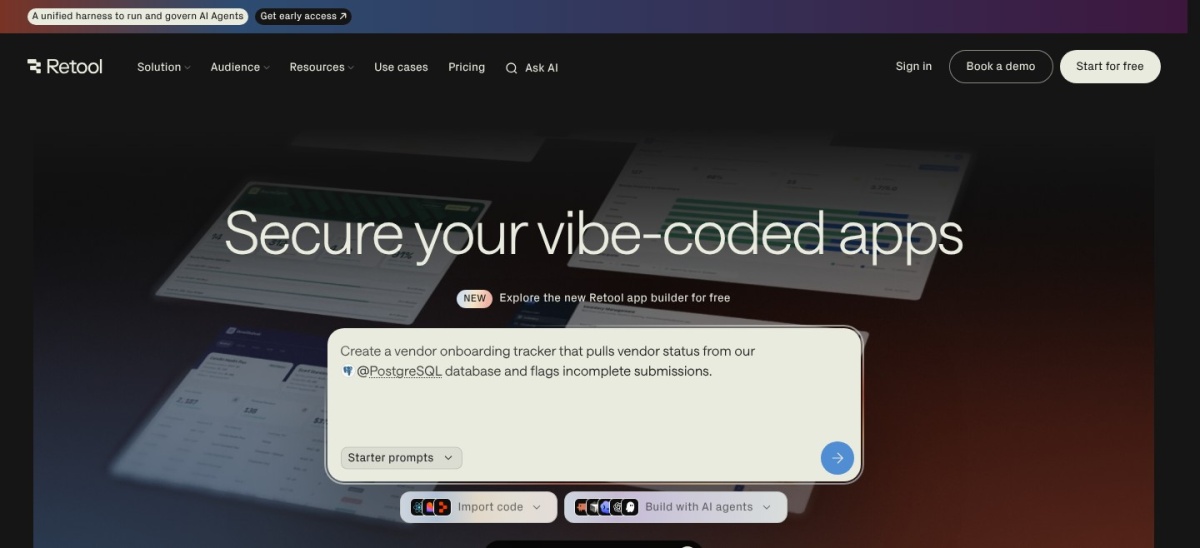
Retool homepage, captured Nov 2026.
Retool is a low-code platform for building internal tools, admin panels and dashboards on live company data. The free plan covers up to 5 users with unlimited web and mobile apps, 500 workflow runs a month and full API and database connectivity.
The trade off is seat pricing. Team costs $10 per builder and $5 per internal user a month on annual billing, so the bill grows with everyone who logs in, and audit logs and external users need Business at $50 a builder. It suits teams that want a polished dashboard fast.
What we like
Largest review base in this list at 383 G2 reviews
Free plan is genuinely usable for small teams
Cheapest paid entry here at $10 a builder a month
Prebuilt components and workflow automation included
Watch out for
Builders and viewers are billed separately
Performance can slow on very complex apps
External users need the $50 Business plan
Business adds audit logs, permissions and external users at $50 a builder a monthVisit retool.com
04
UI Bakery
4.6/5on G2 (130 reviews, checked Nov 2026)
Paid from$25/mo
Best for small teams that want code export
BuildingDrag-and-drop plus AI prompts
Code exportYes, clean React
Free planYes, 1 user
Paid planBuilder, $25/dev/mo
uibakery.io
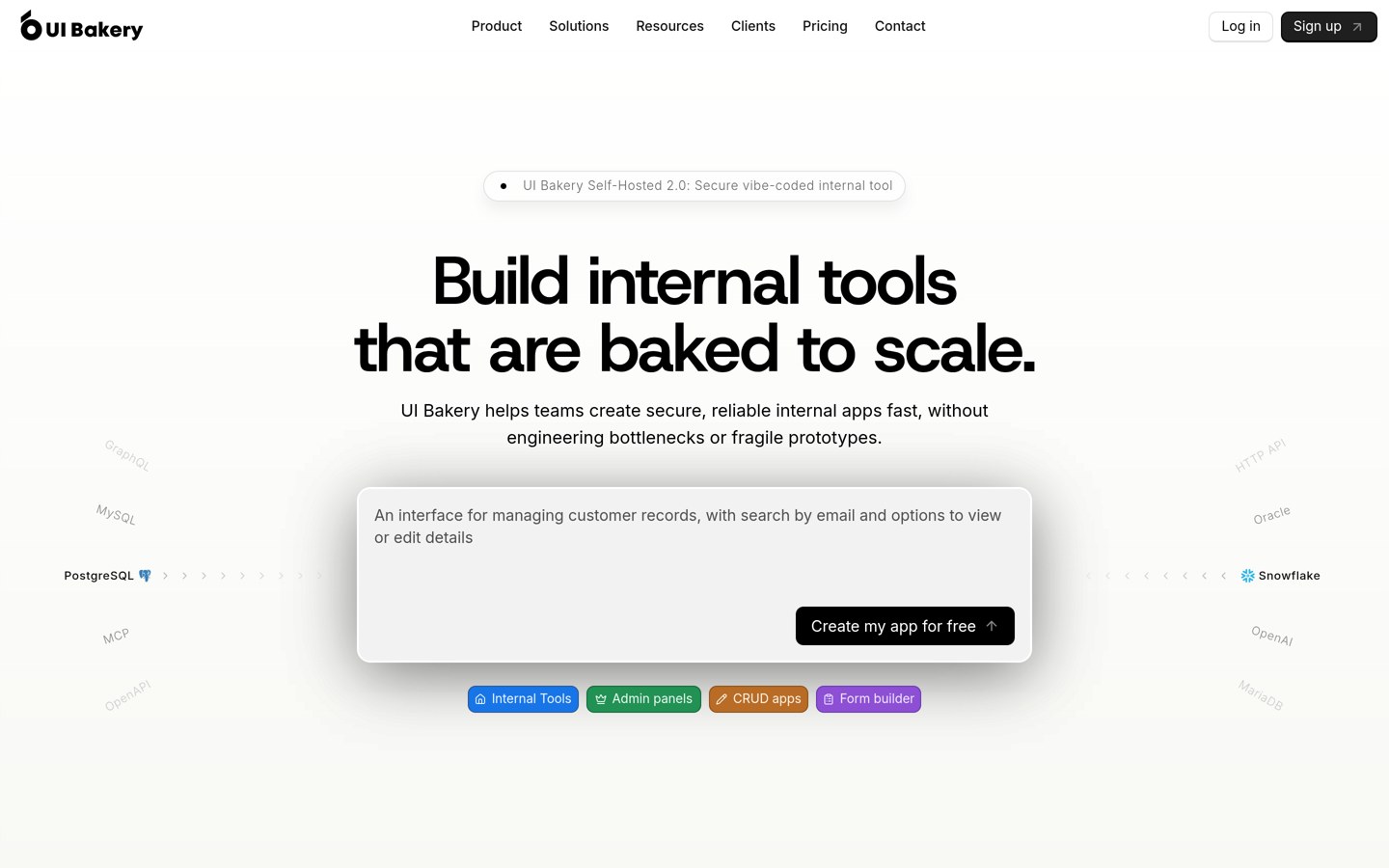
UI Bakery homepage, captured Nov 2026.
UI Bakery is a low-code platform for internal tools, admin panels and dashboards, with an AI agent that generates a working app from a prompt. It connects to more than 45 databases and APIs, and you can export the result as clean React code, so there is no lock-in.
The trade off is the free plan's size. Free covers one user with unlimited apps, and the Builder plan at $25 a developer a month adds the features a small team needs, while role-based access needs Team at $40. It suits developers who want AI speed without giving up the code.
What we like
Exports clean React code with no lock-in
AI agent generates a first version in minutes
Free plan includes unlimited apps
Self-hosting available for regulated data
Watch out for
Free plan covers only one user
AI credits can run out fast on heavy use
Role-based access needs the $40 Team plan
Team adds role-based access and more AI credits at $40 a developer a monthVisit uibakery.io
05
Appsmith
4.6/5on G2 (67 reviews, checked Nov 2026)
Paid from$15/mo
Best open-source builder for engineers
BuildingDrag-and-drop widgets
CodeJavaScript logic
Free planYes, up to 5 users
Paid planBusiness, $15/user/mo
appsmith.com
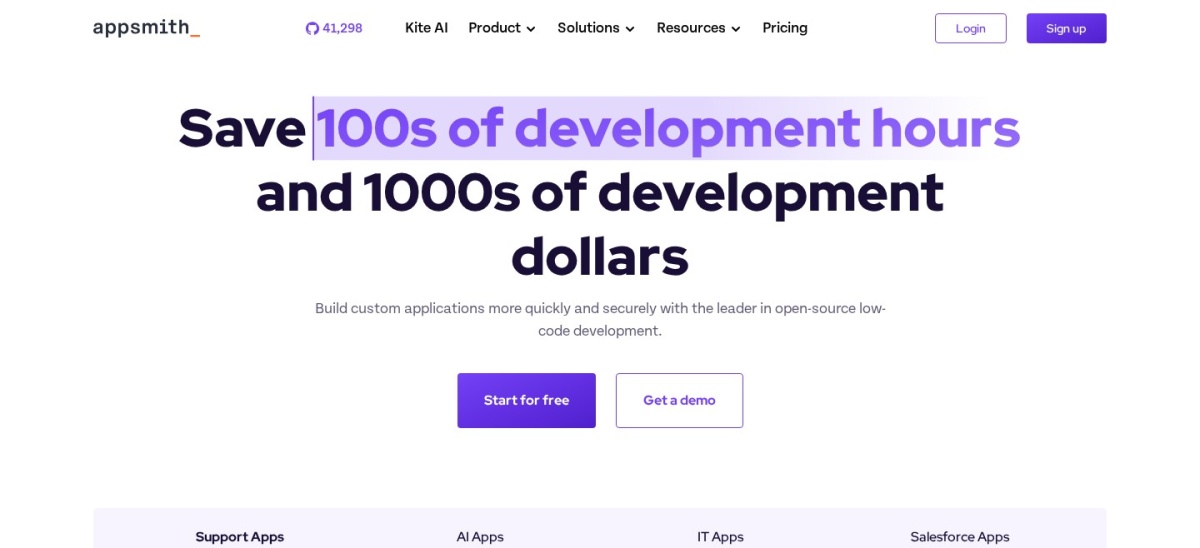
Appsmith homepage, captured Nov 2026.
Appsmith is an open-source low-code platform for building admin panels, dashboards and CRUD tools over databases and APIs you already run. The cloud free plan covers up to 5 users, and the Community edition is free to self-host with no published user cap.
The trade off is user counting. Business costs $15 per user a month, and every workspace member counts as a billable user whether they build or only view, with a 99-user cap before Enterprise at $2,500 a month. It suits engineering teams that want open source and self-hosting.
What we like
Genuinely open source with a free self-hosted edition
Simple flat $15 per user pricing
Unlimited workspaces, repos and environments on Business
Strong Git and workflow support for engineers
Watch out for
Every viewer counts as a $15 billable user
Business caps at 99 users before a big Enterprise jump
Can feel slow with heavy data or many widgets
Enterprise adds SSO, SCIM and 24/7 support from $2,500 a month for 100 usersVisit appsmith.com
06
ToolJet
4.6/5on G2 (53 reviews, checked Nov 2026)
Paid from$23/mo
Best for AI-assisted internal tools
BuildingDrag-and-drop plus AI
Self-hostingYes, open source
Free planYes, 2 builders
Paid planBasic, $23/builder/mo
tooljet.com
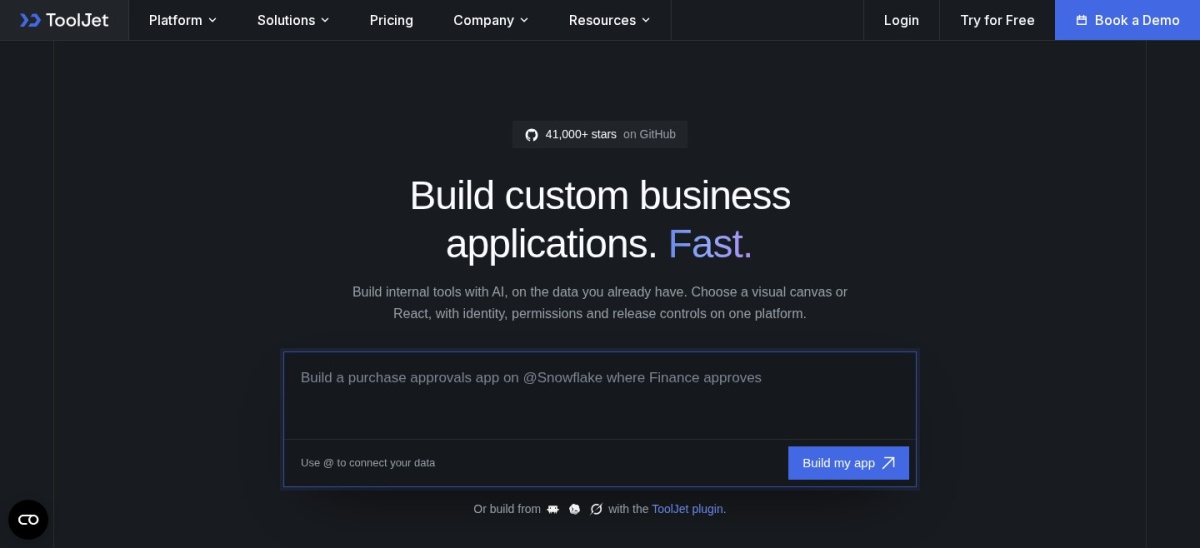
ToolJet homepage, captured Nov 2026.
ToolJet is an open-source low-code platform for internal tools, dashboards and workflows, with an AI builder and more than 50 data connectors. The free cloud plan covers 2 builders, 50 end users, 10 apps and 100 AI credits a month, and you can self-host it yourself.
The trade off is the builder model. Basic costs $23 per builder a month on annual billing, and the limits that matter for teams, such as SSO, audit logs and Git Sync, sit on the $199 Team plan. It suits teams that want version control and multi-environment workflows.
What we like
Open source with a free self-hosted option
Version control and Git Sync on paid plans
Only builders are billed, end users are included
AI credits included from the free plan up
Watch out for
SSO and audit logs need the $199 Team plan
Performance can dip on complex apps
Only 53 G2 reviews behind the rating
Pro adds white labelling and version control at $79 a builder a monthVisit tooljet.com
07
Hex
4.5/5on G2 (433 reviews, checked Nov 2026)
Paid from$36/mo
Best for analysts who live in notebooks
BuildingSQL, Python and no-code cells
Data appsPublish notebooks as apps
Free planYes, Community
Paid planProfessional, $36/editor/mo
hex.tech
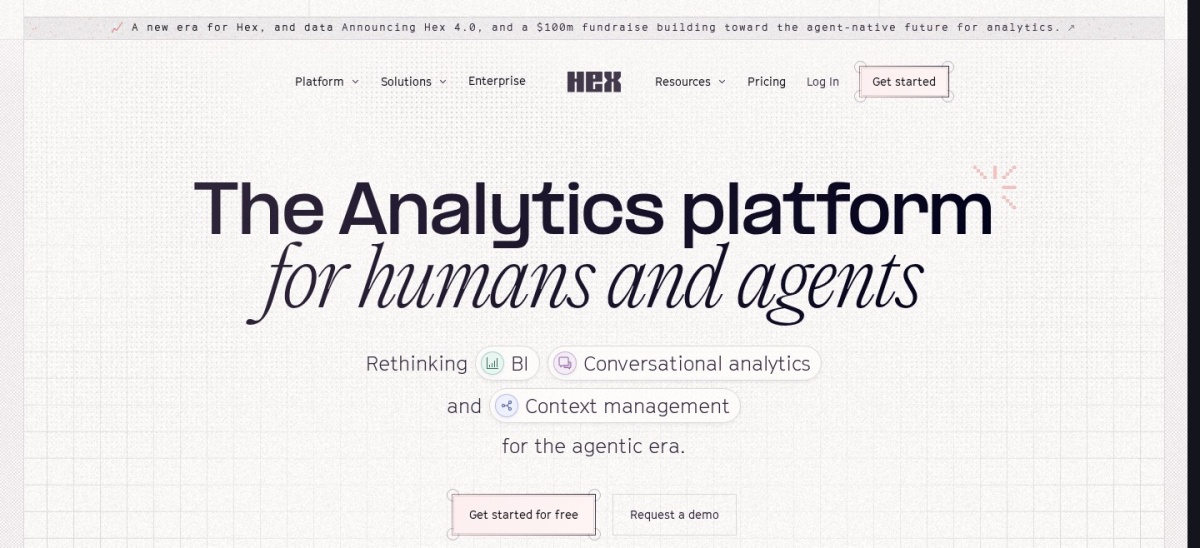
Hex homepage, captured Nov 2026.
Hex is a collaborative data workspace where analysts combine SQL, Python and no-code cells in one notebook, then publish the result as an interactive data app. The free Community plan includes an agent trial and small compute, and published apps carry filters colleagues can use without code.
The trade off is per-editor pricing. Professional costs $36 per editor a month and caps published apps at 5, while Team at $75 adds unlimited apps, scheduled runs and shared components. It suits data teams that already analyse in notebooks and want to share the result.
What we like
Second-largest review base here at 433 G2 reviews
SQL, Python and no-code cells in one file
Publishes analysis as an app colleagues can use
AI agent and conversational analytics included
Watch out for
Professional caps published apps at 5
Explorer seats for viewers are priced only by sales
Costs rise fast once a team grows past 5 editors
Team adds unlimited apps, scheduled runs and shared components at $75 an editor a monthVisit hex.tech
08
Budibase
4.5/5on G2 (67 reviews, checked Nov 2026)
Paid from$19/mo
Best free self-hosted alternative
BuildingDrag-and-drop plus AI agents
Self-hostingYes, open source
Free planYes, self-hosted
Paid planPro, $19/mo annual
budibase.com
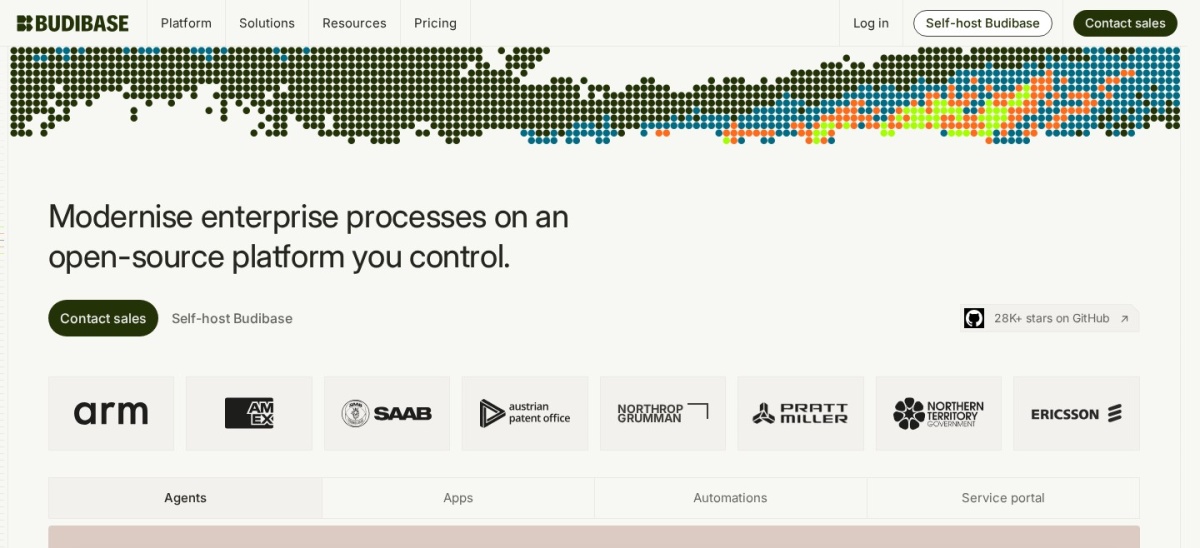
Budibase homepage, captured Nov 2026.
Budibase is an open-source platform for internal apps, automations and AI agents built on your data. The self-hosted Community edition is free with unlimited users, apps and automations, and the cloud Pro plan at $19 a month on annual billing adds 5,000 actions and 2,000 AI credits.
The trade off is the hosted plan's limits. Pro allows one creator, one workspace and one day of log retention, and end users cost $5 each a month as an add-on, so a shared team outgrows it quickly. It suits IT teams that can self-host and want no per-user fees.
What we like
Free self-hosted edition with unlimited users
Apps, automations and AI agents in one platform
Cheapest hosted entry after Retool and Appsmith
Strong option for regulated industries
Watch out for
Pro allows only one creator and one workspace
End users are a $5 a month add-on on cloud plans
Self-hosting moves upgrades and backups to you
Premium adds SSO, branding and backups at $49 a month on annual billingVisit budibase.com
09
DronaHQ
4.4/5on G2 (39 reviews, checked Nov 2026)
Paid from$100/mo
Best for web and mobile apps together
BuildingDrag-and-drop plus AI agents
AppsWeb and mobile
Free planYes, free start
Paid planStarter, $100/mo annual
dronahq.com
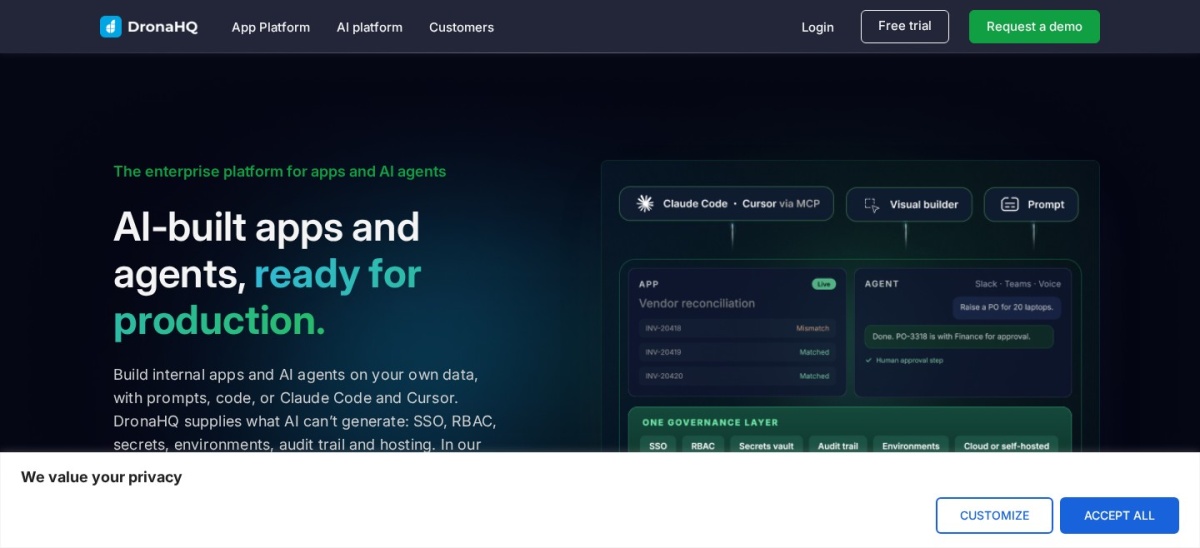
DronaHQ homepage, captured Nov 2026.
DronaHQ is a low-code platform for building internal tools, dashboards and admin panels for web and mobile from one builder. It now positions itself around AI agents that connect to enterprise systems with governance built in, and its free start includes $5 of AI credits.
The trade off is the new pricing. Starter now lists at $100 a month on annual billing, or $140 billed monthly, a large jump from the $10 a user a month that G2 and older pages still show. It suits enterprises that need mobile apps and governed AI agents in one platform.
What we like
Builds web and mobile apps from one builder
AI agents with governance controls built in
Developer-only plans allow unlimited end users
SOC 2 compliant with self-hosting on Enterprise
Watch out for
Starter jumped to $100 a month on annual billing
Smallest review base in this list at 39 G2 reviews
Latest G2 review is from 2024, so feedback is dated
Business adds more users and controls at $500 a month on annual billingVisit dronahq.com
Code-first vs drag-and-drop: which side are you on?
Code-first picks keep your logic in a language you already use. Dash and Hex let Python and SQL do the work, so version control, code review and testing follow your normal engineering habits, and the app is just another part of the codebase.
Drag-and-drop builders trade that control for speed. Retool, Appsmith, ToolJet, UI Bakery, Budibase and DronaHQ let a team ship an admin panel in an afternoon, but the app lives inside the vendor's builder, and moving it elsewhere is rarely simple.
The honest split is team shape. If the people building the app write Python every day, Dash is the natural replacement for Streamlit. If the builders are operations staff or analysts who never open an editor, a visual builder will ship sooner and be maintained longer.
How we chose
We started from every tool named as a Streamlit alternative in roundups and review sites, then kept only those with a numeric rating and review count on G2, the review source the brief allows. That filter removed the closest Python frameworks: Gradio has 0 G2 reviews, Shiny has no standalone G2 listing, and Voila, Panel, Taipy, Reflex and Solara have none either.
Prices come from each vendor's pricing page, checked on 29 November 2026, with annual-billing prices used where a vendor discounts them. Ratings and review counts come from G2 on the same day. Where a vendor shows a sale, the list shows the regular price.
We left out tools whose G2 listing belongs to a different product, such as Anvil, whose G2 page covers a document-automation product rather than the Python web framework. No vendor paid for a place, and we do not claim hands-on testing for this list.
How to choose a Streamlit alternative
Start with who builds the app, then match the tool to that person.
Decide code-first or visual. Python teams should shortlist Dash and Hex first, since they keep existing code and skills. Non-developers should look at Retool, Appsmith or UI Bakery instead.
Count the real monthly cost. Multiply the seat price by everyone who logs in, not just builders. Appsmith and DronaHQ bill every user, while ToolJet bills builders only, which changes the total fast.
Check the free plan's limits. A free plan that covers one user or five apps is a trial in practice. Confirm the caps on users, apps and actions before you build anything real on it.
Match governance to the audience. Internal dashboards for a small team need little beyond login. Customer-facing or regulated apps need SSO, audit logs and permissions, which push you to Superblocks, Retool Business or DronaHQ.
FAQ
What is the best Streamlit alternative in 2026?
Dash is the best Streamlit alternative for most Python teams. It builds data apps in pure Python with Plotly charts, needs no JavaScript, and holds the highest rating in this list at 4.8/5 on G2, though its managed hosting is quote-only.
What is the best free alternative to Streamlit?
Dash is the best free alternative, since the framework itself is free and open source under the MIT licence and you can self-host it at no cost. Retool is the best free hosted option, with a free plan for up to 5 users.
Is Dash better than Streamlit?
Dash is better for complex, multi-page apps that need custom layouts, Plotly charts and production controls. Streamlit is faster for a quick single-script prototype, so Dash wins when the app grows past a demo.
Which Streamlit alternative is cheapest?
Retool is cheapest at $10 a builder a month on annual billing, followed by Appsmith at $15 a user a month. Dash itself is free if you self-host, and only the managed Enterprise hosting carries a custom price.
Can I switch from Streamlit without rewriting everything?
You can keep most of your Python data code, but the UI layer needs rewriting in every alternative here. Dash is the closest match, since it stays in Python, while visual builders replace code with drag-and-drop components.
Dash or Superblocks: which is better?
Dash is better for Python teams building data apps themselves, while Superblocks is better for enterprises where business users generate apps with AI and IT must govern access, audit logs and deployment. Dash is free to start; Superblocks starts at $100 a month.
Which Streamlit alternative is best for beginners?
Retool is the easiest starting point, with drag-and-drop building, prebuilt components and a free plan for up to 5 users. UI Bakery is close behind, since its AI agent can generate a first working app from a plain-language prompt.
SaaS SEO and WordPress specialist with about 8 years of experience. Rakib compares WordPress plugins, themes, hosting and software using public pricing, documentation and user reviews. See how we rank.