Best Competitive Intelligence Software in 2026: 9 Tools Compared
WLWPLegible EditorsLast verified 24 Nov 2026How we rank10 min read
★ Short answer
Klue is the best competitive intelligence software for most sales-led teams, with battlecards that surface inside live deals and a 4.7/5 G2 rating from 443 reviews. Pick Semrush for digital and keyword intelligence at $199 a month, or Similarweb when traffic and market share are the main question.
How we make this list: we compare pricing pages, product documentation and public user reviews, then re-check every price before each update. No product paid for a place. Disclosure.
Klue leads on battlecards and win/loss analysis, rated 4.7 out of 5 on G2 from 443 reviews.
Crayon monitors the widest surface, with 100+ data types from pricing pages to job posts.
Semrush is the only pick with a public price under $250 a month and 3,317 G2 reviews.
Four of the nine tools publish no price at all, including Klue, Crayon, Contify and Kompyte.
Crunchbase Pro is the cheapest published paid plan in this list at $79 a month on annual billing, after a $49 first-year promo.
What competitive intelligence software should cover
Competitive intelligence software watches what rivals do and turns it into material a team can use. That means pricing changes, product launches, messaging shifts, hiring moves and customer reviews, collected without manual checking.
The tools in this list fall into three groups. Dedicated platforms such as Klue and Crayon build battlecards for sales teams. Digital intelligence tools such as Semrush and Similarweb measure traffic, keywords and ads. Listening tools such as Brand24 and Talkwalker track what people say about a brand in public.
Traffic estimates are useful for sizing a rival, but they are estimates, not measured visits. Our guide on measuring blog traffic in WordPress explains what traffic numbers can and cannot show.
Start with the job, not the feature list. A sales team needs battlecards in the CRM. A strategy team needs market and regulatory signals. A marketing team needs traffic and mention data it can act on each week.
The 9 best competitive intelligence software tools
01
Klue
4.7/5on G2 (443 reviews, checked Nov 2026)
PricingCustom/yr
Best for sales-led competitive intelligence
BattlecardsIn CRM, Slack and email
Win/loss analysisBuilt in, with interviews
MonitoringWeb, news, jobs, reviews
Paid planCustom annual quote
klue.com
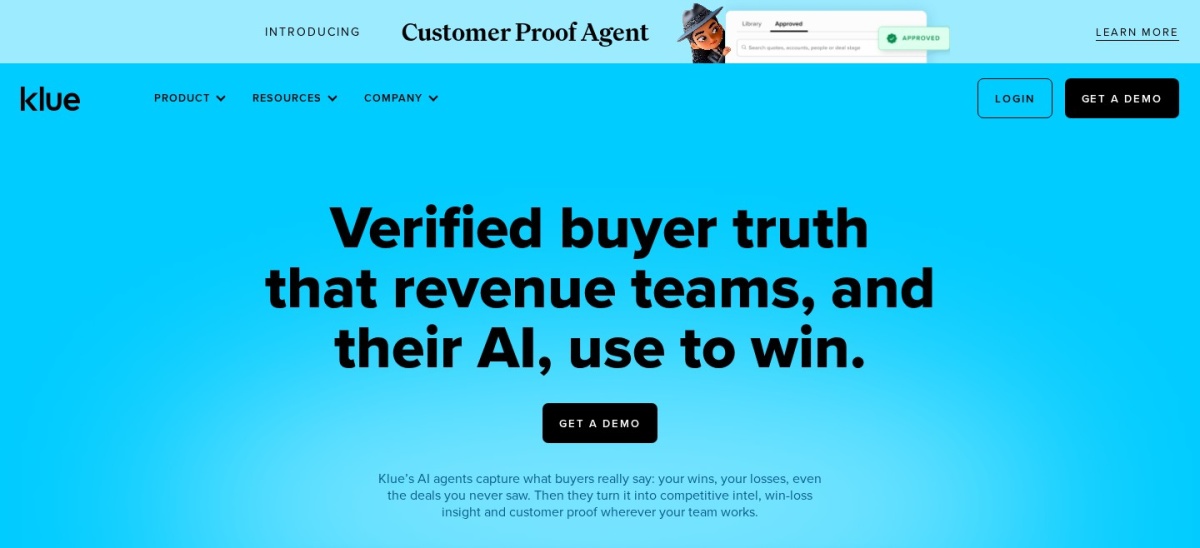
Klue homepage, captured Nov 2026.
Klue is a competitive intelligence platform built around the deal, not the dashboard. It routes competitor moves to sellers when a rival appears in a live opportunity, and its battlecards travel into Salesforce, Slack and email. Klue reports 250,000+ users, and it added win/loss interviews when it acquired DoubleCheck.
The trade off is price and upkeep. Klue publishes no price, and third-party estimates put annual contracts near $15,000 to $40,000. Battlecards also go stale without a dedicated curator. It suits sales-led teams with someone owning the content.
What we like
Battlecards surface inside live deals
Win/loss interviews in the same platform
Ask Klue answers questions in Slack and Teams
Highest G2 rating in this list
Watch out for
No published price; every deal is a quote
Needs a curator or cards go stale
Setup is heavier than simpler trackers
Paid plans add more competitors and seats by quoteVisit klue.com
02
Crayon
4.6/5on G2 (385 reviews, checked Nov 2026)
PricingCustom/yr
Best for wide competitor monitoring
Monitored signals100+ data types
BattlecardsAuto-updating
AI summariesSparks agent
Paid planCustom annual quote
crayon.co
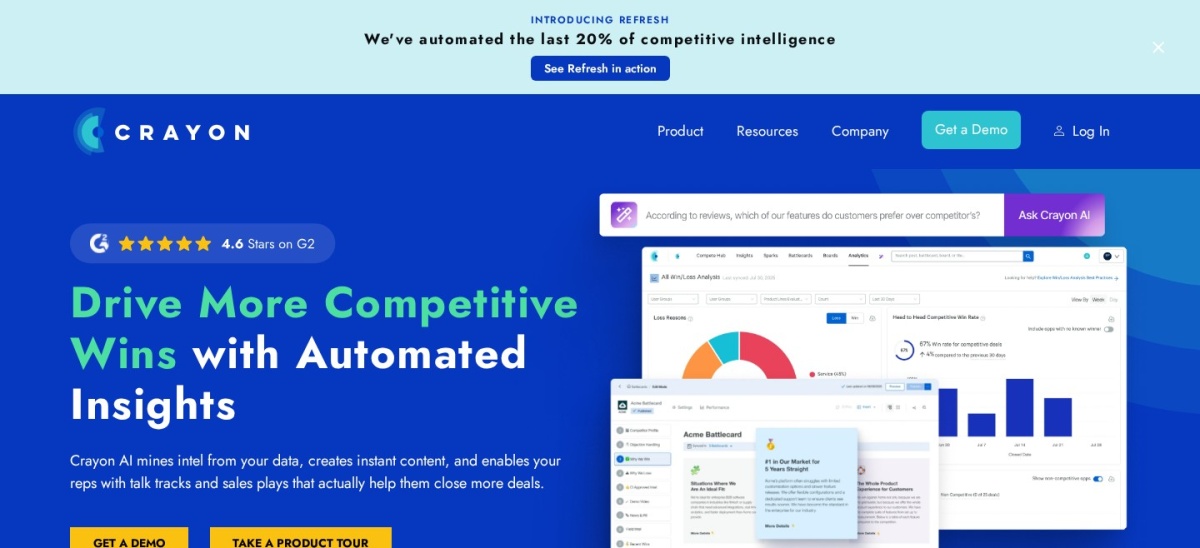
Crayon homepage, captured Nov 2026.
Crayon is a competitive intelligence platform that tracks rivals across more than 100 data types, from pricing pages and job posts to SEC filings and review sites. Its Sparks agent turns the feed into summaries and refreshed battlecards, and Crayon Answers handles questions inside Slack.
The trade off is noise and price. Broad monitoring surfaces low-value alerts alongside real moves, so teams must curate the feed. Pricing is quote-only, with third-party estimates near $15,000 to $40,000 a year. It suits product marketing teams that need depth.
What we like
Widest monitoring breadth in this list
AI summaries keep battlecards current
MCP server feeds intel into AI assistants
Daily email digest of rival moves
Watch out for
No published price or free trial
Broad feeds need curation to stay useful
Annual contracts only
Paid plans scale by competitors tracked and seatsVisit crayon.co
03
Semrush
4.5/5on G2 (3,317 reviews, checked Nov 2026)
Starts at$199/mo
Best value for digital intelligence
Keyword gapYes, vs rivals
Traffic AnalyticsYes
Ad researchYes
Paid planPro, $199/mo
semrush.com
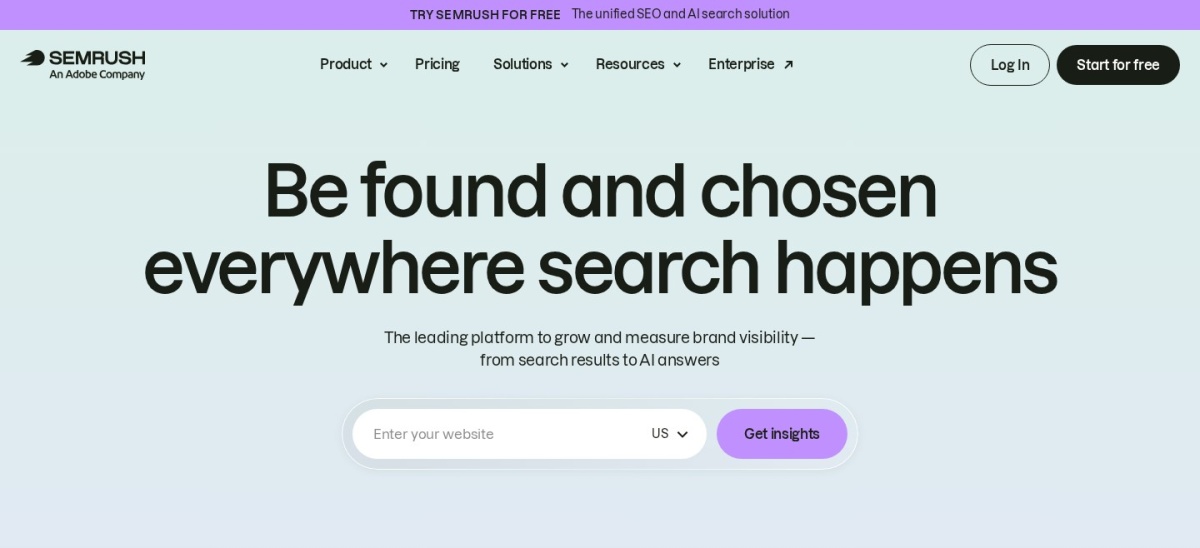
Semrush homepage, captured Nov 2026.
Semrush is a digital intelligence platform that compares rivals on keywords, organic traffic, backlinks and ad spend. Its Traffic Analytics and keyword gap tools show where a competitor wins search, and its .Trends data draws on Kompyte, the CI tool Semrush acquired in 2022.
The trade off is scope. Semrush covers digital signals well but has no sales battlecards of its own, so deal teams need a second tool. Pro starts at $199 a month, and higher tiers add more projects and reports. It suits marketing teams that compete mainly in search.
What we like
Only pick here with a public price under $250 a month
Largest G2 review base in this list
7-day free trial
Keyword, traffic, backlink and ad data in one place
Similarweb is a digital intelligence platform that estimates visits, engagement, traffic sources and audience demographics for rival websites and apps. Its market views roll those estimates into category share, and the entry plan adds competitor alerts plus Excel and PDF downloads.
The trade off is accuracy. Its figures are estimates, and reviewers most often flag data accuracy, especially for smaller sites. The entry plan costs $125 a month billed yearly, or $199 month to month, for one user. It suits teams sizing a market rather than tracking a deal.
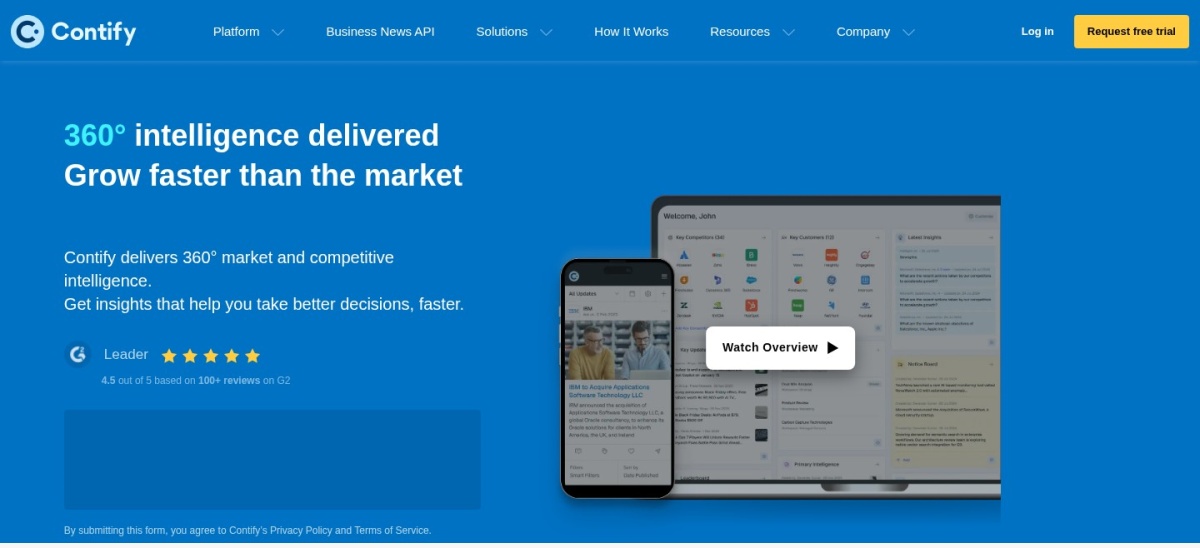
Contify is a market and competitive intelligence platform built for strategy and research teams. It pulls signals from more than 1 million vetted sources, including news, company websites, SEC filings and regulatory portals, and its Athena AI answers questions and updates dashboards.
The trade off is price and learning curve. Contify publishes no price, and third-party estimates put contracts near $25,000 to $60,000 a year. It also leans toward market research rather than sales battlecards. It suits strategy teams tracking regulation and M&A.
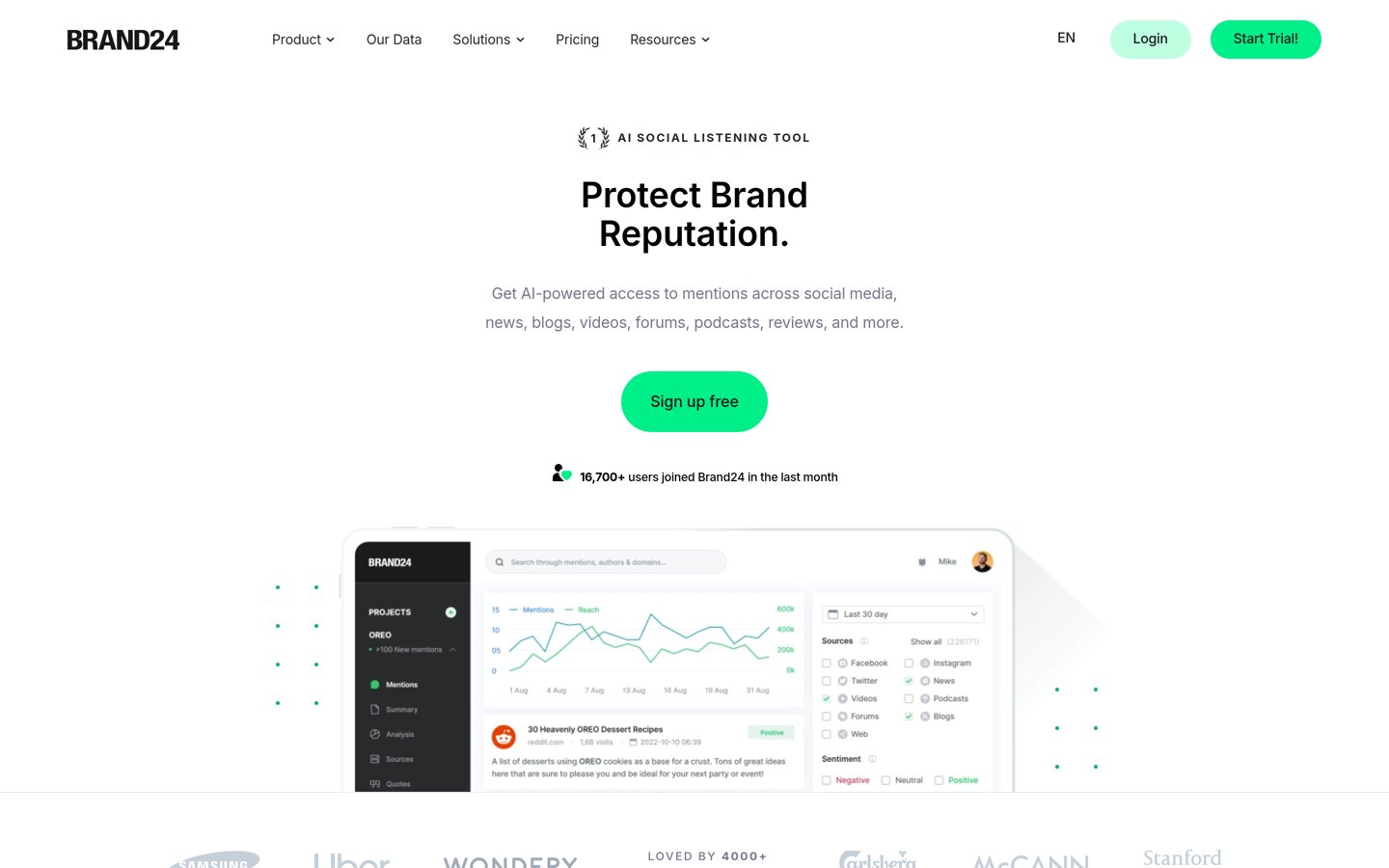
Brand24 is a media monitoring tool that tracks brand and competitor mentions across social media, forums, podcasts, newsletters and review sites. Its AI scores sentiment across 90+ languages, and its LLM Listening feature tracks mentions inside AI search answers.
The trade off is keyword caps. The Individual plan covers 3 keywords and 2,000 mentions a month for one user, with updates every 12 hours. It costs $199 a month billed yearly, or $249 month to month. It suits small teams watching mentions and sentiment.
What we like
Mention alerts across 25M+ sources
AI sentiment in 90+ languages
Tracks mentions in AI search answers
14-day free trial
Watch out for
Entry plan caps keywords at 3
Updates every 12 hours on Individual
No sales battlecards
Team and Pro add keywords, mentions and real-time updatesVisit brand24.com
07
Crunchbase
4.4/5on G2 (407 reviews, checked Nov 2026)
Paid from$79/mo
Best for funding and company data
Companies4M+ profiles
Exports2,000 rows/mo
Free planYes, basic profiles
Paid planPro, $79/mo
crunchbase.com
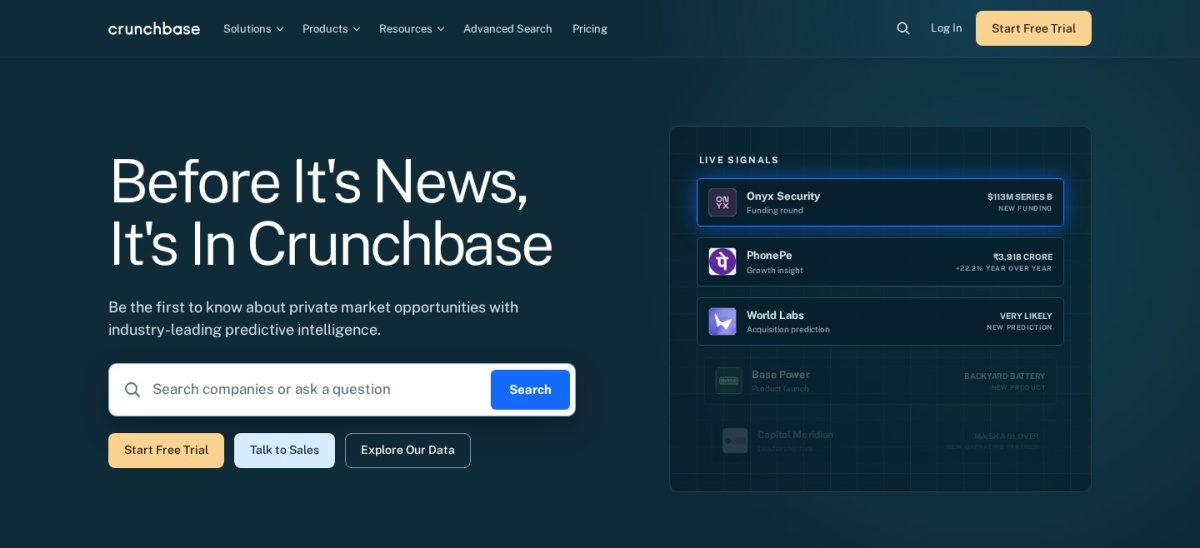
Crunchbase homepage, captured Nov 2026.
Crunchbase is a private company intelligence platform that tracks funding rounds, growth signals and predictions across more than 4 million companies. Pro adds advanced search, Growth and Heat Scores, competitor rankings, saved lists and 2,000 export rows a month.
The trade off is the price on the page. Pro lists at $49 a month on annual billing, but that is a first-year promo against a $79 regular rate, so budget for the renewal. Data can also be thin for small companies. It suits teams mapping startups and funding.
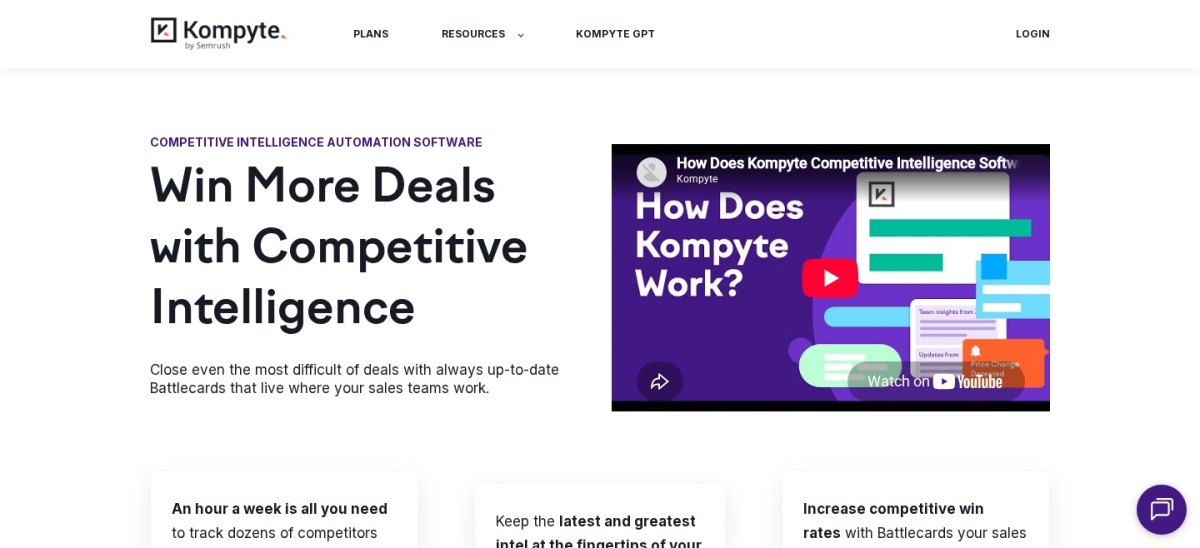
Kompyte is a competitive intelligence tool from Semrush that visits competitor websites daily, classifies changes and builds sales battlecards. The Essentials tier tracks 10 companies with 25 user seats, and Professional raises that to 20 companies and 100 seats.
The trade off is depth and pricing opacity. Kompyte publishes no price, so quotes come from sales, and its AI summaries can be noisy. Directories list a $300 a year floor, but typical contracts run far higher. It suits small teams that need battlecards without an enterprise deal.
What we like
Fastest setup among dedicated CI tools
Unlimited battlecards on every tier
Deep Salesforce and HubSpot integration
Highest ease-of-use score in the category on Gartner Peer Insights
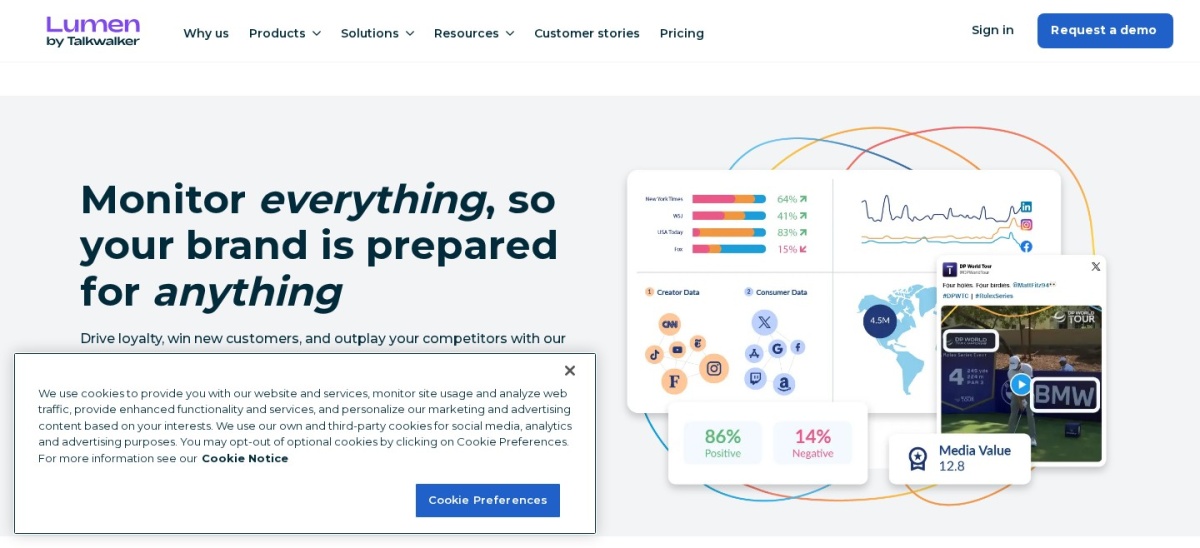
Talkwalker is a social listening and consumer intelligence platform, now sold as Lumen by Talkwalker under Hootsuite. It monitors more than 150 million sources across 30+ social networks, and its BlueSilk AI adds visual recognition that spots logos in images without text tags.
The trade off is price and complexity. Every plan is a custom quote, with third-party reports putting contracts from about $10,000 a year into six figures, and setup takes real onboarding. It suits large brands with dedicated insights teams.
Free options in this list are narrow. Similarweb and Crunchbase offer free tools for quick checks, and Talkwalker Alerts covers basic mentions by email.
Paid plans split two ways. Dedicated CI platforms charge by quote and scale with competitors and seats. Digital and listening tools publish monthly prices that rise with keywords, mentions and history.
If the budget is small, start with a published-price tool such as Semrush or Brand24, and add a dedicated CI platform only when battlecards become a weekly job.
How we chose
We started from the dedicated CI platforms, digital intelligence tools and listening tools that appear most often in buyer comparisons, then kept nine with an established review base on G2.
Prices come from each vendor's pricing page or, where the vendor publishes none, from widely reported third-party estimates, checked on 24 November 2026. Ratings and review counts come from G2 on the same day. Where a vendor shows a sale, the list shows the regular price.
We left out tools with no public review base and tools built only for one channel. No vendor paid for a place, and we do not claim to have used these tools ourselves.
How to choose competitive intelligence software
Start with the team that will use the intel every week, then match the tool to their workflow.
Name the job first. Sales teams need battlecards in the CRM. Strategy teams need market and regulatory signals. Marketing teams need traffic and mention data.
Check what is published. If a vendor shows no price, expect a sales process and an annual contract. Published-price tools let you start and stop without a negotiation.
Test the data on your own rivals. Run a trial against the three competitors you care about most. Check whether the feed catches their pricing and messaging changes, and whether the numbers look right.
Count the seats and the sources. Some plans cover one user, others are unlimited. Match keyword, mention and competitor caps to the team size before signing.
FAQ
What is the best competitive intelligence software?
Klue is the best pick for most sales-led teams. Its battlecards surface inside live deals, it includes win/loss interviews, and it holds the highest G2 rating in this list at 4.7 out of 5 from 443 reviews.
How much does competitive intelligence software cost?
It ranges from $79 a month for Crunchbase Pro to custom annual contracts near $15,000 to $40,000 for Klue and Crayon. Published-price tools such as Semrush and Brand24 start at $199 a month, while four tools in this list show no price at all.
Is there a free competitive intelligence tool?
No dedicated CI platform in this list is free. Similarweb and Crunchbase offer free tiers for basic checks, and Talkwalker Alerts sends free mention alerts by email. Full monitoring, battlecards and exports need a paid plan.
What is the difference between Klue and Crayon?
Klue organises intelligence around the deal, routing battlecards to sellers in live opportunities with win/loss analysis built in. Crayon focuses on monitoring breadth, tracking 100+ signal types and turning them into AI summaries and refreshed battlecards.
Can competitive intelligence tools track pricing changes?
Yes. Dedicated tools such as Crayon, Klue and Kompyte watch rival pricing pages and flag changes, and Semrush tracks paid search and shopping ads. Set alerts on the pages that matter, and check the change in context before acting on it.
Do I need a dedicated CI tool, or is Semrush enough?
Semrush is enough when the contest is mainly in search, keywords and ads. Add a dedicated tool such as Klue or Crayon when sales needs battlecards, win/loss data and alerts inside the CRM for live deals.