Databricks is the best Snowflake alternative for most teams, rated 4.6/5 on G2 from 801 reviews, with usage pricing from $0.07 per DBU. Pick Google BigQuery for serverless queries with 1 TiB free each month, or Amazon Redshift if your data already lives on AWS.
How we make this list: we compare pricing pages, product documentation and public user reviews, then re-check every price before each update. No product paid for a place. Disclosure.
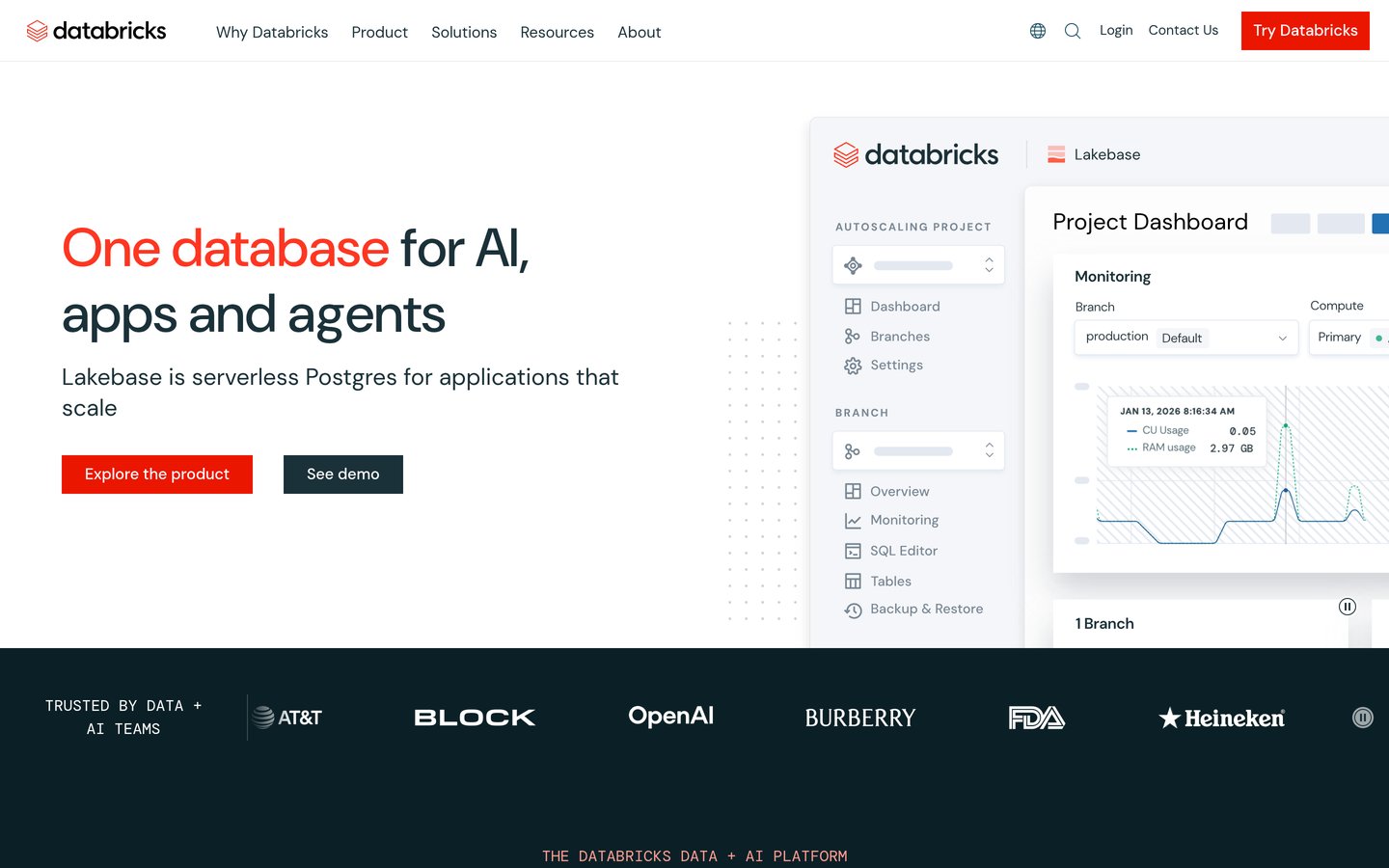
Databricks leads at 4.6/5 from 801 G2 reviews, with usage pricing from $0.07 per DBU and a free Community Edition.
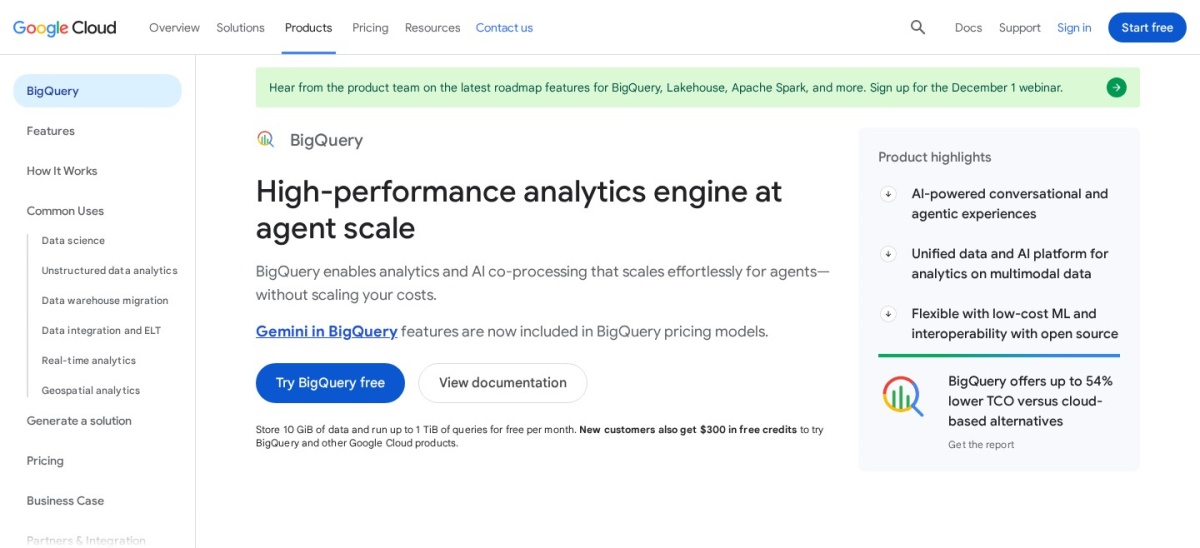
BigQuery is the cheapest way to start: 1 TiB of queries free each month, then $6.25 per TiB scanned.
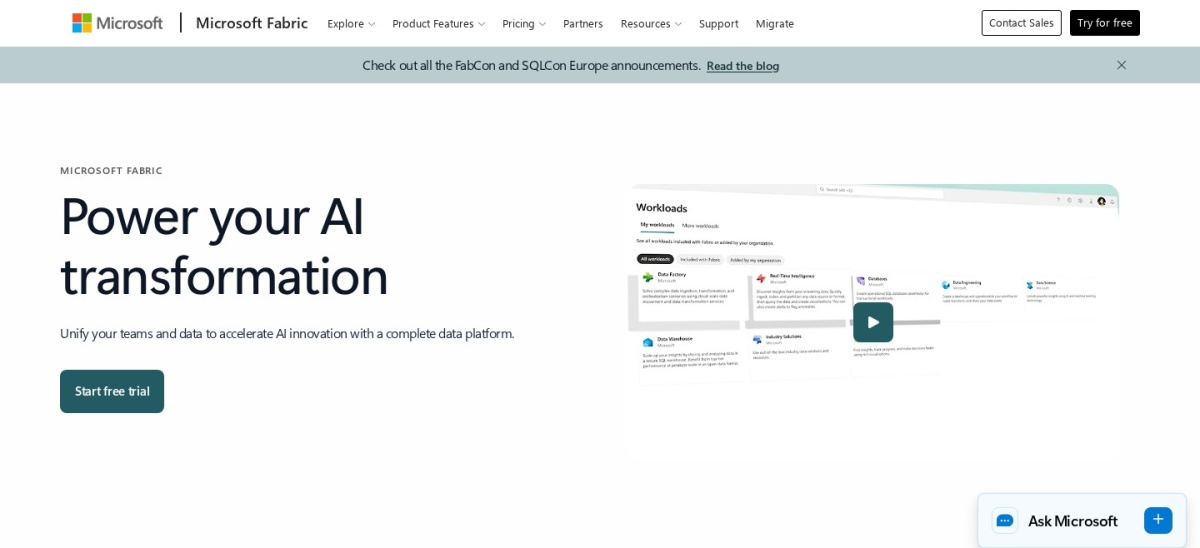
Fabric is the only pick with Power BI built in, but its smallest capacity costs $262.80 a month whether you use it or not.
Dremio, Starburst, SingleStore and Apache Spark all offer a free tier; ClickHouse Cloud scales to zero when idle.
Every platform here bills by usage, so price the same workload on each instead of comparing headline rates.
How do you choose the best Snowflake alternative?
Usage billing is the real difference between these tools. Databricks charges per DBU, BigQuery per TiB scanned, Redshift per RPU-hour and Fabric per capacity unit, so a flat monthly comparison hides the true cost.
Start from the workload, not the brand. A team running nightly batch jobs needs different billing than a team serving dashboards all day, and the cheapest tool flips when the workload changes.
Free tiers matter more than headline rates for small teams. BigQuery gives 1 TiB of queries a month free, Dremio and Starburst Galaxy keep a permanent free tier, and Apache Spark costs nothing to run yourself.
Governance decides the shortlist for larger teams. Unity Catalog is the Databricks feature teams miss most, so check catalog, access control and lineage on each alternative before committing. Our guide on choosing a data center location covers the region question that affects latency and price.
Databricks is a unified Data Intelligence Platform that runs data engineering, SQL analytics and machine learning on one lakehouse. It is built by the original creators of Apache Spark, and its Premium tier lists usage from about $0.07 per DBU, with a free Community Edition for learning.
The trade off is that the DBU rate varies by workload. All-purpose compute costs about $0.40 per DBU, far more than the $0.07 jobs rate, so bills rise fast on interactive work. It suits teams that want one platform for pipelines, SQL and AI, with engineers who can watch usage.
What we like
One platform for pipelines, SQL and machine learning
Google BigQuery is a serverless data warehouse with no servers to size or clusters to manage. The first 1 TiB of queries and 10 GB of storage are free each month, and on-demand queries cost $6.25 per TiB scanned.
The trade off is scan-based billing. A badly written query that scans whole tables costs the same as a careful one that scans little, so costs rise with sloppy SQL. It suits Google Cloud teams with light or irregular query volume.
Microsoft Fabric is a unified analytics platform that puts lakehouse storage in OneLake, pipelines, notebooks and Power BI on one capacity. The smallest F2 capacity costs $262.80 a month pay-as-you-go, and a 60-day trial is available.
The trade off is the capacity model. F2 bills whether you use it or not, and report viewers below F64 still need Power BI Pro licences. It suits Microsoft shops that already pay for Power BI and Azure.
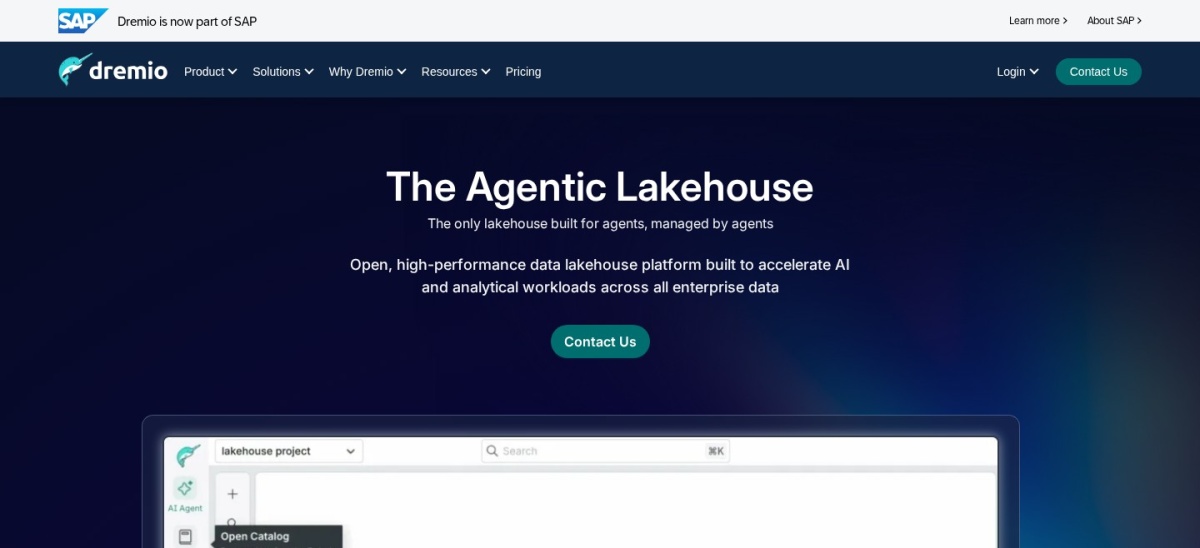
Dremio is an open data lakehouse platform built on Apache Iceberg and Apache Arrow that runs SQL directly on object storage. Dremio Cloud includes a permanent free tier, while paid engines bill at $0.20 per Dremio Compute Unit, from $6.40 an hour for an XS engine.
The trade off is that the free tier is small, and engine hours add up fast on busy dashboards. Advanced governance and support sit in Enterprise plans priced by sales. It suits teams standardising on Iceberg who want fast BI queries without moving data.
What we like
Permanent free tier on Dremio Cloud
Queries run directly on object storage
Fast BI queries on Iceberg tables
Open formats avoid lock-in
Watch out for
Engine hours add up on busy dashboards
Enterprise pricing needs a sales quote
Paid engines add scalable DCU compute and accelerationVisit dremio.com
05
Amazon Redshift
4.3/5on G2 (402 reviews, checked Nov 2026)
Starts at$0.375/RPU-hr
Best for AWS analytics teams
Billing unit$0.375 per RPU-hour
Serverless startFrom $1.50 an hour, 4 RPU
Storage$0.024 per GB a month
Trial credit$300 for 90 days
aws.amazon.com
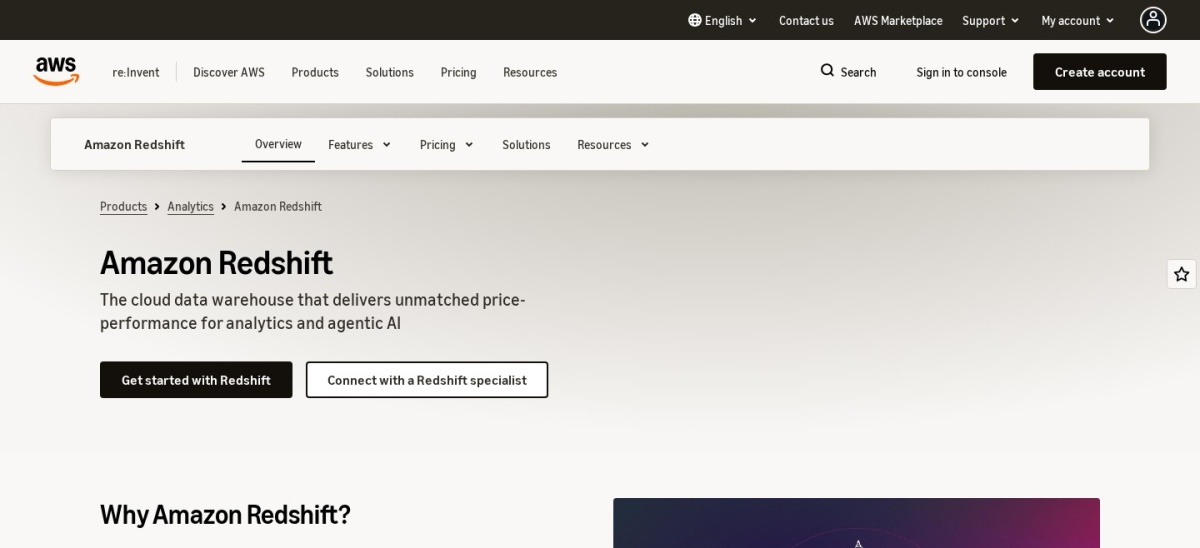
Amazon Redshift homepage, captured Nov 2026.
Amazon Redshift is the AWS data warehouse, available as provisioned clusters or as a serverless service that scales with demand. Serverless costs $0.375 per RPU-hour, with a 4 RPU minimum working out to $1.50 an hour, and new serverless users get a $300 credit for 90 days.
The trade off is the AWS tie-in. Moving data or skills to another cloud takes work, and the default 128 RPU base can cost $48 an hour while busy if left unchanged. It suits teams already running their data on AWS.
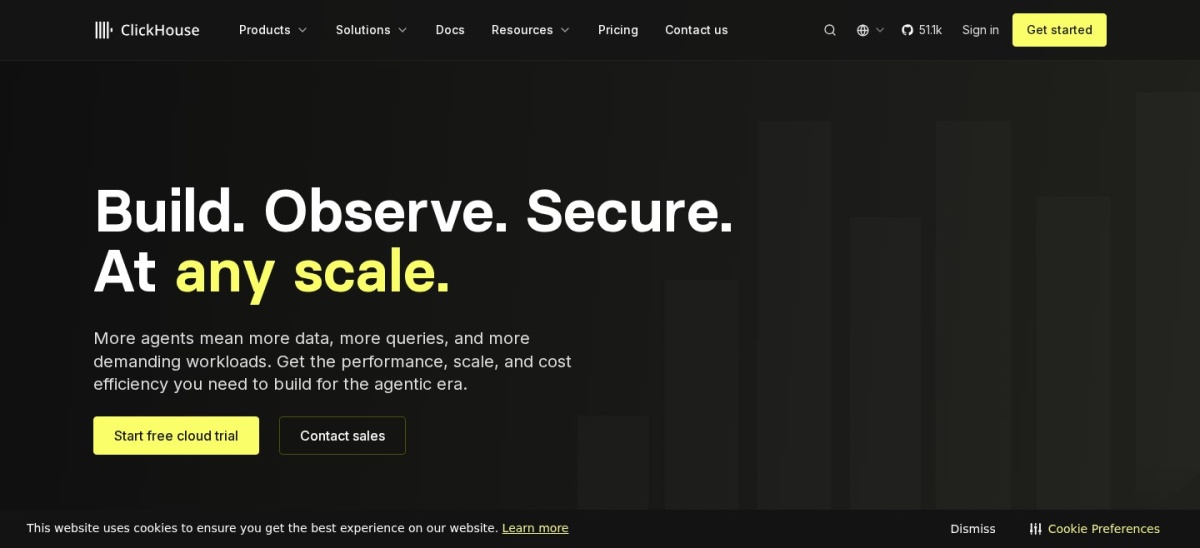
ClickHouse Cloud is the managed version of the open-source columnar database, built for sub-second dashboards over billions of rows. Basic compute costs $0.2181 per unit-hour in US East, storage costs $25.30 per TB a month, and services scale to zero when idle.
The trade off is scope. It is an analytical engine first, not a full lakehouse, so governance and catalog features trail the bigger platforms. It suits engineering teams running real-time dashboards and event analytics on a tight budget.
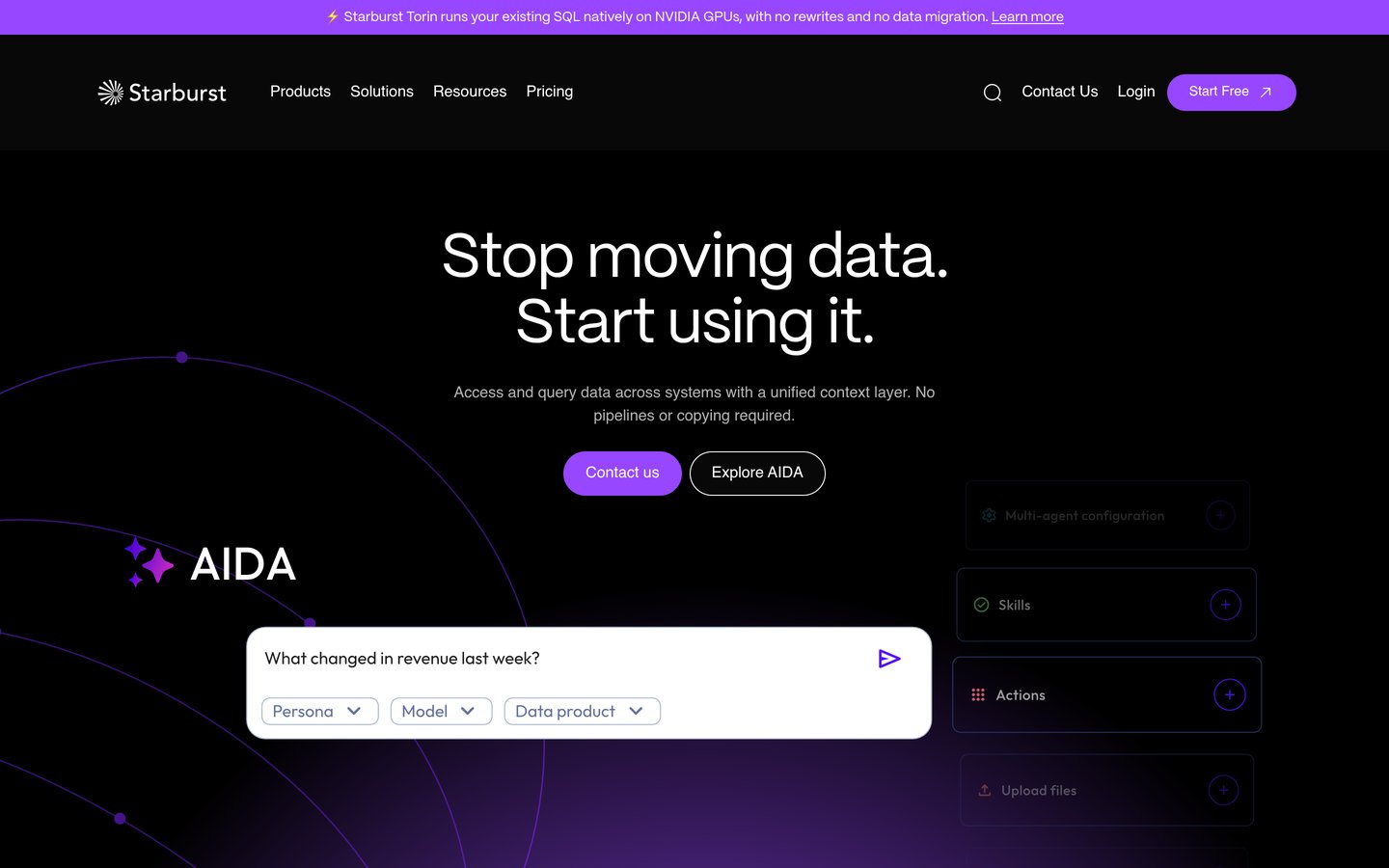
Starburst is an enterprise distribution of open-source Trino that runs federated ANSI SQL across data lakes, warehouses and operational databases in place. Its managed Galaxy service includes a free tier with up to three clusters, while paid Pro plans start at $0.50 per credit.
The trade off is price at scale. Enterprise features raise the rate to $0.75 per credit, and reviewers warn that costs climb fast as query volume grows. It suits teams that need one SQL layer over many sources without copying data first.
SingleStore Helios is a unified database for transactional SQL and real-time analytics in one system. The smallest S-00 workspace costs $0.99 an hour before storage, and a free Shared tier lets small teams test workloads first.
The trade off is complexity. Distributed setup has a learning curve, and the 99.99% SLA tier needs Multi-AZ, which raises compute costs. It suits teams that need fast analytics on live operational data without a separate warehouse.
Apache Spark is the free open-source engine Databricks is built on, for large-scale batch and streaming data processing in Python, Scala, Java and SQL. There is no licence fee, and it runs on your own servers or on any major cloud.
The trade off is operations. You manage clusters, tuning and upgrades yourself, or pay a cloud vendor to run Spark for you. It suits engineering teams with Spark skills who want full control and no per-unit platform bill.
No two platforms bill the same unit. Databricks sells DBUs, BigQuery sells TiB scanned, Dremio sells DCUs, Starburst sells credits and Fabric sells capacity units.
Pick one workload and price it everywhere. Take a week of real queries, note the data scanned and the compute hours, then run those numbers through each vendor calculator.
Watch the idle cost. Fabric capacity bills while idle, Redshift serverless bills nothing while idle, and ClickHouse Cloud scales to zero, so the same quiet weekend costs very different amounts.
How we chose
We started from the platforms buyers compare with Snowflake most often: lakehouse platforms, cloud warehouses and the open-source engine Databricks is built on.
Prices come from each vendor pricing page and G2 listings, checked on 29 November 2026. Ratings and review counts come from G2 on the same day. Where a vendor shows a sale, the list shows the regular price.
We left out tools with no public rating and tools sold only by custom quote. No vendor paid for a place, and we do not claim to have used these tools ourselves.
How to choose a Snowflake alternative
Start with the workload, then price it the same way on every platform.
Name the workload first. Batch jobs, streaming, dashboards and AI work bill differently. Write down what runs daily before you compare prices.
Price one real week everywhere. Take actual queries and data volumes, then run them through each vendor calculator instead of comparing headline unit rates.
Check the free tier and the idle cost. A generous free tier covers small teams, but capacity that bills while idle can cost more than usage billing at low volume.
Test governance before you migrate. Check catalog, access control and lineage on your shortlist, because those features are the hardest to replace later.
FAQ
What is the best Snowflake alternative in 2026?
Databricks is the best Snowflake alternative for most teams. It is rated 4.6 out of 5 on G2 from 801 reviews, covers pipelines, SQL and machine learning on one lakehouse, and usage starts from about $0.07 per DBU.
How much do Snowflake alternatives cost?
Most bill by usage, not by seat. Databricks usage starts from $0.07 per DBU, BigQuery queries cost $6.25 per TiB scanned, Dremio charges $0.20 per DCU and Fabric F2 capacity costs $262.80 a month. Total cost depends on how much you query, so price one real workload on each.
Which Snowflake alternative is best for small teams?
Google BigQuery is the best pick for small teams, because there are no servers to manage and the first 1 TiB of queries each month is free. Dremio Cloud and Starburst Galaxy also offer free tiers, while Fabric is the most expensive way to start.
Is Databricks or BigQuery the better Snowflake alternative?
Databricks is better for teams that want one lakehouse for pipelines, SQL and machine learning, rated 4.6/5 from 801 G2 reviews. BigQuery is better for Google Cloud teams with irregular queries, rated 4.5/5 from 1,138 reviews, because serverless billing charges only for data scanned.
Is Microsoft Fabric a good Snowflake alternative?
Microsoft Fabric is a good Snowflake alternative for teams already using Power BI and Azure, because OneLake, notebooks and reporting share one capacity. The smallest F2 capacity costs $262.80 a month whether you use it or not, so it suits steady workloads better than occasional queries.
Can I migrate from Snowflake to an alternative easily?
Migration is rarely easy, because warehouses, stored procedures and sharing features do not move directly to another platform. Open formats such as Delta Lake and Apache Iceberg help, and Dremio and Starburst both query those formats in place, which lowers the migration cost.
SaaS SEO and WordPress specialist with about 8 years of experience. Rakib compares WordPress plugins, themes, hosting and software using public pricing, documentation and user reviews. See how we rank.