Databricks is the best data platform for most teams, unifying engineering, analytics and AI on one lakehouse with the largest G2 review base in this list. Pick Snowflake for pure warehousing and BigQuery for serverless analytics inside Google Cloud.
How we make this list: we compare pricing pages, product documentation and public user reviews, then re-check every price before each update. No product paid for a place. Disclosure.
Databricks leads with a 4.6/5 G2 rating from 1,366 reviews and the broadest unified platform.
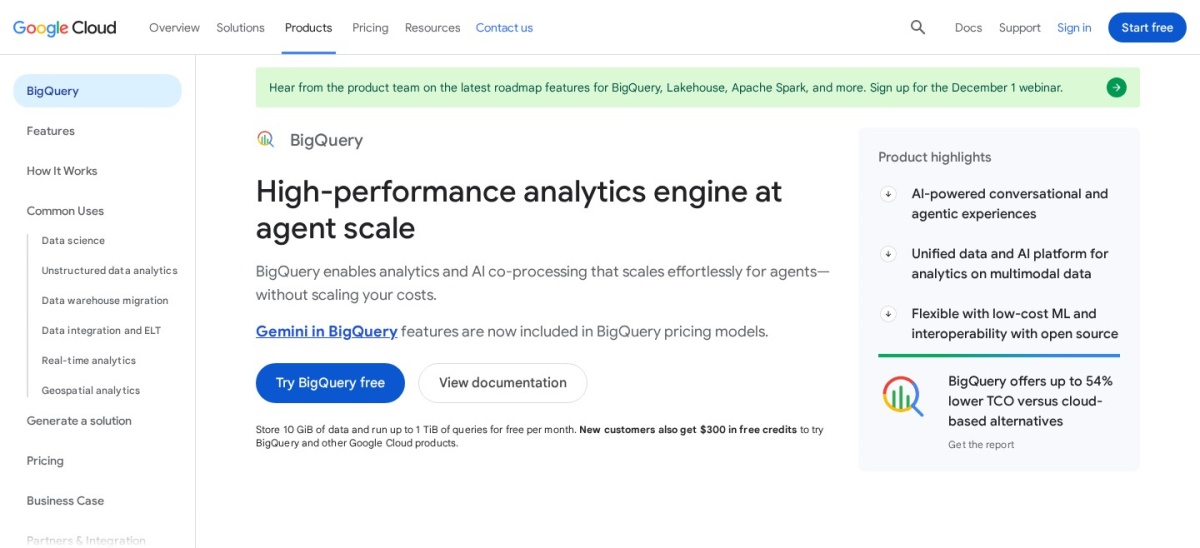
Snowflake charges from $2.00 per credit on Standard in AWS US East, with storage at $23 per TB a month.
BigQuery gives 1 TiB of queries free each month, then charges $6.25 per TiB scanned.
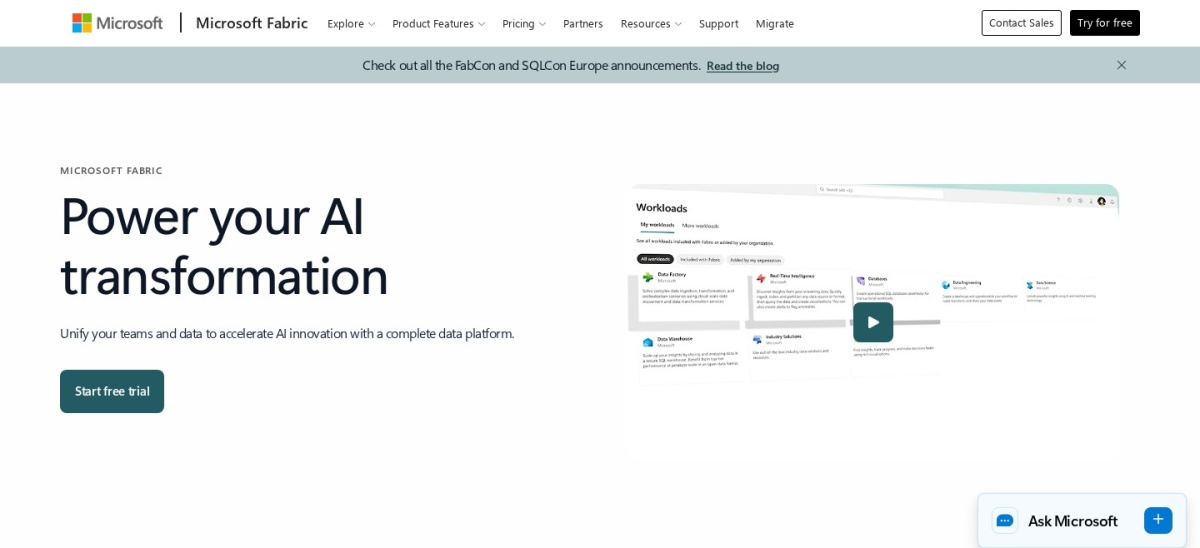
Microsoft Fabric starts at $262.80 a month for an F2 capacity, with Power BI built in.
Every platform here bills by usage, so the cheapest choice depends on how much you query, not a flat seat price.
What a data platform should cover
A data platform stores, transforms and serves data for analytics and AI. The best ones combine a warehouse or lakehouse, pipelines, governance and notebooks in one place.
Pricing is usage-based almost everywhere. Snowflake bills credits, Databricks bills DBUs, BigQuery bills terabytes scanned and Fabric bills capacity units, so compare the unit that matches your workload.
Governance matters as much as speed. Look for access controls, lineage and audit logs before you load sensitive data.
Small teams should start with the free tier or trial, run a real workload for two weeks, and only then commit to a capacity plan.
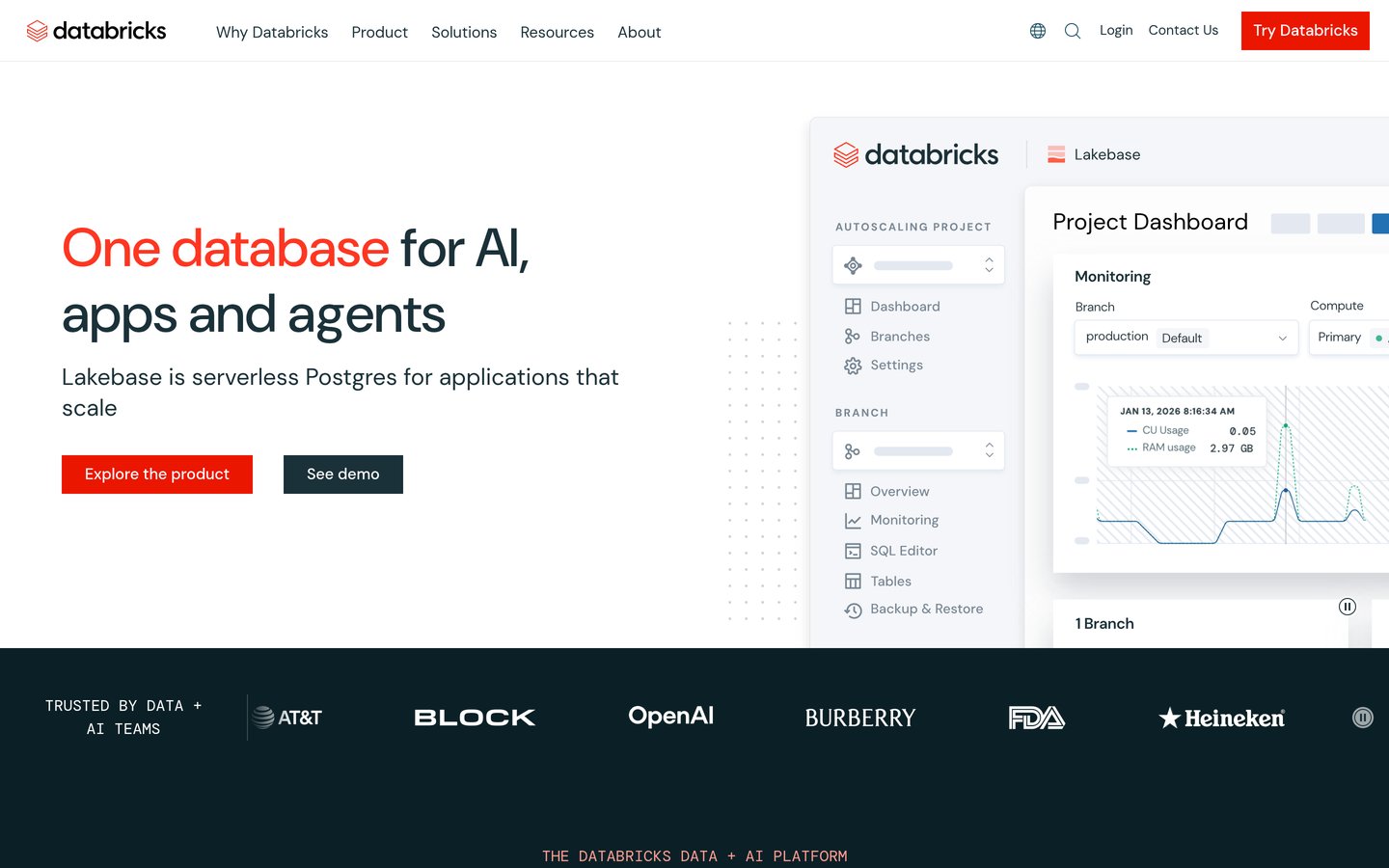
Databricks is a unified lakehouse that runs data engineering, analytics and machine learning on one platform. It combines Apache Spark, Delta Lake, collaborative notebooks and Unity Catalog governance, with a free trial to start. All-purpose compute starts at $0.40 per DBU on the Standard tier.
The trade off is cost control. DBU rates rise with interactive and serverless workloads, and bills climb fast if clusters stay running. It suits teams that want one platform for pipelines, SQL analytics and AI work.
What we like
One platform for engineering, analytics and AI
Largest review base in this list at 1,366 G2 reviews
Strong governance with Unity Catalog
Runs on AWS, Azure and Google Cloud
Watch out for
Usage bills are hard to predict without monitoring
Setup and tuning take real data-engineering skill
Cloud infrastructure is charged on top of DBUs
Paid use is consumption-based; jobs compute starts at $0.15 per DBUVisit databricks.com
02
Snowflake
4.6/5on G2 (783 reviews, checked Nov 2026)
Pricing$2.00/credit
Best for cloud data warehousing
Platform typeCloud warehouse
Standard credit$2.00, AWS US East
Storage$23 per TB/month
Free trial$400 in credits
snowflake.com
Snowflake homepage, captured Nov 2026.
Snowflake is a cloud data warehouse that scales storage and compute separately, so queries do not fight each other for resources. It serves more than 7,200 brands, offers a $400 trial credit, and bills compute in credits, with a Standard credit at $2.00 in AWS US East on demand.
The trade off is that the price of a credit changes with edition, cloud and region, and Enterprise costs $3.00 per credit in the same region. It suits analytics teams that want fast SQL, data sharing and near-zero administration.
What we like
Separate scaling of storage and compute
Fast SQL with very little administration
Built-in data sharing between accounts
Rated 4.6/5 by 783 G2 reviewers
Watch out for
Credit prices vary by edition and region
Costs can spike without warehouse monitoring
No flat monthly plan to budget against
Enterprise edition raises the credit price to $3.00 in AWS US EastVisit snowflake.com
03
Google BigQuery
4.5/5on G2 (1,250 reviews, checked Nov 2026)
Pricing$6.25/TiB
Best for serverless analytics in Google Cloud
Platform typeServerless warehouse
On-demand queries$6.25 per TiB
Free tier1 TiB/month
Slot pricingStandard $0.04/slot-hr
cloud.google.com
Google BigQuery homepage, captured Nov 2026.
Google BigQuery is a serverless data warehouse that runs SQL over huge datasets with no servers to manage. The first 1 TiB of queries each month is free, then on-demand queries cost $6.25 per TiB scanned, and it connects directly to Looker Studio, Sheets and other Google Cloud tools.
The trade off is cost predictability. A badly written query can scan far more data than expected, and the bill follows the bytes. It suits Google Cloud teams that want fast analytics without provisioning a warehouse.
What we like
No servers to provision or manage
Generous free tier of 1 TiB a month
Very fast queries over large datasets
Deep integration with Google Cloud and Sheets
Watch out for
Query costs follow bytes scanned, so bills vary
Slot capacity pricing adds a second model to learn
Microsoft Fabric is a unified analytics platform that combines data engineering, warehousing, real-time intelligence and Power BI on OneLake. The smallest F2 capacity costs $262.80 a month pay-as-you-go, and a 60-day trial is available. It fits organisations already using Microsoft 365 and Azure.
The trade off is the capacity model. One pool of capacity units serves every workload, and viewers below F64 still need Power BI Pro or Premium Per User licences. It suits Microsoft shops that want one platform instead of several tools.
What we like
One capacity pool for warehouse, Spark and Power BI
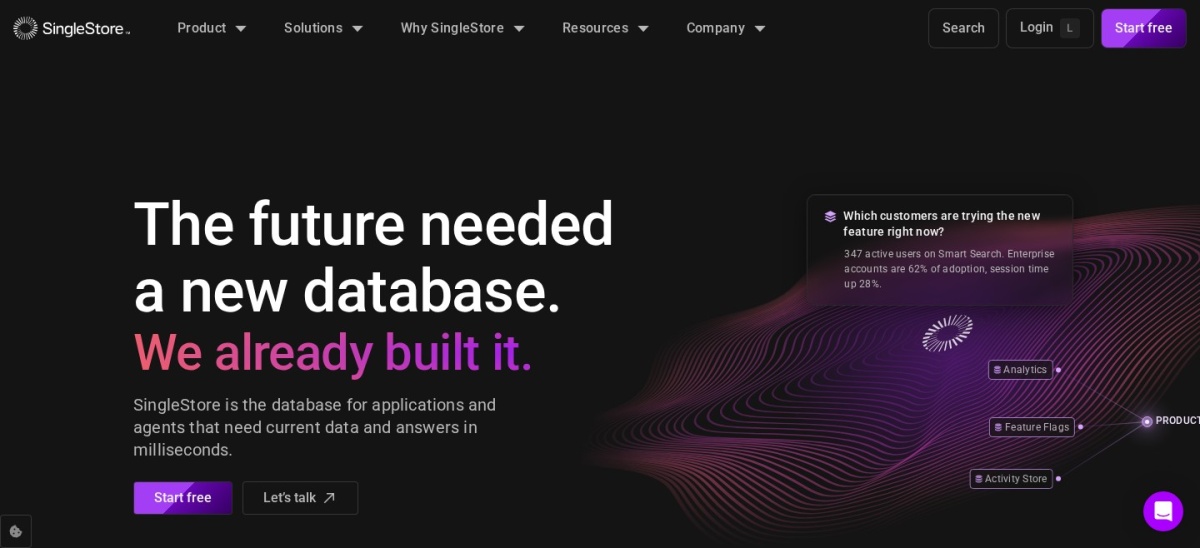
SingleStore is a distributed SQL database that handles transactions and real-time analytics in one system, so teams avoid a separate warehouse pipeline. Its Helios cloud starts with a free Shared tier, and Standard compute on the smallest S-00 workspace costs $0.99 an hour before storage.
The trade off is scale of the community. It has 118 G2 reviews, far fewer than the leaders, and multi-zone deployment for the top availability tier doubles compute cost. It suits real-time apps that need fast reads and writes together.
Amazon Redshift is the AWS data warehouse, available as provisioned clusters or as a serverless service that scales with demand. Serverless costs $0.375 per RPU-hour in US East, with a 4 RPU minimum working out to $1.50 an hour, and new serverless users get a $300 credit for 90 days.
The trade off is AWS lock-in and idle cost. Provisioned clusters charge around the clock unless stopped, and the deepest integrations are with S3, Glue and other AWS services. It suits teams whose data already lives in AWS.
What we like
Deep integration with S3, Glue and AWS services
Serverless shuts down when idle
Reserved nodes cut steady costs by up to 75%
Rated 4.3/5 by 404 G2 reviewers
Watch out for
Provisioned clusters bill even when idle
Pricing has two models to compare
Best value only inside AWS
Reserved instances cut provisioned node prices for steady workloadsVisit aws.amazon.com
07
Teradata Vantage
4.3/5on G2 (376 reviews, checked Nov 2026)
PricingCustom/yr
Best for enterprise analytics at scale
Platform typeEnterprise analytics
DeploymentCloud and on-premises
AnalyticsClearscape Analytics
PricingBy quote
teradata.com
Teradata Vantage homepage, captured Nov 2026.
Teradata Vantage is an enterprise analytics platform built for very large, complex workloads across cloud and on-premises systems. It pairs a high-performance engine with Clearscape Analytics for AI and machine learning, and it is rated 4.3/5 by 376 G2 reviewers.
The trade off is price and complexity. Pricing is by quote, implementation takes months, and it is aimed at large enterprises rather than small teams. It suits organisations with petabyte-scale data and strict governance needs.
Oracle Autonomous Data Warehouse homepage, captured Nov 2026.
Oracle Autonomous Data Warehouse is a self-driving cloud warehouse that provisions, tunes, patches and backs itself up with little human work. An Always Free tier is available, and reviewers praise automated provisioning, tuning and maintenance. Its G2 base is thin, at 4.3/5 from 10+ reviews.
The trade off is the Oracle ecosystem. The best value comes to teams already running Oracle databases, and pricing per OCPU-hour is not published as a single flat rate. It suits Oracle shops that want administration handled for them.
What we like
Self-driving provisioning, tuning and patching
Always Free tier for testing
Strong fit for existing Oracle databases
Automated scaling and backups
Watch out for
Only 10+ G2 reviews, a very thin base
Pricing is not a single published flat rate
Best value only inside the Oracle ecosystem
Paid use bills per OCPU-hour with committed-use discountsVisit oracle.com
09
Cloudera Data Platform
4.1/5on G2 (136 reviews, checked Nov 2026)
PricingCustom/yr
Best for hybrid and private-cloud data
Platform typeHybrid data platform
DeploymentPublic, private, hybrid
Data servicesWarehouse, ML, streaming
PricingBy quote
cloudera.com
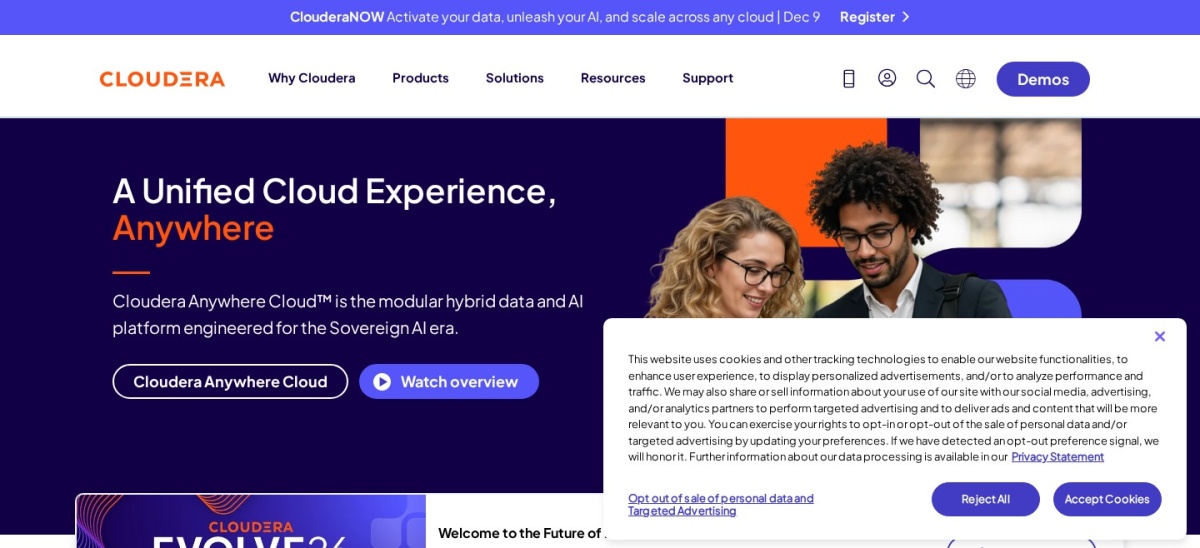
Cloudera Data Platform homepage, captured Nov 2026.
Cloudera Data Platform is a hybrid data platform that runs the same data services across public cloud, private cloud and on-premises systems. It covers warehousing, machine learning, streaming and data engineering, and is rated 4.1/5 by 136 G2 reviewers.
The trade off is cost and complexity. Pricing is by quote, reviewers call it expensive next to open source options, and running a hybrid platform needs skilled platform staff. It suits regulated enterprises that must keep data in more than one place.
What we like
Same platform across cloud and on-premises
Covers warehousing, ML and streaming
Strong governance and security controls
Suited to regulated industries
Watch out for
Pricing is by quote only
Reviewers call it expensive at scale
Lowest G2 rating in this list at 4.1/5
Paid plans are negotiated per deployment and data services usedVisit cloudera.com
Usage pricing: how to compare the bills
None of these platforms has a simple per-seat price. Each bills a different unit, so a direct price comparison only works for one defined workload.
Pick a real workload first, such as 1 TB stored and 10 TB scanned a month, then price that same workload on two or three platforms before you commit.
Watch for the extras. Storage, data transfer, licences and support often sit outside the headline compute rate.
How we chose
We started from the data platforms with the largest G2 review bases and the clearest published pricing, then kept nine that cover warehousing, lakehouses and hybrid deployments.
Prices come from each vendor's pricing page, checked on 25 November 2026. Ratings and review counts come from G2 on the same day. Where a vendor shows a sale, the list shows the regular price.
We left out niche and open-source-only engines with no verifiable G2 rating. No vendor paid for a place, and we do not claim hands-on testing for this list.
How to choose a data platform
Start with where your data already lives, then match the billing unit to your workload.
Map where your data lives today. A team on AWS, Google Cloud or Microsoft should shortlist the platform native to that cloud first.
Price one real workload, not the headline rate. Run the same queries and storage on two platforms for two weeks and compare the actual bills.
Check governance before you load sensitive data. Confirm access controls, lineage, audit logs and regional hosting meet your rules.
Start on the free tier or trial. Load a real dataset, test the tools your analysts use daily, and only then sign a capacity deal.
FAQ
What is the best data platform in 2026?
Databricks is the best overall data platform for most teams. It unifies data engineering, analytics and AI on one lakehouse and is rated 4.6 out of 5 by 1,366 G2 reviewers, the largest review base in this list.
How much does Snowflake cost?
Snowflake bills by usage, not by seat. A Standard credit costs $2.00 in AWS US East on demand, an X-Small warehouse uses 1 credit an hour, and storage costs $23 per TB a month after compression.
Is BigQuery free?
BigQuery has a free tier. The first 1 TiB of queries each month is free, then on-demand queries cost $6.25 per TiB scanned. Storage and slot capacity are charged separately.
What is the difference between a data warehouse and a lakehouse?
A warehouse stores structured data tuned for fast SQL, while a lakehouse adds open file formats and machine learning on the same storage. Databricks and Fabric are lakehouses; Snowflake, BigQuery and Redshift are warehouses.
Which data platform is cheapest for a small team?
BigQuery is usually cheapest to start, because the first 1 TiB of queries a month is free and there is no capacity to buy. Small teams should still price a real workload, since heavy scanning changes the answer.
Do I need a data platform or just a database?
A database stores application data for one app, while a data platform combines storage, pipelines, governance and analytics for many teams. Choose a platform when several teams analyse the same data.
SaaS SEO and WordPress specialist with about 8 years of experience. Rakib compares WordPress plugins, themes, hosting and software using public pricing, documentation and user reviews. See how we rank.