Coda is the best Notion alternative without AI, with docs, tables and automations from $10 per Doc Maker a month and a 4.6 out of 5 G2 rating. Obsidian is the pick for local-first notes at $48 a year, and Microsoft OneNote is the best free option.
How we make this list: we compare pricing pages, product documentation and public user reviews, then re-check every price before each update. No product paid for a place. Disclosure.
Coda leads at $10 per Doc Maker a month, rated 4.6 out of 5 on G2 from 492 reviews.
ClickUp Core costs $12 per user a month, the highest regular price in this list.
OneNote is completely free, and Bear Pro costs $39.99 a year.
Obsidian Sync is $48 a year, and the core app is free with no cap on notes.
Evernote's free plan caps at 50 notes, so most people need Starter at $99 a year.
How do you pick Notion alternatives without AI?
Without AI means the tool works fully without an assistant. Every pick here runs its core features with no AI subscription, and any AI add-on is optional.
Start with how you work, not with the feature list. If you plan projects in tables, a docs-plus-database tool fits; if you write long notes, a local-first app fits better. Our guide on planning a content calendar shows the same pick-by-workflow idea.
Price spreads are wide. Free plans cover solo notes in most of these tools, while paid plans run from $39.99 to $144 a year, so the cheapest paid plan is rarely the deciding factor.
Check the platform before you commit. Bear and Craft are Apple-first, while Obsidian, Logseq and OneNote run on every major platform, including Linux for the first two.
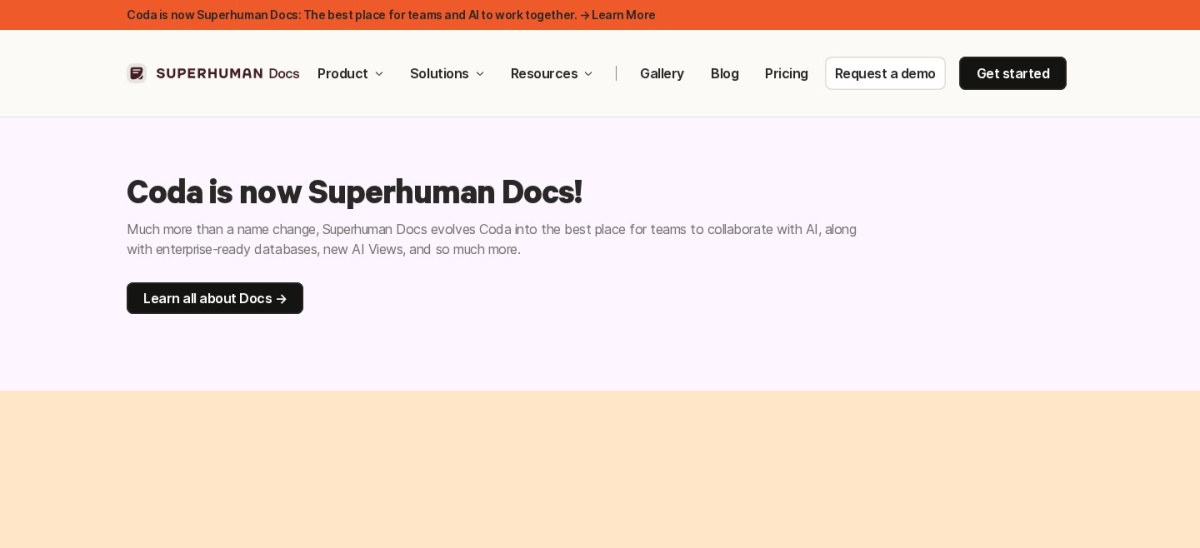
Coda is a docs workspace that blends pages, tables, formulas and automations, so teams can build wikis, trackers and lightweight apps in one place. The free plan covers basic collaboration with doc size limits, and only Doc Makers pay, while editors and viewers are free.
The trade off is the new name and the AI push. Coda is now sold as Superhuman Docs and leads with AI collaboration, but its docs, tables and automations work without AI credits. It suits small teams with one or two builders who design systems for everyone else.
What we like
Only Doc Makers pay, editors and viewers are free
Packs connect docs to other apps and data
Strong formulas and automations for custom workflows
Rated 4.6 out of 5 on G2 from 492 reviews
Watch out for
Steep learning curve for new users
Can feel slow on very large docs
Smaller community than Notion
Team adds unlimited automations and doc lockingVisit coda.io
02
ClickUp
4.6/5on G2 (13,731 reviews, checked Nov 2026)
Paid from$12/mo
Best for notes tied to team work
Cheapest paid planCore, $12/user/mo
Free planYes, unlimited tasks
Storage on free plan60 MB
PlatformsWeb, Mac, Windows, iOS, Android
clickup.com
ClickUp homepage, captured Nov 2026.
ClickUp is a work platform with docs, tasks, whiteboards and chat, so notes live next to the work they describe. The free plan includes unlimited tasks and members, collaborative docs and 60 MB of storage, and paid plans add more storage and controls.
The trade off is size. ClickUp does far more than take notes, so setup takes longer than a simple notes app, and the regular Core price is $12 per user a month on yearly billing. It suits teams that want notes tied to real work.
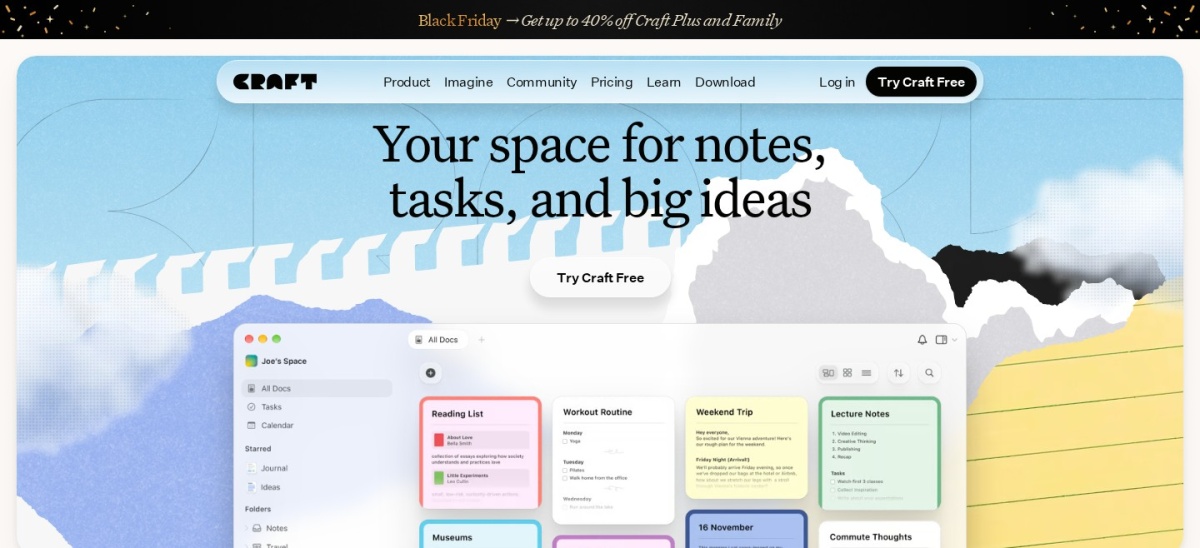
Craft is a notes and docs app for Apple devices and the web with a clean, visual editor. The free plan allows 1,500 blocks and 1 GB of storage, and daily notes and calendars link notes to plans, while optional AI can summarise, rewrite and extend text.
The trade off is platform. Craft is built for Apple first, and the Plus plan costs $8 a month on yearly billing for unlimited content and 30-day version history. It suits Apple users who want good-looking notes and docs.
What we like
Attractive editor with cards and tables
Daily notes link to calendar and tasks
Optional AI summaries and rewrites
Watch out for
Apple-first, with a thinner Windows story
Free plan caps at 1,500 blocks
Plus adds unlimited content and version historyVisit craft.do
04
Obsidian
4.5/5on G2 (14 reviews, checked Nov 2026)
Paid from$4/mo
Best for owning your notes as files
Free planYes, full core app
Cheapest paidSync, $4/mo
File formatPlain Markdown
PlatformsMac, Windows, Linux, iOS, Android
obsidian.md
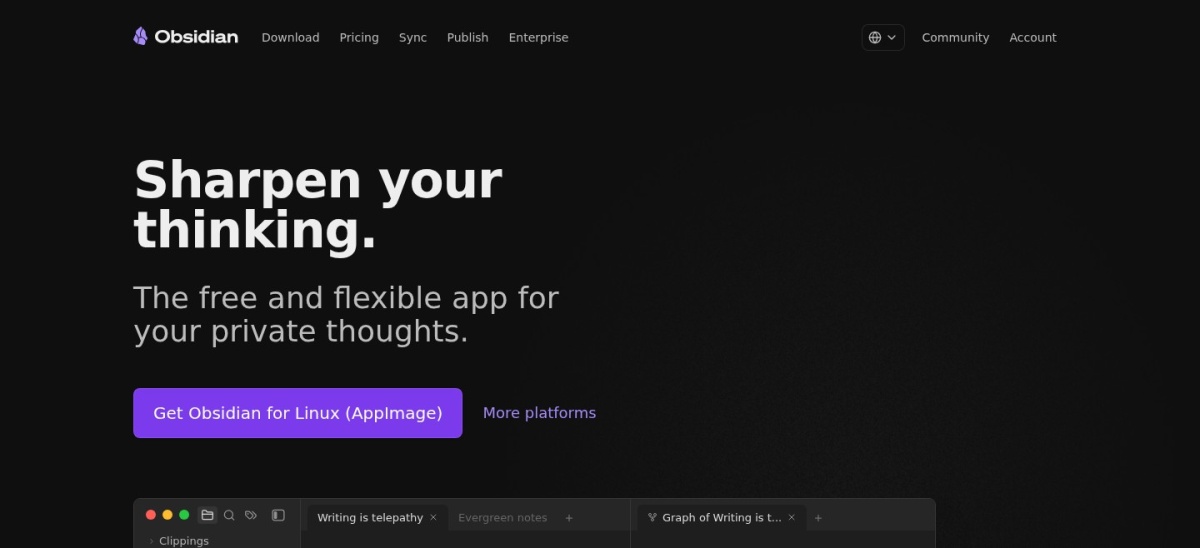
Obsidian homepage, captured Nov 2026.
Obsidian is a local-first notes app that stores notes as plain Markdown files on your device. The core app is free with no sign-up and no cap on notes or vaults, and links, backlinks and a graph view connect notes together.
The trade off is sync. Notes stay on one device unless you pay for Obsidian Sync at $4 a month on yearly billing, or set up your own cloud folder. It suits writers and researchers who want to own their notes as plain files.
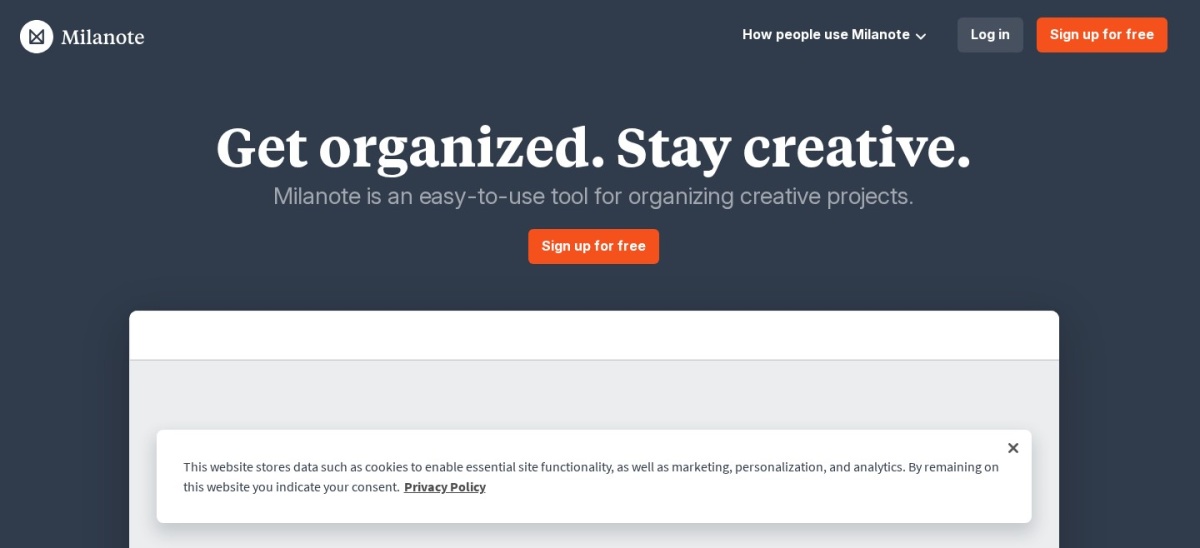
Milanote is a visual workspace that organises notes, images, links and files on boards instead of in folders. The free plan allows 100 notes, images or links and 10 file uploads, and Pro removes those limits for $9.99 a person a month on yearly billing.
The trade off is price. Pro costs more than most solo note apps here, and team plans are billed yearly only. It suits creative teams and freelancers who plan projects visually.
Microsoft OneNote is a free digital notebook organised into notebooks, sections and pages. It handles typed notes, handwriting, drawings, audio and clipped web pages, and it syncs through OneDrive across Windows, Mac, web, iPhone and Android.
The trade off is AI. Copilot in OneNote needs a paid Microsoft 365 plan, so the free app has no built-in AI assistant. It suits anyone who wants a capable free notebook, especially in a Microsoft household.
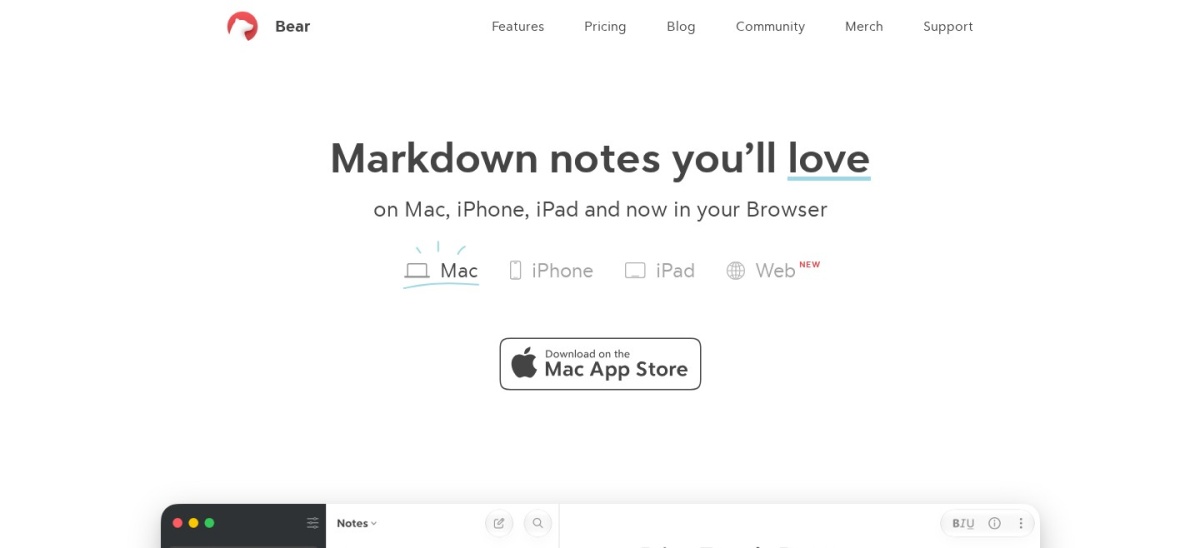
Bear is a Markdown notes app for Mac, iPhone, iPad and the web. The free version covers the full editor with tags, backlinks and tables on one device, and Bear Pro adds sync across devices, encryption, themes and export to PDF, Word and HTML.
The trade off is reach. Bear has no Windows or Android app, and Pro costs $3.99 a month or $39.99 a year for new subscribers from 24 November 2026. It suits Apple users who want a fast, focused writing app.
Evernote is a note app built around clipping, search and organisation. The free plan allows 50 notes in one notebook on one device with 1 GB of storage, and paid plans add AI search, AI transcribe for meetings, and AI edit for writing and summaries.
The trade off is the free plan. Fifty notes and one notebook run out fast, and the Starter plan costs $8.25 a month on yearly billing for 1,000 notes and 3 devices. It suits people who save lots of web pages, PDFs and scans.
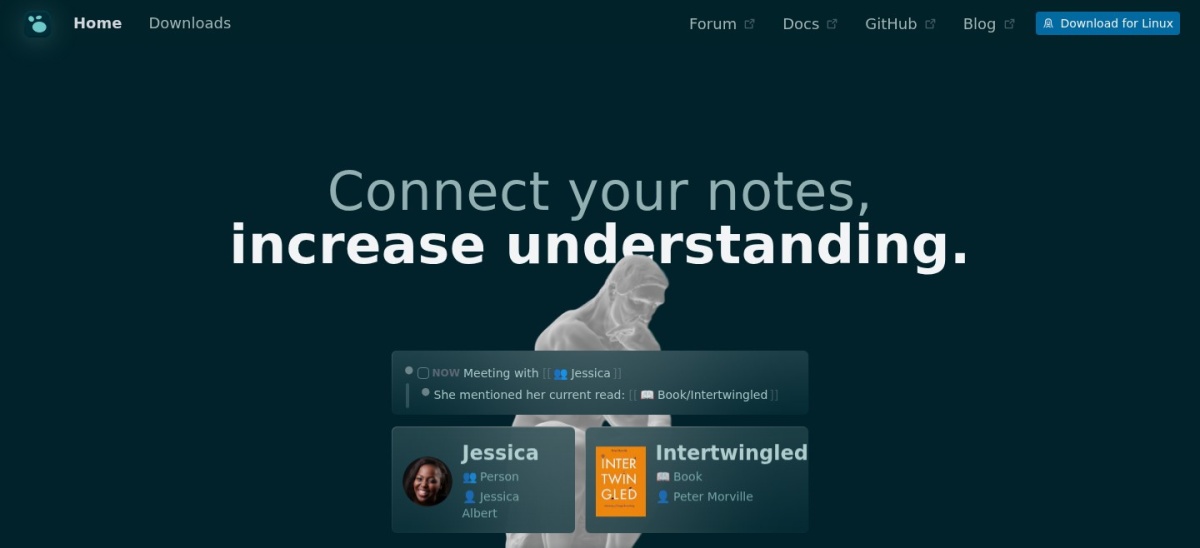
Logseq is a free, open-source outliner that stores notes as plain Markdown files on your device. Daily journals, block-level links, tasks and a graph view build a linked notebook, and PDF annotation is built in.
The trade off is polish. Logseq Sync costs $5 a month, and the outliner style and mobile apps take some learning. It suits people who think in outlines and want their notes as files they own.
It means no AI subscription is needed to use the tool. Coda and Craft include optional AI features, while Obsidian, Logseq and Bear have none built in.
It does not mean these tools never mention AI. Coda is now sold as Superhuman Docs and leads with AI collaboration, but its docs, tables and automations work without buying AI credits.
How we chose
We started from established Notion rivals that work as docs, notebooks or team wikis, then kept the nine with public ratings and published prices.
Prices come from each vendor's pricing page and public pricing reads, checked on 29 November 2026. Ratings come from G2 or Capterra on the same date. Where a vendor shows a sale, the list shows the regular price.
We left out tools with no public rating, tools that shut down, and AI-first apps that need an AI plan for core features. No vendor paid for a place, and we do not claim to have used these tools ourselves.
How to choose a Notion alternative without AI
Match the tool to the way you already work, then check price and platform.
List what Notion does for you today. If it is mostly notes, a notebook app is enough. If it is databases and trackers, you need docs plus tables.
Try the free plan first. Every tool here has a free plan. Import a real set of notes and use it for a week before paying.
Check sync and export. Local-first apps need a paid sync plan or your own cloud folder, and every pick should export your notes as plain files.
Count the seats, not the headline price. Per-maker billing like Coda's can cost far less than per-seat billing when most of the team only reads.
FAQ
What are the best Notion alternatives without AI in 2026?
Coda is the best Notion alternative without AI for most people, with docs, tables and automations from $10 per Doc Maker a month and a 4.6 out of 5 G2 rating. ClickUp suits teams that want notes beside tasks, and Obsidian suits writers who want local files.
Which Notion alternative without AI is free?
Microsoft OneNote is the best free Notion alternative without AI, with notebooks, sections and pages at no cost and sync across every major platform. Obsidian and Logseq are also free for personal use, with paid sync as an optional add-on.
What is the cheapest paid Notion alternative without AI?
Bear Pro is the cheapest paid plan here at $39.99 a year, followed by Obsidian Sync at $48 a year. Both are for solo users, so teams should compare Coda at $10 per Doc Maker a month instead.
Which Notion alternative without AI is best for beginners?
Microsoft OneNote is the easiest start, because it is free, familiar and needs no setup. Evernote is also simple, but its free plan caps at 50 notes in one notebook, so most beginners will need Starter at $99 a year.
Coda vs ClickUp: which Notion alternative is better?
Coda is better for docs and databases, with tables, formulas and automations from $10 per Doc Maker a month. ClickUp is better when notes sit beside team tasks and projects, at $12 per user a month on the Core plan.
Is Obsidian a good Notion alternative without AI?
Yes, Obsidian is a strong Notion alternative without AI for writers and researchers. Its core app is free, notes are plain Markdown files you own, and sync costs $48 a year. It has no built-in collaboration, so teams should look at Coda or ClickUp.
SaaS SEO and WordPress specialist with about 8 years of experience. Rakib compares WordPress plugins, themes, hosting and software using public pricing, documentation and user reviews. See how we rank.