ManageEngine OpUtils is the best network IP tool for small and midsize teams, with switch port mapping and IP tracking from 138 dollars a year. PRTG suits teams that want sensor-based monitoring as well, while SolarWinds IPAM fits large networks that need deep DHCP and DNS control.
How we make this list: we compare pricing pages, product documentation and public user reviews, then re-check every price before each update. No product paid for a place. Disclosure.
OpUtils is the cheapest commercial IPAM here at $138 a year, with a free edition and a 4.5 Capterra rating.
NetBox is free and open source, rated 4.7 on G2, and suits teams that can self-host it.
PRTG starts at $200 a month with a free 100-sensor tier and the clearest sensor pricing here.
SolarWinds IPAM, Infoblox, BlueCat and EfficientIP are all quote-only enterprise tools.
Domotz is the highest rated here at 4.8 on G2, with flat $35-a-month per-collector pricing.
How do you choose the right network IP tools?
Network IP tools answer one question: what lives on each address. The best ones discover devices, track subnets, flag conflicts and keep DNS and DHCP in step.
Price splits the list in two. OpUtils starts at $138 a year and NetBox costs nothing to self-host, while SolarWinds, Infoblox, BlueCat and EfficientIP are all quote-only enterprise sales.
Free scanners are not IPAM. A free scanner finds live hosts, but only an IPAM keeps the authoritative record of who owns each address and when it changes.
Enterprise DDI is about control, not just tracking. Infoblox and BlueCat tie IP allocation to DNS and DHCP changes with approval workflows, which matters once more than one team edits the same zones.
4.5/5on Capterra (Not published reviews, checked Nov 2026)
Paid from$138/yr
Best network IP tool for smaller teams
Entry plan$138/yr
Free editionYes
Switch portsYes, port mapping
IPv6Yes, IPv4 and IPv6
manageengine.com
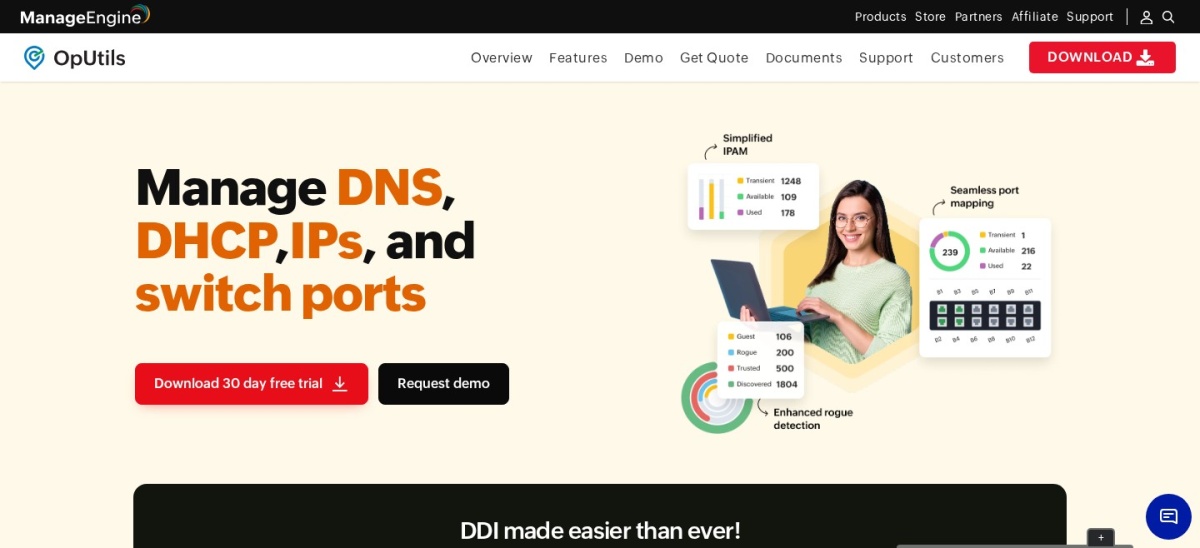
ManageEngine OpUtils homepage, captured Nov 2026.
ManageEngine OpUtils is an IP address and switch port management tool that helps engineers monitor, diagnose and troubleshoot IT resources. It tracks IPv4 and IPv6 addresses, maps switch ports, detects rogue devices and backs up Cisco configuration files, with more than 20 tools in one console.
The trade off is polish. Reviewers call it practical and affordable but note the interface feels dated and reports are hard to shape. The starting price is $138 a year, though one guide lists $345 a year, so confirm the figure on the vendor page. It suits small and midsize teams that want cheap IPAM.
4.4/5on G2 (Not published reviews, checked Nov 2026)
PricingCustom/yr
Best for large Orion-based networks
Entry planCustom, by quote
DHCP and DNSYes, unified
Conflict detectionYes, alerts
Free trial30 days
solarwinds.com
SolarWinds IPAM homepage, captured Nov 2026.
SolarWinds IPAM is an enterprise IP address management tool that discovers, tracks and manages IPs, subnets, DHCP and DNS from a single console. It automatically scans subnets, detects conflicts, logs MAC addresses and hostnames, and slots into the same Orion console as SolarWinds NPM.
The trade off is price opacity. It is sold by quote based on managed IP count, with no published list price, and it runs on Windows servers. It suits large networks already running SolarWinds Orion.
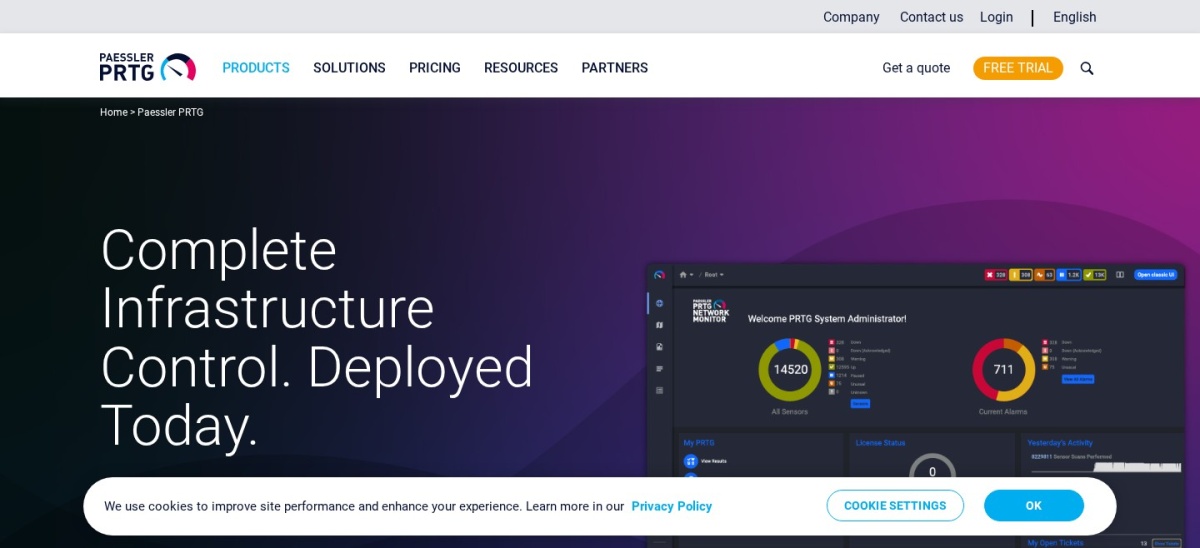
PRTG is a sensor-based monitoring tool from Paessler that watches devices, bandwidth, servers and applications from one dashboard, with hundreds of ready-made sensor types for SNMP, WMI, flow data and ping. It installs on a Windows server in minutes and auto-discovers the network.
The trade off is the sensor math. The free tier covers 100 sensors, about 10 devices, and PRTG 500 costs $200 a month paid annually, so costs climb as sensor counts grow. It suits teams that want fast setup and live IP visibility.
4.5/5on G2 (Not published reviews, checked Nov 2026)
PricingCustom/yr
Best enterprise DDI platform
Entry planCustom, token-based
DNS securityYes, DNS-layer
GridYes, high availability
Free trialYes
infoblox.com
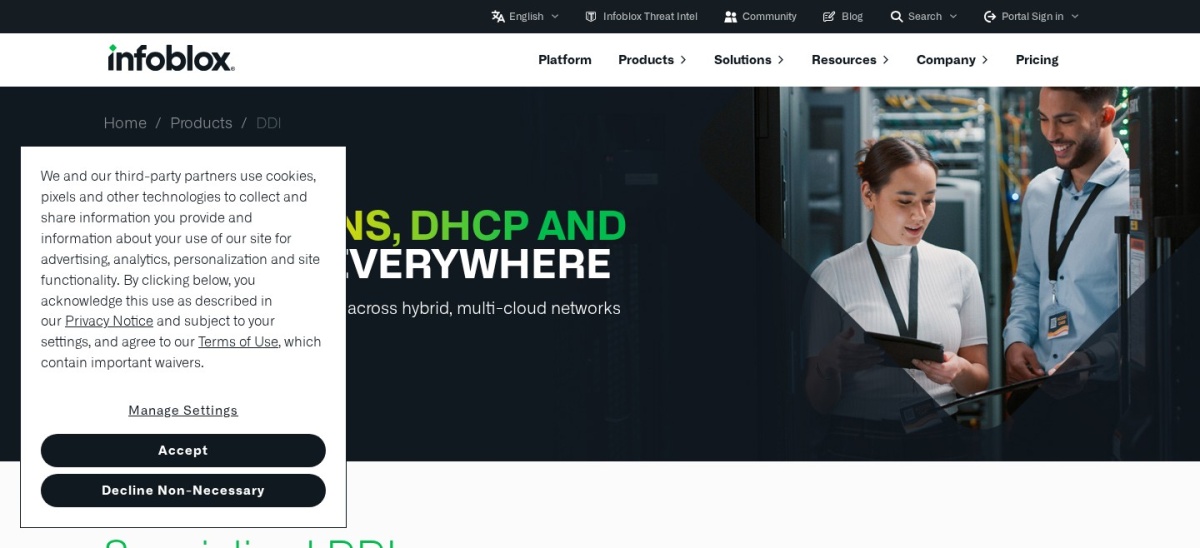
Infoblox homepage, captured Nov 2026.
Infoblox is the enterprise DDI platform that unifies DNS, DHCP and IPAM plus DNS-layer security at scale. Its Grid technology keeps services running with high availability, and Universal DDI covers on-premises, cloud and hybrid networks from one control point.
The trade off is cost and complexity. Pricing is token-based and by quote only, and running it well takes dedicated network staff. It suits large enterprises where DNS and DHCP must never go down.
Lansweeper is a cyber asset intelligence and discovery platform used across more than 30,000 environments to catalog hardware, software, users and cloud resources. It discovers network-connected devices agentlessly and keeps the inventory current with scheduled scans.
The trade off is price. Paid plans start at $299 a month, and the free tier covers only your first 100 assets in full detail. It suits IT teams that need IP addresses tied to real assets and owners.
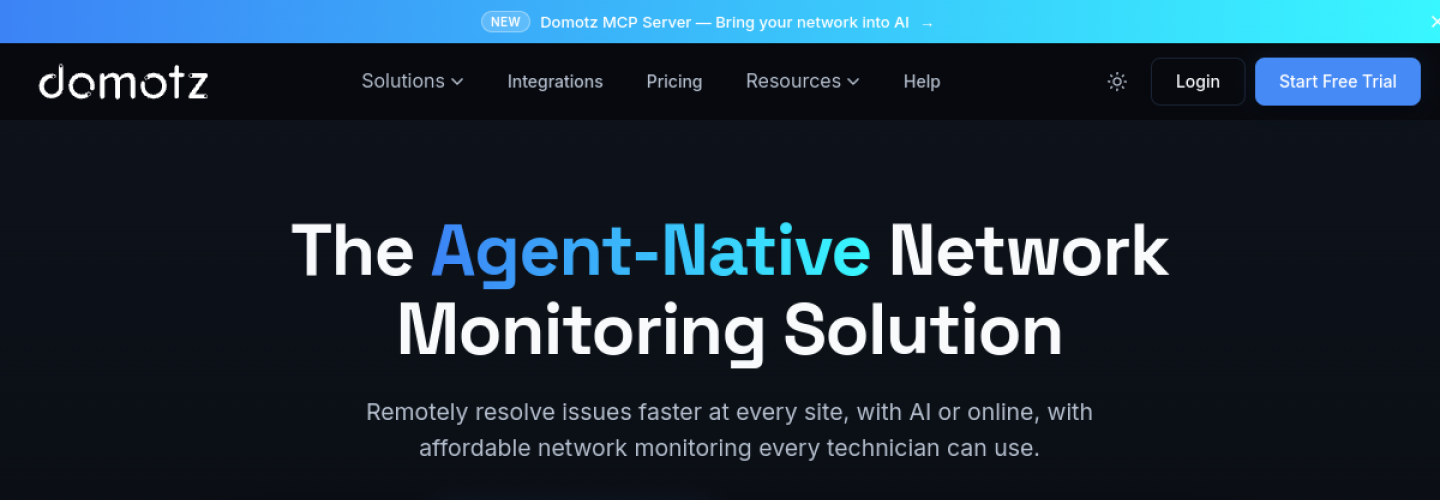
Domotz is a network monitoring and discovery platform that maps endpoints, switches, cameras and IoT devices per site. It charges $35 a month per collector with unlimited devices per site, and it is used by more than 3,600 customers across 40,000-plus networks.
The trade off is depth. Domotz maps and monitors well, but it is not a full IPAM with approval workflows for DNS and DHCP changes. It suits MSPs and multi-site teams that want one flat price per site.
4.3/5on G2 (Not published reviews, checked Nov 2026)
PricingCustom/yr
Best for automation-first DDI
Entry planCustom, by quote
Adaptive DNSYes
AutomationYes, workflows
Free trialYes
bluecatnetworks.com
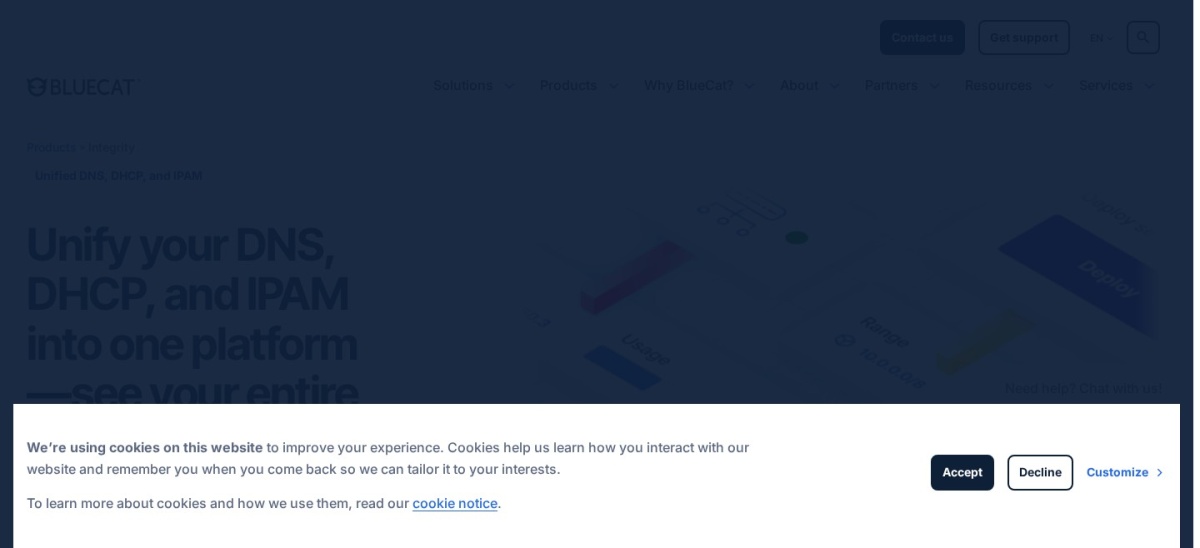
BlueCat homepage, captured Nov 2026.
BlueCat is an enterprise DDI platform built around automation, with Adaptive DNS and IPAM that centralize control across hybrid and multi-cloud networks. It automates VM IP provisioning and ties DNS changes to managed IP records under policy control.
The trade off is enterprise pricing. It is sold by quote only, and the platform is built for regulated, complex networks rather than small teams. It suits enterprises that want policy-driven DNS, DHCP and IPAM automation.
4.7/5on G2 (Not published reviews, checked Nov 2026)
PriceFree
Best free open-source IPAM
Entry planFree, open source
APIYes, API-first
CloudNetBox Cloud, by quote
FocusSource of truth
netbox.dev
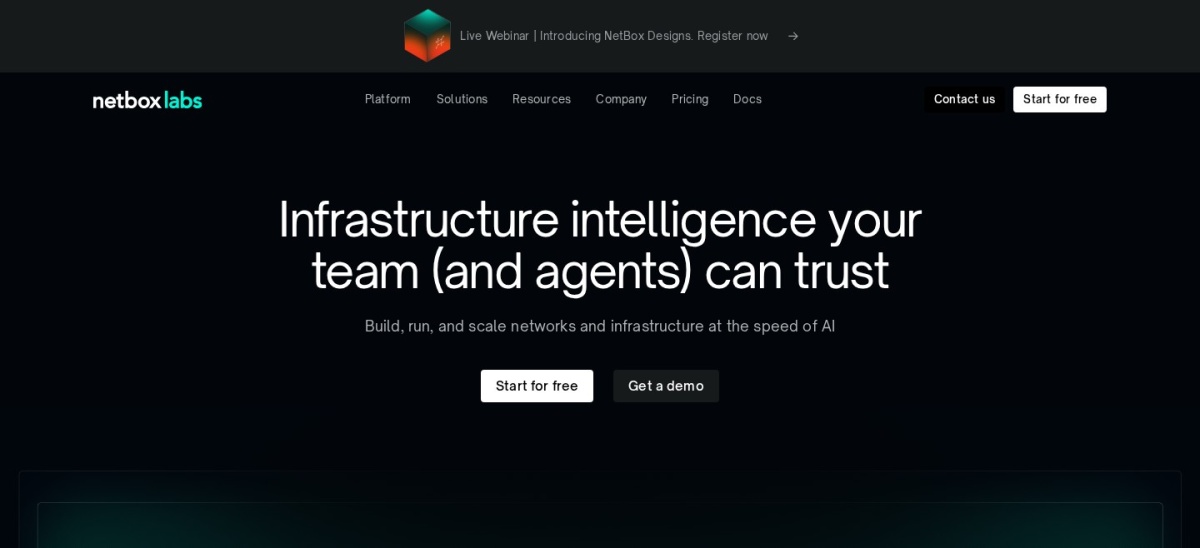
NetBox homepage, captured Nov 2026.
NetBox is an open-source IPAM and infrastructure data model built for automation. It tracks IP addresses, subnets, devices and circuits as a network source of truth, with an API-first design that fits infrastructure-as-code workflows.
The trade off is effort. Self-hosting is free, but the team runs, upgrades and backs it up, and NetBox Cloud is sold by quote for teams that want it hosted. It suits technical teams with small budgets and automation skills.
4.2/5on G2 (Not published reviews, checked Nov 2026)
PricingCustom/yr
Best for DNS security-driven DDI
Entry planCustom, by quote
DNS securityYes, DNS Guardian
DDIYes, unified
Free trialYes
efficientip.com
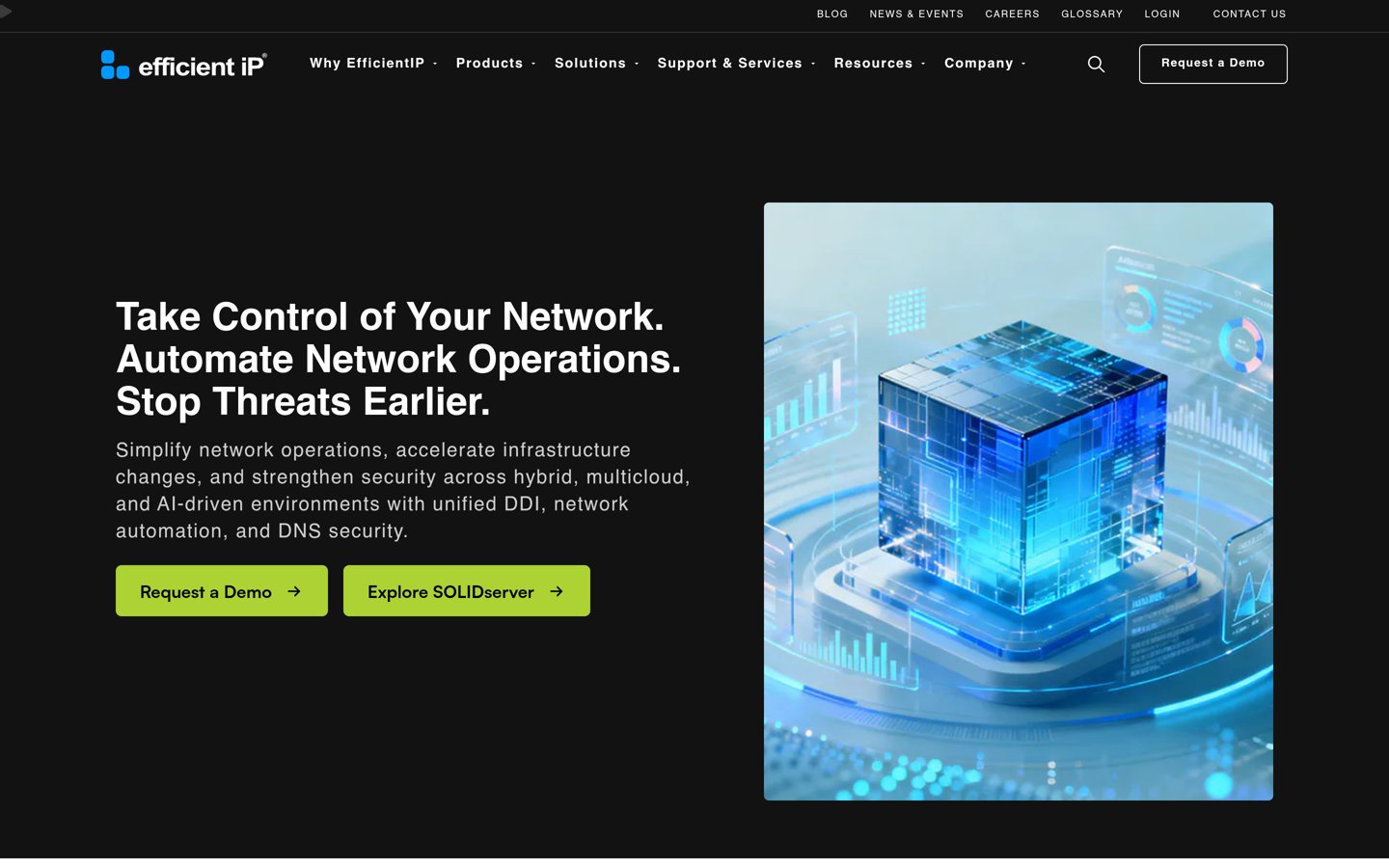
EfficientIP homepage, captured Nov 2026.
EfficientIP is an enterprise DDI suite that unifies DNS, DHCP and IPAM with DNS security built in. Its DNS Guardian protection and customizable resource templates suit critical networks where DNS is a security layer, not just a directory.
The trade off is enterprise sales. It is sold by quote only with tiered enterprise licensing, and it is built for large networks with custom needs. It suits teams that want DDI and DNS threat protection in one platform.
IPAM keeps the authoritative record of subnets, addresses and owners, with conflict detection and DHCP and DNS coordination. SolarWinds IPAM, Infoblox, BlueCat, OpUtils, NetBox and EfficientIP are IPAM tools.
IP scanners find live hosts fast and cost little or nothing. PRTG, Lansweeper and Domotz scan and monitor, but they are not the system of record for address ownership.
Small networks can start with a scanner plus a spreadsheet, then move to OpUtils or NetBox when conflicts and undocumented addresses pile up.
Large networks should buy IPAM first. Once DNS and DHCP changes need approval trails, a scanner alone cannot keep the record straight.
How we chose
We started from the IPAM and IP discovery tools most often shortlisted in 2026 guides, then kept the nine with a G2 or Capterra rating and a real IP tracking role.
Prices come from each vendor pricing page where it loaded today, checked on 30 November 2026, or from November 2026 guides where the vendor page blocked a direct read. Ratings come from G2 or Capterra on the same day.
We left out generic network monitors with no IPAM role and tools with no public rating to check against. No vendor paid for a place, and we do not claim hands-on testing for this list.
How to choose network IP tools
Start with the size of the network, then decide whether you need a record of ownership or just a scan.
Count the network first. List subnets, DHCP scopes and device counts, because enterprise IPAM is priced by scope and scanners by sensors.
Decide if you need a record or a scan. Pick IPAM if ownership and conflicts matter, or a scanner such as PRTG if you mainly need live visibility.
Check DNS and DHCP integration. Confirm the tool talks to your DNS and DHCP servers before you buy, since that is where IPAM earns its keep.
Trial it on one subnet. Run the trial on a single subnet with real devices, then check conflict alerts and reports before rolling it out.
FAQ
What are the best network IP tools in 2026?
ManageEngine OpUtils is the best network IP tool for most small and midsize teams, with IP tracking and switch port mapping from $138 a year. PRTG suits monitoring-led teams, and SolarWinds IPAM fits large enterprise networks.
How much do network IP tools cost?
OpUtils starts at $138 a year and NetBox is free to self-host, while PRTG starts at $200 a month and Domotz at $35 a month. SolarWinds IPAM, Infoblox, BlueCat and EfficientIP are all quote-only.
Is there a free network IP tool?
Yes. NetBox is free and open source, OpUtils and PRTG offer free editions, and Lansweeper is free for your first 100 assets. Free editions cover small networks well.
What is the difference between IPAM and a network scanner?
IPAM keeps the authoritative record of subnets, addresses and owners with conflict detection and DHCP and DNS coordination. A scanner finds live hosts but does not own the record of who holds each address.
SolarWinds IPAM vs Infoblox: which is better?
SolarWinds IPAM suits teams already running SolarWinds Orion, since it slots into the same console. Infoblox suits enterprises that need DDI at scale with DNS-layer security, and it leads on market share.
Do I need enterprise DDI for a small network?
No. Small networks do well with OpUtils or NetBox plus a scanner. Enterprise DDI earns its cost once several teams edit DNS and DHCP and need approval trails.
What is the cheapest commercial IPAM?
ManageEngine OpUtils is the cheapest commercial IPAM here at $138 a year, with a free edition. NetBox is free to self-host for teams with the skills to run it.
SaaS SEO and WordPress specialist with about 8 years of experience. Rakib compares WordPress plugins, themes, hosting and software using public pricing, documentation and user reviews. See how we rank.