PRTG is the best network monitoring software for churches, with a free tier covering 100 sensors and paid plans from $200 a month. Zabbix costs nothing to license for churches with Linux skills, while Site24x7 is the cheapest hosted option from $9 a month.
How we make this list: we compare pricing pages, product documentation and public user reviews, then re-check every price before each update. No product paid for a place. Disclosure.
PRTG is the best network monitoring software for churches, with a free tier for 100 sensors and the fastest setup for volunteers.
Zabbix costs nothing to license and has no device limit, but needs Linux skills to run.
Site24x7 is the cheapest hosted option at $9 a month, with nothing to install.
OpManager starts at $95 a year for 10 devices, the lowest annual paid price here.
Domotz charges a flat $35 a month per site with unlimited devices, which fits multi-campus churches.
Auvik and Checkmk are the priciest paths here: Auvik is quote-only and Checkmk Pro starts at €190 a month.
What should churches look for in network monitoring software?
A church network is small but busy. Sunday streaming, Wi-Fi for the congregation, office computers, security cameras and the sound desk all share one connection, and a failure during a service is the worst time to discover it.
Budget decides most church choices. Free tiers matter more here than in a business: PRTG covers 100 sensors free, Zabbix costs nothing to license, and Site24x7 starts at $9 a month.
Volunteer skill is the second filter. A tool that needs Linux skills only works if a volunteer has them, so churches with no technical volunteer should pick a guided, cloud-hosted tool instead.
Count devices before you compare prices. PRTG charges per sensor, OpManager per device and Domotz per site, so the cheapest headline price is not always the cheapest bill for your network.
List prices in each vendor's currency, checked Nov 2026
ZabbixFree
AuvikCustom
DatadogFREE$84
OpManagerFREE$95
Site24x7FREE$108
Domotz$420
Nagios XIFREE$1,995
CheckmkFREE€2,280
PRTGFREE$2,400
The 9 best network monitoring software for churches
01
PRTG
4.7/5on G2 (219 reviews, checked Nov 2026)
Paid from$200/mo
Best network monitoring software for churches overall
Free tier100 sensors, forever
Cheapest paid planPRTG 500, $200/mo
Sensors on PRTG 500500, about 50 devices
Trial30 days, unlimited
paessler.com
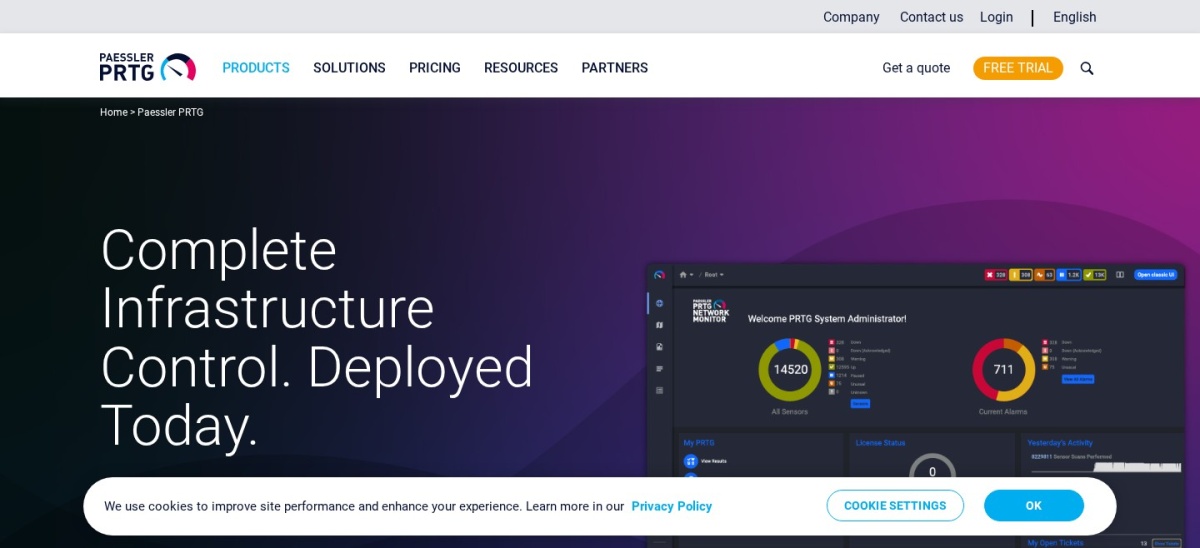
PRTG homepage, captured Nov 2026.
PRTG is sensor-based network monitoring for small IT teams, covering SNMP, WMI, NetFlow, packet sniffing and syslog in one install. The freeware edition covers 100 sensors for about 10 devices, which fits most church networks, and setup uses auto-discovery.
The trade off is sensor sprawl. Paid plans start at $200 a month billed annually for PRTG 500, and busy devices can consume dozens of sensors quickly. It suits churches on Windows with a volunteer or part-time IT lead.
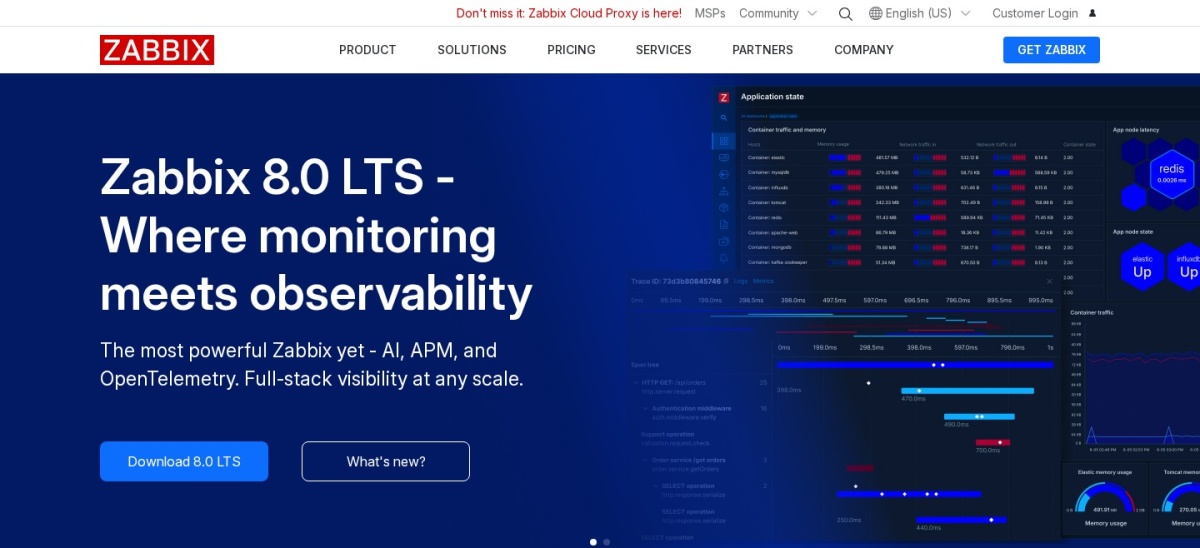
Zabbix is free, open-source monitoring software for servers, networks, cloud hosts, containers and databases, with no license fee and no limit on hosts, metrics, users or alerts. The current release is Zabbix 8.0 LTS, and churches with Linux skills can run it on a spare server.
The trade off is setup time. Zabbix needs Linux and database skills to install and tune, and paid support starts at $325 a month, while hosted Zabbix Cloud starts at $50 a month. It suits churches with a technical volunteer and no budget.
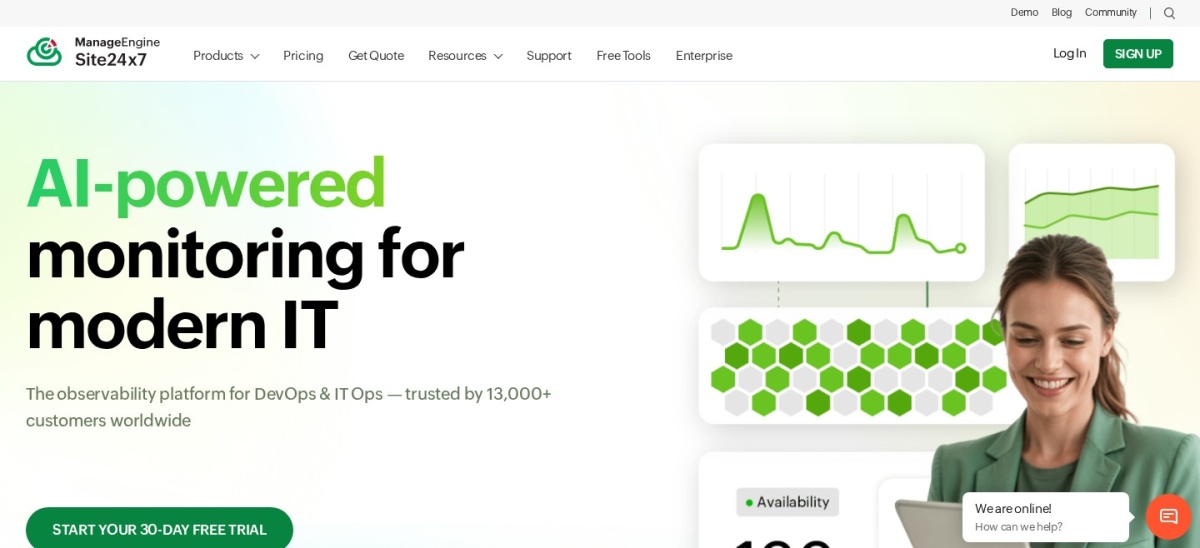
Site24x7 is cloud monitoring from Zoho that covers websites, servers, networks and applications from one dashboard. The Starter plan costs $9 a month, and the free tier covers 50 resources, so a small church can watch its website and office network without running a server.
The trade off is depth. Network monitoring needs the on-premise poller for devices behind the church firewall, and the cheapest plans cap monitor counts. It suits churches that want hosted monitoring with nothing to install.
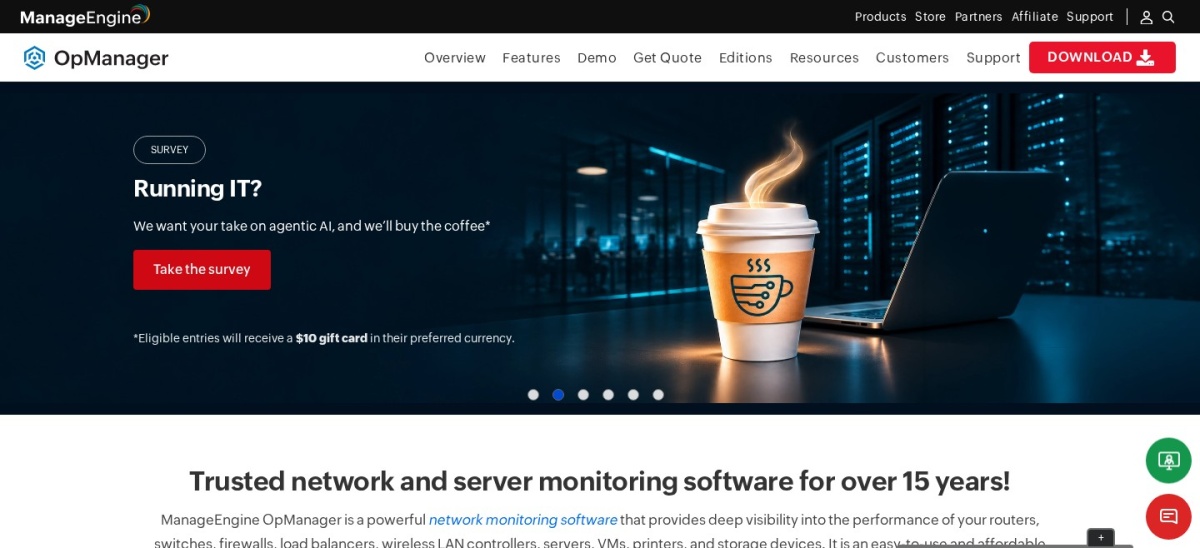
ManageEngine OpManager homepage, captured Nov 2026.
ManageEngine OpManager is network and server monitoring software that runs on-premises or in the cloud, using SNMP, WMI and agents. Its free edition covers 3 devices, and the Standard edition starts at $95 a year for 10 devices, with fault and performance monitoring, alerting and dashboards.
The trade off is setup. It is a Windows-friendly tool with a learning curve for custom views, and larger device packs climb in price quickly. It suits churches with an on-premises network that want a low annual fee.
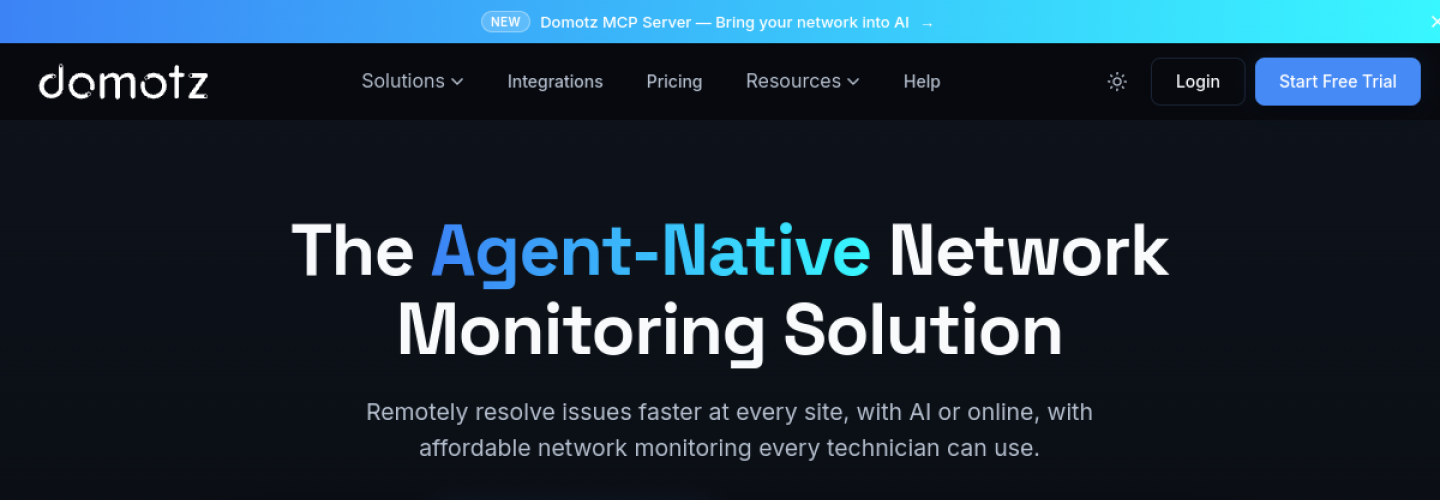
Domotz is cloud network monitoring priced per site, with unlimited devices at each site. A church pays a flat $35 a month per collector, which covers the sanctuary, office and any second campus on the same site, with remote access and alerts included.
The trade off is that there is no free plan, only a 14-day trial, and it is built for MSPs, so some features assume you manage many sites. It suits churches with two or more campuses that want one bill per site.
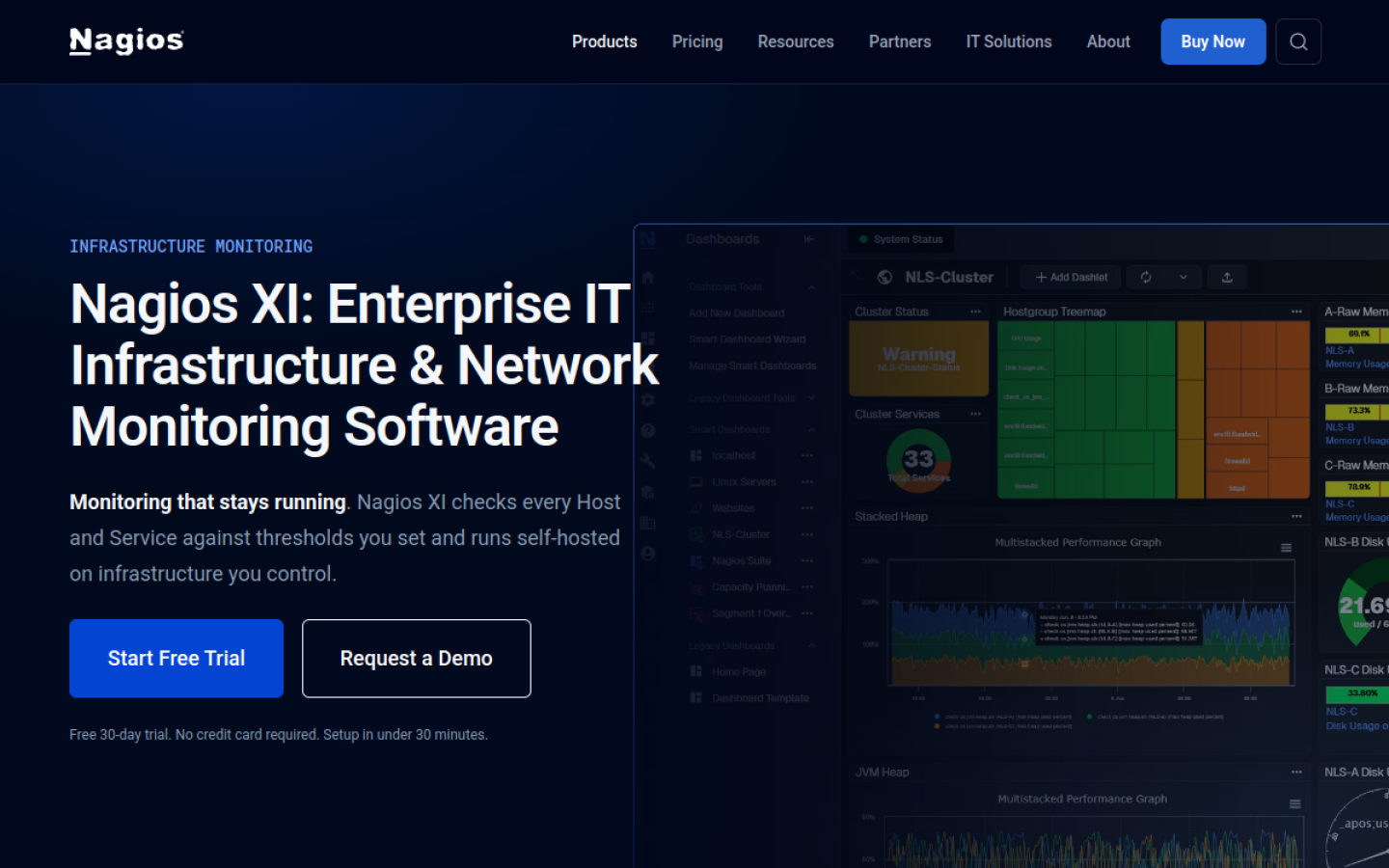
Nagios XI is a commercial monitoring tool built on the open-source Nagios Core, with wizards, dashboards and reporting on top. The free tier covers 7 nodes or 100 services, and Standard covers 100 nodes at $1,995 a year, with a large plugin library.
The trade off is review depth. Its 4.5 out of 5 G2 rating rests on only 58 reviews, and setup still needs Linux skills. It suits churches that already run Nagios Core and want a supported upgrade.
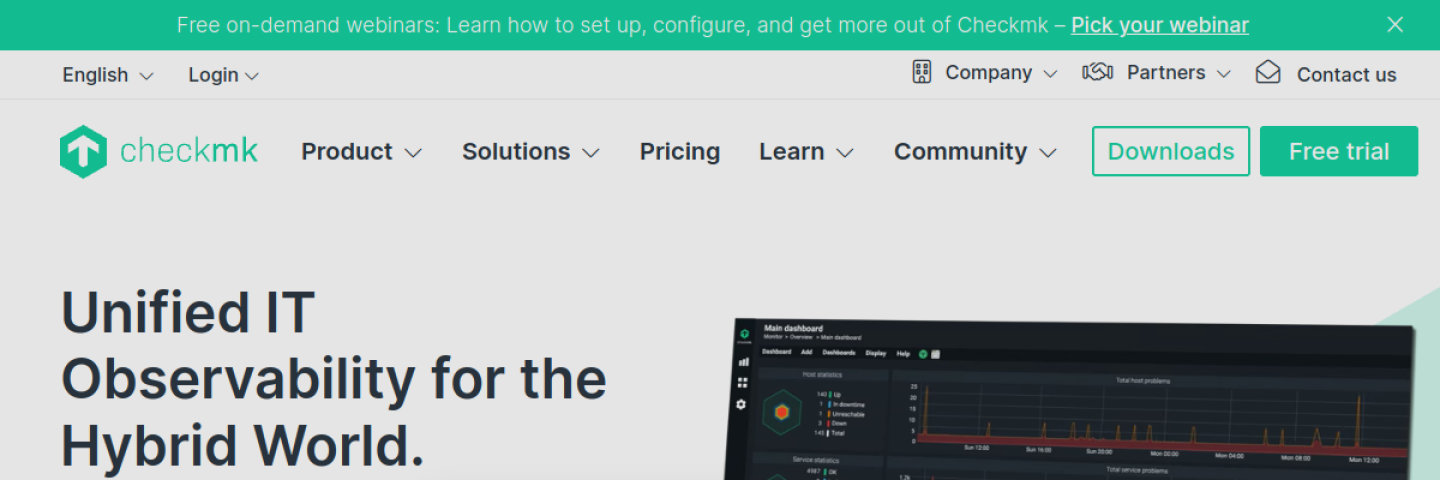
Checkmk is monitoring software with a free Raw edition and paid Pro and Enterprise editions for larger setups. The Raw edition covers unlimited hosts with agent, SNMP and API collection, and Pro adds 750 services with faster support, from €190 a month billed annually.
The trade off is price and currency. Pro is priced in euros, so a US church pays the converted amount, and the jump from free Raw to paid Pro is steep. It suits churches with Linux skills that want a free start and a paid path.
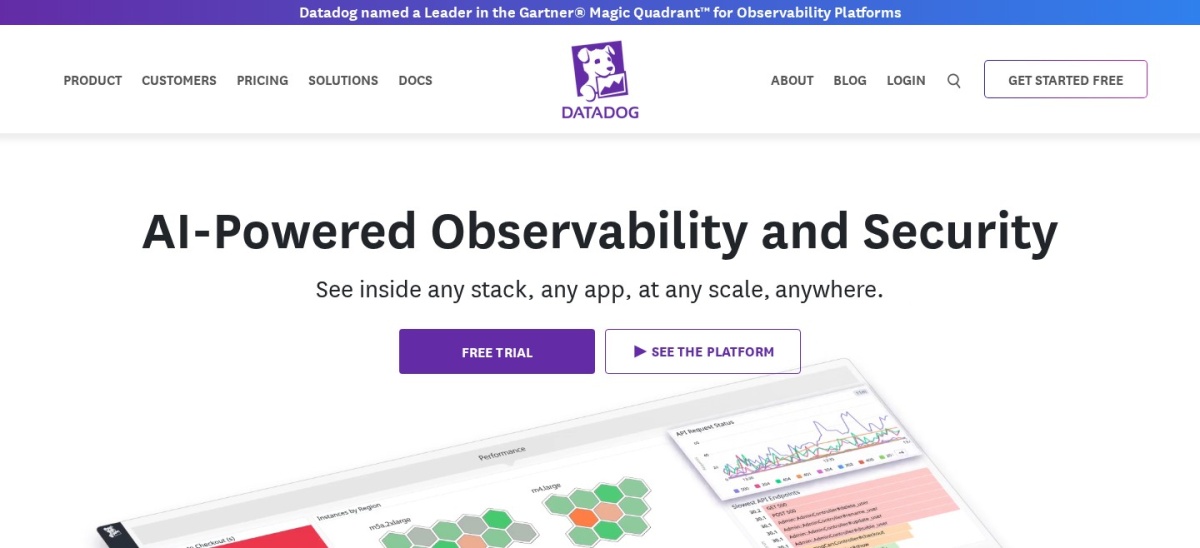
Datadog is a cloud observability platform whose Network Device Monitoring costs $7 per device a month billed annually, on top of its infrastructure monitoring. The free tier covers 5 hosts, and it adds flow data, device health and more than 600 integrations.
The trade off is that network monitoring is an add-on, not a standalone product, so the total bill is higher than $7 a device suggests. It suits churches that already send server data to Datadog.
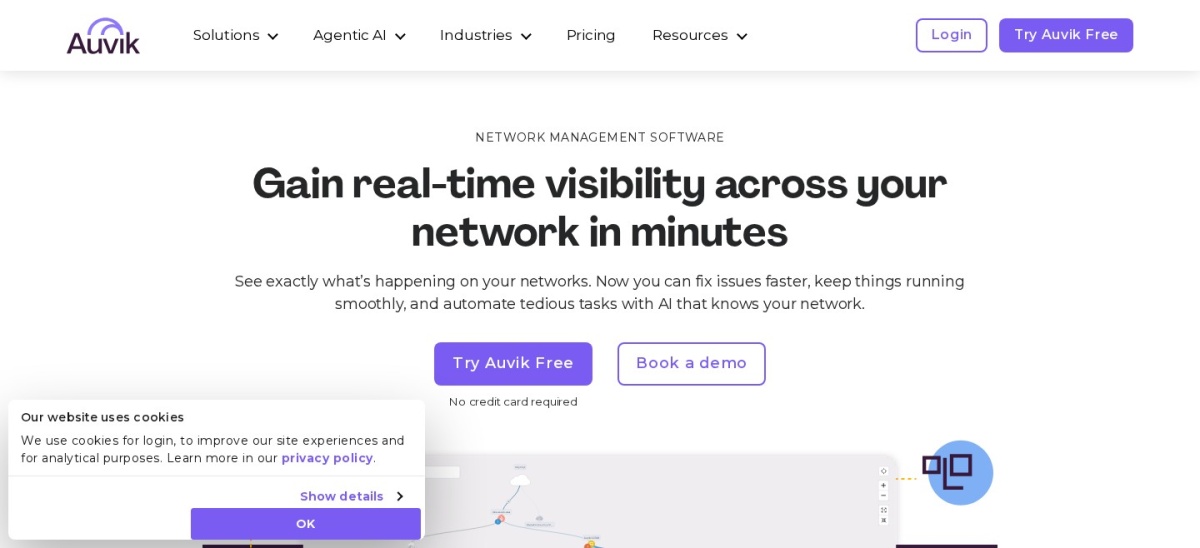
Auvik is a cloud network management platform that automates device discovery and builds live topology maps, recognising more than 15,000 device types from over 700 vendors. Setup takes minutes, and the first thing you see is a map of your network.
The trade off is price. Auvik publishes no list price and sells by custom quote, with reviewers noting costs climb for larger deployments. It suits churches that want live maps and have budget for a quoted plan.
Free plans cover the basics well. PRTG gives 100 sensors, Zabbix gives everything, and OpManager gives 3 devices, which is enough for a small church network.
Paid plans mostly add scale and support. You get more sensors or devices, faster support and hosted options that remove the server work.
If the network grows past the free tier, the cheapest paid step is OpManager at $95 a year or Site24x7 at $9 a month. Both cost less than one emergency call-out.
How we chose
We started from every established network monitoring tool with a G2 rating and a free tier or a low entry price, then kept nine that fit a small church network and a volunteer IT lead.
Prices come from each vendor's pricing page, checked on 30 November 2026, or from a vendor page checked in the same week where the store is script-rendered. Ratings and review counts come from G2 on the same day.
We left out tools with no aggregator rating and quote-only enterprise suites with no small-network path. No vendor paid for a place, and we do not claim hands-on testing for this list.
How to choose network monitoring software for your church
Start by counting your devices, then match the tool to your volunteer's skills.
Count every device on the network. Walk the building and list routers, switches, access points, servers, printers and cameras. That count decides which free tier fits.
Check who will run it. A Linux-savvy volunteer can run Zabbix or Checkmk free. Without one, pick PRTG or a hosted tool like Site24x7.
Test the free tier on a Sunday. Run the tool through a full service with streaming on. If alerts arrive before the congregation notices a problem, it works.
Budget the paid step now. Free tiers end. Know what the next tier costs — $95 a year for OpManager or $9 a month for Site24x7 — before you depend on the tool.
FAQ
What is the best network monitoring software for churches?
PRTG is the best network monitoring software for churches for most congregations. Its free tier covers 100 sensors, about 10 devices, and it holds a 4.7 out of 5 G2 rating from 219 reviews, with auto-discovery that suits a volunteer IT lead.
Is there free network monitoring software for churches?
Yes. Zabbix is free and open source with no device limit, PRTG covers 100 sensors free forever, and OpManager covers 3 devices free. Site24x7 also has a free tier covering 50 resources, so most small churches can start without spending anything.
How much does network monitoring software cost for a church?
A small church can pay nothing using Zabbix or PRTG free tiers. Paid plans start at $95 a year for OpManager, $9 a month for Site24x7, and $35 a month per site for Domotz, while PRTG paid plans start at $200 a month.
Which network monitoring software is easiest for volunteers?
PRTG is the easiest for volunteers, with auto-discovery, pre-built sensors and a Windows interface. Site24x7 is the easiest hosted option, since there is no server to install, while Zabbix and Checkmk need Linux skills.
PRTG vs Zabbix: which is better for a church?
PRTG wins on ease of setup, with auto-discovery and a free 100-sensor tier, but paid plans start at $200 a month. Zabbix wins on cost, since the software is free with no limits, but it needs Linux skills to install and maintain.
Do churches need network monitoring for live streaming?
Yes, if the church streams services. Monitoring watches the streaming encoder, the internet link and Wi-Fi access points, and alerts the team when bandwidth drops or a device fails, before viewers notice the stream cut out.
SaaS SEO and WordPress specialist with about 8 years of experience. Rakib compares WordPress plugins, themes, hosting and software using public pricing, documentation and user reviews. See how we rank.