Port is the best developer portal software for startups, with a free plan covering 5 seats and 10,000 entities and paid plans from $30 per seat a month. Pick Cycloid for the highest-rated portal with published pricing, or GitBook for the cheapest paid docs portal at $8 per user a month.
How we make this list: we compare pricing pages, product documentation and public user reviews, then re-check every price before each update. No product paid for a place. Disclosure.
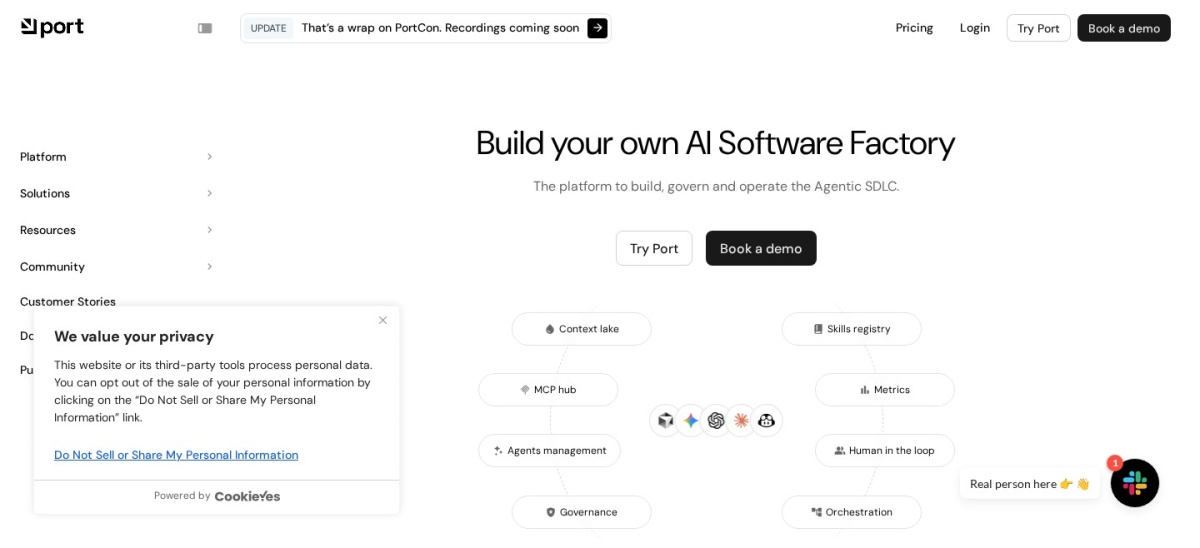
Port leads for startups: a free plan with 5 seats and 10,000 entities, and Basic at $30 per seat a month.
Cycloid has the highest rating with a real review base, 4.9 out of 5 from 32 G2 reviews, with a free plan for up to 5 users.
GitBook is the cheapest paid option at $8 per user a month, and Backstage costs nothing in licence fees if your team can run it.
ReadMe at $250 a month and Mintlify at $450 a month are public docs portals, not internal catalogs, so pick them for outside developers.
Cortex and Harness publish no numeric price, so budget them by quote, and Compass ended sale, so do not start with it.
How do you choose developer portal software for startups?
A startup portal has two jobs. It should show every service, its owner and its docs in one place, and it should let developers create services and run common tasks without filing a ticket.
Free plans matter more at startup size than at enterprise size. Seven of the nine tools here have a free plan, and the cheapest paid plan is GitBook at $8 per user a month, while ReadMe and Mintlify jump to $250 and $450 a month.
Internal portals and public docs portals solve different problems. Port, Cycloid, Backstage, Harness and Cortex organise your own services for your own developers, while GitBook, Stoplight, ReadMe and Mintlify publish docs for outside developers. Our guide on deploying WordPress with GitHub Actions shows the same idea in miniature: a repeatable path replaces a ticket and a wait.
Price is hard to compare here because most tools charge per seat or per user. A $30 per seat plan costs $150 a month for a 5-developer team and $300 for 10, so work out the cost for your current team size, not just the headline rate.
Port is a hosted internal developer portal built around a software catalog, scorecards and self-service actions. The free plan covers 5 seats and 10,000 entities, and blueprints let a small team model services, environments and cloud resources without code.
The trade off is seat pricing. Basic starts at $30 per seat a month billed yearly, so costs grow with every developer, and the Standard plan at $48 a seat adds single sign-on. It suits startups that want a flexible catalog and can design their own blueprints.
What we like
Free plan with 10,000 entities and no time limit
Flexible blueprints for any catalog model
Self-service checkout with no sales call
AI builder and workflow automation included
Watch out for
Per-seat cost grows with every developer
Standard plan costs $48 per seat a month
Blueprints need real design work up front
Basic adds commercial support and 50,000 entitiesVisit port.io
02
Cycloid
4.9/5on G2 (32 reviews, checked Nov 2026)
Paid from$45/mo
Best for published per-user pricing
Free planYes, up to 5 users
Cheapest paidAdvanced, $45/user/mo
Self-hostingYes, SaaS or self-hosted
ScorecardsYes, built in
cycloid.io
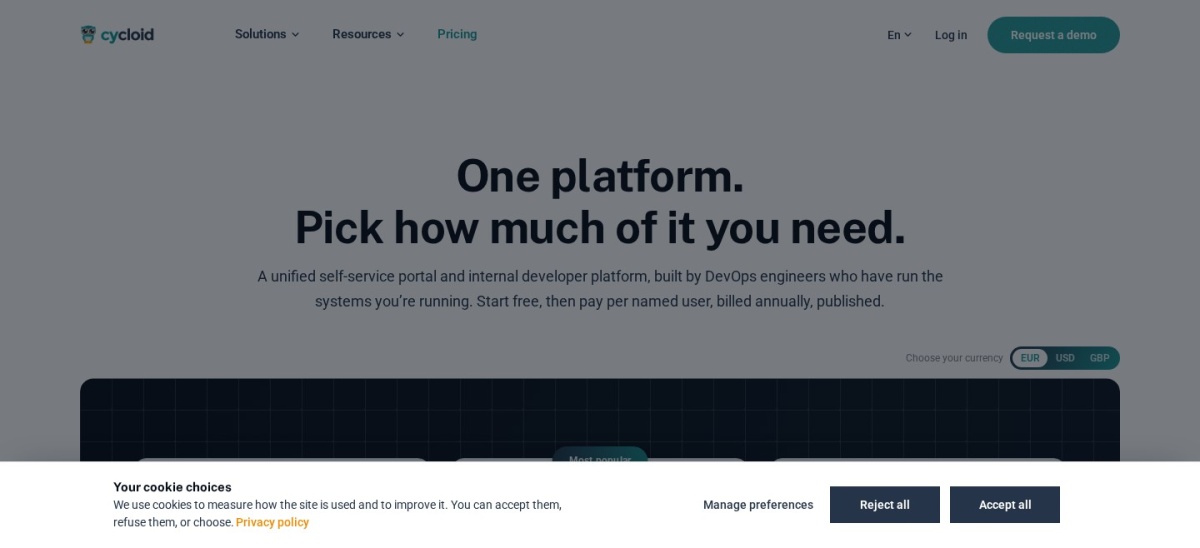
Cycloid homepage, captured Nov 2026.
Cycloid is a self-service portal built around blueprints, environments and scorecards, with a 4.9 out of 5 rating from 32 G2 reviews, the highest in this list. The free plan covers up to 5 users, and the Advanced plan adds unlimited workspaces, custom environments and an AI assistant.
The trade off is per-user cost. Advanced costs $45 per user a month billed yearly, so a 20-user team pays $900 a month, and Enterprise is custom priced. It suits startups that want published pricing and a portal that also runs self-hosted.
What we like
Highest rating here, 4.9 out of 5 from 32 reviews
Published per-user price, billed in dollars or euros
Free plan for up to 5 users
SaaS or self-hosted deployment
Watch out for
Per-user pricing adds up as teams grow
Enterprise plan is custom priced
Smaller review base than Harness or Stoplight
Advanced adds unlimited workspaces and an AI assistantVisit cycloid.io
03
GitBook
4.7/5on G2 (208 reviews, checked Nov 2026)
Paid from$8/mo
Best for the cheapest paid docs portal
Free planPersonal, 1 user
Cheapest paidPlus, $8/user/mo
Git syncYes, two-way
OpenAPI importYes
gitbook.com
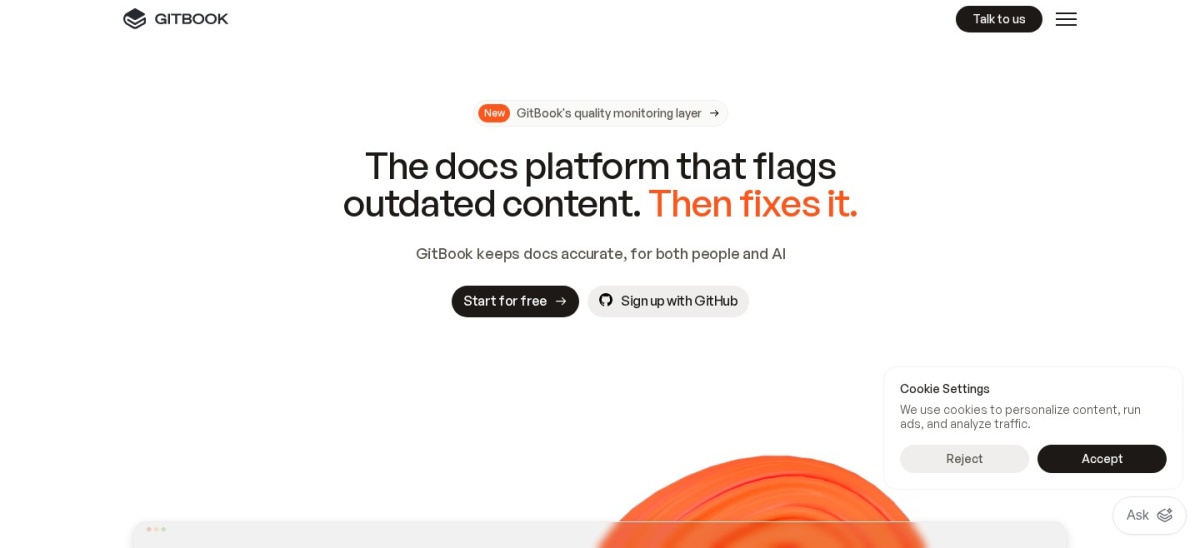
GitBook homepage, captured Nov 2026.
GitBook is a documentation platform that keeps Markdown pages in sync with Git, so docs update with the same pull requests as code. The free Personal plan covers one user, and Plus at $8 per user a month adds team collaboration, custom domains and API reference pages from an OpenAPI file.
The trade off is that the free plan is limited to a single user, and the API reference is an add-on to a general docs tool rather than its core. It suits small teams that already keep docs in Git and want a clean reader experience.
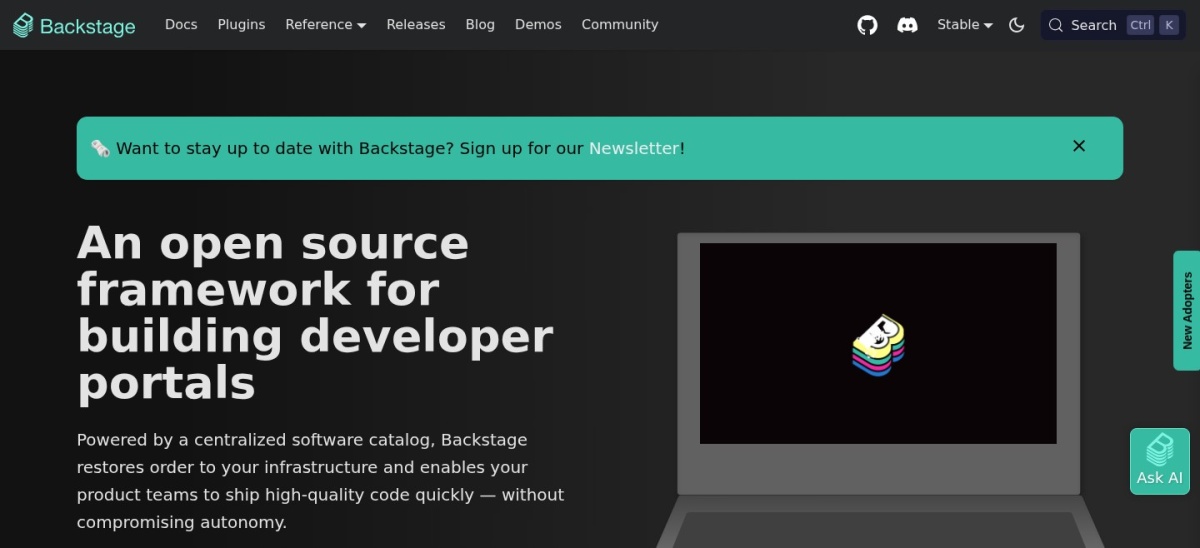
Backstage is the open-source framework for building internal developer portals, created by Spotify and now a CNCF project. It gives teams a software catalog, software templates, TechDocs and a large plugin ecosystem, with no licence cost.
The trade off is effort. You run, upgrade and secure Backstage yourself, which takes real engineering time, and its only G2 rating is 5.0 out of 5 from a single review of the managed Spotify Portal. It suits startups with platform skills that want full control and zero licence fees.
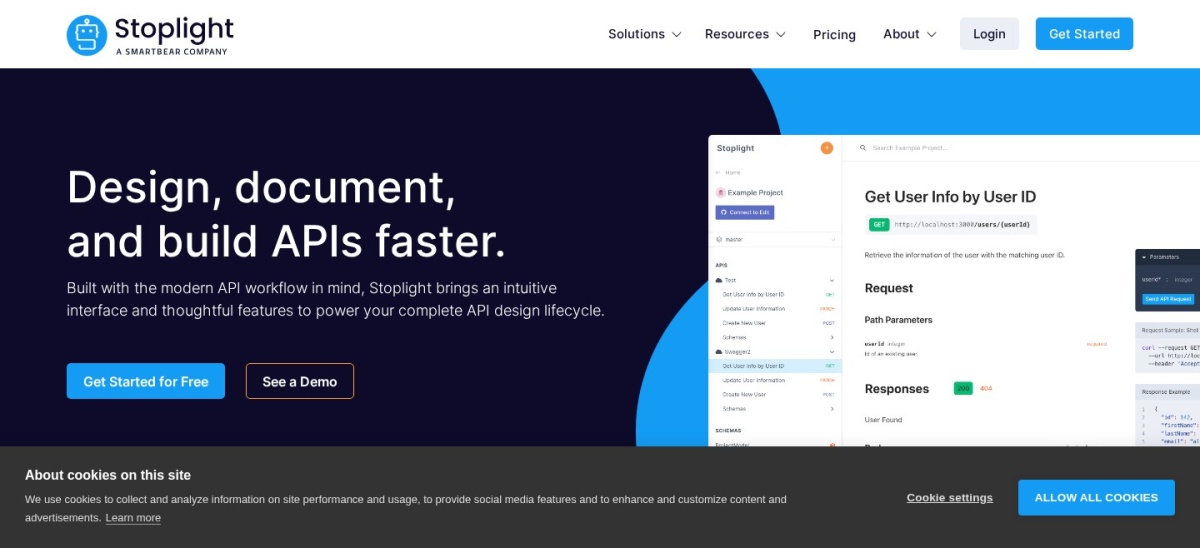
Stoplight is a design-first API platform with a visual editor for OpenAPI specs, so teams can shape endpoints without hand-writing YAML. It pairs the editor with hosted docs, mock servers and Spectral linting that checks specs against a team style guide.
The trade off is that the cheapest paid plan, Basic at $44 a month billed yearly, covers only 3 users, and private projects need a paid plan. It suits teams that design APIs before building them and want mocks and docs from the same spec.
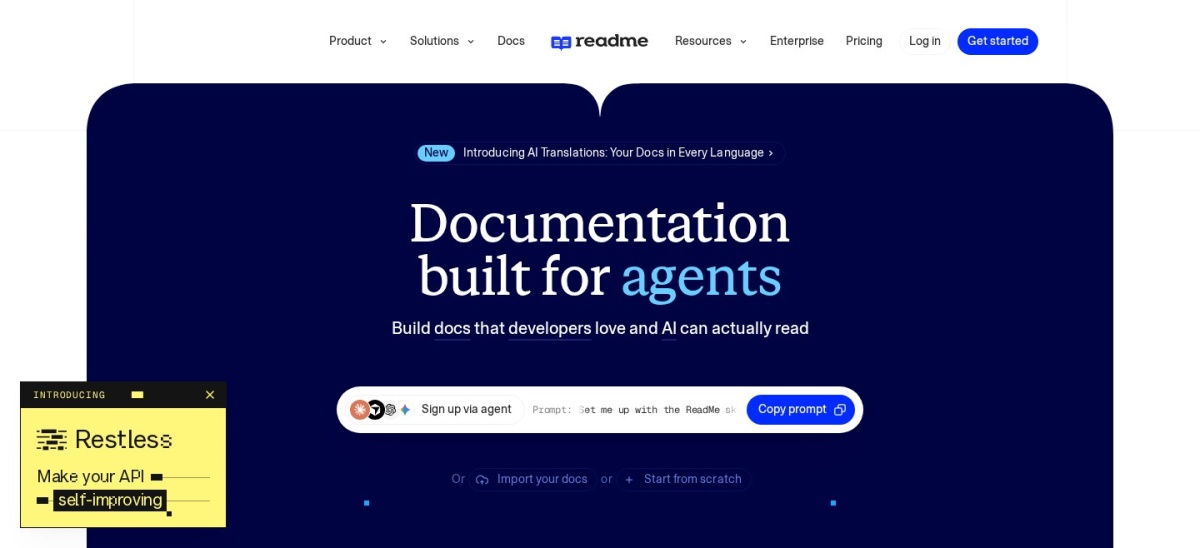
ReadMe is a hosted developer hub that turns an OpenAPI file into a full documentation site with guides, an interactive reference and a changelog. The free Starter plan covers one project and one admin, and still includes a custom domain, bi-directional Git sync, an MCP server and an llms.txt file.
The trade off is the price jump to Pro at $250 a month billed yearly, which is steep for a small team, and each plan covers only one project. It suits API-first companies that want a polished public hub and can see which endpoints developers actually use.
What we like
Free Starter plan with a custom domain and Git sync
Interactive API reference with real API calls
API Metrics show which endpoints get used and fail
Non-developers can edit guides without code
Watch out for
Pro costs $250 a month, a big step from free
One project per plan; a second API needs Enterprise
Reader AI costs $150 a month extra
Pro adds teammates, branching and unlimited versionsVisit readme.com
07
Mintlify
4.6/5on G2 (19 reviews, checked Nov 2026)
Paid from$450/mo
Best for modern docs with AI help
Free planStarter, 5 editors
Cheapest paidPro, $450/mo
AI assistantPro only
Docs as codeMDX in Git
mintlify.com
Mintlify homepage, captured Nov 2026.
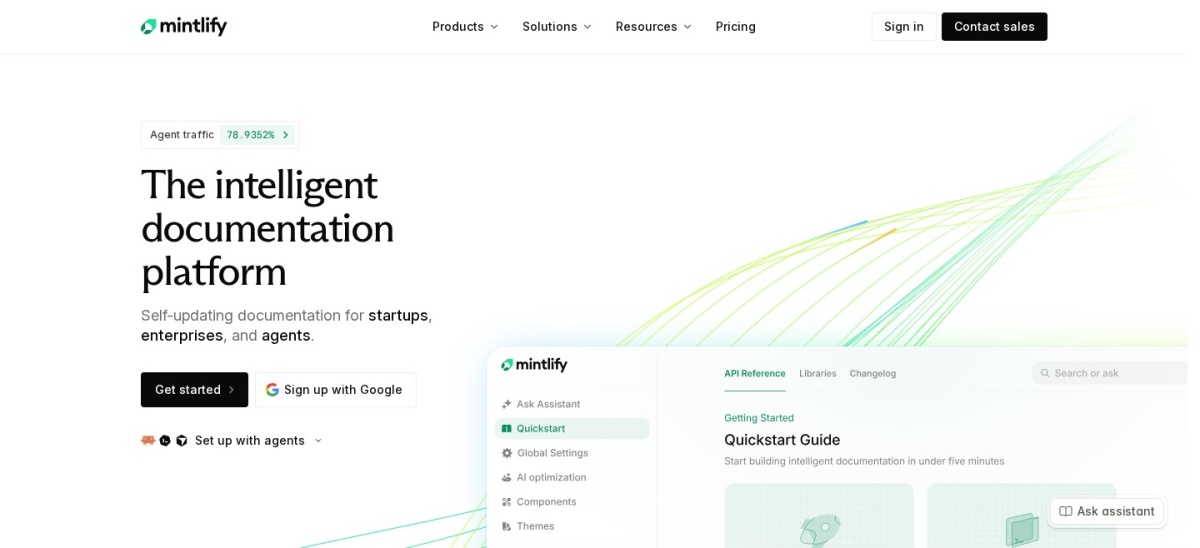
Mintlify is a documentation platform that builds a docs site from MDX files in a Git repository, with search, an API playground and a web editor. The free Starter plan covers up to 5 editors and includes a custom domain, Git sync and an MCP server, so a small team can publish without paying.
The trade off is that the AI features that define Mintlify, the assistant, writing agent and Autopilot, sit on Pro at $450 a month billed yearly. It suits startups that want modern-looking docs and are ready to pay for AI help keeping them current.
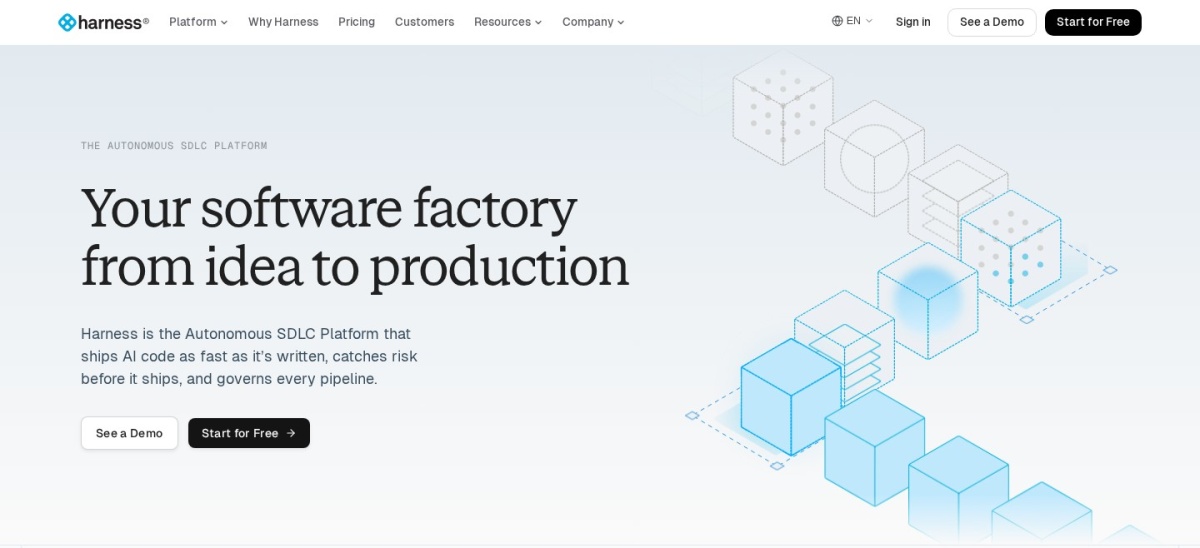
Harness is a wide DevOps platform with an internal developer portal as one module. The portal gives developers a service catalog, software templates and self-service workflows beside CI, CD and infrastructure-as-code tools, and there is a free tier for small teams.
The trade off is price opacity. Harness publishes no numeric price for the portal or its Essentials and Enterprise plans, so costs come from a quote, and the platform is large for teams that only need a portal. It suits teams that already run, or plan to run, several Harness modules.
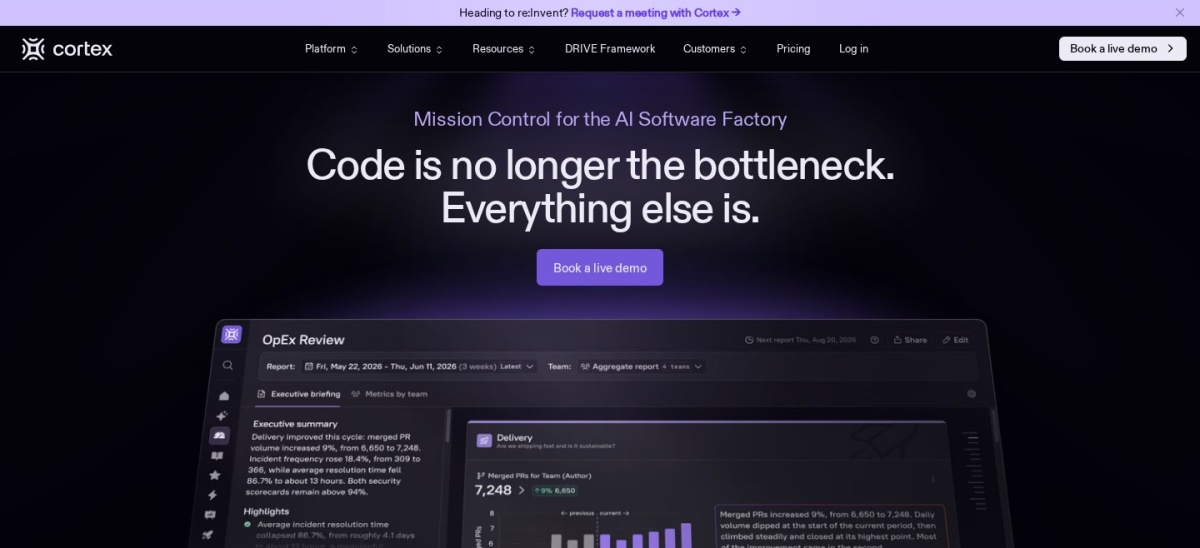
Cortex is an engineering operations platform with a service catalog, scorecards and self-service workflows. It connects to more than 50 tools, including GitHub, Jira, PagerDuty and Datadog, and maps ownership and dependencies across services automatically.
The trade off is price. Cortex publishes no numeric price and sells custom per-seat quotes, so small teams cannot budget it from the site, and a dedicated owner is still needed for scorecards. It suits larger startups that want scorecards and ownership data in one place.
Internal portal or docs portal: pick the right kind first
Start with who the portal is for. If the readers are your own developers, you need a catalog, ownership and self-service actions, which is what Port, Cycloid and Backstage provide.
If the readers are outside developers using your API, you need guides, an interactive reference and a changelog, which is what ReadMe, Mintlify, GitBook and Stoplight provide.
Many startups end up with one of each. A common pair is Port for the internal catalog and GitBook for public docs, which together cost $30 per seat a month plus $8 per user a month once both are paid.
Do not buy a scorecard-heavy portal before you have services worth grading. A team with fewer than 10 services gets more from a catalog and good docs than from scorecards.
How we chose
We started from the G2 internal developer platforms and API documentation categories and kept tools with a public G2 rating, a live homepage and a pricing page we could check on 30 November 2026, then ranked them for startup budgets and setup speed.
Prices come from each vendor's own pricing page or G2 pricing data, checked on 30 November 2026. Ratings and review counts come from G2 on the same day. Where a vendor shows no numeric price, the list shows Custom instead of a guessed number.
We left out Atlassian Compass because it ended sale to new customers in May 2026, and Roadie because it has no G2 rating and its Teams plan starts at 50 developers. No vendor paid for a place, and we do not claim to have used these tools ourselves.
How to choose developer portal software for your startup
Start with your team size and who will read the portal, then let the free plan prove the fit before you pay.
Count your developers and services. A 5-developer team with 10 services needs a free catalog, not scorecards. Pick a tool whose free plan covers your current size.
Decide who the portal is for. Internal developers need a catalog and self-service actions. Outside developers need guides and an interactive API reference.
Try the free plan with real services. Connect one repo, add a few services and see whether developers find owners and docs without asking in chat.
Work out the cost at twice your size. Per-seat prices double with headcount. Check what the same plan costs at 10 and 20 developers before you commit.
FAQ
What is the best developer portal software for startups in 2026?
Port is the best developer portal software for startups. It has a free plan covering 5 seats and 10,000 entities, paid plans from $30 per seat a month, and a catalog, scorecards and self-service actions in one place.
How much does developer portal software cost for a startup?
Most startups can start free, since seven of the nine tools here have a free plan. The cheapest paid plan is GitBook at $8 per user a month, Port starts at $30 per seat a month, and Cortex and Harness publish no price, so they need a quote.
Is there a free developer portal for startups?
Yes. Port, Cycloid, GitBook, Backstage, Stoplight, ReadMe, Mintlify and Harness all have a free plan or tier. Backstage is fully free as open-source software, while the others limit seats, users or projects on their free plans.
Which developer portal is best for a small team?
Cycloid is the best pick for a small team that wants a full portal, with a free plan for up to 5 users and the highest rating here at 4.9 out of 5. GitBook is the best pick if you only need docs, at $8 per user a month.
Port vs Cycloid: which is better for a startup?
Port is better for a flexible catalog, with blueprints you can shape to any model and a free plan covering 10,000 entities. Cycloid is better for published per-user pricing and the highest rating, 4.9 out of 5, with a free plan for up to 5 users.
Should a startup use Backstage or a hosted portal?
Use Backstage if your team has the skills and time to run, upgrade and secure it, since the licence costs nothing. Use a hosted portal such as Port or Cycloid if you want a working catalog in days without a platform team.
SaaS SEO and WordPress specialist with about 8 years of experience. Rakib compares WordPress plugins, themes, hosting and software using public pricing, documentation and user reviews. See how we rank.