Portainer is the best Docker alternative for most teams, rated 4.8/5 on G2 from 297 reviews, with a free Community Edition for managing Docker and Kubernetes. Kubernetes is free and best for orchestration at scale, while OpenShift suits enterprises that want Kubernetes with built-in security and support.
How we make this list: we compare pricing pages, product documentation and public user reviews, then re-check every price before each update. No product paid for a place. Disclosure.
Portainer is the highest-rated pick at 4.8/5 on G2, and its free Community Edition plus 3 free Business nodes cover small setups.
Six of the nine tools are free to run: Kubernetes, Rancher, Nomad and the free tiers of GKE, AKS and Portainer.
Managed Kubernetes costs $0.10 per cluster per hour on GKE and EKS, or $876 a year, while AKS charges nothing for the control plane.
OpenShift cloud services start at $0.076 an hour for reserved instances, and self-managed editions are priced by quote.
Podman, the best-known Docker replacement, has no G2, Capterra or Trustpilot rating, so it could not be ranked here.
Portainer Business is the only pick with a published four-figure starting price, at $1,045 a year.
What should you look for in Docker alternatives?
Docker is several tools in one, so the right replacement depends on which part you use. Desktop users need a local runtime, while platform teams need orchestration or a management console.
A free plan should cover real work, not just a trial. Portainer, Kubernetes, Rancher and Nomad all run free without a time limit, and GKE and AKS include a free control-plane tier.
Managed services trade money for operations work. GKE and EKS charge $0.10 per cluster per hour, while AKS charges nothing for the control plane, so the bill follows the nodes you run. Our guide to how much Cloudways costs shows the same pay-for-what-you-run pattern in managed hosting.
Ratings matter because container tools are hard to trial quickly. Every tool here carries a G2 rating from 4.1 to 4.8, and the review counts range from 10 for Nomad to 306 for OpenShift.
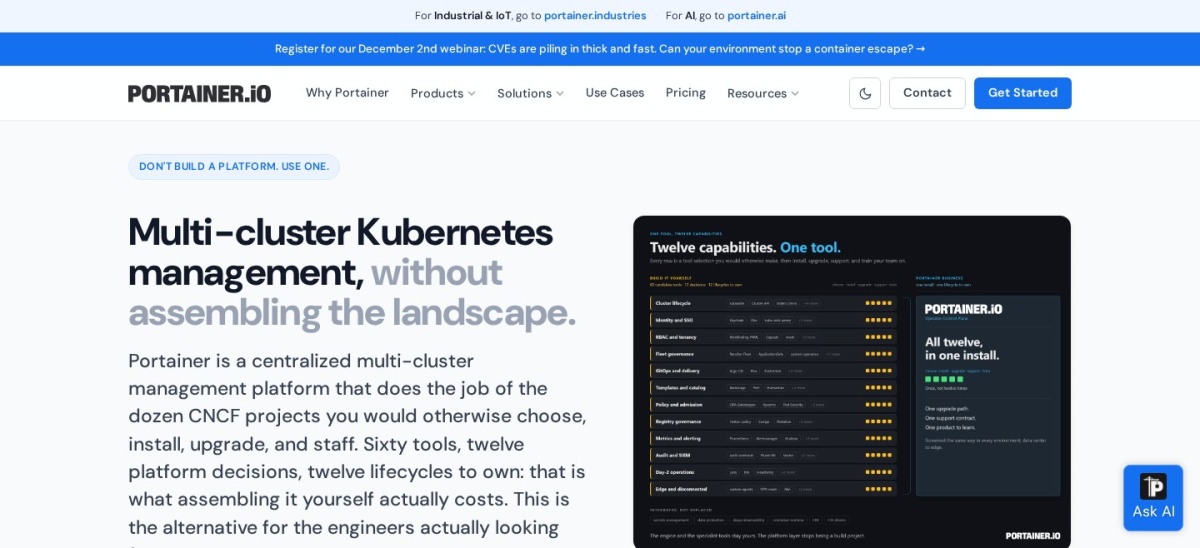
Portainer is a web console that manages Docker, Swarm, Podman and Kubernetes from one dashboard. The free Community Edition is open source with no node limit, and Portainer also gives three free Business Edition licence keys with the full feature set.
The trade off is price once you pass the free nodes. Starter starts at $1,045 a year for 5 to 15 nodes, which is steep for a home lab but fair for a small business. It suits teams that want one console for Docker hosts and Kubernetes clusters without learning kubectl.
What we like
Free Community Edition with no node limit
Three free Business Edition licence keys
One console for Docker, Swarm and Kubernetes
Rated 4.8 out of 5, the highest score here
Watch out for
Paid plans start at $1,045 a year
Advanced Kubernetes work still needs kubectl at times
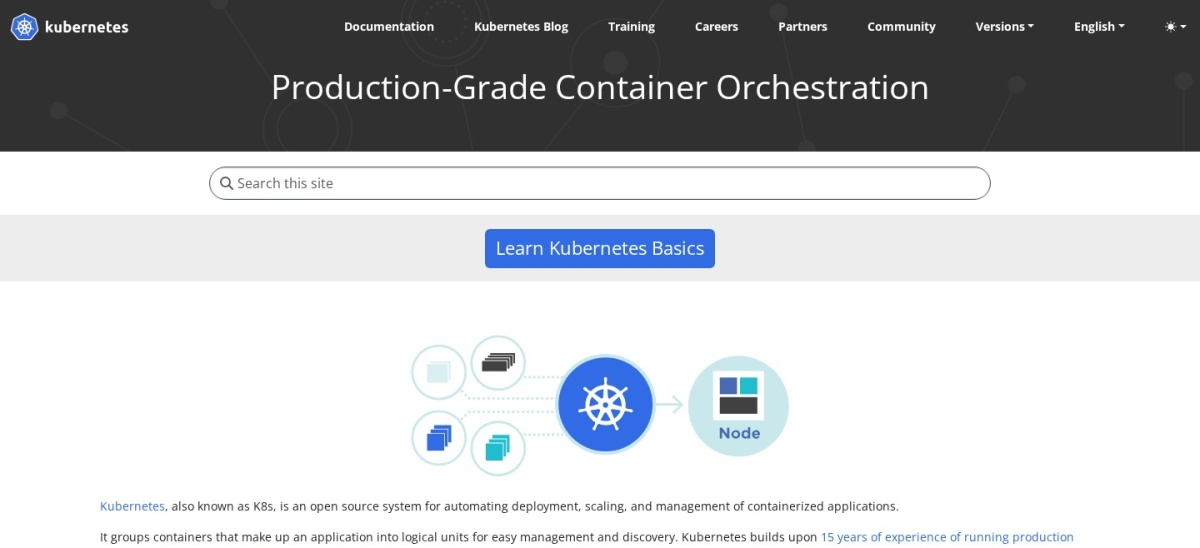
Kubernetes is the open source standard for running containers across many machines. It schedules workloads, scales them up and down, restarts failed containers and rolls out updates, and every major cloud runs a managed version of it.
The trade off is operational skill. Running Kubernetes yourself means managing upgrades, networking and storage, which is a full-time job for a platform team. It suits organisations with the staff to run it, or a managed service to hide it.
Red Hat OpenShift is an enterprise Kubernetes platform with full-stack automation, built-in CI/CD, security scanning and developer tools. It adds opinionated defaults on top of Kubernetes so teams ship faster without assembling a dozen separate projects.
The trade off is cost and complexity. Cloud services start at $0.076 an hour for reserved instances, and self-managed editions are priced by quote. It suits enterprises that want Kubernetes with support, security and a paved path.
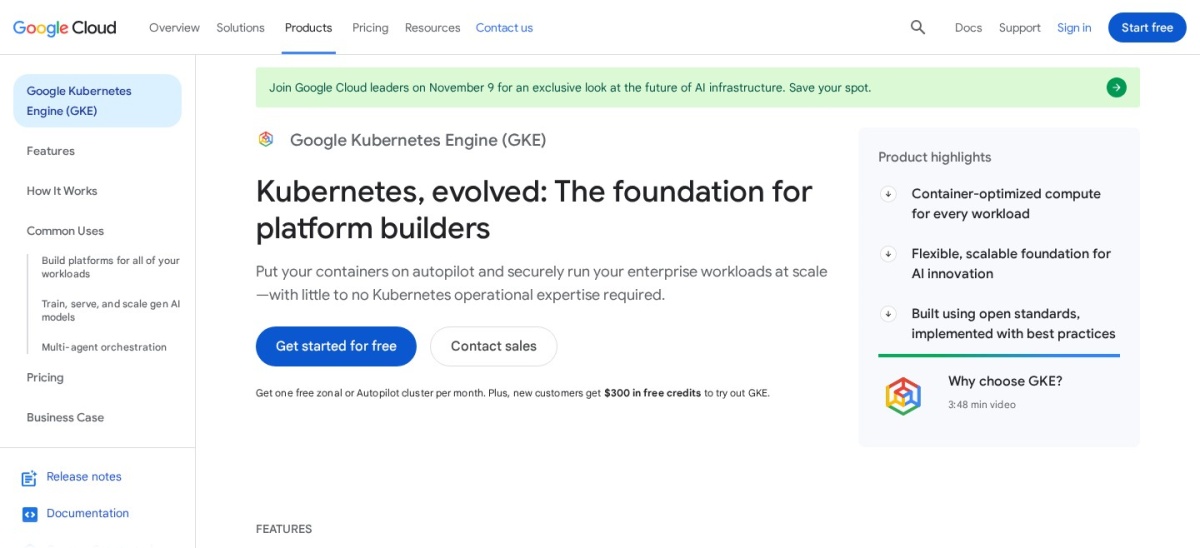
Google Kubernetes Engine homepage, captured Nov 2026.
Google Kubernetes Engine is a managed, production-ready environment for running Kubernetes on Google Cloud. Autopilot mode handles node provisioning, scaling and security patching, while Standard mode gives teams full control over node configuration.
The trade off is the cloud bill. GKE charges $0.10 per cluster per hour plus the nodes you run, so costs follow workload size, though the free tier covers one cluster a month. It suits teams already on Google Cloud who want Kubernetes without running it.
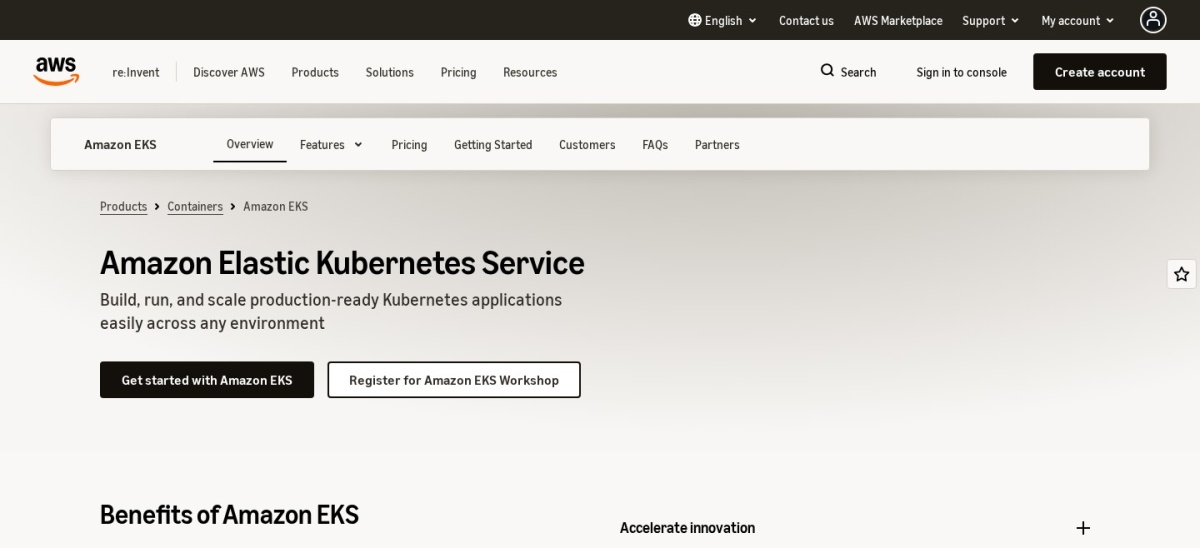
Amazon Elastic Kubernetes Service homepage, captured Nov 2026.
Amazon Elastic Kubernetes Service is a managed Kubernetes service that runs applications without managing, securing or scaling a control plane. It integrates with AWS services for networking, storage and identity, and supports Auto Mode for node management.
The trade off is the hourly fee and the AWS bill around it. Standard support costs $0.10 per cluster per hour, rising to $0.60 in extended support, plus EC2 and storage. It suits teams already on AWS who want Kubernetes without running it.
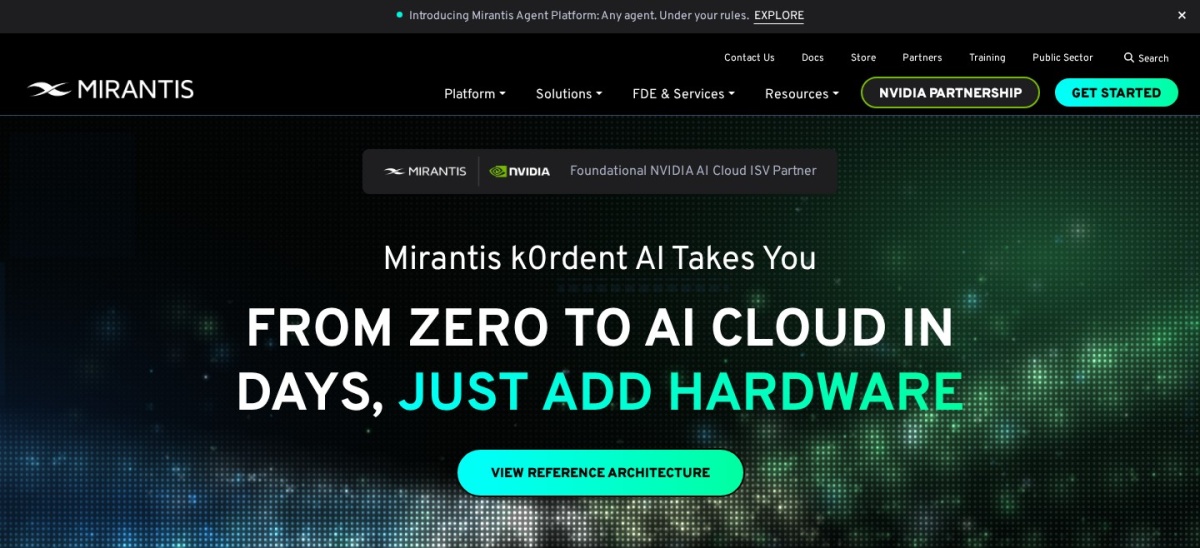
Mirantis Kubernetes Engine homepage, captured Nov 2026.
Mirantis Kubernetes Engine is a hardened, self-hosted Kubernetes platform built on the open source k0s distribution. It carries FIPS 140-3 validation and a DISA STIG profile, and it descends from the Docker Enterprise platform Mirantis acquired in 2019.
The trade off is price transparency. Mirantis publishes no list price for MKE, so buyers need a quote, and a licence is required to run it. It suits regulated organisations that need a hardened on-premises platform.
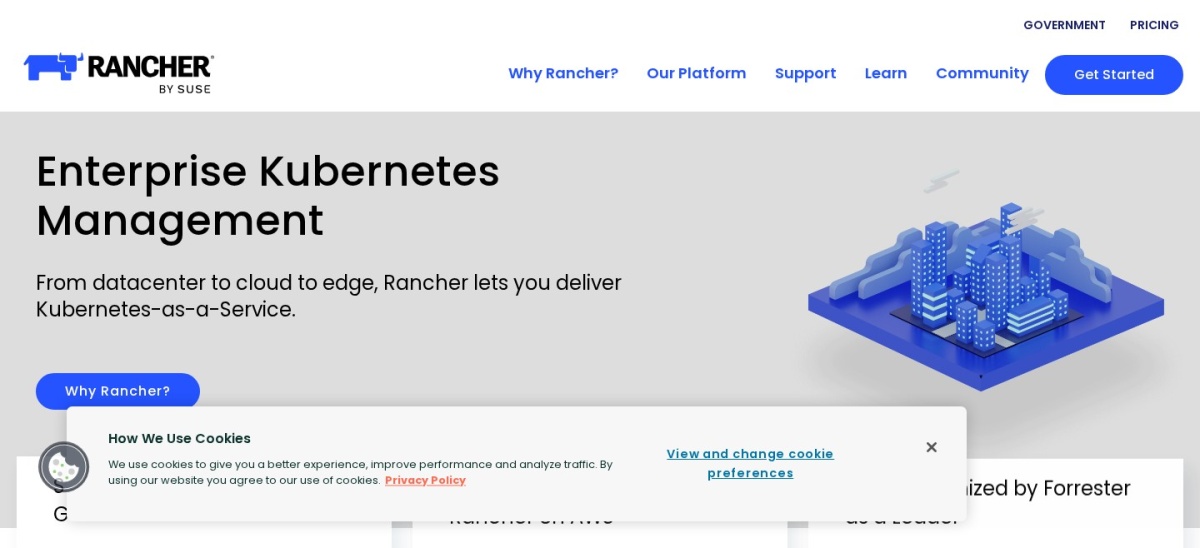
Rancher is an open source platform for managing many Kubernetes clusters from one console. It covers provisioning, policy, monitoring and upgrades across data centres, clouds and edge sites, with commercial support available from SUSE.
The trade off is Kubernetes knowledge. Rancher simplifies management but does not remove the need to understand Kubernetes itself, and paid Prime support is quoted. It suits teams running several clusters who want one control plane.
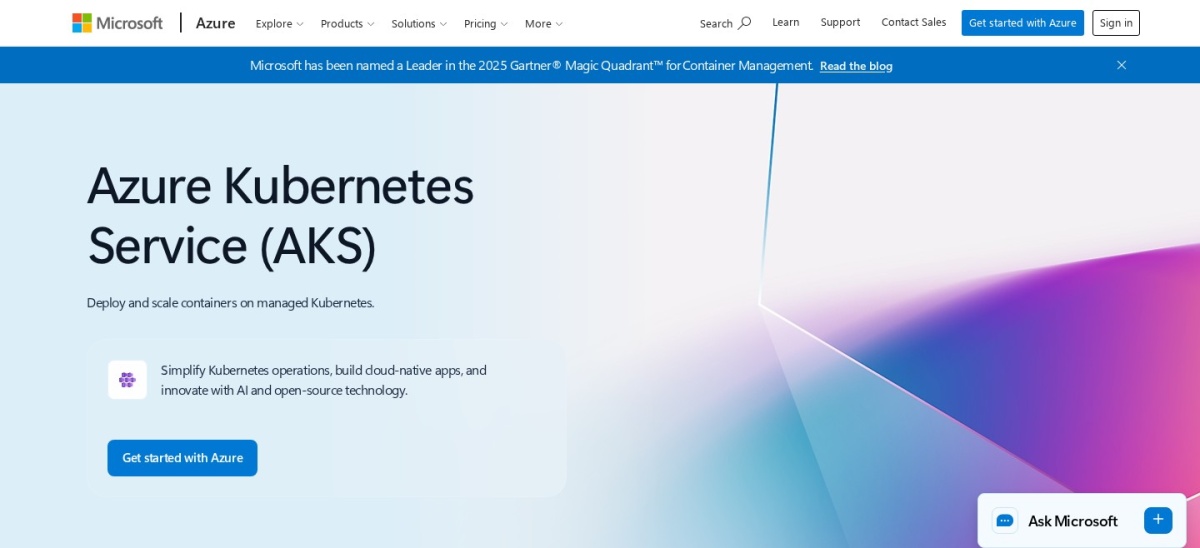
Azure Kubernetes Service homepage, captured Nov 2026.
Azure Kubernetes Service is Microsoft's managed Kubernetes offering with a free control plane and deep Azure integration. It connects to Azure identity services and scales clusters up to 5,000 nodes on the Standard tier.
The trade off is that the free tier carries no SLA. Production workloads need the Standard tier, and you still pay for the virtual machines that run your pods. It suits teams already on Azure who want Kubernetes without running it.
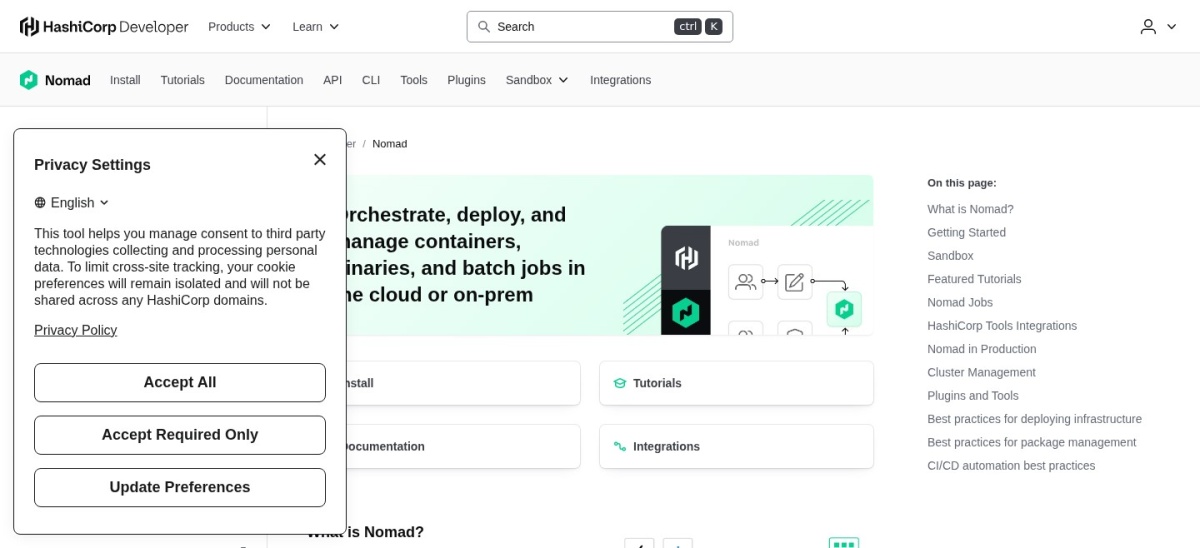
HashiCorp Nomad is a lightweight scheduler that runs containers alongside virtual machines and standalone applications from a single binary. It is simpler to operate than Kubernetes and fits mixed workloads that do not need full orchestration.
The trade off is ecosystem depth. Nomad has fewer integrations and a smaller community than Kubernetes, and its G2 review base is only 10 reviews. It suits teams with mixed workloads who want scheduling without Kubernetes complexity.
Free picks cover most Docker use cases. Portainer, Kubernetes, Rancher and Nomad cost nothing to run, and GKE and AKS include a free control-plane tier.
Paid picks add support and polish. Portainer Business adds more nodes and support from $1,045 a year, while OpenShift and Mirantis add hardened, supported platforms by quote.
Managed cloud services charge by the hour, not by licence. GKE and EKS cost $0.10 per cluster per hour, so a cluster left running all year costs $876 before nodes. Our Cloudways cost guide shows the same usage-based pattern in managed hosting.
If you earn money from the work, a paid plan can pay for itself in support alone. For study or a side project, start free and only pay when a missing feature blocks you.
How we chose
We started from the tools most often named as Docker replacements: desktop runtimes, management consoles, orchestrators and the three big managed cloud services, then kept only those with a numeric rating and review count on G2.
Prices come from each vendor's pricing page, checked on 29 November 2026. Ratings and review counts come from G2 on the same day. Where a vendor shows a sale, the list shows the regular price.
We left out Podman, Colima, Lima and OrbStack because no G2, Capterra or Trustpilot rating exists for them, and Rancher Desktop, which has only 3 G2 reviews. Docker Swarm ships with Docker, so it is not a replacement for it. No vendor paid for a place, and we do not claim to have used these tools ourselves.
How to choose a Docker alternative
Start with the part of Docker you actually want to replace, then match the tool to it.
Work out which Docker part you are replacing. Desktop users need a local runtime or console, while platform teams need orchestration or a management console. Picking the wrong layer wastes the trial.
Check the free tier first. Portainer, Kubernetes, Rancher and Nomad run free, and GKE and AKS include a free control-plane tier. Start there before paying for support.
Price the whole setup, not the licence. Managed services charge for nodes as well as the control plane, so a $0.10 hourly fee is only part of the bill. Add up node costs before you commit.
Match the tool to your team's skill. Kubernetes and OpenShift repay platform skills, while Portainer and Rancher suit smaller teams. Do not pick a tool your team cannot operate.
FAQ
What is the best Docker alternative in 2026?
Portainer is the best Docker alternative for most teams. It is rated 4.8 out of 5 from 297 G2 reviews, its free Community Edition manages Docker and Kubernetes, and paid Business plans start at $1,045 a year.
How much does a Docker alternative cost?
Six of the nine tools here are free to run, including Kubernetes, Rancher and Nomad. Managed Kubernetes costs $0.10 per cluster per hour on GKE and EKS, or $876 a year, while AKS charges nothing for the control plane.
Is there a free alternative to Docker?
Yes. Portainer, Kubernetes, Rancher and Nomad are all free and open source, and GKE and AKS include a free control-plane tier. Podman is also free, but it has no public rating on G2, Capterra or Trustpilot, so it is not ranked here.
Which Docker alternative is best for beginners?
Portainer is the easiest starting point. Its web console manages Docker and Kubernetes without kubectl, it installs in minutes, and the free Community Edition covers personal use with no node limit.
Portainer vs Kubernetes: which Docker alternative is better?
Portainer is better for day-to-day management, with a 4.8 G2 rating against 4.6 for Kubernetes and a visual console instead of a command line. Kubernetes is better for orchestration at scale, with autoscaling and self-healing across many machines.
Can I run Docker Compose files with a Docker alternative?
Yes, in most cases. Portainer deploys Compose stacks from its console, and Podman and Rancher Desktop also read Compose files. Managed Kubernetes services need the stack converted to Kubernetes manifests first.
SaaS SEO and WordPress specialist with about 8 years of experience. Rakib compares WordPress plugins, themes, hosting and software using public pricing, documentation and user reviews. See how we rank.