Zerto is the best disaster recovery software for healthcare systems, because continuous replication gives near-zero data loss and recovery in under ten minutes. Pick Veeam for the broadest workload coverage, and Acronis when backup and security should share one agent.
How we make this list: we compare pricing pages, product documentation and public user reviews, then re-check every price before each update. No product paid for a place. Disclosure.
Zerto replicates continuously, so failover loses only seconds of data and recovery takes under ten minutes.
Veeam covers virtual, physical, cloud and Microsoft 365 workloads, with a free edition for 10 workloads.
Acronis holds the highest G2 rating here at 4.7 out of 5 from 1,462 reviews.
Azure Site Recovery publishes the clearest price here at $25 per protected instance a month.
Most enterprise platforms here sell by quote, so budget through a sales call and a restore drill.
How do you choose disaster recovery software for healthcare systems?
Healthcare recovery is judged by two numbers: how much data you can lose, and how long patients wait while systems are down.
Zerto leads on both numbers, with recovery points measured in seconds and recovery times under ten minutes, which is why it sits first for hospitals.
HIPAA support is a baseline here, not a differentiator. Every tool in this list supports HIPAA, so the real choice is between cloud-native services, backup platforms and continuous replication.
Price clarity is poor across the category. Only Azure Site Recovery and AWS Elastic Disaster Recovery publish simple usage prices, while the rest sell by quote.
The 9 best disaster recovery software for healthcare systems
01
Zerto
4.6/5on G2 (73 reviews, checked Nov 2026)
PricingCustom/yr
Best disaster recovery for healthcare systems
Recovery pointSeconds
Recovery timeUnder 10 minutes
HIPAAYes
Paid planQuote only
zerto.com
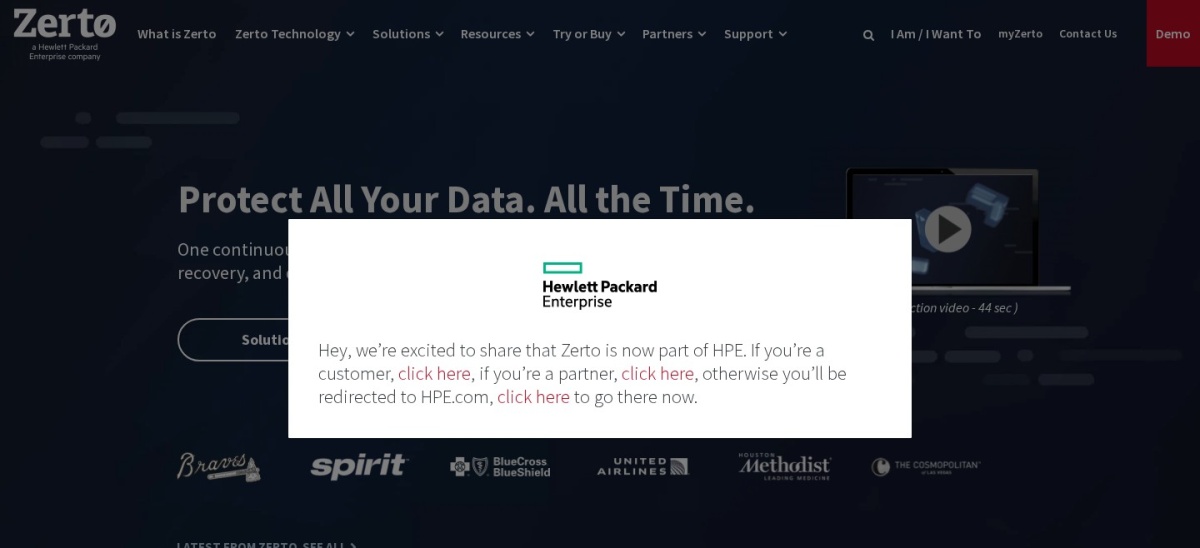
Zerto homepage, captured Nov 2026.
Zerto is a continuous data protection platform that replicates healthcare systems in near real time, so failover loses only seconds of data. It supports journal-based recovery to any point in time, and it is rated 4.6 out of 5 on G2 from 73 reviews.
The trade off is price. Zerto sells by quote, so budgeting needs a sales conversation, and it is aimed at virtualised and cloud estates. It suits hospitals that cannot afford minutes of lost patient data.
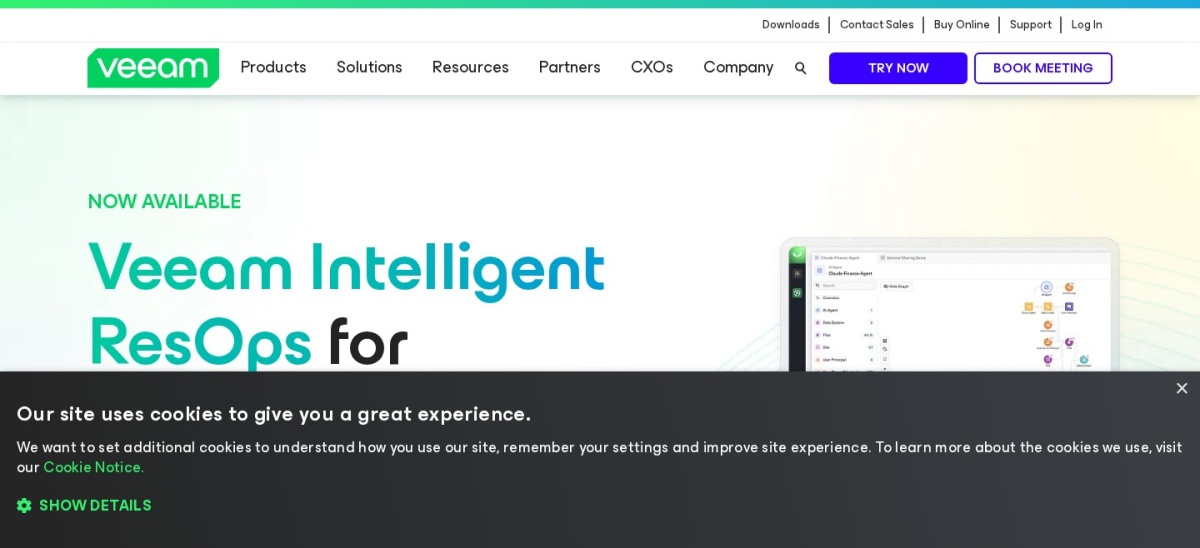
Veeam Data Platform is a backup and recovery platform that covers virtual, physical, cloud and Microsoft 365 workloads from one console, with instant recovery and immutable repositories. It serves more than 550,000 customers, and it is rated 4.6 out of 5 on G2 from 752 reviews.
The trade off is that full disaster recovery orchestration is an add-on. The free edition covers 10 workloads, and platform pricing is by quote. It suits health systems that already run Veeam backup and want recovery on the same platform.
What we like
Broadest workload coverage here
Free edition for up to 10 workloads
Immutable repositories against ransomware
Watch out for
Recovery orchestration is an add-on
Platform pricing is by quote
Needs Veeam skills to run well
Free edition covers 10 workloads; platform pricing by quoteVisit veeam.com
03
Acronis Cyber Protect
4.7/5on G2 (1,462 reviews, checked Nov 2026)
PricingCustom/yr
Best disaster recovery for backup plus security
Free planNo, 30-day trial
Backup plus securityYes, one agent
HIPAAYes
Paid planQuote only
acronis.com
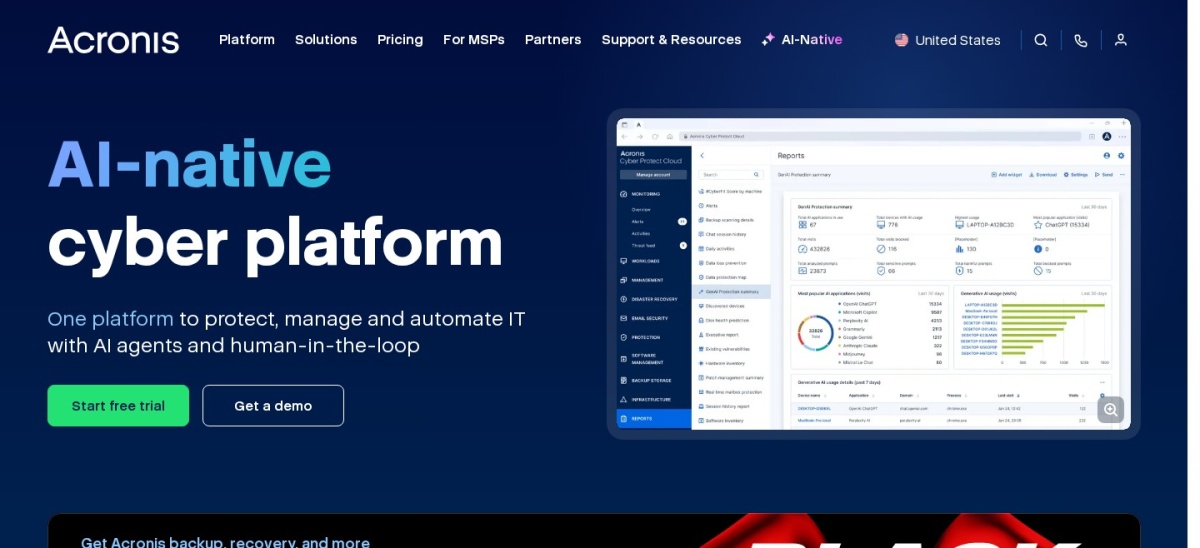
Acronis Cyber Protect homepage, captured Nov 2026.
Acronis Cyber Protect is a platform that combines backup, disaster recovery and endpoint security in one agent for mixed device fleets. It covers servers, virtual machines and workstations, and it holds the highest G2 rating here at 4.7 out of 5 from 1,462 reviews.
The trade off is pricing clarity. The cloud platform for health systems sells by quote, while the published 85 dollar workstation price covers a different edition. It suits smaller health systems that want backup and security together.
What we like
Joint-highest G2 rating here at 4.7 out of 5
Backup and security in one agent
Largest G2 review base in this list
Watch out for
Platform pricing is by quote
Published $85 price is a different edition
Console takes time to learn
Platform pricing is by quote; workstation edition from $85 a yearVisit acronis.com
04
Druva Data Security Cloud
4.7/5on G2 (746 reviews, checked Nov 2026)
PricingCustom/yr
Best disaster recovery for SaaS-only delivery
Free planNo, 30-day trial
Delivery100 percent SaaS
HIPAAYes
Paid planQuote only
druva.com
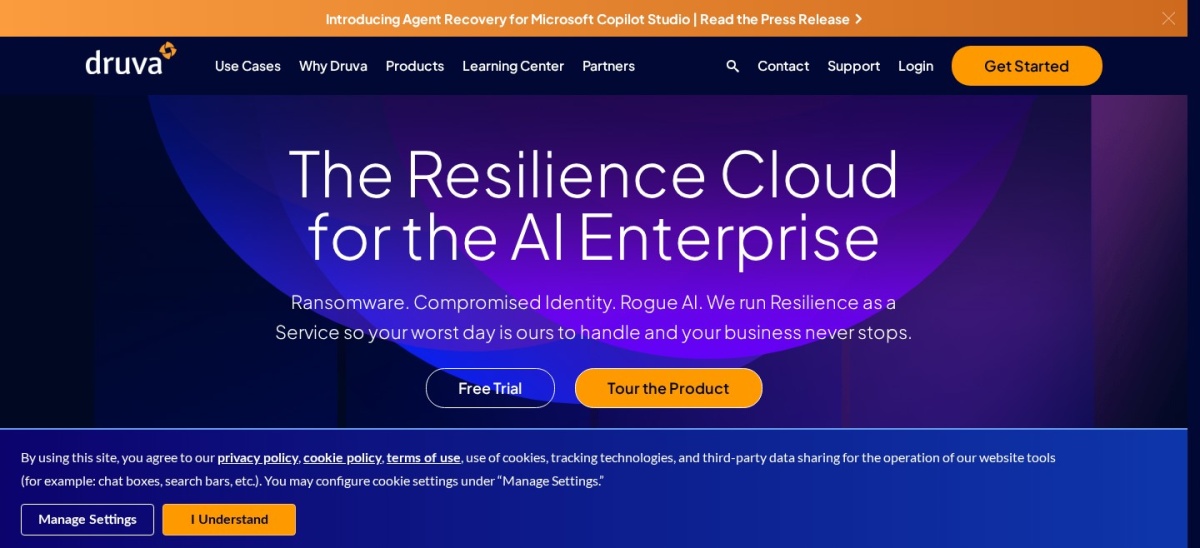
Druva Data Security Cloud homepage, captured Nov 2026.
Druva Data Security Cloud is a fully managed SaaS backup and recovery platform with air-gapped backups and no servers for the customer to run. It covers endpoints, SaaS apps and cloud workloads, and it is rated 4.7 out of 5 on G2 from 746 reviews.
The trade off is control. Everything runs in Druva cloud, pricing is by quote, and deep on-premises estates fit less well. It suits health systems that want recovery without running backup infrastructure.
Rubrik Security Cloud homepage, captured Nov 2026.
Rubrik Security Cloud is a data security platform that treats backup as a security control, with immutable copies, threat hunting inside backups and clean-room recovery. It is rated 4.6 out of 5 on G2 from 302 reviews.
The trade off is enterprise pricing. Rubrik sells by subscription with no public prices, and contracts run large, so small health systems may find it heavy. It suits hospitals that rank ransomware recovery first.
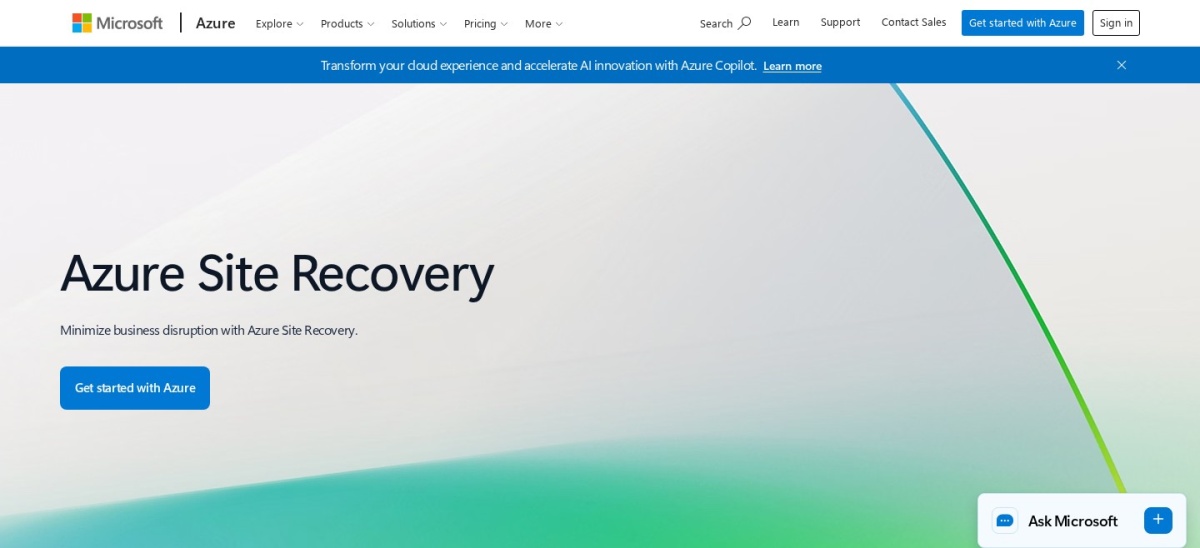
Azure Site Recovery is a Microsoft service that replicates virtual machines and physical servers to Azure with recovery plans and test failover. It costs 25 dollars per protected instance a month, with the first 31 days free, and it is rated 4.7 out of 5 on G2 from 40 reviews.
The trade off is Azure lock-in. It works best when Azure is the recovery site, and recovery of non-Microsoft estates needs more work. It suits hospitals already running on Microsoft infrastructure.
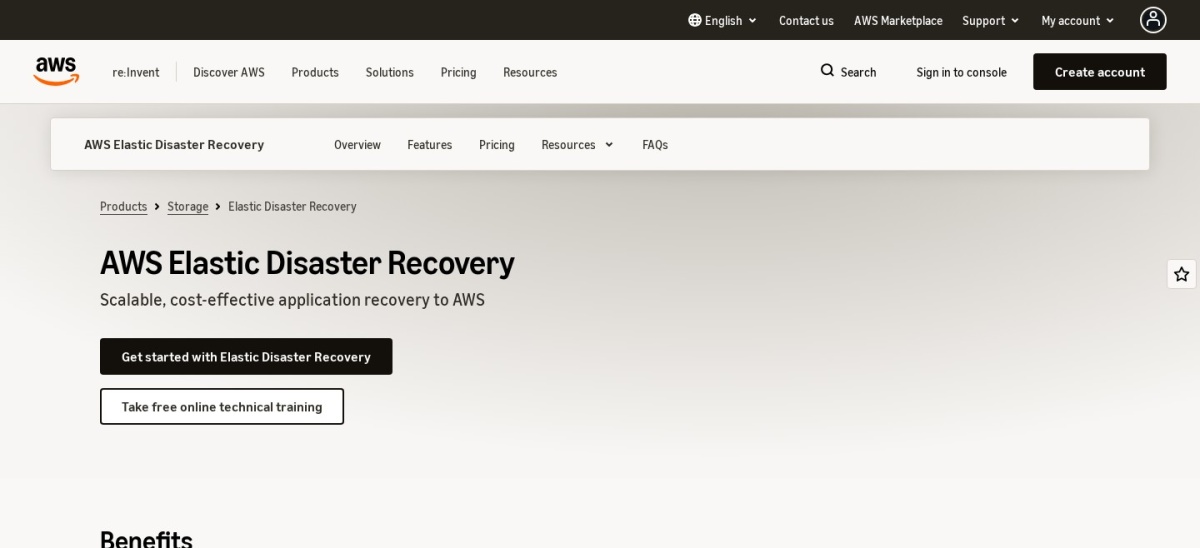
AWS Elastic Disaster Recovery homepage, captured Nov 2026.
AWS Elastic Disaster Recovery is a cloud service that continuously replicates on-premises and cloud servers to AWS for failover and failback. It costs 0.028 dollars per source server per hour, and it is rated 4.4 out of 5 on G2 from 11 reviews.
The trade off is that it is AWS-only. Recovery targets are AWS regions, usage pricing is hard to budget without a pilot, and the G2 base is thin at 11 reviews. It suits hospitals already running on AWS.
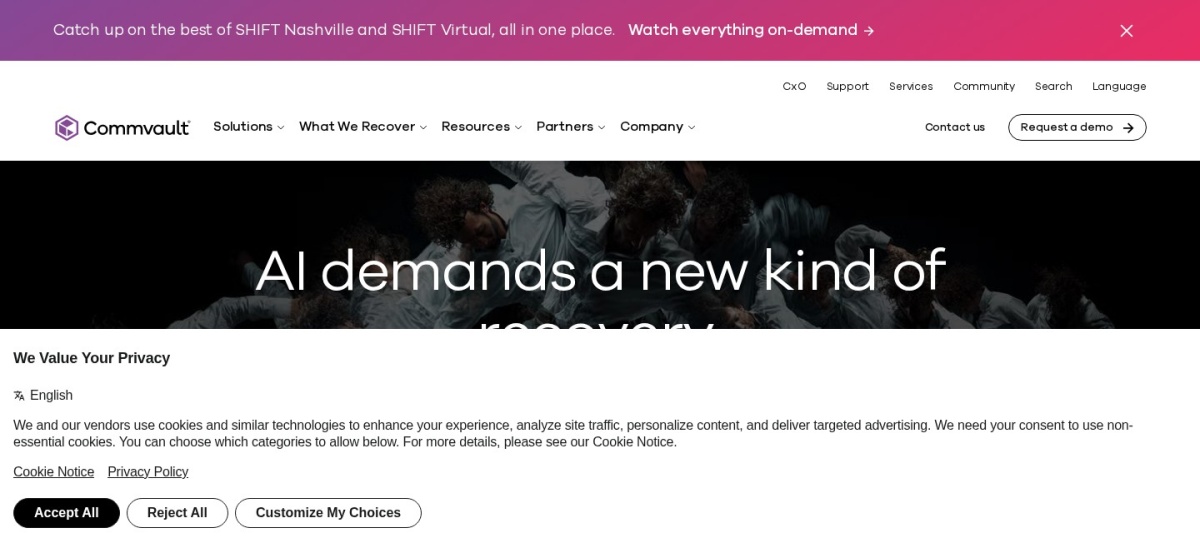
Commvault Cloud is a cyber resilience platform that covers more than 250 workload types across data centres, clouds and SaaS apps, with clean-room recovery for verified restores. It is rated 4.4 out of 5 on G2 from 195 reviews.
The trade off is complexity and cost. Commvault sells by quote, contracts run large, and the platform needs skilled staff to run. It suits large health systems with mixed estates and strict governance.
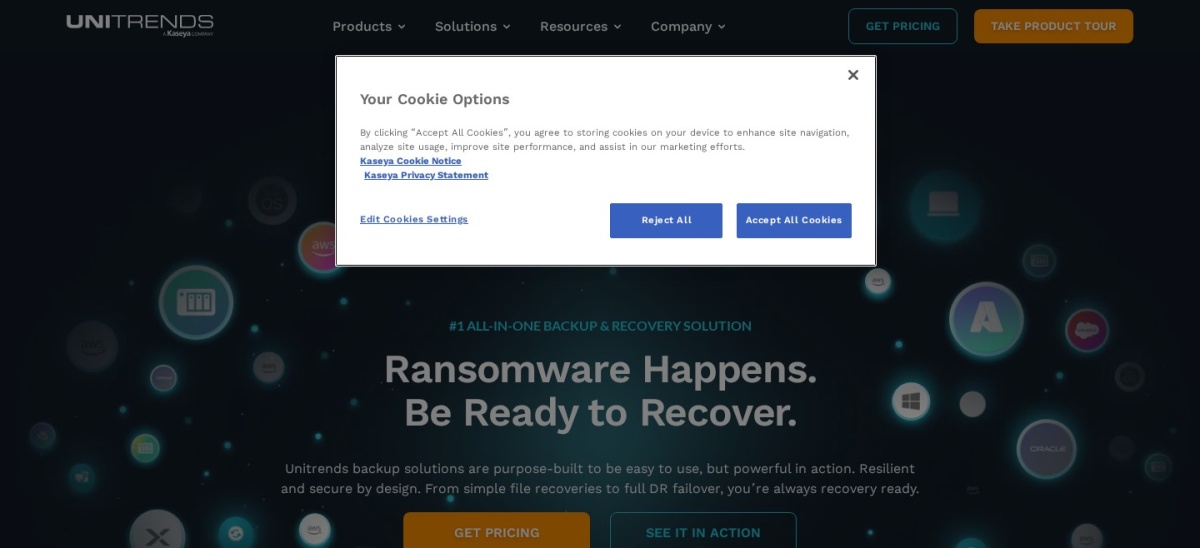
Unitrends Backup and Recovery homepage, captured Nov 2026.
Unitrends Backup and Recovery is an appliance and software platform that ties backup, replication and recovery-plan testing together for physical, virtual and cloud systems. It is rated 4.2 out of 5 on G2 from 464 reviews.
The trade off is scale. Unitrends fits mid-size hospitals best, pricing is by quote, and large multi-cloud estates may outgrow it. It suits health systems that want one appliance-led platform.
Recovery point objective is how much data you can lose, and recovery time objective is how long recovery may take. Hospitals need both numbers small.
Continuous replication tools like Zerto and AWS Elastic Disaster Recovery keep the recovery point near zero, while backup-led tools restore from the last backup.
Test failover before you buy. A recovery plan that has never run is a guess, and healthcare downtime costs far more than the test.
How we chose
We started from disaster recovery listings on G2 and healthcare recovery guides, then kept nine established platforms with a numeric G2 rating and HIPAA support.
Prices come from vendor pricing pages and pricing guides that quote them, checked in November 2026. Azure Site Recovery at 25 dollars per instance a month and AWS at 0.028 dollars per server per hour are published usage prices. Ratings and review counts come from G2 on the same day.
We left out tools with no G2 rating or no clear disaster recovery offer. No vendor paid for a place, and we do not claim hands-on testing for this list.
How to choose disaster recovery software for healthcare systems
Start with the systems that cannot go down, then set recovery targets for each one.
List the systems that must never stop. Rank electronic records, imaging and scheduling first, because their downtime hits patient care directly.
Set a recovery point and time for each. Near-zero data loss needs continuous replication, while nightly backups suit less urgent systems.
Check HIPAA and audit support. Ask for the compliance reports and clean-room recovery proof you will need at audit time.
Run a test failover before you sign. A drill shows the real recovery time, and it is cheaper to learn that before a contract than during an outage.
FAQ
What is the best disaster recovery software for healthcare systems?
Zerto is the best disaster recovery software for healthcare systems, because continuous replication gives near-zero data loss and recovery in under ten minutes. Veeam is the best pick for broad workload coverage.
How much does disaster recovery software cost for hospitals?
Most enterprise platforms here sell by quote, so expect a sales conversation. Azure Site Recovery publishes 25 dollars per protected instance a month, and AWS charges 0.028 dollars per source server per hour.
Is there a free disaster recovery option for healthcare?
Veeam offers a free edition for up to 10 workloads, and Azure Site Recovery gives the first 31 days free. Free options cover small estates only, not a full hospital.
Which disaster recovery software is best for small hospitals?
Acronis Cyber Protect suits smaller health systems that want backup and security in one agent, while Unitrends fits mid-size hospitals with appliance-led backup. Both sell by quote.
Is Zerto or Veeam better for healthcare?
Zerto is better when near-zero data loss matters most, with continuous replication and recovery in under ten minutes. Veeam is better for broad backup coverage across virtual, physical, cloud and Microsoft 365 workloads.
Does disaster recovery software need to support HIPAA?
Yes. Every tool in this list supports HIPAA, with encryption, access controls and audit reporting. Confirm the vendor signs a business associate agreement before you buy.
SaaS SEO and WordPress specialist with about 8 years of experience. Rakib compares WordPress plugins, themes, hosting and software using public pricing, documentation and user reviews. See how we rank.