Qovery is the best internal developer platform for most teams. It is rated 4.7 out of 5 on G2 from 70 reviews, has a free plan, and its paid Starter plan costs $299 a month billed yearly. Pick Harness for the broadest platform and Cycloid for a portal with published per-user pricing.
How we make this list: we compare pricing pages, product documentation and public user reviews, then re-check every price before each update. No product paid for a place. Disclosure.
Qovery leads with 4.7/5 from 70 G2 reviews, a free plan for 3 users and Starter at $299 a month billed yearly.
Harness has the most reviews here, 335 on G2 at 4.6/5, and its portal is one module in a wider DevOps platform.
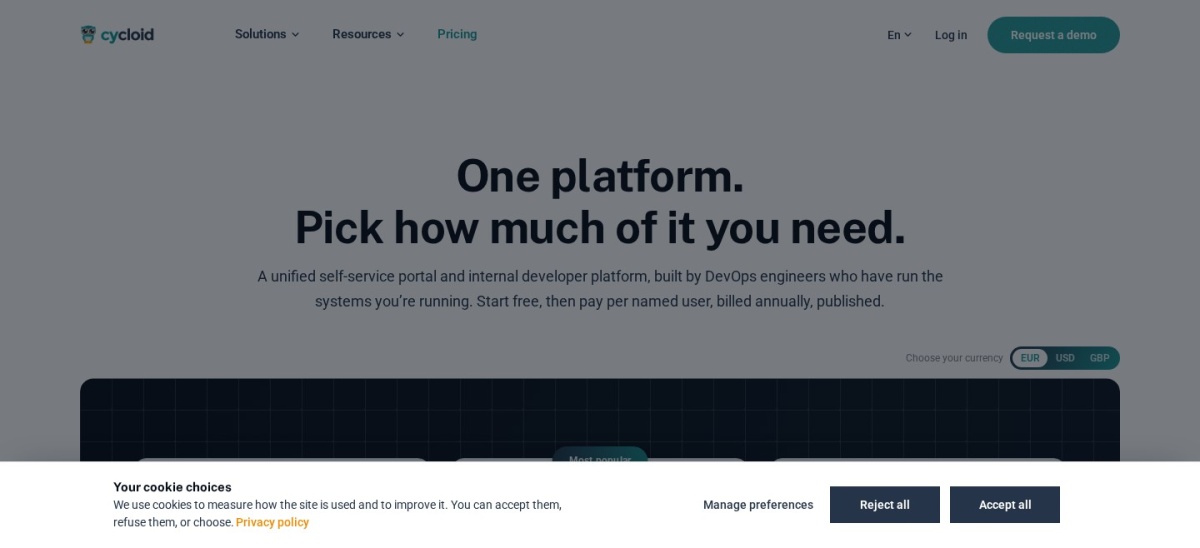
Cycloid is rated 4.9/5 from 32 G2 reviews, the strongest rating with a real review base, with Advanced at $45 per user a month billed yearly.
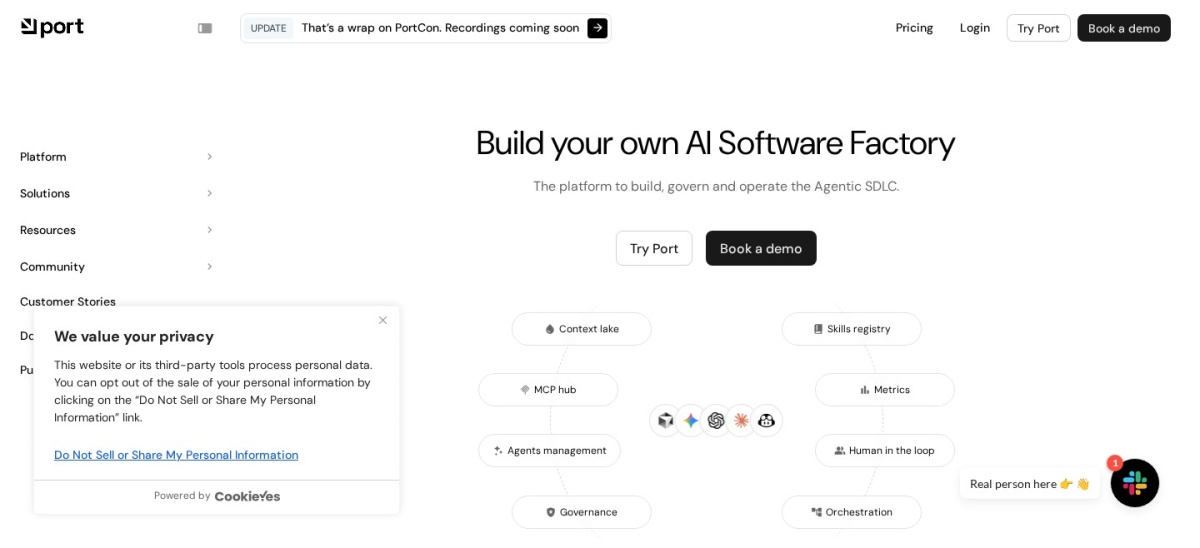
Port's free plan covers 5 seats and 10,000 entities, and Basic starts at $30 per seat a month billed yearly.
Cortex, OpsLevel and Harness publish no numeric price, so budget them by quote, while DuploCloud's live paid plan starts at $5,000 a month.
What an internal developer platform should cover
An internal developer platform gives developers one place to find services, docs and owners, instead of hunting across repos, wikis and dashboards. The core pieces are a software catalog, scorecards for standards, and self-service actions for common tasks.
A good platform should show who owns each service, how healthy it is, and how to spin up a new service from an approved template. If it only lists services without actions, it is a catalog, not a platform.
Self-service is where the time saving comes from. Our guide on deploying WordPress with GitHub Actions shows the same idea in miniature: a repeatable path replaces a ticket and a wait.
Price is hard to compare here. Three of the nine tools publish no numeric price at all, and most charge per seat or per user, so the cost of a 50-developer team is very different from the cost of a 5-developer team.
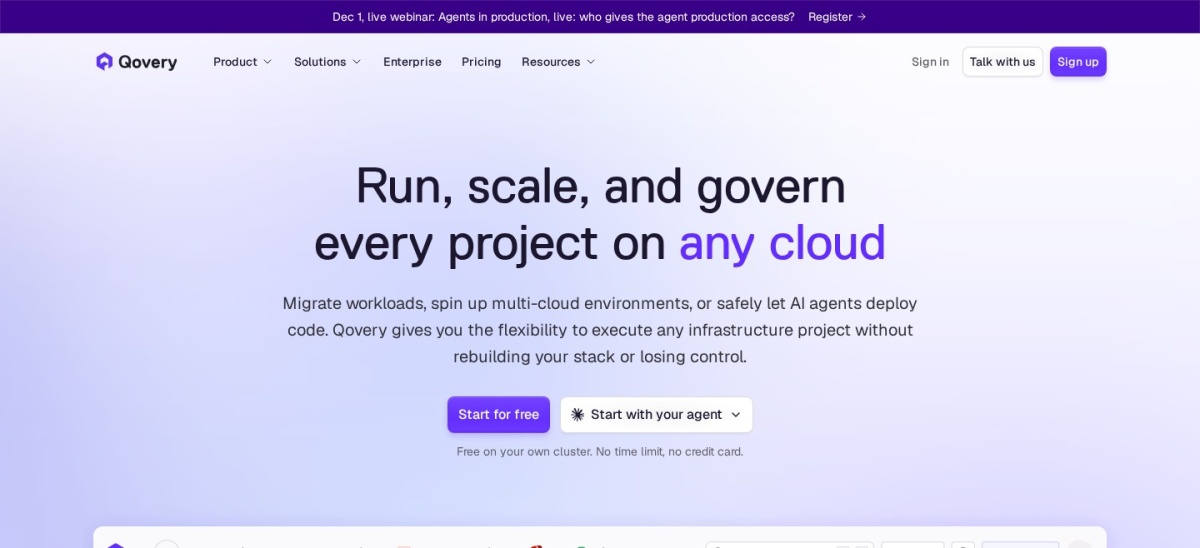
Qovery is an internal developer platform that deploys applications to Kubernetes in your own cloud account. The free plan covers 3 users, 1 cluster and 1,000 deployment minutes a month, and paid plans add managed clusters, preview environments and a 14-day trial.
The trade off is cost at scale. Starter costs $299 a month billed yearly for 3 users and 1 cluster, and extra deployment minutes cost $0.16 each, so heavy build teams should watch usage. It suits small and mid-size teams that want deploys without running Kubernetes by hand.
What we like
Free plan with no time limit or credit card
Published prices for every paid plan
Preview environments for every pull request
AI agents do not consume user seats
Watch out for
Starter is capped at 3 users and 1 cluster
Your cloud bill stays separate from Qovery
Deployment-minute overages add up for busy teams
Growth adds more users, clusters and a kickoff sessionVisit qovery.com
02
Harness
4.6/5on G2 (335 reviews, checked Nov 2026)
PricingCustom/yr
Best for the broadest DevOps platform
Free planYes, free tier
PortalIDP module, Backstage-compatible
Other modulesCI, CD, IaC, security
Paid planCustom, Essentials or Enterprise
harness.io
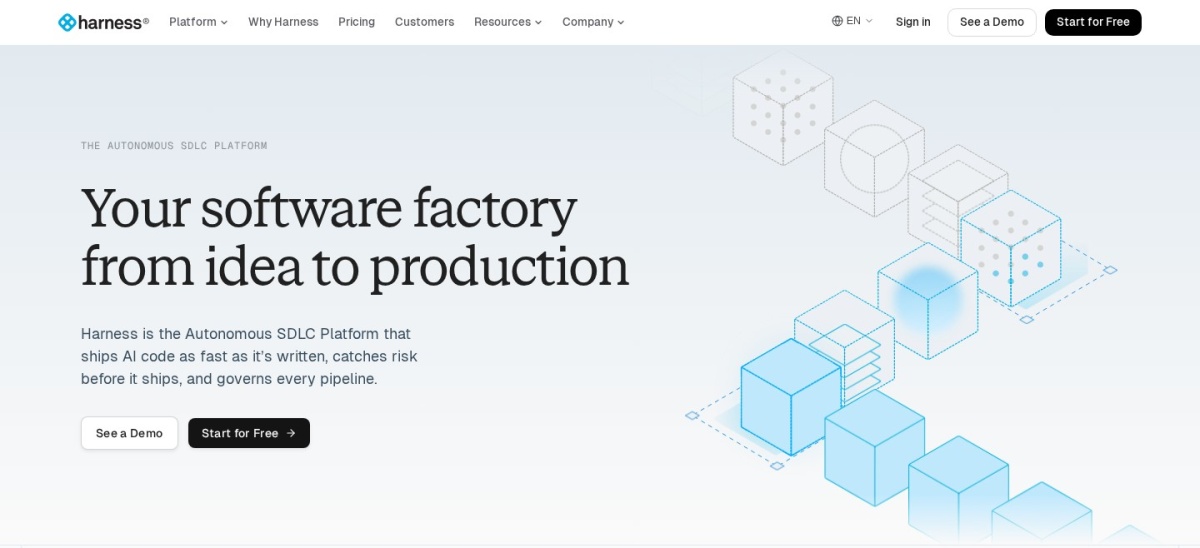
Harness homepage, captured Nov 2026.
Harness is a wide DevOps platform with an internal developer portal as one module. The portal gives developers a service catalog, software templates and self-service workflows beside CI, CD and infrastructure-as-code tools, and there is a free tier for small teams.
The trade off is price opacity. Harness publishes no numeric price for the portal or its Essentials and Enterprise plans, so costs come from a quote, and the platform is large for teams that only need a portal. It suits teams that already run, or plan to run, several Harness modules.
Cycloid is a self-service portal and internal developer platform built around blueprints, environments and scorecards. The free plan covers up to 5 users, and the Advanced plan adds unlimited workspaces, custom environments and an AI assistant.
The trade off is per-user cost. Advanced costs $45 per user a month billed yearly, so a 20-user team pays $900 a month, and Enterprise is custom. It suits platform teams that want published pricing and a portal that also runs self-hosted.
Port is a hosted internal developer portal built around a software catalog, scorecards and self-service actions. The free plan covers 5 seats, 10,000 entities and 400 workflow runs, and blueprints let platform teams model services, environments and cloud resources.
The trade off is seat pricing. Basic starts at $30 per seat a month billed yearly for up to 50 seats, and the Standard plan at $48 adds single sign-on and a second workspace. It suits teams that want a flexible catalog and can design their own blueprints.
What we like
Free plan with 10,000 entities and no time limit
Flexible blueprints for any catalog model
Self-service checkout with no sales call
AI builder and workflow automation included
Watch out for
Per-seat cost grows with every developer
Standard plan rose to $48 per seat a month
Blueprints need real design work up front
Standard adds single sign-on and a second workspaceVisit port.io
05
Cortex
4.4/5on G2 (20 reviews, checked Nov 2026)
PricingCustom/yr
Best for scorecards and ownership data
Free planNo, custom quote
Integrations50+ native integrations
ScorecardsYes, with CQL
DeploymentCloud-hosted SaaS
cortex.io
Cortex homepage, captured Nov 2026.
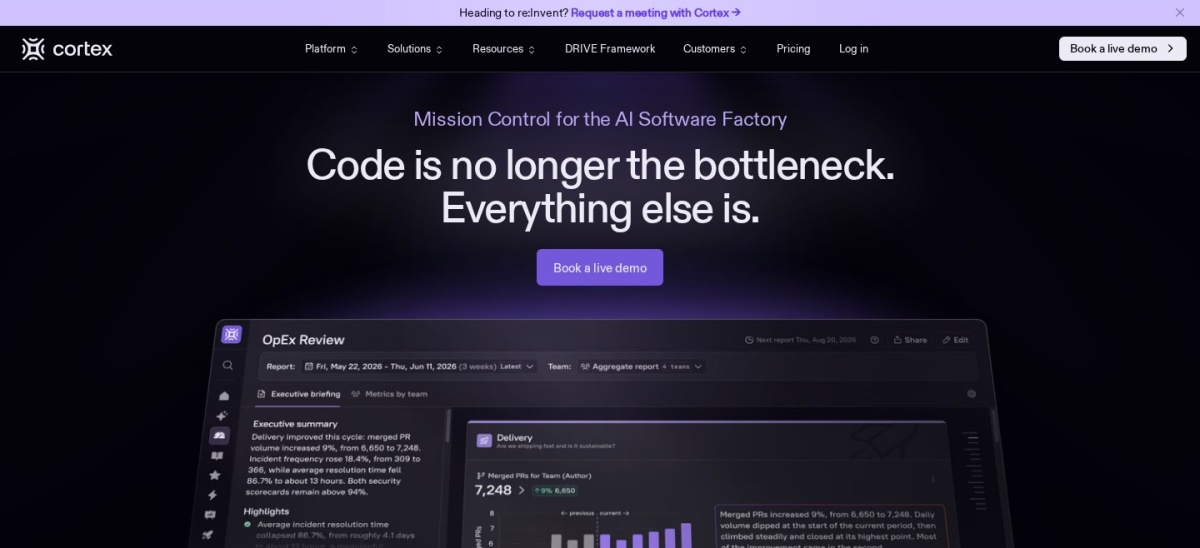
Cortex is an engineering operations platform with a service catalog, scorecards and self-service workflows. It connects to more than 50 tools, including GitHub, Jira, PagerDuty and Datadog, and maps ownership and dependencies across services automatically.
The trade off is price. Cortex publishes no numeric price and sells custom per-seat quotes, so small teams cannot budget it from the site, and a dedicated owner is still needed for scorecards. It suits larger engineering orgs that want scorecards and ownership data in one place.
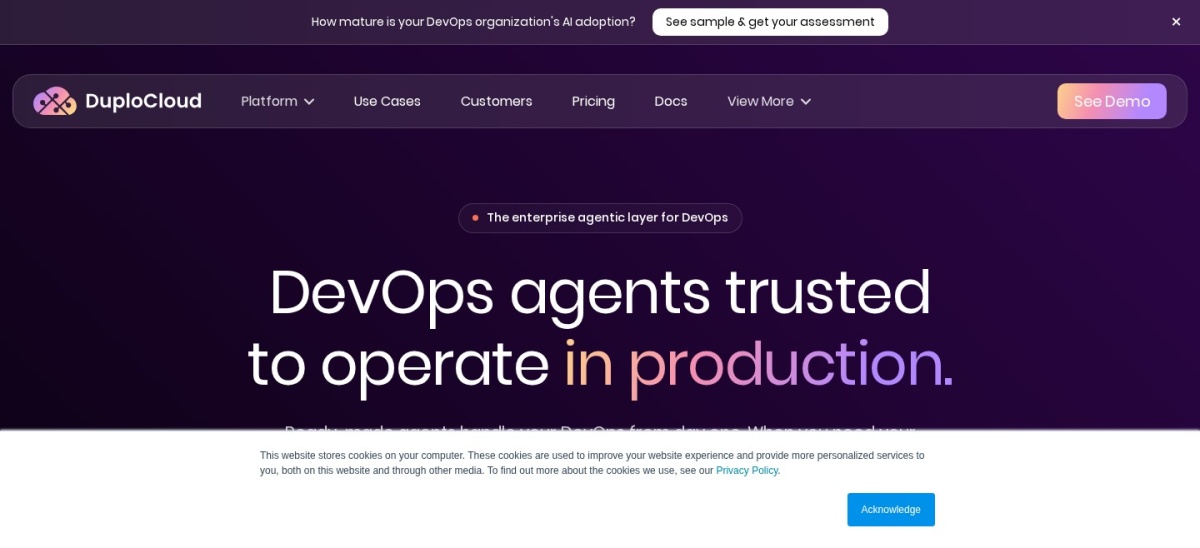
DuploCloud is a cloud platform that automates infrastructure, deployments and compliance controls. The free Starter plan allows up to 5 installed agents per environment, and the Pro plan adds a forward-deployed engineer, an account manager and 24x7 support.
The trade off is price and a changed product. The live pricing page now sells agent-based plans, with Pro at $5,000 a month, while G2 still lists older node-based plans from $3,500 a month. It suits teams that want guided help running cloud infrastructure, not just a portal.
OpsLevel is an internal developer portal focused on service ownership, standards and scorecards. It catalogs services and repos, runs checks against each service, and lets developers trigger self-service actions instead of filing tickets.
The trade off is price opacity. OpsLevel publishes no numeric price, sells Standard for up to 50 users and Enterprise for unlimited users by quote, and offers a demo rather than a free trial. It suits teams that want to drive standards with scorecards across many services.
Massdriver is an internal developer platform and orchestrator that turns Terraform, OpenTofu and Helm modules into a self-service catalog. Developers provision approved infrastructure from the catalog, with policy checks before every deploy.
The trade off is the entry price. The Managed plan costs $999 a month billed yearly for 15 seats, and Enterprise and self-hosted deployments are custom, so small teams pay a lot for a catalog. It suits platform teams that already standardise on Terraform or OpenTofu.
Backstage is the open-source framework for building internal developer portals, created by Spotify and now a CNCF project. It gives teams a software catalog, software templates, TechDocs and a large plugin ecosystem, with no licence cost.
The trade off is effort. You run, upgrade and secure Backstage yourself, and its only G2 rating is 5.0 out of 5 from a single review of the managed Spotify Portal. It suits platform teams with the staff to own a portal long term.
A portal is the front door: catalog, docs, templates and scorecards. An orchestrator sits behind it and actually provisions infrastructure when a developer clicks a button.
Most tools here are portals first. Qovery, Massdriver and Cycloid go further, because they also run the deployment or the infrastructure behind the request.
Ask each vendor what happens after the click. If the answer is a ticket or a manual step, the platform has not removed the handoff, it has only moved it.
How we chose
We started from the G2 internal developer platforms category and kept tools with a public G2 rating, a live homepage and a pricing page we could open on 25 November 2026.
Prices come from each vendor's own pricing page, checked on 25 November 2026. Ratings and review counts come from G2 on the same day. Where a vendor shows no numeric price, the list shows Custom instead of a guessed number.
We left out tools with no public rating, including Humanitec and configure8, and tools whose rating could not be tied to the right product. No vendor paid for a place, and we do not claim to have used these tools ourselves.
How to choose an internal developer platform
Start with the catalog, then check price and effort before you commit.
Count your services and owners first. A portal only helps if the catalog is complete. Pick the tool that can import your repos and map owners with the least manual work.
Price it for your real team size. Per-seat pricing looks cheap for 5 developers and steep for 50. Work out the yearly cost for your team before you shortlist.
Check what happens after the click. A template that only creates a repo is not self-service. See how our deploy with GitHub Actions guide chains a repeatable path from push to live.
Plan who owns the platform. Every portal needs someone to keep the catalog honest and the scorecards current. If no team owns that job, pick the simplest tool, not the biggest.
FAQ
What is the best internal developer platform?
Qovery is the best pick for most teams. It is rated 4.7 out of 5 on G2 from 70 reviews, has a free plan for 3 users, and its Starter plan costs $299 a month billed yearly.
What is an internal developer platform?
It is one place where developers find services, docs, owners and approved templates, and run self-service actions such as creating a service or an environment. It replaces tickets and tribal knowledge with a catalog and golden paths.
Is Backstage free?
Yes. Backstage is open source under the Apache 2.0 licence, so there is no licence cost. You still pay in engineering time to run, upgrade and secure it, or you can buy the managed Spotify Portal by quote.
How much does an internal developer platform cost?
Published prices in this list run from free open source to $30 per seat a month for Port Basic and $299 a month for Qovery Starter. Harness, Cortex and OpsLevel publish no price, so budget them by quote.
Do I need a platform if I already use Kubernetes?
Kubernetes runs workloads, but it does not tell developers who owns a service or how to create one correctly. A platform adds the catalog, templates and scorecards on top of the clusters you already run.
What is the difference between a portal and an orchestrator?
A portal is the front door developers see: catalog, docs and templates. An orchestrator is the engine behind it that provisions infrastructure and enforces policy when a developer requests something.
SaaS SEO and WordPress specialist with about 8 years of experience. Rakib compares WordPress plugins, themes, hosting and software using public pricing, documentation and user reviews. See how we rank.