TestMu AI is the best BrowserStack alternative for most teams, with live testing from fifteen dollars a month and a free tier for small suites. Sauce Labs suits regulated enterprises, while Cypress and Playwright cost nothing for teams happy to run their own grid.
How we make this list: we compare pricing pages, product documentation and public user reviews, then re-check every price before each update. No product paid for a place. Disclosure.
TestMu AI is the cheapest like-for-like cloud, with live testing from $15 a month and a free tier.
Sauce Labs is the closest full replacement, with live testing from $39 a month and unlimited users.
TestingBot is the cheapest small-team cloud in euros, from 20 euros a month, with prepaid minutes.
Perfecto and HeadSpin are quote-led enterprise clouds; budget on a sales call, not a price page.
Cypress, Selenium and Playwright cost nothing to run, but you host and maintain the grid yourself.
What makes a good BrowserStack alternative?
Most teams leave BrowserStack over the bill, not the product. Parallel tests are the cost driver, so compare the price of one parallel session, not the headline plan, before you switch.
Real devices are the second dividing line. TestMu AI, Sauce Labs, TestingBot, Kobiton, Perfecto and HeadSpin all run tests on real phones, while Cypress, Selenium and Playwright run browsers on your own machines.
Free options exist at both ends. TestMu AI has a permanent free tier with monthly minutes, while the open-source trio costs nothing but needs your own infrastructure and maintenance.
Check the framework fit before the price. If your suite is Appium, a device cloud is the answer; if it is Playwright or Cypress, the cloud adds little unless you need Safari or real phones. Our best software testing tools guide covers the wider field.
List prices in each vendor's currency, checked Nov 2026
PerfectoCustom
CypressFree
SeleniumFree
PlaywrightFree
TestMu AIFREE$180
TestingBot€240
Sauce Labs$468
HeadSpin$588
Kobiton$996
The 9 best BrowserStack alternatives
01
TestMu AI
4.6/5on Capterra (545 reviews, checked Nov 2026)
Paid from$15/mo
Best overall BrowserStack alternative
Real devicesYes, 10,000+ combos
Emulators and simulatorsYes
Parallel tests1 on entry plans
Entry priceLive, $15/mo
lambdatest.com
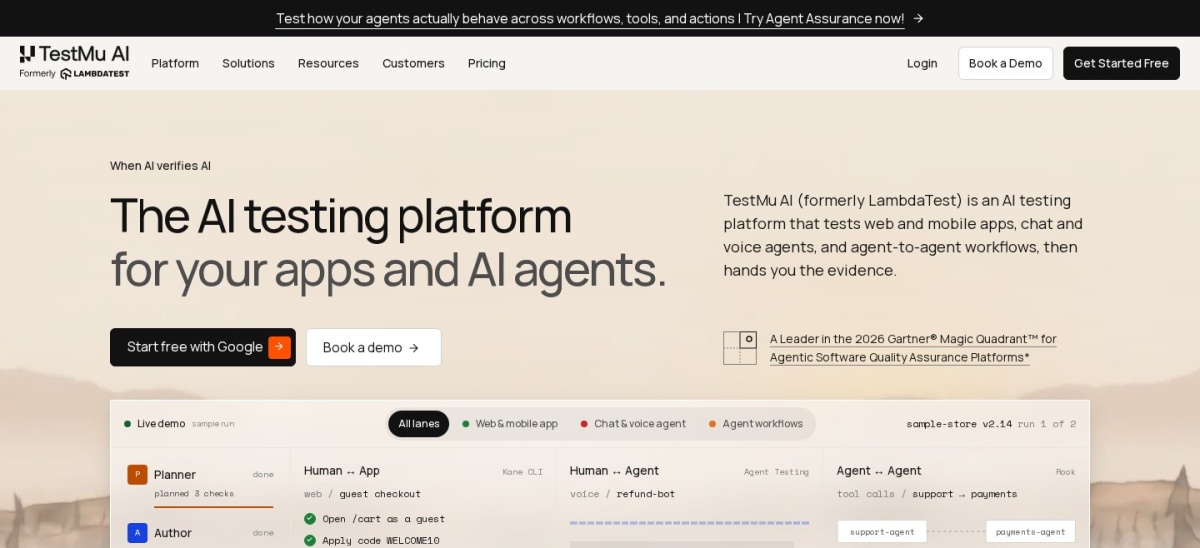
TestMu AI homepage, captured Nov 2026.
TestMu AI is the testing cloud formerly known as LambdaTest, covering live, automated and real-device testing in one place. It runs tests across more than 10,000 browser and operating system combinations, adds an AI agent that writes and triages tests, and keeps a permanent free tier for small suites.
The trade off is depth on niche devices. Its AI features are newer than the incumbents, and coverage of specific phone models can be thinner than a curated fleet. It suits teams that want BrowserStack breadth at a lower price.
Sauce Labs is the closest like-for-like BrowserStack replacement, with live testing, virtual and real device clouds and error analytics in one platform. Every plan includes unlimited users and unlimited testing minutes, and its compliance posture suits regulated enterprises.
The trade off is the entry price for automation. Live testing starts at $39 a month, but virtual device automation starts at $149 a month per parallel, so heavy automation suites cost more than on TestMu AI. It suits enterprises that need compliance and scale.
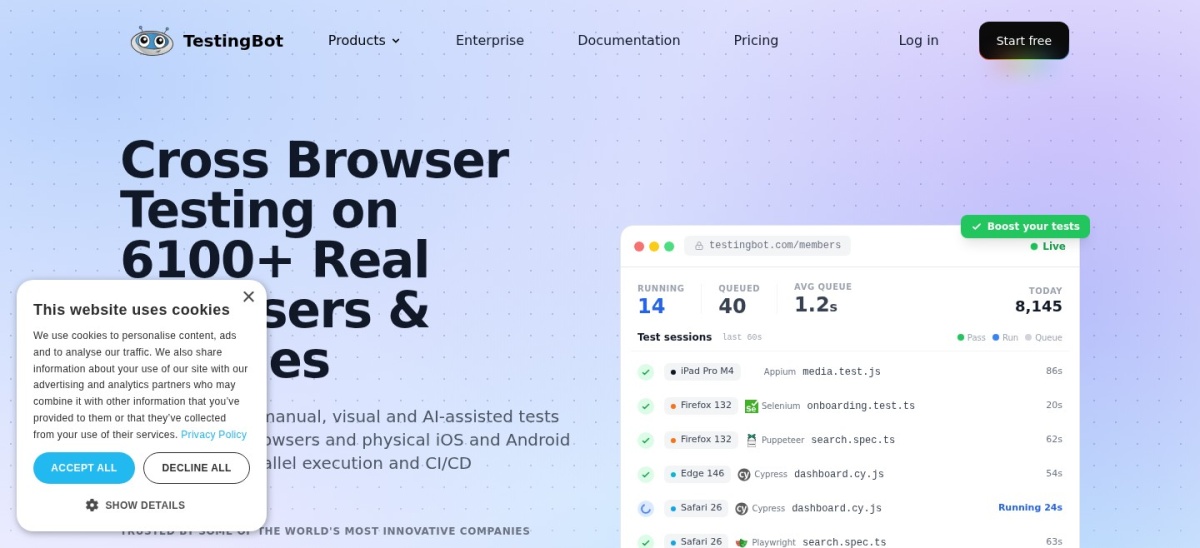
TestingBot is a smaller device cloud that keeps pricing simple, with live testing from 20 euros a month and automated plans from 50 euros a month. It covers real iOS and Android devices alongside desktop browsers, and sells prepaid minutes for teams that test in bursts.
The trade off is size. Its review base is thin, with a 3.9 out of 5 G2 rating from only 17 reviews, and its device catalogue is smaller than the leaders. It suits small teams that want one simple plan and prepaid minutes.
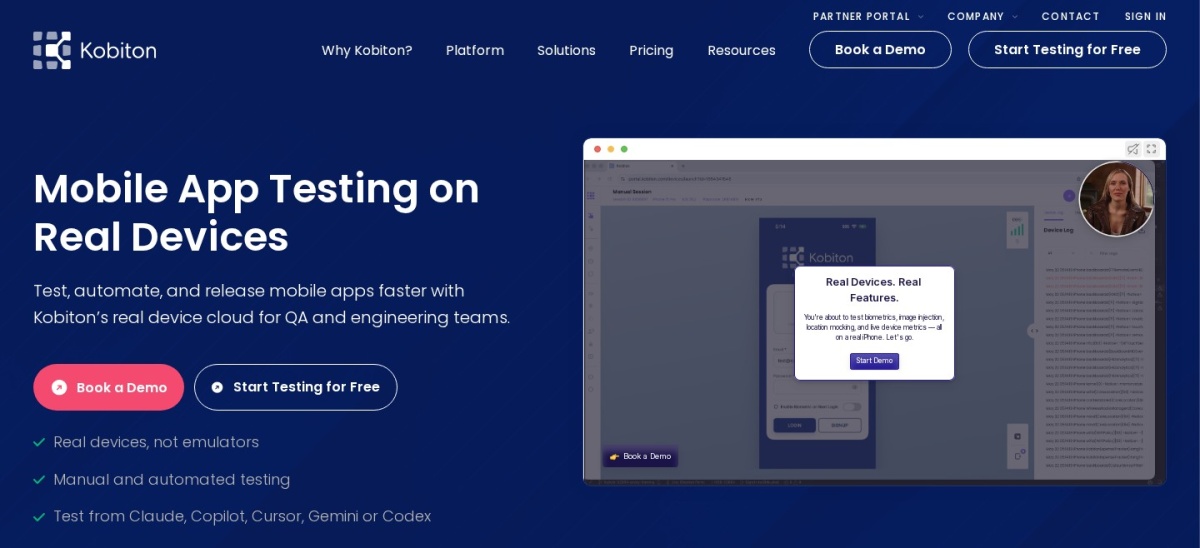
Kobiton is a mobile-first device cloud built around real phones, with cloud, private cloud and on-premises options for regulated teams. Its Startup plan costs $83 a month for 500 real-device minutes, and AI tools help generate Appium scripts and heal broken locators.
The trade off is that per-minute billing punishes heavy use. A team testing all day will outgrow the Startup minutes fast, and prices rise steeply from there. It suits mobile teams that test a few hours a week on real phones.
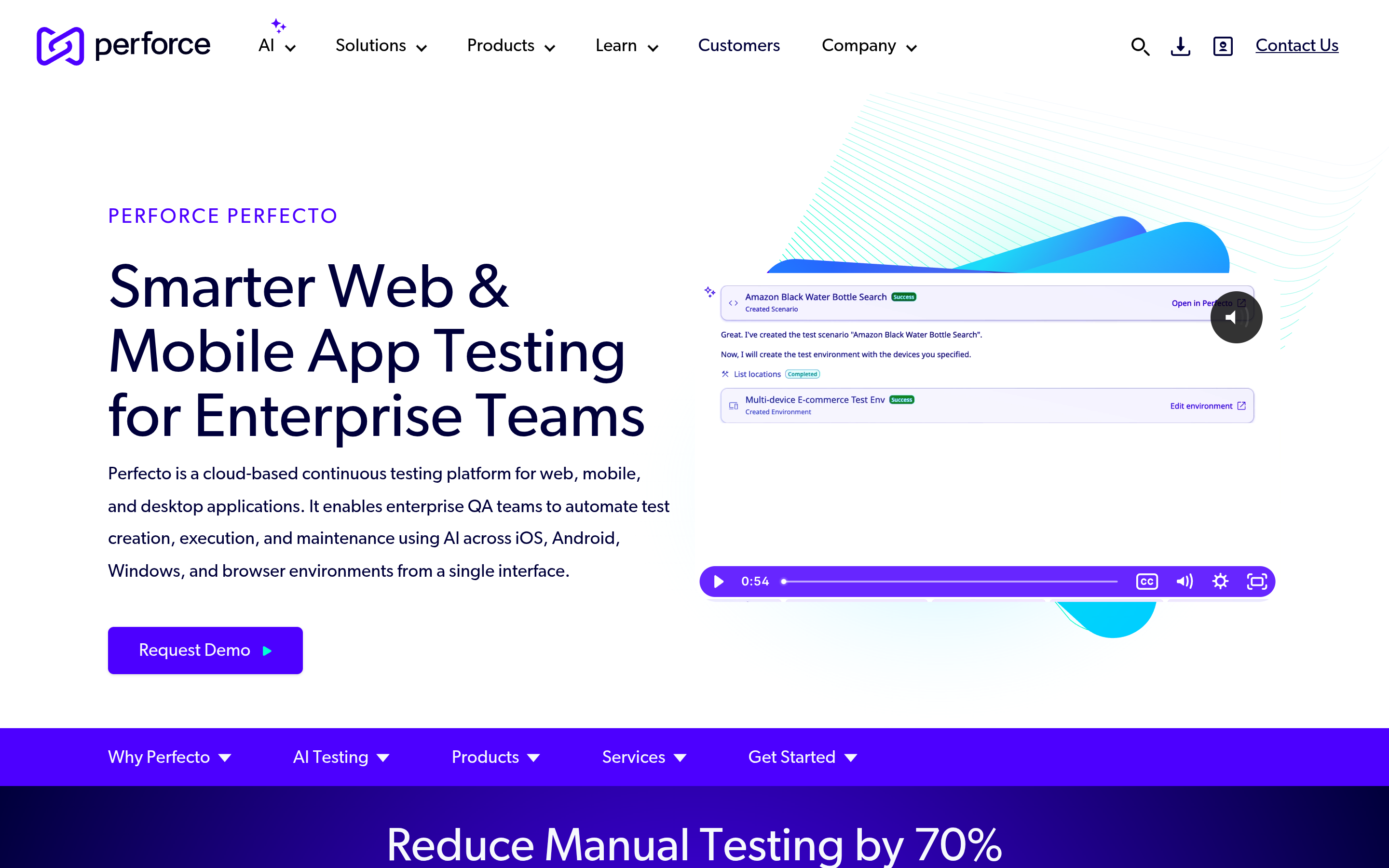
Perfecto is an enterprise testing cloud from Perforce, covering web and mobile testing with real devices, automation and performance checks. It suits large teams that need scale, stability and vendor support rather than the lowest price.
The trade off is transparency. Perfecto publishes no prices and sells by quote, so budgeting needs a sales call, and smaller teams will find cheaper clouds. It suits enterprises that already run Perforce tools or need a managed platform.
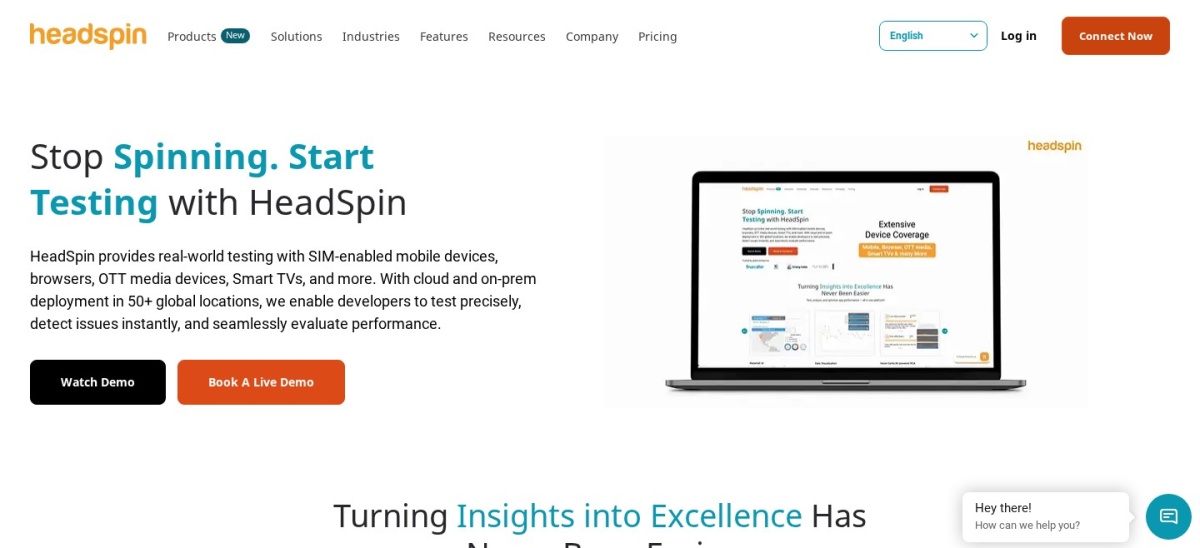
HeadSpin is a device cloud with real phones in many global locations, built for teams that need to test on carrier networks and local conditions. Its Cloud Test Lite plan starts at $49 a month for occasional manual testing, with larger plans for automation.
The trade off is review depth. Its G2 rating of 4.6 rests on only 61 reviews, and automation pricing is not published, so heavy users must get a quote. It suits teams testing on real devices in many countries.
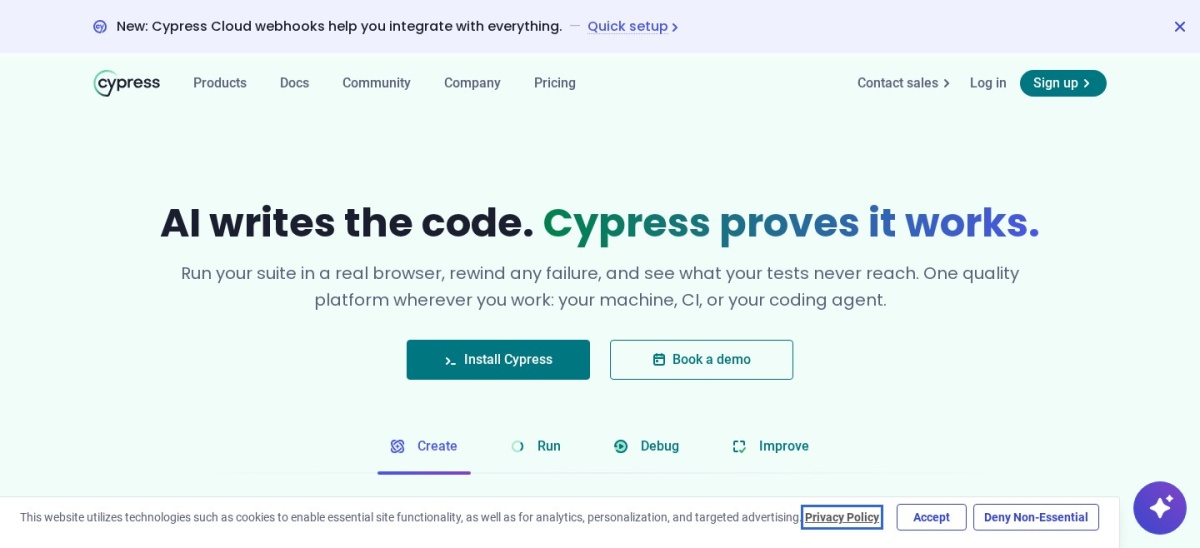
Cypress is a free, open-source testing framework for modern web apps, with a fast runner, real-time debugging and automatic waiting built in. The test runner costs nothing under the Apache 2.0 licence, and its paid Cloud dashboard adds parallel runs, flake detection and recordings.
The trade off is that you run it yourself. Cypress has no device cloud, so real phones need another tool and Safari testing needs a cloud grid, and the Cloud dashboard price was not published when we checked. It suits front-end teams that debug in the browser.
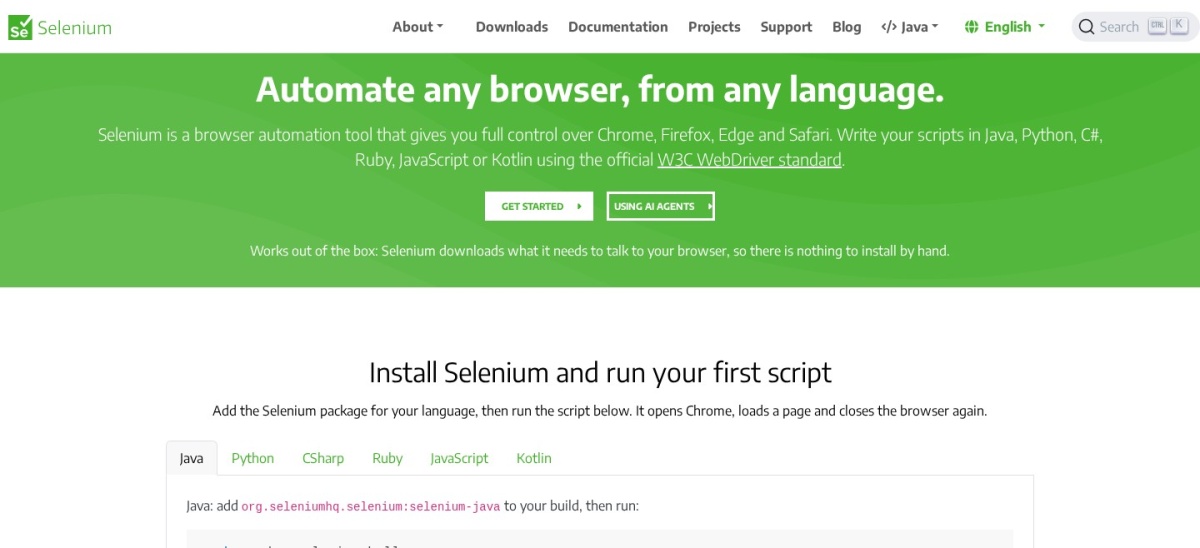
Selenium is the free, open-source standard for browser automation, running tests through WebDriver on your own grid or CI. It supports every major browser and language, and its Grid lets teams run tests in parallel across their own machines.
The trade off is maintenance. Selenium gives you the framework, not the infrastructure, so you build, update and debug the grid yourself, and there is no vendor support without a third party. It suits code-first teams with an existing Selenium suite.
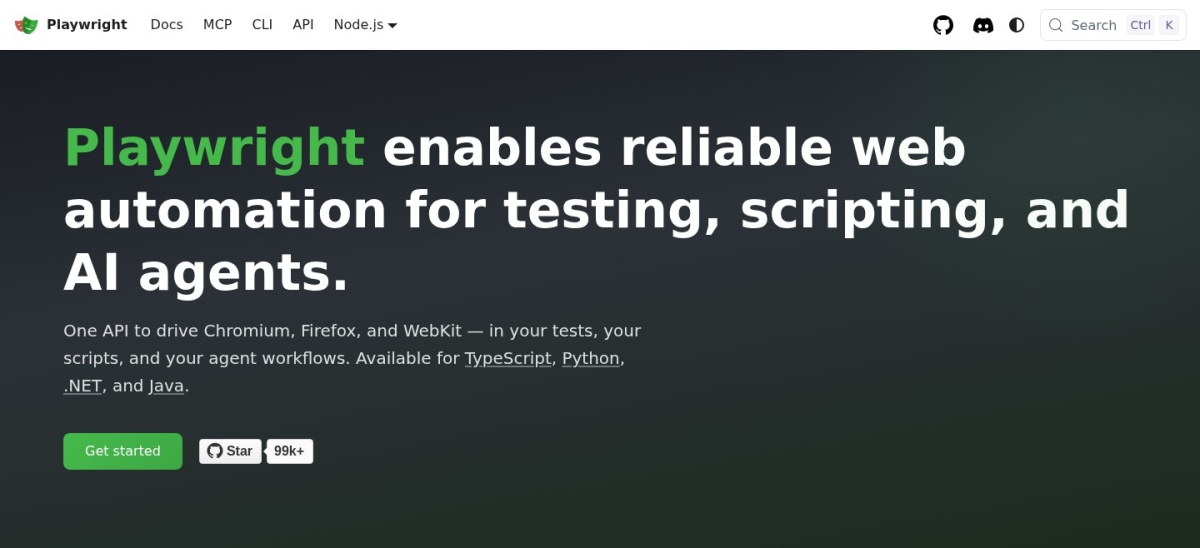
Playwright is a free, open-source framework from Microsoft for end-to-end web testing across Chromium, Firefox and WebKit. It runs tests in parallel, handles modern web apps well and needs no licence, so the only cost is your own CI time.
The trade off is that it is a framework, not a service. Playwright has no real phones and no hosted grid, so mobile testing and Safari on macOS need extra tooling. It suits developer-led teams that can run browsers in their own CI.
If your tests only need desktop browsers, the free frameworks win on price by a wide margin. Cypress, Selenium and Playwright run in your own CI, cost nothing to licence and cover Chromium, Firefox and WebKit between them.
The cloud earns its fee when you need real phones or Safari on macOS. Those are the two things a self-hosted grid cannot give you, and they are the reason most teams keep at least a small cloud plan.
A common split is free frameworks for desktop pull-request checks and a small TestMu AI or Sauce Labs plan for real devices and Safari. That keeps the bill low without giving up coverage.
How we chose
We started from the testing clouds and frameworks teams actually name as BrowserStack replacements, then kept nine with a verified review base and a clear role for web or mobile testing.
Prices come from vendor pricing pages checked on 30 November 2026, with TestMu AI live testing from $15 a month and Sauce Labs live testing from $39 a month read from the vendors' own pages. TestingBot, Kobiton and HeadSpin prices come from November 2026 roundups.
Ratings come from G2 and Capterra listings checked on 30 November 2026. No vendor paid for a place, and we do not claim hands-on testing for this list.
How to choose a BrowserStack alternative
Start with the tests you already run, then match the tool to the browsers and devices they need.
Count your parallel sessions. BrowserStack bills per parallel, and so do most clouds, so one parallel on TestMu AI or Sauce Labs is the number to compare.
List the devices you must cover. Real iOS and Android devices need a device cloud, while desktop Chrome, Firefox and Safari can run on your own grid.
Check the free tier first. TestMu AI gives monthly minutes free, and Cypress, Selenium and Playwright cost nothing, so prove the fit before you pay.
Trial the top two for a sprint. Run the same suite on both clouds for two weeks and compare flakiness, speed and support before you commit.
FAQ
What is the best BrowserStack alternative?
TestMu AI, formerly LambdaTest, is the best BrowserStack alternative for most teams. It covers live and automated testing on real devices from $15 a month, with a free tier, and it holds a 4.6 out of 5 Capterra rating from 545 reviews.
Is there a free alternative to BrowserStack?
Yes. TestMu AI has a permanent free tier with 100 automation minutes a month, and Cypress, Selenium and Playwright are free and open source. The free tools need your own machines or CI to run on, while TestMu AI hosts the browsers for you.
Which BrowserStack alternative is cheapest?
TestMu AI is the cheapest paid cloud, with live testing from $15 a month. TestingBot follows from 20 euros a month, and Sauce Labs live testing starts at $39 a month. Cypress, Selenium and Playwright cost nothing to licence.
Is LambdaTest the same as TestMu AI?
Yes. LambdaTest renamed itself TestMu AI in January 2026, and lambdatest.com now redirects to the new brand. The product, pricing and free tier carried over, so older LambdaTest comparisons still apply to TestMu AI.
BrowserStack vs Sauce Labs: which is better?
Sauce Labs is the closest like-for-like replacement, with a similar device cloud and unlimited users on every plan. BrowserStack has the wider device catalogue, while Sauce Labs suits regulated enterprises that need compliance reviews and regional data centres.
Do I need real devices or are emulators enough?
Emulators suit most web checks, but real devices catch touch, battery, network and hardware issues that emulators miss. If you ship a mobile app, budget for a real-device cloud; if you only test websites, emulators and desktop browsers are usually enough.
SaaS SEO and WordPress specialist with about 8 years of experience. Rakib compares WordPress plugins, themes, hosting and software using public pricing, documentation and user reviews. See how we rank.