Best Zero Trust Platforms in 2026: 7 Tools Compared
WLWPLegible EditorsLast verified 22 Nov 2026How we rank6 min read
★ Short answer
Cloudflare One leads for teams wanting zero trust network access and web filtering on one global network, with a free tier for up to 50 users. Twingate fits lean teams replacing legacy VPNs at $5 per user per month, while Tailscale suits engineering teams building WireGuard mesh networks.
How we make this list: we compare pricing pages, product documentation and public user reviews, then re-check every price before each update. No product paid for a place. Disclosure.
Cloudflare One offers a free plan for up to 50 users and a published $7/user/month Pay-as-you-go rate.
Twingate starts with a free Starter tier for up to 5 users and lists Teams at $5/user/month before a 15% yearly discount.
Tailscale provides a free Personal plan for up to 6 users and Standard at $8/user/month.
Pomerium Zero Business is priced at $7/user/month billed annually or $9/user/month billed monthly.
NordLayer starts at $8/user/month on Lite with a 5-user minimum.
What to look for in a zero trust platform
Zero trust platforms replace broad network-level VPNs with identity- and context-aware access to specific applications, services, or workloads. Instead of placing remote users inside a flat corporate network after a single login, these tools verify identity, device posture, and policy rules before granting access.
Most tools in this category fall into two practical groups. Edge and SASE platforms inspect traffic and gate web or private apps through cloud points of presence, while mesh overlay or identity-aware proxies connect devices or services directly with lighter operational overhead.
Pricing structure varies sharply across vendors. Some charge per active user with generous free tiers for small teams, while others enforce seat minimums, charge per connected device or gateway, or keep enterprise tiers behind custom quotes.
Before choosing a platform, map your identity provider integration, whether you need browser-only app access or full TCP/UDP and SSH routing, and how much log retention and support you require.
For unifying identity, SSO, and cross-platform device management
$9/mo
No free plan
4.5/5
Price ladder: cheapest paid plan per year
List prices, USD, checked Nov 2026
TwingateFREE$60
CloudflareFREE$84
PomeriumFREE$84
GoodAccess$84
TailscaleFREE$96
NordLayer$96
JumpCloud$108
The 7 best zero trust platforms
01
Cloudflare One
4.6/5on G2 (105 reviews, checked Nov 2026)
Paid from$7/mo
Best for combined ZTNA and web security on one edge network
Entry price$0 up to 50 users
Paid entry$7/user/mo
Core modulesAccess, Gateway, Tunnel
G2 rating4.6/5 (105)
cloudflare.com
Cloudflare One homepage, captured Nov 2026.
Cloudflare One is a cloud-delivered zero trust and SASE platform combining Cloudflare Access, Gateway DNS and HTTP filtering, and Tunnel connectors. Its free plan covers up to 50 users with ZTNA and secure web gateway controls plus up to 24 hours of log retention.
The trade off is that upgrading to Pay-as-you-go at $7 per user per month still gates items like Remote Browser Isolation as add-ons and caps free log retention at 30 days. It suits teams that want ZTNA and web filtering on one global network.
What we like
Free plan covers up to 50 users with ZTNA and SWG
Published $7/user/mo Pay-as-you-go tier without custom sales quotes
Combines private app access, DNS/HTTP filtering, and tunnels in one console
Watch out for
Free plan includes community support and 24-hour log retention
Some capabilities such as Remote Browser Isolation sit behind add-ons
Pay-as-you-go at $7/user/mo removes the 50-user cap and extends log retention to 30 days.Visit cloudflare.com
02
Twingate
4.6/5on G2 (84 reviews, checked Nov 2026)
Paid from$5/mo
Best for straightforward VPN replacement on small and midsize teams
Entry price$0 up to 5 users
Paid entry$5/user/mo
ConnectivityP2P with connectors
G2 rating4.6/5 (84)
twingate.com
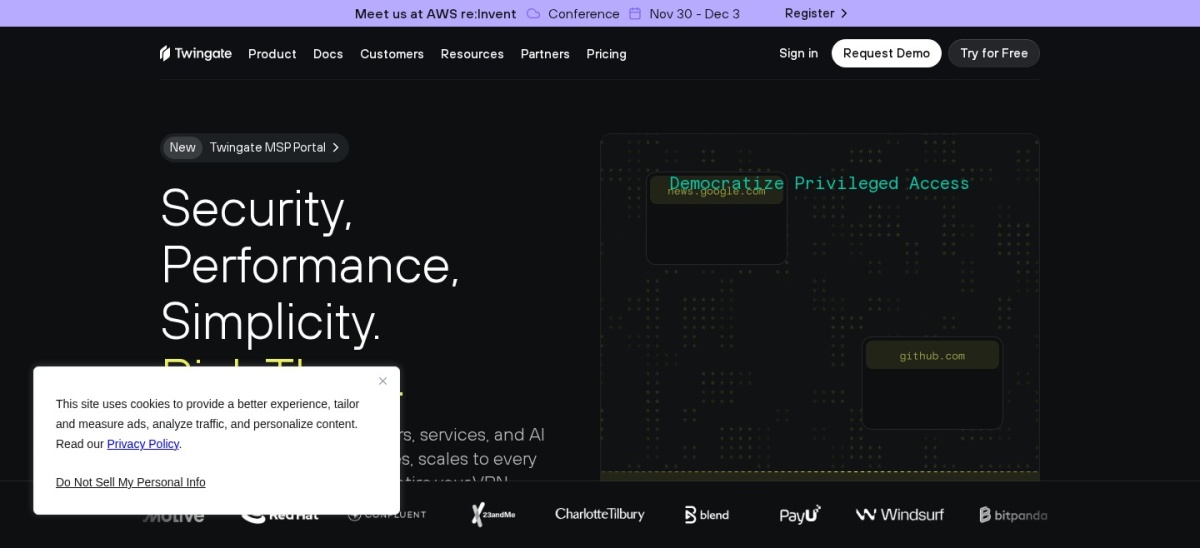
Twingate homepage, captured Nov 2026.
Twingate is a zero trust network access platform that routes user traffic to defined resources through lightweight connectors without exposing internal networks. Its free Starter tier supports up to 5 users and up to 50 resources with conditional access.
The trade off is that paid Teams starts at $5 per user per month (with a 15% yearly discount option) and leaves features like directory sync and usage-based policies for higher tiers. It suits teams retiring a legacy VPN with minimal setup.
What we like
Free Starter plan includes up to 5 users and 50 resources
Low $5/user/mo entry price on the Teams plan
Integrates with identity providers and supports Docker connector setup
Watch out for
Teams plan caps usage at 100 users
IdP directory sync and JIT access require higher-tier plans
Teams at $5/user/mo raises the limit to 100 users and adds Google Workspace SSO and device posture checks.Visit twingate.com
03
Pomerium
4.8/5on G2 (12 reviews, checked Nov 2026)
Paid from$7/mo
Best for identity-aware proxy access to web apps, SSH, and TCP/UDP
Entry priceFree personal tier
Paid entry$7/user/mo annual
Access modesBrowser, SSH, TCP/UDP
G2 rating4.8/5 (12)
pomerium.com
Pomerium homepage, captured Nov 2026.
Pomerium is an identity-aware proxy that enforces context-based access policies across web applications, SSH, Kubernetes, and TCP/UDP services. It offers a free Zero Personal edition for individuals with 1 cluster, 10 routes, and 5 policies.
The trade off is that Zero Business costs $7 per user per month billed annually ($9 monthly) and limits the managed tier to 5 clusters and 100 routes. It suits engineering teams wanting clientless web access and fine-grained policy control.
What we like
Supports clientless web access alongside SSH, Kubernetes, and TCP/UDP
Continuous authorization and SSO with mutual TLS verification
Free Zero Personal plan available for individual projects
Watch out for
Small review sample size on G2 with 12 reviews
Zero Business caps capacity at 5 clusters, 100 routes, and 100 policies
Zero Business at $7/user/mo annually adds up to 5 clusters, 100 routes, directory sync, and email support.Visit pomerium.com
04
Tailscale
4.6/5on G2 (31 reviews, checked Nov 2026)
Paid from$8/mo
Best for WireGuard mesh networking across servers and cloud workloads
Entry price$0 up to 6 users
Paid entry$8/user/mo
ProtocolWireGuard mesh
G2 rating4.6/5 (31)
tailscale.com
Tailscale homepage, captured Nov 2026.
Tailscale builds peer-to-peer zero trust networks over WireGuard with access control lists, subnet routers, and MagicDNS. Its free Personal plan supports up to 6 users, unlimited user devices, and up to 50 tagged resources.
The trade off is that team Standard starts at $8 per user per month and reserves features like network flow logs and 10,000 ephemeral resource minutes for Premium at $18 per user per month. It suits engineering teams connecting servers, cloud instances, and internal tools.
What we like
Free Personal plan covers up to 6 users and unlimited user devices
Direct peer-to-peer WireGuard connections with subnet routing and ACLs
Supports MDM, EDR, and XDR device posture integrations on Standard
Watch out for
Additional tagged resources beyond 50 cost $1/month each
Flow logs and log streaming require the $18/user/mo Premium plan
Standard at $8/user/mo unlocks unlimited team users, SCIM provisioning, up to 10 ACL groups, and MDM/EDR posture checks.Visit tailscale.com
05
GoodAccess
4.7/5on G2 (167 reviews, checked Nov 2026)
Starts at$7/mo
Best for small businesses needing dedicated static IPs and cloud VPN
Paid entry$7/user/mo
Minimum seats5 users
Gateway add-on+$49/mo per gateway
G2 rating4.7/5 (167)
goodaccess.com
GoodAccess homepage, captured Nov 2026.
GoodAccess is a cloud software-defined perimeter and remote access platform with dedicated VPN gateways, static IP whitelisting, and web threat blocking. Its Essential plan starts at $7 per user per month with a 5-user minimum.
The trade off is that there is no permanent free tier beyond trials, dedicated gateways add $49 per month each, and full ZTNA access control requires the $11 per user per month Premium plan. It suits small teams needing static egress IPs and straightforward setup.
What we like
Dedicated cloud VPN gateways with static IP options across 35+ locations
Strong G2 rating of 4.7/5 across 167 reviews
Built-in web threat protection and split tunneling
Watch out for
Requires a minimum of 5 users on paid plans
Dedicated gateways carry an extra $49/month per-gateway fee
Premium at $11/user/mo adds zero trust access control, SSO, and cloud or branch connectors.Visit goodaccess.com
06
NordLayer
4.3/5on Capterra (34 reviews, checked Nov 2026)
Starts at$8/mo
Best for teams wanting a managed network security suite with 24/7 support
Paid entry$8/user/mo
Minimum seats5 users
Support24/7 chat and email
Capterra rating4.6/5 (34)
nordlayer.com
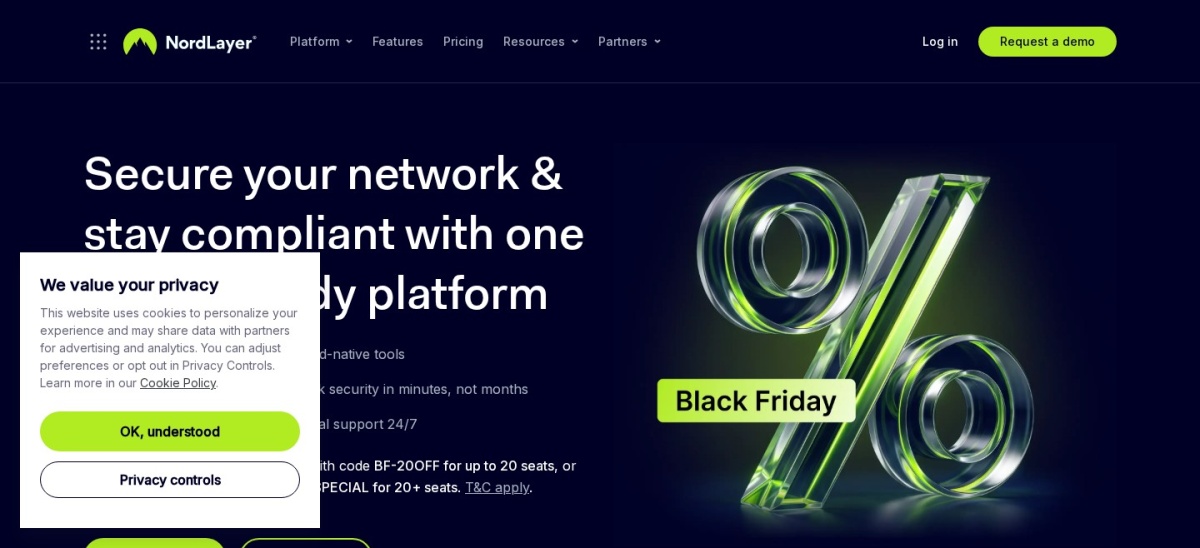
NordLayer homepage, captured Nov 2026.
NordLayer is a business network access and zero trust platform offering encrypted remote access, site-to-site connectivity, and threat prevention across 40+ gateway countries. Its Lite plan starts at $8 per user per month with a 5-user minimum and includes 24/7 chat and email support.
The trade off is that Lite omits dedicated IPs, IP allowlisting, and split tunneling, while Core at $11 per user per month adds basic network access control. It suits small and midsize teams wanting 24/7 support and SSO without custom quoting.
What we like
24/7 live chat and email support included from the Lite plan
Supports MFA, SSO, and up to 6 devices per user license
Offers optional add-ons including dedicated IPs and endpoint integrations
Watch out for
Enforces a 5-user minimum on Lite, Core, and Premium plans
Network segmentation and device posture security require the $14/user/mo Premium plan
Core at $11/user/mo adds access control for business resources, website/app blocking, and IP allowlisting.Visit nordlayer.com
07
JumpCloud
4.5/5on G2 (4,151 reviews, checked Nov 2026)
Starts at$9/mo
Best for unifying identity, SSO, and cross-platform device management
Paid entry$9/user/mo annual
Monthly rate$11/user/mo
Core focusIdentity and MDM
G2 rating4.5/5 (4,151)
jumpcloud.com
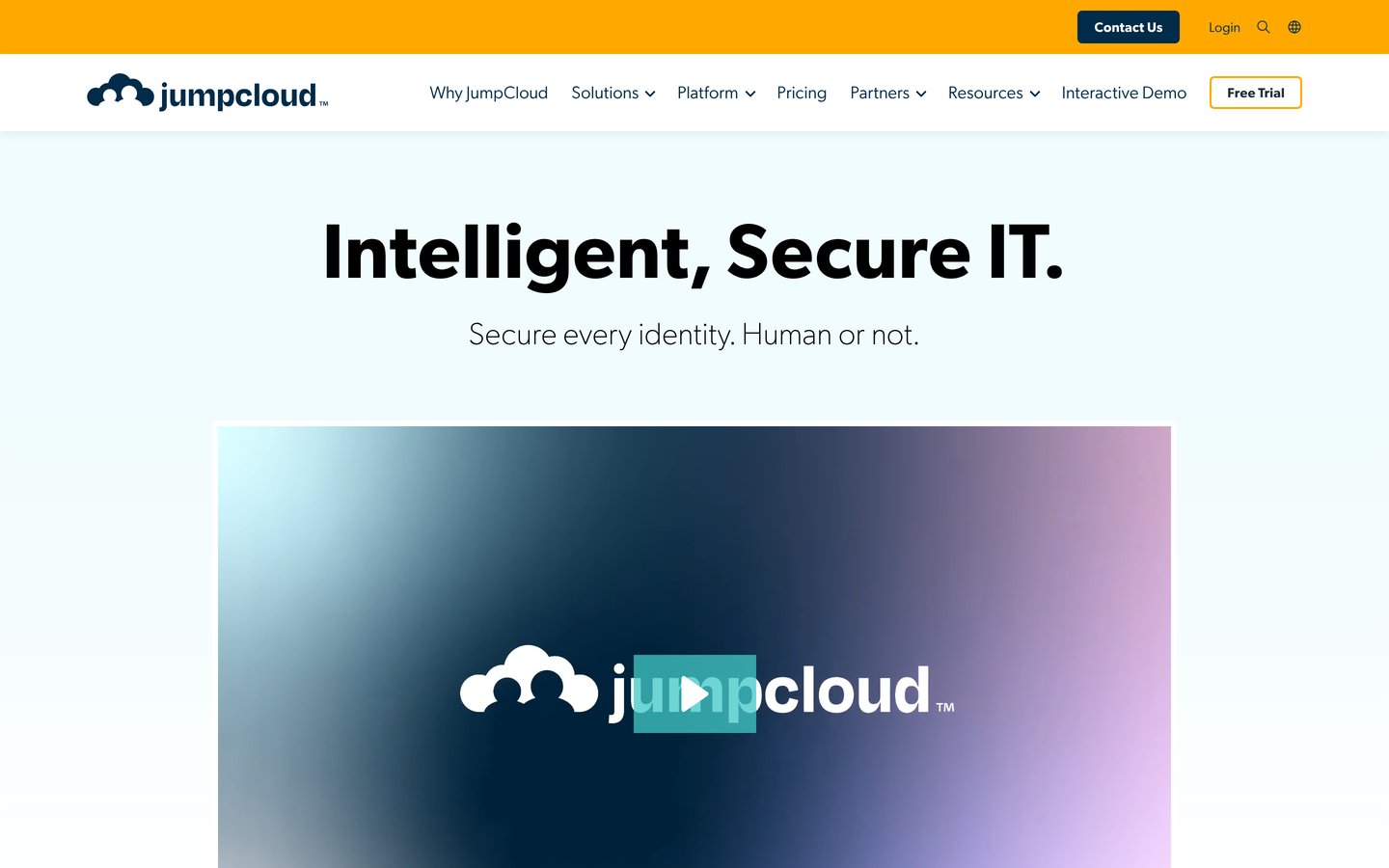
JumpCloud homepage, captured Nov 2026.
JumpCloud is a cloud directory, identity, and device management platform that pairs SSO, MFA, and conditional access with cross-platform endpoint controls. Its self-serve Device Management package starts at $9 per user per month billed annually ($11 billed monthly).
The trade off is that there is no free plan for new accounts, and bundled SSO plus password management starts at $11 per user per month annually while full platform tiers require sales quotes. It suits teams centralizing identity and endpoint posture alongside zero trust access.
What we like
Large review footprint with 4,151 G2 reviews and a 4.5/5 rating
Combines cloud directory, SSO, MFA, and Windows, macOS, and Linux device management
Allows both package pricing and modular à la carte feature selection
Watch out for
No free tier for new sign-ups beyond a 30-day trial
Top platform bundles require contacting sales for custom pricing
SSO at $11/user/mo annually adds single sign-on, MFA resource access, and a password manager.Visit jumpcloud.com
Edge ZTNA vs. mesh networking
Edge-routed platforms like Cloudflare One inspect traffic and enforce web or application policies through cloud infrastructure, making them a natural fit for browser access, DNS/HTTP filtering, and centralized policy control.
Mesh and proxy tools like Tailscale, Twingate, and Pomerium focus on direct connectivity or identity-aware routing to private services, servers, and internal apps with less network-wide traffic inspection.
How we chose
We selected established zero trust and secure access platforms that publish clear pricing and serve remote teams, engineering groups, and midsize organizations.
All pricing tiers, free plan limits, and review ratings were checked on 22 Nov 2026 from vendor pricing pages and public software review directories.
We excluded platforms that only disclose enterprise pricing through custom sales quotes or lacked a verifiable entry price on their pricing page. No vendor paid for a place, and we do not claim testing for this list.
How to choose a zero trust platform
Follow four steps to narrow down the right zero trust platform for your team.
List the resources you actually need to protect. Decide whether you are gating internal web apps, SSH and databases, cloud workloads, or outbound employee web browsing.
Check identity provider and device posture support. Confirm the platform works with your existing SSO or directory provider and can verify device state before allowing access.
Model your real seat and add-on costs. Look beyond the headline per-user rate for seat minimums, extra gateways, log retention limits, and add-on modules.
Test onboarding and support fit during a trial. Verify how quickly your team can deploy connectors or clients and check what support tier is included on your target plan.
FAQ
What is the main difference between a traditional VPN and a zero trust platform?
A traditional VPN typically grants broad access to a private network once a connection is established, whereas a zero trust platform verifies identity, context, and policy for specific applications or resources continuously.
Which zero trust platform offers a free plan for small teams?
Cloudflare One offers a free plan for up to 50 users, Tailscale offers a free Personal plan for up to 6 users, and Twingate offers a free Starter plan for up to 5 users.
Do I need a dedicated VPN client or agent for every zero trust tool?
Not always. Some platforms use lightweight connectors or clientless web proxies for browser access, while mesh networking tools rely on client software on participating devices or subnet routers.
Why do some per-user zero trust plans cost more than the headline price?
Seat minimums, extra gateways or tagged resources, extended log retention, and specialized modules like browser isolation or posture checks can add to the monthly total.
Can zero trust tools work alongside an existing identity provider?
Yes, most platforms in this guide support single sign-on or directory integration so user roles and access rules align with your existing identity setup.