Best Third Party Risk Management Software in 2026: 9 Tools Compared
WLWPLegible EditorsLast verified 24 Nov 2026How we rank12 min read
★ Short answer
Drata is the best third-party risk management software for SaaS teams, with vendor risk workflows inside compliance automation, rated 4.7/5 on G2. Pick Vanta if you already run Vanta for compliance, and SecurityScorecard for outside-in vendor monitoring with a free company scorecard.
How we make this list: we compare pricing pages, product documentation and public user reviews, then re-check every price before each update. No product paid for a place. Disclosure.
Drata is rated 4.7/5 on G2 from 1,331 reviews, with vendor risk inside compliance automation.
Vanta is rated 4.6/5 on G2 from 2,709 reviews, with vendor risk as a $5,000 to $15,000 a year add-on.
SecurityScorecard offers a free company scorecard with letter-grade security ratings.
Secureframe starts at $7,500 a year and is rated 4.7/5 on G2.
BitSight and Prevalent are both rated 4.5/5 on G2, for ratings and vendor lifecycle work.
What third-party risk management software should do
Third-party risk management, or TPRM, is the work of checking that your vendors are safe to use. It covers onboarding questionnaires, security reviews, continuous monitoring and offboarding.
Two kinds of tools do this job. Compliance platforms such as Drata, Vanta and Secureframe run vendor risk inside a wider compliance workflow, while ratings tools such as SecurityScorecard and BitSight watch vendors from the outside.
Most TPRM tools are sold by quote, not by published price. Expect a demo and a proposal priced on vendor count, frameworks or modules.
Questionnaires alone are not enough. The strongest programs combine vendor answers with continuous outside monitoring, so a vendor that was safe in January is still safe in June.
Drata is the compliance automation platform that many SaaS teams run their whole program on, and vendor risk sits inside it. Its vendor workflows cover finding vendors, running security reviews, sending questionnaires and reminding you before renewals, with the most praised customer success team in the category behind it.
The trade off is price. Vendor risk is an add-on to a core compliance plan, priced at roughly $6,000 to $14,000 a year, so the total cost is higher than the headline. It suits teams already running Drata for compliance automation.
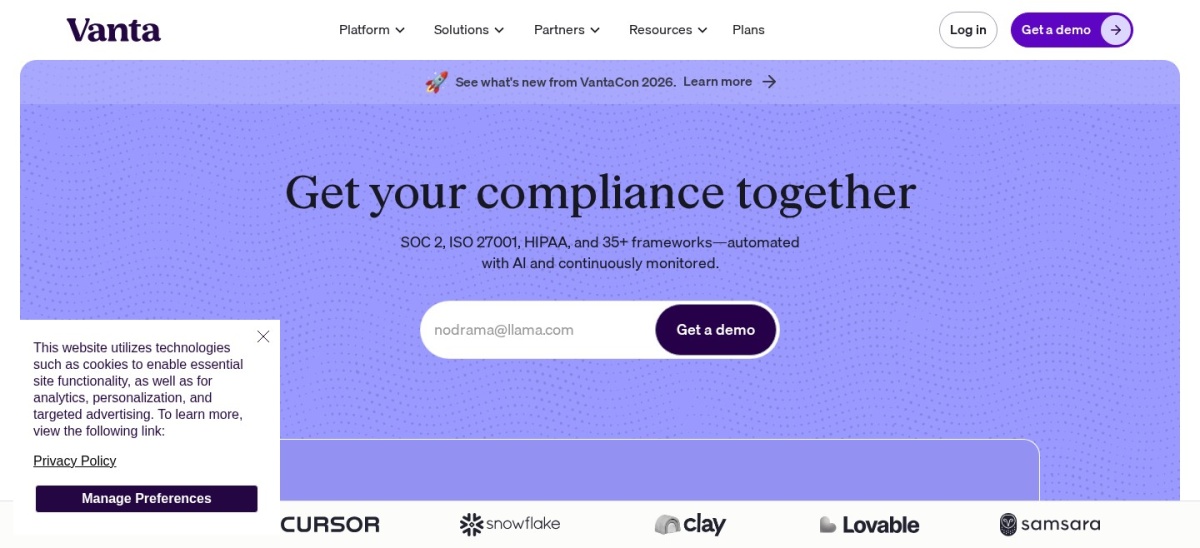
Vanta is the compliance platform that growth and mid-market SaaS teams use to automate frameworks and controls, and its vendor risk module runs inside that workflow. It covers vendor reviews, trust reports and continuous control monitoring, with an auditor and partner network behind it. The vendor risk add-on costs roughly $5,000 to $15,000 a year on top of the core plan.
The trade off is that vendor risk is not the core product. Monitoring is partial rather than continuous, so teams that want deep outside watching pair Vanta with a ratings tool. It suits startups and SaaS teams already running Vanta.
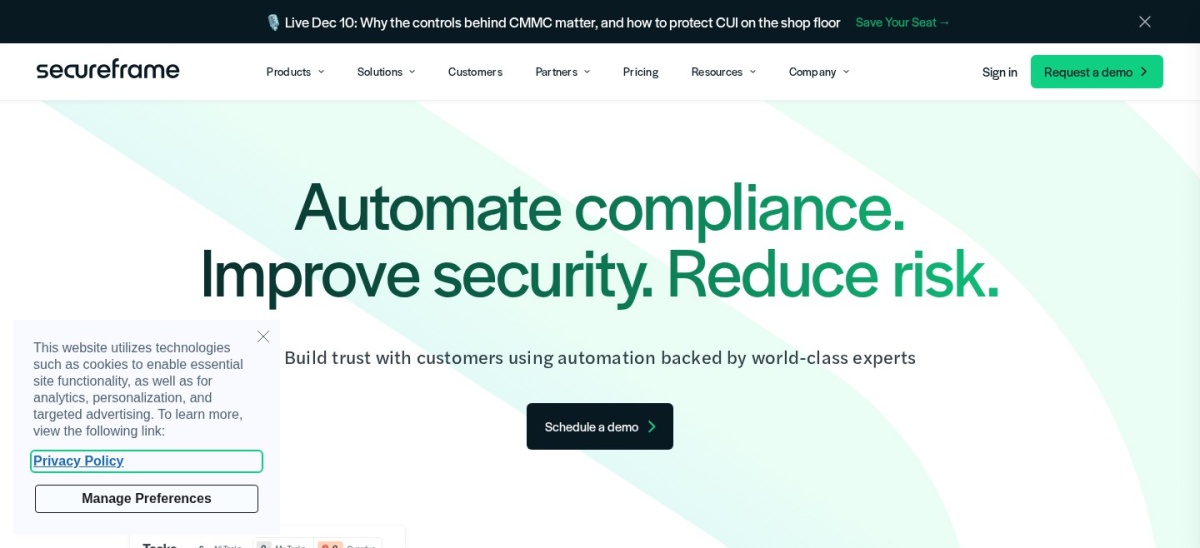
Secureframe is a compliance automation platform for mid-market SaaS, with guided audits and a named customer success manager. Its vendor risk workflows cover onboarding, security reviews and evidence collection, and the Fundamentals package starts at $7,500 a year, one of the few published prices in this list.
The trade off is scale. Secureframe is built for mid-market SaaS, so large enterprises with complex vendor programs may need a broader GRC suite. It suits mid-market teams that want guided audits and vendor risk together.
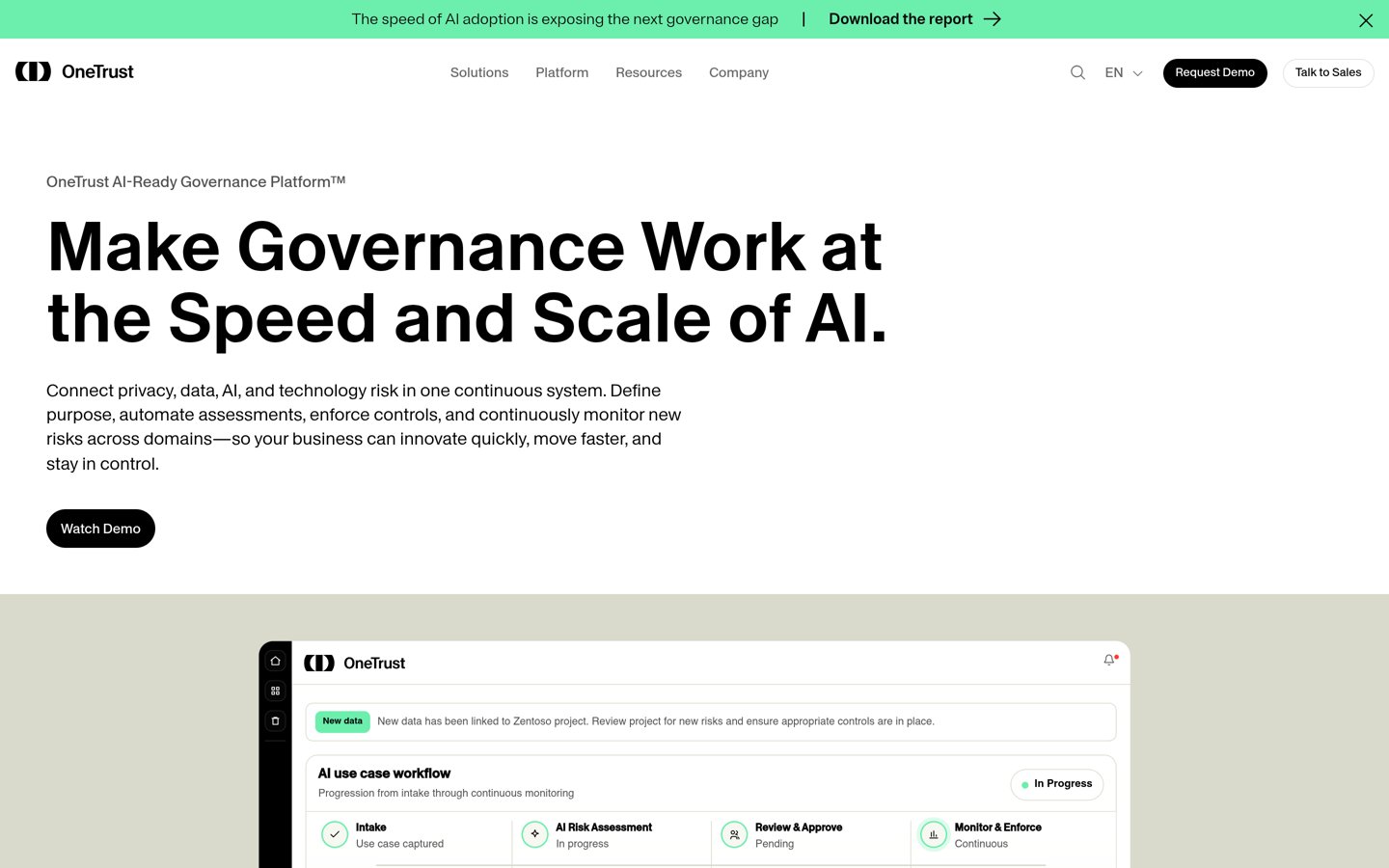
OneTrust is the big-company option for vendor risk, with deep supplier risk workflows, vendor inventories, automated checks and connections to its privacy tools. Its TPRM module spans onboarding to offboarding, and its reviewers are mostly large regulated enterprises that run vendor risk as a full-time function.
The trade off is that OneTrust has no single overall G2 score, because its products are rated separately from 4.3 to 4.6, and pricing is quote-only. It suits enterprises unifying vendor risk with privacy and AI governance.
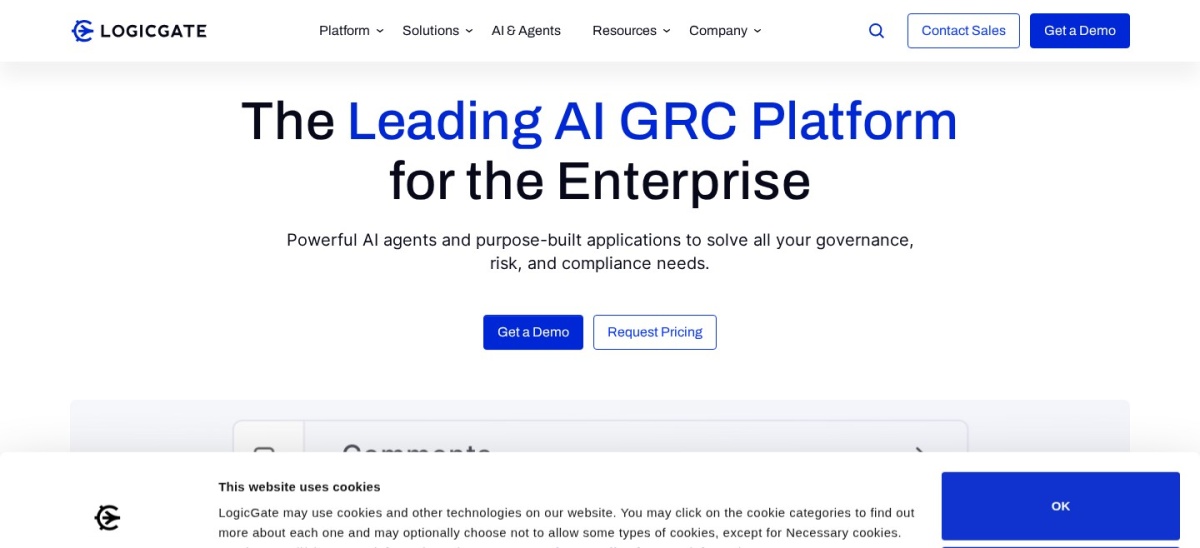
LogicGate Risk Cloud is a no-code GRC platform that lets teams build their own third-party risk workflows. It covers vendor onboarding, risk assessments, questionnaires and remediation tracking, with configuration freedom that larger suites do not offer. Pricing is quote-only, with user licences for Power Users only.
The trade off is complexity. The configuration freedom creates setup work, and reviewers warn that the platform needs care to run well. It suits mid-size teams that want configurable workflows rather than a fixed template.
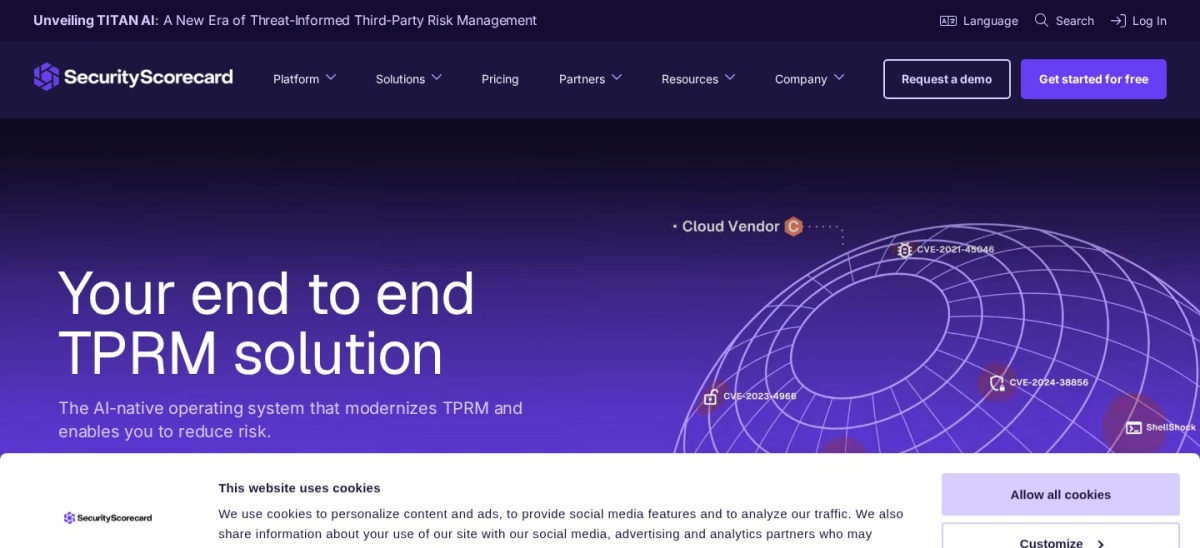
SecurityScorecard is the ratings tool that starts free: its company scorecard gives any business a letter grade for its outside security posture, and paid plans add continuous monitoring and vendor scores. It watches vendors from the internet, so it catches changes a questionnaire misses, and it has kept the free self-monitoring entry point that the paid platforms do not offer.
The trade off is workflow depth. SecurityScorecard is a ratings and monitoring tool, not a compliance platform, so teams that need questionnaires and audit evidence pair it with a platform such as Drata or Vanta. It suits teams that want an outside view before spending anything.
BitSight is the ratings leader for board reporting. Its outside-in security ratings on a 250 to 900 scale give executives a benchmark-style number for each vendor, with continuous monitoring and rescans triggered by remediation events such as an asset going offline or a vulnerability being patched.
The trade off is that BitSight is a ratings tool, not a workflow tool. Questionnaire automation is partial, so teams that need full vendor lifecycle workflows pair it with another platform. It suits large enterprises standardizing on security ratings.
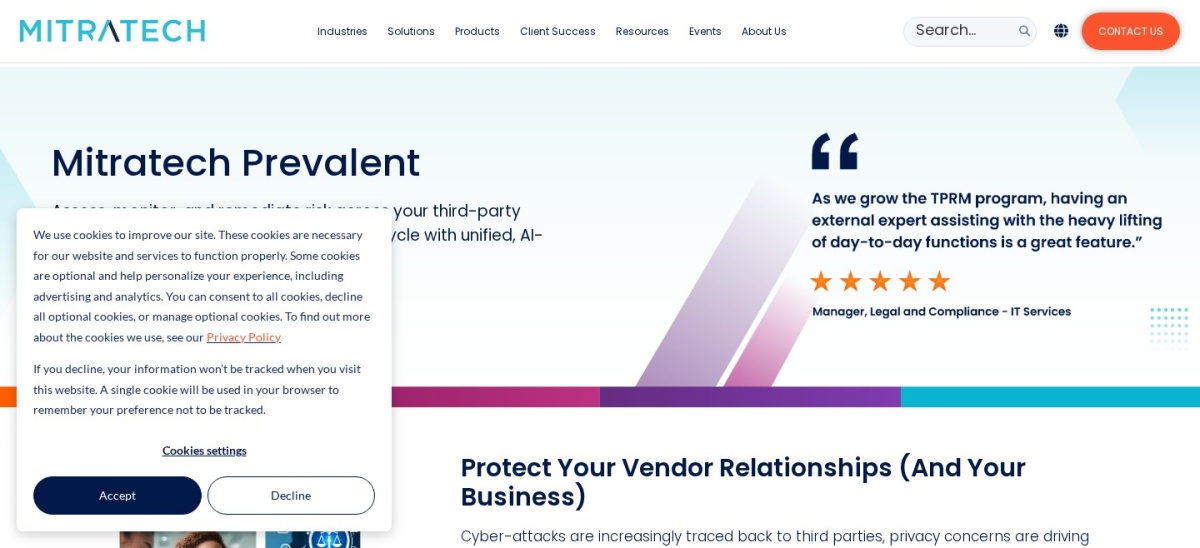
Prevalent is the vendor lifecycle specialist. It covers onboarding questionnaires, evidence collection, risk scoring, continuous monitoring and offboarding in one workflow, which suits a team running a formal third-party risk program with many vendors at different lifecycle stages.
The trade off is the small review base. It is rated 4.5/5 on G2 from only 21 reviews, and pricing is quote-only. It suits mature, dedicated TPRM programs that want the full lifecycle in one tool.
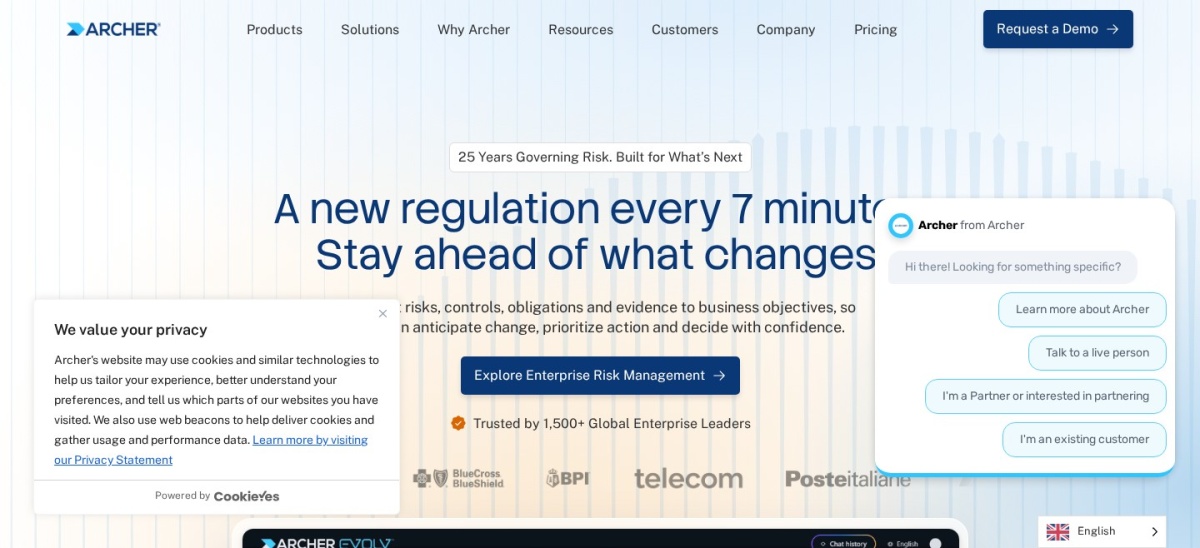
Archer, formerly RSA Archer, is the enterprise GRC suite that covers third-party risk inside a broader governance program. It handles vendor risk alongside audit, enterprise risk and compliance, with the breadth that large banks and insurers need, and it holds pockets of older banking and insurance GRC work.
The trade off is age and rating. Archer is rated 3.9/5 on G2, the lowest in this list, and it has changed owners three times in five years. It suits enterprises with legacy GRC programs that need breadth over modern design.
Compliance platforms run vendor risk as part of a wider program: frameworks, controls, evidence and audits. Drata, Vanta and Secureframe work this way, and vendor risk is often an add-on to a core compliance plan.
Ratings tools watch vendors from the outside, scoring their security posture continuously. SecurityScorecard and BitSight work this way, and they catch changes that a questionnaire misses.
Many teams use both: a compliance platform for the workflow, and a ratings tool for the outside view. If you can only buy one, pick the platform if audits drive you, and the ratings tool if vendor breaches worry you more.
How we chose
We started from the third-party risk management tools most often shortlisted by security and compliance teams, then kept nine that cover vendor reviews, questionnaires and monitoring.
Prices come from each vendor's pricing page and dated November 2026 checks. Most vendors sell by quote, so those are shown as Custom. Ratings and review counts come from G2, checked in November 2026.
We left out pure GRC suites without a dedicated vendor risk module. No vendor paid for a place, and we do not claim hands-on testing for this list.
How to choose third-party risk management software
Start with how many vendors you manage and whether audits or breaches drive the program.
Count your vendors. Vendors price on vendor count or modules, so list every third party that touches your data before you ask for a quote.
Decide what drives the program. If audits drive it, pick a compliance platform. If vendor breaches worry you more, pick a ratings tool with continuous monitoring.
Check the questionnaire library. A good tool ships standard questionnaires and automates chasing vendors for answers, rather than leaving it to email.
Trial the monitoring view. Add a few real vendors in the trial and check whether the outside view catches issues your questionnaires missed.
FAQ
What is the best third-party risk management software?
Drata is the best pick for SaaS teams, with vendor risk workflows inside compliance automation, rated 4.7/5 on G2. Vanta suits teams already running Vanta, and SecurityScorecard suits teams that want outside-in monitoring.
How much does third-party risk management software cost?
Most vendors sell by quote. Secureframe starts at $7,500 a year, SecurityScorecard offers a free company scorecard, and Vanta and Drata price vendor risk as an add-on to a core compliance plan.
What is the difference between TPRM and vendor risk management?
They are the same thing. TPRM is the formal name, and vendor risk management is the shorter version. Both cover onboarding, questionnaires, monitoring and offboarding of third parties.
Does Vanta do third-party risk management?
Yes, as an add-on to its compliance platform, priced at roughly $5,000 to $15,000 a year on top of the core plan. It covers vendor reviews inside the compliance workflow.
What is a security rating?
A security rating is a score for a vendor's outside security posture, based on what can be seen from the internet. BitSight scores from 250 to 900, while SecurityScorecard uses letter grades.
Is OneTrust good for third-party risk?
OneTrust suits large enterprises that want vendor risk inside a wider privacy and governance suite. Its products are rated separately on G2, from 4.3 to 4.6, with no single overall score.