Best Threat Intelligence Tools in 2026: 9 Tools Compared
WLWPLegible EditorsLast verified 24 Nov 2026How we rank11 min read
★ Short answer
Recorded Future is the best threat intelligence tool for most mature teams, with the broadest collection and a 4.5/5 G2 rating from 256 reviews. Pick Mandiant for deep adversary research with a free tier, and GreyNoise if you need a free way to cut scan noise.
How we make this list: we compare pricing pages, product documentation and public user reviews, then re-check every price before each update. No product paid for a place. Disclosure.
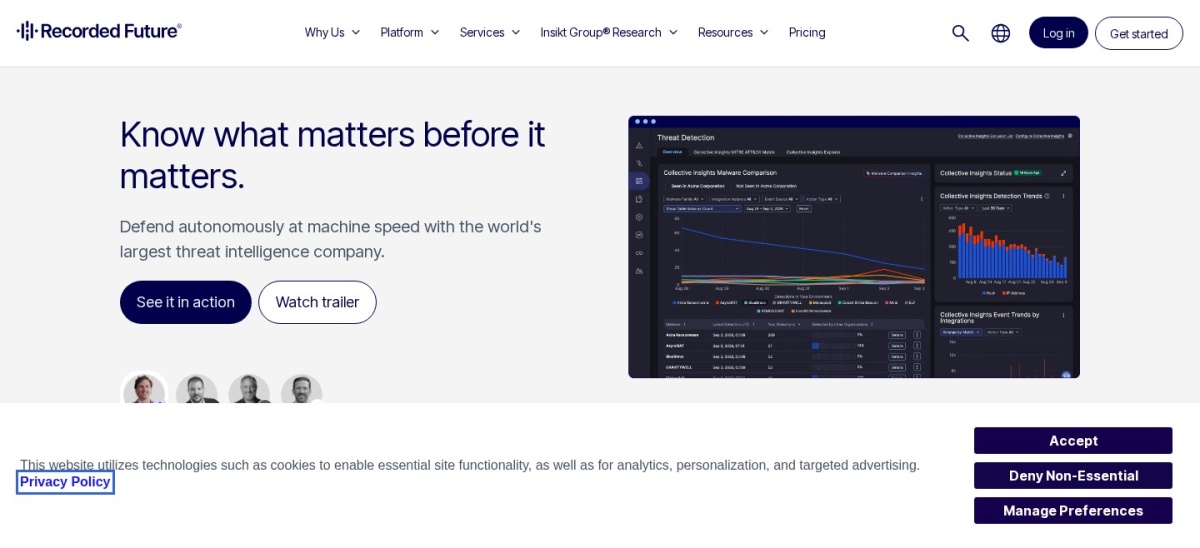
Recorded Future has the broadest commercial collection, with analyst research from its Insikt Group team and 200+ integrations.
Mandiant Threat Intelligence is the only top pick with a free tier, and it now runs inside Google Threat Intelligence.
Flashpoint is the strongest choice for dark web and underground forum coverage, backed by more than 100 analysts in over 35 languages.
Anomali, ThreatQuotient and Cyble are the three full threat intelligence platforms here that consolidate many feeds into one workflow.
GreyNoise is rated 4.8/5 on G2 and its free community tier filters internet scan noise before it reaches your analysts.
Every paid plan in this list is quote-only, so budget for a sales conversation and multi-year terms on the enterprise tools.
What a threat intelligence tool should cover
Threat intelligence tools turn raw indicators such as malicious IPs, domains and file hashes into context your team can act on. The best ones say who the attacker is, what they want and how they operate.
There are three shapes on the market. Full platforms ingest many feeds and push enriched indicators into your SIEM and SOAR tools. Curated feeds such as Mandiant and CrowdStrike sit on top of a stack you already run. Specialists such as Flashpoint and Dragos go deep in one area.
Coverage is only half the job. Check how the tool scores and prioritises indicators, whether it maps attacks to the MITRE ATT&CK framework and how easily it exports to STIX/TAXII.
Pricing is the hardest part of this market to compare. None of the nine tools here publishes a list price, so our website security statistics guide is a better starting point for the size of the problem than any price page.
Small teams should start free. GreyNoise, Mandiant and Anomali all offer a free tier, and that is enough to learn whether your team will use threat intelligence every day.
Recorded Future is the broadest commercial threat intelligence platform in this list. Its Intelligence Cloud pulls signals from the open web, the dark web and technical sources, and its Insikt Group analyst team adds written research on threat actors, campaigns and vulnerabilities.
The trade off is price and volume. Pricing is quote-only and modules are sold separately, so the full platform is an enterprise budget line, and small teams can drown in the amount of data. It suits mature CTI teams with dedicated analysts who will use it every day.
What we like
Broadest source coverage in this list
Insikt Group analyst research on top of machine collection
200+ integrations into SIEM, SOAR and EDR tools
Modules for SecOps, brand, identity and third-party risk
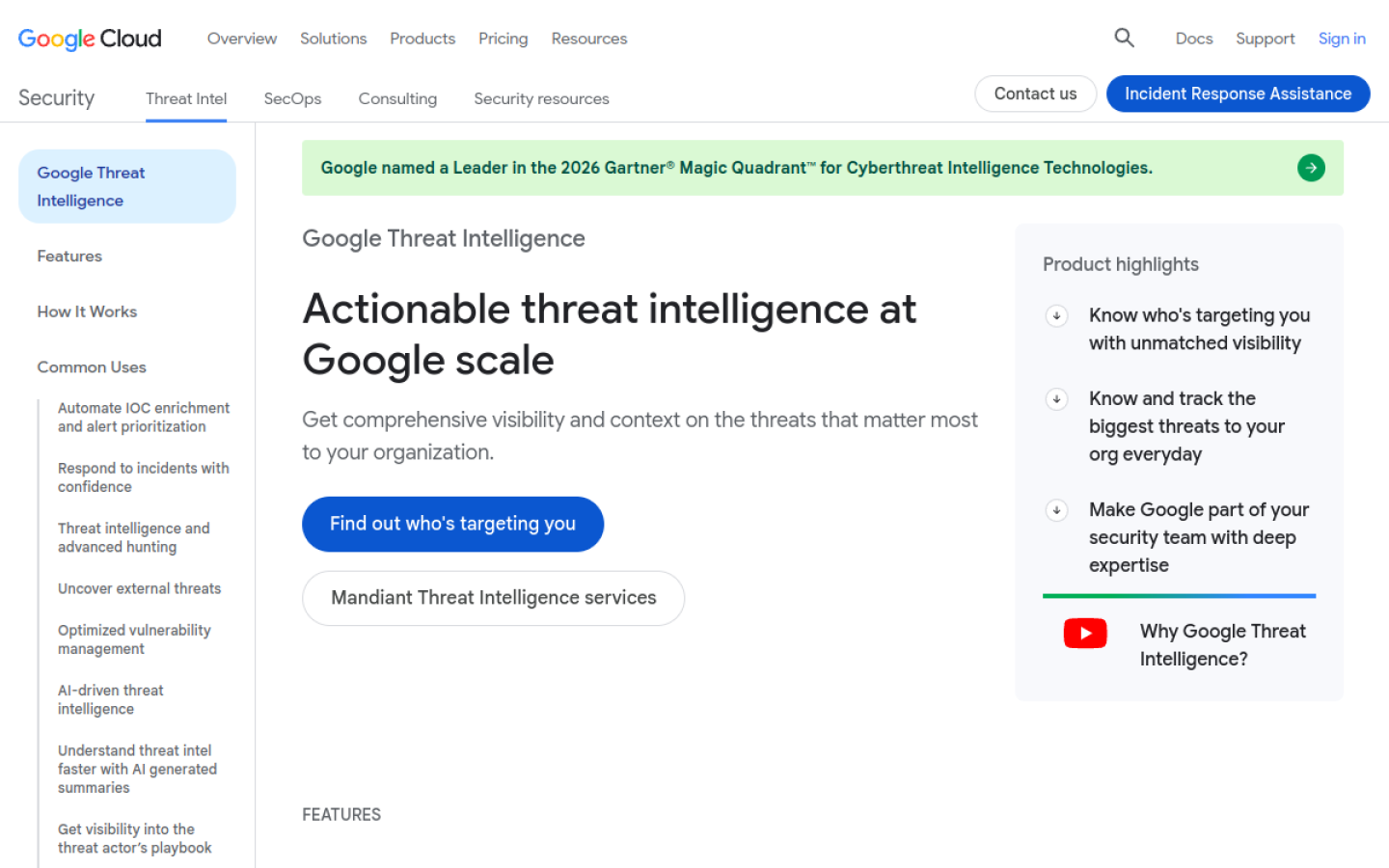
Mandiant Threat Intelligence homepage, captured Nov 2026.
Mandiant Threat Intelligence is the research arm built from two decades of breach response work, now sold as part of Google Threat Intelligence. It tracks named threat groups and their tactics in more depth than any other vendor here, and it maps them to the MITRE ATT&CK framework.
The trade off is ecosystem fit. The standalone subscription is quote-only, and the deepest value now sits inside Google SecOps, so teams on other clouds get less from it. It suits enterprises and government teams that need the most trusted adversary research available.
What we like
Deepest incident-driven adversary research
Free tier with basic threat intelligence access
Native integration with Google SecOps
Annual M-Trends report is a useful public benchmark
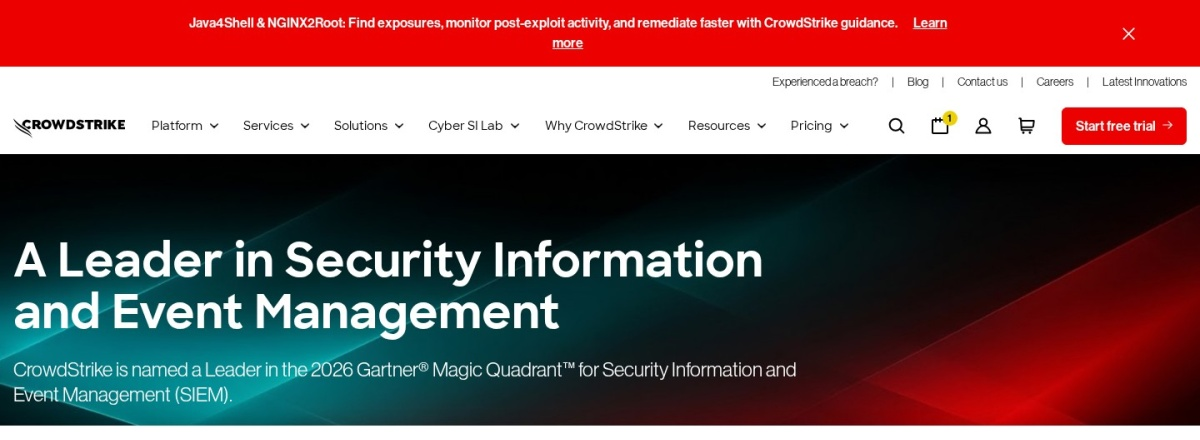
CrowdStrike Falcon Intelligence homepage, captured Nov 2026.
CrowdStrike Falcon Intelligence is the threat intelligence module built from the intrusions CrowdStrike investigates. It profiles the named adversary groups targeting your industry, maps their tactics to MITRE ATT&CK and feeds that context straight into Falcon detections and threat hunting.
The trade off is lock-in. The intelligence is most useful inside the Falcon platform, and its price is bundled into platform deals rather than published alone. It suits teams that already run Falcon EDR and want adversary context without adding another console.
What we like
Adversary profiles built from real investigations
Indicators flow directly into Falcon detections
Highest G2 review count among the enterprise picks
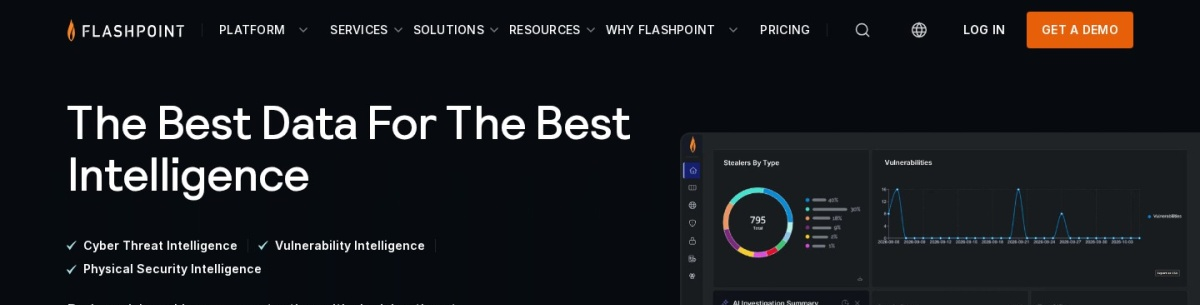
Flashpoint is the strongest tool here for seeing what criminals discuss before they act. Its Ignite platform collects from illicit forums, chat groups and marketplaces that scrapers cannot reach, and more than 100 in-house analysts filter that material against your priorities.
The trade off is cost and scope. Pricing is quote-only and aimed at teams with a dedicated intelligence budget, and the breadth can exceed what a small team needs. It suits fraud, brand protection and vulnerability teams that need underground visibility first.
What we like
Deepest dark web and underground collection
Analyst support and requests for information included
Covers cyber, vulnerability and physical security intel
Strong search across 3.6 petabytes of collected data
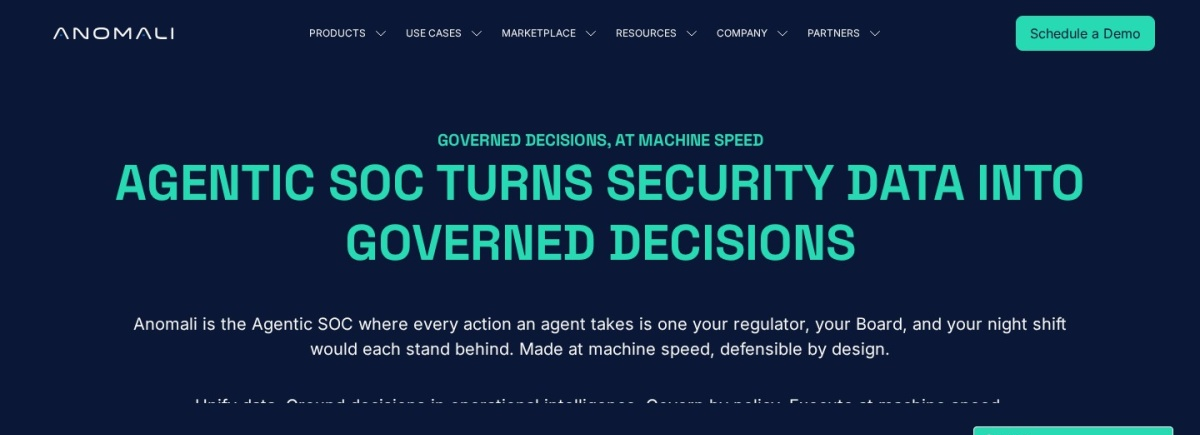
Anomali ThreatStream is one of the original threat intelligence platforms. It aggregates feeds from hundreds of sources, normalises and scores the indicators, and pushes them into your SIEM, firewall and EDR tools automatically, so analysts work from one prioritised queue.
The trade off is that the company has repositioned around a wider agentic SOC platform, so buyers who only want the TIP should confirm that focus during evaluation. It suits SOC teams that feed many sources into detection and want one place to manage them.
What we like
Long-standing TIP with feed aggregation
Free STAXX community tier for basic feeds
200+ integrations with security tools
Match module correlates intel against historic logs
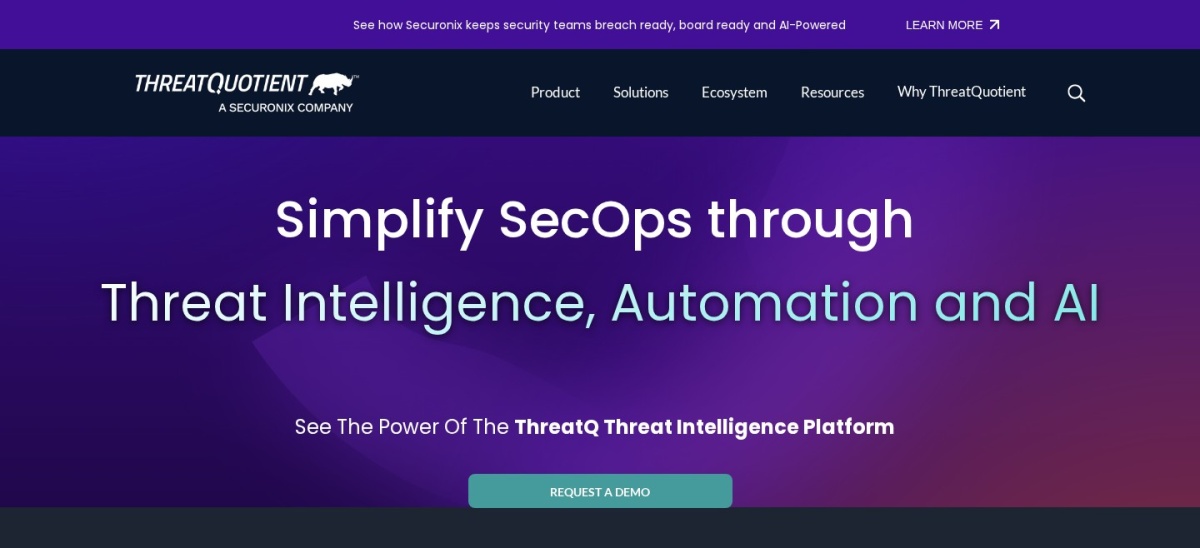
ThreatQuotient ThreatQ homepage, captured Nov 2026.
ThreatQuotient ThreatQ is a lean threat intelligence platform built around curated threat libraries. Analysts score and prioritise indicators in custom libraries, then automate enrichment and sharing into the SIEM and SOAR tools they already use, without the heavy footprint of larger platforms.
The trade off is depth. It carries less proprietary research than Recorded Future or Mandiant, and its integration ecosystem is smaller than Anomali. It suits mid-market CTI teams of one to five analysts who want a customisable TIP rather than a maximum feature stack.
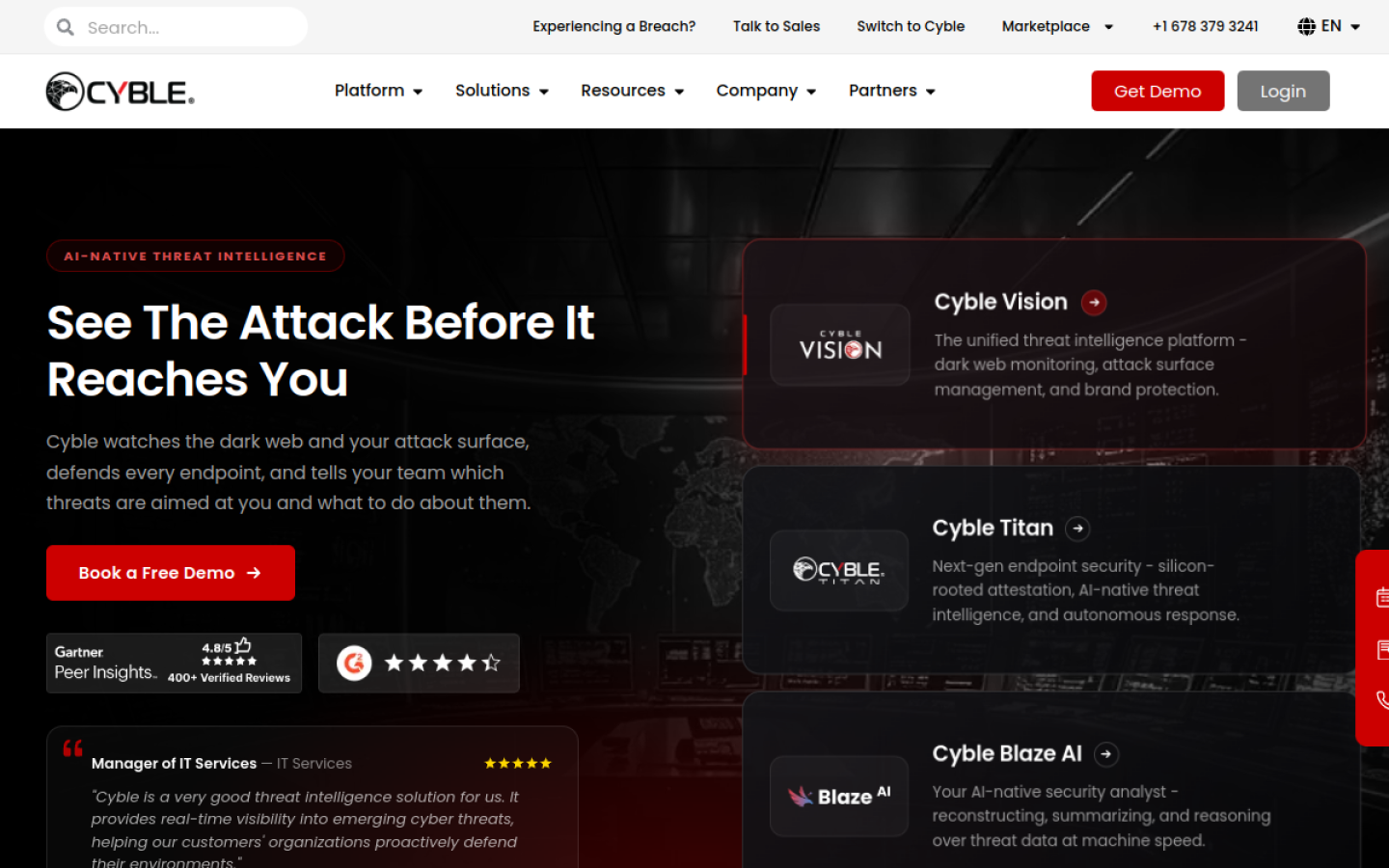
Cyble is an AI-native threat intelligence platform built around its Vision TIP, with dark web monitoring, attack surface management and takedown services in the same product. It correlates open, deep and dark web sources continuously, and an AI analyst hunts and reasons over the data.
The trade off is track record. Cyble is younger than Recorded Future or Flashpoint, so reference customers in your industry matter more during evaluation. It suits teams that want dark web monitoring and threat intelligence in one AI-driven platform.
What we like
Highest G2 rating in this list at 4.8/5
Vision TIP plus dark web and takedown services
AI analyst that hunts across sources
Challenger in the 2026 Gartner CTI Magic Quadrant
Watch out for
Quote-only pricing with no published tiers
Younger vendor with a shorter track record
No free tier to evaluate with
Paid plans add Vision modules and takedown servicesVisit cyble.com
08
Dragos
4.6/5on G2 (90 reviews, checked Nov 2026)
PricingCustom/yr
Best for OT and industrial threat intelligence
Free planNo
PricingQuote only
G2 rating4.6/5, 90 reviews
Threat groups25+ industrial groups
dragos.com
Dragos homepage, captured Nov 2026.
Dragos is the only serious option in this list for operational technology and industrial control systems. Its WorldView research team tracks more than 25 industrial threat groups, and the Dragos Platform pairs that intelligence with OT-aware asset discovery and threat detection.
The trade off is fit. It is built for energy, manufacturing, water and other critical infrastructure, and IT-only buyers will find no overlap with their needs. It suits operators with a real OT footprint and regulatory exposure such as NERC CIP.
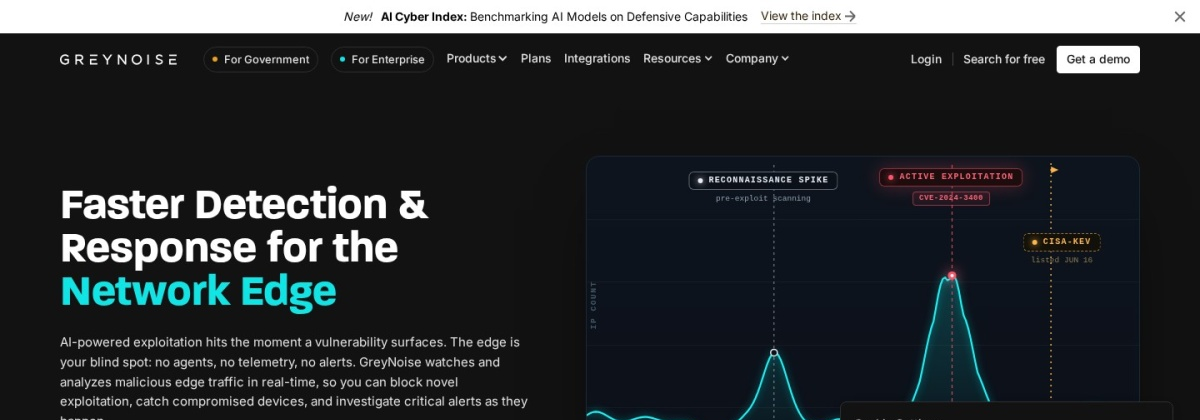
GreyNoise is a focused threat intelligence tool that solves one painful problem. Most of what hits a perimeter is background noise from mass scanners, and GreyNoise runs a global sensor network that tags that activity by CVE, tooling and campaign, so analysts can tell targeted attacks from background radiation.
The trade off is scope. It is not a full threat intelligence platform, so it cannot replace a TIP for teams that need broad actor research or dark web coverage. It suits any SOC drowning in scan alerts, and the free community tier makes it easy to start.
Every tool in this list sells its paid plan by quote, so the numbers that matter are the ones in your own sales conversation. Ask for an itemised quote that separates the platform fee, feed licences, API call limits and analyst services.
Module pricing is the usual surprise. Recorded Future and Flashpoint sell their platforms in modules, so a deal that starts with one module can double once you add the feeds you actually need.
Multi-year contracts are standard across this market, and annual price rises are common. Get the renewal terms in writing before you sign, and confirm what happens to your data if you leave.
Start with the free tiers. GreyNoise, Mandiant and Anomali all let you use real intelligence before spending anything, which is the cheapest way to learn whether your team will use the tool every day.
How we chose
We started from the established threat intelligence vendors ranked by G2, Capterra and analyst coverage in 2026, then kept the nine with the strongest record for collection depth, analyst workflow and integrations.
Prices and free tiers come from each vendor's homepage and pricing page, checked on 24 November 2026. Every paid plan here is quote-only, so the list shows Custom rather than a guessed figure. Ratings and review counts come from G2 on the same day.
We left out tools whose homepages no longer show the product, such as ThreatConnect, whose site now redirects to Dataminr, and SOCRadar, whose homepage blocked every capture attempt. No vendor paid for a place, and we do not claim hands-on testing for this list.
How to choose a threat intelligence tool
Start with the job your team actually does every day, then match the tool shape to it.
Decide which shape you need. Pick a full platform such as Anomali or ThreatQ if you consolidate many feeds, a curated feed such as Mandiant or CrowdStrike if you already have a stack, or a specialist such as Flashpoint or Dragos for one deep area.
Try a free tier first. GreyNoise, Mandiant and Anomali all offer free access. Run one for a month and check whether analysts open it daily before you pay for anything.
Check the integrations you already own. Intelligence only helps if it reaches your SIEM, SOAR and firewall. Confirm the feeds export in STIX/TAXII and that your tools are on the vendor's integration list.
Get an itemised quote before you commit. Ask what each module, feed and API pack costs, what the renewal rise is and how your data is exported if you leave.
FAQ
What is the best threat intelligence tool?
Recorded Future is the best overall pick for mature teams, with the broadest collection and a 4.5/5 G2 rating from 256 reviews. Mandiant is the best choice for deep adversary research, while GreyNoise is the best free starting point.
How much do threat intelligence tools cost?
Every tool in this list sells its paid plan by quote, so there is no published list price to compare. Expect enterprise platforms to run into six figures a year, and ask for an itemised quote before budgeting.
Is there a free threat intelligence tool?
Yes. GreyNoise has a free community tier that tags internet scan noise, Mandiant offers a limited free tier, and Anomali has a free STAXX community feed. All three are useful without paying anything.
What is the difference between a TIP and a threat feed?
A threat intelligence platform ingests many feeds, normalises and scores the indicators, then pushes them into your SIEM and SOAR tools. A feed is a single stream of indicators that rides on top of a stack you already run.
Do I need a threat intelligence tool for a small team?
Probably not a paid one. A small team gets more from a free tier such as GreyNoise plus good patching and backups than from an enterprise platform that needs dedicated analysts to run it.
Which threat intelligence tool is best for dark web monitoring?
Flashpoint is the strongest choice, with collection from illicit forums and chat groups plus more than 100 analysts. Cyble is a strong alternative that combines dark web monitoring with brand protection and takedowns.