Best Age Verification Software in 2026: 9 Tools Compared
WLWPLegible EditorsLast verified 24 Nov 2026How we rank12 min read
★ Short answer
Yoti is the best age verification software for most teams, with independently certified facial age estimation and reusable digital ID. Pick Veriff for published per-check pricing from $0.80, or Didit for the lowest cost at $0.10 per age estimation.
How we make this list: we compare pricing pages, product documentation and public user reviews, then re-check every price before each update. No product paid for a place. Disclosure.
Yoti is the only pick with independently certified facial age estimation and reusable digital ID, rated 4.9/5 on G2.
Veriff is the cheapest published start: $0.80 per verification with a $49 monthly minimum and a 15-day trial.
Didit is the lowest cost per check: age estimation at $0.10, with $10 of free credit every month.
Four of the nine tools publish no business price at all, so budget for a sales conversation with Yoti, Jumio, Incode and VerifyMy.
G2 ratings run from 4.1 to 5.0, but VerifyMy's 4.1 rests on only 7 reviews and Yoti's 4.9 on only 28.
Facial estimation is the cheapest route, but only a document check gives a high-assurance result, and most tools step up from one to the other.
What age verification software should cover
Age verification software checks that a visitor meets a minimum age before showing restricted content or completing a sale. The check can be a selfie estimate, a document scan, a database lookup or a reusable digital ID.
The methods are not equal. A facial estimate is fast and cheap but returns a probability, while a document check with liveness gives a stronger result and costs more per check. The right pick depends on the assurance level your rules demand, not on the lowest price.
Certification is the clearest quality signal in this market. Yoti and VerifyMy hold independent age assurance certification, and several others hold published liveness test results. Our GDPR compliance guide explains the data rules that apply when you collect identity data.
Pricing is mostly per check with a monthly minimum, so a quiet month still costs money on the published plans. Four tools in this list publish no price at all and quote through sales.
Age estimation methodFacial, plus document and Digital ID
Independent certificationACCS age assurance and estimation
NIST age estimation error1.88 years, ages 13 to 16
Business pricingQuote only
yoti.com
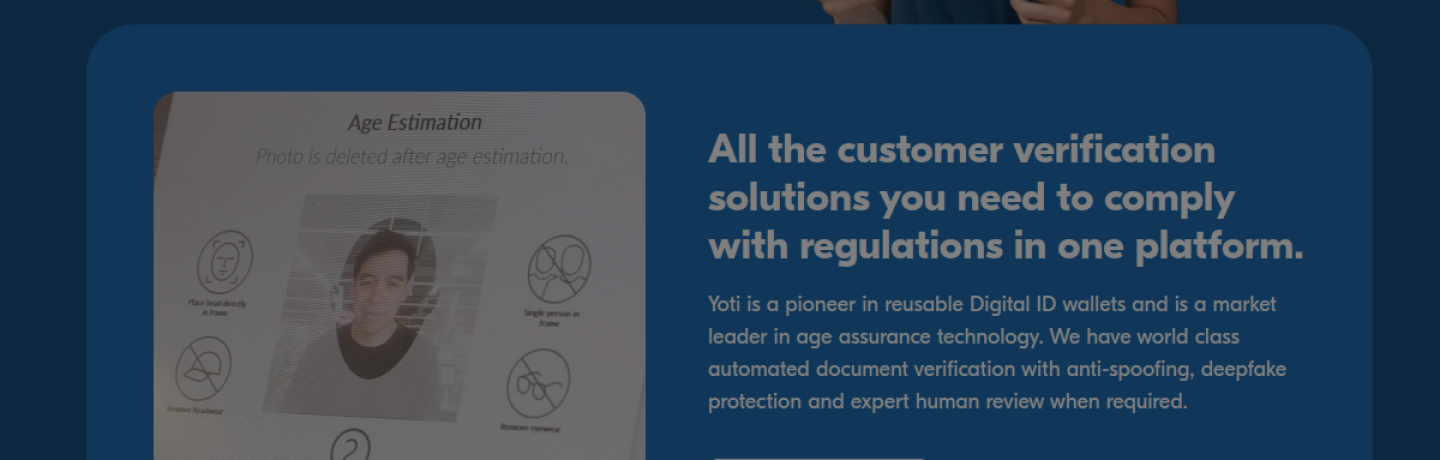
Yoti homepage, captured Nov 2026.
Yoti is a specialist age assurance provider from London, founded in 2014. Its facial age estimation returns an over or under result from a selfie, with no document and no account needed, and its reusable Digital ID lets returning users prove their age without a fresh check. Photos are deleted after the estimation, and the service offers more than 10 check methods in one integration.
The trade off is price. Yoti publishes no business pricing, so every deal is quoted through sales, which makes it hard to budget without a conversation. It suits teams that need certified age assurance with as little personal data collected as possible.
What we like
Independently certified age estimation and age assurance
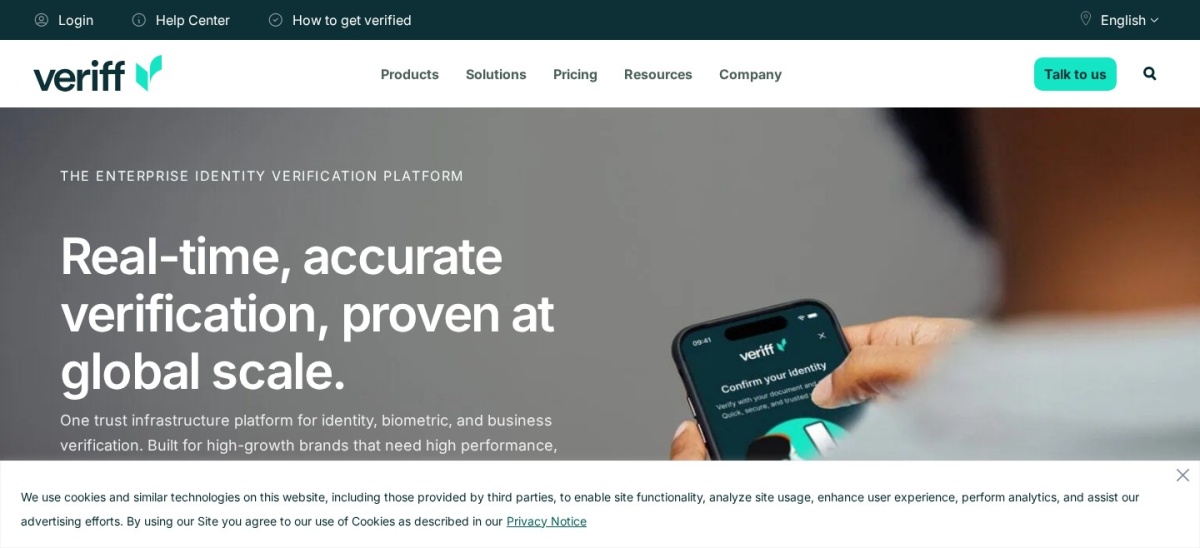
Veriff is an identity verification platform that checks a government ID and a selfie with liveness detection. Its Essential plan costs $0.80 per verification with a $49 monthly minimum, and it supports more than 12,500 document types from 230 countries and territories. Decisions take about 6 seconds on average, and a 15-day trial includes 50 live verifications.
The trade off is that the cheapest plan is automation only. Human review by verification specialists starts with the Plus plan at $1.39 per verification, and add-ons such as sanctions screening cost extra. It suits teams that want to start without a sales call and pay a published per-check price.
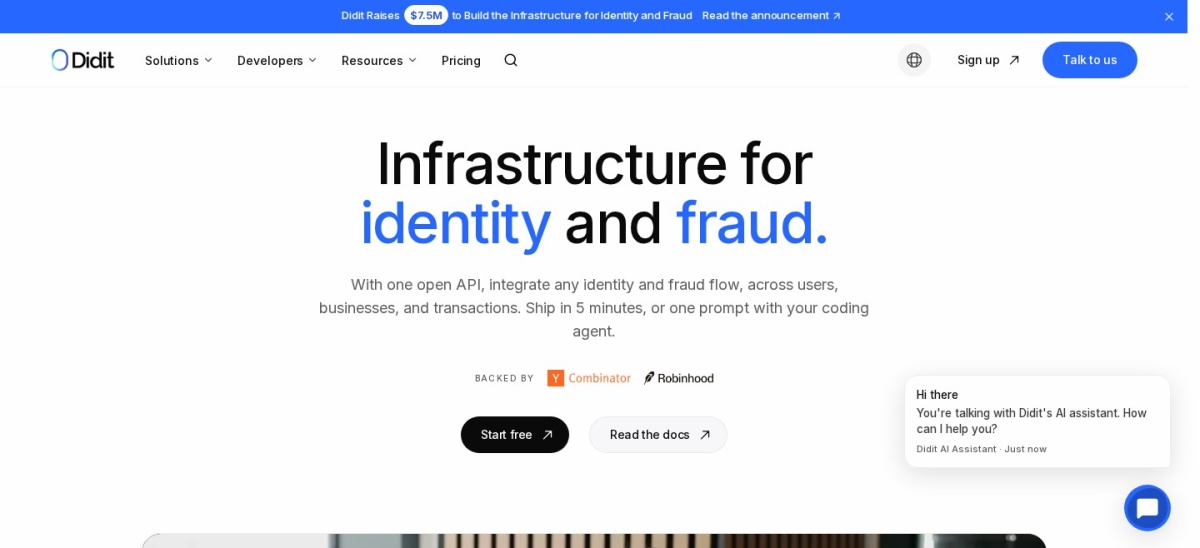
Didit is a modular identity platform with age estimation at $0.10 per check from a selfie. Its Free plan costs $0 a month and adds $10 of credit each month, which covers about 100 age estimations or 30 full identity checks. The full KYC bundle costs $0.33 and adds document verification, passive liveness, face match and device checks.
The trade off is that Didit is a toolkit, not a finished age gate. You build the flow yourself from its checks, and white-label styling costs $0.10 per finished session on the Free plan. It suits developers and small teams that want the lowest per-check cost and no monthly minimum.
What we like
Lowest per-check cost in this list
Free plan with $10 of credit every month
Every check has a published price
No monthly minimum on the Free plan
Watch out for
You build the age gate flow yourself
White-label styling costs extra per session
Fewer workflow features than Persona
Growth adds $115 of credit and 4% off list pricesVisit didit.me
04
Persona
4.2/5on G2 (48 reviews, checked Nov 2026)
Starts at$250/mo
Best for custom verification workflows
Entry planEssential, $250 a month
Services included500 a month
Extra services$1.50 each
Contract12 months
withpersona.com
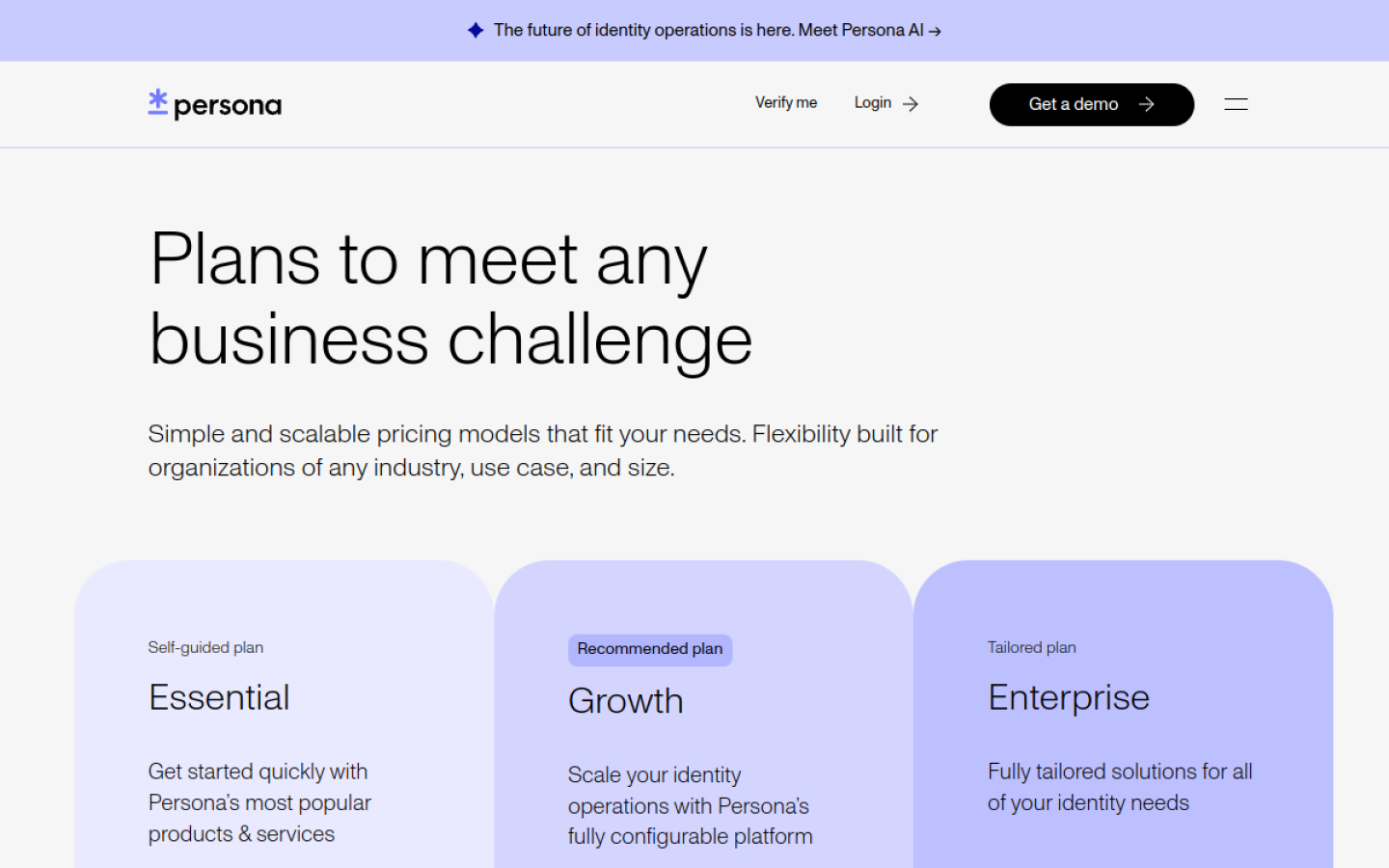
Persona homepage, captured Nov 2026.
Persona is a configurable identity platform built around a no-code workflow builder. Its Essential plan costs $250 a month on a 12-month contract and includes 500 verifications or reports a month, with extra services at $1.50 each. It covers government ID, selfie and database checks in more than 200 countries and territories.
The trade off is the contract. Essential locks you in for 12 months, unused services do not roll over, and the Growth plan price is not published. It suits product teams that run different checks for different users and want to change flows without writing code.
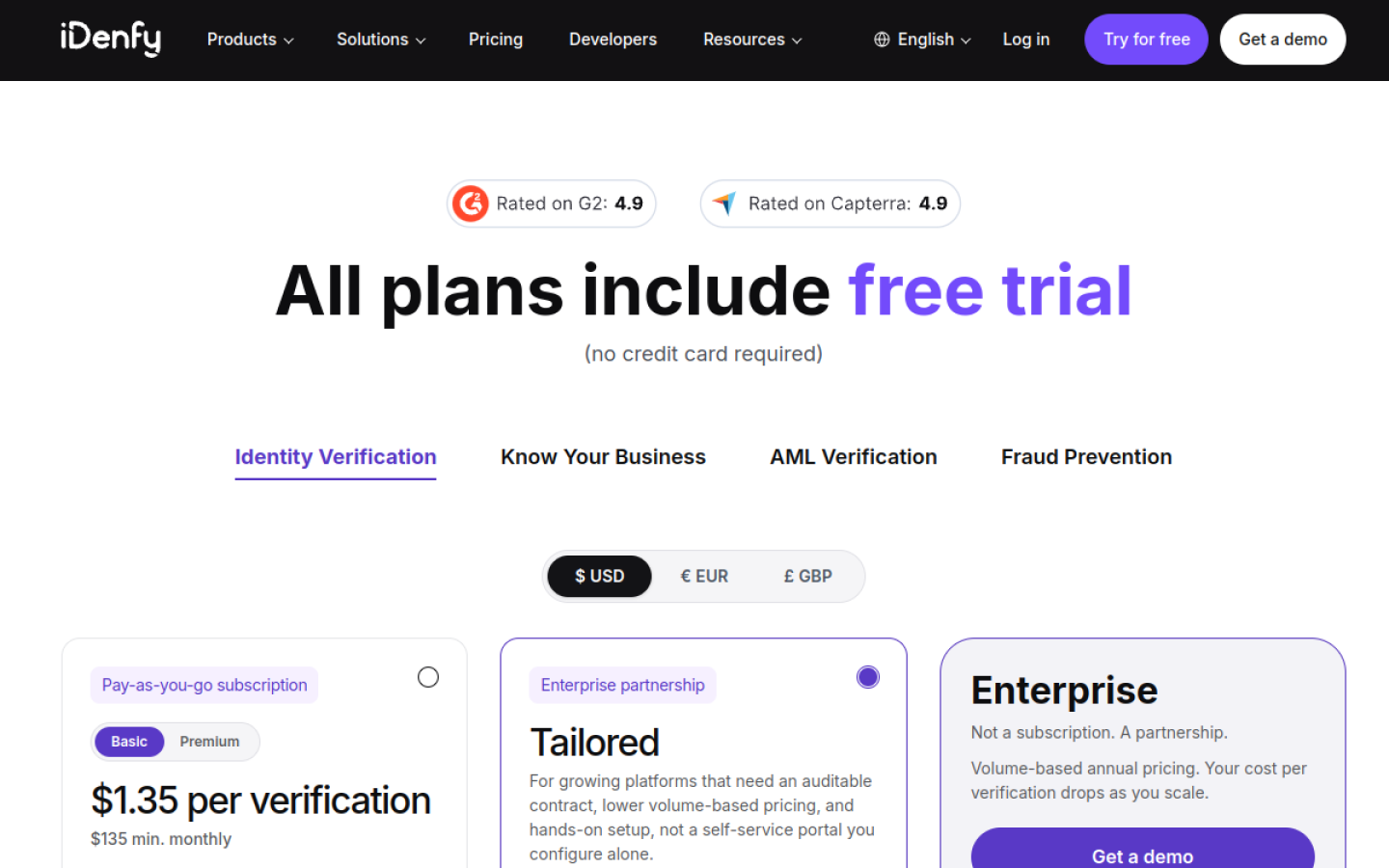
iDenfy is a Lithuanian verification provider with published per-check pricing. Its Basic plan costs $1.35 per verification with a $135 monthly minimum, and rates fall to $0.55 per verification at high volume. It covers more than 3,500 ID documents from 200 countries and territories, with 3D liveness and a 14-day trial of 10 checks.
The trade off is add-ons. Sanctions and PEP screening, proof of address and 24/7 manual review all cost extra per check, and the approved-only billing option adds $0.50 per check. It suits smaller teams that want a published price and the option to pay only for approved verifications.
Jumio is one of the longest-running enterprise identity verification vendors, founded in 2010. It pairs document checks with biometric selfie matching and liveness, covers more than 5,000 ID subtypes in 200 countries, and reports over 1 billion transactions processed. It also accepts government digital credentials in more than 60 countries.
The trade off is access. Jumio publishes no pricing and sells volume-based annual contracts through sales, with no free tier or self-serve trial. It suits large regulated teams that need the broadest document coverage and can commit to an enterprise contract.
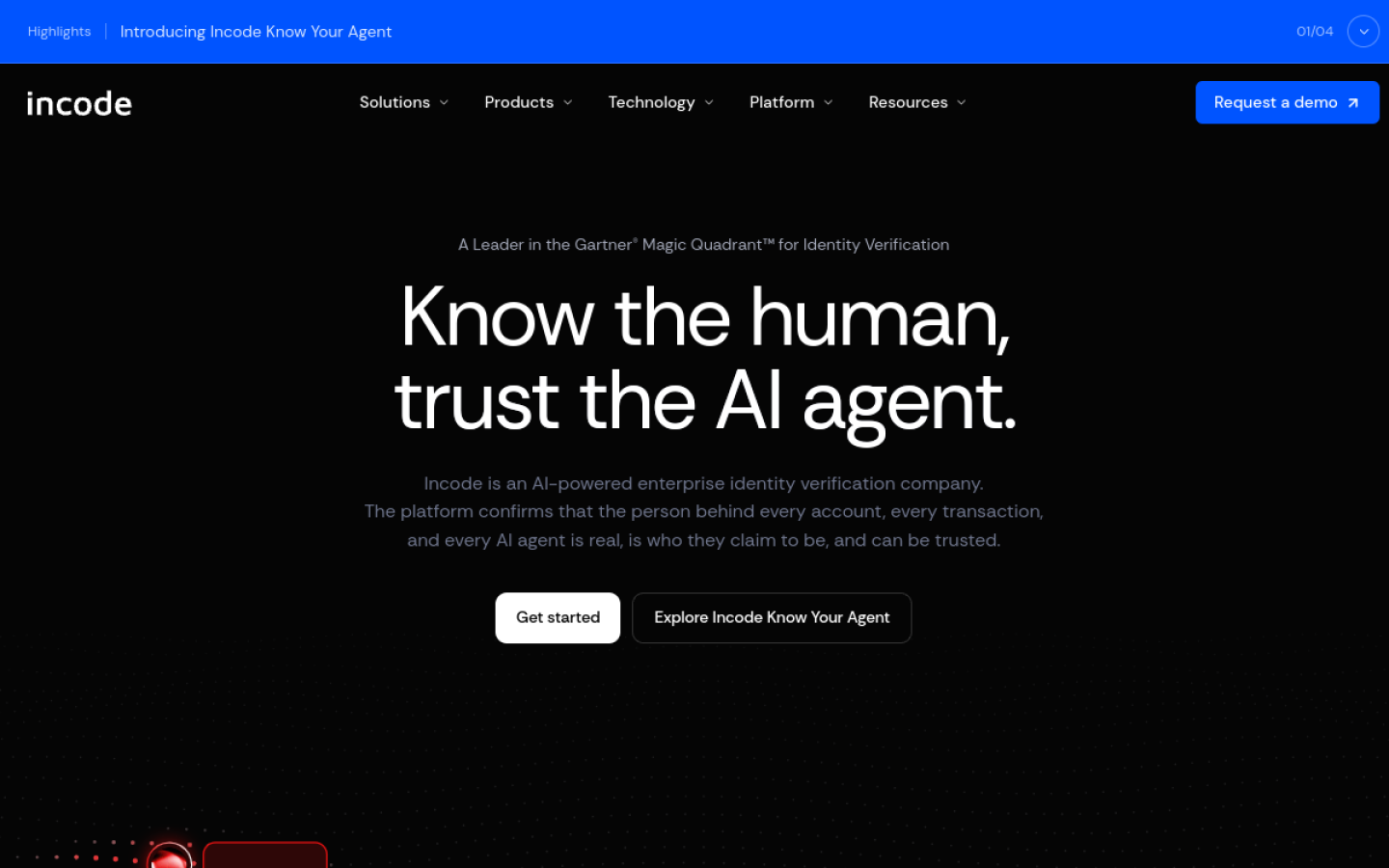
Incode is an enterprise identity platform whose models are trained on more than 7 billion trust checks, according to the company. It pairs document and face checks with liveness and deepfake detection, and Gartner has named it a Leader in identity verification in 2024, 2025 and 2026. G2 reviewers cite its age estimation accuracy most often.
The trade off is price and fit. Incode publishes no pricing and licenses its platform to enterprises by volume, so smaller teams will find it out of reach. It suits large teams that face deepfakes as well as age rules and want one system for onboarding and ongoing checks.
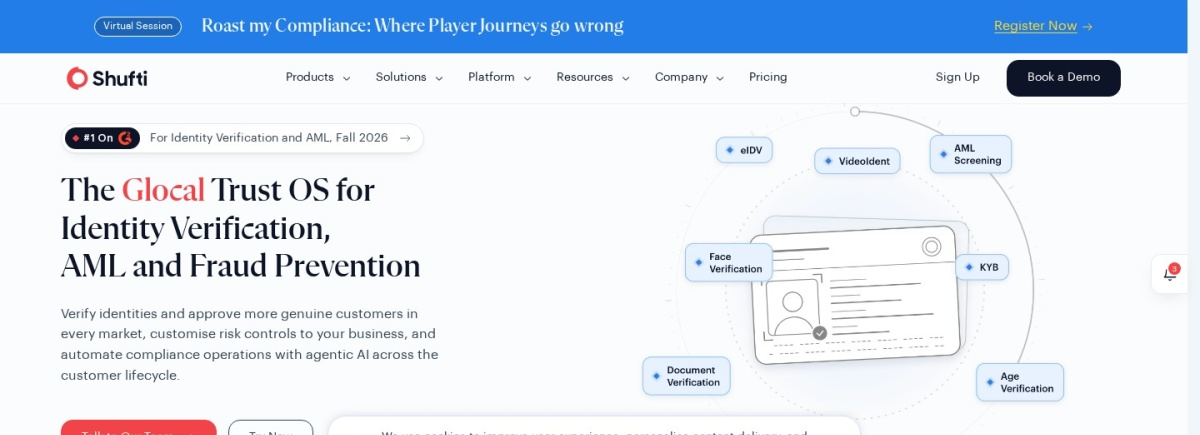
Shufti Pro is an identity verification platform with age verification built in. Its Free Forever plan covers 10 verifications a month, and the Essentials plan starts from $1.50 per verification for up to 20,000 checks. It covers more than 10,000 document types in 240 countries and territories and 150 languages.
The trade off is the starting price. The $1.50 rate is a starting point, and add-ons such as AML screening and address verification are not priced on the page. It suits teams that want a free tier, wide coverage and a selfie estimation that steps up to a document check.
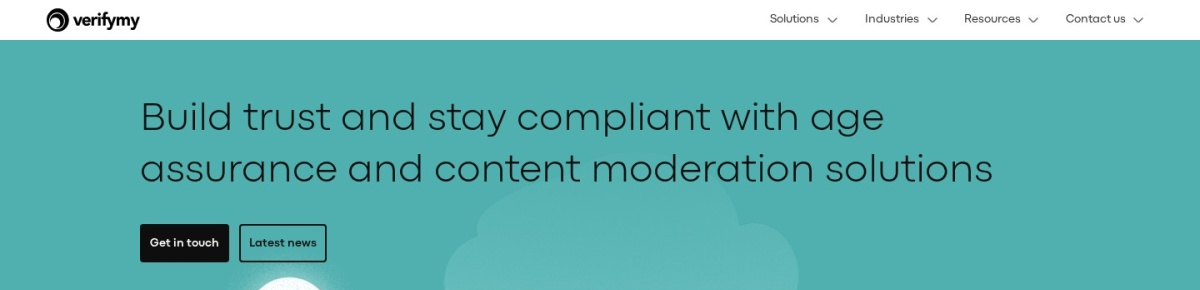
VerifyMy is a dedicated age assurance company that launched in 2019. Its email-based age estimation needs no document or selfie: it estimates age from an email footprint, and in ACCS testing it returned zero false positives at the 18 threshold. It also offers facial estimation, mobile, credit card and ID document checks, and says it has verified more than 35 million users.
The trade off is scope and evidence. Email estimation needs an established footprint, thin-file users always need a fallback, and its G2 rating rests on only 7 reviews. It suits shops and content platforms that want most adults cleared with no friction.
Facial estimation vs document checks: which to use
Facial estimation guesses age from a selfie and returns an over or under result in seconds. It costs $0.10 a check at Didit and needs no document, so most visitors pass with no friction.
Document checks ask for a government ID plus a selfie, then match the two. They cost more per check and more users drop out, but the result stands up better when a regulator asks how you checked.
Most teams use both. Run estimation first, then step the borderline cases up to a document check. Didit, Shufti Pro and Veriff all support that pattern in one flow.
No software guarantees legal compliance on its own. Check which method and which evidence your market requires before you buy, and keep the records the check produces.
How we chose
We started from every age verification provider with an established product and public documentation, then kept the nine that a business can buy and run today, from dedicated age specialists to full identity platforms.
Prices come from each vendor's pricing page, checked on 24 November 2026. Ratings come from G2 on the same day. Where a vendor publishes no price, the list says so instead of guessing.
We left out tools with no public product or no way to buy them. No vendor paid for a place, and we do not claim to have used these tools ourselves.
How to choose age verification software
Match the method to the assurance you need, then check the real cost before you sign.
Decide how much assurance you need. A selfie estimate is enough for a low-risk age gate, but a regulated sale usually needs a document check. Ask what evidence your market expects before you compare prices.
Check certification, not marketing. Look for independent age assurance certification or a published liveness test result. Yoti and VerifyMy hold age-specific certification, while others rely on general identity standards.
Work out the cost at your volume. Multiply the per-check price by your monthly checks, then add the monthly minimum. A $0.10 check on a $250 plan can cost more than a $1.35 check with a $135 minimum at low volume.
Pilot with real users first. Use the free trial or free credit to run real checks on your own audience. Watch the pass rate and the drop-off before you commit to a contract.
FAQ
What is the best age verification software?
Yoti is the best overall pick. Its facial age estimation is independently certified, it reuses digital ID so returning users are not checked twice, and it is rated 4.9 out of 5 on G2, though that rating rests on only 28 reviews.
How much does age verification software cost?
Published prices run from $0.10 per age estimation at Didit to $1.50 per verification at Shufti Pro, with monthly minimums from $49 at Veriff to $250 at Persona. Four tools in this list publish no price and quote through sales.
Is facial age estimation accurate enough?
It depends on the threshold. Yoti's algorithm reported a 1.88-year average error for ages 13 to 16 in NIST testing, but an estimate is still a probability, not proof. Use a document check when the result must stand up to scrutiny.
Do I need a document check, or is a selfie enough?
A selfie estimate is enough for a low-risk age gate where most visitors pass. A document check with liveness is the safer choice for regulated sales, high-value accounts or any case where you must keep proof of the check.
Can age verification work without collecting personal data?
Partly. Facial estimation can return an over or under result and delete the photo, and reusable digital ID avoids a fresh check. A document check always collects more data, so check your privacy rules before you turn it on.
Which tool is cheapest for a small site?
Didit is the cheapest way to start. Its free plan adds $10 of credit a month, age estimation costs $0.10 a check, and there is no monthly minimum. Veriff is the next cheapest published start at a $49 monthly minimum.