ClickUp is the best workflow software for small businesses overall, offering unlimited tasks and free members on its free plan and earning 4.6/5 from 15,954 G2 reviews. Asana is better for structured task automation, while monday.com suits businesses that prefer customizable visual workflows.
How we make this list: we compare pricing pages, product documentation and public user reviews, then re-check every price before each update. No product paid for a place. Disclosure.
ClickUp earns 4.6/5 from 15,954 G2 reviews, with Core regularly priced at $12 per user monthly before its advertised discount.
Asana Starter costs $131.88 per user annually and includes unlimited automations, forms and reporting dashboards.
monday.com Basic starts at $108 per seat annually and earns 4.7/5 from 17,985 G2 reviews.
Trello Standard costs $60 per user annually, making it the cheapest fixed-price paid subscription in this comparison.
Smartsheet Pro includes 250 monthly automations for $9 per member monthly on annual billing.
Process Street supports structured approvals and recurring procedures, with its quote-based Startup plan including 5 users and 10 guests.
What small businesses need from workflow software
Workflow software helps small businesses organize recurring activities, assign responsibilities and automate routine administrative work. Common applications include customer onboarding, employee training, purchase approvals, marketing production and service delivery.
Prioritize reusable templates, task assignments, deadlines and automated notifications. These capabilities reduce the need for managers to manually coordinate every activity or repeatedly explain established procedures.
Distinguish between project management and process automation. Project management tools organize assignments and deadlines, while dedicated workflow platforms enforce procedures, route approvals and record completed process steps.
Consider employee adoption and subscription costs alongside functionality. A straightforward visual workflow may deliver more value to a small team than an advanced system requiring extensive configuration and ongoing administration.
The 7 best workflow software tools for small businesses
01
ClickUp
4.6/5on G2 (15,954 reviews, checked Nov 2026)
Paid from$12/mo
Best for overall small business workflow management
Free tasks and membersUnlimited
Free file storage60 MB
Core automation allowance1,000/month
Regular Core price$12/user/month
clickup.com
ClickUp homepage, captured Nov 2026.
ClickUp is a work management platform combining tasks, collaborative documents, scheduling and workflow automation. Its free plan includes unlimited tasks and members, while Core provides unlimited storage, custom fields, forms and 1,000 monthly automations.
The trade off is that ClickUp's extensive customization options require initial configuration, and advanced capabilities increase subscription costs. Core has a regular listed price of $12 per user monthly, currently discounted to $9 on annual billing. It suits small businesses seeking centralized operational workflows.
Asana is a work management platform designed to coordinate assignments, project schedules and repeatable business processes. Its Starter subscription costs $10.99 per user monthly on annual billing and includes unlimited automations, reporting dashboards, forms and custom workflow templates.
The trade off is that more advanced organizational reporting and approval capabilities require higher subscriptions, while monthly Starter billing costs $13.49 per user. It suits small businesses that need clearly assigned responsibilities, automated task routing and consistent project execution.
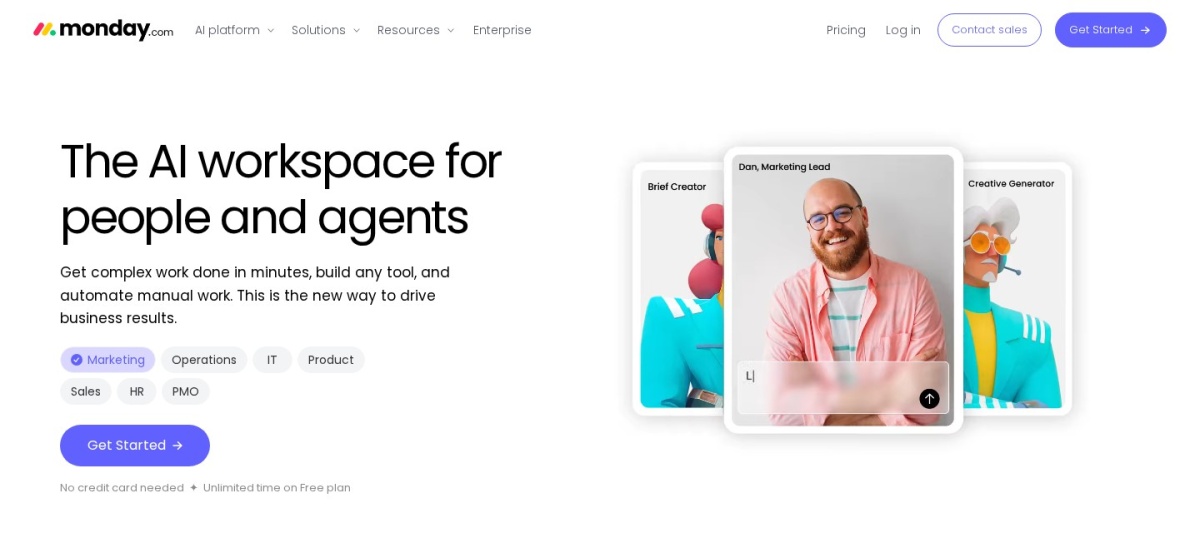
monday.com is a visual work management platform that helps businesses organize assignments, customer records and operational processes through customizable boards. Its free plan supports 2 seats and 3 boards, while Basic costs $9 per seat monthly on annual billing and adds unlimited items.
The trade off is that conventional workflow automation requires Standard at $12 per seat monthly on annual billing, including 250 monthly automation actions. It suits small businesses that prefer visual status tracking and customizable workflows, particularly when different departments manage distinct processes.
What we like
Accessible visual board interface
Customizable process tracking
More than 200 templates on Free
Flexible task and operational management
Watch out for
Basic excludes conventional workflow automation
Paid seat bundles can increase costs
Automation allowances vary by subscription
Basic adds unlimited items and viewers; Standard introduces workflow automation.Visit monday.com
04
Trello
4.4/5on G2 (14,079 reviews, checked Nov 2026)
Paid from$5/mo
Best for simple and affordable visual workflows
Workflow formatKanban boards
Entry planStandard
Annual billing$5/user/month
Monthly billing$6/user/month
trello.com
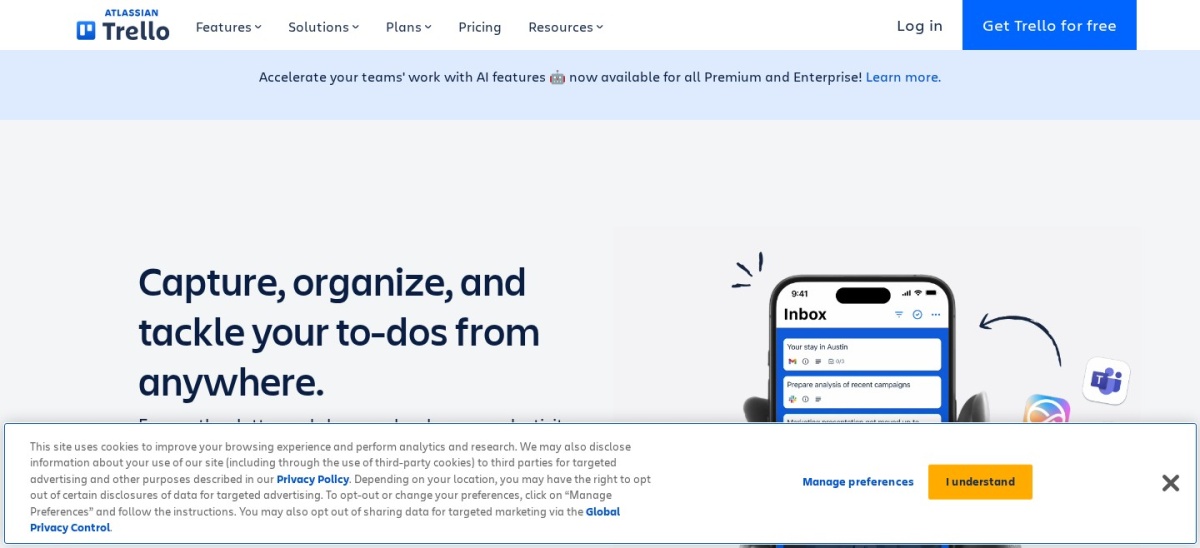
Trello homepage, captured Nov 2026.
Trello is a visual task management application that organizes business activities into boards, lists and cards. Its free plan supports everyday task coordination, while Standard costs $5 per user monthly on annual billing and adds unlimited boards, card mirroring and expanded automation.
The trade off is that complex task dependencies, detailed reporting and cross-project oversight are less developed than in comprehensive work management platforms. Standard costs $60 per user annually. It suits small businesses that want affordable visual workflows without complicated administrative setup.
What we like
Affordable paid subscription
Straightforward drag-and-drop workflow management
Built-in task automation
Suitable for recurring operational checklists
Watch out for
Limited advanced dependency management
Complex reporting may require integrations
Large numbers of boards can become difficult to organize
Standard adds unlimited boards, card mirroring and expanded automation.Visit trello.com
05
Smartsheet
4.4/5on G2 (23,294 reviews, checked Nov 2026)
Starts at$9/mo
Best for spreadsheet-based business workflows
Entry planPro
Pro member range1–10
Pro automations250/month
Monthly billing$12/member/month
smartsheet.com
Smartsheet homepage, captured Nov 2026.
Smartsheet is a work management platform combining spreadsheet-style data organization with project scheduling, forms and workflow automation. Its Pro subscription costs $9 per member monthly on annual billing and includes unlimited sheets, forms and reports, plus 250 monthly automations.
The trade off is that Pro supports a maximum of 10 paid members, while Business starts at $19 per member monthly on annual billing and introduces unlimited automations. It suits businesses transitioning from spreadsheets to more structured operational tracking.
Pro includes unlimited sheets, forms and reports with 250 monthly automations.Visit smartsheet.com
06
Notion
4.6/5on G2 (14,029 reviews, checked Nov 2026)
Paid from$10/mo
Best for combining workflows and business documentation
Entry planPlus
Published Plus price$10/seat/month
Plus page history30 days
Workflow structureConnected databases and pages
notion.com
Notion homepage, captured Nov 2026.
Notion is a connected workspace for business documentation, databases, task management and internal knowledge sharing. Its free plan covers personal organization, while Plus starts at $10 per seat monthly and includes expanded collaboration capabilities and 30 days of page history.
The trade off is that businesses must design their own databases, task relationships and operational structures rather than relying entirely on predefined process management features. Plus costs $120 per seat on an annualized basis. It suits knowledge-focused businesses that want procedures and assignments in the same workspace.
What we like
Combines documentation and task tracking
Flexible relational databases
Suitable for internal business knowledge bases
Customizable workflow templates
Watch out for
Requires planning to build effective workflows
Less specialized for complex approval chains
Advanced AI capabilities can increase costs
Plus expands team collaboration, database capabilities and page history.Visit notion.com
07
Process Street
4.6/5on G2 (463 reviews, checked Nov 2026)
PricingCustom pricing
Best for recurring procedures and approval workflows
Startup users5
Startup guests10
Startup data records5,000
Pricing modelCustom quotation
process.st
Process Street homepage, captured Nov 2026.
Process Street is a business process management platform that converts operating procedures into executable workflows with assignments, approvals and conditional logic. Its quote-based Startup plan includes 5 users, 10 guests, unlimited workflows and tasks, and capacity for 5,000 data records.
The trade off is that pricing requires direct vendor contact, and creating detailed process templates involves more preparation than basic task management. It suits small businesses that need enforceable operating procedures, structured onboarding, consistent approvals and documented compliance activities.
What we like
Dedicated recurring process management
Conditional workflow logic
Enforced task order and approvals
Documented process execution
Unlimited workflows on Startup
Watch out for
No fixed public subscription price
Less suitable for informal project management
Detailed procedures require initial configuration
Startup includes recurring workflows, approvals, conditional logic and analytics.Visit process.st
Which small business workflows should you automate first?
Customer onboarding is a practical starting point. Create a repeatable workflow covering contract preparation, information collection, account setup, initial communication and internal handovers.
Employee onboarding also benefits from structured automation. Assign training activities, document collection, equipment requests and access permissions to the appropriate team members whenever someone joins.
Consider automating purchase approvals, invoice reminders, content publishing and recurring maintenance activities. Prioritize frequent processes with predictable steps and clear responsibilities before attempting more complex automation.
What is the difference between workflow and project management software?
Project management software helps teams plan and complete work with defined objectives, schedules and assignments. It is particularly useful for campaigns, customer projects and product development.
Workflow software focuses on how recurring activities move between people, systems and approval stages. Dedicated process tools can enforce task sequences, collect required information and document whether procedures were followed.
Many small businesses can use a combined platform such as ClickUp or Asana for both purposes. Businesses with stricter procedural requirements may benefit from dedicated software such as Process Street.
How we chose
We compared established workflow platforms based on small business affordability, recurring task management, automation, collaboration, documentation and public customer feedback.
Official subscription pages and G2 ratings were checked on 27 Nov 2026. Annual billing rates were used where published, and temporary discounts were excluded from regular prices. ClickUp's regular listed Core price is used instead of its advertised promotional rate. Automation availability varies by subscription.
We excluded enterprise-only platforms without practical small business applications and products without established review histories. Custom-priced software appears below the publicly priced leaders. No vendor paid for a place, and we do not claim testing for this list.
How to choose the best workflow software for small business
Identify your repetitive business processes, employee requirements and automation budget before selecting a workflow management platform.
Document your existing workflows. List recurring processes, responsible employees, required information and approval stages. Identify activities where delays, missed assignments or repetitive administration create the greatest operational problems.
Choose the appropriate workflow structure. Use visual boards for straightforward assignments, spreadsheet-based platforms for structured records and dedicated process management software for workflows requiring strict task sequences and formal approvals.
Compare automation capabilities. Check available triggers, actions, conditional rules and subscription allowances. Confirm that your intended plan supports the required automation features rather than assuming every paid subscription includes them.
Calculate the total annual subscription cost. Include employee licenses, additional automation capacity, integrations and optional AI services. Start with essential workflows and expand your subscription only when additional functionality provides measurable business value.
FAQ
What is the best workflow software for small businesses?
ClickUp is the best overall choice because it combines task management, documents and workflow automation with a generous free plan. Asana is better for structured task routing, while monday.com suits businesses that prefer customizable visual boards.
What is the best free workflow software for small businesses?
ClickUp offers a useful free plan with unlimited tasks and members, although storage is limited to 60 MB. Trello is another suitable option for straightforward visual workflows, while Notion works well for combining business documentation with task tracking.
How much does small business workflow software cost?
Trello Standard starts at $5 per user monthly on annual billing. Smartsheet Pro and monday.com Basic start at $9 per paid member or seat monthly, while specialized process management platforms such as Process Street require custom quotations.
Can small businesses automate workflows without coding?
Yes. Platforms such as ClickUp, Asana, monday.com, Trello and Process Street provide visual automation builders that allow businesses to configure triggers and actions without programming. Available automation features and usage limits depend on the selected subscription.
Is workflow software worth it for a small business?
Workflow software can be worthwhile when recurring administrative tasks consume significant employee time or important assignments regularly get missed. Businesses should compare subscription expenses with potential time savings, reduced process errors and improved accountability before committing.
Which workflow software is best for standard operating procedures?
Process Street is particularly suitable for turning standard operating procedures into executable checklists with conditional logic, task sequencing and approvals. Notion is useful for documenting procedures, while ClickUp can connect process documentation with everyday task assignments.
SaaS SEO and WordPress specialist with about 8 years of experience. Rakib compares WordPress plugins, themes, hosting and software using public pricing, documentation and user reviews. See how we rank.