ServiceNow SPM is the best strategic portfolio management software for most large organizations, leading G2's SPM category with a 4.1/5 rating from 316 reviews and keeping strategy, demand, resources and finances on one platform. Pick Planview for deep scenario planning or Mooncamp when you want a lighter strategy-execution tool.
How we make this list: we compare pricing pages, product documentation and public user reviews, then re-check every price before each update. No product paid for a place. Disclosure.
ServiceNow SPM leads G2's SPM category with a 4.1/5 rating from 316 reviews and the highest satisfaction score in the group.
Five of the nine tools publish no prices at all, so expect a sales quote and an implementation project for the enterprise suites.
Planview is the category-defining SPM platform, built around linking funding decisions to delivered outcomes.
Meisterplan is the only mid-market tool with public package pricing, from $700 a month for 50 resources billed annually.
Mooncamp at $7 per user a month and Smartsheet at $9 are the cheapest paid entries, but both are lighter on portfolio finance than the enterprise suites.
What strategic portfolio management software should cover
Strategic portfolio management sits above project management. It connects strategy to funding: which initiatives get money, which get cut, and whether the portfolio as a whole is on track.
The core pieces are demand intake, prioritisation and scoring, roadmaps, capacity planning and portfolio financials. A tool that only tracks tasks is project software, not SPM.
Most enterprise SPM suites sell by quote and take months to implement. G2 puts ServiceNow's average implementation time at 4 months and Planisware's at 8 months, so budget for that as well as the licence.
Mid-market teams can start smaller. Mooncamp and Cascade cover strategy execution and OKRs with public pricing, while Meisterplan covers capacity-led portfolio planning. Running many projects at once is closer to managing many sites at once than to running a single project, so check which plan holds the portfolio view before you buy.
The 9 best strategic portfolio management software tools
01
ServiceNow SPM
4.1/5on G2 (316 reviews, checked Nov 2026)
PricingCustom/yr
Best strategic portfolio management software overall
G2 rating4.1/5 (316 reviews)
PricingCustom quote
Time to implement4 months (G2)
Best forLarge ServiceNow shops
servicenow.com
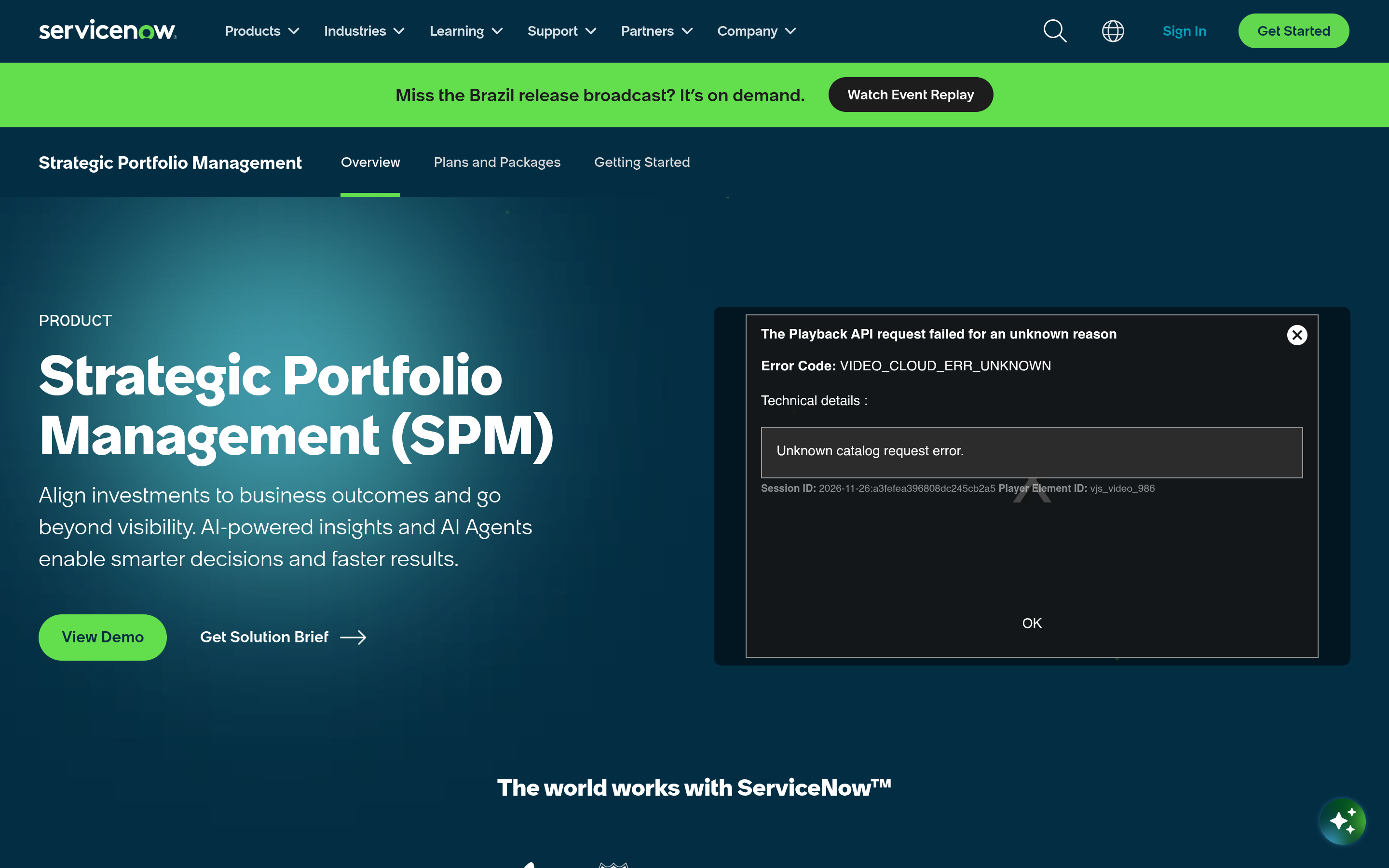
ServiceNow SPM homepage, captured Nov 2026.
ServiceNow SPM is the SPM layer of the Now Platform, linking strategy, demand, projects, resources and finances in one system. It covers demand intake, prioritisation, roadmaps, resource management and portfolio financials, and G2 names it the Leader of its SPM category with the highest satisfaction score.
The trade off is cost and commitment. ServiceNow publishes no prices, so every deal is a custom quote, and G2 puts the average implementation at 4 months. It suits large organisations already running ServiceNow, where portfolio data stays inside one platform.
What we like
G2 Leader in the SPM category
Strategy, demand, resources and finances in one place
Highest satisfaction score in the category
AI agents for portfolio planning
Watch out for
No public pricing; every deal is a custom quote
Four-month average implementation
Makes little sense outside the ServiceNow platform
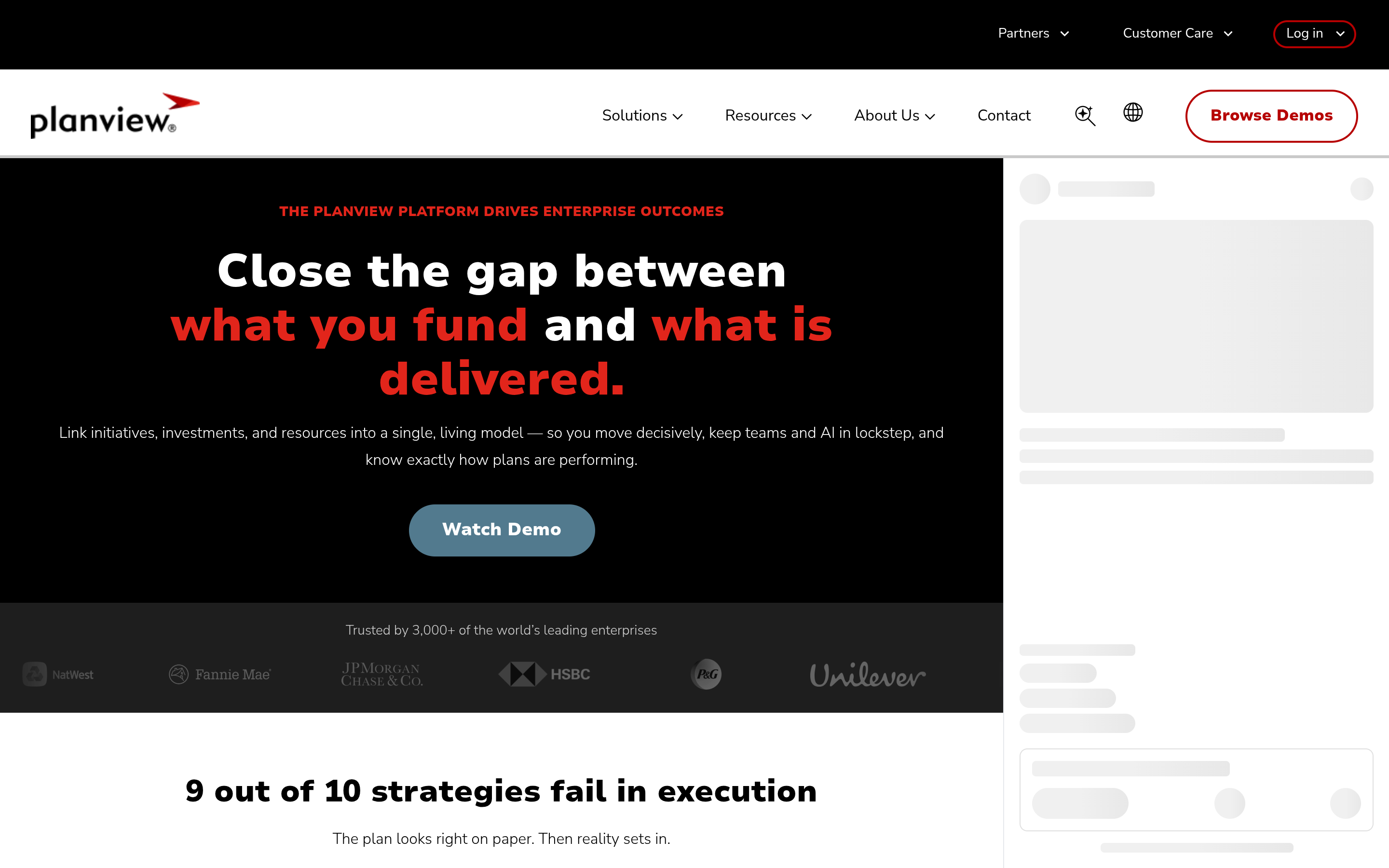
Planview Portfolios is the category-defining SPM platform, built around one idea: link what you fund to what gets delivered. It covers portfolio planning, investment prioritisation, capacity views and what-if scenarios, and Planview says more than 3,000 enterprises use its platform.
The trade off is price and setup. Planview publishes no prices, and G2 reviewers call pricing high and setup complex, with ease of setup scoring 5.6 out of 10. It suits large PMOs that need deep scenario modelling and can fund an implementation.
What we like
Deepest scenario and what-if planning in this list
Centralised view of investments and outcomes
Trusted by 3,000+ enterprises
Watch out for
No public pricing
Lowest ease-of-setup score among the enterprise suites
Overkill for small portfolios
Pricing is by custom quote; expect an implementation projectVisit planview.com
03
Oracle Primavera
4.4/5on G2 (389 reviews, checked Nov 2026)
PricingCustom/yr
Best for capital projects and engineering
G2 rating4.4/5 (389 reviews)
PricingCustom quote
SchedulingCritical path (CPM)
Best forConstruction and engineering
oracle.com
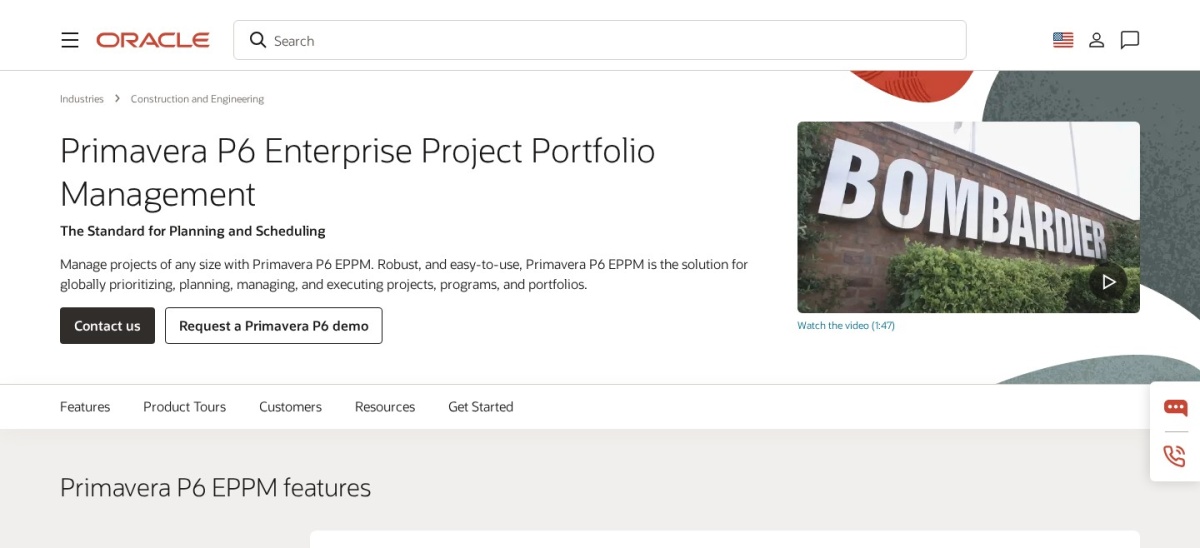
Oracle Primavera homepage, captured Nov 2026.
Oracle Primavera is the standard for planning and scheduling large programmes, sold as Primavera P6 Enterprise Project Portfolio Management. It covers critical-path scheduling, resource optimisation, cost and schedule management, and portfolio views, and scales from a single user to tens of thousands across hundreds of projects.
The trade off is weight. Primavera is built for engineering and construction programmes, so its scheduling depth comes with a steep learning curve and enterprise pricing by quote. It suits organisations running capital projects where schedule risk is the main risk.
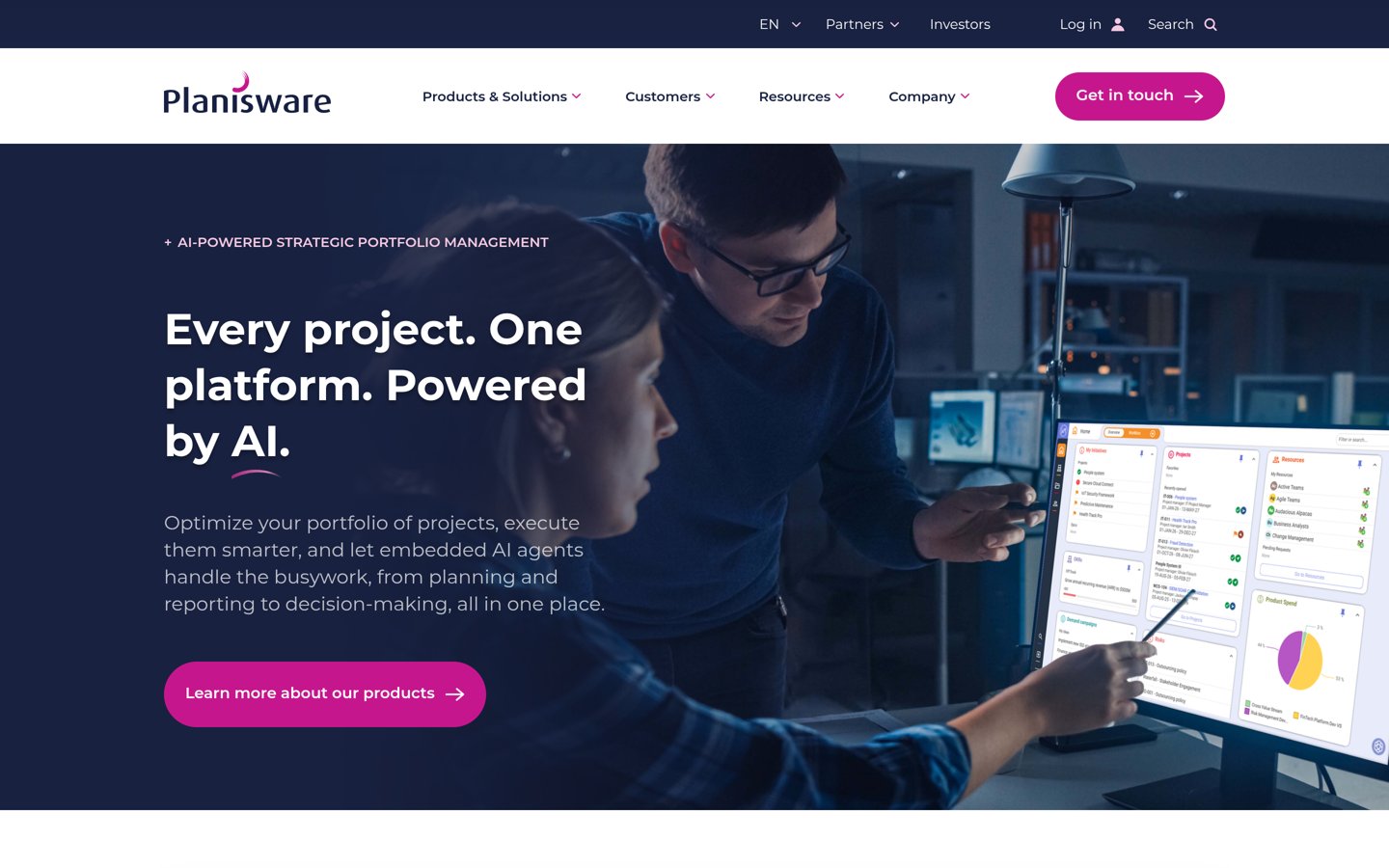
Planisware Enterprise homepage, captured Nov 2026.
Planisware Enterprise is an SPM platform built for product development, engineering and IT portfolios. It brings together budgets, forecasts, schedules, resources and actuals in one system, and counts Ford, Philips, Pfizer and Société Générale among its customers.
The trade off is time and cost. G2 puts the average implementation at 8 months, the longest in this list, and reviewers describe it as expensive. It suits large product and engineering organisations that need portfolio financials tied to stage-gate governance.
What we like
Portfolio budgets, forecasts and actuals in one place
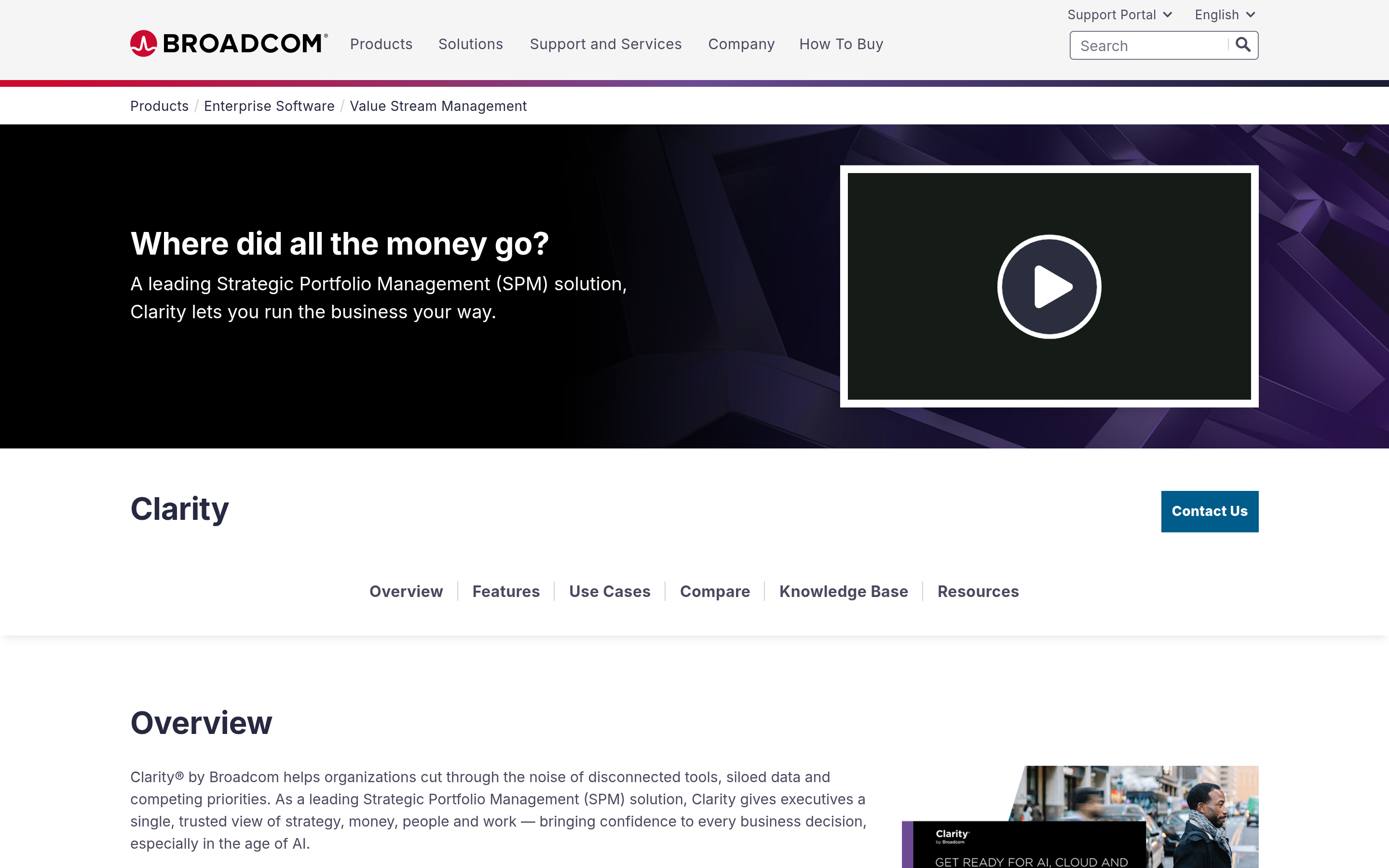
Broadcom Clarity is the veteran enterprise PPM platform, now part of Broadcom's ValueOps line. It covers demand intake, project financials, resource capacity, timesheets and stage-gate governance, with the audit trails regulated industries expect.
The trade off is age and cost. Clarity has the lowest G2 rating in this list at 3.7 out of 5, and G2 reviewers rate its cost at the top of the scale. It suits large IT organisations with strict governance needs that already run Broadcom tooling.
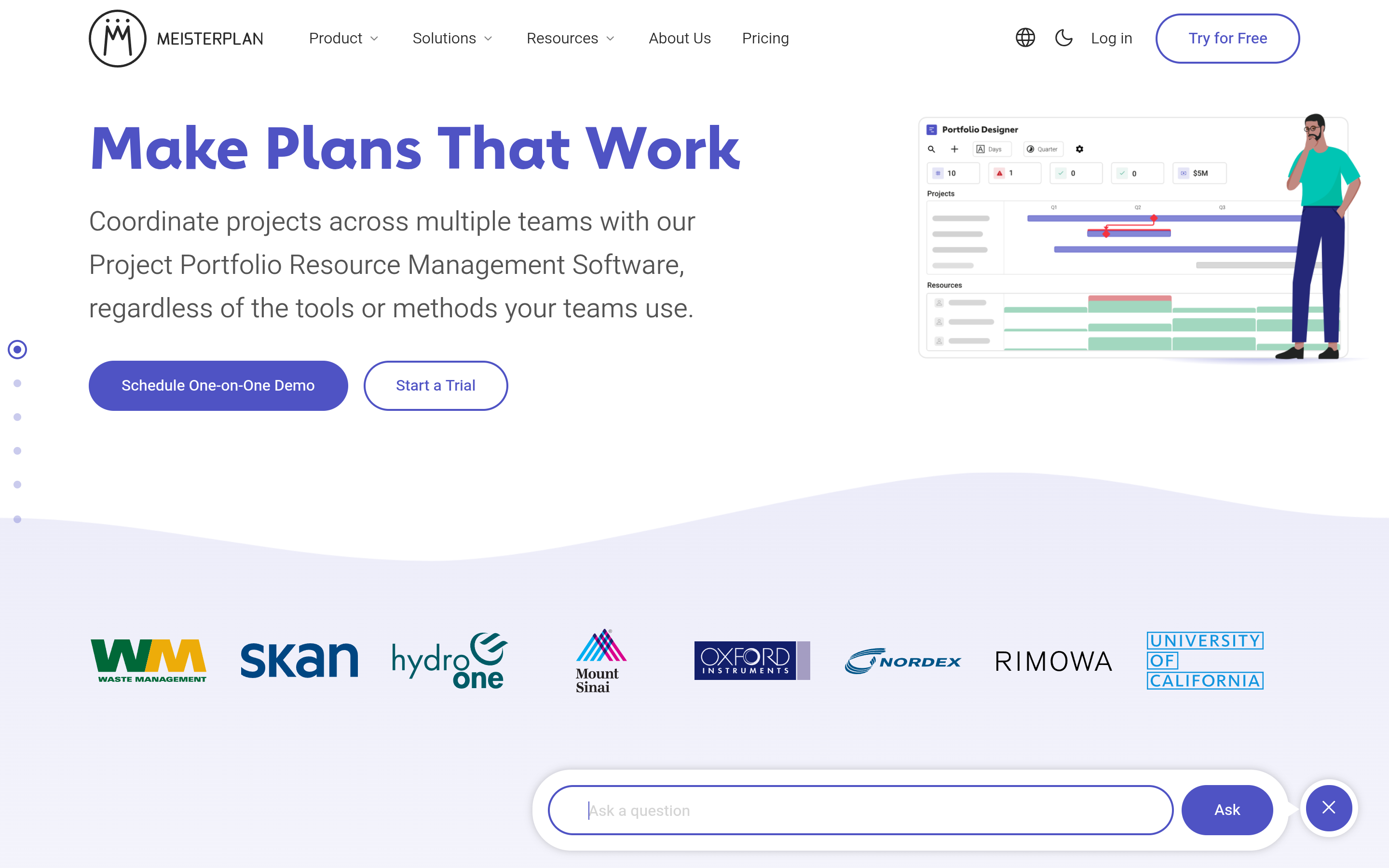
Meisterplan is a portfolio planning tool built around one question: which projects fit the people you have. It plans projects against resource capacity, runs what-if scenarios and balances workloads across teams, with unlimited users on every edition and pricing by the number of resources planned.
The trade off is the pricing model. Basic starts at $700 a month for 50 resources billed annually, so small teams pay for capacity they may not use, and scenarios need the Pro edition at $900 a month. It suits PMOs whose main problem is fitting projects to available people.
What we like
Best scenario planning outside the enterprise suites
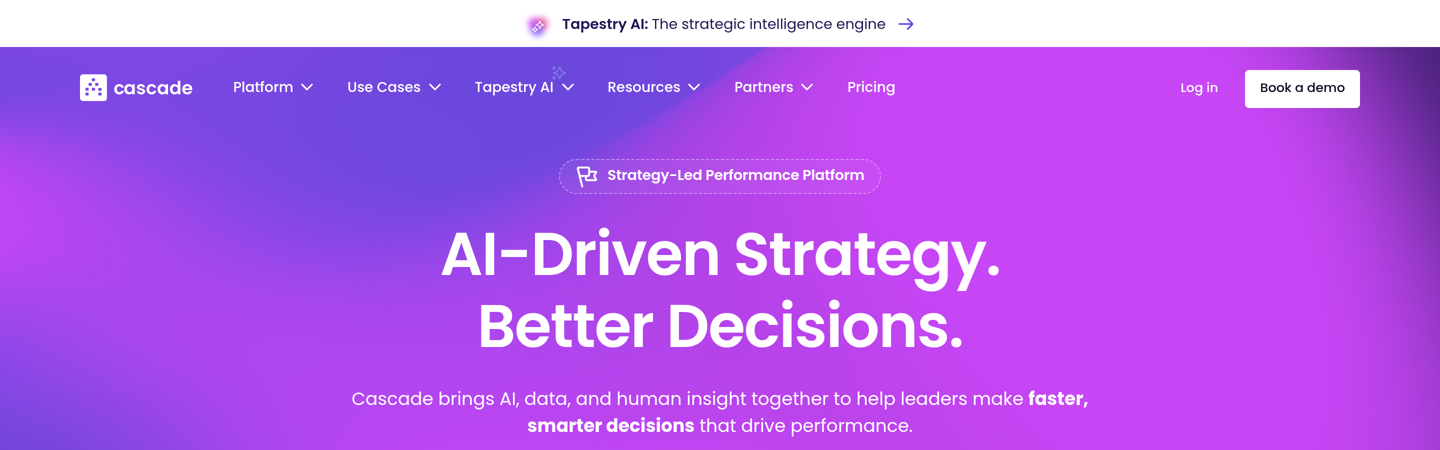
Cascade is a strategy execution platform that turns a strategy into a plan everyone can see. It connects objectives, initiatives, KPIs and projects in one view, with AI dashboards and automated reporting, and its free Plan covers up to 2 users.
The trade off is depth. Cascade covers strategy execution well but has no portfolio financials or capacity planning, and paid plans are custom-priced with no public rates. It suits strategy and operations teams that need alignment and reporting more than project finance.
What we like
Highest G2 rating in this list alongside Mooncamp (4.8/5)
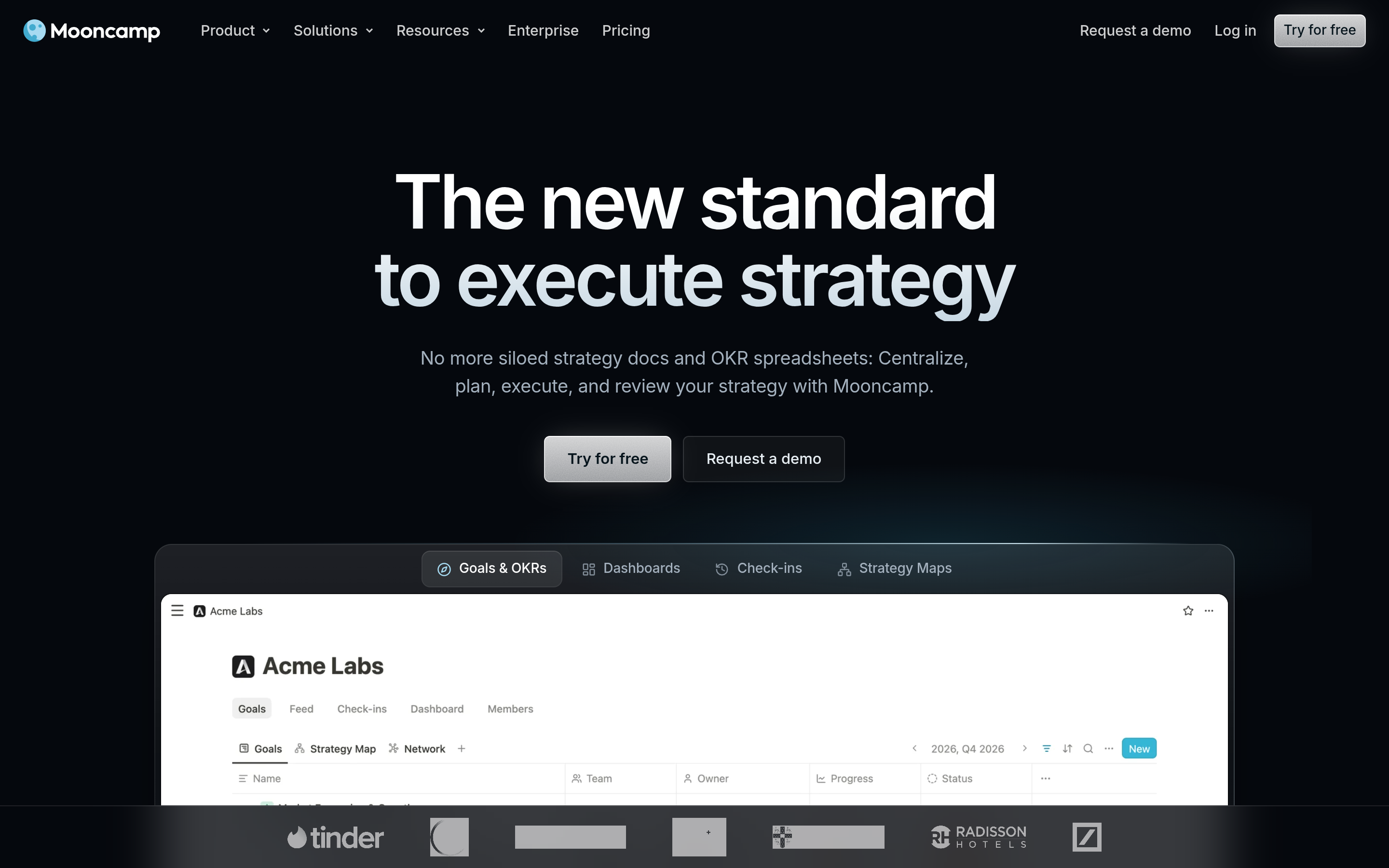
Mooncamp is a strategy execution platform that connects objectives, projects, initiatives and outcomes in one operating view. It covers OKRs, goal trees, check-ins, dashboards and strategy maps, and its Essential plan costs $7 per user a month billed annually.
The trade off is scope. Mooncamp is lighter than the enterprise suites, with no portfolio financials or stage-gate governance, and its Enterprise plan needs at least 100 users. It suits growing teams that want strategy and OKRs without enterprise PPM overhead.
What we like
Highest G2 rating in this list alongside Cascade (4.8/5)
Cheapest paid plan in this list at $7 per user a month
Smartsheet is a work management platform that many teams use as a light portfolio tracker. Its spreadsheet grid, dashboards, automation and reporting give portfolio visibility without enterprise PPM, and the Pro plan costs $9 per member a month billed annually.
The trade off is depth. Smartsheet has no portfolio financials, demand scoring or stage-gate governance, and per-user pricing adds up as teams grow. It suits teams that want portfolio visibility in a familiar grid and already work in spreadsheets.
What we like
Largest review base in this list (23,251 G2 reviews)
Enterprise suites vs lighter tools: where the line sits
The five enterprise suites in this list sell by quote and take months to implement. They add portfolio financials, demand scoring, capacity planning and stage-gate governance.
The lighter tools publish prices and start in days. They cover strategy, OKRs and portfolio visibility, but leave finance and governance to other systems.
Pick the enterprise route when funding decisions happen inside the tool. Pick a lighter tool when the PMO only needs to track delivery against a plan.
A middle path works too: run Meisterplan or Smartsheet for the portfolio view and keep finance in the system that already holds it.
How we chose
We started from G2's Strategic Portfolio Management category and the enterprise PPM shortlists, then kept nine established tools with public G2 ratings and a real portfolio layer.
Prices come from each vendor's pricing page, checked on 26 November 2026. Ratings and review counts come from G2 on the same day. Five vendors publish no prices, so those tools show Custom. Where a vendor shows a sale, the list shows the regular price.
We left out generic project tools without a portfolio layer, and tools with no public rating. No vendor paid for a place, and we do not claim to have used these tools ourselves.
How to choose strategic portfolio management software
Start with the size of your portfolio and who makes the funding decisions, then match the tool to that.
Decide who funds the work. If executives approve funding in the tool, you need an enterprise suite with financials. If the PMO just tracks delivery, a lighter tool may be enough.
Check the portfolio layer, not the task list. Look for demand intake, scoring, roadmaps and capacity views. A good task tracker without those is not SPM.
Ask about implementation time. Enterprise suites take months to set up. G2 reports 4 months for ServiceNow SPM and 8 months for Planisware, so plan the rollout, not just the licence.
Trial the mid-market tools first. Mooncamp, Smartsheet and Meisterplan all offer trials. Use one to test your prioritisation workflow before committing to a quote-only suite.
FAQ
What is the best strategic portfolio management software?
ServiceNow SPM is the best pick for most large organizations. It leads G2's SPM category with a 4.1/5 rating from 316 reviews and keeps strategy, demand, resources and finances on one platform.
How much does strategic portfolio management software cost?
Five of the nine tools in this list publish no prices and sell by custom quote. The cheapest public prices are Mooncamp at $7 per user a month and Smartsheet at $9 per member a month, both billed annually.
What is the difference between SPM and PPM?
SPM connects strategy and funding decisions to the portfolio: which initiatives get money and which get cut. PPM manages the delivery of the projects themselves, such as schedules, tasks and resources.
Is there a free strategic portfolio management tool?
Cascade is the only tool in this list with a free plan, covering up to 2 users. The other tools offer free trials instead, typically 30 days, with no free tier.
Which SPM tool is best for mid-sized companies?
Meisterplan, Cascade and Mooncamp fit mid-sized teams best. Meisterplan covers capacity-led planning, while Cascade and Mooncamp cover strategy execution and OKRs without enterprise implementation projects.
Does Smartsheet count as SPM software?
Smartsheet works as a light portfolio tracker with dashboards and reporting, but it has no portfolio financials, demand scoring or stage-gate governance. It suits teams that want visibility, not enterprise portfolio control.
SaaS SEO and WordPress specialist with about 8 years of experience. Rakib compares WordPress plugins, themes, hosting and software using public pricing, documentation and user reviews. See how we rank.