Aurora Solar is the best solar project management software for most installers, with 3D design and bankable shade reports rated 4.7 out of 5 on G2 from 121 reviews. OpenSolar suits tight budgets with a free core platform, while Enerflo covers the full sales-to-install workflow.
How we make this list: we compare pricing pages, product documentation and public user reviews, then re-check every price before each update. No product paid for a place. Disclosure.
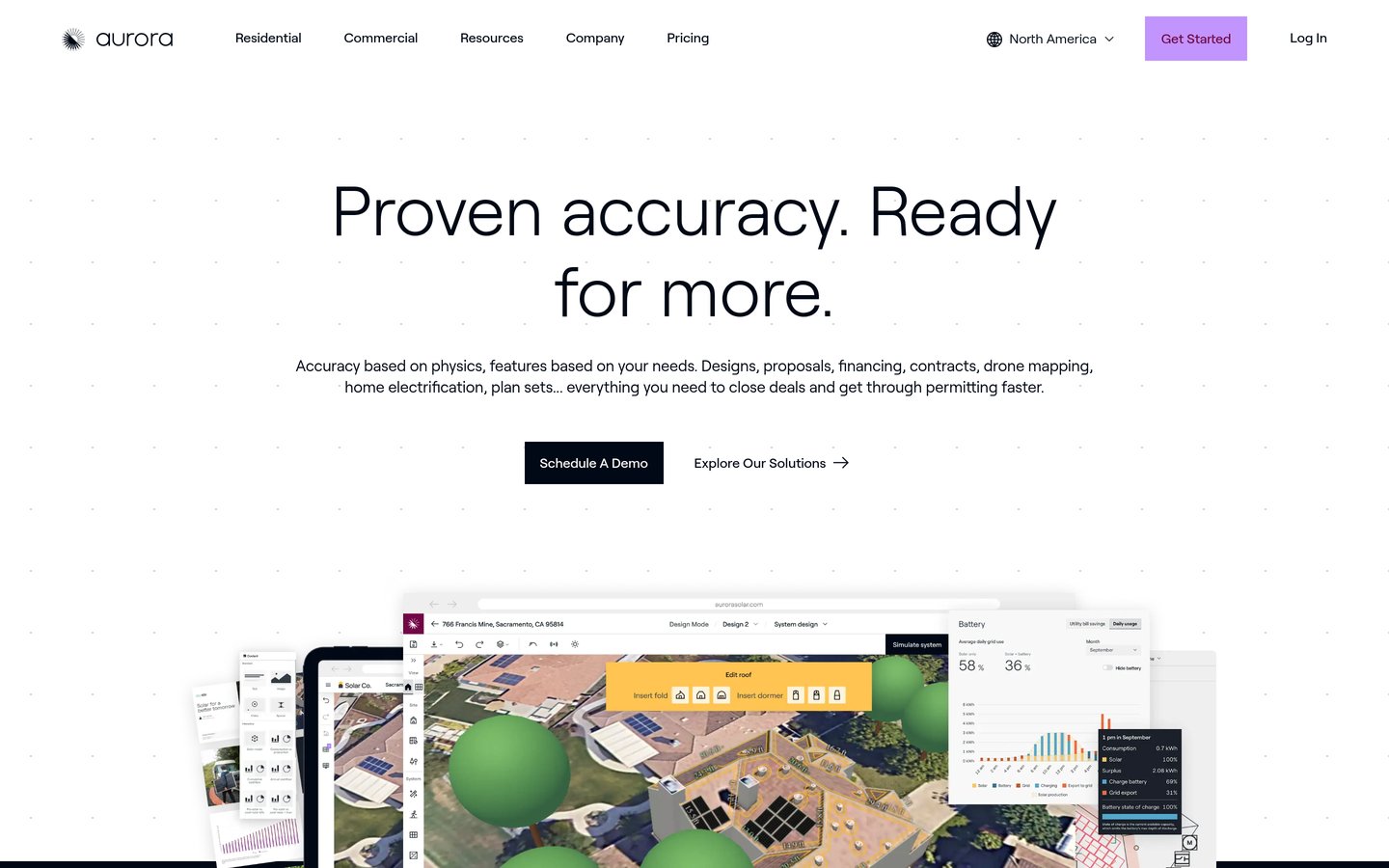
Aurora Solar leads on design: 3D models with LIDAR, bankable shade reports, rated 4.7/5 from 121 G2 reviews.
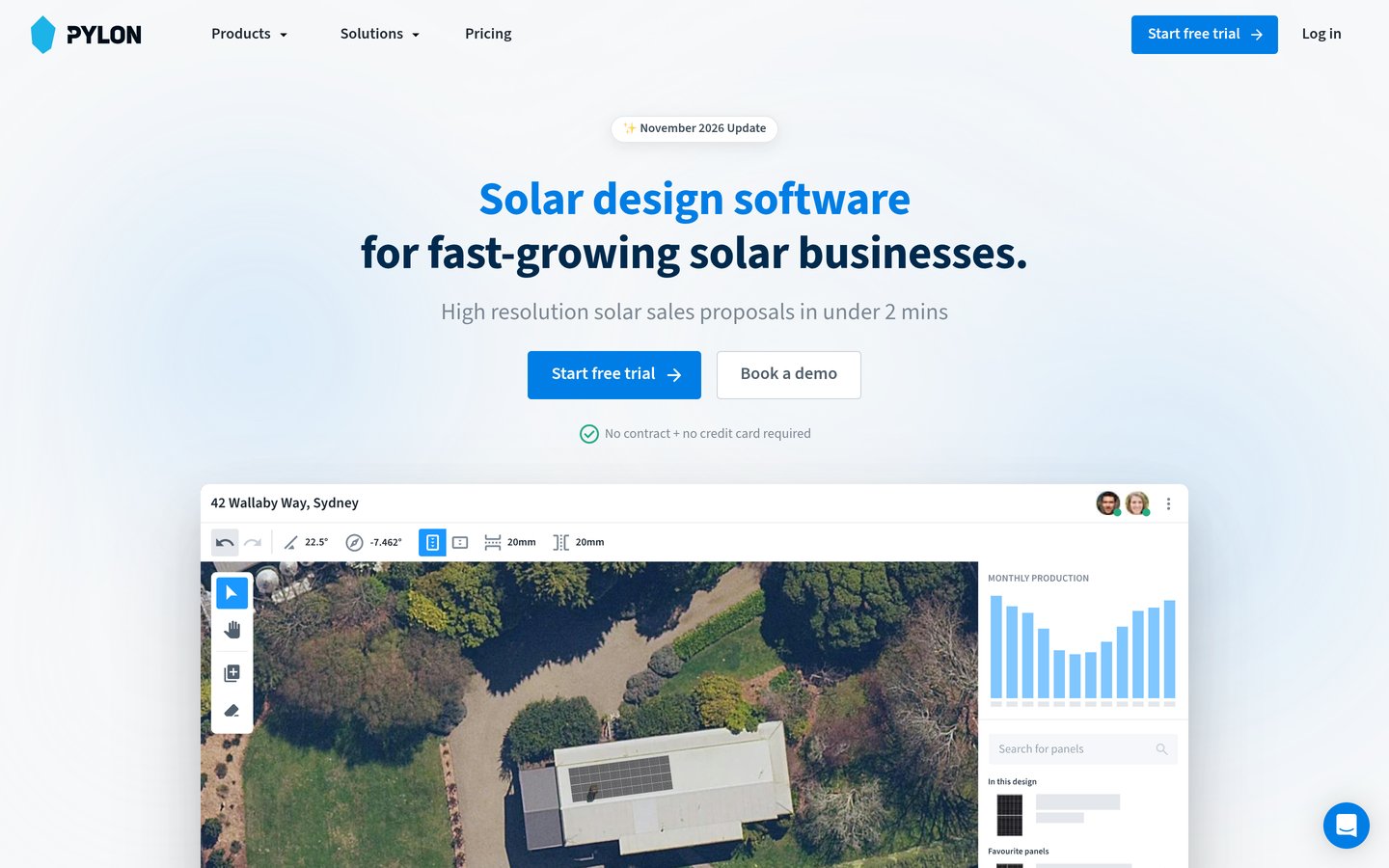
Pylon is the cheapest way in at $4 per project, with proposals in under 2 minutes.
OpenSolar is the only free core platform here, but its G2 rating rests on 3 reviews.
Enerflo is the fullest workflow, from lead to permission to operate, but G2 lists it from $1,750 a month.
Published prices run from $4 per Pylon project to $2,799 a year for SolarGraf Starter; Enerflo and Solo are quote-only.
What solar project management software should cover
Solar installers run two kinds of work in one business: selling systems and building them. Design tools model roofs and price proposals, while operations tools track permits, crews and inspections from sale to switch-on.
Most teams need one of each, not one tool that claims to do both. A design engine with weak dispatch leaves crews guessing, and a field tool with weak shading produces proposals a lender will not trust.
Price models differ more than prices. Per-user seats punish growing field teams, per-project fees punish high volume, and module-based pricing hides the real bill until the quote arrives. Compare the ladder below on the same basis: one year of the cheapest paid plan.
Ratings in this niche are thin, so read them with care. Several tools below have fewer than 20 public reviews, and we say so where that is the case. A 5.0 from 7 reviews is weaker evidence than a 4.7 from thousands.
Aurora Solar is a cloud design and proposal platform for residential installers. It builds 3D roof models from imagery and LIDAR, runs performance simulations and turns the result into proposals with financing options. Basic covers 50 projects a month and includes HD imagery, an AHJ database of 25,000+ jurisdictions and a component database.
The trade off is price and scope. Basic costs $135 per user per month billed annually, and battery modelling, LIDAR and bankable shade reports need Premium at $220. It suits residential teams that sell on design accuracy and need proposals a lender will trust.
What we like
LIDAR-assisted 3D models with bankable shade reports
Pylon is a solar design and quoting tool built for speed. It creates high-resolution proposals in under 2 minutes, with 3D shading, battery design and financial projections, and it charges per project instead of per seat. The Solar CRM add-on tracks leads and projects from $49 per user per month.
The trade off is depth. Pylon covers design and quoting well, but it does not run permits, dispatch or long install timelines the way an operations platform does. It suits small residential teams that want fast quotes without a per-seat bill.
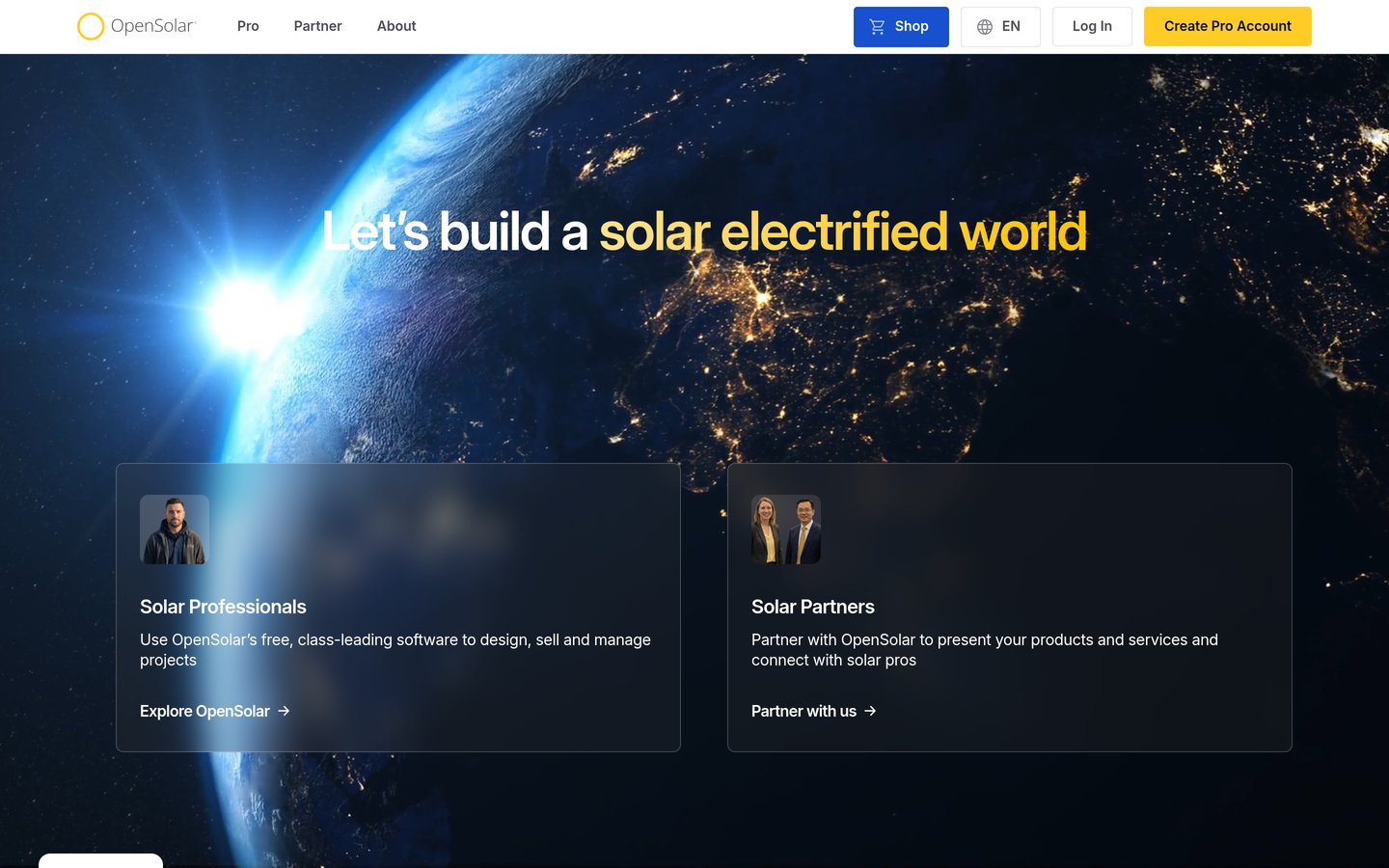
OpenSolar is a free design, proposal and sales platform for solar installers. The core platform covers 3D and 2D design, shading, web proposals with e-signature and payments, finance options and a hardware shop, with unlimited users and no licence fee.
The trade off is that free does not mean everything is free. Since April 2026, API access is billed by use and the Xero and QuickBooks connectors cost a monthly fee per company, at unpublished rates. It suits new or small installers that need designs and signed proposals with no licence fee.
What we like
Core platform is free with unlimited users
Design, proposals, e-sign and payments in one place
Rated 4.8 out of 5 on G2
Used in more than 160 countries, per the vendor
Watch out for
Only 3 G2 reviews, so the rating is thin evidence
API and accounting connectors now cost extra
Designs still need an engineering review, per reviewers
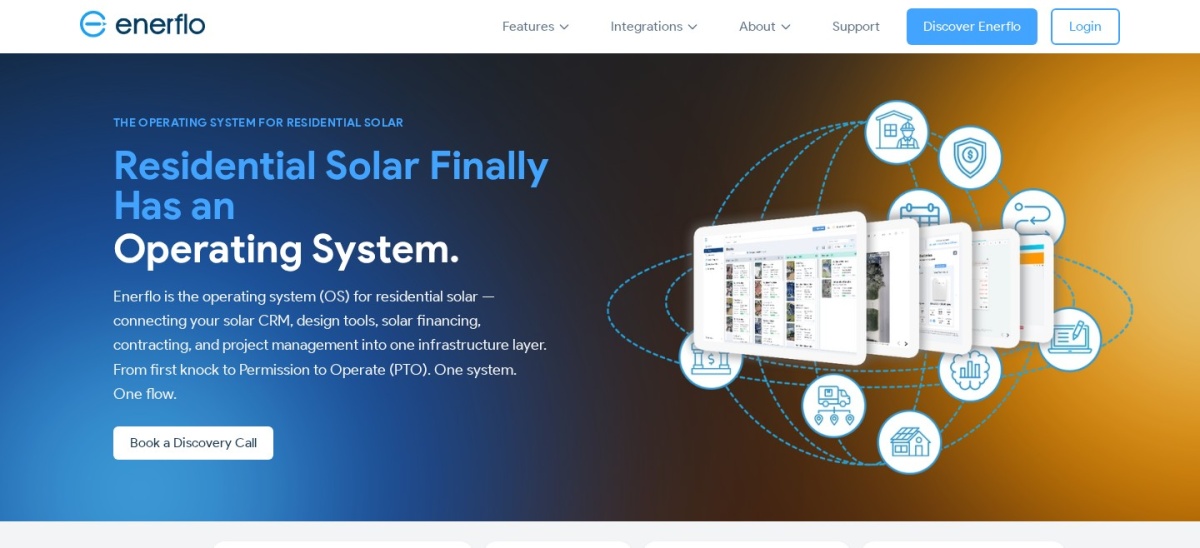
Enerflo is the operating system for residential solar, covering lead intake, design requests, proposals, financing, e-signature, project submission and install tracking in one flow. It connects CRM, design, financing and contracting so the handoff from sale to install stays in one system.
The trade off is price. Enerflo quotes after a discovery call, and G2 lists the subscription as starting at $1,750 a month, with a 12-month minimum and a one-time implementation fee. It suits residential dealers that want one system from first contact to permission to operate.
What we like
Full sales-to-install flow in one platform
Rated 5.0 out of 5 from 7 G2 reviews
100+ integrations, per the vendor
Install tracker with custom milestones
Watch out for
Entry price is high for small teams
Residential solar only
Pricing is quoted, not published on its site
Paid plans are quoted by volume, with a 12-month minimumVisit enerflo.com
05
SolarGraf
3.2/5on Capterra (15 reviews, checked Nov 2026)
Starts at$2,799/yr
Best for proposals plus permit packs
Cheapest paid planStarter, $2,799/yr
Starter limits2 users, 240 projects
Permit plan setsIncluded on every plan
OwnerEnphase Energy
solargraf.com
SolarGraf homepage, captured Nov 2026.
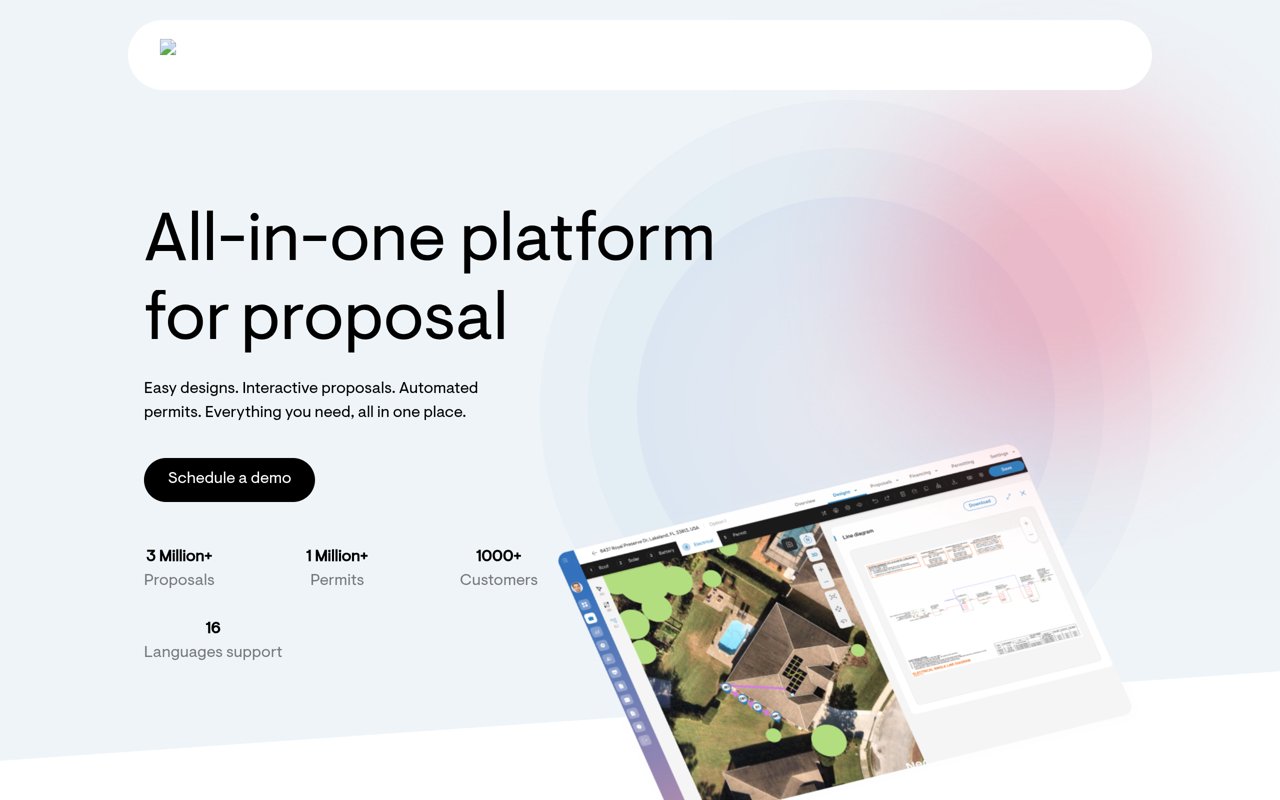
SolarGraf is Enphase's design, proposal, financing and permitting platform for residential installers. It covers scoping, quoting, finance options and e-signatures, and every plan includes permit-ready single-line diagrams and plan sets. Starter costs $2,799 a year for 2 users and 240 projects.
The trade off is the rating and the cap. Capterra users rate it 3.2 out of 5 from 15 reviews, the lowest in this list, and each bundle caps users and projects. It suits installers that want proposals and permit packs from one vendor and can live with the caps.
What we like
Permit plan sets included on every plan
Published annual pricing with project bundles
Financing options built into proposals
3 Million+ proposals, per the vendor
Watch out for
Lowest rating in this list at 3.2 out of 5
User and project caps on every bundle
Owned by Enphase, so hardware-neutral buyers should weigh that
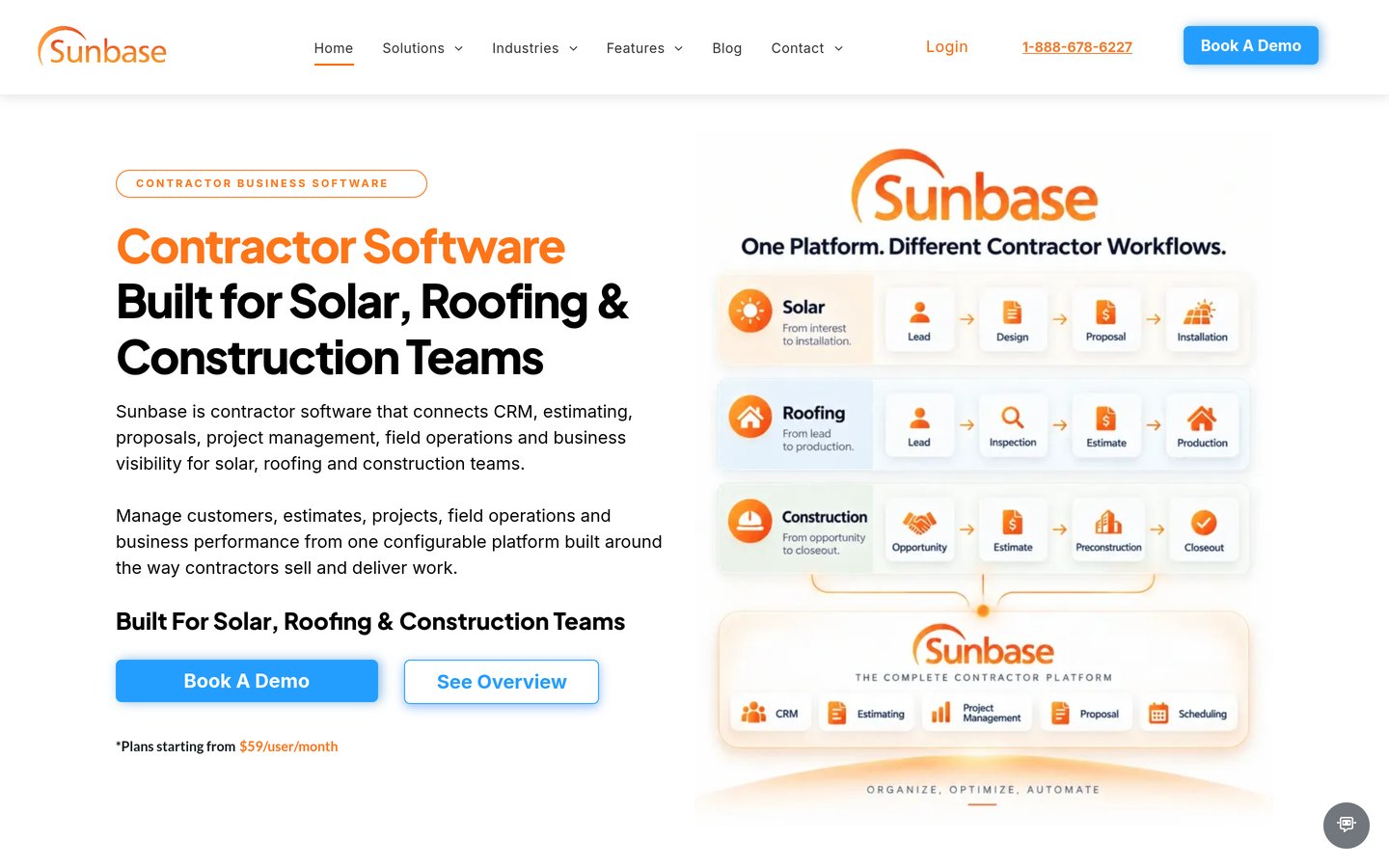
Sunbase is a modular solar business platform that covers CRM, PV design, proposals, project management, inventory and financials. Plans start at $59 per user per month, with modules switched on per team, and the vendor states no long-term contracts are required.
The trade off is that $59 is a starting point, not the bill. Final pricing is a custom quote by users, modules and onboarding, and the public rating is a single Capterra review at 4.0 out of 5. It suits sales-led installers that want one configurable system from lead to invoice.
What we like
Published starting price with no long-term contract
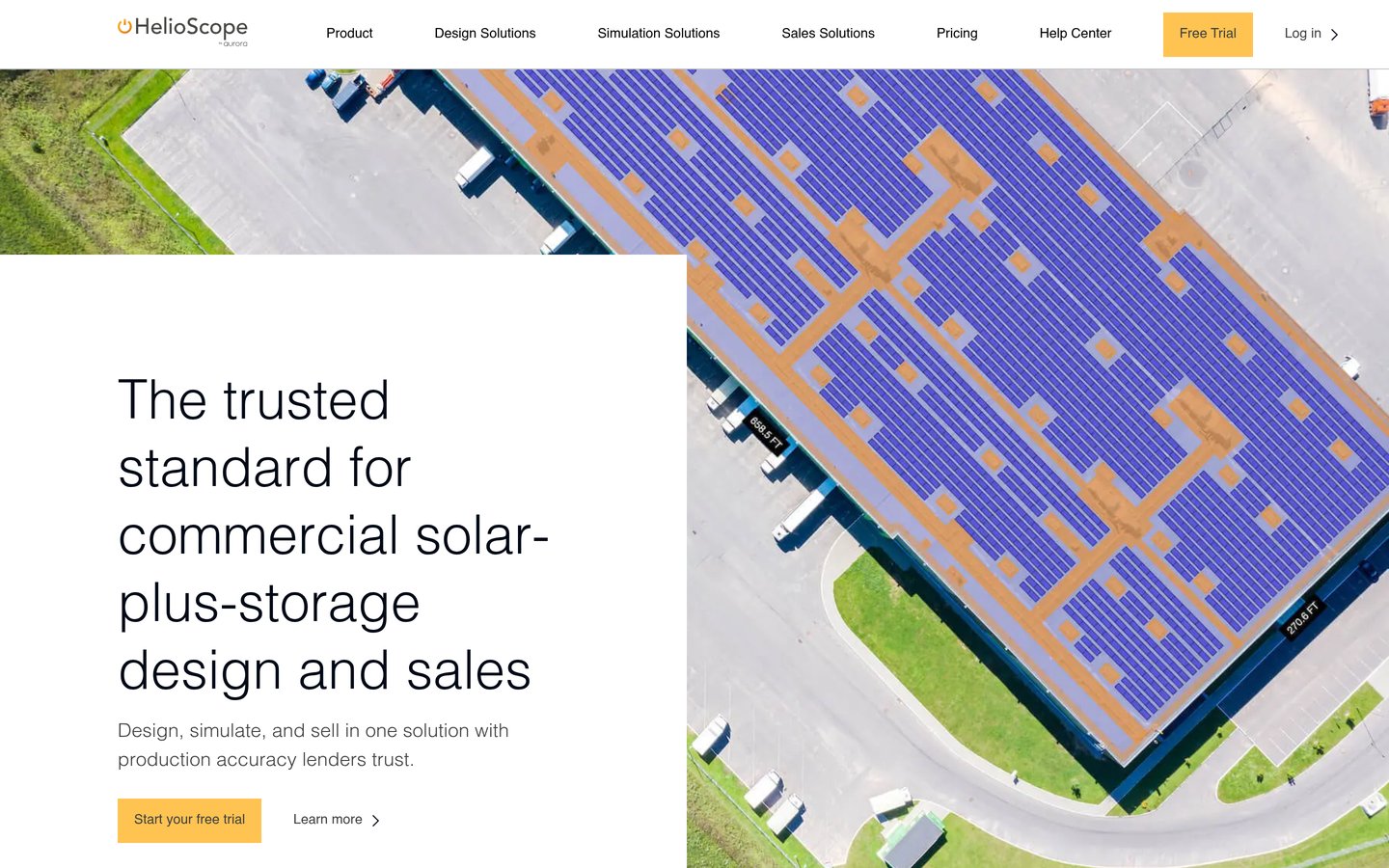
HelioScope is Aurora Solar's browser-based design tool for commercial and industrial solar. It handles layouts, shading analysis and production estimates for roofs, carports and ground mounts up to 30 MW DC, with a 50,000-item component library and single-line diagram generation.
The trade off is the cap and the roadmap. Basic costs $135 a month billed annually and allows 1.25 MW DC, and signups now run through Aurora, so ask about the product roadmap before committing. It suits EPCs that design commercial jobs in the browser.
What we like
Fast browser simulations with wiring-loss analysis
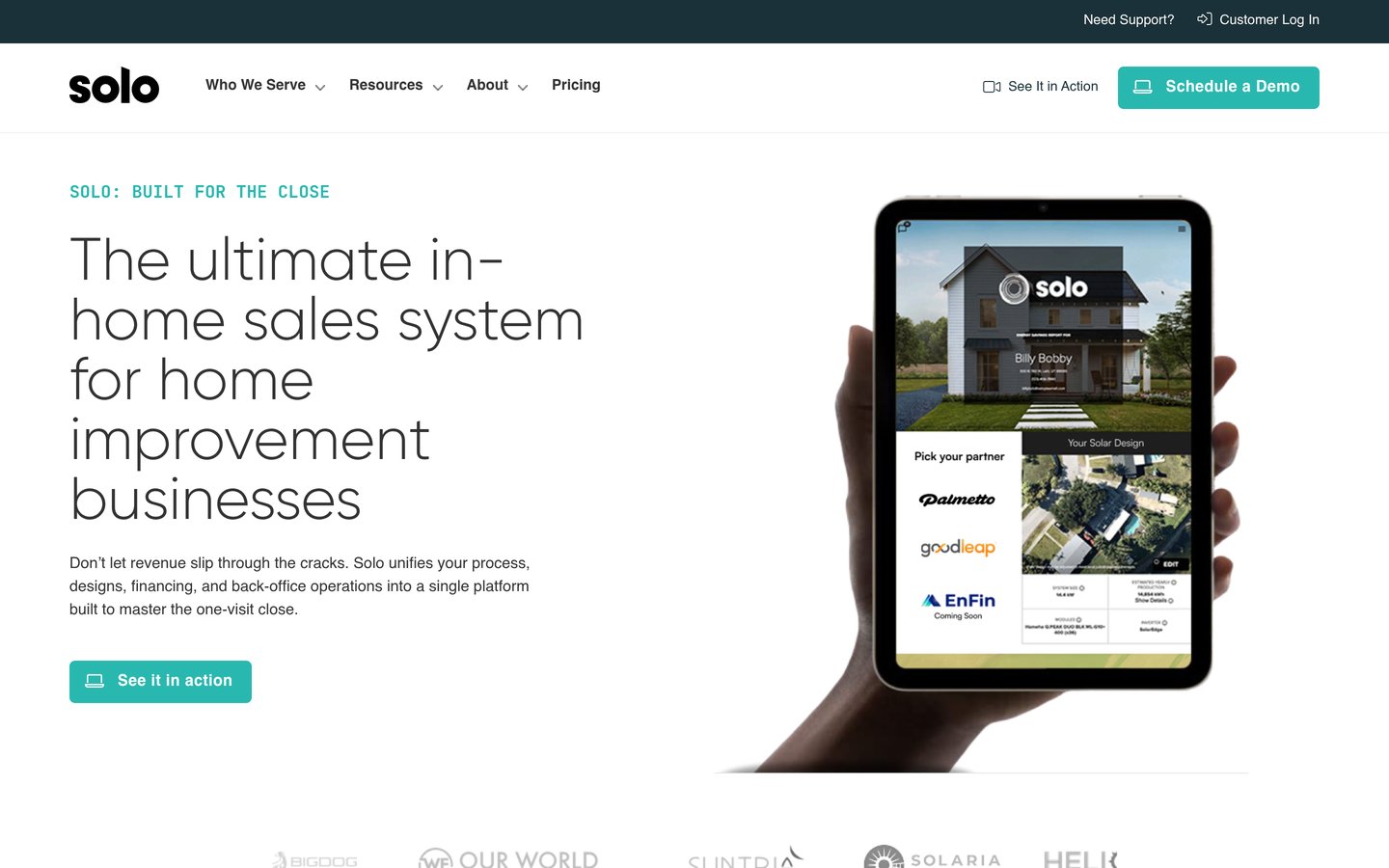
Solo is a sales platform for solar and roofing companies that unifies proposals, designs, financing and back-office work. It builds dynamic proposals with lender options, e-signatures and adders, and it includes Solo Analytics for tracking rep performance.
The trade off is that pricing is quoted. Solo publishes no prices and sells through demos, with unlimited users on every plan, so budget the discovery call before comparing it with per-seat tools. It suits sales teams that close in one visit and need financing inside the proposal.
What we like
Lenders and financing built into proposals
Rated 4.6 out of 5 from 12 G2 reviews
Unlimited users on every plan
Built for the one-visit close
Watch out for
No published pricing
Design is lighter than Aurora or HelioScope
Sales-first, so install tracking is thinner
Plans are quoted by usage, support level and scaleVisit gosolo.io
09
monday.com
4.7/5on G2 (17,969 reviews, checked Nov 2026)
Paid from$9/user/mo
Best general tracker beside a design tool
Cheapest paid planBasic, $9/user/mo, annual
Free planYes, up to 2 seats
Project viewsBoards, Gantt, timeline
Minimum seats3 on paid plans
monday.com
monday.com homepage, captured Nov 2026.
monday.com is a general work platform that solar teams use to track installs when they do not want solar-only software. Boards, timelines, Gantt charts, automations and dashboards cover scheduling, permits and crew tasks, and the free plan covers up to 2 seats.
The trade off is that nothing is solar-specific. There is no shading model, proposal builder or permit pack, so design still lives in another tool, and paid plans start at 3 seats. It suits small teams that want a flexible tracker beside a design tool.
Design tools win the sale. They model the roof, prove the yield and produce a proposal a homeowner and a lender can both read.
Operations tools win the install. They track permits, crews, inspections and handover, and they are where most jobs stall.
Buy one of each before buying two of either. Aurora plus an operations platform is the common stack, and OpenSolar plus monday.com is the low-cost version of the same idea.
How we chose
We started from the solar design and operations tools most often shortlisted by US residential installers, then kept nine with public pricing or a quoted starting point, live homepages and a numeric public rating.
Prices come from each vendor's pricing page, checked on 26 November 2026. Ratings come from G2, except SolarGraf and Sunbase, which use Capterra. Where a vendor shows a monthly price, the list shows the regular annual-billing rate.
We left out Scoop Solar because we could not verify a public rating for it, and Sighten because it merged into EverBright in 2022 and no longer publishes pricing. No vendor paid for a place, and we do not claim to have used these tools ourselves.
How to choose solar project management software
Start with the job you lose money on, then match the tool to that job.
Decide whether you need design, operations, or both. Residential installers usually need both: a design engine for proposals and an operations tool for permits and crews. Buying one lane twice does not fix the other.
Model a year of your real volume. Per-user seats punish growing teams, per-project fees punish high volume, and module quotes hide the real bill. Price the ladder below on your own project count before signing.
Check the rating base, not just the stars. Several tools here have fewer than 20 public reviews. Treat a 5.0 from 7 reviews as weaker evidence than a 4.7 from 17,969.
Plan the handover before the first install. Agree who books inspections and who talks to the homeowner at each milestone. Our guide on handing over a WordPress site to a client covers the same handover discipline for client work.
FAQ
What is the best solar project management software?
Aurora Solar is the best pick for most installers. Its 3D design, LIDAR-assisted modelling and bankable shade reports are rated 4.7 out of 5 on G2 from 121 reviews, and it covers proposals and financing in one place.
Is there free solar project management software?
Yes. OpenSolar's core platform is free, with unlimited users, 3D design, proposals, e-signatures and payments. API access and accounting connectors cost extra since April 2026, so check those fees before relying on the free tier.
How much does solar project management software cost?
Published prices in this list run from $4 per Pylon project to $2,799 a year for SolarGraf Starter. Aurora Solar starts at $135 per user per month billed annually, while Enerflo and Solo are quote-only.
Do I need separate design and operations tools?
Most installers do. Design tools win the sale with accurate models and proposals, while operations tools track permits, crews and inspections. All-in-one platforms such as Enerflo and Sunbase cover both, with trade-offs in depth.
What is the best solar software for commercial projects?
HelioScope is the best fit here for commercial design, with browser-based layouts, shading and production estimates for projects up to 30 MW DC. It is rated 4.5 out of 5 on G2 from 19 reviews.
Can I use monday.com for solar projects?
Yes, as a tracker beside a design tool. monday.com covers scheduling, permits and crew tasks with boards and Gantt charts, and it is rated 4.7 out of 5 from 17,969 G2 reviews. It has no solar design, proposals or permit packs.
SaaS SEO and WordPress specialist with about 8 years of experience. Rakib compares WordPress plugins, themes, hosting and software using public pricing, documentation and user reviews. See how we rank.