Best Sustainability Software in 2026: 8 Tools Compared
WLWPLegible EditorsLast verified 24 Nov 2026How we rank8 min read
★ Short answer
Watershed is the best sustainability software for large enterprises running full climate programs. Persefoni is the best free start, with a genuinely free carbon accounting tier. Pick Salesforce Net Zero Cloud if your ESG data already lives in Salesforce.
How we make this list: we compare pricing pages, product documentation and public user reviews, then re-check every price before each update. No product paid for a place. Disclosure.
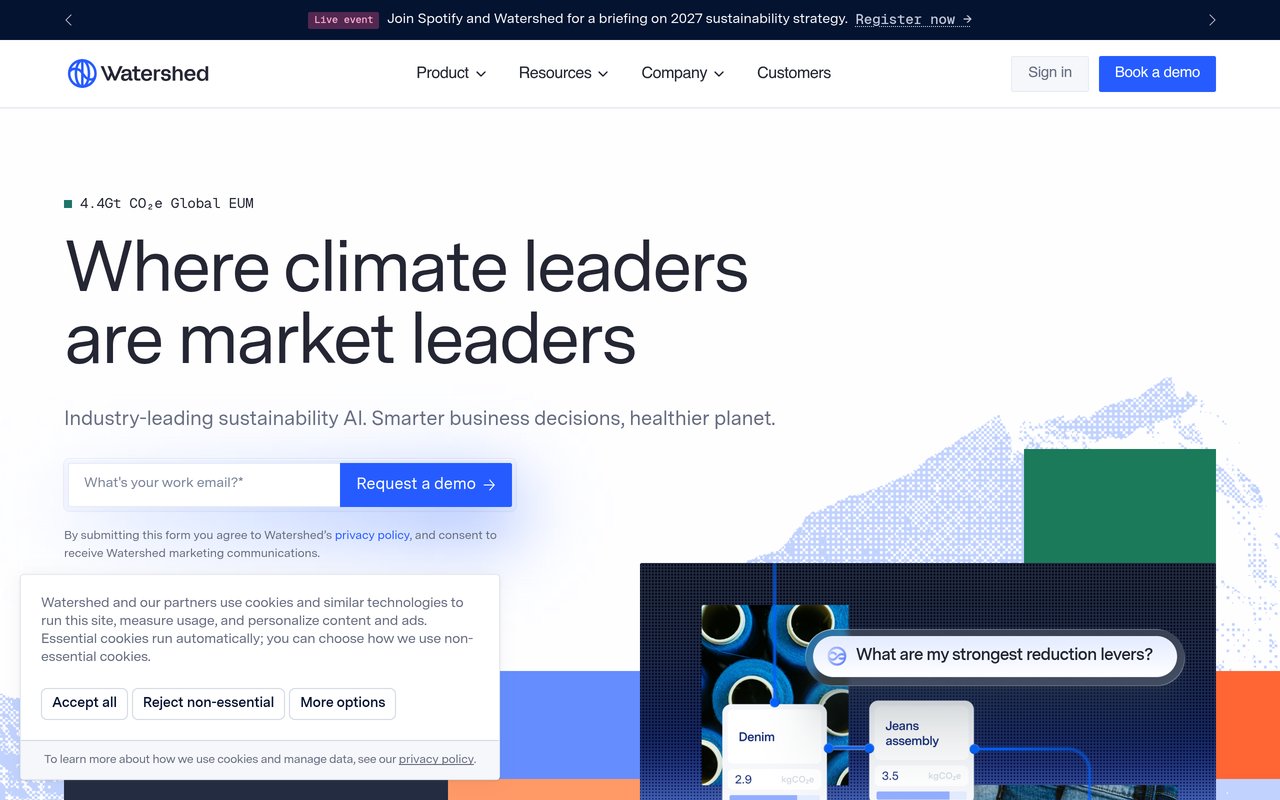
Watershed leads for large enterprises running full climate programs, but pricing is custom and typically five or six figures a year.
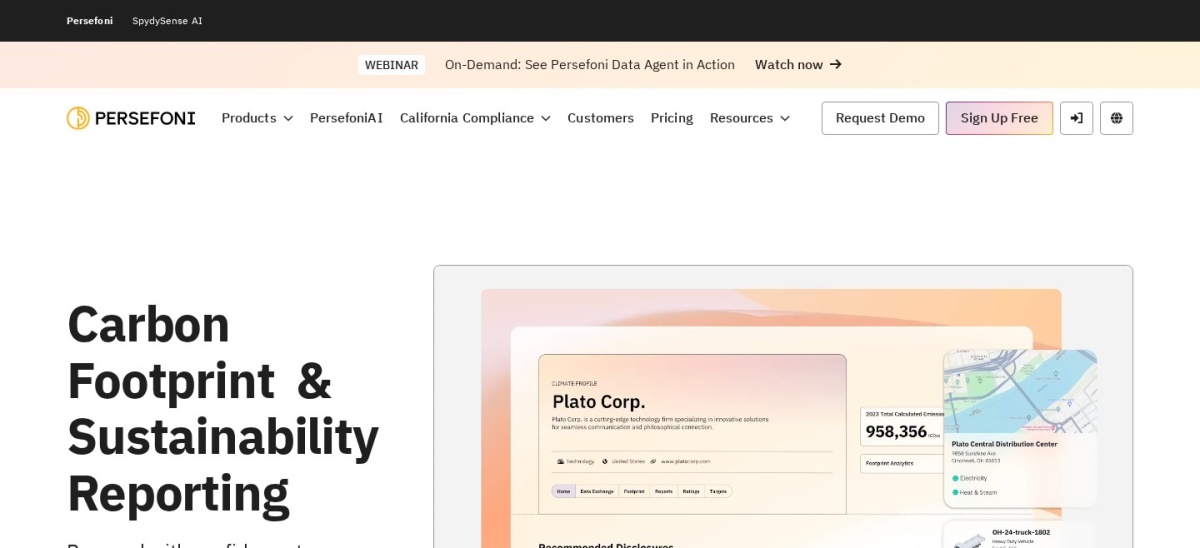
Persefoni offers a genuinely free Pro tier, the best way to start measuring emissions at no cost.
Salesforce Net Zero Cloud is the only tool here with published pricing, from $48,000 per organisation per year.
Sweep holds the highest G2 rating in this list at 4.9, built for collaborative value-chain data.
Almost nobody else publishes prices, so treat every figure as a starting point and get written quotes before budgeting.
What sustainability software should cover
Sustainability software helps companies measure greenhouse gas emissions, manage ESG data and file disclosures. It ranges from carbon accounting engines to full ESG reporting platforms.
The market splits in two. Carbon specialists such as Watershed, Persefoni and Sweep focus on measuring emissions, while ESG platforms such as Workiva, Novata and IBM Envizi focus on managing and reporting data.
Pricing transparency is the worst of any category in this guide: almost no vendor publishes prices. Our guide on analytics software covers the wider reporting market.
The market is consolidating fast. Normative is merging with Greenly, Plan A was acquired by Diginex, and Emitwise was absorbed by Green Project Technologies.
Watershed is the reference platform for large corporate climate programs. It covers Scope 1, 2 and all 15 Scope 3 categories, drafts disclosures with AI assistance and acts on reductions through a marketplace of vetted carbon projects.
The trade off is scale and price. Watershed targets large enterprises with in-house sustainability teams, and pricing is custom-quoted, with third-party estimates in five or six figures a year. It suits large companies facing mandatory disclosure.
What we like
Leader in Forrester Wave and Verdantix Green Quadrant
Persefoni is a carbon management platform that calls itself the ERP of carbon, and the positioning is deliberate: every calculation is built to be audit-ready, with the same discipline as financial reporting. The free Pro tier lets companies build a real carbon footprint without paying.
The trade off is that the paid Advanced tier is custom-quoted, so costs only appear after a sales conversation. It suits firms that need their carbon numbers to survive the same assurance process as their financials.
4.4/5on G2 (Not published reviews, checked Nov 2026)
Starts at$48,000/org/yr
Best for Salesforce customers
Salesforce nativeYes
Scope 3 supplier dataYes
Report buildersCSRD, SASB, GRI, CDP
Paid planStarter, $48,000/org/yr
salesforce.com
Salesforce Net Zero Cloud homepage, captured Nov 2026.
Salesforce Net Zero Cloud is the sustainability offering built on the Salesforce platform. It automates carbon inventory calculations using preloaded emissions factors from the EPA, IEA and IPCC, manages Scope 3 supplier data and offers framework-specific report builders.
The trade off is the entry price. Starter costs $48,000 per organisation per year, including 3 CRM licences, and Growth costs $210,000. It suits companies already running Salesforce.
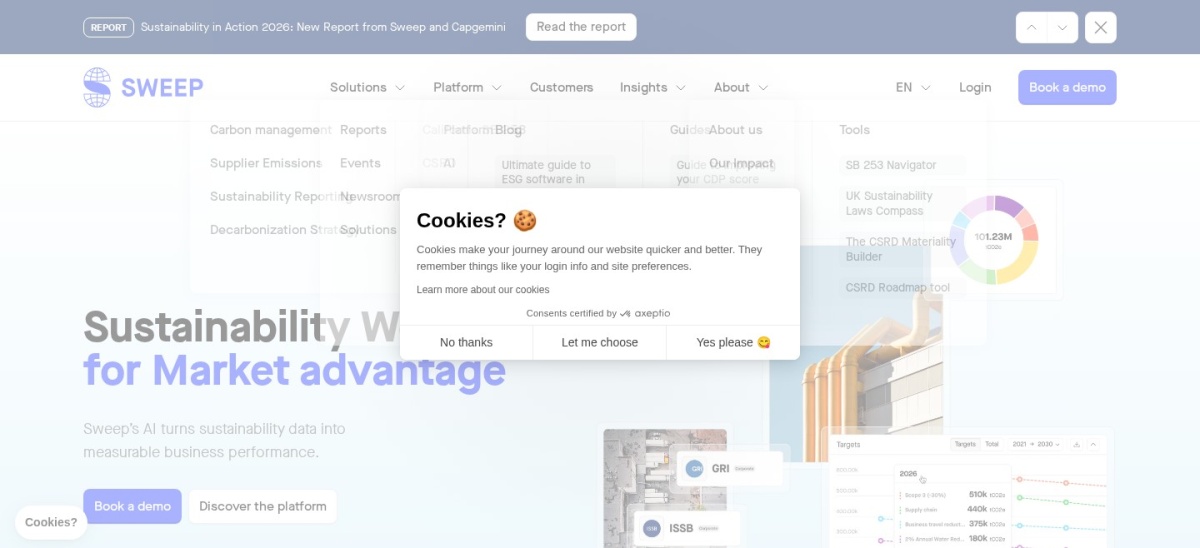
Sweep is built around the idea that carbon data should be collaborative: employees, subsidiaries and suppliers each contribute data to a shared platform. The mapping tool visualises the full emissions tree so companies see where data is missing.
The trade off is pricing. Sweep is quote-based with no free trial, and its European roots mean US regulatory content trails slightly. It suits companies with complex value chains and many contributors.
What we like
Highest G2 rating in this list
Network approach for suppliers
B Corp certified
Watch out for
Quote-based pricing
No free trial
Pricing is custom, based on entities and suppliersVisit sweep.net
05
Greenly
4.7/5on G2 (27 reviews, checked Nov 2026)
Starts at$1,950/user/yr
Best for mid-market fast starts
Guided onboardingYes
Product footprintsLife-cycle assessments
CSRD supportYes
Paid planFrom $1,950/user/yr
greenly.earth
Greenly homepage, captured Nov 2026.
Greenly is a carbon accounting platform that built its name making carbon accounting approachable for companies without a sustainability department. The workflow walks you through data collection with plain-language guidance, and it extends into product life-cycle assessments.
The trade off is that the $1,950 per user per year figure is a starting point reported in comparisons, so final pricing depends on scope. It suits mid-market companies, especially in Europe.
What we like
Most approachable serious option for smaller firms
Guided assessment, fast setup
Merging with Normative for deeper science
Watch out for
Starting price is a reported figure, not a list price
IBM Envizi is a full ESG data platform, acquired by IBM in 2022. The suite is modular: emissions management across Scopes 1 to 3, ESG reporting frameworks, supply chain intelligence, financed emissions and utility bill analytics.
The trade off is opacity. Pricing is based on the data volume you manage and is scoped during the sales process. It suits large organisations consolidating sustainability data from hundreds of sources.
Workiva is a reporting platform that comes at sustainability from the reporting side. Thousands of companies already use it for SEC filings, and its ESG solution lets teams work in the same audit-ready environment, with connected data, controlled permissions and XBRL tagging.
The trade off is focus. Workiva is where you assemble and file the disclosure, not necessarily where you do the deepest emissions math. It suits public companies worried about an ESG restatement.
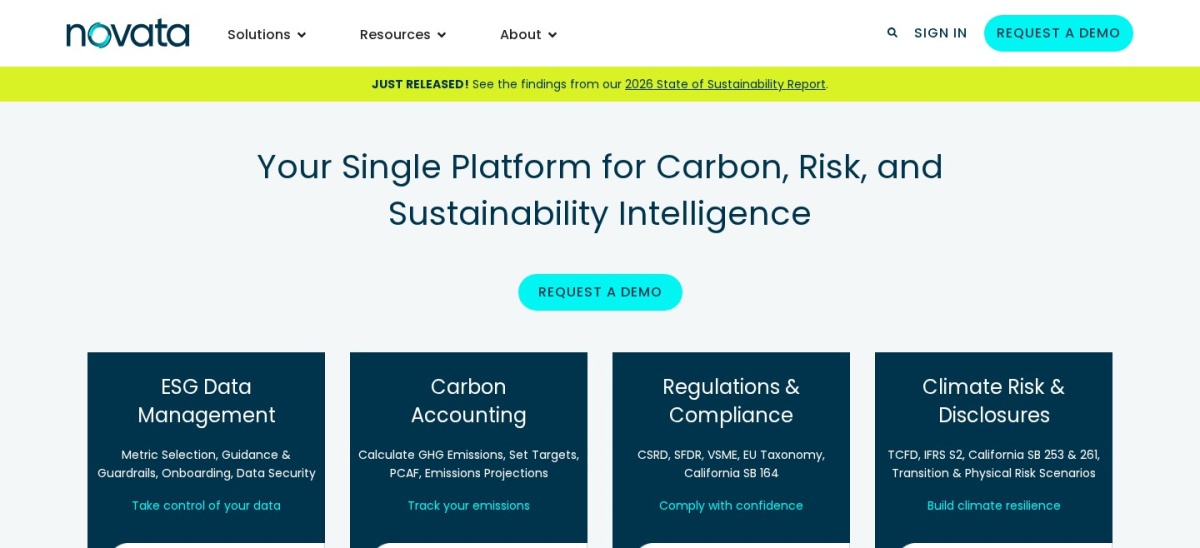
Novata is an ESG platform created by a consortium including the Ford Foundation and S&P Global to solve private equity ESG data chaos. It guides users to the metrics that matter, streamlines collection across portfolio companies and produces LP-ready reporting and benchmarks.
The trade off is focus. Novata serves more than 5,000 companies across 20-plus countries, but operating companies outside private markets get less value. It suits PE firms managing ESG across dozens of portfolio companies.
What we like
Built specifically for private equity
Guided metric selection
Advisory practice alongside the software
Watch out for
Private-markets focus means less for public disclosure
Carbon accounting or ESG reporting: which job first
If your main job is measuring emissions accurately, start with a carbon accounting specialist such as Watershed, Persefoni or Sweep.
If your main job is collecting ESG data across entities and filing disclosures, start with a reporting platform such as Workiva or Novata.
Many large companies end up with both, using a carbon engine for the math and a reporting platform as the system of record.
How we chose
We started from the established sustainability software that buyers shortlist in 2026, then kept those with a verifiable rating on G2 or Capterra and a published price or a clear quote-based model.
Prices come from each vendor's pricing page as reported in comparisons checked on 24 November 2026, with the top three checked against vendor pricing pages. Ratings and review counts come from G2 or Capterra on the same day. Where a vendor shows a sale, the list shows the regular price.
We left out tools with no verifiable public rating. No vendor paid for a place, and we do not claim hands-on testing for this list.
How to choose the best sustainability software
Start with the job: measure emissions, file disclosures, or both.
Name the job first. Measuring a footprint, preparing a CSRD filing and managing supplier data are different jobs that need different tools.
List every framework you must report under. EU firms need CSRD depth, US firms should check California climate laws, and investors may ask for CDP or TCFD.
Ask about audit readiness. Request a sample audit trail from source data to reported figure, and ask which methods are independently verified.
Budget for data work, not just licences. Collection, cleanup and staffing often cost more than the licence, so ask what the first year really costs.
FAQ
What is the best sustainability software?
Watershed is the best pick for large enterprises running full climate programs, with the strongest analyst recognition. Persefoni is the best starting point for smaller firms because its Pro tier is free.
How much does sustainability software cost?
Most vendors use quote-based enterprise pricing, with third-party estimates in the tens to hundreds of thousands a year. Salesforce Net Zero Cloud is the exception, publishing Starter at $48,000 per organisation per year.
What are Scope 1, 2 and 3 emissions?
Scope 1 covers direct emissions from sources you own, Scope 2 covers purchased electricity and heat, and Scope 3 covers everything else in your value chain. Scope 3 is usually the largest share and the hardest to measure.
Can small businesses use sustainability software?
Most tools here target mid-size and large companies. Small businesses facing a first disclosure request should look at lighter carbon tools such as Greenly or Persefoni's free tier, or work with a consultant.
Do I need carbon accounting or ESG reporting software?
Start with carbon accounting if measuring emissions is the job, and with ESG reporting if filing disclosures is the job. Many large companies end up buying both.
Is there free sustainability software?
Persefoni offers a free Pro tier for Scope 1, 2 and 3 footprints, the only free tier in this list. Other vendors offer demos rather than free plans.