OutSystems is the best platform for web application development for large organizations that need governed, mission-critical apps. Mendix is the closest enterprise alternative, while Retool suits developers building internal tools and Bubble suits founders shipping a product without code.
How we make this list: we compare pricing pages, product documentation and public user reviews, then re-check every price before each update. No product paid for a place. Disclosure.
OutSystems and Mendix lead for enterprise teams, but both sell paid plans by quote.
Power Apps Premium costs $20 per user per month and fits organizations already on Microsoft 365.
Retool is the cheapest credible start for developers, with a free plan for up to 5 users and Team at $10 per builder per month.
Bubble lets founders ship a real web app from $32 a month, with a free plan for building.
Glide has the highest rating here, but it builds web apps from spreadsheets, not native apps.
What to look for in a web app development platform
Web application development platforms split into two markets. Enterprise low-code serves IT departments building governed, long-lived systems, while no-code builders serve founders and small teams shipping a product fast.
The wrong lane is the expensive mistake. An enterprise platform bought for a prototype drowns a small team in sales calls and quotes, while a weekend builder bought for a bank hits a wall in production.
Start with who builds and who uses the app. Our guide to project management software covers the planning tools that usually sit beside a new app in a team's stack, and the same audience question applies here.
Check the pricing model before the feature list. Per-user pricing, workload units and quote-only enterprise plans change the real cost far more than the headline monthly figure.
The 9 best platforms for web application development
01
OutSystems
4.5/5on G2 (1,810 reviews, checked Nov 2026)
PricingCustom/yr
Best for enterprise app development
Free planPersonal Edition
DeploymentCloud or on-premises
AI buildingMentor and Agent Workbench
Paid planBy quote
outsystems.com
OutSystems homepage, captured Nov 2026.
OutSystems is the enterprise low-code platform for building customer portals, core system extensions and mobile apps without hand-coding every screen. The free Personal Edition supports up to 100 users for learning and evaluation, and the platform adds AI-assisted development with governance, deployment pipelines and lifecycle management.
The trade off is price. Paid plans are sold by quote based on application size, users and add-ons, and production pricing starts well above the budgets of small teams. It suits large organizations that need governed, long-lived applications and can fund an enterprise platform.
What we like
Most proven enterprise low-code platform in this list
Full lifecycle, governance and deployment pipelines
Free Personal Edition for learning and evaluation
Watch out for
No published price, everything is by quote
Overkill and overpriced for small teams and prototypes
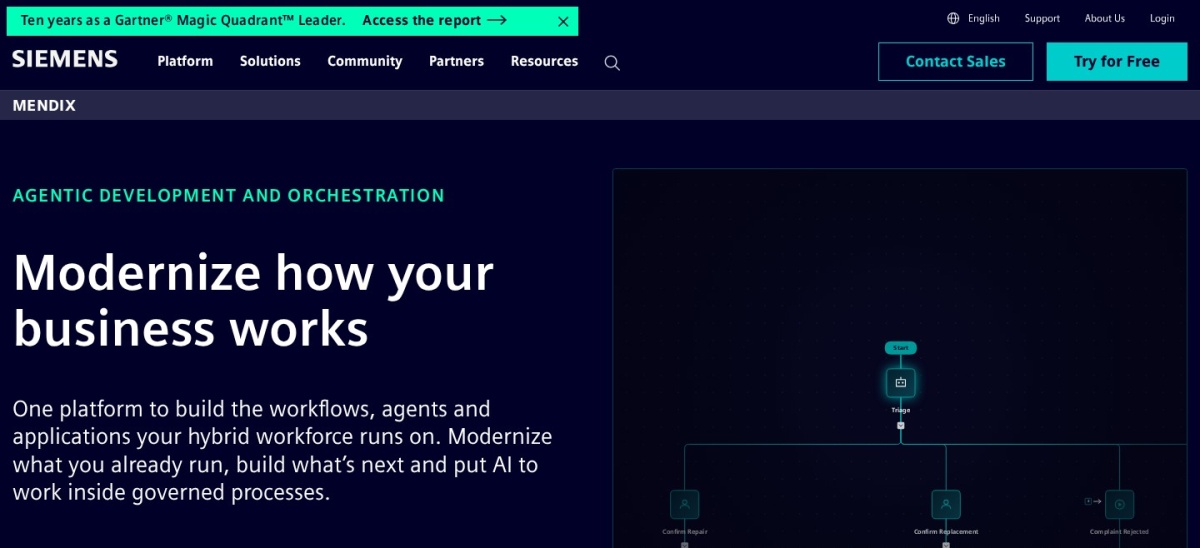
Mendix is the low-code platform from Siemens where business analysts and professional developers build in the same environment. Business users shape visual models in Studio while developers extend the app in Studio Pro with code, widgets and database modelling, and the free tier lets teams evaluate the platform seriously.
The trade off is pricing transparency. Larger plans are by quote, so the final cost depends on users, apps and infrastructure, and the total only becomes clear in a sales conversation. It suits large organizations, especially in manufacturing, that need governed collaboration across many teams.
What we like
Strongest business and IT collaboration model here
Two-tier building keeps both sides productive
Runs on Mendix Cloud, SAP BTP or your own infrastructure
Watch out for
Enterprise pricing is by quote, with no public figure
Smaller review base than OutSystems or Power Apps
Paid plans add production apps and enterprise governanceVisit mendix.com
03
Microsoft Power Apps
4.3/5on G2 (570 reviews, checked Nov 2026)
Paid from$20/user/mo
Best for Microsoft 365 organizations
Free planDeveloper Plan
Premium price$20 per user per month
Data platformDataverse
ConnectorsPremium and on-premises
powerapps.microsoft.com
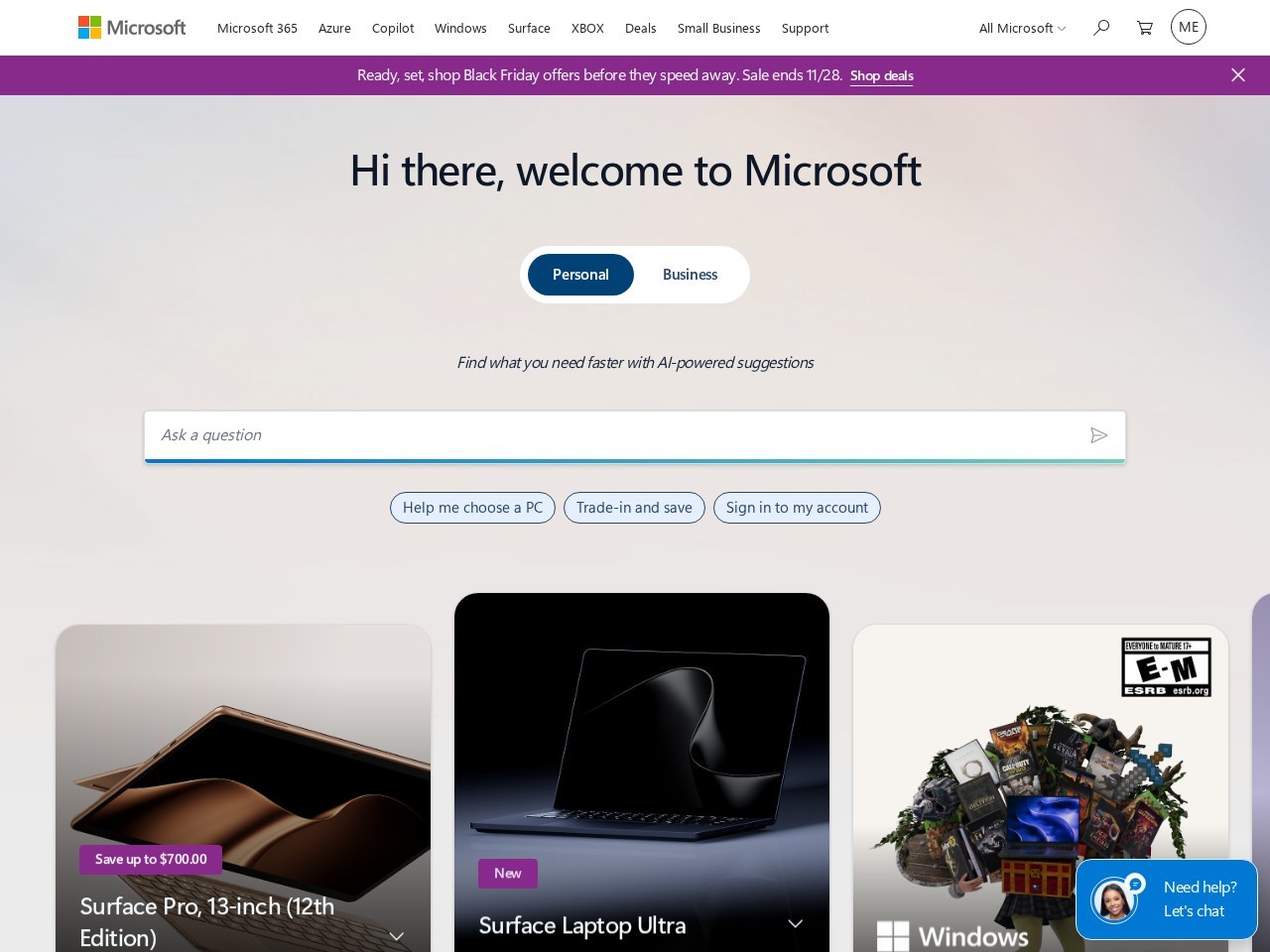
Microsoft Power Apps homepage, captured Nov 2026.
Microsoft Power Apps is the low-code builder inside the Microsoft Power Platform for teams that already run Microsoft 365 and Azure. The free Developer Plan lets one person build and test apps, while Premium at $20 per user per month adds unlimited apps, premium connectors, Dataverse and on-premises data access.
The trade off is licensing cost at scale. Twenty dollars per user per month adds up fast across a large workforce, and the cheaper $12 rate needs at least 2,000 seats. It suits organizations already standardized on Microsoft 365 where the apps live beside Teams, SharePoint and Outlook.
What we like
Deep integration with Microsoft 365, Teams and SharePoint
Published per-user pricing with a free Developer Plan
Premium connectors and Dataverse included
Watch out for
Per-user cost climbs fast across a large workforce
Weak fit for teams outside the Microsoft ecosystem
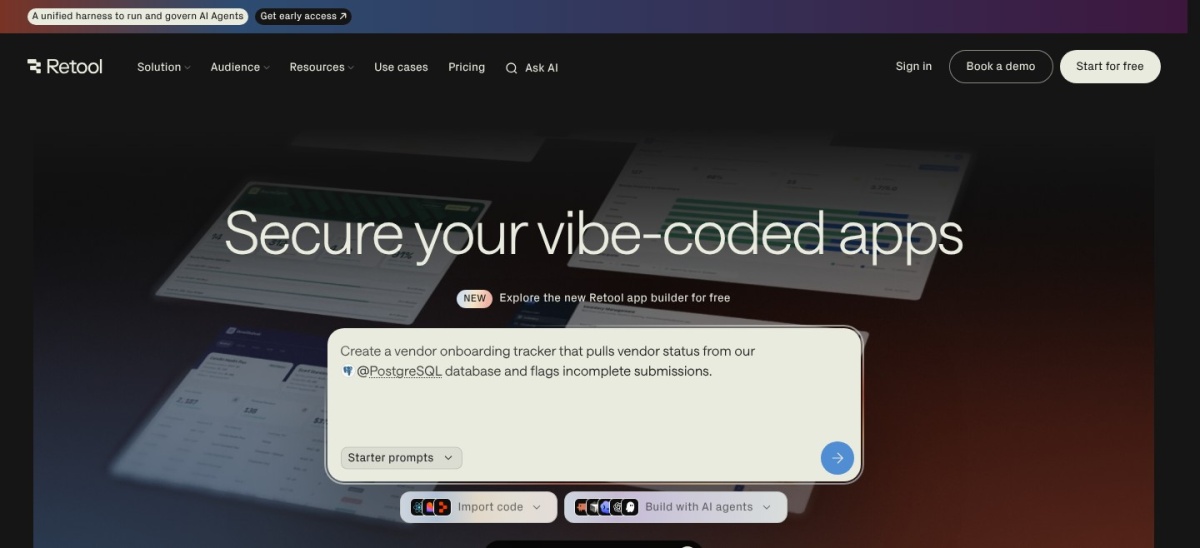
Retool is the developer-first low-code builder for internal tools, dashboards and admin panels. You drag components onto a canvas, wire them to any database or API, and drop into JavaScript or SQL where visual building stops. The free plan covers up to 5 users, and Team starts at $10 per builder per month.
The trade off is the seat bill. Internal users who only run apps cost $5 each per month on Team, so a large audience pushes the monthly total up quickly. It suits engineering teams that need internal tools fast and already work with databases and APIs every day.
What we like
Highest G2 rating among the developer tools here
Connects to almost any database or API
Free plan covers a small team of 5 users
Watch out for
End users are billed too, which adds up at scale
Built for internal tools, not customer-facing products
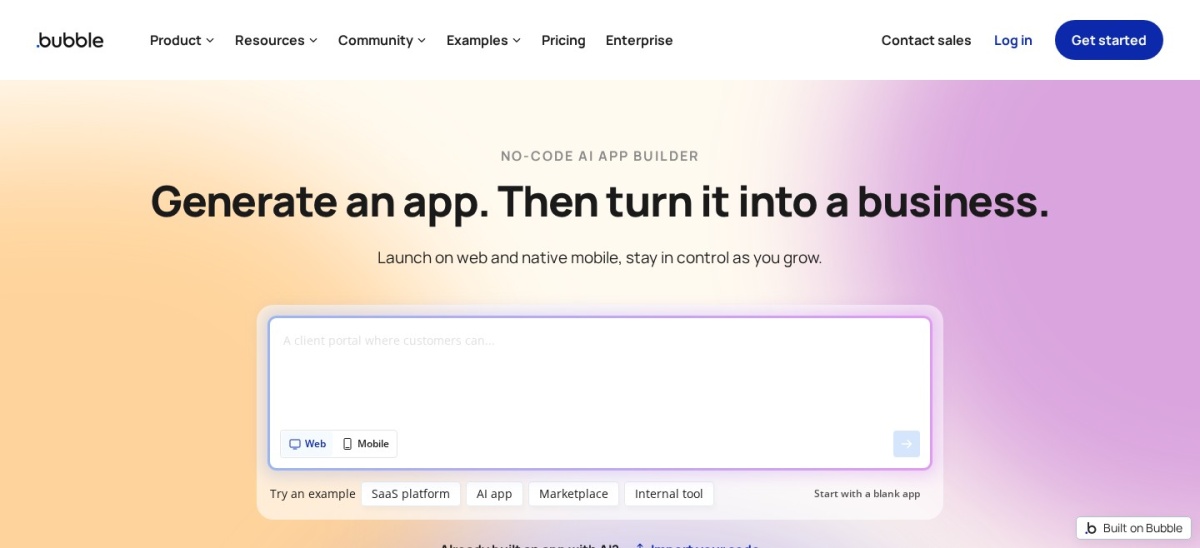
Bubble is the no-code platform that lets founders build complete web applications with databases, user accounts, payments and API integrations, all visual. The free plan is for building and learning, and Starter at $32 a month billed yearly adds a custom domain, more capacity and no Bubble branding.
The trade off is workload pricing. Heavy apps can burn through the 175,000 monthly workload units on Starter, and costs climb with usage and team size. It suits founders and small teams shipping a real product without hiring developers.
What we like
Most complete no-code builder for real web products
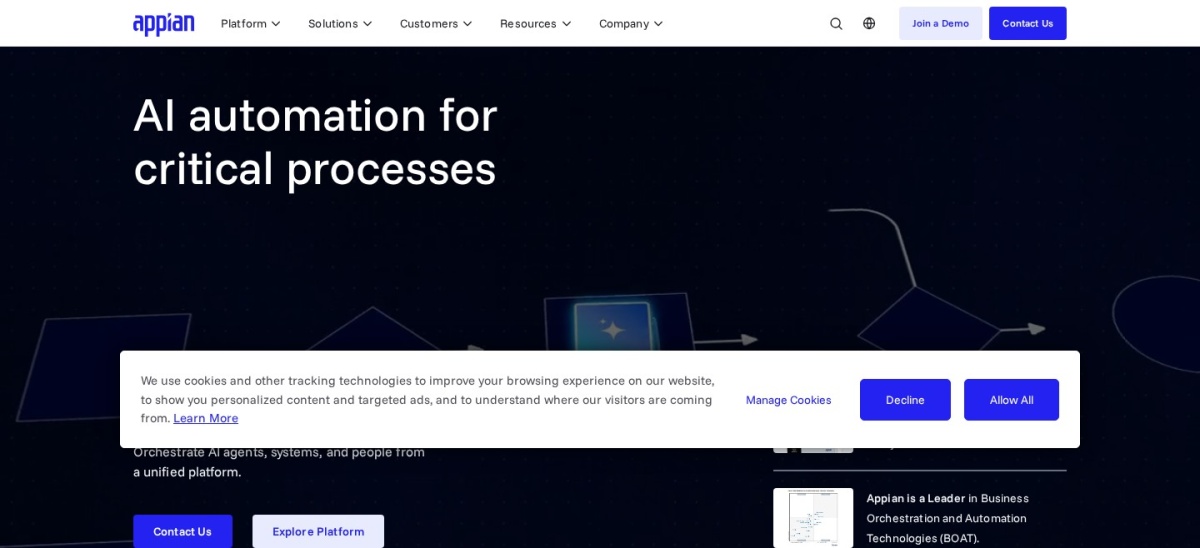
Appian is a low-code platform built around process automation, case management and decision rules for large organizations. Its Data Fabric unifies data from many systems without moving it, and the platform covers workflow, AI and document handling in one governed environment.
The trade off is cost and opacity. Appian publishes no dollar prices, selling per user, per month, per app by quote, and reviewers repeatedly call the licensing expensive for smaller teams. It suits enterprises and government teams automating complex, regulated processes.
What we like
Strongest process automation and case management here
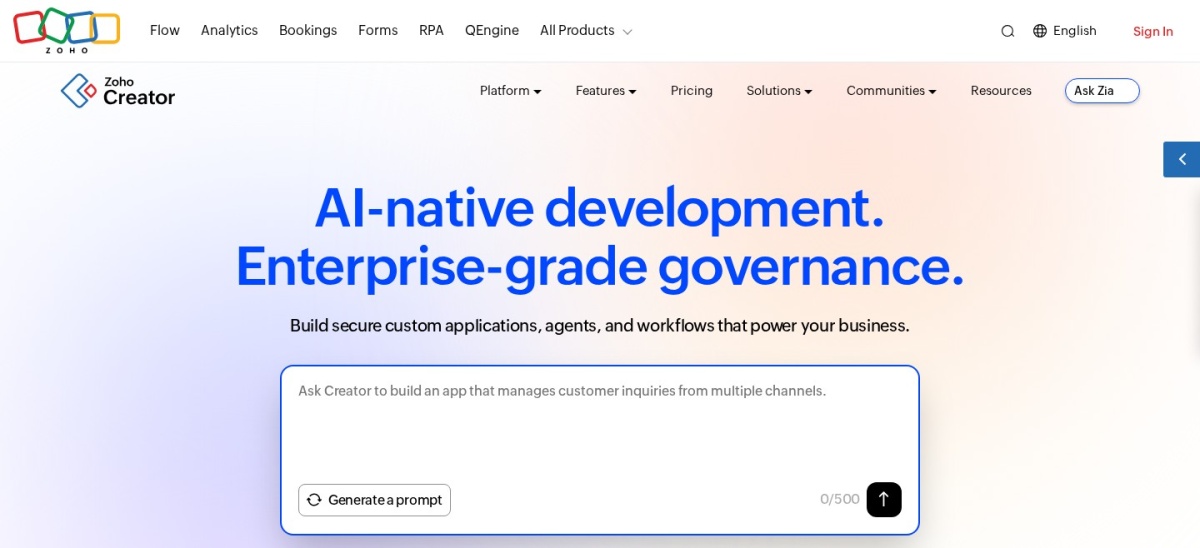
Zoho Creator is a low-code app builder for small and mid-sized businesses that already use Zoho tools. The free plan covers one user and one app, and Standard at $8 per user per month adds more apps, custom schedules and integrations with Zoho CRM, Books and the rest of the suite.
The trade off is depth. The interface and scripting take time to learn, and the cheapest plan covers only one application. It suits small businesses that want cheap custom apps inside the Zoho ecosystem.
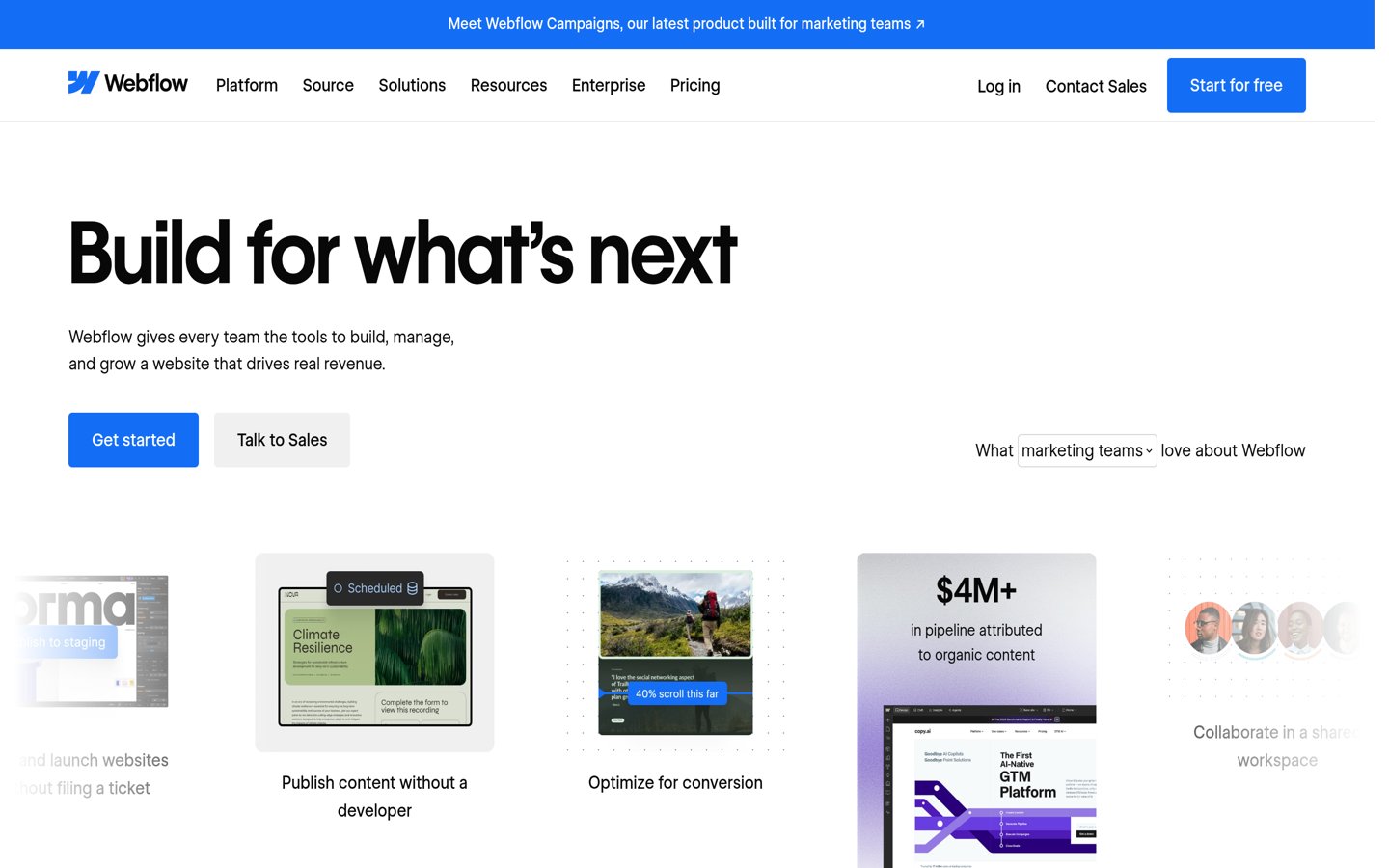
Webflow is a visual web design platform that turns a design canvas into a hosted website with a content management system. The free Starter plan covers a small site on a Webflow subdomain, and Basic at $15 a month billed yearly adds a custom domain, 300 static pages and 10 GB of bandwidth.
The trade off is that Basic has no CMS. Content collections, localization and e-commerce need Premium or higher, and per-site pricing adds up across many sites. It suits design-led teams building marketing sites and web apps with full control over layout.
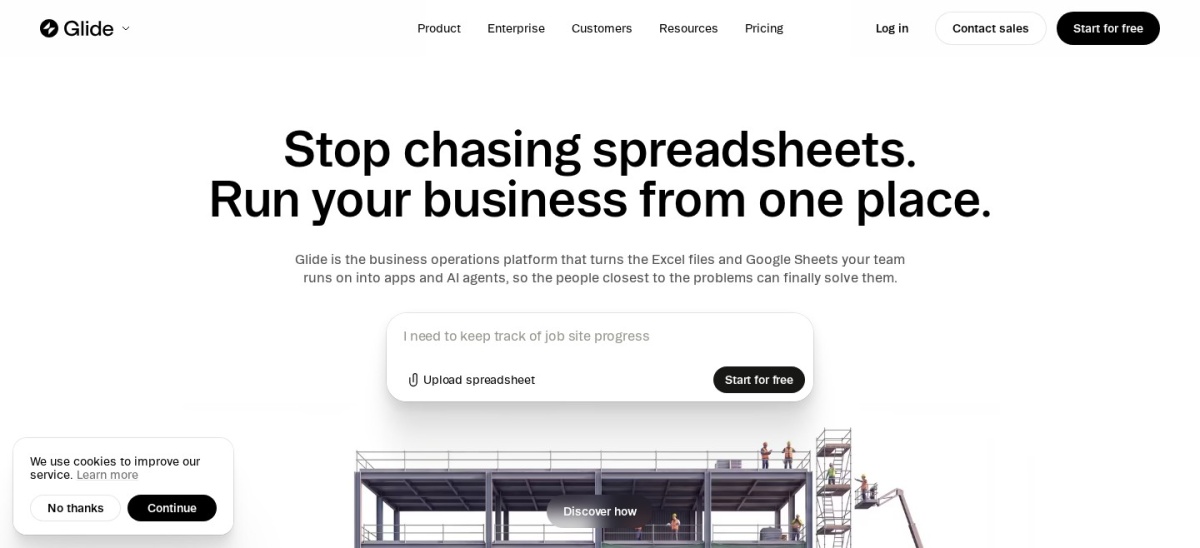
Glide is a no-code builder that turns a spreadsheet or database into a working business app in hours. You connect Google Sheets, Excel or Airtable, and Glide builds the interface, workflows and user access around it. The free plan is for building, and Explorer at $19 a month publishes one app.
The trade off is the output. Glide builds progressive web apps, not native apps, so you cannot publish to the Apple App Store or Google Play. It suits internal tools, portals and dashboards where a link is enough and the data already lives in a spreadsheet.
Three platforms in this list publish no dollar price. OutSystems, Mendix and Appian all sell by quote, because the price depends on application size, user count and add-ons.
The $36,300-a-year figure for OutSystems that appears on directory sites is not on the vendor's current pricing page, which asks buyers to contact sales for a custom quote. This list shows Custom rather than repeating a stale figure.
Budget for implementation as well as the licence. G2 reviewers report about five months to implement Appian, so the first-year cost is far more than the subscription alone.
How we chose
We started from the low-code and no-code platforms with the largest review bases on G2 and Capterra, then kept the nine that cover enterprise, developer and founder use cases.
Prices come from each vendor's pricing page, checked on 26 November 2026. Ratings and review counts come from G2 and Capterra on the same day. Where a vendor sells by quote, the list shows Custom instead of a figure from a directory.
We left out platforms with no verifiable rating on G2, Capterra or Trustpilot. No vendor paid for a place, and we do not claim hands-on testing for this list.
How to choose a platform for web application development
Start with who will build the app, then match the platform to that team.
Decide who builds it. Developers belong with Retool or Power Apps, business teams with Mendix or Zoho Creator, and founders with Bubble or Glide.
Check the pricing model. Per-user seats, workload units and quote-only enterprise plans change the real bill. Add up the cost for your actual user count.
Confirm the output type. Glide builds web apps, not native apps, and Webflow Basic has no CMS. Make sure the platform ships what you need to publish.
Run a small pilot first. Use the free plan to build one real workflow end to end before paying. A pilot shows the learning curve and the real limits.
FAQ
What is the best platform for web application development?
OutSystems is the best pick for large organizations building governed, mission-critical web applications, with the largest enterprise review base in this list. Mendix is the closest alternative for teams where business and IT build together.
What is the cheapest platform for building a web app?
Zoho Creator is the cheapest paid option here at $8 per user per month, and Retool Team starts at $10 per builder per month. Both have free plans, and Bubble starts at $32 a month for a full web app.
Can I build a web app without coding?
Yes. Bubble, Glide, Webflow and Zoho Creator all build working web apps visually, with databases, forms and user accounts. Bubble is the most complete for customer-facing products, while Glide is fastest when your data already lives in a spreadsheet.
Why do OutSystems and Mendix not show a price?
Both sell enterprise plans by quote, so the price depends on application size, user count and add-ons. OutSystems publishes no dollar figure on its pricing page, and Mendix quotes larger plans individually, so this list shows Custom for both.
Is Power Apps a good choice outside Microsoft 365?
It is a weaker fit. Power Apps shines where Microsoft 365, Teams and SharePoint already run the business, because licensing, identity and data all flow through the same tenant. Teams outside that ecosystem usually get more from Retool or Bubble.
What is the difference between low-code and no-code?
Low-code platforms such as OutSystems, Mendix and Retool let developers drop into code where visual building stops. No-code builders such as Bubble and Glide keep everything visual, which is faster to start but limits what you can customize.
SaaS SEO and WordPress specialist with about 8 years of experience. Rakib compares WordPress plugins, themes, hosting and software using public pricing, documentation and user reviews. See how we rank.