WLWPLegible EditorsLast verified 23 Nov 2026How we rank12 min read
★ Short answer
OpenGov Permitting & Licensing is the best permit software for most cities: it covers online applications, plan review, inspections and code enforcement in one cloud system, rated 4.5/5 on G2. Clariti is the best budget pick, with the only published price at $1,800 a year.
How we make this list: we compare pricing pages, product documentation and public user reviews, then re-check every price before each update. No product paid for a place. Disclosure.
OpenGov is the best pick for most cities, with permitting, licensing, inspections and code enforcement in one cloud system.
GovPilot has the highest rating in this list at 4.6 out of 5 on Capterra, from 76 reviews.
Clariti is the only platform with a published starting price: $1,800 a year.
Almost every other vendor sells on quote, so budget for a sales process and a multi-year contract.
PermitFlow is the only pick built for builders, not governments — it automates permit submissions.
How permit software is sold
Permit software moves building permits, business licenses, inspections and code enforcement from paper forms to online workflows.
The buyers are mostly local governments: cities, counties and towns. Construction companies buy applicant-side tools that prepare and submit permits.
Pricing is almost entirely quote-based. Vendors sell through requests for proposal and multi-year contracts, so Clariti's $1,800 a year is the only published anchor, not a market price.
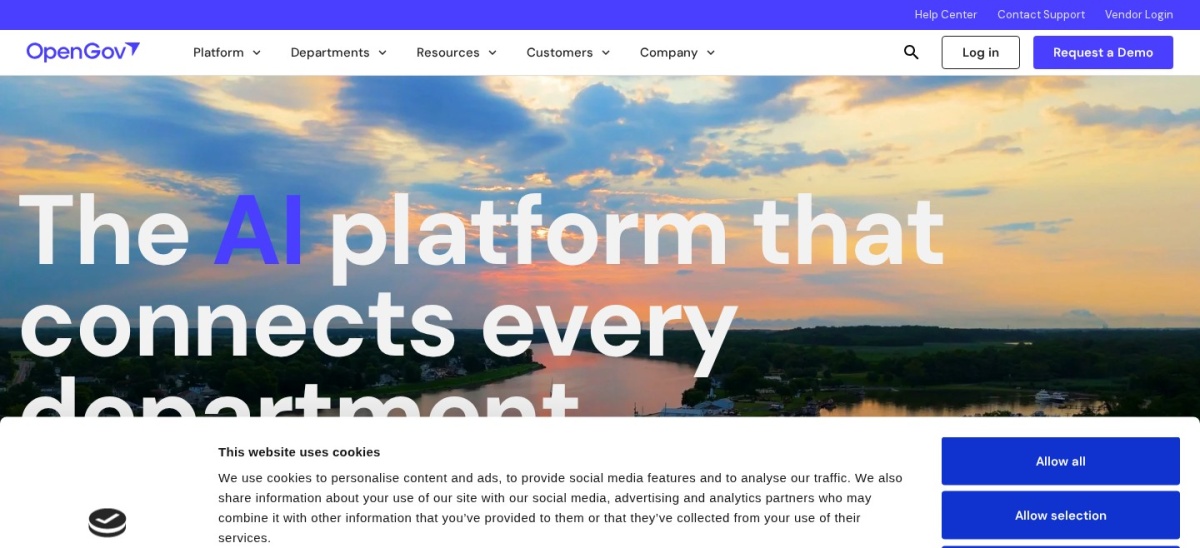
OpenGov Permitting & Licensing homepage, captured Nov 2026.
OpenGov Permitting & Licensing is a cloud platform that moves permit applications, plan review, inspections and code enforcement online for cities and counties. It sits inside the wider OpenGov government cloud, which also covers budgeting, procurement and asset management, and it adds AI-assisted document review.
The trade off is price and scale. Everything is quote-based, implementation takes months, and the full platform suits mid-size to large governments better than small towns. Smaller municipalities may find the scope and the sales process heavier than they need.
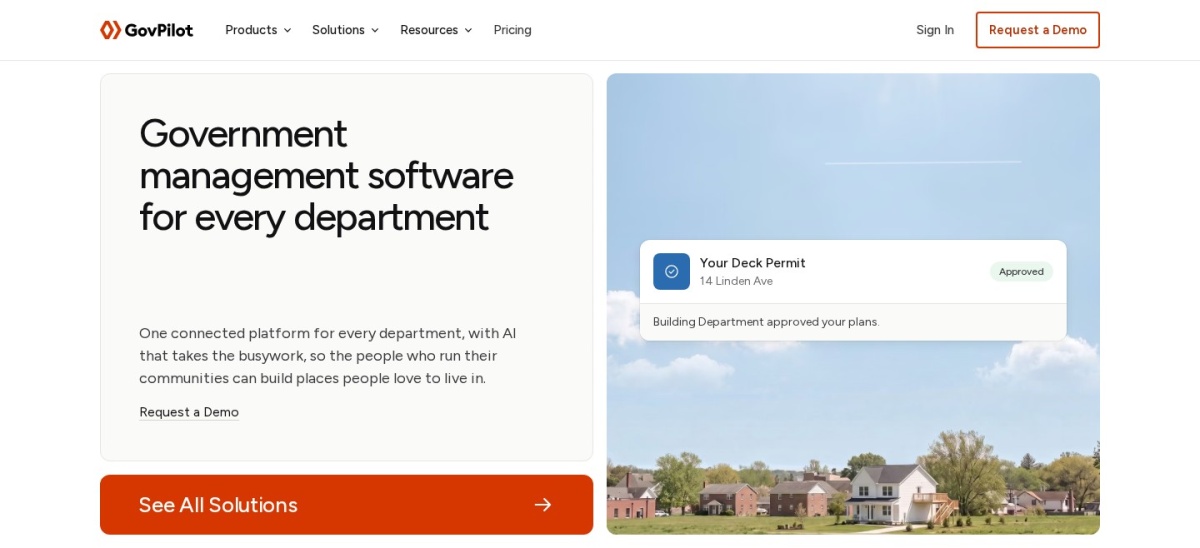
GovPilot is a government operations platform where permitting is one module among many, alongside code enforcement, business registration and facility management. Municipalities digitize one workflow at a time, which spreads cost and change over time instead of requiring a big-bang project.
The trade off is depth. Permitting features depend on how each module is configured, so a town may need more setup to match a purpose-built permit system. Pricing is quote-based and the vendor is smaller than OpenGov or Tyler. It suits small to mid-size towns modernizing step by step.
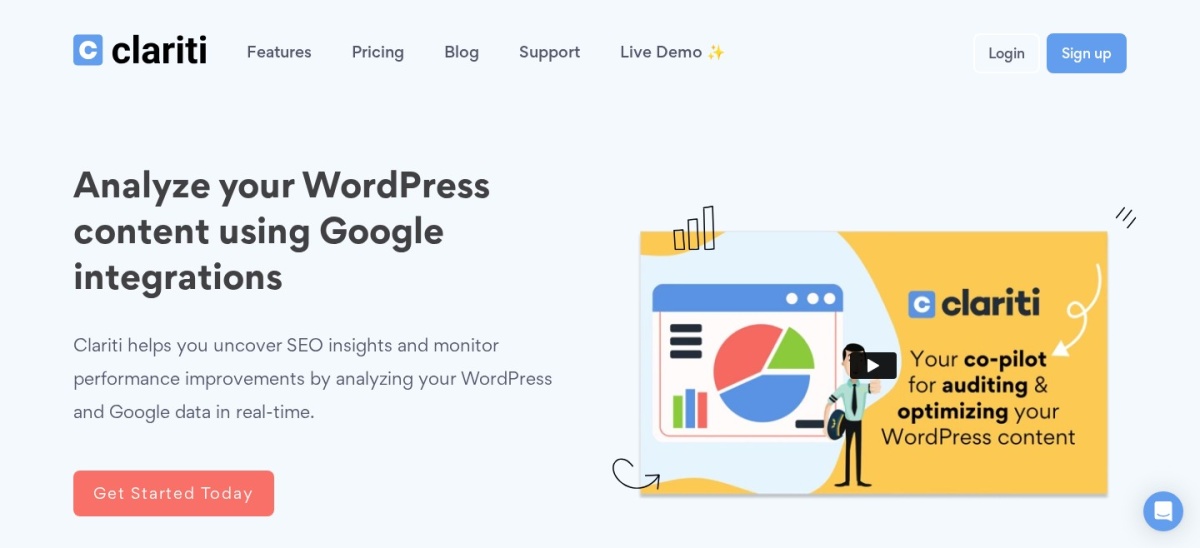
Clariti is a cloud permitting and licensing platform for state and local governments, covering online applications, plan review, permit issuance, inspection scheduling and code enforcement. It includes GIS integration and real-time reporting, and its $1,800 a year starting price is the only published price in this list.
The trade off is review volume and ecosystem. Only 7 Capterra reviews support the 4.3 rating, and Clariti has fewer native integrations than the largest platforms. Enterprise feature depth also trails the biggest suites. It suits governments that want to budget without a sales process.
Cityworks, now part of Trimble, approaches permitting from the asset side: permits tied to GIS-mapped infrastructure, work orders and utility assets. Public works departments and utilities that already run Esri GIS get permitting inside the same spatial system, which makes infrastructure and right-of-way permits far easier to manage.
The trade off is scope. For a standard building department, the GIS depth is unnecessary weight and enterprise pricing reflects it. Implementation is a project, not a quick setup. It suits utilities and public works agencies, not towns that only need building permits.
PermitFlow flips the perspective: instead of helping governments process permits, it helps construction companies prepare and submit them. The platform automates paperwork, plan packaging and submission steps, using AI to handle document review and completeness checks across many jurisdictions.
The trade off is audience. PermitFlow serves builders, not governments, so it does not replace municipal software. Pricing is quote-based and the vendor is newer than the government-focused incumbents, with a small public review footprint. It suits builders working across multiple cities.
Accela is a cloud civic platform for government agencies that covers permitting, licensing, inspections, code enforcement and environmental health in one system. It is built for multi-department operations at scale, with a public portal where residents apply and track permits.
The trade off is size and setup. Accela is built for large agencies, so small towns may find it heavy, and implementation can take months with configuration help. It suits large cities that need one platform across departments.
What we like
Covers permitting, licensing and inspections in one platform
iWorQ Systems serves the small end of the market: municipalities that need to track permits, inspections and history in the cloud without enterprise complexity. Permit history tracking and document storage cover the core needs of a small building department moving off paper or spreadsheets.
The trade off is depth. Larger or faster-growing municipalities will outgrow it, and the applicant experience is simpler than modern portals. Pricing is quote-based and feature depth is basic next to larger platforms. It suits towns taking the first step off manual processes.
There is no free permit software in this list. Every platform sells on quote or from a published annual price.
Published prices are starting points. Clariti starts at $1,800 a year, but enterprise deployments can run five to six figures a year including implementation.
Ask each vendor for the five-year total, including implementation, data migration, training and annual increases, before comparing quotes.
How we chose
We shortlisted permitting platforms with a real 2026 market presence serving US local governments and the construction industry.
Prices come from vendor pricing pages and Capterra, checked on 23 November 2026. Ratings come from G2 and Capterra on the same day. Where a vendor shows no price, the list shows Quote.
We left out tools with no rating on G2 or Capterra, and tools with only a single review. No vendor paid for a place, and this list is based on pricing, docs and reviews, not on using the tools ourselves.
How to choose permit software
Start with who you are: a government or a builder.
Pick your side of the counter. Governments need processing software such as OpenGov or Clariti. Builders need submission software such as PermitFlow.
Get three quotes. Almost every vendor sells on quote. Ask each for the five-year total including implementation and training.
Check the applicant portal. A confusing portal creates phone calls that erase the efficiency gains. Demo it as a first-time user.
Match the size. Small towns fit iWorQ. Large cities need OpenGov, Cityworks or Accela.
FAQ
What is the best permit software?
OpenGov Permitting & Licensing is the best pick for most cities. It covers online applications, plan review, inspections and code enforcement in one cloud system, and it is rated 4.5 out of 5 on G2.
How much does permit software cost?
Almost every vendor sells on quote. The only published figure is Clariti from $1,800 a year. Large deployments can run five to six figures a year.
Is there free permit software?
No. None of the established permit platforms in this list has a free plan. Clariti offers a free trial, but it needs a paid contract to use.
What is the difference between permit software for governments and builders?
Government tools process permits: intake, review, inspection and issuance. Builder tools such as PermitFlow prepare and submit applications to many different cities. They complement each other rather than compete.
How long does permit software take to set up?
Small municipalities can deploy a focused tool such as iWorQ in weeks to a few months. Enterprise suites such as OpenGov, Cityworks or Accela take several months including data migration and staff training.
Does permit software integrate with GIS?
Most platforms offer some GIS integration. Cityworks is built on Esri ArcGIS for deep asset mapping, tying permits to work orders and infrastructure. Confirm the integration depth during demos before you buy.