Tali AI is the best medical voice recognition software for clinicians who want direct dictation and automated clinical notes, with 60 free dictation minutes per month. Scribeberry is an alternative for unlimited documentation, while Freed suits independent clinicians who prefer automated encounter summaries.
How we make this list: we compare pricing pages, product documentation and public user reviews, then re-check every price before each update. No product paid for a place. Disclosure.
Tali AI includes 60 minutes of medical dictation and 5 AI-generated notes per month on its free plan.
Scribeberry Pro costs $99 per month and includes unlimited documentation and dictation.
Freed Starter supports 40 clinical notes per month.
Sunoh lists a regular price of $199 per month, with a temporary $149 offer.
Dragon Medical One has a 3.9/5 G2 rating from 27 reviews.
Heidi has a 4.9/5 G2 rating from 20 reviews and offers unlimited transcription on its free plan.
What medical voice recognition software should offer
Medical voice recognition converts spoken clinical information into written documentation. Unlike general transcription software, these products account for specialized terminology and healthcare workflows.
Traditional medical dictation software converts speech into text as clinicians speak. Ambient documentation software listens to consultations and generates structured clinical notes.
Electronic health record compatibility matters because manually transferring notes between applications can reduce the time saved through automated documentation.
Healthcare organizations should assess patient consent, audio retention, encryption, access permissions and contractual privacy protections before adopting any voice recognition platform.
Tali AI is a medical voice assistant that combines speech recognition, clinical documentation and medical information retrieval. Its free plan includes 60 minutes of dictation and 5 AI-generated notes per month.
The trade off is that unlimited dictation requires Starter, priced at $60 per month with annual billing or $68 with monthly billing. It suits clinicians who want both traditional dictation and automated encounter documentation.
What we like
Free medical dictation allowance
Supports spoken commands
Unlimited dictation on Starter
Custom clinical templates
Watch out for
Free documentation allowance is limited
Unlimited AI notes require a higher plan
Starter adds unlimited dictation and 40 AI notes per month.Visit tali.ai
02
Scribeberry
3.8/5on Trustpilot (27 reviews, checked Nov 2026)
Paid from$99/mo
Best for unlimited medical dictation
Free allowance20 uses/mo
Medical dictationPro
Clinical formsSupported
Paid planPro
scribeberry.com
Scribeberry homepage, captured Nov 2026.
Scribeberry is an AI medical documentation platform that generates clinical notes from spoken information. Its free mode provides 20 monthly uses following an initial 3-day unlimited trial.
The trade off is that dedicated dictation and transcription require Pro at $99 per month. It suits busy clinicians who prefer unlimited documentation and customizable templates.
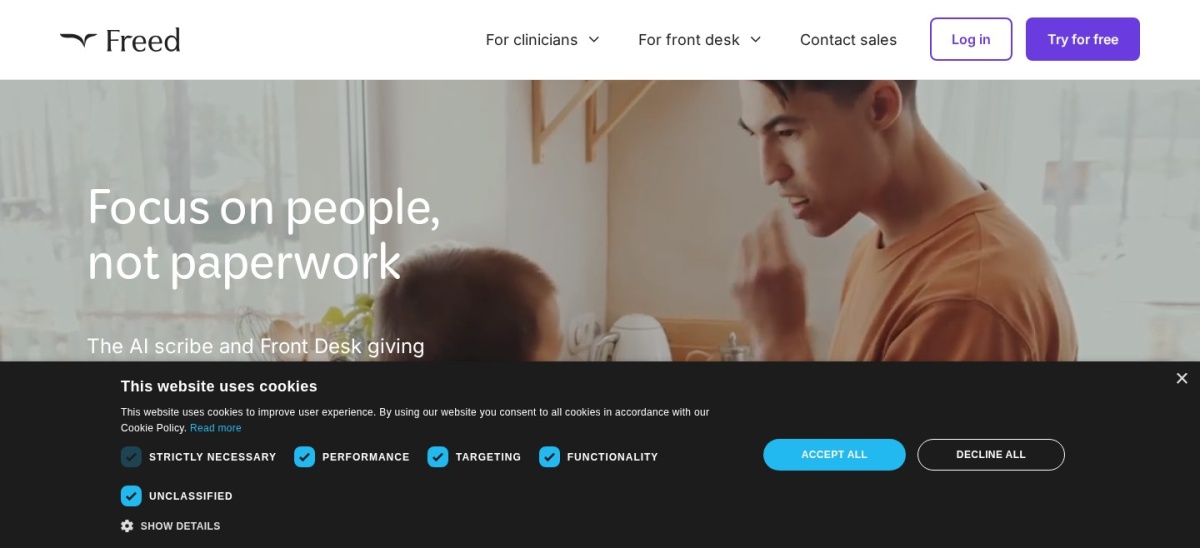
Freed is an ambient medical documentation platform that turns patient conversations into structured clinical notes. Starter supports 40 notes per month and includes templates for different medical specialties.
The trade off is that dedicated dictation and direct EHR transfer require Premier, while Starter lists a regular $59 monthly price alongside a lower $39 offer. It suits independent clinicians who mainly need automated encounter summaries.
What we like
Specialty-specific documentation
Structured clinical notes
High public review rating
Dedicated human support
Watch out for
Starter limits monthly notes
Direct dictation requires Premier
No general permanent free plan
Higher plans add unlimited notes, dictation and EHR transfer.Visit getfreed.ai
04
Dragon Medical One
3.9/5on G2 (27 reviews, checked Nov 2026)
PricingCustom pricing
Best for established clinical dictation workflows
RecognitionMedical speech-to-text
DeploymentCloud
LicensingPer user
Paid planContact sales
microsoft.com
Dragon Medical One homepage, captured Nov 2026.
Dragon Medical One is a clinical speech recognition platform from Nuance and Microsoft. It supports direct medical dictation and specialized documentation workflows, with a 3.9/5 rating from 27 G2 reviews.
The trade off is that current subscription pricing could not be confirmed from the accessible Microsoft Marketplace pricing table. It suits hospitals and established practices that prioritize conventional medical dictation.
What we like
Specialized clinical speech recognition
Cloud-based voice documentation
Established healthcare product
Per-user licensing
Watch out for
Requires pricing confirmation
Less focused on ambient note generation
A paid subscription provides access to clinical speech recognition.Visit microsoft.com
05
Heidi
4.9/5on G2 (20 reviews, checked Nov 2026)
PricingCustom pricing
Best for free clinical transcription
Free transcriptionUnlimited
Standard templatesIncluded
Desktop dictationSupported
Paid planClinician
heidihealth.com
Heidi homepage, captured Nov 2026.
Heidi is a clinical documentation assistant that converts spoken consultations into structured notes. Its free plan includes unlimited transcription, and it holds a 4.9/5 G2 rating from 20 reviews.
The trade off is that advanced templates, patient linking and additional workflow features have free-plan restrictions. Current paid pricing requires confirmation through Heidi, making it suitable for clinicians starting with free transcription.
INVOX Medical is a speech recognition platform designed for dictating medical reports. Its documentation describes more than 15 specialty dictionaries and integration with existing clinical systems.
The trade off is that current subscription pricing needs confirmation from the vendor, and recognition performance can vary with background noise. It suits radiologists and other specialists who frequently dictate detailed reports.
Sunoh is an ambient medical voice recognition platform that generates visit transcripts, clinical summaries and structured notes. Its subscription includes documentation support and a Business Associate Agreement.
The trade off is its regular $199 monthly price, temporarily reduced to $149 per user. It suits practices that prioritize automated clinical notes and supported EHR integration.
What we like
Ambient consultation capture
Structured SOAP documentation
Mobile and browser access
BAA included
Watch out for
Higher regular subscription cost
Generated notes require clinical review
The subscription includes ambient documentation and implementation support.Visit sunoh.ai
08
Suki
4.4/5on G2 (14 reviews, checked Nov 2026)
PricingCustom pricing
Best for healthcare enterprise voice workflows
Specialties100+
Voice editingSupported
EHR integrationSupported
Paid planContact sales
suki.ai
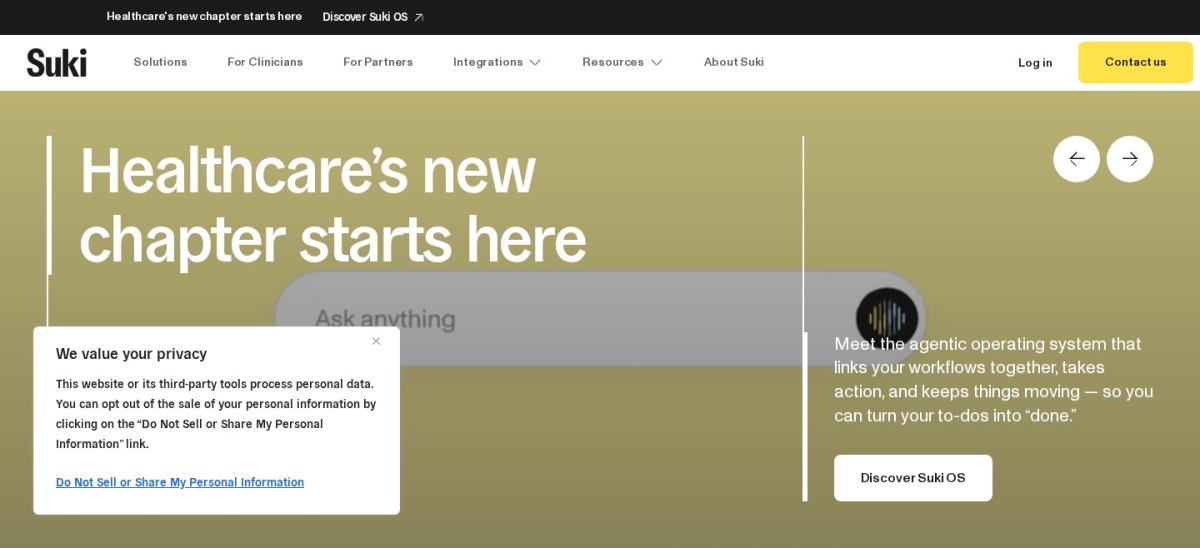
Suki homepage, captured Nov 2026.
Suki is a clinical voice assistant that combines ambient documentation, voice-based editing and clinical workflow automation. The vendor supports more than 100 medical specialties across desktop and mobile devices.
The trade off is that subscription pricing requires a sales consultation, and integration requirements depend on the organization. It suits healthcare groups seeking documentation tools connected to their existing clinical infrastructure.
What we like
Voice-enabled note editing
Broad specialty coverage
Major EHR integrations
Clinical coding assistance
Watch out for
No public subscription price confirmed
Implementation requirements vary
Paid access combines clinical documentation and integrated workflows.Visit suki.ai
How we chose
We selected established medical voice recognition platforms from clinical documentation directories, vendor websites and public review platforms. We included traditional dictation products and ambient documentation assistants.
The article uses the requested 22 Nov 2026 editorial date, while source pages were checked on 25 Nov 2026. Ratings come from G2, Capterra and Trustpilot. Published subscription prices are annualized, and custom pricing entries use zero as a placeholder rather than indicating free access. Annual billing discounts and temporary promotions may affect comparisons.
We excluded products without sufficient independent reviews and general transcription software without a clear clinical use case. Some enterprise vendors provide sales contact pages rather than accessible pricing tables, and their exact subscription costs require confirmation. No vendor paid for a place, and we do not claim testing for this list.
How to choose medical voice recognition software
Compare your clinical documentation requirements before committing to a subscription.
Identify your preferred documentation method. Choose direct speech-to-text for traditional medical reports or ambient recognition for automated consultation notes.
Check clinical vocabulary and EHR compatibility. Confirm that the software supports your specialty, terminology and existing electronic health record system.
Review patient privacy requirements. Assess contractual protections, consent procedures, audio retention and access controls before processing identifiable patient information.
Compare the complete subscription cost. Consider per-user fees, documentation limits, integration charges, annual commitments and implementation expenses.
FAQ
What is the best medical voice recognition software?
Tali AI is our top pick for combining direct medical dictation and automated clinical notes. Dragon Medical One is worth considering for traditional clinical dictation, while Heidi offers a useful free transcription option.
Is there free medical voice recognition software?
Yes. Tali AI provides a limited monthly dictation allowance, while Heidi offers unlimited transcription on its free plan. Free access may exclude advanced templates, dedicated dictation features and direct electronic health record integrations.
What is the difference between medical dictation and ambient AI?
Medical dictation converts a clinician's spoken words directly into written text. Ambient AI captures conversations during consultations and generates structured documentation. Both approaches require clinicians to review the resulting text before finalizing records.
Can medical voice recognition software integrate with an EHR?
Many clinical voice recognition platforms support electronic health record integration through dedicated connections, browser extensions or direct text entry. Compatibility depends on the EHR product, subscription level and healthcare organization's technical requirements.
Is medical voice recognition software safe for patient information?
Safety depends on the vendor's privacy protections, contractual agreements and organizational configuration. Healthcare providers should verify encryption, access controls, data retention and applicable consent requirements, and review all generated documentation for clinical accuracy.
SaaS SEO and WordPress specialist with about 8 years of experience. Rakib compares WordPress plugins, themes, hosting and software using public pricing, documentation and user reviews. See how we rank.