Amazon SageMaker is the best machine learning cloud platform for general-purpose model development, with a 4.3/5 G2 rating from 57 reviews and managed training infrastructure. Choose Google's Gemini platform for integrated cloud AI development or Roboflow for computer vision projects.
How we make this list: we compare pricing pages, product documentation and public user reviews, then re-check every price before each update. No product paid for a place. Disclosure.
Amazon SageMaker has a 4.3/5 G2 rating from 57 reviews.
Google's Gemini platform bills custom training and prediction in 30-second increments.
Roboflow includes 10 monthly credits for free, with paid plans starting at $39/month.
CoreWeave Forge Pro starts at $60/month and includes 100 GB of monthly storage.
IBM watsonx.ai provides 20 free monthly Compute Usage Hours for machine learning.
Azure Machine Learning has no additional platform fee beyond consumed cloud resources.
What a machine learning cloud platform should include
Cloud machine learning platforms provide infrastructure and development tools for preparing datasets, training models, managing experiments and deploying predictions without purchasing dedicated hardware.
Look for configurable CPU and GPU resources, distributed training support and compatibility with your preferred machine learning frameworks. These capabilities determine which models you can train efficiently.
Production deployment requires more than training infrastructure. Model versioning, monitoring, automated pipelines and access controls help teams maintain reliable applications.
Cloud pricing frequently depends on resource consumption rather than fixed subscriptions. Compare training time, endpoint uptime, storage, data transfer and inference charges before selecting a provider.
Training infrastructureManaged CPU and GPU instances
DeploymentManaged inference endpoints
Example evaluation rate$0.20 per million tokens
Paid planPay-as-you-go
aws.amazon.com
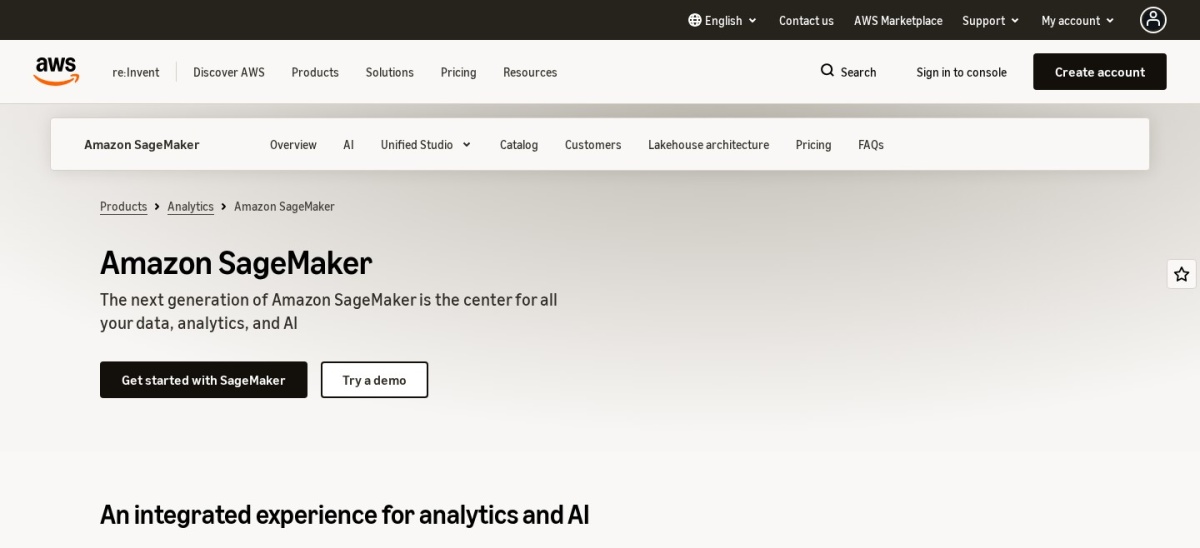
Amazon SageMaker homepage, captured Nov 2026.
Amazon SageMaker is a managed cloud platform for developing, training and deploying machine learning models. Its usage-based services cover training infrastructure, inference endpoints and model evaluation, with published custom evaluation rates of $0.20 per million tokens in its pricing example.
The trade off is complicated resource-based billing rather than a predictable annual subscription. It suits engineering teams that need configurable training infrastructure, automated deployment and integration with existing AWS services.
What we like
Managed training and inference infrastructure
Supports custom machine learning workflows
Integration with AWS storage and security services
Model monitoring and deployment automation
Watch out for
Pricing varies across infrastructure configurations
Idle endpoints can generate ongoing charges
Requires familiarity with AWS services
Paid usage covers training compute, inference, storage and selected model development services.Visit aws.amazon.com
02
Gemini platform
4.3/5on G2 (908 reviews, checked Nov 2026)
PricingUsage-based pricing
Best for Google Cloud machine learning workflows
Former productVertex AI
Training billing increment30 seconds
Model developmentAutoML and custom training
Paid planResource-based billing
cloud.google.com
Gemini platform homepage, captured Nov 2026.
Gemini platform is Google Cloud's integrated environment for machine learning development, previously associated with the Vertex AI product name. It supports automated model development, custom training and deployment, with training and prediction usage billed in 30-second increments.
The trade off is that deployed models can continue generating charges even without prediction requests, and compute rates depend on machine configurations. It suits teams developing machine learning applications around Google Cloud infrastructure.
Paid usage includes model training, managed predictions and selected AI development services.Visit cloud.google.com
03
Roboflow
4.7/5on G2 (161 reviews, checked Nov 2026)
Paid from$39/mo
Best for computer vision model development
Free monthly credits10
Core monthly credits20
Supported inference models50+
Paid planCore, $468/yr
roboflow.com
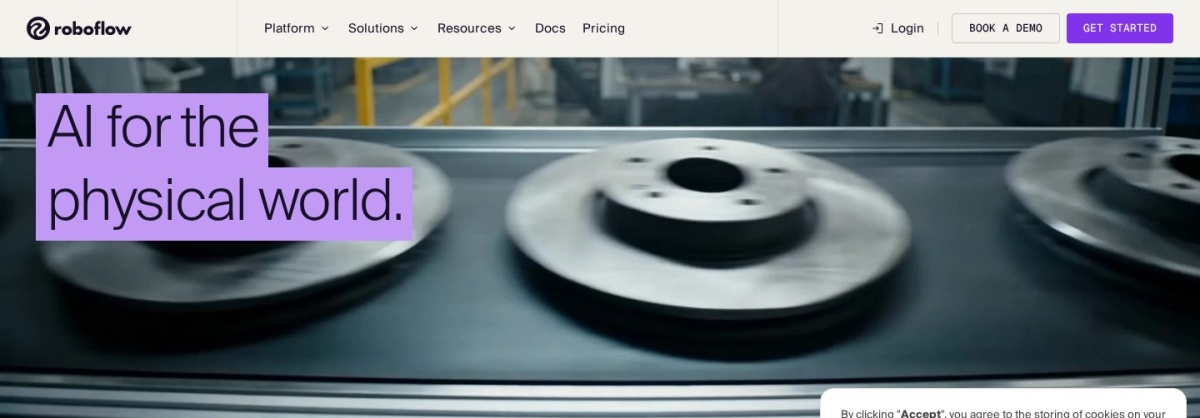
Roboflow homepage, captured Nov 2026.
Roboflow is a cloud machine learning platform specializing in computer vision datasets, model training and visual inference. Its free tier includes 10 monthly credits, which the vendor estimates can support approximately 30 model training runs or 80,000 inferences.
The trade off is its computer vision focus and credit-based resource allowances, with Core starting at $39 monthly for 20 total credits. It suits teams developing object detection, image classification and visual inspection applications.
What we like
Dedicated computer vision development tools
Permanent free credit allowance
Cloud and edge inference options
Downloadable model weights
Watch out for
Not a general-purpose machine learning platform
Larger workloads require additional credits
Enterprise service guarantees require custom pricing
Core doubles the starting monthly credit allowance for training and inference.Visit roboflow.com
04
Azure Machine Learning
4.3/5on G2 (90 reviews, checked Nov 2026)
PricingUsage-based pricing
Best for Microsoft cloud environments
Additional platform feeNone
Compute billingPer second
Compute commitmentsOptional
Paid planUnderlying Azure resource usage
azure.microsoft.com
Azure Machine Learning homepage, captured Nov 2026.
Azure Machine Learning is Microsoft's cloud service for managing model development, automated training and production deployment. The platform has a 4.3/5 G2 rating from 90 reviews and does not impose an additional machine learning service fee.
The trade off is that compute, storage, container registries and monitoring services generate separate expenses according to usage. It suits organizations already operating Microsoft cloud infrastructure and requiring centralized machine learning governance.
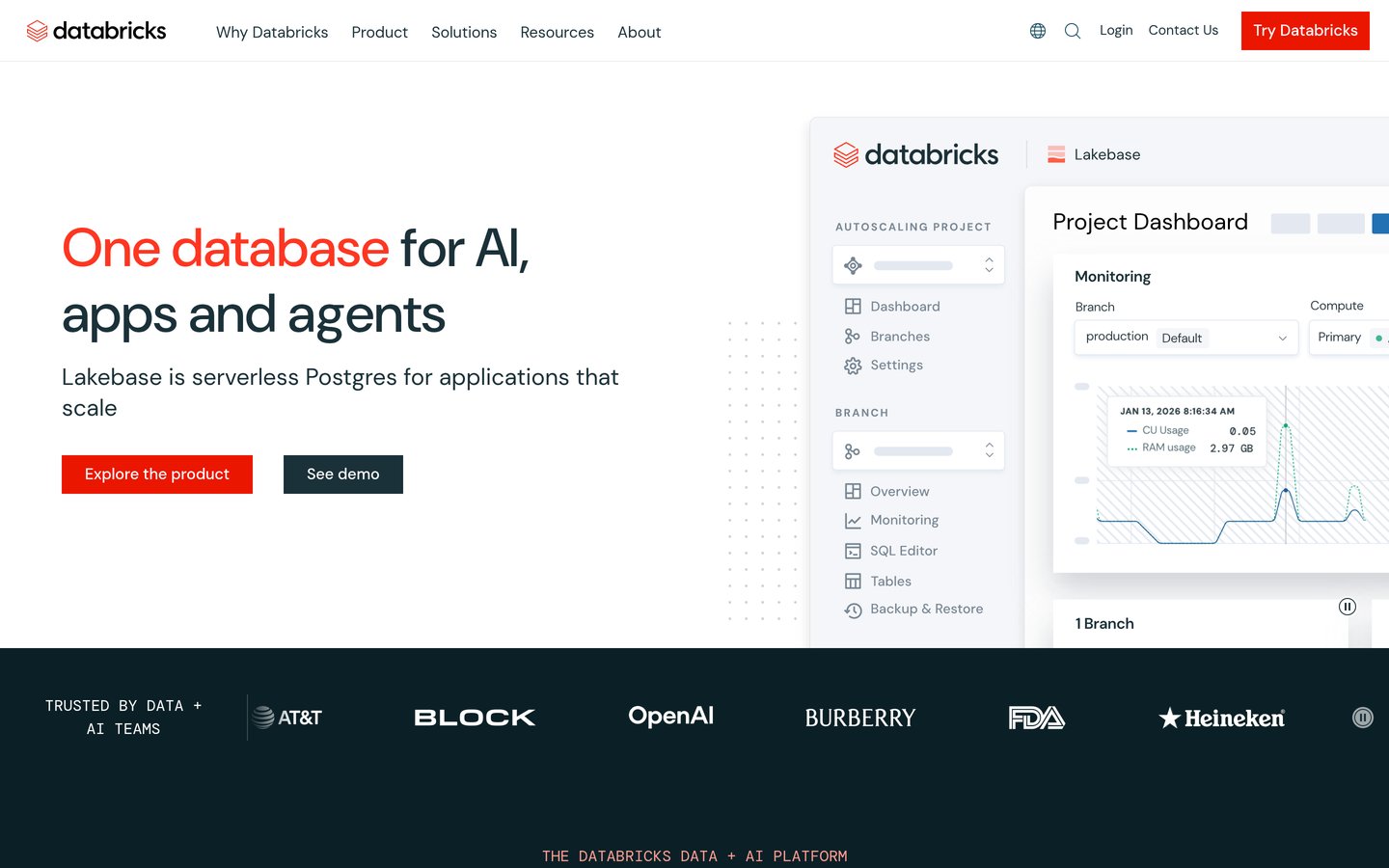
Databricks is a cloud data and AI platform combining data engineering, analytics and machine learning development. It serves more than 20,000 organizations and provides consumption-based subscriptions with per-second billing granularity.
The trade off is that platform consumption and underlying cloud infrastructure can generate separate expenses, making annual costs workload-dependent. It suits data science teams training models against large organizational datasets.
What we like
Unified data processing and model development
Integrated experiment tracking
Distributed data processing
Supports multiple cloud providers
Watch out for
Consumption-based expenses require monitoring
Complex infrastructure configuration
Less economical for simple individual projects
Paid consumption enables production data processing, model development and managed AI workloads.Visit databricks.com
06
IBM watsonx.ai
4.4/5on G2 (161 reviews, checked Nov 2026)
PricingUsage-based pricing
Best for enterprise AI development and governance
Free monthly ML usage20 CUH
Free monthly foundation tokens300,000
Embedding example rate$0.10 per million tokens
Paid planEssentials, pay-as-you-go
ibm.com
IBM watsonx.ai homepage, captured Nov 2026.
IBM watsonx.ai is an AI development studio supporting traditional machine learning, foundation models and application development. Its free Toolbox playground includes 20 monthly Compute Usage Hours for machine learning and up to 300,000 foundation model tokens.
The trade off is separate consumption rates for different workloads under Essentials, while the fixed starting charge for Standard is $1,110 monthly before applicable usage expenses. It suits enterprises developing managed AI applications with organizational oversight.
Essentials enables production workloads with feature-specific consumption charges.Visit ibm.com
07
CoreWeave Forge
4.5/5on G2 (83 reviews, checked Nov 2026)
Paid from$60/mo
Best for experiment tracking and model optimization
Free model seats5
Free monthly storage5 GB
Pro monthly storage100 GB
Paid planPro, $720/yr
coreweave.com
CoreWeave Forge homepage, captured Nov 2026.
CoreWeave Forge is an AI development platform incorporating experiment tracking, model registries and evaluation capabilities associated with Weights & Biases. Its free subscription includes up to five model seats and 5 GB of monthly storage.
The trade off is that Pro starts at $60 monthly, with additional compute and storage expenses depending on usage. It suits machine learning teams prioritizing reproducible experiments and collaboration across cloud infrastructure.
What we like
Free experiment tracking capabilities
Cloud-independent development workflows
Model registry and lineage tracking
Team collaboration on Pro
Watch out for
Underlying compute can cost extra
Enterprise pricing applies to larger organizations
G2 rating reflects the Weights & Biases product
Pro adds team access controls, automation, priority support and expanded storage.Visit coreweave.com
How much does cloud machine learning cost?
Machine learning cloud expenses depend on training duration, hardware selection, dataset size and production inference volume. GPU-intensive training generally costs more than conventional CPU-based development.
Separate development expenses from production expenses. Training jobs may run intermittently, while dedicated prediction endpoints can continue generating charges between requests.
Fixed subscriptions and usage-based cloud services are not directly comparable. Only verified fixed subscriptions have annual values in this comparison; consumption-based entries have null annual prices rather than misleading zero-dollar estimates.
How we chose
We shortlisted established cloud machine learning and MLOps platforms from G2, comparing model development, infrastructure management, deployment capabilities, public pricing and independent user reviews.
The editorial reference date is 22 Nov 2026. Official pricing pages and G2 listings were opened during research, but historical figures for that exact date could not be independently confirmed. Usage-based services have published pricing models rather than fixed annual subscriptions, so their annual price fields are null. Databricks review data includes a later source update.
We excluded products with insufficient relevant reviews or inaccessible pricing information. Published consumption-based pricing is accepted for leading cloud platforms because fixed subscriptions do not exist for many infrastructure services. No vendor paid for a place, and we do not claim testing for this list.
How to choose a machine learning cloud platform
Compare cloud platforms according to your model requirements, existing infrastructure and expected production workloads.
Define your machine learning workload. Identify whether your project involves predictive analytics, computer vision, natural language processing or foundation model customization.
Evaluate hardware and framework compatibility. Check CPU and GPU configurations, distributed training options, supported programming frameworks and integration with existing development tools.
Estimate complete infrastructure costs. Include training time, persistent storage, production endpoint uptime, inference requests and data transfer expenses.
Review production maintenance capabilities. Look for model versioning, automated deployment, performance monitoring, access controls and reproducible experiment management.
FAQ
What is the best machine learning cloud platform?
Amazon SageMaker is our overall pick for general-purpose machine learning development because it supports managed training and production deployment. Google's Gemini platform is another broad option, while Roboflow specializes in computer vision.
Are there free cloud machine learning platforms?
Yes. Roboflow includes 10 monthly credits, IBM watsonx.ai provides 20 monthly Compute Usage Hours, and CoreWeave Forge offers free experiment tracking. Free allowances generally suit development and smaller workloads rather than continuous production deployments.
How much does cloud machine learning cost?
Roboflow starts at $39 monthly, while CoreWeave Forge Pro starts at $60 monthly. General-purpose cloud platforms typically charge according to compute consumption, storage, training duration and production inference usage rather than a fixed subscription.
Which cloud machine learning platform is best for computer vision?
Roboflow is our preferred specialist platform for computer vision because it combines dataset management, visual model training and deployment. General-purpose platforms such as SageMaker can also support computer vision through configurable training infrastructure.
Do cloud machine learning platforms require GPUs?
Not every machine learning workload requires GPUs. Conventional predictive models can often train efficiently on CPUs, while deep learning, computer vision and large language model workloads frequently benefit from GPU acceleration. Hardware requirements depend on model architecture and dataset size.
SaaS SEO and WordPress specialist with about 8 years of experience. Rakib compares WordPress plugins, themes, hosting and software using public pricing, documentation and user reviews. See how we rank.