Peec AI is the best LLM visibility tracking software for most marketing teams, offering daily monitoring of 50 prompts across three AI models for $95 a month. Choose OtterlyAI for affordable monitoring or Ahrefs Brand Radar for flexible prompt tracking and broader AI search research.
How we make this list: we compare pricing pages, product documentation and public user reviews, then re-check every price before each update. No product paid for a place. Disclosure.
Peec AI tracks 50 prompts across three selected models for $95/month, with unlimited users.
OtterlyAI starts at $29/month and monitors 20 prompts across three engines under its updated pricing structure.
Ahrefs Brand Radar offers 2,500 custom prompt checks per month for $50.
Semrush combines 25 tracked prompts with competitor research and AI visibility reports for $99/month.
Scrunch includes 15,000 monthly AI responses across eight supported engines for $250/month.
Profound supports up to 10 answer engines but requires a custom pricing agreement.
What to look for in LLM visibility tracking software
LLM visibility tracking software monitors how often AI assistants mention, recommend or cite your business when answering questions. It helps marketers understand whether their brand appears in AI-generated responses rather than traditional search results alone.
Look for custom prompt tracking that lets you monitor questions your potential customers actually ask. General visibility scores can provide useful benchmarks, but targeted prompts offer more practical information about specific products and services.
Citation monitoring is equally important. Knowing which publications, review websites and competitor pages influence AI answers can help you prioritize content improvements and digital PR opportunities.
Compare usage limits carefully. Some platforms charge for tracked prompts, while others charge for individual AI responses or checks. Monitoring the same question across several engines can consume considerably more of your allowance.
Treat visibility scores as estimates based on sampled responses. AI answers can change between sessions, and a brand mention does not necessarily translate into a website visit or sale.
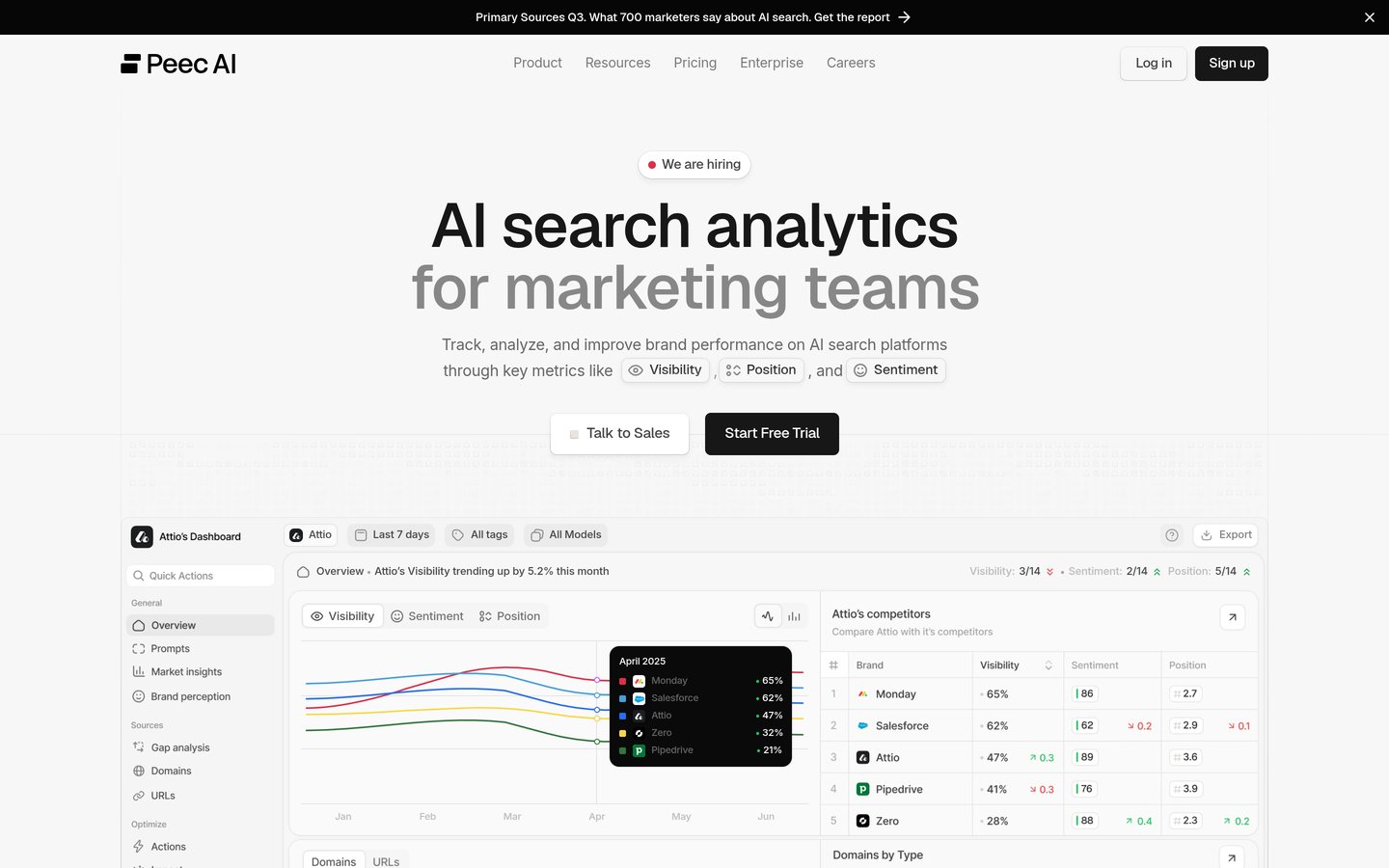
Peec AI is an AI search analytics platform that monitors brand appearances, citations and competitors across selected answer engines. Its Starter subscription includes daily tracking for 50 prompts across three models, one project and unrestricted team membership.
The trade off is limited project and model coverage on the $95 monthly Starter plan. Businesses needing additional projects, deeper integrations or access to a broader model selection must consider higher tiers. It suits marketing departments building a focused generative engine optimization strategy.
What we like
Daily monitoring of selected prompts
Unlimited users on the entry plan
Dedicated brand and competitor analytics
Flexible selection of supported AI models
Watch out for
Starter covers only one project
Broader model coverage requires higher tiers
API access requires an Enterprise subscription
Higher tiers increase prompt capacity, projects and reporting options.Visit peec.ai
02
OtterlyAI
4.7/5on G2 (53 reviews, checked Nov 2026)
Starts at$29/mo
Best for affordable LLM monitoring
Tracked prompts20 across three engines
Prompt credits2,000
Tracking frequencyDaily
Entry planLite, $29/mo
otterly.ai
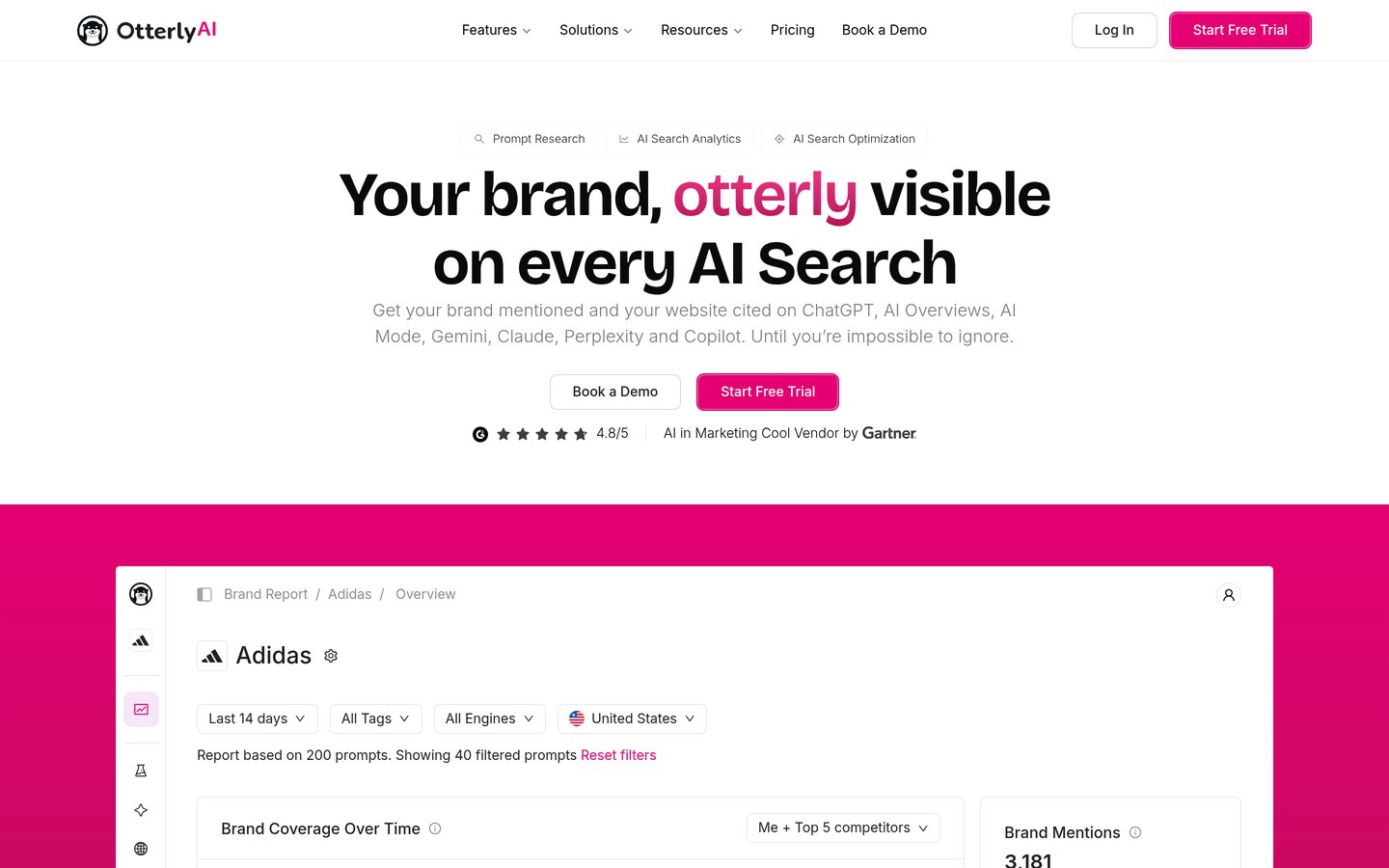
OtterlyAI homepage, captured Nov 2026.
OtterlyAI is a dedicated AI search monitoring platform for tracking brand mentions, citations and competitor visibility. Its Lite plan supports 20 daily prompts across three selected engines or 16 across four, following the vendor's November pricing update.
The trade off is limited monitoring capacity on the $29 monthly Lite subscription. Additional credit purchases require a higher tier, and expanding engine coverage reduces the available prompt count. It suits small businesses and independent marketers beginning to measure AI visibility.
What we like
Affordable entry subscription
Daily monitoring included
Flexible AI engine selection
Unlimited team members and brands
Watch out for
Limited entry-level prompt allowance
Lite does not support credit top-ups
Larger campaigns require higher subscriptions
Standard and Premium increase monitoring capacity and support credit top-ups.Visit otterly.ai
03
Ahrefs Brand Radar
4.5/5on G2 (725 reviews, checked Nov 2026)
Paid from$50/mo
Best for prompt tracking and SEO research
Monthly prompt checks2,500
Free accessLimited visibility preview
Additional checks$0.020/check
Entry planBasic Custom Prompts, $50/mo
ahrefs.com
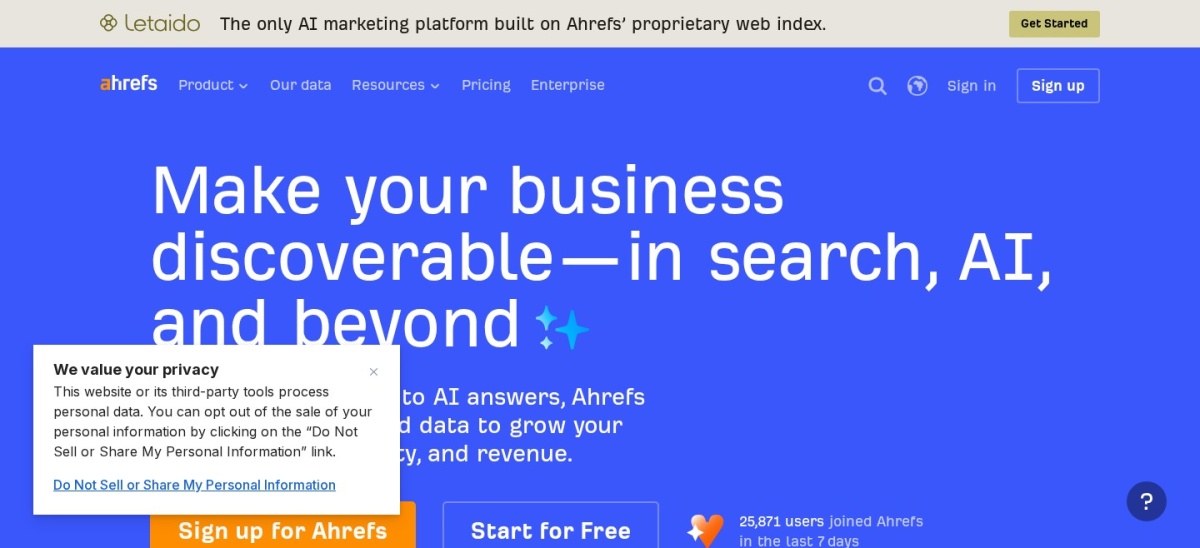
Ahrefs Brand Radar homepage, captured Nov 2026.
Ahrefs Brand Radar is an AI visibility research and monitoring product within the Ahrefs platform. Its Basic Custom Prompts package includes 2,500 monthly checks, helping teams monitor selected questions, citations and competing brands without purchasing the broader AI visibility index.
The trade off is usage-based billing on the $50 monthly tracking package. Additional checks incur charges, while the larger AI visibility research index starts at $199 per month. It suits SEO professionals who want to connect prompt monitoring with content and citation research.
What we like
Flexible custom prompt monitoring
Standalone tracking subscription available
Useful competitor and citation research
Limited free visibility preview
Watch out for
Broader research index costs extra
Monitoring multiple engines consumes more checks
G2 rating covers Ahrefs rather than Brand Radar alone
Paid packages increase prompt checks or provide access to the broader AI visibility index.Visit ahrefs.com
04
Semrush
4.4/5on G2 (4,324 reviews, checked Nov 2026)
Paid from$99/mo
Best for combined SEO and AI visibility research
Tracked prompts25
Brand performance domains1
Daily AI analysis queries300
Entry planAI Visibility Toolkit, $99/mo
semrush.com
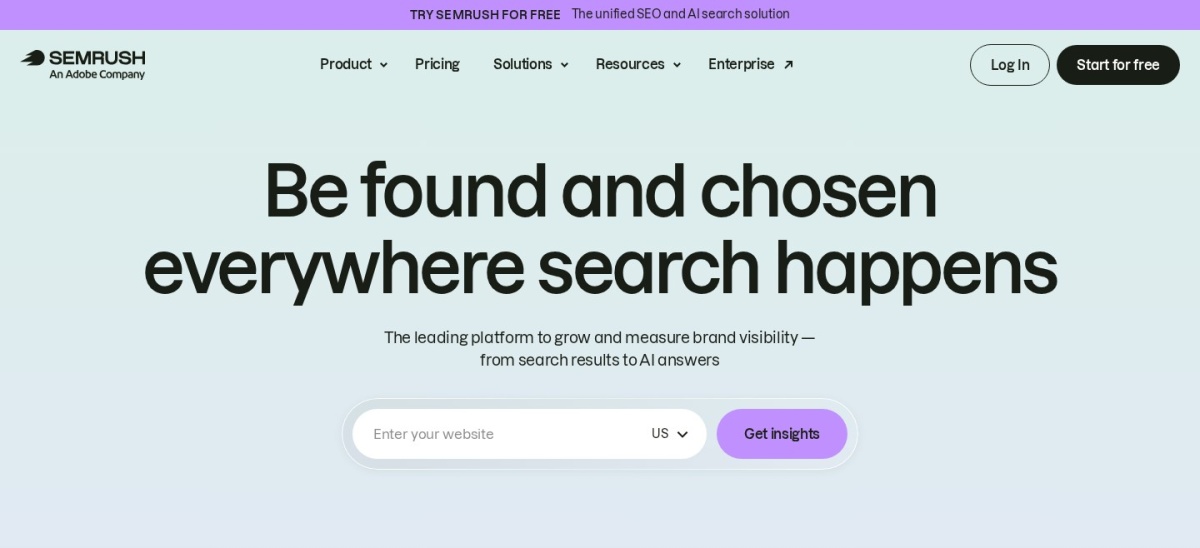
Semrush homepage, captured Nov 2026.
Semrush is a digital marketing platform with a dedicated AI Visibility Toolkit for monitoring brand appearances, competitors and relevant prompts. The standalone paid toolkit includes 25 tracked prompts, brand performance analysis for one domain and 300 daily AI analysis queries.
The trade off is that the $99 monthly subscription has separate limits for custom prompts and brand reporting. Extra monitoring capacity and additional domains increase the subscription cost. It suits established SEO teams that want AI research and conventional search marketing within the same platform.
What we like
Combines prompt and competitor research
Daily custom prompt tracking
AI-focused technical website auditing
Established digital marketing platform
Watch out for
Additional domains increase costs
Limited standalone prompt allowance
G2 reviews cover the broader Semrush platform
Semrush One combines AI visibility features with a wider SEO toolkit.Visit semrush.com
05
Scrunch AI
4.6/5on G2 (74 reviews, checked Nov 2026)
Starts at$250/mo
Best for AI website and citation optimization
Monthly responses15,000
Supported LLMs8
Competitors5
Entry planCore, $250/mo
scrunch.com
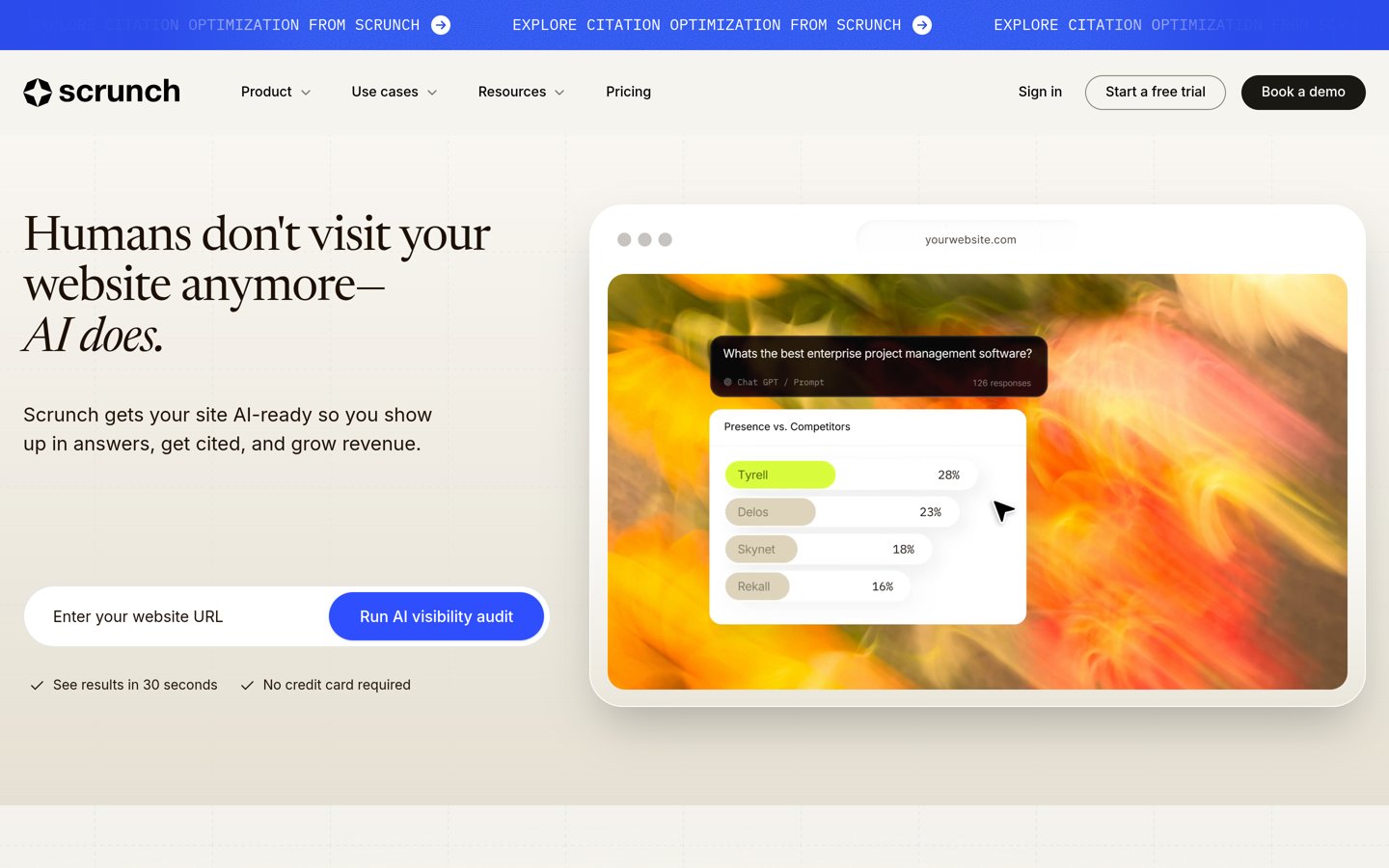
Scrunch AI homepage, captured Nov 2026.
Scrunch AI is an AI customer experience platform that combines visibility monitoring with website optimization and citation analysis. Its Core subscription includes 15,000 monthly responses, support for eight AI engines and monitoring for one brand.
The trade off is the $250 monthly starting price and limits on team access, brands and optimization capacity. Claude monitoring and API access require Enterprise arrangements. It suits businesses that want to identify visibility problems and improve how AI systems consume their website content.
What we like
Broad entry-level AI engine coverage
Website optimization alongside monitoring
AI crawler and referral analysis
Dedicated citation improvement features
Watch out for
Higher starting price than basic trackers
Claude is an Enterprise add-on
API access requires Enterprise
Enterprise expands usage limits, integrations, brand coverage and support.Visit scrunch.com
06
AthenaHQ
4.9/5on G2 (39 reviews, checked Nov 2026)
Paid from$295/mo
Best for AI visibility improvement recommendations
Free allowance300 credits
Starter credits3,600
Usage unit1 credit per AI response
Entry planStarter, $295/mo
athenahq.ai
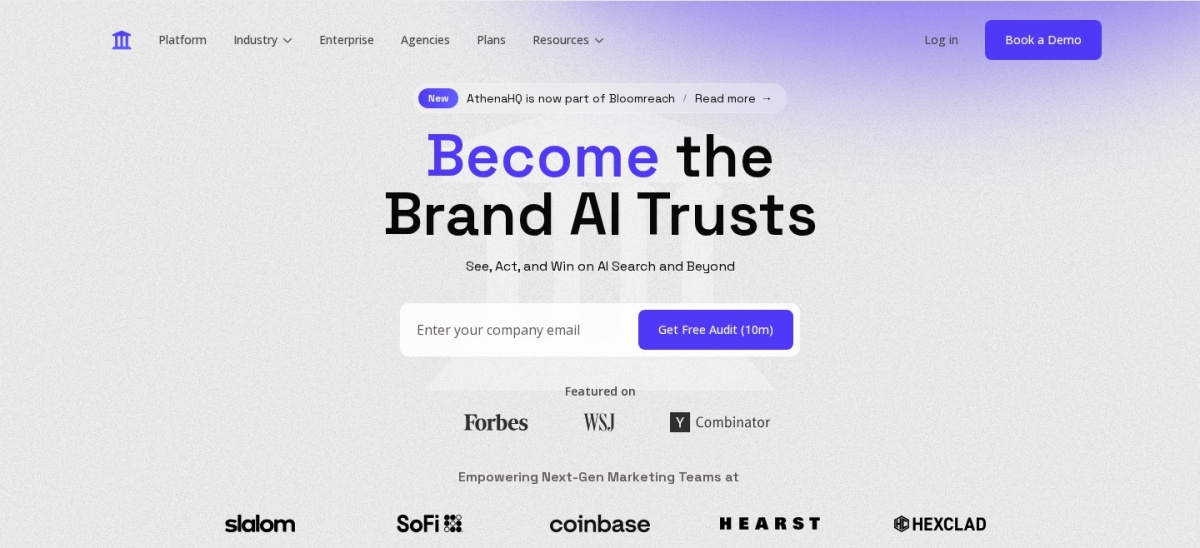
AthenaHQ homepage, captured Nov 2026.
AthenaHQ is a generative engine optimization platform that analyzes AI responses, competing brands and content opportunities. Its Essential free offering includes 300 credits, while the Starter subscription provides 3,600 credits and access to a broader selection of AI platforms.
The trade off is credit-based monitoring and a $295 monthly starting price for the paid subscription. Additional credits and API access carry separate charges, so extensive monitoring can increase costs. It suits growth and content teams that want recommendations alongside their visibility measurements.
What we like
Free introductory credit allocation
High public G2 rating
Content improvement recommendations
Competitor and source analysis
Watch out for
Paid subscription has a relatively high entry price
Additional credits cost extra
API access is a paid add-on
Starter increases credit capacity and expands AI engine coverage.Visit athenahq.ai
07
Profound
4.5/5on G2 (1,133 reviews, checked Nov 2026)
PricingCustom pricing
Best for enterprise LLM visibility tracking
Supported answer enginesUp to 10
Prompt allowanceCustom
Tracking frequencyDaily
Entry planEnterprise, custom pricing
tryprofound.com
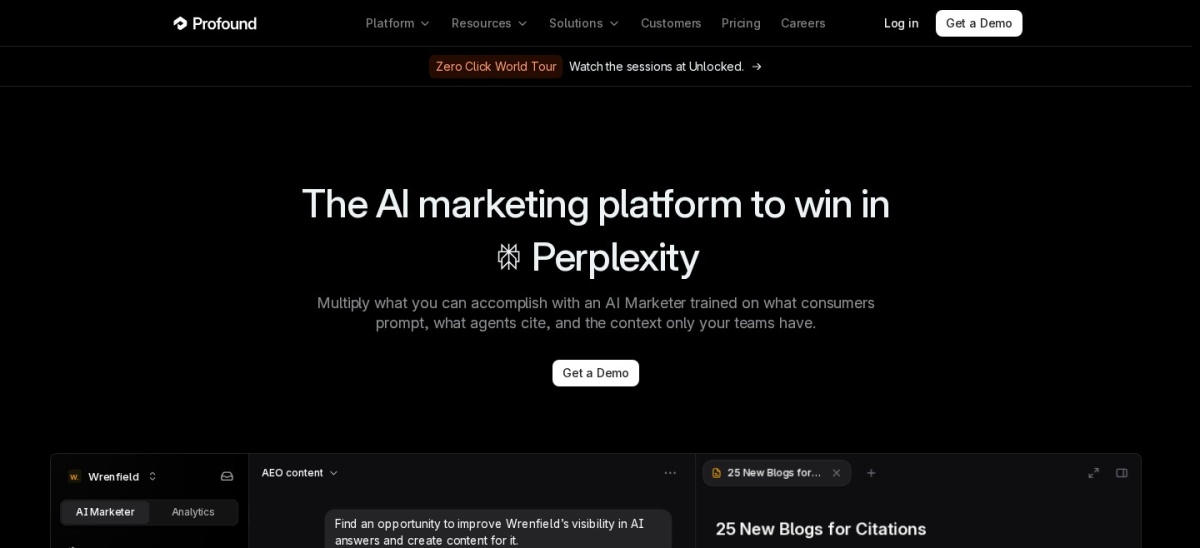
Profound homepage, captured Nov 2026.
Profound is an enterprise AI marketing platform combining answer engine analytics, prompt demand research and automated marketing workflows. Its Enterprise subscription supports monitoring across up to 10 answer engines, with configurable prompt limits and dedicated customer support.
The trade off is custom pricing and a sales-led purchasing process. Profound retired its public Starter and Growth plans for brands in September 2026, making direct budget comparisons difficult. It suits larger organizations requiring extensive monitoring, reporting integrations and coordinated AI search initiatives.
Brand mention rate measures how frequently your business appears in responses to monitored questions. Compare this metric against direct competitors and review changes over consistent reporting periods.
Citation frequency measures how often AI assistants reference your website or another source discussing your brand. Mentions and citations should remain separate metrics because an assistant can recommend your business without linking to its website.
Competitive share of voice helps explain whether your business is gaining or losing representation relative to similar companies. Track comparable prompts and keep the competitor list consistent to avoid misleading changes.
Brand sentiment describes how AI responses characterize your business. Review the underlying answers rather than relying entirely on a numerical sentiment score, especially when responses discuss pricing, product limitations or customer complaints.
AI referral traffic measures actual website visits attributed to AI platforms where identifiable. Combine visibility monitoring with website analytics to distinguish increased brand exposure from measurable business outcomes.
Why prompt limits and response limits are different
A tracked prompt represents a question assigned to your monitoring campaign. A response or check usually represents an individual execution of that question against a particular AI platform.
Ahrefs explicitly charges for individual checks, while AthenaHQ uses credits tied to AI responses. OtterlyAI allocates monitoring capacity through prompt credits, and Peec AI packages subscriptions around tracked questions and selected models.
Scrunch measures its allowance using collected responses. These different billing models mean that similarly priced subscriptions can support very different monitoring workloads.
Before comparing annual costs, define the questions, engines, monitoring frequency and brands you need. Request a realistic subscription estimate whenever the public pricing page does not clearly explain the required capacity.
The price ladder uses regular monthly subscription rates multiplied by twelve. Profound's zero numeric value represents unpublished custom pricing, not a free subscription.
How we chose
We selected established AI search analytics and marketing platforms that provide recurring prompt monitoring, brand visibility measurements or citation tracking. Products were compared on monitoring capacity, engine coverage, competitor research, pricing transparency and public customer feedback.
The requested editorial verification date is 22 Nov 2026. Pricing and ratings were actually checked on 25 Nov 2026 using official vendor pages and G2 reviews. Ahrefs and Semrush ratings represent their broader platforms rather than their individual AI visibility products. Annual prices use regular monthly rates multiplied by twelve.
We excluded products without accessible pricing information, verifiable public ratings or meaningful recurring AI visibility tracking. Quote-only enterprise software was considered where the vendor explicitly confirmed its pricing model. No vendor paid for a place, and we do not claim testing for this list.
How to choose the best LLM visibility tracking software
Start with your monitoring requirements, then compare the cost of collecting meaningful AI visibility data rather than choosing the subscription with the largest advertised allowance.
**Identify your priority AI engines.** Choose the assistants and AI search experiences your target customers are likely to use. Verify that these platforms are available on the subscription you intend to purchase.
**Create a representative prompt list.** Include product comparisons, informational questions, buying recommendations and category-specific queries. Avoid focusing exclusively on questions that already mention your business.
**Calculate the complete monitoring cost.** Account for prompt volume, response frequency, selected engines, competitors, additional domains and user access. Compare subscription allowances against the same expected workload.
**Connect visibility data to marketing decisions.** Choose software that reveals citation sources, missing content opportunities and competitor advantages. Combine its reporting with website analytics and business performance measurements.
FAQ
What is LLM visibility tracking software?
LLM visibility tracking software monitors whether AI assistants mention, recommend or cite your business when generating answers. It typically uses selected prompts or collected AI search data to measure brand representation, competing businesses and the sources influencing responses.
What is the best LLM visibility tracking software?
Peec AI is our top pick for marketing teams because its Starter plan combines daily prompt monitoring, selectable AI models and unlimited users for $95 per month. OtterlyAI is better suited to smaller budgets, while Ahrefs Brand Radar offers flexible check-based tracking.
What is the cheapest LLM visibility tracking software?
OtterlyAI has the lowest published paid entry price among the products compared here at $29 per month. Its updated Lite subscription supports 20 prompts across three engines or 16 across four, making it suitable for focused monitoring campaigns.
Is there free LLM visibility tracking software?
AthenaHQ provides an introductory free offering with 300 credits. Ahrefs and Semrush also provide limited free visibility research capabilities. Free access is useful for evaluating brand exposure, although ongoing monitoring and broader reporting may require a paid subscription.
Can LLM tracking software monitor ChatGPT and Gemini?
Yes. Several platforms in this comparison support both ChatGPT and Gemini, including Peec AI, OtterlyAI, Scrunch and Profound. However, model availability depends on the subscription, engine selection rules and any additional coverage requirements specified by the vendor.
How accurate are LLM visibility tracking tools?
These tools provide directional measurements based on collected AI responses rather than a complete record of every user conversation. Results vary with prompt wording, model updates, personalization and collection methods. Consistent monitoring conditions make trends more useful than isolated scores.
What is the difference between SEO rank tracking and LLM visibility tracking?
Traditional SEO rank tracking measures where a webpage appears in search results for selected keywords. LLM visibility tracking measures whether AI-generated answers mention a brand, recommend products or cite relevant sources. Both can contribute to a broader search visibility strategy.
Does LLM visibility tracking improve AI rankings automatically?
No. Monitoring identifies visibility patterns, citation opportunities and competitor advantages, but it does not guarantee improvements. Businesses must act on the findings through relevant content, accurate product information, technical accessibility and credible third-party coverage.
How often should businesses monitor LLM visibility?
Daily monitoring can help active marketing teams detect changes after content updates and product launches. Weekly monitoring may be sufficient for smaller campaigns. Keep prompts and collection settings consistent so changes reflect visibility trends rather than adjustments to the measurement process.
SaaS SEO and WordPress specialist with about 8 years of experience. Rakib compares WordPress plugins, themes, hosting and software using public pricing, documentation and user reviews. See how we rank.