Hivel is the best engineering analytics software for most teams, combining delivery metrics with AI spend tracking from $20 per contributor a month. Pick LinearB for workflow automation or Jellyfish for finance-led reporting across large engineering organisations.
How we make this list: we compare pricing pages, product documentation and public user reviews, then re-check every price before each update. No product paid for a place. Disclosure.
Hivel leads on value at $20 per contributor a month, with AI spend tied to delivery outcomes.
LinearB Essentials costs $29 per user a month and adds workflow automation plus AI credits.
Jellyfish holds the largest review base here, 430 G2 reviews, but its pricing is quote-only.
Swarmia is free for teams of up to 9 developers and publishes its prices in full.
Haystack has the highest G2 rating at 4.8 out of 5, but only 11 reviews back it.
What engineering analytics software should cover
Engineering analytics software turns Git and issue-tracker data into delivery insight. It tracks cycle time, deployment frequency, review time and team health so leaders can see where work slows down.
The tools here split into three jobs. Hivel, Swarmia and Haystack measure delivery with DORA metrics, Jellyfish and DX report engineering work to finance and executives, and LinearB automates the workflows behind the metrics.
Per-developer pricing is the norm, so a 50-developer team pays far more than the headline monthly figure. Multiply every per-user price by your team size before comparing, and check whether AI features sit in a paid add-on. Our guide on developer tools covers the wider tooling around these platforms.
Most of these tools need Jira or GitHub connected before they show anything useful. Budget a week for data cleanup, because messy ticket hygiene produces misleading cycle-time figures.
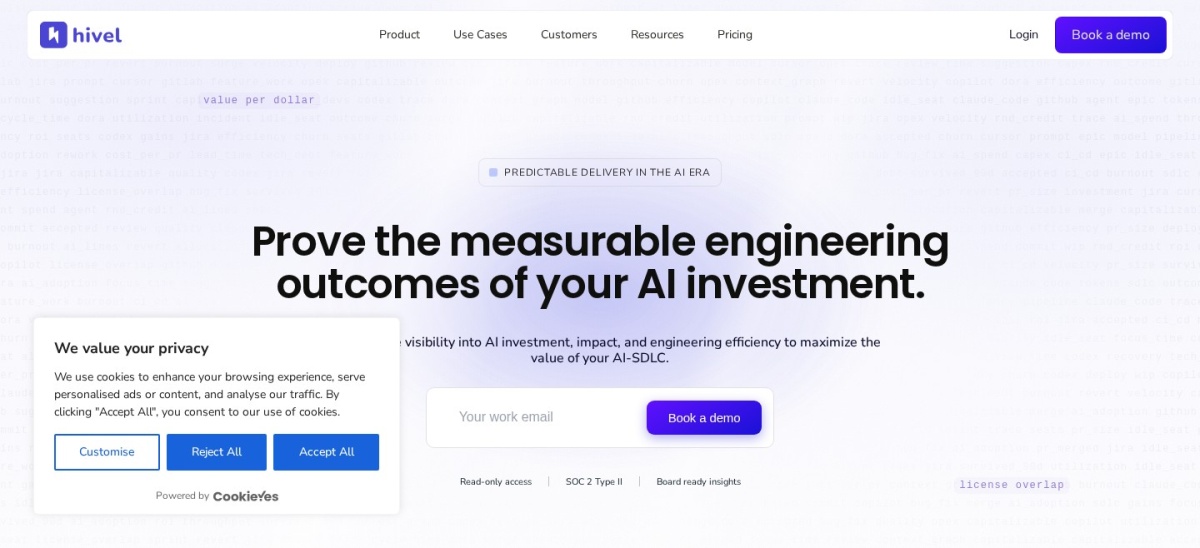
Hivel is an engineering intelligence platform that ties AI spend and merged code to delivery outcomes. It reports delivery metrics, flags risks and shows what AI tools cost against the work they produce, with a 4.7 out of 5 rating on G2 from 118 reviews.
The trade off is maturity. Hivel is newer than Jellyfish or DX, so its benchmark data and enterprise controls are thinner, and Growth starts at $20 per contributor a month billed annually. It suits teams that want AI impact measured next to delivery.
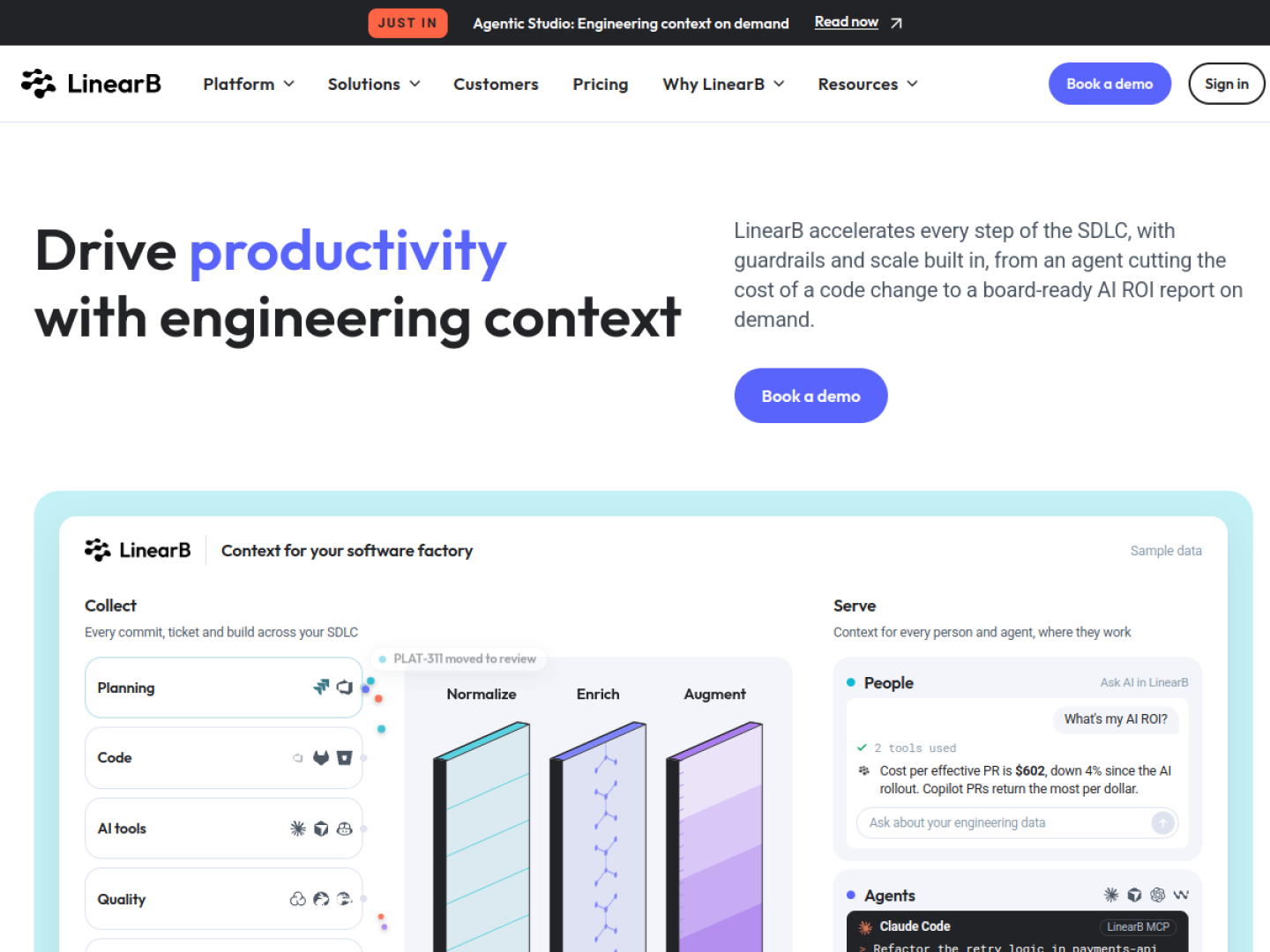
LinearB is an engineering analytics platform that pairs delivery metrics with workflow automation. It tracks cycle time and review bottlenecks, automates pull request routing and includes AI credits, with a 4.6 out of 5 rating on G2 from 79 reviews.
The trade off is team size. Essentials starts at $29 per user a month billed annually for teams of 50 developers or more, and Enterprise is $59. It suits mid-size and large teams that want automation, not just dashboards.
Jellyfish is an engineering management platform built for executive and finance reporting. It connects engineering work to business outcomes, tracks software capitalisation and benchmarks against more than 1,000 engineering organisations, with a 4.5 out of 5 rating on G2 from 430 reviews.
The trade off is price. There is no public list price, and median contracts run near $57,500 a year according to Vendr data. It suits CFOs and CTOs who must report engineering investment, not just team speed.
DX is an engineering intelligence platform that combines developer surveys with system metrics. It measures developer experience alongside delivery data, flags risks with DX AI and tracks AI measurement, with a 4.6 out of 5 rating on G2 from 394 reviews.
The trade off is price and focus. Pricing is quote-only with a median contract near $53,800 a year, and survey programmes need ongoing effort to keep response rates up. It suits organisations running formal developer experience programmes.
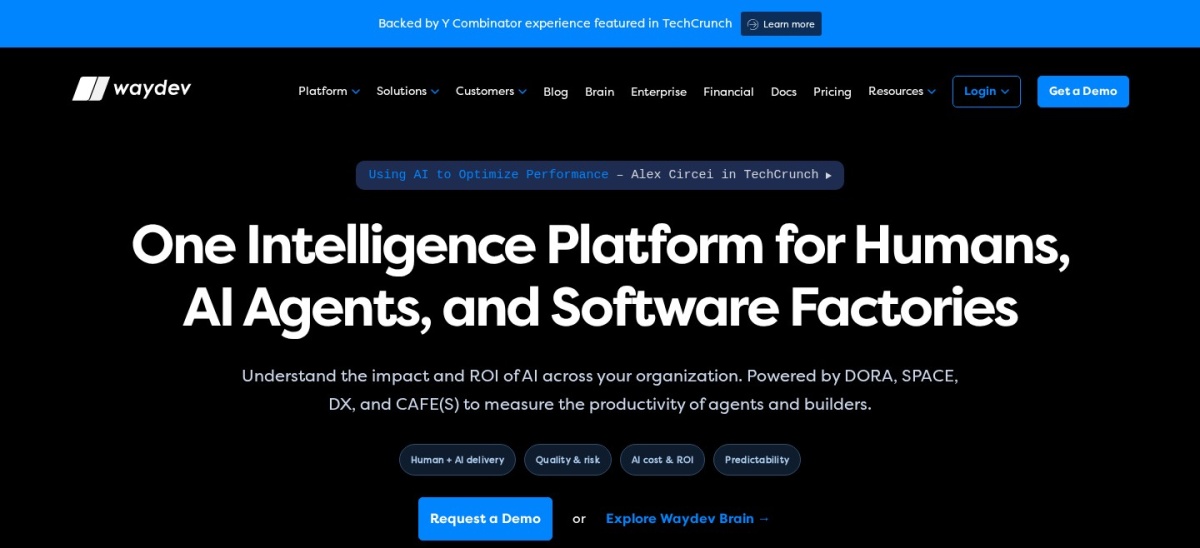
Waydev is an engineering analytics platform that turns Git and Jira data into team performance views. It tracks cycle time, review time and throughput, with a 4.7 out of 5 rating on G2 from 61 reviews.
The trade off is breadth. Waydev is narrower than Jellyfish or DX, with less finance reporting and no survey programme, and its Pro plan costs $449 a contributor a year per the vendor's own site, while G2 lists a $649 Basic plan. It suits engineering managers who want clear Git-based metrics fast.
Swarmia is an engineering productivity platform with modular metrics and a free plan for teams of up to 9 developers. It reports DORA metrics, cycle time and pull request flow with Slack integration, with a 4.4 out of 5 rating on G2 from 319 reviews.
The trade off is add-on pricing. Standard costs $45 per developer a month billed annually, and AI adoption and productivity add-ons cost $5 and $23 more. It suits teams that want published pricing and a gentle rollout.
Allstacks is an engineering intelligence platform built around AI agents that work over engineering data. It connects delivery metrics with forecasting and risk signals, with a 4.5 out of 5 rating on G2 from 57 reviews.
The trade off is price transparency. Plans are quote-based with no public list, and the agent-first approach is newer than the dashboard-first tools here. It suits teams that want AI to surface risks without manual report building.
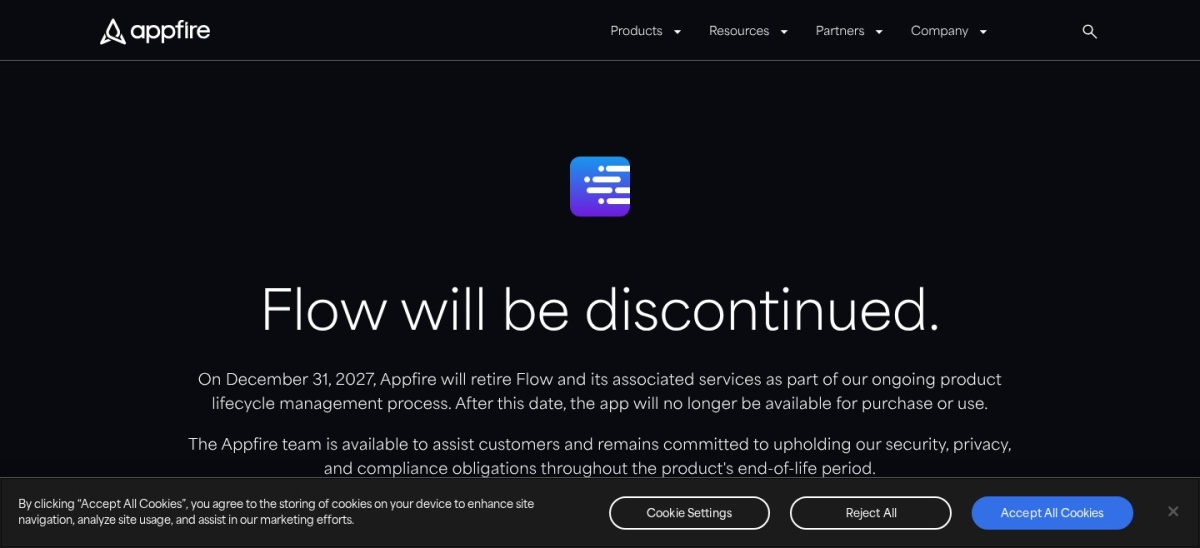
Pluralsight Flow is a software delivery intelligence platform from Pluralsight. It turns Git and issue tracker data into cycle time, work in progress and team health views, with a 4.1 out of 5 rating on G2 from 91 reviews.
The trade off is price and lock-in. Core costs $38 per contributor a month billed annually with no monthly option, and it fits best where teams already use Pluralsight Skills. It suits engineering leaders who want delivery data beside learning data.
Haystack is an engineering analytics platform focused on team delivery and risk. It tracks DORA metrics, detects at-risk epics automatically and posts status updates to Slack, with a 4.8 out of 5 rating on G2 from 11 reviews.
The trade off is the thin review base. Only 11 G2 reviews back the highest rating here, and Growth costs $20 to $25 per member a month depending on the listing. It suits smaller teams that want delivery risk flagged early.
Only Swarmia offers a free plan, for teams of up to 9 developers. It covers core DORA metrics and pull request flow, which is enough for a small team to start measuring delivery.
Paid plans add history and AI. Longer data history, AI adoption tracking and finance reporting all sit behind paid tiers, and per-developer pricing means costs scale with headcount.
For a team of 10 developers, Hivel Growth costs about $2,400 a year while LinearB Essentials costs about $3,480. Quote-only tools start far higher, so get a written quote before shortlisting them.
How we chose
We started from the software development analytics category on G2, then kept tools with a verifiable G2 rating and an established customer base.
Prices come from vendor pricing pages and G2 listings, checked on 25 November 2026. Where a vendor publishes no list price, the list says so and the price is marked as a quote. Ratings and review counts come from G2 on the same day.
We left out tools with no verifiable rating on G2, Capterra or Trustpilot. No vendor paid for a place, and we do not claim hands-on testing for this list.
How to choose engineering analytics software
Start with the question you need answered, then check the price per developer.
Name the decision first. If you need to report engineering cost to finance, pick Jellyfish or DX. If you need faster delivery, pick a DORA metrics tool such as Hivel or Swarmia.
Multiply the price by your team. Every price here is per developer per month, so a 100-developer team pays about $24,000 a year at $20 a head. Quote-only tools need a written quote.
Check the AI features are included. Some tools charge extra for AI adoption or AI impact add-ons. Confirm what is in the base plan before you sign.
Clean up Jira and Git hygiene first. Cycle time and DORA metrics are only as good as ticket discipline. Fix status flows and branch naming before you judge any tool.
FAQ
What is the best engineering analytics software?
Hivel is the strongest pick for most teams, with a 4.7 out of 5 G2 rating from 118 reviews and Growth pricing from $20 per contributor a month. It ties AI spend to delivery outcomes, which few rivals do. LinearB suits teams that want workflow automation built in.
How much does engineering analytics software cost?
Published prices run from $20 to $59 per developer per month on annual billing, so a 50-developer team pays roughly $12,000 to $35,000 a year. Jellyfish, DX and Allstacks are quote-only, and their contracts can run well above $50,000 a year for large teams.
What are DORA metrics?
DORA metrics are four delivery measures: deployment frequency, lead time for changes, change failure rate and time to restore service. Hivel, Swarmia and Haystack all report them from Git and CI data, and they are the standard way to compare engineering delivery speed.
Is there free engineering analytics software?
Swarmia is free for companies with up to 9 developers, which covers small teams. Every other tool in this list needs a paid plan, though most offer a free trial of 14 to 45 days before billing starts.
Do these tools track individual developers?
Most focus on team-level delivery rather than individual output. Haystack states this directly, and Jellyfish reports work at initiative and team level. If a vendor pitches per-developer productivity scores, ask how it handles holidays, leave and non-coding work.
Which tool is best for reporting engineering cost to finance?
Jellyfish is the strongest fit, with DevFinOps features for software capitalisation and initiative cost reporting. It holds 430 G2 reviews, the largest base here, but pricing is quote-only, so expect an enterprise sales process.
SaaS SEO and WordPress specialist with about 8 years of experience. Rakib compares WordPress plugins, themes, hosting and software using public pricing, documentation and user reviews. See how we rank.