PowerSchool is the best education management software for large K-12 districts, while Gradelink is the best pick for small private schools at $121 a month. OpenEduCat is the cheapest serious option at $59 a year, and QuickSchools suits small schools that want per-student billing.
How we make this list: we compare pricing pages, product documentation and public user reviews, then re-check every price before each update. No product paid for a place. Disclosure.
PowerSchool is the default pick for large K-12 districts, serving more than 60 million students across 90 countries.
Gradelink is the best small-school option, with published prices from $121 a month for up to 50 students.
OpenEduCat costs $59 a year for its Basic plan, and QuickSchools charges $0.99 per student a month with a 30-student minimum.
Almost every district-scale platform prices by quote, so budget for a sales process and months of implementation.
Ellucian is the only tool here built for higher education, covering admissions, aid and advancement for universities.
What education management software covers
Education management software is the student information system that runs a school: enrollment, attendance, grades, schedules, transcripts and billing. Districts, independent schools and universities all use some version of it, but the products differ sharply by market.
Large K-12 districts buy PowerSchool, Infinite Campus or Skyward, and pay by quote with implementations that take months. Small private schools get a better fit from Gradelink, QuickSchools or Alma, where prices are published or quoted in days.
Independent and faith-based schools have their own options in Veracross and FACTS, which bundle admissions, billing and academics for tuition-charging schools. Universities should start with Ellucian, the only platform here built for higher education.
Price is only the first line of the real cost. Our online course platform guide covers the teaching side, while this list covers the administrative backbone that keeps the records straight.
PowerSchool SIS is the default student information system for large K-12 districts, serving more than 60 million students across 90 countries. Its platform covers the SIS, Schoology Learning, enrollment, talent management and analytics from one vendor.
The trade off is everything around the software. Pricing is quote-based with enterprise-style contracts, and implementation takes months of data migration, state-reporting validation and staff training. It suits districts that want one vendor for attendance, grades, HR and state reporting.
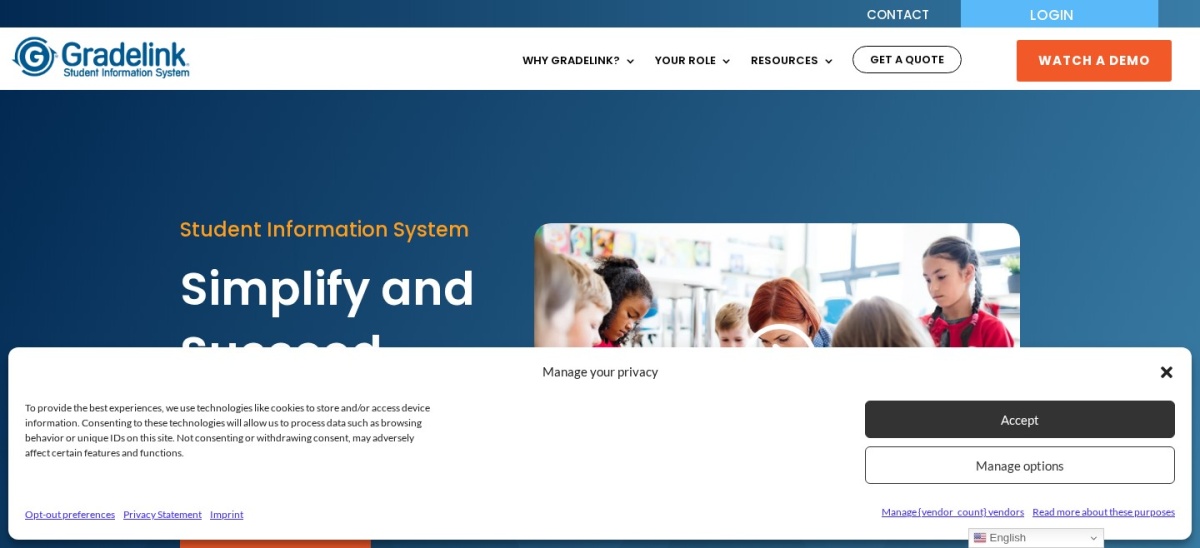
Gradelink is a student information system for preschool through high school, with attendance, gradebook, report cards, transcripts, parent communication and billing. It is priced in per-student enrollment bands, starting at $121 a month for up to 50 students.
The trade off is depth. Gradelink covers the basics well but trails the district platforms on reporting depth, custom workflows and integrations. It suits an independent school under a few hundred students that needs to stop running grades in spreadsheets.
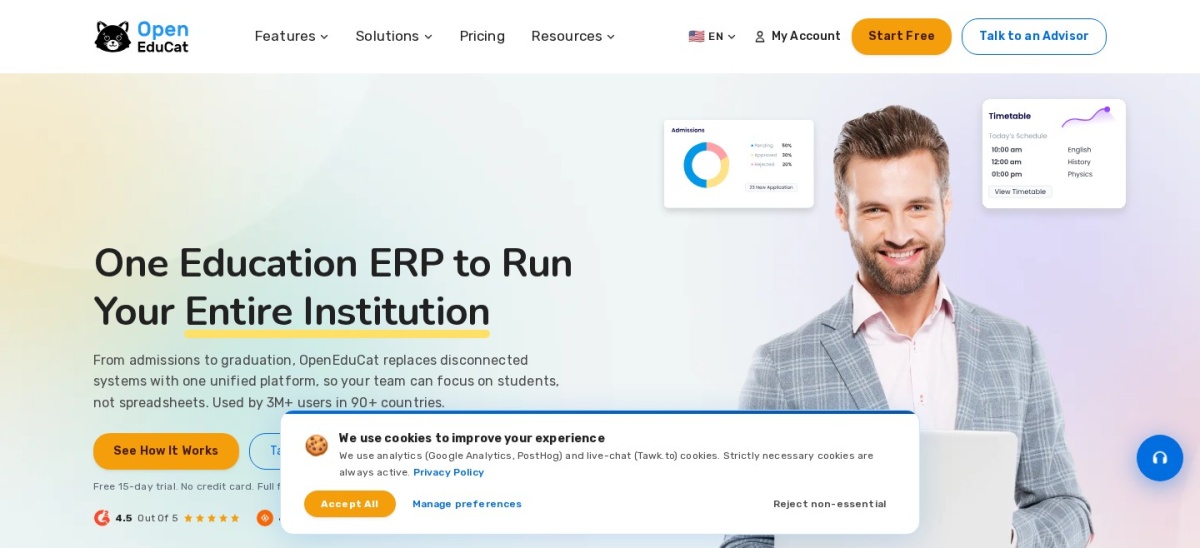
OpenEduCat is an open-source school management platform with student records, attendance, academics, fees and faculty management. Its Basic cloud plan costs $59 a year, making it the cheapest serious option in this list.
The trade off is support. OpenEduCat is community-driven, so schools that want a vendor to call may prefer a commercial product. It suits small schools and colleges that want full control of their data and a very low bill.
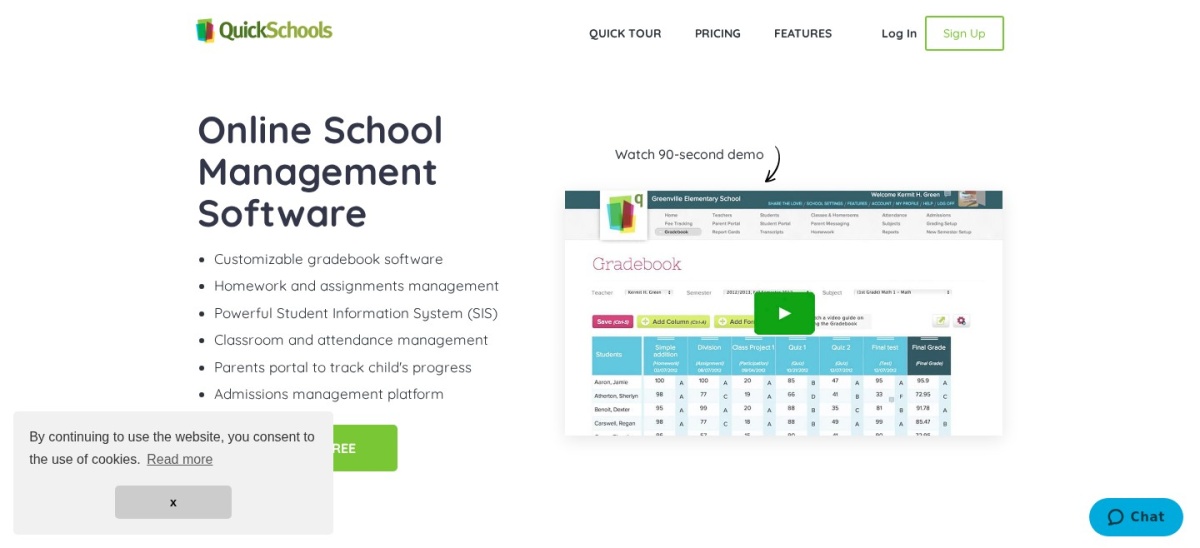
QuickSchools is a web-based student information system for small and mid-size schools, with gradebook, attendance, admissions and parent communication. It charges per student, from $0.99 a month on the Gaia plan, with a 30-student minimum.
The trade off is scale. QuickSchools fits schools under 200 students best, and larger schools need enterprise pricing past 300 students. It suits small schools that want a clear per-student cost without separate tools for grades and attendance.
Alma SIS is a cloud-based student information system designed to feel like current software instead of a database with a web form on top. Teachers get gradebook, attendance and communication tools, and districts get state reporting, custom report builders and data dashboards.
The trade off is track record. Alma is newer than the incumbents, so the longest track records belong to rivals, and advanced customization trails the biggest suites. It suits schools that want current UX without enterprise bloat.
Veracross is a student information system built around the way independent schools actually operate: one person, one record, from first admissions inquiry through alumni donation. With more than 3,300 schools on the platform, it is the standard choice in the private-school world.
The trade off is focus. Veracross optimizes for independent and private K-12, including boarding schools, and public districts with heavy state-reporting obligations will find gaps. It suits tuition-charging schools that want admissions, academics, billing and development in one record.
FACTS SIS is a full K-12 platform that started in tuition management and grew to cover the SIS, admissions and enrollment, financial aid assessment and payment processing. More than 12,000 schools and 2 million families use FACTS products.
The trade off is the bill. FACTS sells modules that each carry per-student or per-family fees, and a school using tuition billing plus aid assessment plus the SIS can see the total climb. It suits Catholic, Christian and other faith-based schools that want one vendor from application to tuition collection.
Skyward is a K-12 student information system that has served schools since 1980 and now counts more than 2,500 school districts, with a distinctive pitch: one vendor for both the student information system and the business office. Districts that run payroll, HR and finance on Skyward get a single database for employees who are also parents.
The trade off is choice. Districts choose between SMS 2.0 and Qmlativ, and picking the wrong one for your size means a migration later. It suits districts that value the SIS-plus-ERP combination and plan to stay for a decade.
Infinite Campus is a web-based K-12 student information system built on one codebase, with more than 1,500 core tools and add-on products that integrate natively. For a district technology team, that means fewer integration points to babysit and one vendor to call when the gradebook disagrees with the transcript.
The trade off is the interface. Longtime users praise reliability but describe the interface as functional rather than modern, and customization beyond standard workflows usually needs professional services. It suits districts that want SIS and add-ons from a single codebase.
Ellucian is the higher-ed specialist on this list. Its platform covers the full student lifecycle that universities actually run: recruiting and admissions, enrollment, financial aid, student accounts, advising and alumni advancement.
The trade off is scale. Ellucian sells to institutions, not schools, and the sales cycle, implementation timeline and contract values reflect it: think months of implementation and a dedicated internal team. It suits a mid-size university replacing a legacy Banner or Colleague install.
A student information system is the system of record: who the students are, where they are enrolled and what grades they earned.
A learning management system is where teaching happens: assignments, discussions and course content. Most schools run both, with grades flowing from the LMS into the SIS.
PowerSchool owns Schoology, so its SIS and LMS come from one vendor. Other schools pair Infinite Campus or Skyward with Canvas or Google Classroom.
How we chose
We started from the products schools actually buy: district RFP shortlists, state approved-vendor lists and the platforms that dominate G2. Every tool here has a G2 rating with a review count, checked on 25 November 2026.
Prices come from each vendor's pricing page or vendor-supplied pricing. Nearly every SIS vendor prices by quote, which is standard in this market, so we say so plainly instead of printing third-party guesses.
We left out Teachmint because its only published price is in rupees, and Classter because its pricing is quote-only with no G2 rating we could verify. No vendor paid for a place, and we do not claim hands-on testing for this list.
How to choose education management software
Match the tool to your school type, then get the quote in writing and check state reporting.
Match the tool to your school type. Districts buy PowerSchool, Infinite Campus or Skyward; independent schools buy Veracross, FACTS or Alma; small schools buy Gradelink or QuickSchools.
Get the quote in writing. Nearly every vendor prices by quote based on enrollment and modules. Ask for implementation broken out separately.
Check state reporting before you sign. District platforms maintain state-specific reporting modules. Confirm your state's reports are supported and how fast updates ship.
Protect the academic calendar. Never schedule a cutover for August. Run the new system in parallel for one grading period and keep the old system read-only for a year.
FAQ
What is the best education management software?
PowerSchool is the best education management software for large K-12 districts, with the broadest product suite and more than 60 million students served. Gradelink is the best pick for small private schools, with published prices from $121 a month.
How much does a student information system cost?
Nearly every SIS vendor prices by quote, based on enrollment, modules and implementation services. Small-school platforms publish prices, from $59 a year for OpenEduCat to $121 a month for Gradelink, while district platforms run into five or six figures a year.
What is the difference between an SIS and an LMS?
The SIS is the system of record: who the students are, where they are enrolled and what grades they earned. The LMS is where teaching happens, with assignments, discussions and course content, and grades flow from the LMS into the SIS.
How long does SIS implementation take?
Small schools can go live in 4 to 12 weeks, while districts typically need 6 to 18 months across phased rollouts. Universities replacing core student systems should plan for a year or more, since data migration and reporting validation take the most time.
Can a small private school use the same software as a public district?
Technically yes, but it is a poor fit. District platforms are built around state reporting and tens of thousands of students, so independents pay for complexity they never use. Veracross, FACTS, Alma and Gradelink are built for the independent-school model instead.
Do these platforms handle state reporting?
The district-scale vendors maintain state-specific reporting modules and update them as requirements change. Independent-school platforms cover the states their customers need but with narrower libraries, so confirm your state's reports are supported before you sign.
SaaS SEO and WordPress specialist with about 8 years of experience. Rakib compares WordPress plugins, themes, hosting and software using public pricing, documentation and user reviews. See how we rank.