Best Ecommerce Platforms Comparison in 2026: 7 Tools Compared
WLWPLegible EditorsLast verified 23 Nov 2026How we rank8 min read
★ Short answer
Shopify is the best ecommerce platforms comparison pick for most buyers, rated 4.4/5 on G2 from 5,159 reviews, with paid plans from $29/mo. Pick BigCommerce for a cheaper start and WooCommerce for the most control.
How we make this list: we compare pricing pages, product documentation and public user reviews, then re-check every price before each update. No product paid for a place. Disclosure.
Shopify leads overall: Basic from $29 a month billed yearly, rated 4.4/5 on G2 from 5,159 reviews.
BigCommerce matches Shopify at $29 a month, with no platform fee and stronger built-in B2B tools.
WooCommerce is free at the core with 0% platform fees, but hosting and upkeep are separate costs.
Wix and Squarespace cost $29 and $28 a month for selling plans, with design as their main strength.
Ecwid and Shift4Shop both have free plans, and Shift4Shop offers unlimited products on every plan.
What to look for in ecommerce platforms comparison
Comparing ecommerce platforms means comparing the full bill, not just the plan price. Card rates, apps, transaction fees and hosting change the ranking once a store is running.
The best platform depends on the seller. A maker with 20 products needs different tools from a wholesaler with 20,000, so match the platform to the catalog and the team. Our guide on best CRM software covers the sales side.
Free plans are real in this comparison. WooCommerce, Ecwid, Square Online and Shift4Shop all let a seller start with no monthly fee, though card fees still apply.
Ease of leaving matters too. Hosted platforms are faster to start but harder to move away from, while open-source tools are harder to run but fully portable.
Shopify is a hosted commerce platform that runs the store, checkout, payments and hosting in one place. The Basic plan costs $29 a month billed yearly and includes unlimited products, discount codes, abandoned cart recovery and 24/7 support. In this comparison, Shopify wins on ease of launch, checkout and the size of its app store.
The trade off is cost creep. Paid apps add up fast, and sales through a third-party gateway carry a 2% fee on Basic. It suits sellers who want a store live quickly without managing hosting or updates.
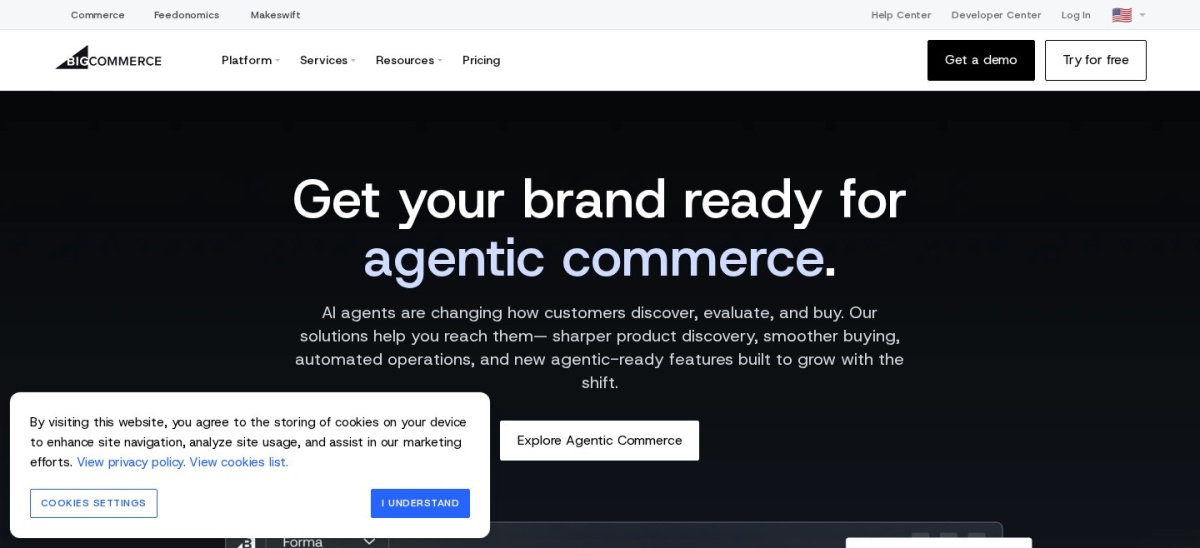
BigCommerce is a hosted platform built for larger catalogs and B2B selling, with no platform transaction fee on its embedded payment providers. The Core plan costs $29 a month billed yearly and includes unlimited products, unlimited staff accounts and multi-currency selling. In this comparison, BigCommerce wins on built-in features and no platform fee on embedded payments.
The trade off is the sales cap. Core covers up to $30,000 in trailing 12-month sales, then the store moves up a tier. It suits sellers who outgrow simple builders and need B2B tools without replatforming.
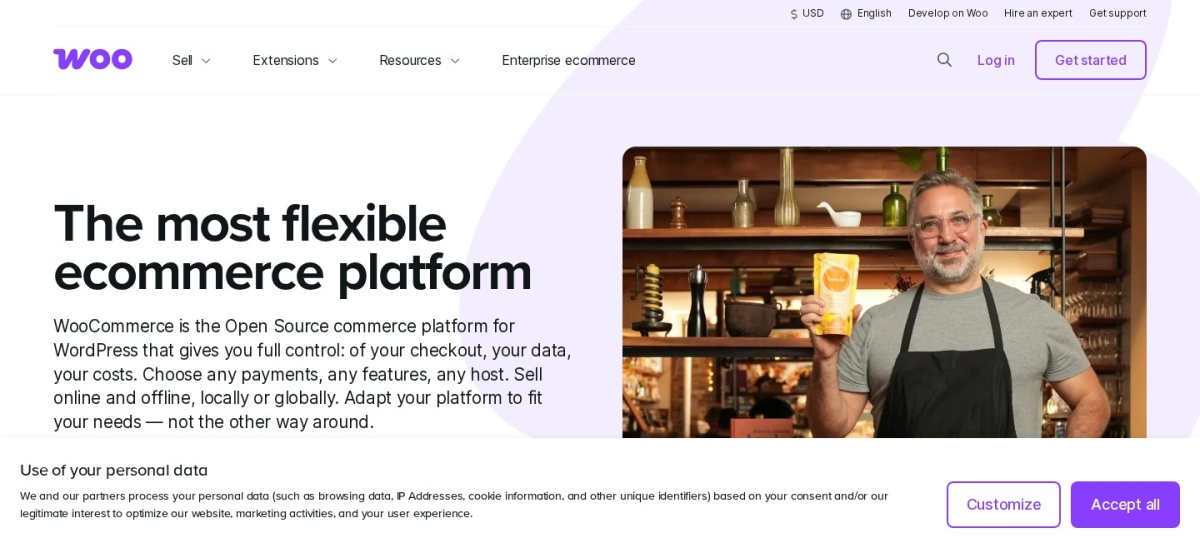
WooCommerce is a free, open-source plugin that turns a WordPress site into a store. The core software costs nothing and adds unlimited products, coupons, tax settings and payment options, while hosting, a domain and extensions are paid separately. In this comparison, WooCommerce wins on price and control, since the core is free and open source.
The trade off is upkeep. Updates, backups, security and speed are the store owner's job, and paid extensions add up. It suits sellers who already run WordPress and want full control of their data and checkout.
Wix is a drag-and-drop website builder with a store built in, so the site and the shop share one editor. The Core plan costs $29 a month billed yearly and is the first plan that accepts payments. In this comparison, Wix wins on visual design control for small stores.
The trade off is depth. It is not built for very large catalogs or complex B2B pricing, and moving a store off Wix later is hard. It suits small stores that want design control without code.
Squarespace is a design-led website builder with commerce built in, known for polished templates and a clean checkout. The Commerce Basic plan costs $28 a month billed yearly with no platform transaction fee. In this comparison, Squarespace wins on template quality for design-led brands.
The trade off is scale. It suits small catalogs and design-led brands, but large inventories and complex shipping rules fit other platforms better. It suits creators and small brands whose site is part of the brand.
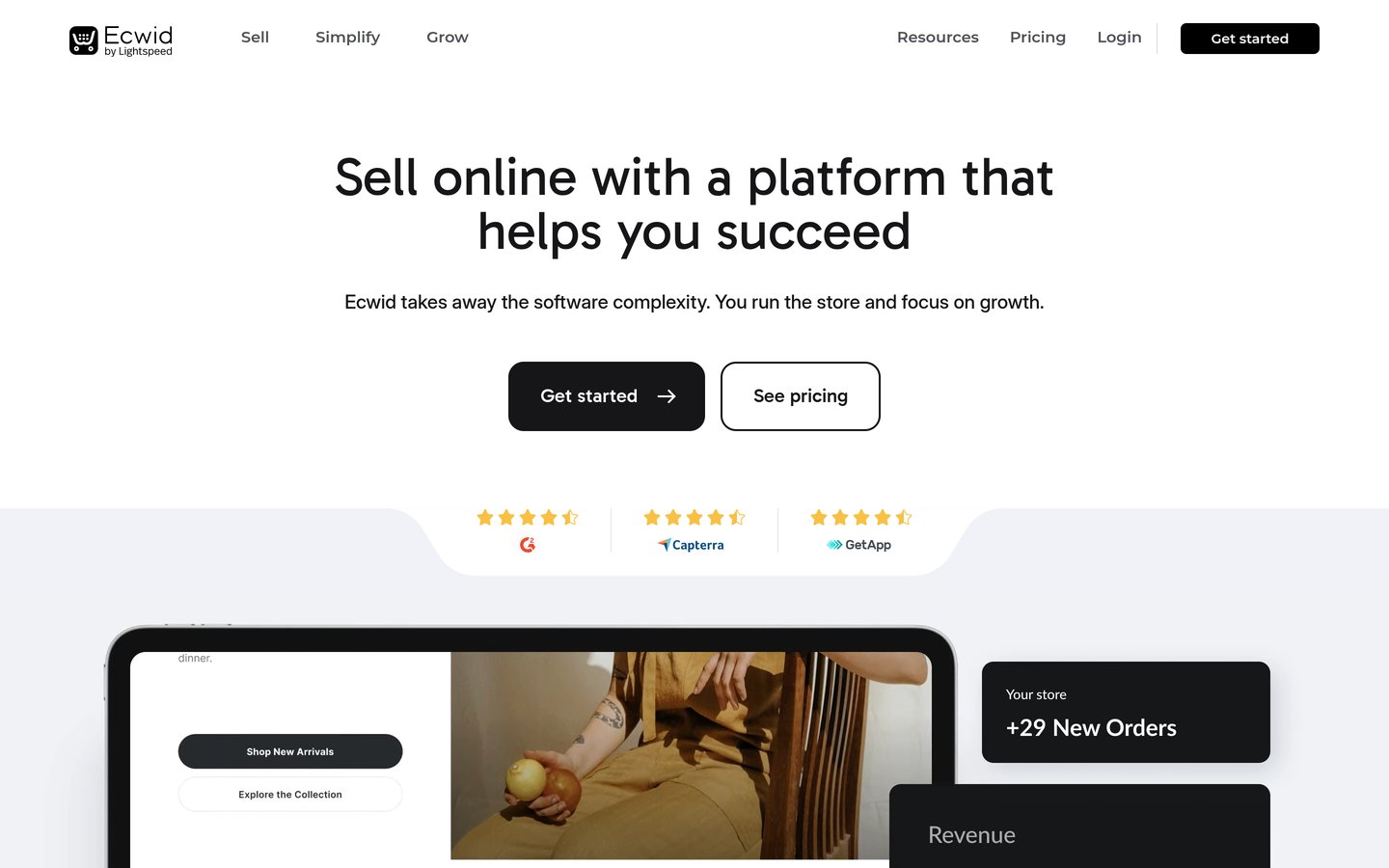
Ecwid by Lightspeed adds a store to an existing website or social page instead of replacing it. The free plan covers 5 products, and the Venture plan costs $25 a month with 100 products and no platform transaction fee. In this comparison, Ecwid wins on flexibility, adding a store to any site or social page.
The trade off is that it is an add-on, not a full website builder. Sellers who need a standalone site must pair it with one. It suits sellers with a site already who want to start selling fast.
Shift4Shop is a hosted platform with unlimited products, bandwidth and orders on every plan. US merchants can use the End-to-End plan free with Shift4 Payments, and the Basic Store plan costs $29 a month. In this comparison, Shift4Shop wins on unlimited products and a free plan for US merchants.
The trade off is the interface, which reviewers describe as dated, and the free plan is US-only. It suits budget sellers who want built-in features without paying for many apps.
Pick Shopify if you want the fastest launch and the largest app store.
Pick BigCommerce if you want more built in and no platform fee on embedded payments.
Pick WooCommerce if you already run WordPress and want full control with no platform fee.
Pick Wix or Squarespace if design matters most and the catalog is small.
Pick Ecwid or Shift4Shop if budget matters most and you want a free or cheap start.
How we chose
We started from the established ecommerce platforms and shipping tools with a verifiable G2 rating and a published price, then kept those that fit best ecommerce platforms comparison.
Prices come from each vendor's pricing page, checked on 23 November 2026. Ratings and review counts come from G2 on the same day. Where a vendor shows a sale, the list shows the regular price.
We left out tools with no verifiable rating or no published price. No vendor paid for a place, and we do not claim hands-on testing for this list.
How to choose ecommerce platforms comparison
Start with what you sell and how much you ship, then match the tool to that shape.
Add up the full monthly bill. Plan price plus card fees, apps and hosting is the real cost.
Match the platform to your catalog. Small catalogs suit builders; large or B2B catalogs need BigCommerce or WooCommerce.
Test the checkout on mobile. Most buyers shop on phones, so a slow mobile checkout costs sales.
Check how hard it is to leave. Hosted platforms are fast to start but hard to move away from later.
FAQ
What is the best ecommerce platform overall?
Shopify is the strongest overall pick. Basic costs $29 a month billed yearly, it is rated 4.4/5 on G2 from 5,159 reviews, and its app store covers most needs.
Is BigCommerce better than Shopify?
BigCommerce matches Shopify on price at $29 a month and adds no platform fee on embedded payments plus built-in B2B tools. Shopify has the larger app store, so the better pick depends on your needs.
Is WooCommerce better than Shopify?
WooCommerce is cheaper and more flexible, since the core is free and you own the data. Shopify is faster to launch and easier to maintain, since hosting and updates are handled for you.
What is the cheapest ecommerce platform?
WooCommerce is free at the core, and Ecwid and Shift4Shop have free plans. Among paid plans, Squarespace Commerce Basic at $28 a month billed yearly is the cheapest in this list.
Which ecommerce platform is easiest for beginners?
Wix has the easiest visual editor in this list, and Shopify is the easiest hosted commerce platform to launch. Both get a store live without a developer.
Can I switch ecommerce platforms later?
Yes, but it takes work. Products, customers and orders can be exported, and every old URL needs a redirect, so pick with the long term in mind.