Taktile is the best decision intelligence software for most teams. Its decision flows combine rules, data and machine learning, while Pecan suits teams that want churn and lifetime value predictions without a data scientist and Tellius suits teams that want to ask questions in plain language.
How we make this list: we compare pricing pages, product documentation and public user reviews, then re-check every price before each update. No product paid for a place. Disclosure.
Taktile is the best overall pick, with the highest G2 rating here at 4.7 and decision flows that combine rules, data and machine learning.
Pecan is the only tool with a published price, Starter at $950 a month, and it predicts churn and lifetime value without a data scientist.
Tellius answers plain-language questions and finds the root cause behind a change in the numbers automatically.
Pyramid pairs governed self-service analytics with AI forecasts, but its G2 base is only 17 reviews.
Six of the eight tools are quote-only, and three ratings rest on five or fewer G2 reviews, so shortlist on a demo, not a score.
What decision intelligence software actually does
Decision intelligence software turns data into a recommendation, not just a chart. It finds what changed, explains why, and suggests what to do next, so a manager can act without waiting for an analyst.
Most tools here combine three things: a way to ask questions in plain language, automated root-cause analysis, and predictions from machine learning. Taktile and Aera go further, turning the recommendation into an action inside the same platform.
The buying decision is mostly about who decides. A data team wants governed models and a semantic layer, which is where Pyramid and Qrvey earn their place. A business team wants answers in plain language, which is where Tellius and Pecan fit.
This list covers decision intelligence platforms, not decision automation rules engines, which we cover separately. Ratings come from G2, and five tools rest on small review bases, which we flag in each card.
Taktile is a decision platform that turns data, rules and machine learning into recommendations teams can act on. Risk and lending teams build decision flows, watch approval rates live, and let the platform suggest the next action. It holds 4.7 out of 5 from 81 G2 reviews, the highest rating in this list.
The trade off is cost and scope. There is no published price, and the annual subscription plus usage fees put it out of reach for small teams. Its home is regulated lending and risk, so teams outside that world may find the platform more than they need. It suits organisations that decide on credit, fraud or onboarding every day.
What we like
Highest G2 rating in this list at 4.7
Rules, data and ML models in one decision flow
Recommendations turn into actions in the same platform
Built for regulated, high-volume decisions
Watch out for
No published price, annual subscription plus usage fees
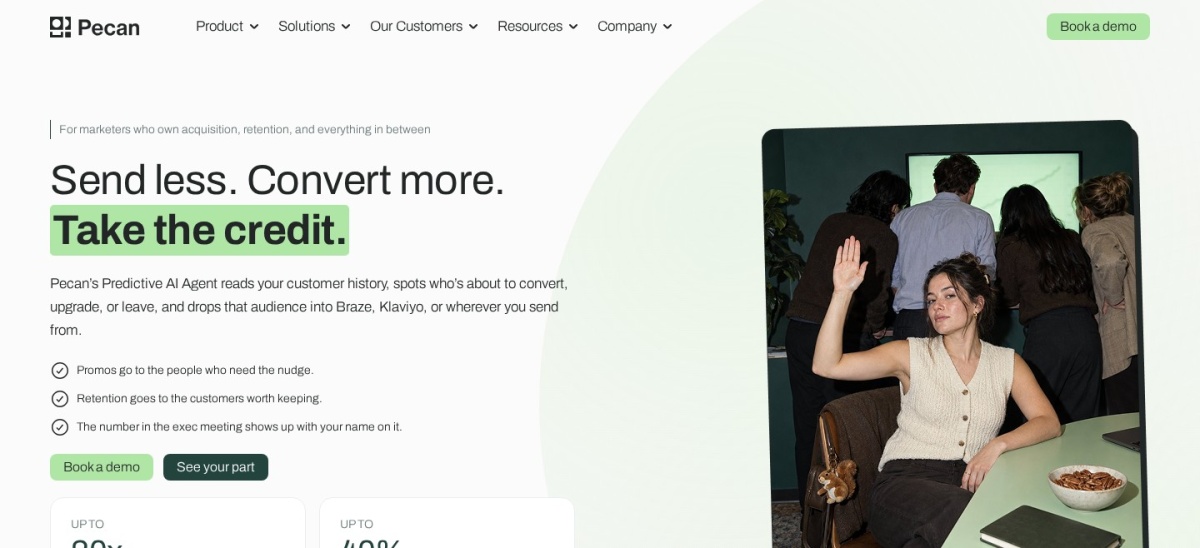
Pecan AI is a predictive analytics platform that builds machine learning models from a business question, with no code and no data scientist. Teams ask which customers will churn or buy again, and Pecan returns predictions plus the drivers behind them. It holds 4.7 out of 5 from 48 G2 reviews.
The trade off is price and depth. Starter costs $950 a month, so the entry point is high for a small team, and the platform focuses on customer predictions rather than general analytics. It suits marketing and sales teams that want churn and lifetime value predictions in days.
What we like
Only published price in this list, Starter at $950 a month
No-code predictive modelling for business teams
Predictions arrive with their drivers explained
Free trial and pay-as-you-go entry from $5 a month
Watch out for
$950 a month is a high entry point
Focused on customer predictions, not general analytics
Usage-based pricing makes the bill hard to forecast
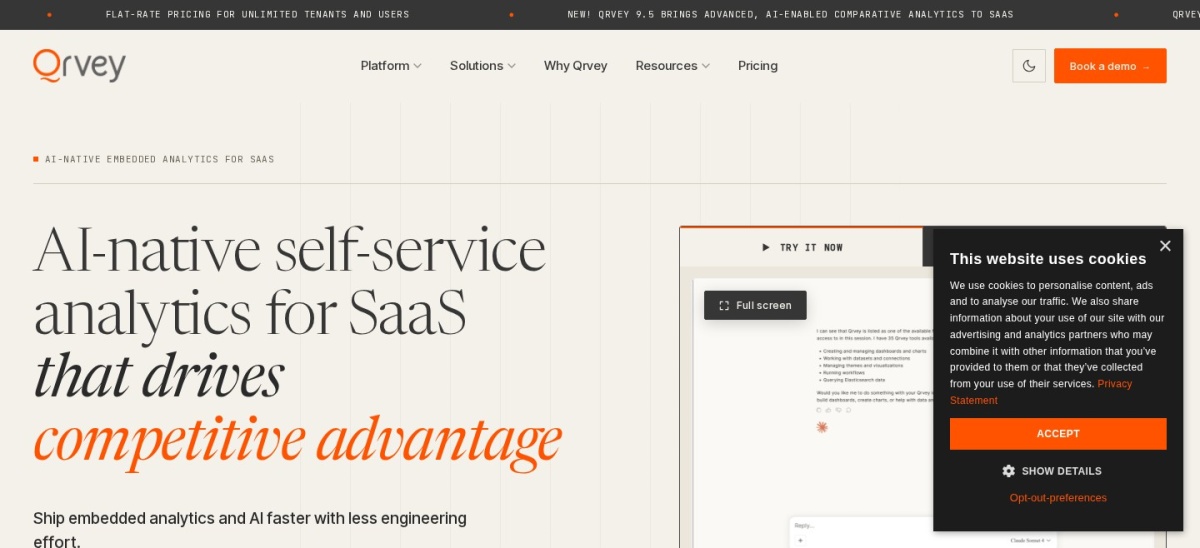
Qrvey is an analytics platform built for teams that embed reporting inside their own product. Business users build dashboards and reports without engineering help, and a workflow builder can trigger actions when conditions change. It holds 4.4 out of 5 from 29 G2 reviews.
The trade off is pricing and focus. Qrvey publishes no price, and G2 reviewers cite unclear pricing and a steep learning curve for advanced features. It suits SaaS teams that want analytics inside their product rather than a standalone decision platform.
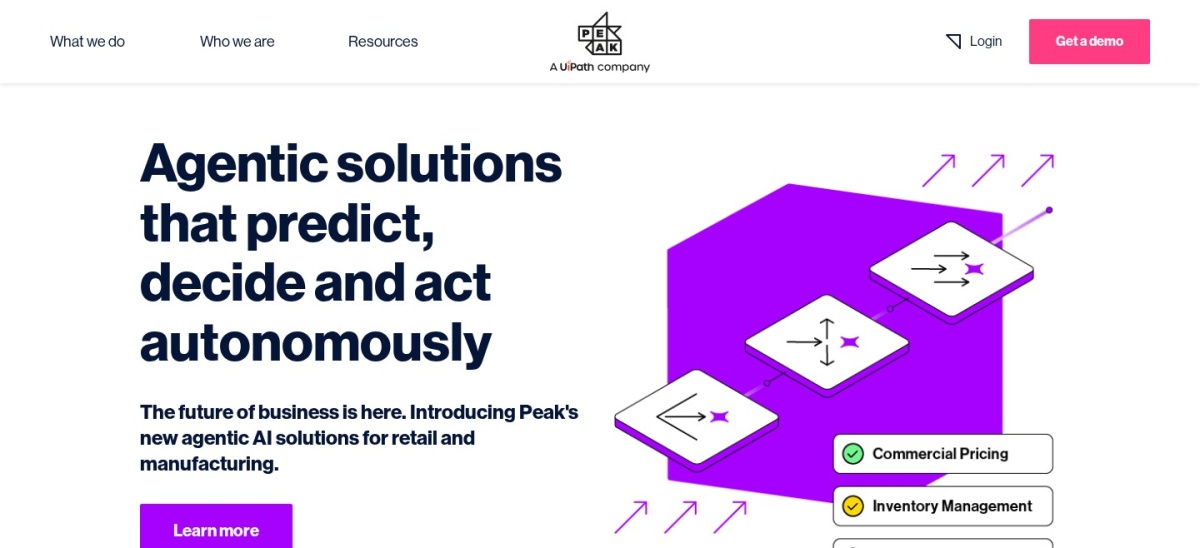
Peak is an enterprise AI platform, now part of UiPath, that packages AI applications for commercial decisions. Its apps recommend inventory levels and prices, then expose the outputs through APIs or web applications. It holds 4.4 out of 5 from 17 G2 reviews.
The trade off is the thin review base and the narrow focus. G2 holds only 17 reviews, and Peak is built for inventory and pricing optimisation rather than general decision intelligence. It suits retail and manufacturing teams that want packaged AI for stock and price decisions.
What we like
Packaged AI apps for inventory and pricing
Recommendations exposed via API or web apps
Built for business users, no data science team needed
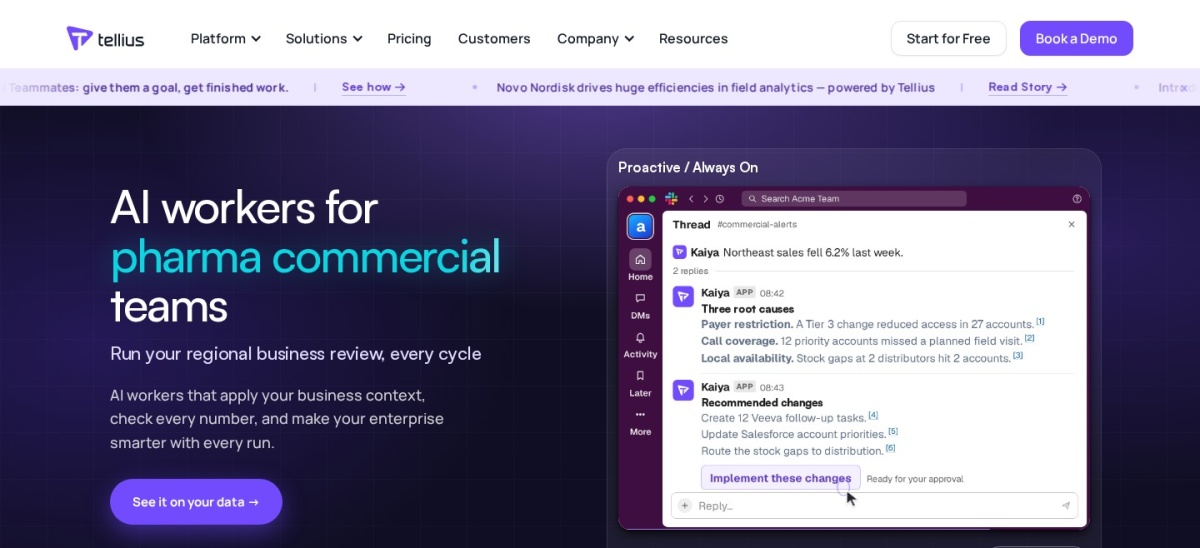
Tellius is a decision intelligence platform that answers plain-language questions about business data. It scans for anomalies, explains what is driving a change, and runs guided AutoML for predictions. It holds 4.3 out of 5 from 26 G2 reviews.
The trade off is price opacity and scale. Tellius publishes no price, with third parties listing $495 a month for up to five users, and the G2 base is only 26 reviews. It suits data and business teams that want to move from what happened to why, fast.
Pyramid Analytics is a decision intelligence platform that combines data preparation, analysis and machine learning in one governed environment. Teams ask plain-language questions, get one-click forecasts, and share metrics through a universal semantic layer. It holds 4.1 out of 5 from 17 G2 reviews.
The trade off is complexity and the thin review base. G2 holds only 17 reviews, and advanced configuration can add complexity for new teams. It suits enterprises that want governed self-service analytics with one set of metrics across regions.
Aera Decision Cloud is a decision intelligence platform that augments and automates enterprise decisions, starting with supply chain and operations. It monitors the business, recommends actions, acts within set policies, and learns from every outcome. It holds 4.1 out of 5 from 5 G2 reviews.
The trade off is the thinnest review base in this list and the enterprise scale. G2 holds only 5 reviews, and Aera sells a platform subscription for large enterprises, so smaller teams will struggle to buy or run it. It suits large operations teams that want decisions to run autonomously.
What we like
Leader in Gartner's 2026 decision intelligence quadrant
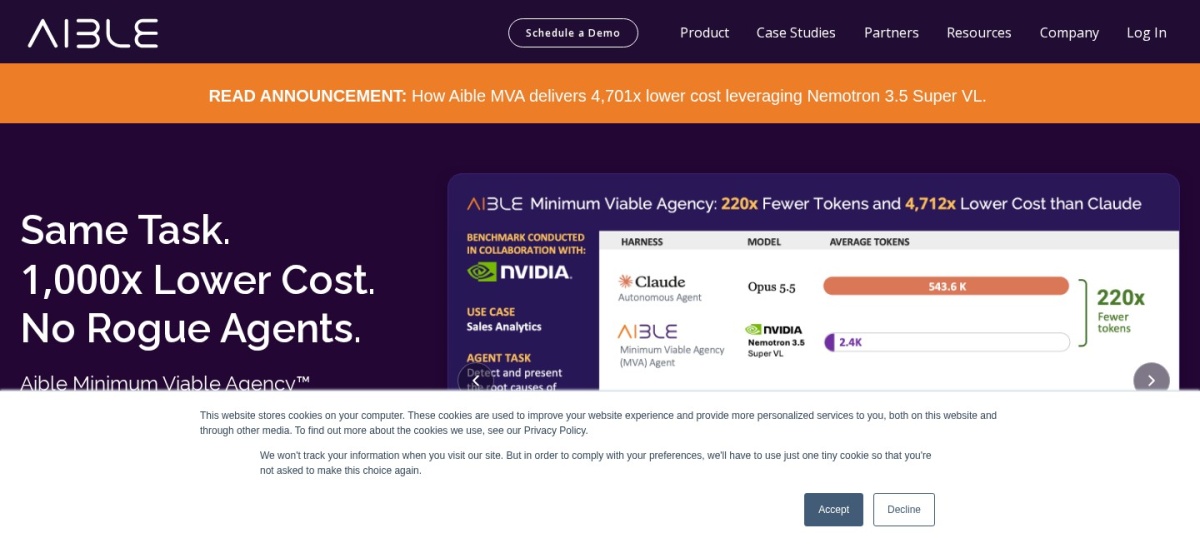
Aible is an enterprise AI platform that trains predictive models around business objectives rather than abstract accuracy. Teams set financial goals and constraints, and Aible builds models that optimise for measurable impact. It holds 4.0 out of 5 from 5 G2 reviews.
The trade off is the thin review base and the learning curve. G2 holds only 5 reviews, and users report a steep learning curve with documentation that could be stronger. It suits teams that want models judged on dollars, not accuracy scores.
Decision intelligence vs business intelligence: what is different?
Business intelligence shows what happened. A dashboard tells you sales fell last month, and an analyst then hunts for the reason. Decision intelligence skips the hunt: it flags the fall, finds the driver, and recommends the fix.
The difference is who does the work. BI hands the question to a person; decision intelligence hands the person an answer. Teams that already have analysts may only need BI, while teams that need faster decisions without more headcount want decision intelligence.
How we chose
We started from the tools that appear in 2026 decision intelligence roundups and Gartner's first Magic Quadrant for the category, then kept only those with a verifiable G2 rating. FICO and Quantexa have no rating on G2, Capterra or Trustpilot, so they are not in this list.
We checked each price on the vendor's own pricing page where one exists, and used the regular monthly price rather than a first-year discount. Only Pecan publishes a price, Starter at $950 a month; the other seven tools are quote-only.
No vendor paid for a place, and we do not claim hands-on testing for this list. We ranked by fit for better decisions: a real recommendation engine first, then explainability, the size of the review base behind each rating, and whether a team can start without a sales call.
How to choose decision intelligence software
Start with the decision: pick one recurring choice your team gets wrong or slow.
Name the decision. Pick one recurring choice, such as which customers will churn or which stock will run out. A tool that cannot answer that question is the wrong shortlist.
Check the explanation. Ask how the tool shows why it recommends an action. A score without a reason is hard to trust and harder to defend.
Try it on your data. Run a trial or a pilot on real history, not a demo dataset. Pecan and Tellius both offer trials; the rest need a sales-led pilot.
Price the shortlist. Seven tools here are quote-only, so get written prices for your data volume and users. Compare three-year costs, not first-year offers.
FAQ
What is the best decision intelligence software?
Taktile is the best decision intelligence software for most teams. Its decision flows combine rules, data and machine learning, it holds 4.7 out of 5 from 81 G2 reviews, the largest review base in this list, and it is built for regulated, high-volume decisions.
Is there free decision intelligence software?
No tool in this list has a free plan. Pecan offers a free trial and a pay-as-you-go plan from $5 a month, and Tellius offers a free trial, but every production plan here is paid. Expect a sales conversation before you can run any of the other six tools.
What is decision intelligence?
Decision intelligence is software that connects data, machine learning and decision logic so it can recommend or execute a choice, then track whether the choice worked. Gartner published its first Magic Quadrant for the category in January 2026, naming FICO, Aera, SAS, IBM, ACTICO and Quantexa as Leaders.
How much does decision intelligence software cost?
Seven of the eight tools here are quote-only, so there is no list price to compare. The exception is Pecan, whose Starter plan costs $950 a month. Tellius is listed at $495 a month for up to five users by third parties, but the vendor publishes no price.
What is the difference between decision intelligence and decision automation?
Decision intelligence analyses the choice, using data and models to recommend what to do. Decision automation runs the choice, applying rules to decide and act without a person. Taktile and Aera do both, while Pecan, Tellius and Pyramid focus on the analysis.
Why are some ratings based on so few reviews?
Decision intelligence is a new enterprise category, so review bases are small. Aera holds 4.1 from 5 G2 reviews and Aible 4.0 from 5, and we flag both in their cards. Taktile has the largest base here at 81 reviews, followed by Pecan at 48.
Do these tools replace data analysts?
No. Decision intelligence automates the routine hunt for drivers and predictions, but analysts still check the data, set the questions and own the judgement. The win is speed: a business user gets an answer in minutes instead of waiting days for a report.
SaaS SEO and WordPress specialist with about 8 years of experience. Rakib compares WordPress plugins, themes, hosting and software using public pricing, documentation and user reviews. See how we rank.