Flyway is the best database schema management software for most SQL teams, because its free Community edition covers plain SQL migrations across more than 60 database platforms. Pick Liquibase if you need changelogs across 70+ databases, and Bytebase if schema changes need visual review and approval.
How we make this list: we compare pricing pages, product documentation and public user reviews, then re-check every price before each update. No product paid for a place. Disclosure.
Flyway is the top pick, with free Community migrations across 60+ databases and almost no learning curve.
Liquibase covers 70+ database types from one changelog, with rollback in the free edition.
Bytebase publishes its price at $20 per user a month, while Flyway and Liquibase paid tiers are quote only.
PlanetScale brings Git-like schema branching from $5 a month, with no free tier.
Atlas, Prisma Migrate and Alembic were left out because no verifiable G2, Capterra or Trustpilot rating was found.
What schema management software does
Database schema management software tracks every change to your database structure, from adding a column to renaming a table, so the schema can move from a laptop to production without breaking the app.
The tools split by model. Flyway treats a migration as a numbered SQL file, Liquibase treats it as a changeset in a changelog, and Bytebase treats it as a reviewed change in a web interface.
Pricing is the honest split. Bytebase, PlanetScale and Supabase publish prices, while Flyway Enterprise, Liquibase Secure, Harness and DBmaestro are quote only, and our guide on best database software covers the databases they manage.
Free tiers carry small teams far. Flyway Community, Liquibase Community and Bytebase Community all cover real schema work at no cost, with paid tiers adding governance and rollback.
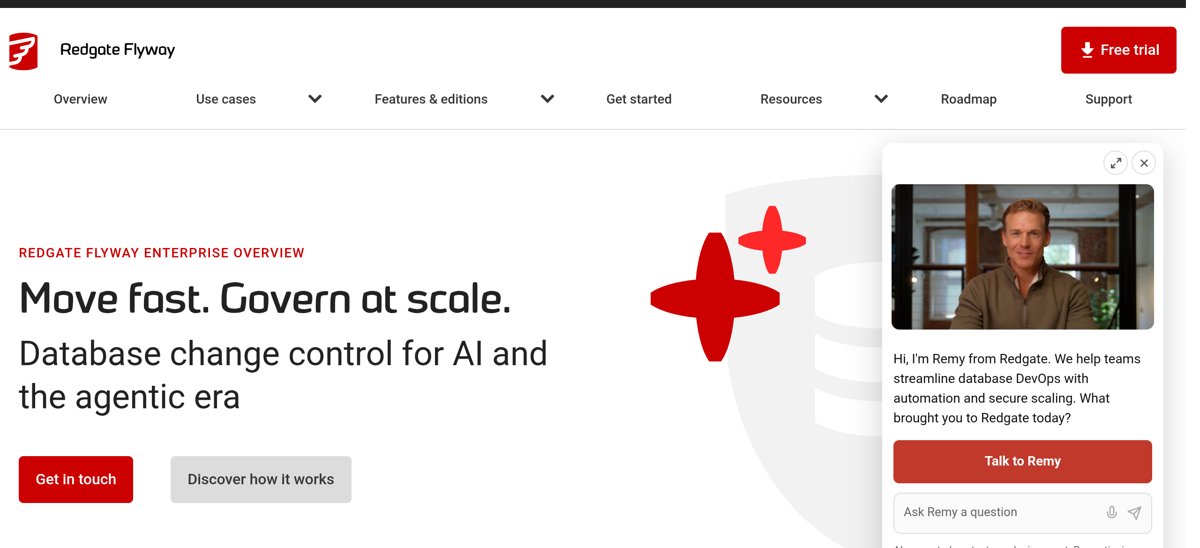
Flyway is the de facto standard for SQL-first schema management, where each schema change is a numbered SQL file applied in order and tracked in a schema history table. The free Community edition covers the core migrate workflow across more than 60 database platforms.
The trade off is that undo migrations, drift detection and policy checks are paid features, and Enterprise pricing is by quote. Community users fix forward instead of rolling back. It suits SQL teams that want the simplest schema workflow with almost no learning.
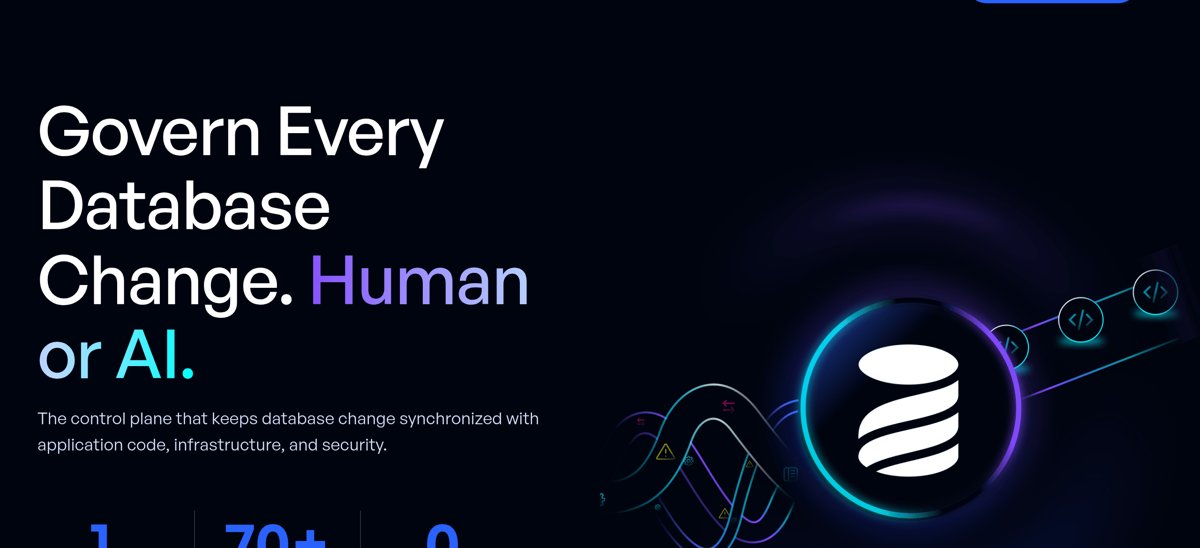
Liquibase is the changelog-based schema management platform, tracking changes as changesets in SQL, XML, YAML or JSON files. One changelog can target more than 70 databases, and the free Community edition includes rollbacks for schema changes and drift reporting.
The trade off is that the commercial Secure edition is quote only, and the changelog format carries a steeper learning curve than plain SQL files. Community moved to a source-available licence in version 5.0. It suits enterprises governing schema changes across many database types.
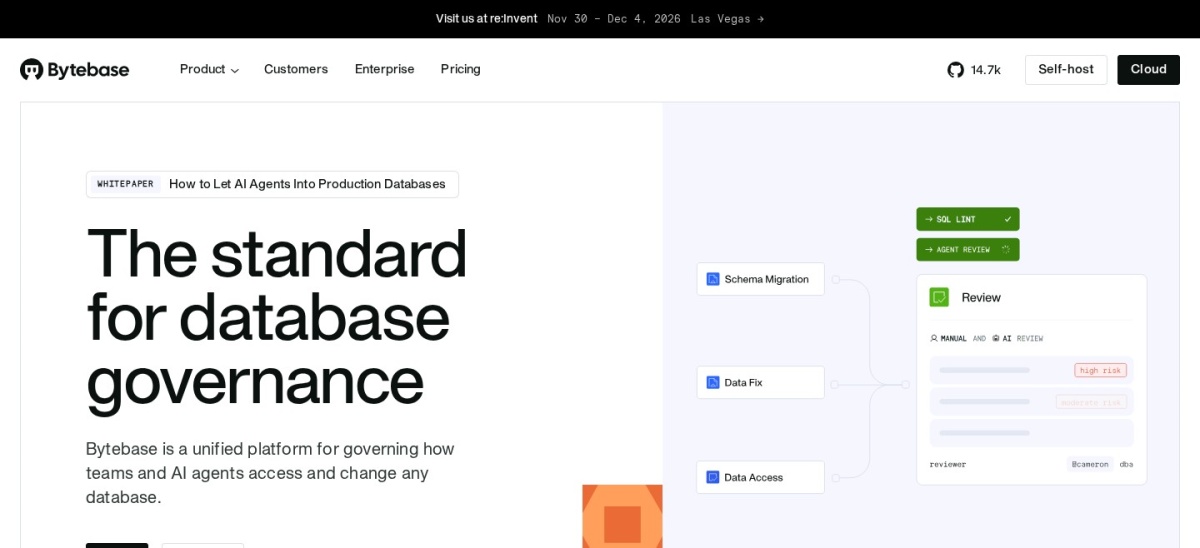
Bytebase is a web-based schema management platform that puts review, approval and access control around every schema change, with more than 100 SQL review rules checking each migration. The Community plan is free for up to 20 users and 10 database instances, and Pro costs $20 per user a month.
The trade off is a small G2 review base of 8 reviews, and one guide lists 4.8 out of 5 while the G2 page itself shows 4.5. Pro pricing also scales per user. It suits teams where schema changes need review and approval in a web interface.
DbVisualizer is a mature universal SQL client that complements any migration tool, with ER diagrams, schema browsing and visual query building across many engines. The free tier is genuinely usable, and a Pro licence costs $229 for the first year with renewals at $119.
The trade off is that it is a client, not a migration engine, so it shows and compares schemas rather than deploying them. It suits analysts and DBAs who review schema changes visually before they ship.
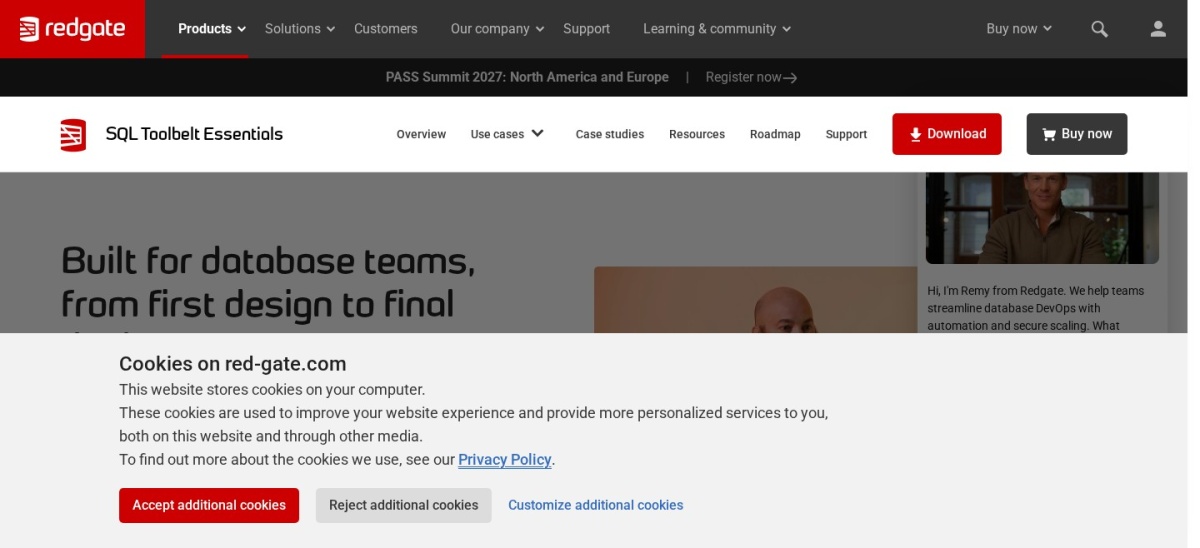
SQL Toolbelt Essentials homepage, captured Nov 2026.
SQL Toolbelt Essentials is Redgate's bundle for SQL Server schema management, including SQL Compare for diffing schemas and verifying environments stay in sync after a release. It costs $1,269 per user per year, and G2 rates it 4.7 out of 5 from 26 reviews.
The trade off is the price per user and the SQL Server focus, which leaves Postgres and MySQL teams out. It suits SQL Server teams that want compare, deploy and monitor tooling in one bundle.
DBmaestro is an enterprise schema management platform built for regulated teams, where every schema promotion is controlled, logged and auditable across environments. Plans are licensed by environment connection and priced on a contact-us basis, with no free plan.
The trade off is that everything is quote-based and the G2 review base is small at 16 reviews, so it is hard to compare on price. It suits regulated enterprises that need audit trails for every schema change.
Harness Platform is the schema management option for teams that already run CI/CD on Harness, putting schema changes inside the same pipelines as application releases. It adds canary and blue-green deployments with automated verification, and G2 shows 321 reviews at 4.6 out of 5.
The trade off is that pricing is by quote, so a small team cannot budget it from the website, and it makes most sense inside a wider Harness setup. It suits engineering teams that want schema releases governed like application releases.
PlanetScale is a managed database platform with Git-like branching for schemas, so a change can be tested on a branch and deployed like code. Postgres starts at $5 a month for a single node, while Vitess-backed MySQL starts at $39 a month, and there is no free tier.
The trade off is that the G2 review base is tiny at 6 reviews, and the free tier is gone, so every user pays from day one. It suits teams that want schema changes reviewed like pull requests.
Supabase is a managed Postgres platform with database branching built in, so schema changes can be tested on a branch before they reach production. The free tier covers a 500 MB database and 50,000 monthly active users, and Pro costs $25 a month per organization.
The trade off is that it is a platform, not a pure migration tool, so schema governance is lighter than Flyway or Liquibase. It suits startups that want Postgres plus auth and storage in one place.
Versioned files are the simplest model. Flyway applies numbered SQL files in order and tracks what has run in a schema history table.
Changelogs add abstraction. Liquibase writes changes once in SQL, XML, YAML or JSON and renders them to each database, which suits teams on many engines.
Branches are the newest model. PlanetScale and Supabase let you test a schema change on a branch before deploying it, like a pull request for your database.
Pick the model your team already thinks in, because the migration format is the part you live with every day.
How we chose
We started from the most widely used database schema management software tools, then kept those with a verifiable rating on G2, Capterra or Trustpilot and a published price or free plan.
Prices come from each vendor's pricing page, checked on 25 November 2026. Ratings and review counts come from the review site named on each tool on the same day. Where a vendor shows a sale, the list shows the regular price.
We left out tools with no verifiable rating or no published pricing information. No vendor paid for a place, and we do not claim hands-on testing for this list.
How to choose database schema management software
Start with how your team writes migrations today, then check whether the free tier covers your database count.
Match the tool to your migration style. SQL-first teams fit Flyway, multi-database teams fit Liquibase, and approval-heavy teams fit Bytebase, so pick the style before the vendor.
Check the declarative option. If you prefer declaring the desired schema and letting the tool compute the migration, look for a declarative workflow rather than versioned scripts.
Test rollback before you need it. Run a bad migration on a staging database and check whether the tool can undo it, because Community editions often cannot.
Count databases and users first. Bytebase Pro is $20 per user a month and Toolbelt is $1,269 per user a year, so the bill follows headcount on several tools here.
FAQ
What is the best database schema management software?
Flyway is the best database schema management software for most SQL teams, because its free Community edition covers plain SQL migrations across more than 60 database platforms. Atlas is the best paid alternative for declarative schema as code, with Pro from $9 per developer per month.
What is the difference between Flyway and Liquibase?
Flyway uses numbered SQL files applied in order, while Liquibase uses changelogs in SQL, XML, YAML or JSON that can target more than 70 databases. Liquibase includes rollback in its free edition, while Flyway reserves undo for paid tiers.
Is Atlas free?
Atlas Starter is free and covers MySQL, MariaDB, PostgreSQL and SQLite, while Pro starts at $9 per developer per month plus usage. Atlas was left out of this list because no verifiable G2, Capterra or Trustpilot rating was found for it.
How much does Bytebase cost?
Bytebase Community is free for up to 20 users and 10 database instances. Pro costs $20 per user a month and adds SSO, custom user counts and email support, while Enterprise is priced by quote.
What is declarative schema management?
Declarative schema management means you describe the schema you want and the tool computes the migration to get there, instead of writing each migration step by hand. Atlas is the main declarative tool in this category.
Do I need schema management for a small project?
A small project can start with Flyway Community or Liquibase Community at no cost. You need a paid governance tier when several people change the same database or when a bad migration must be undone fast.
SaaS SEO and WordPress specialist with about 8 years of experience. Rakib compares WordPress plugins, themes, hosting and software using public pricing, documentation and user reviews. See how we rank.