Mixpanel is the best data tracking software for most product teams, with the deepest funnels and a free plan covering 1 million events a month. Pick Amplitude for the most generous free tier at 2 million events, and PostHog if you want analytics, replay and flags in one place.
How we make this list: we compare pricing pages, product documentation and public user reviews, then re-check every price before each update. No product paid for a place. Disclosure.
Mixpanel leads on funnel depth, rated 4.5 out of 5 from 1,375 G2 reviews.
Amplitude gives the most generous free tier here at 2 million events a month.
PostHog bundles analytics, replay, flags and surveys in one open-source platform.
Heap is the only serious autocapture option, with no tracking plan needed up front.
Heap, Fullstory and Pendo publish no starting price, so budget for a sales conversation.
What data tracking software actually does
Data tracking software records what users do in your product or on your website, then turns those events into funnels, retention curves and session replays.
Product analytics and web analytics answer different questions. Mixpanel, Amplitude and PostHog track events inside a product, while Matomo tracks page views and visits on a website.
Free tiers are generous in 2026. Amplitude offers 2 million events a month free, PostHog is free for most small products, and our guide on best database software covers where that event data can live long term.
Pricing is usage-based almost everywhere, so the bill follows event or session volume, not seats. Count your real volume before you trust a starting price.
List prices in each vendor's currency, checked Nov 2026
PostHogFREEUsage-based
HeapFREECustom
FullstoryFREECustom
PendoFREECustom
MatomoFREE€29
AmplitudeFREE$588
LogRocketFREE$1,188
MixpanelFREE$1,680
StatsigFREE$1,800
The 9 best data tracking software
01
Mixpanel
4.5/5on G2 (1,375 reviews, checked Nov 2026)
Paid from$140/mo
Best data tracking software overall
Free events1M per month
Paid entry$140/mo, 1.5M events
Session replay10,000 per month free
Pricing unitPer 1,000 events
mixpanel.com
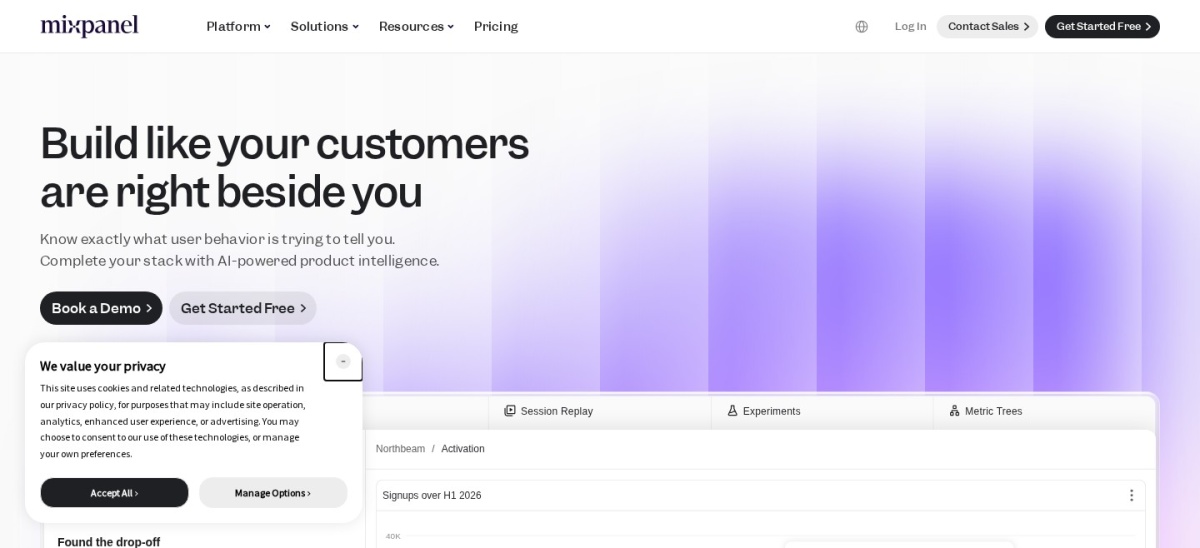
Mixpanel homepage, captured Nov 2026.
Mixpanel is the product analytics tool most teams reach for first, with a free plan covering 1 million events a month and 10,000 session replays. Its funnels, retention curves and cohort reports are the deepest in this list, and the Growth plan charges $0.28 per 1,000 events after the free million.
The trade off is that the bill climbs fast with volume, reaching $613 a month at 5 million events on monthly billing. Add-ons for replay and experimentation sit on separate meters. It suits product teams that want clear, self-serve funnel analysis and can forecast event volume.
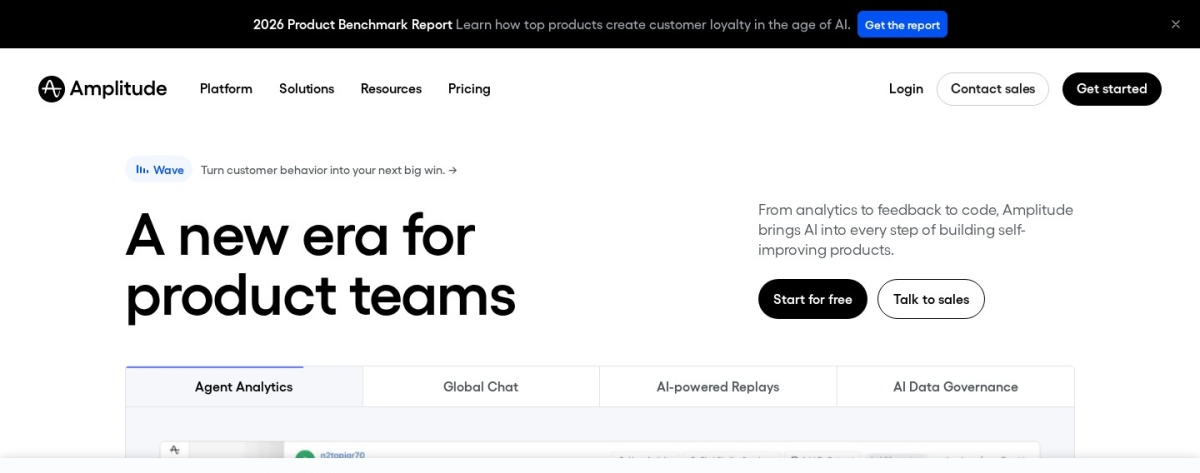
Amplitude is the deepest product analytics suite in this list, with behavioral cohorts, experimentation and session replay in one place. The free Starter plan covers 2 million events a month, double Mixpanel, and the Plus plan starts at $49 a month billed annually.
The trade off is the learning curve, because the platform needs a governed tracking plan to stay useful at scale. Enterprise pricing is by quote, and costs rise with volume. It suits mid-size product teams that want analytics plus experimentation in one suite.
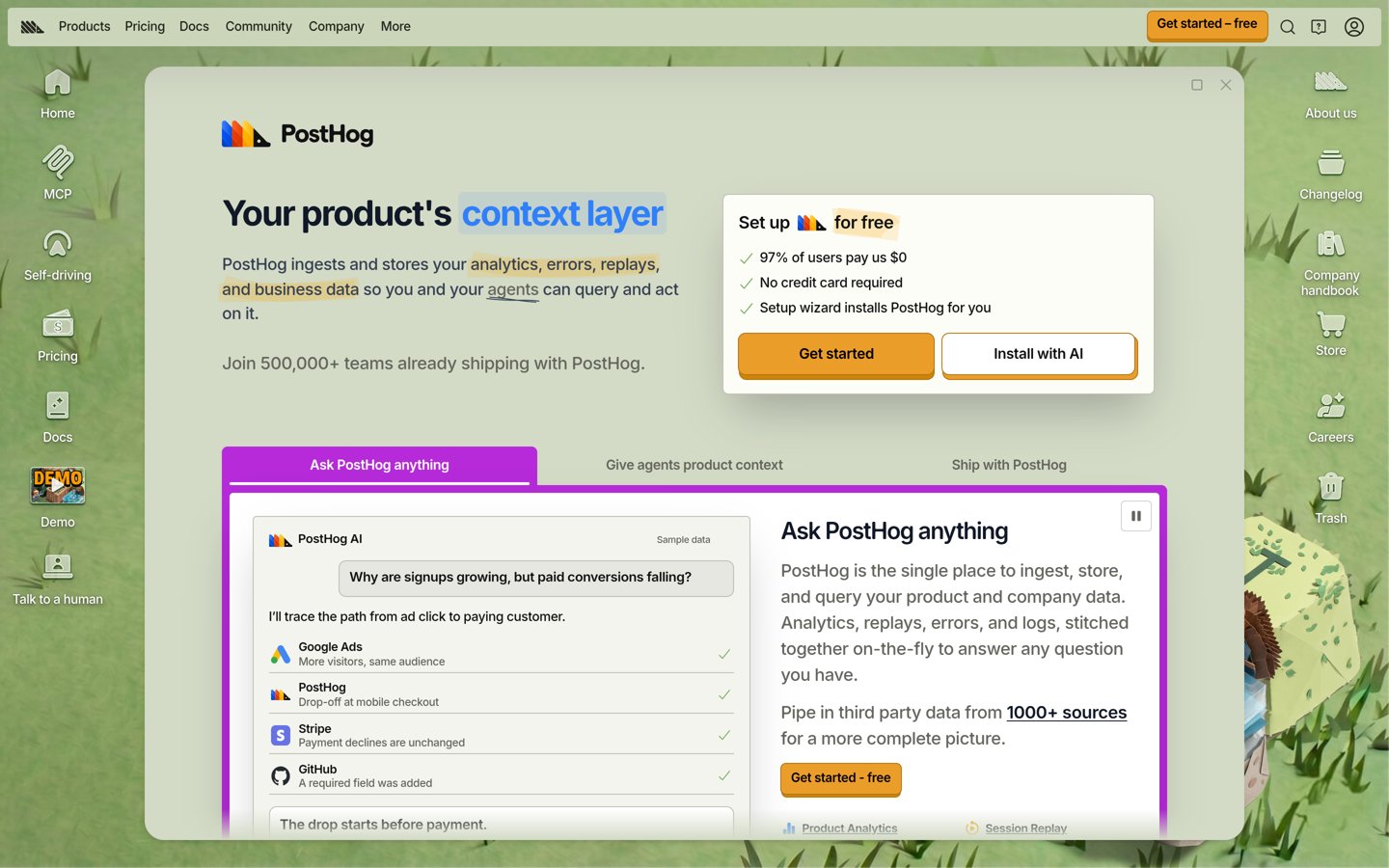
PostHog is an open-source suite that puts product analytics, session replay, feature flags, experiments and surveys behind one login. The cloud free tier covers 1 million events a month plus 5,000 session recordings, and each product has its own free allowance with usage pricing after that.
The trade off is a large, technical surface that takes longer to learn than a single-purpose tracker. Pricing is per product, so the bill needs a spreadsheet to forecast. It suits engineering-led teams that want one stack and full data ownership, including self-hosting.
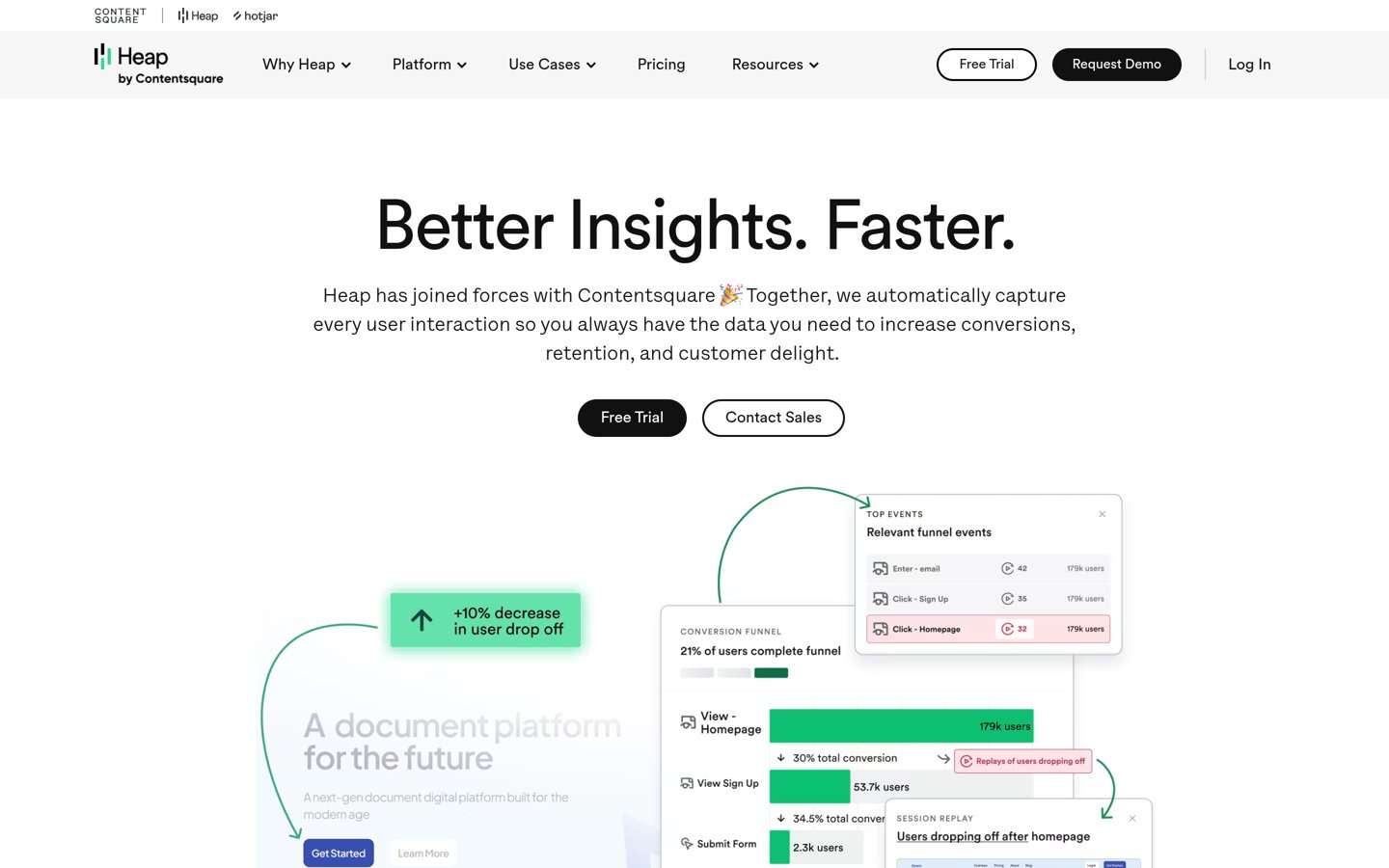
Heap is the autocapture analytics tool, now part of Contentsquare, that records every click, form submission and page view from one snippet. The free plan covers 10,000 sessions a month with six months of data history, and you define events retroactively against data already captured.
The trade off is that paid pricing is by quote, so you cannot budget it from the website, and session replay is a paid add-on. The raw data is also noisier than a hand-built tracking plan. It suits teams that cannot instrument every event up front.
Fullstory is a replay-led analytics tool that records sessions and turns them into funnels, journeys and friction signals. The free plan covers 30,000 sessions a month with 12 months of data retention, which is the largest free replay allowance in this list.
The trade off is that paid plans are quote only and warehouse export is a paid add-on, so costs at scale are hard to estimate. It is also a replay tool first, not a full semantic analytics model. It suits UX teams that investigate behavior by watching real sessions.
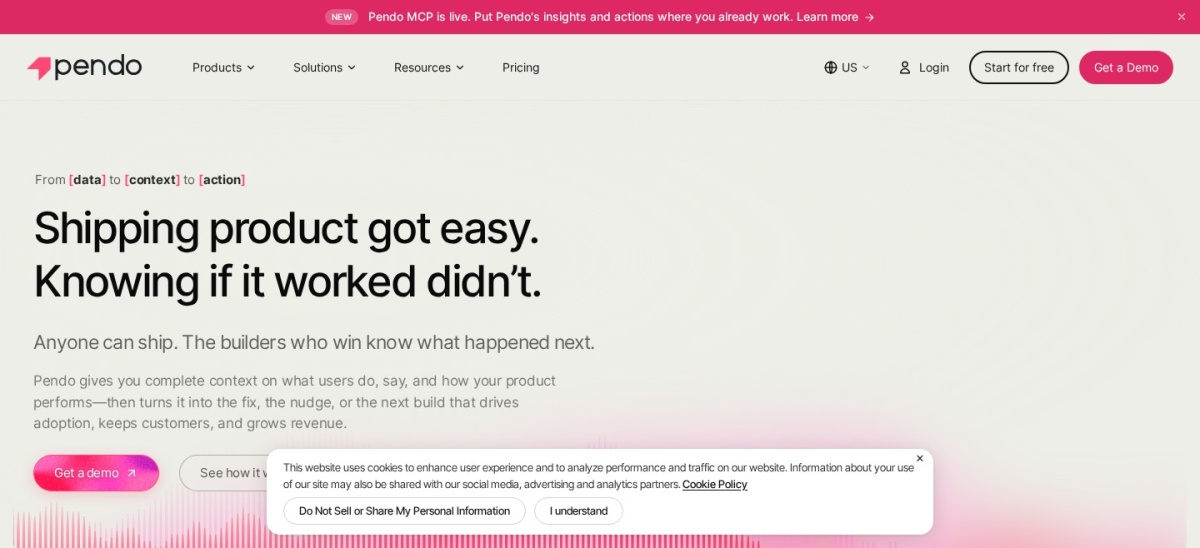
Pendo is a platform that pairs product analytics with in-app guides, onboarding checklists and NPS surveys, so the same tool that shows where users drop off can also guide them. The free plan covers 500 monthly active users with one year of data retention, and the vendor reports 14,000-plus teams using it.
The trade off is that paid plans are quote only and reviewers flag costs that climb with usage, plus a learning curve from the broad feature set. It suits product managers who want analytics tied directly to onboarding and in-app messaging.
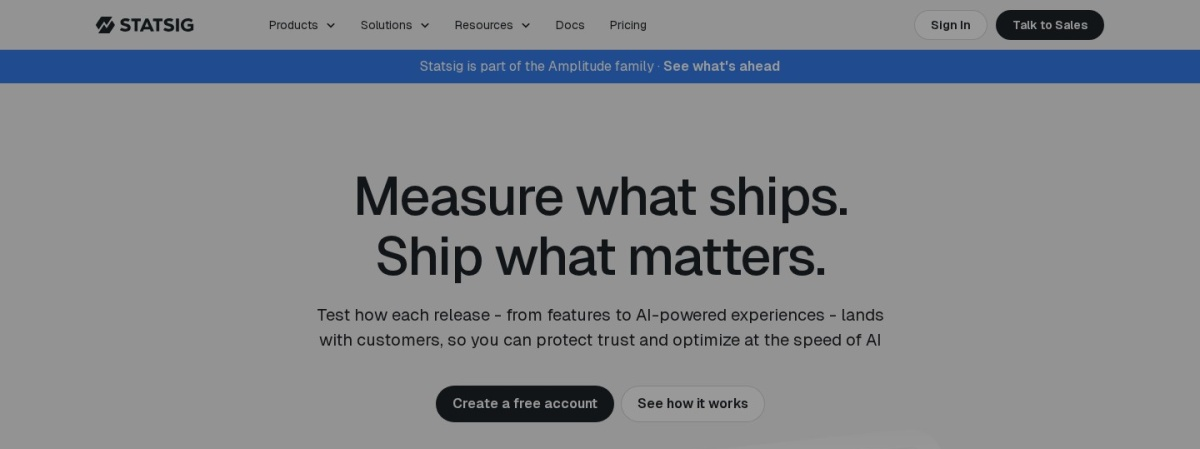
Statsig is the experimentation-first analytics tool, with feature flags, A/B tests and product analytics on one free plan covering 2 million events a month and 50,000 session replays. The Pro plan starts at $150 a month with 5 million events included, then $0.05 per 1,000 events.
The trade off is that it is built for teams that run experiments, so pure funnel users pay for depth they may not need. It also has the smallest review base in this list at 348 G2 reviews. It suits teams that ship behind flags and test every change.
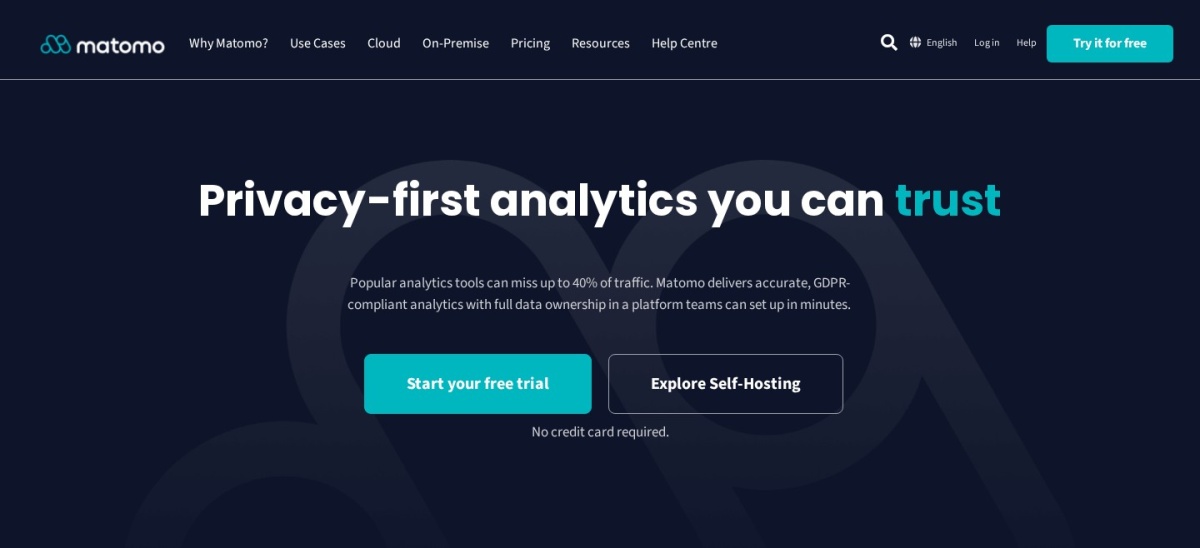
Matomo is the privacy-first web analytics alternative to Google Analytics, open source and self-hostable so your data never leaves your servers. The cloud Business plan starts at €29 a month for 50,000 hits, and the self-hosted version is free with paid plugins for advanced features.
The trade off is that cloud pricing is in euros, not dollars, and advanced modules cost extra on top of the base plan. It is also web-first, so product event analytics are thinner than Mixpanel or Amplitude. It suits teams that need full data ownership and cookieless tracking.
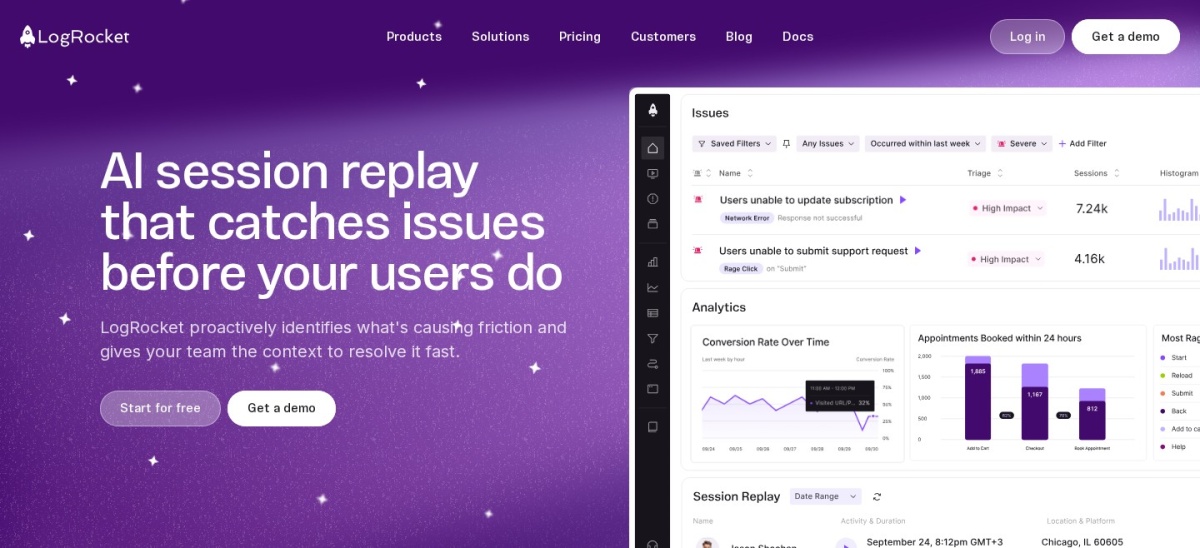
LogRocket is a session replay tool that pairs session replay with console logs, stack traces and network data, so a developer can see exactly what happened before a bug. The free plan covers 1,000 sessions a month with one month of retention, and the Team plan starts at $99 a month.
The trade off is that it is a debugging tool first, not a full product analytics suite, and the free session allowance is small. It is less suited to adoption analysis than Mixpanel or Amplitude. It suits frontend teams that fix bugs by replaying real user sessions.
Free tiers carry early products far. Mixpanel covers 1 million events, Amplitude 2 million, and Fullstory 30,000 sessions a month at no cost.
Paid plans mostly add volume and retention. You get more events, longer data history and team controls such as SSO.
Three tools here publish no starting price at all, so Heap, Fullstory and Pendo need a sales call before you can budget them.
If your volume is steady, a published per-event price such as Mixpanel at $0.28 per 1,000 events is the easiest bill to forecast.
How we chose
We started from the most widely used data tracking software tools, then kept those with a verifiable rating on G2, Capterra or Trustpilot and a published price or free plan.
Prices come from each vendor's pricing page, checked on 25 November 2026. Ratings and review counts come from the review site named on each tool on the same day. Where a vendor shows a sale, the list shows the regular price.
We left out tools with no verifiable rating or no published pricing information. No vendor paid for a place, and we do not claim hands-on testing for this list.
How to choose data tracking software
Start with the question you need answered, then check the free tier against your real event volume.
Name the question first. Funnels, retention and session replay are different jobs, so pick the tool that answers your main question before comparing prices.
Measure your event volume. Count monthly events or sessions honestly, because free tiers end at 1M events on Mixpanel and 10,000 sessions on Heap.
Check who owns the data. Self-hosted Matomo and open-source PostHog keep data with you, while cloud tools hold it on their servers.
Trial two finalists on real traffic. Install both on your real event stream for two weeks, because free tiers make that cheap and the differences show fast.
FAQ
What is the best data tracking software?
Mixpanel is the best data tracking software for most product teams, with the deepest funnels and retention reports and a free plan covering 1 million events a month. Amplitude is the better pick if you want the largest free tier.
What is the difference between Mixpanel and Amplitude?
Mixpanel focuses on self-serve funnels and retention with published per-event pricing, while Amplitude adds deeper behavioral cohorts, experimentation and AI agents. Amplitude gives 2 million free events a month, double Mixpanel.
Is PostHog really free?
PostHog is free for most small products, with 1 million analytics events, 5,000 session recordings and 1 million feature flag requests a month. Usage pricing applies after those allowances, and self-hosting is free to license.
What is autocapture in data tracking?
Autocapture means the tool records every click, form submission and page view automatically, so you define events after the fact instead of writing tracking code first. Heap is the main autocapture tool in this list.
Which data tracking tool is best for privacy?
Matomo is the best privacy pick, because it is open source and can be self-hosted so your data never leaves your servers. PostHog also offers self-hosting with full data ownership.
Do I need Segment as well as Mixpanel?
Segment is a data pipeline, not analytics, so it feeds clean event data into tools like Mixpanel and Amplitude. You need it only when three or more tools must share the same event data.
SaaS SEO and WordPress specialist with about 8 years of experience. Rakib compares WordPress plugins, themes, hosting and software using public pricing, documentation and user reviews. See how we rank.