Deepnote is the best data science notebook software for teams, with the highest G2 rating in this list and real-time collaboration in the browser. Google Colab is the best free cloud option, and JupyterLab is the free standard everyone else builds on.
How we make this list: we compare pricing pages, product documentation and public user reviews, then re-check every price before each update. No product paid for a place. Disclosure.
Deepnote leads with a 4.8/5 G2 rating and real-time collaboration.
Google Colab gives free GPU access, with Pro from $9.99 a month.
JupyterLab is free forever and is the format standard.
Hex and Deepnote are the cheapest paid team notebooks at $36 and $39 per editor a month.
Observable has only 4 G2 reviews, a very thin base.
What data science notebook software should cover
A data science notebook is an interactive document that mixes live code, charts, tables and written explanation in one place. You run a cell, see the output right below it, change the code and run it again, which is how most data scientists explore a dataset and explain results.
The market splits by where code runs. Local notebooks such as JupyterLab run on your own machine, so you control the environment and the data, while hosted notebooks such as Google Colab run in the cloud, so you open a browser tab and start working.
Language support matters. Python is supported everywhere here, R support is strongest in JupyterLab, Posit Workbench and Deepnote, while Observable is built around JavaScript and suits visualisation more than statistical modelling.
Paid plans usually charge per editor per month, and several add compute charges on top. Colab gives free GPU time with limits, JupyterLab is free forever, and Deepnote gives a small free tier.
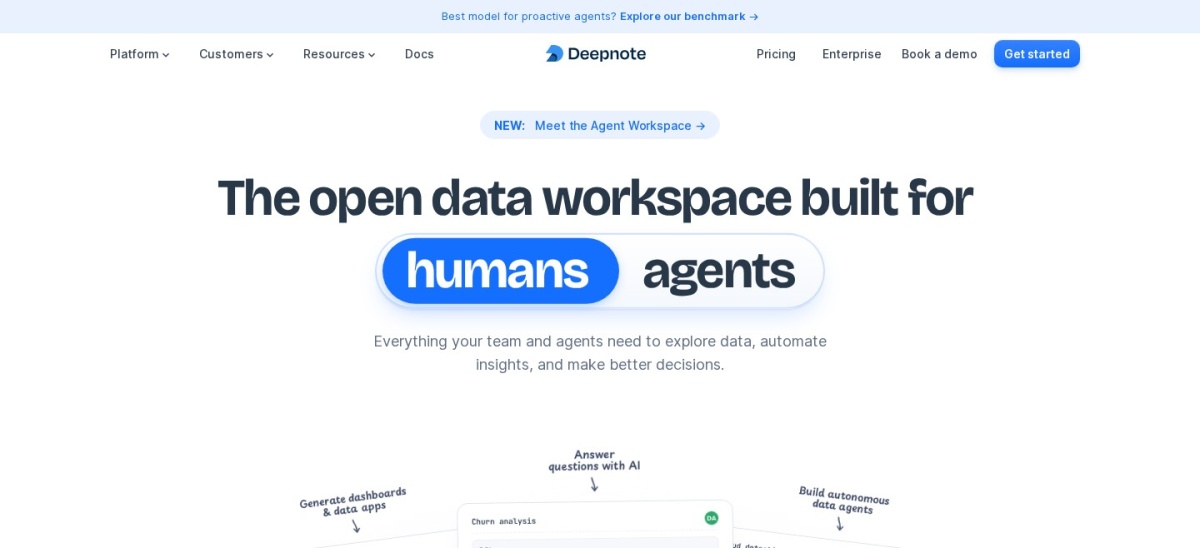
Deepnote is a collaborative data science platform that runs notebooks in the browser with managed machines, so nobody installs Python or configures an environment. Several people can edit the same notebook at once, leave comments and follow version history, and you can import and export standard .ipynb files.
The trade off is the free tier and usage charges. The free plan caps at 3 editors and 5 projects, and the Team plan includes a fixed monthly allowance of AI, CPU and GPU credits, so heavy use adds pay-as-you-go charges. It suits teams that want a Jupyter replacement.
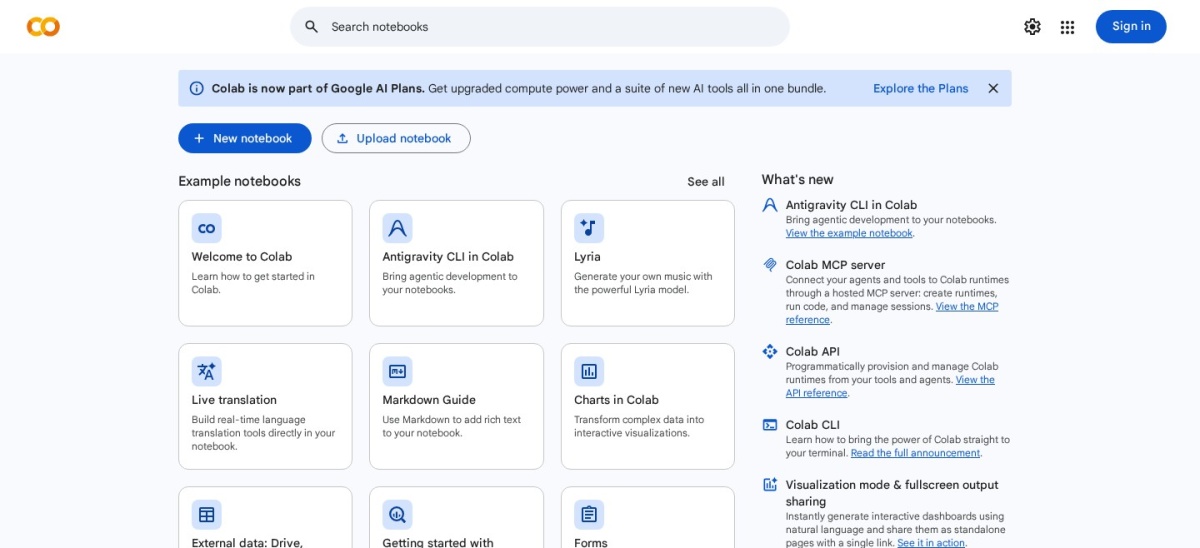
Google Colab is a hosted Jupyter notebook service from Google that opens in a browser with no installation. The free tier gives access to GPUs and TPUs, so a student can train a small model without buying hardware, and notebooks live in Google Drive, so sharing is a link.
The trade off is the compute unit system. You buy a budget of units, not a reserved machine, Google does not guarantee which GPU you get, and free sessions disconnect after idle time. It suits students, learners and quick experiments.
Kaggle Notebooks is a free cloud notebook service from Google that pairs Jupyter notebooks with public datasets and free GPU access. It suits learners and competitors who want to practise on real data without paying for compute, and notebooks run in the browser with no setup.
The trade off is scope. Kaggle is built around public data and competitions, so private team workflows and governed data are not its job, and the free GPU quota has limits. It suits learning, competitions and portfolio work.
JupyterLab is the web based interface of Project Jupyter and the reference implementation of the notebook format the rest of this market follows. You install it with one pip or conda command, open it in a browser, and get notebooks, a file browser, terminals and text editors in one workspace.
The trade off is that everything beyond the editor is your job. You install packages, manage environments and share files yourself, with no built-in cloud hosting or team collaboration. It suits solo analysts and researchers who want the standard.
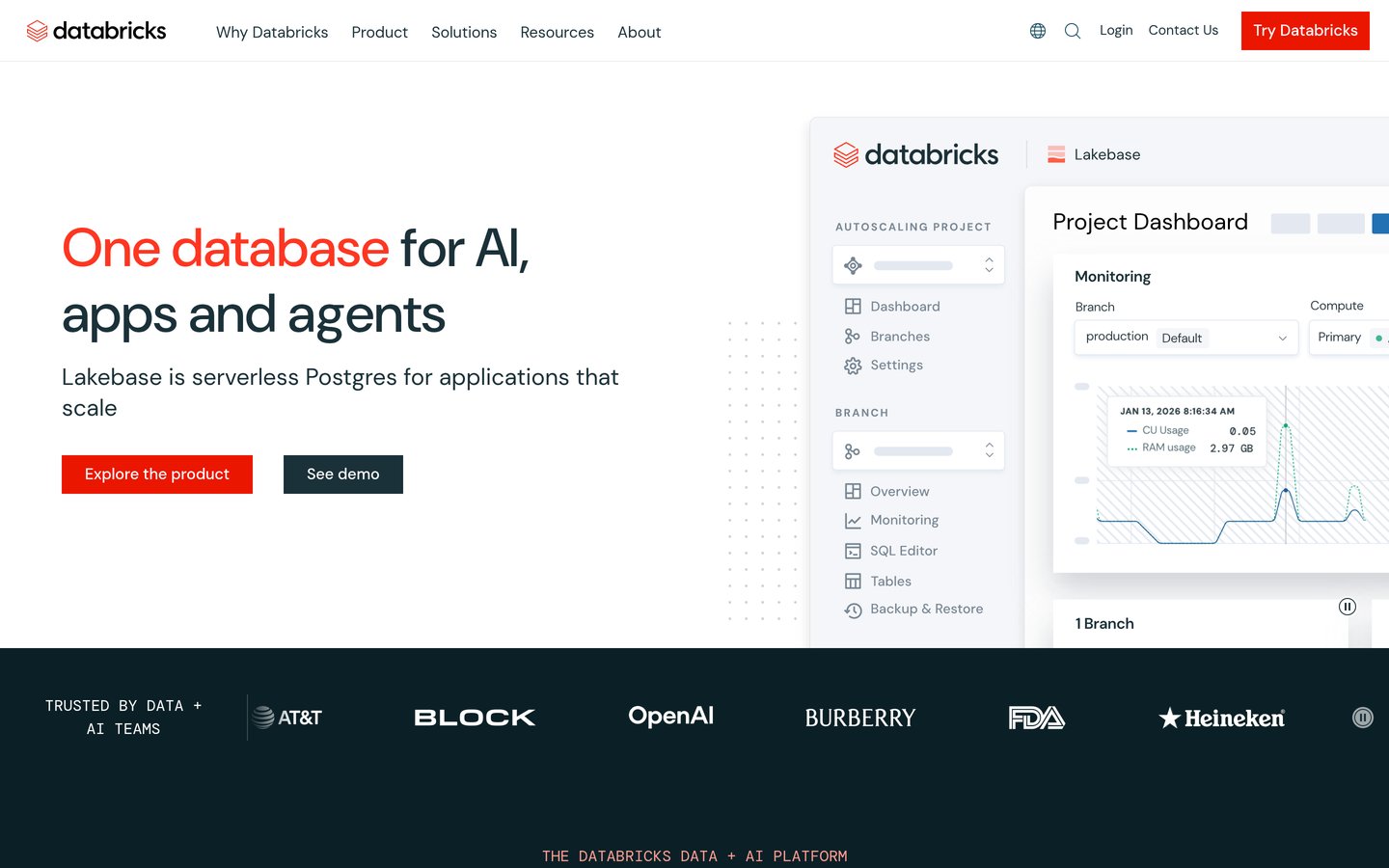
Databricks Notebooks is the interactive front end of the Databricks lakehouse platform, where notebooks run against governed data in Delta Lake with Spark underneath. Notebooks support Python, SQL, R and Scala in one document, with version control, scheduled jobs and Unity Catalog access control.
The trade off is pricing. You pay per DBU, with all-purpose compute at $0.55 per DBU on Premium in AWS US East and serverless notebooks at $0.75 on AWS and $0.95 on Azure, plus cloud VM costs. It suits enterprise teams already on Databricks.
What we like
Notebooks run on the same lakehouse as data
Strong governance with Unity Catalog
Built-in Git and scheduling
Rated 4.6/5 by 801 G2 reviewers
Watch out for
Pricing is hard to predict, billed per DBU
Varies by compute type, cloud and region
Overkill outside the Databricks platform
All-purpose compute from $0.55 per DBU, Premium tier, AWS US EastVisit databricks.com
06
VS Code notebooks
4.6/5on G2 (200+ reviews, checked Nov 2026)
PriceFree
Best for developers who live in VS Code
PriceFree
KernelsJupyter kernels
DebuggingIntegrated
Format.ipynb and .py
code.visualstudio.com
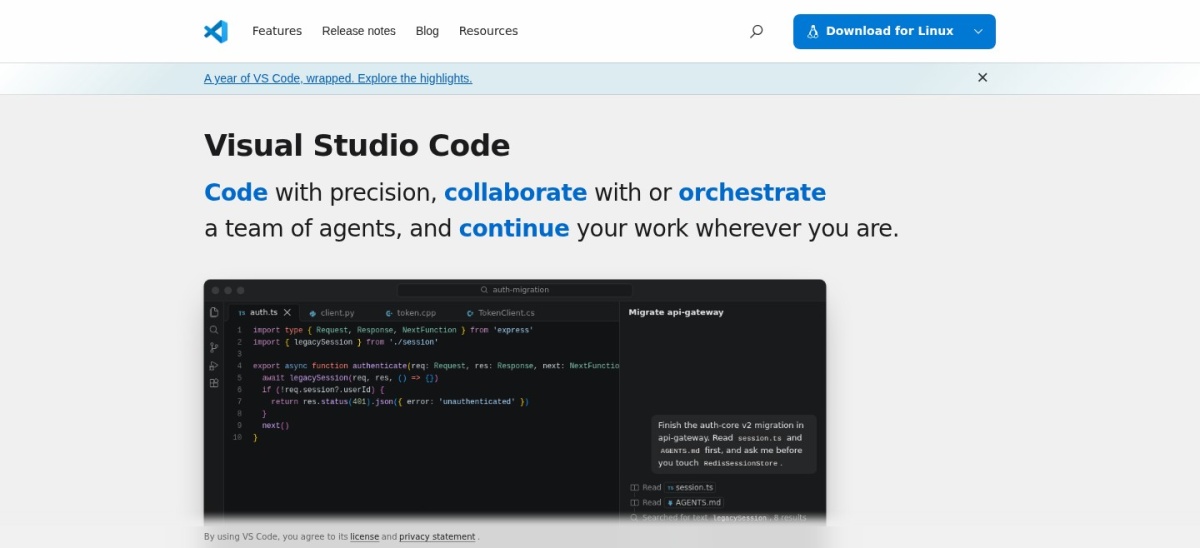
VS Code notebooks homepage, captured Nov 2026.
VS Code notebooks is the notebook support built into Visual Studio Code, letting developers run notebooks beside their code in a real editor with integrated debugging. It is free, works with Jupyter kernels, and keeps notebooks in plain .py and .ipynb files with clean Git diffs.
The trade off is focus. VS Code is an editor first, so it has no hosted compute, no GPU access and no team collaboration beyond Git. It suits developers who already work in VS Code and want notebooks beside their code.
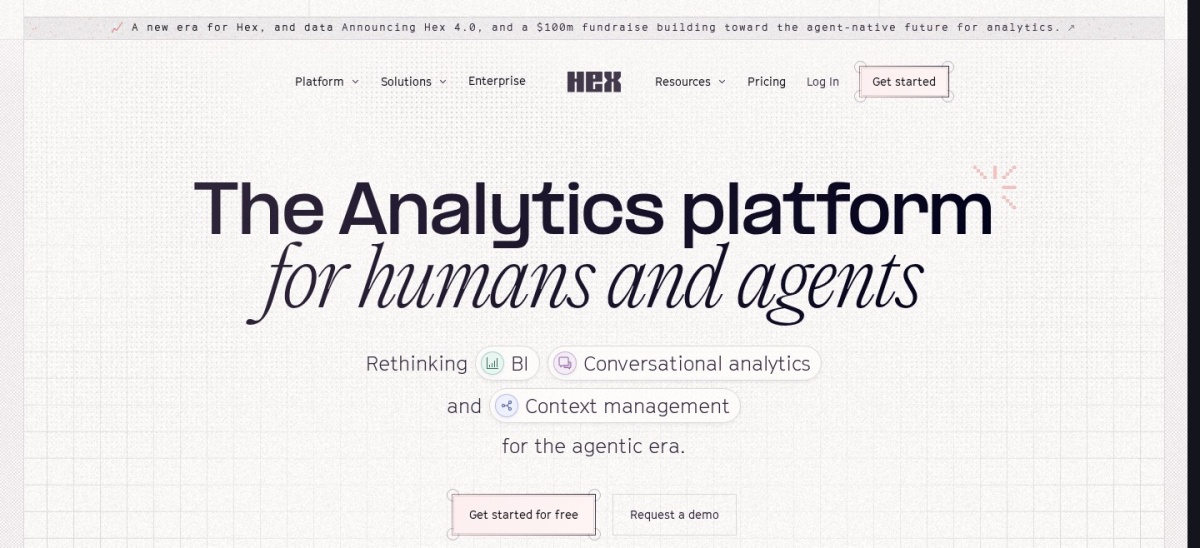
Hex is a cloud notebook workspace built for teams that analyse data together and then share the result with people who do not write code. A Hex project mixes SQL cells, Python cells and visualisations on one canvas, several people can edit at the same time, and the notebook can be published as an interactive app or dashboard.
The trade off is lock-in and add-on costs. Hex uses a proprietary notebook format, so your work lives in Hex, and larger compute profiles and AI credits add usage charges on top of the seat price. It suits data teams presenting to stakeholders.
4.5/5on G2 (Not published reviews, checked Nov 2026)
Starts at$6,413/yr
Best for governed R and Python teams
Basic tier$6,413/year for 5 users
SessionsRStudio, Positron, Jupyter, VS Code
LicensingPer named user
Free planNo
posit.co
Posit Workbench homepage, captured Nov 2026.
Posit Workbench is a shared server that gives a whole data science team governed access to R and Python sessions in the browser. Each person gets RStudio, Positron, Jupyter or VS Code sessions on managed infrastructure, licensed per named user with no consumption meters.
The trade off is price and scope. The Basic tier starts at $6,413 a year for 5 named users, from the Posit 2026 price list, and there is no free plan. It suits governed enterprise teams that work in R and Python.
What we like
Governed R and Python sessions in the browser
Per-user licensing, no consumption meters
RStudio, Positron, Jupyter and VS Code sessions
Rated 4.5/5 on G2
Watch out for
No free plan
Starts at $6,413 a year for 5 users
Enterprise-shaped pricing
Basic tier from $6,413 a year for 5 named usersVisit posit.co
09
Observable
4.4/5on G2 (4 reviews, checked Nov 2026)
Paid from$22/mo
Best for interactive JavaScript visualisation
LanguageJavaScript
Pro$22/month billed annually
Team$40/editor/month
Free planPublic notebooks
observablehq.com
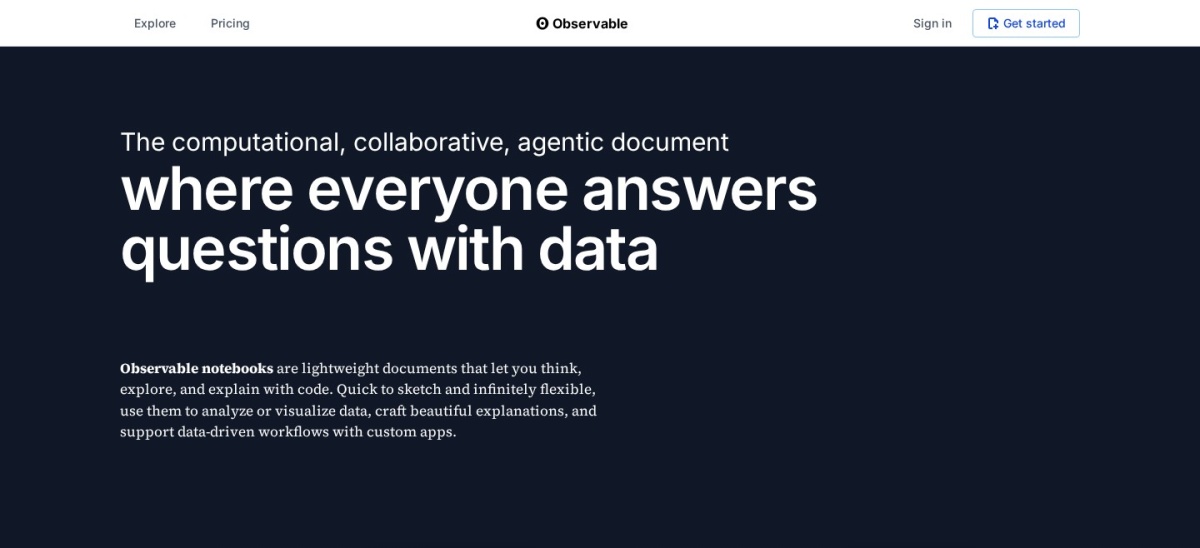
Observable homepage, captured Nov 2026.
Observable is a reactive notebook platform where cells update automatically when the values they depend on change, which makes it feel more like a live document than a script you run top to bottom. It was built by the creator of D3.js, and charting with Observable Plot and D3 is first class.
The trade off is language and evidence. It is a JavaScript notebook, not a Python or R notebook, so it cannot replace a Python workflow, and only 4 G2 reviews support the rating. It suits interactive data visualisation work.
Local notebooks keep data on your machine and cost nothing, but you manage installation, packages and hardware, and sharing means sending files or setting up a server.
Hosted notebooks remove setup entirely and add collaboration, but you pay for compute and trust the vendor with your data. Google Colab is the lowest-friction hosted option.
Most teams end up with both: JupyterLab for private exploration and a hosted tool for shared work. The .ipynb format travels between them, except for Hex, whose format is proprietary.
How we chose
We started from the data science notebooks with the largest G2 review bases, then kept nine that cover free local tools, hosted team notebooks, enterprise platforms and visualisation.
Prices come from each vendor's pricing page, checked on 25 November 2026. Ratings and review counts come from G2 on the same day. Where a rating has no published review count, the list says so rather than guessing one.
We left out tools with no verifiable G2, Capterra or Trustpilot rating, including CoCalc and marimo. No vendor paid for a place, and we do not claim hands-on testing for this list.
How to choose data science notebook software
Start with where your code will run, then check language support and collaboration.
Decide where code will run. Local notebooks suit private work; hosted notebooks suit teams and GPU access.
Check language support. Python is everywhere, R is strongest in JupyterLab, Posit and Deepnote, and Observable is JavaScript only.
Check collaboration needs. Solo analysts can use almost anything; teams need real-time co-editing, comments and version history.
Work out the true cost. Seat prices are only part of it: Colab and Databricks add compute charges on top.
FAQ
What is the best data science notebook software?
Deepnote is the best overall pick for teams, rated 4.8 out of 5 by more than 70 G2 reviewers. It runs notebooks in the browser with managed machines, real-time collaboration and standard .ipynb import and export, so work is not locked in.
Is JupyterLab really free?
Yes. JupyterLab is free and open source under a BSD licence, and the full product costs nothing. It is the reference implementation of the notebook format the rest of this market follows, and it runs Python, R and Julia kernels.
How much does Google Colab cost?
Google Colab is free with limited GPU and runtime, and Colab Pro costs 9 dollars 99 per user per month, adding 100 compute units a month and longer sessions. Colab Pro Plus costs 49 dollars 99 a month for heavier use.
What is the difference between Hex and Deepnote?
Hex mixes SQL and Python cells on one canvas and publishes notebooks as interactive apps and dashboards, starting at 36 dollars per editor per month. Deepnote is a closer Jupyter replacement with managed compute and .ipynb portability, starting at 39 dollars per editor per month.
Which notebook is best for R?
Posit Workbench is the best pick for governed R and Python teams, giving a whole team shared RStudio, Positron, Jupyter or VS Code sessions in the browser. JupyterLab and Deepnote also support R well.
Can I use notebooks for free with a GPU?
Yes. Google Colab gives free GPU and TPU access in the browser with no installation, and Kaggle Notebooks gives free GPU access alongside public datasets. Both free tiers have usage limits and sessions disconnect after idle time.
What is Databricks Notebooks?
Databricks Notebooks are the interactive front end of the Databricks lakehouse platform, where notebooks run against governed data in Delta Lake with Spark underneath. They support Python, SQL, R and Scala in one document, with version control and scheduled jobs.
SaaS SEO and WordPress specialist with about 8 years of experience. Rakib compares WordPress plugins, themes, hosting and software using public pricing, documentation and user reviews. See how we rank.