dbt is the best data quality software for most teams, with the highest G2 rating in this list and a free open-source core. Melissa leads on contact data, and Soda is the only tool here with a published monthly price.
How we make this list: we compare pricing pages, product documentation and public user reviews, then re-check every price before each update. No product paid for a place. Disclosure.
dbt leads with a 4.7/5 G2 rating from 210 reviews and a free open-source core.
Soda is the only tool here with a published monthly price, $750 a month for Team.
Seven of the nine tools sell by quote only.
Monte Carlo has the largest review base at 547 G2 reviews.
Great Expectations and Ataccama have thin review bases of 11 and 12 reviews.
What data quality software should cover
Data quality software checks that the data in your warehouse is accurate, complete, consistent and fresh. Bad data quietly breaks dashboards, models and decisions, so the checks should run before anyone trusts the output.
The category splits into two approaches. Test-based tools such as dbt and Soda let you write rules about what good data looks like, while monitoring tools such as Monte Carlo and Anomalo watch for anomalies without hand-written rules.
Pricing is mostly by quote. Only Soda publishes a monthly price here, so expect a sales conversation for Monte Carlo, Anomalo, Informatica, Talend and Ataccama.
Open source is a real option. dbt Core and Great Expectations are free, and both have managed cloud versions for teams that want support and hosting.
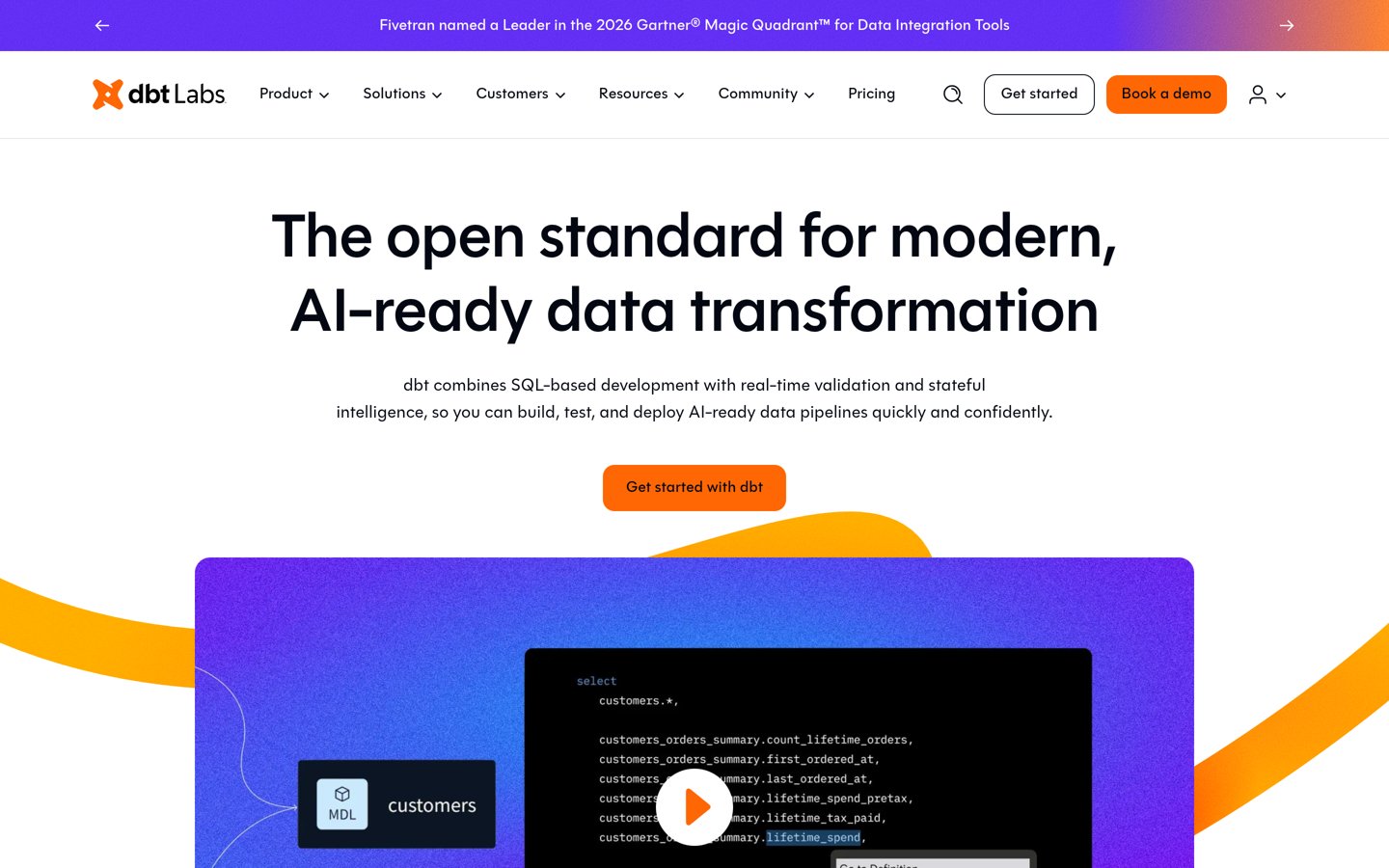
dbt is a transformation and testing tool that turns raw data into trusted models, with tests that catch broken data before it reaches dashboards. Models are written in SQL, tests run on every build, and the free open-source core works with every major warehouse.
The trade off is skill. dbt needs SQL and a version-control workflow, and dbt Cloud pricing is not published in a simple per-seat figure here. It suits data teams that already transform data in SQL.
What we like
Free open-source core
Tests run inside the pipeline
Works with all major warehouses
Largest community in the category
Watch out for
Needs SQL and version-control skills
Cloud pricing not published here
No built-in data profiling interface
dbt Cloud adds hosting, scheduling and collaborationVisit getdbt.com
02
Melissa
4.5/5on G2 (195 reviews, checked Nov 2026)
PricingCustom/yr
Best for contact data quality
VerificationAddress, email, phone
PricingCredit-based
Trial90 days on subscriptions
DeliveryAPI, batch, plugins
melissa.com
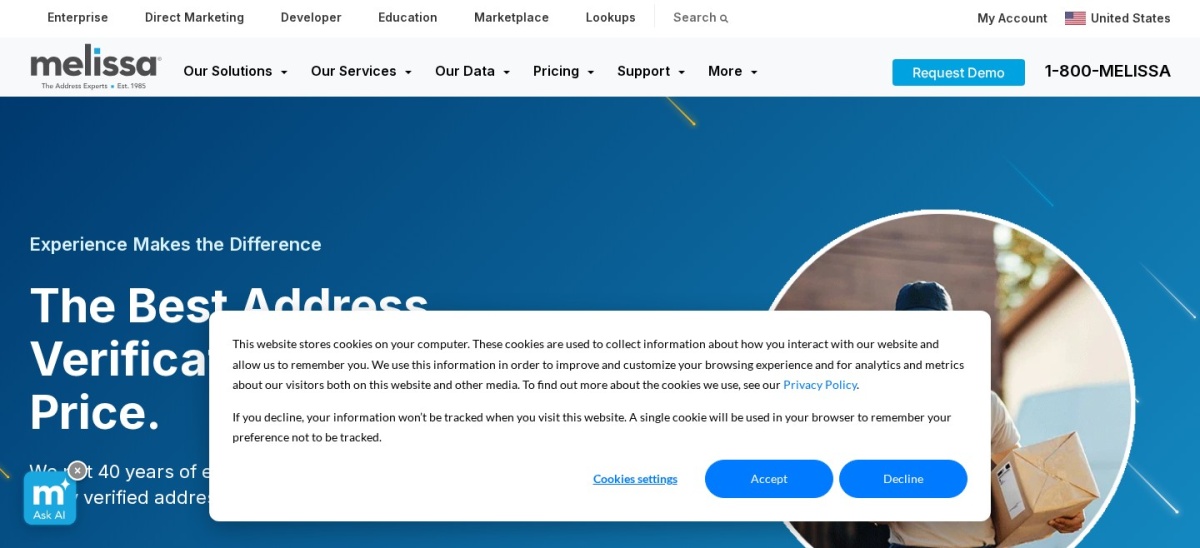
Melissa homepage, captured Nov 2026.
Melissa is a contact data quality platform that verifies addresses, emails and phone numbers in real time. It covers global addresses, runs as an API, batch process or plugin, and is rated 4.5/5 by 195 G2 reviewers.
The trade off is pricing. Melissa charges by credits, and no per-credit price is published here, so budgeting needs a quote. It suits teams whose customer data quality lives or dies on contact details.
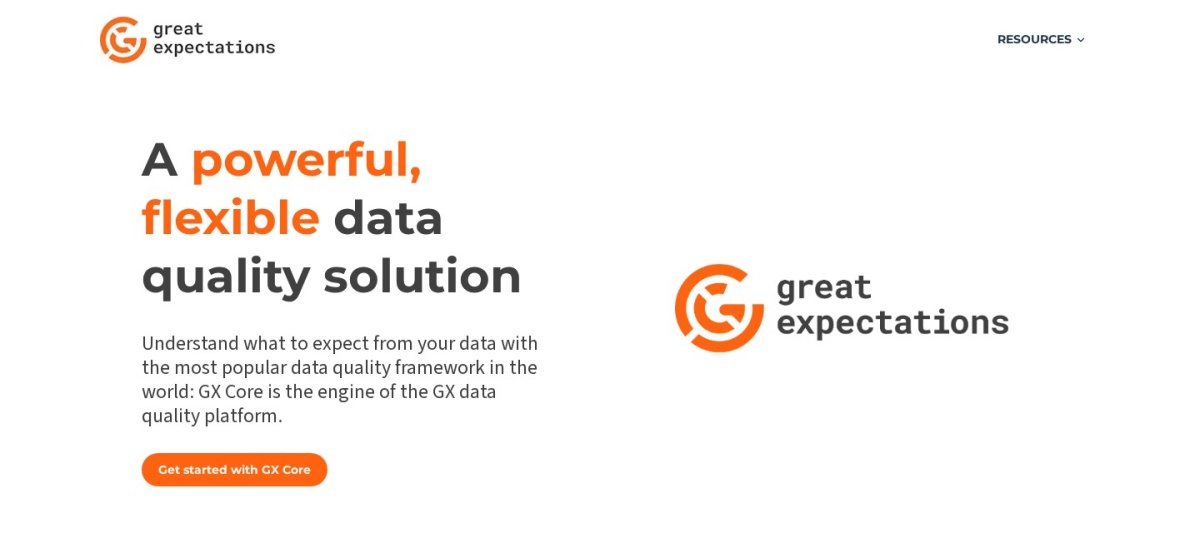
Great Expectations is an open-source framework for testing data, with expectations that describe what good data looks like and alerts when data breaks the rules. It runs in Python, documents data quality in a human-readable form, and has strong documentation and community support.
The trade off is the review base and effort. Only 11 G2 reviews support the rating, and GX needs Python skills to set up. It suits data teams that want a free, code-first way to test data.
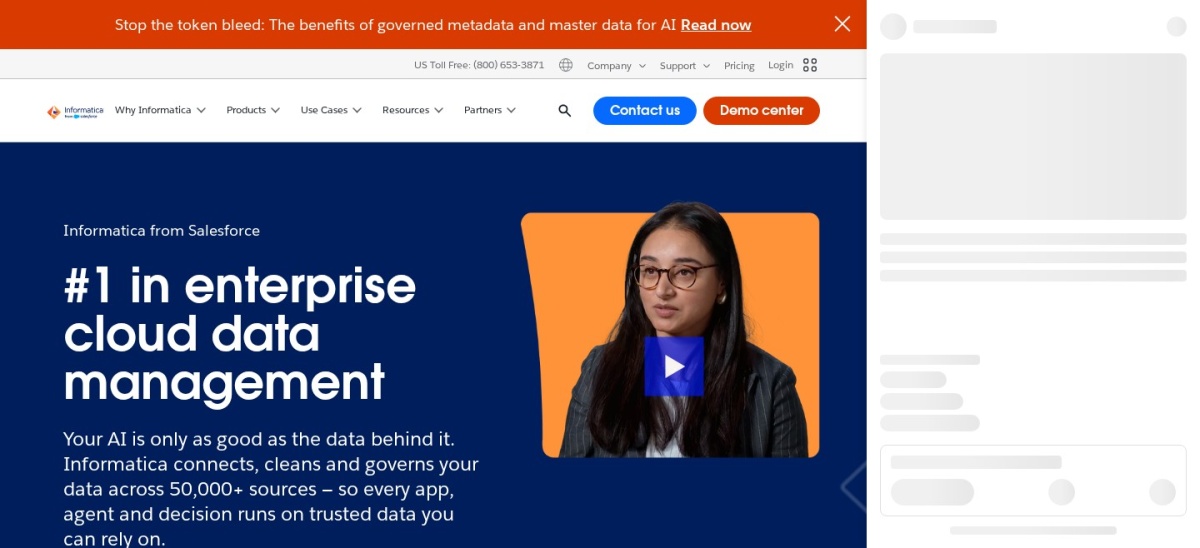
Informatica Data Quality homepage, captured Nov 2026.
Informatica Data Quality is an enterprise data quality suite inside the Intelligent Data Management Cloud, now part of Informatica from Salesforce. It pairs profiling and cleansing with data governance, and the CLAIRE AI engine automates much of the discovery work.
The trade off is evidence. Sources disagree on the G2 rating, with readings of 4.3 and 4.5, and only 12 reviews support the listing, so treat the rating with care. It suits large enterprises already invested in Informatica.
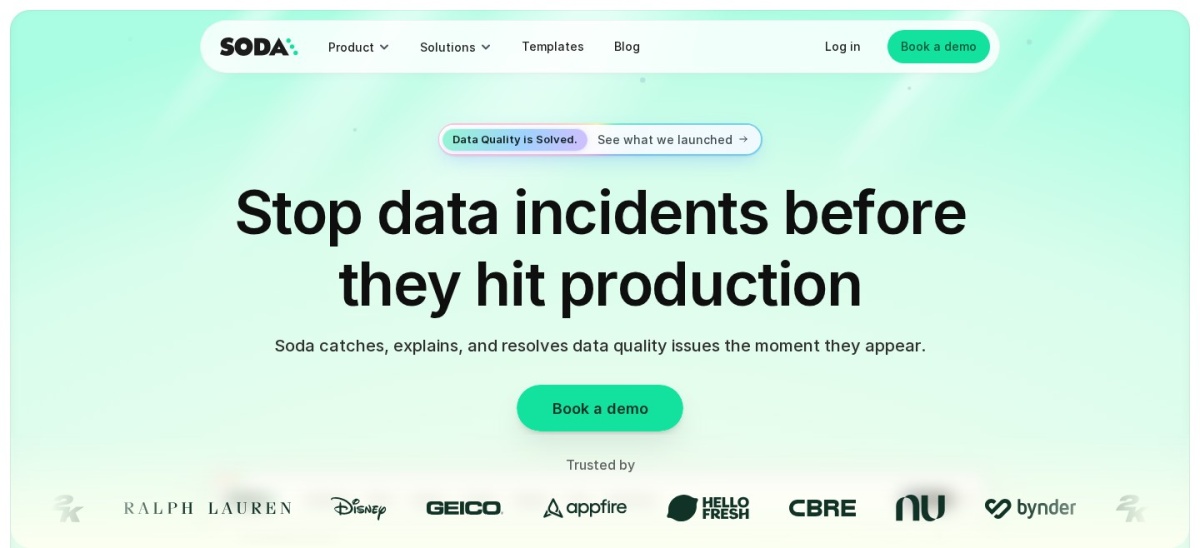
Soda is a data quality testing platform that checks data in the warehouse with SodaCL, a human-readable language for writing checks, and alerts teams in Slack when data breaks. It has a free plan covering 3 production datasets a month, and Team costs $750 a month.
The trade off is scale. Team caps at 20 datasets, with extra tables at $8 each a month, so costs grow with coverage. It suits teams that want checks anyone on the team can read.
What we like
Published pricing from $750 a month
Free plan to start
SodaCL checks are easy to read
Alerts in Slack, Teams and email
Watch out for
Team plan caps at 20 datasets
Extra tables cost $8 each a month
Smaller review base than Monte Carlo
Team is $750 a month; Enterprise is by quoteVisit soda.io
06
Anomalo
4.4/5on G2 (44 reviews, checked Nov 2026)
PricingCustom/yr
Best for automated anomaly detection
DetectionML-based, no rules
Root causeAutomated
PricingBy quote
Reviews44 on G2
anomalo.com
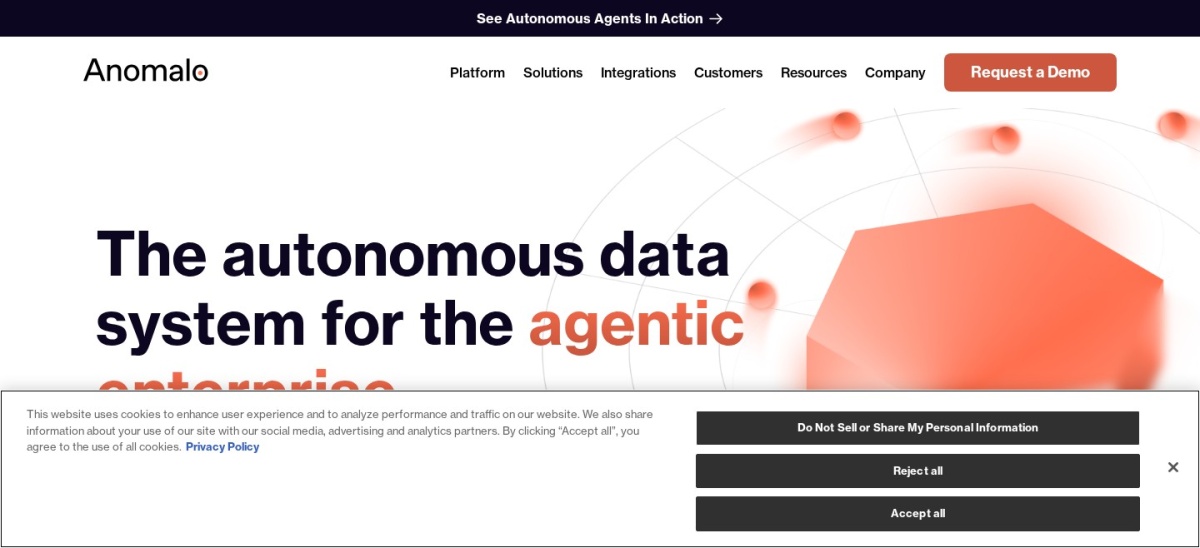
Anomalo homepage, captured Nov 2026.
Anomalo is an AI data quality platform that watches tables automatically, learns what normal looks like, and flags anomalies without hand-written rules. It adds automated root-cause analysis, so teams see why a table broke, not just that it broke.
The trade off is price and proof. Anomalo publishes no price, and only 44 G2 reviews support the rating. It suits teams with many tables and no time to write rules for each one.
Monte Carlo is a data observability platform that monitors data pipelines end to end, tracking freshness, volume, schema and lineage, and alerting when something breaks. It has the largest review base here at 547 G2 reviews, and its incident management ties alerts to owners.
The trade off is scope and price. Monte Carlo is observability rather than pure quality testing, and pricing is by quote, with marketplace contracts near $50,000 a year. It suits data teams running large pipelines.
Talend Data Quality is a data profiling and cleansing tool inside the Qlik Talend platform, with matching, deduplication and standardisation for enterprise data. It profiles data first, so teams see quality problems before they clean them.
The trade off is weight and evidence. Only 20 G2 reviews support the rating, pricing is by quote, and the platform is heavy for small teams. It suits enterprises that already use Talend for integration.
Ataccama ONE is a data management platform that combines data quality, governance and master data management in one product, with AI-assisted data profiling. It suits regulated industries that need quality and governance from the same vendor.
The trade off is evidence and price. Only 12 G2 reviews support the rating, and other sources rate it 4.5, so the figure is uncertain, while pricing is by quote. It suits enterprises consolidating quality and governance tools.
Rule-based testing catches known problems: a null where there should be a value, a duplicate key, a value outside its range. It is precise, but someone has to write and maintain every rule.
Monitoring catches unknown problems by learning what normal looks like, then flagging deviations in freshness, volume or distribution. It needs a baseline period before it becomes useful.
Most mature teams use both: tests for the critical tables, monitoring for everything else. dbt plus Monte Carlo is a common pairing.
How we chose
We started from the data quality tools with the largest G2 review bases, then kept nine that cover test-based tools, monitoring platforms, contact data and enterprise suites.
Prices come from each vendor's pricing page, checked on 25 November 2026. Ratings and review counts come from G2 on the same day. Where a vendor sells by quote, the list says so rather than guessing a price.
We left out tools with no verifiable G2 rating. No vendor paid for a place, and we do not claim hands-on testing for this list.
How to choose data quality software
Start with where your data lives and who will write the checks, then compare coverage and price.
List the data that matters most. Critical tables get written tests; everything else can be monitored for anomalies.
Check who writes the checks. SQL teams suit dbt and Soda, while Anomalo and Monte Carlo need less hand-written work.
Confirm warehouse support. Check that the tool connects to your warehouse, lakehouse or database before you compare anything else.
Start free, then pay for scale. dbt Core and Great Expectations cost nothing to start, and Soda has a free plan.
FAQ
What is the best data quality software?
dbt is the best overall pick for most teams, rated 4.7 out of 5 by 210 G2 reviewers. Its free open-source core runs tests inside the transformation pipeline, so bad data is caught before it reaches dashboards.
How much does Soda cost?
Soda has a free plan covering 3 production datasets a month, and the Team plan costs 750 dollars a month for 20 datasets, with extra tables at 8 dollars each a month. Enterprise pricing is by quote.
What is data quality software?
Data quality software tests, profiles and monitors data to catch errors before they reach reports and models. It checks accuracy, completeness, consistency and freshness, and alerts teams when data breaks the rules.
Is Great Expectations free?
Yes. Great Expectations Core is free and open source under the Apache 2.0 licence, and you can run it yourself in Python. GX Cloud is the managed version and is priced by quote.
What is the difference between data quality and data observability?
Data quality tools test data against rules you define, such as no nulls or no duplicates. Data observability tools monitor pipelines for freshness, volume, schema and lineage changes, and alert when something unexpected happens.
Which data quality tool is best for contact data?
Melissa is the best pick for contact data, rated 4.5 out of 5 by 195 G2 reviewers. It verifies addresses, emails and phone numbers in real time through an API, batch processing or plugins.
What is dbt?
dbt is a transformation tool that turns raw warehouse data into trusted models using SQL, with built-in tests that run on every build. dbt Core is free and open source, while dbt Cloud adds hosting, scheduling and collaboration.
SaaS SEO and WordPress specialist with about 8 years of experience. Rakib compares WordPress plugins, themes, hosting and software using public pricing, documentation and user reviews. See how we rank.