Apify is the best data extraction software for most teams, with thousands of ready-made scrapers and a free tier. Pick Octoparse for no-code visual scraping and Bright Data for sites that fight back with anti-bot defences.
How we make this list: we compare pricing pages, product documentation and public user reviews, then re-check every price before each update. No product paid for a place. Disclosure.
Apify has the largest review base here, 676 G2 reviews at 4.7 out of 5.
Octoparse suits non-developers, with a visual builder and cloud scheduling from $69 a month.
Bright Data handles IP blocking, CAPTCHAs and geo-restrictions at enterprise scale.
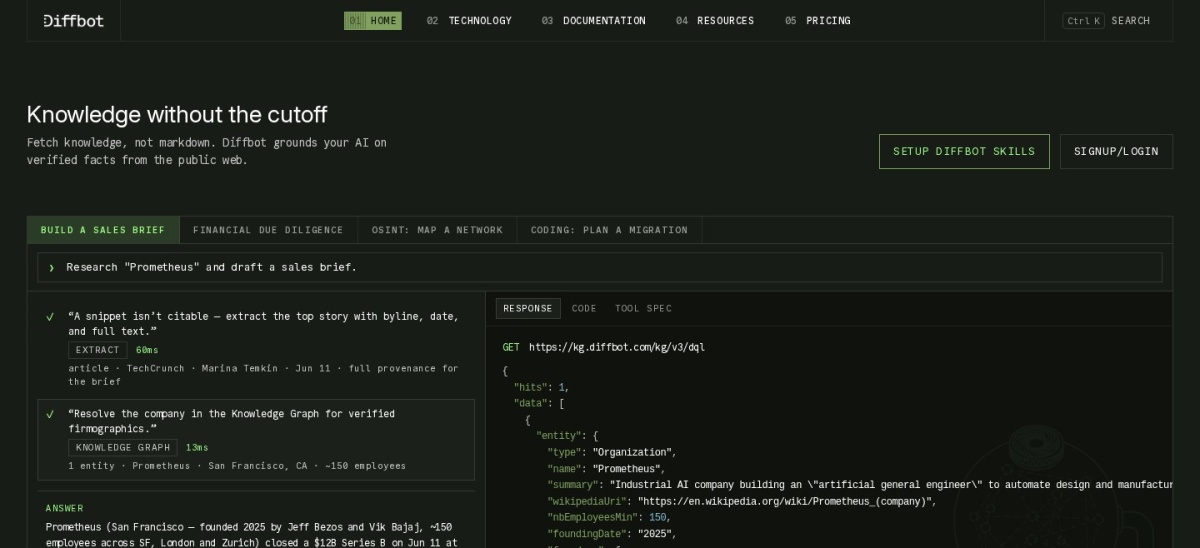
Diffbot returns structured data with AI, but Startup costs $299 a month.
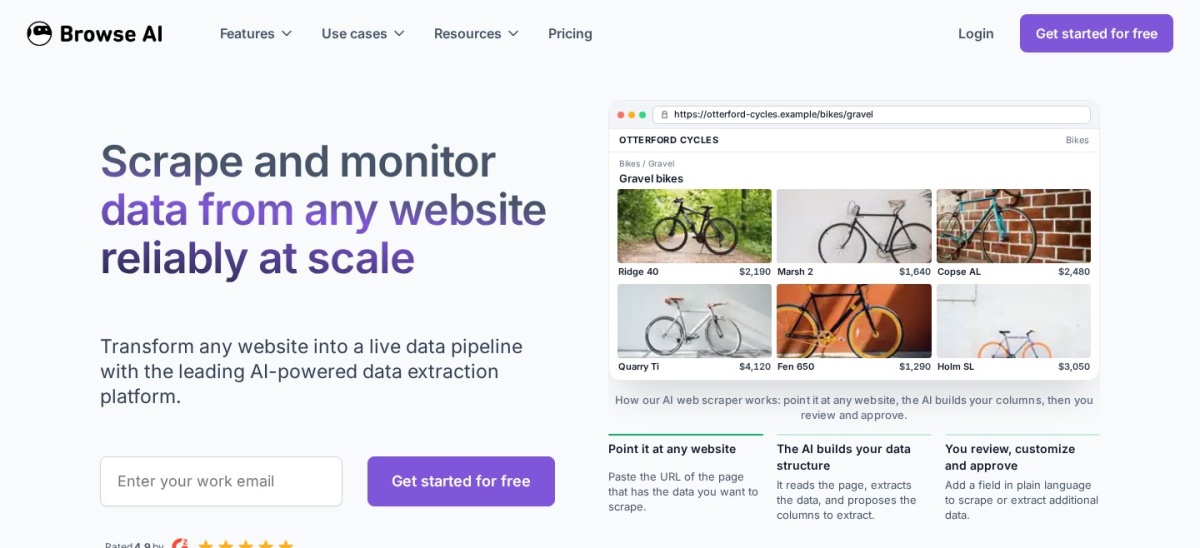
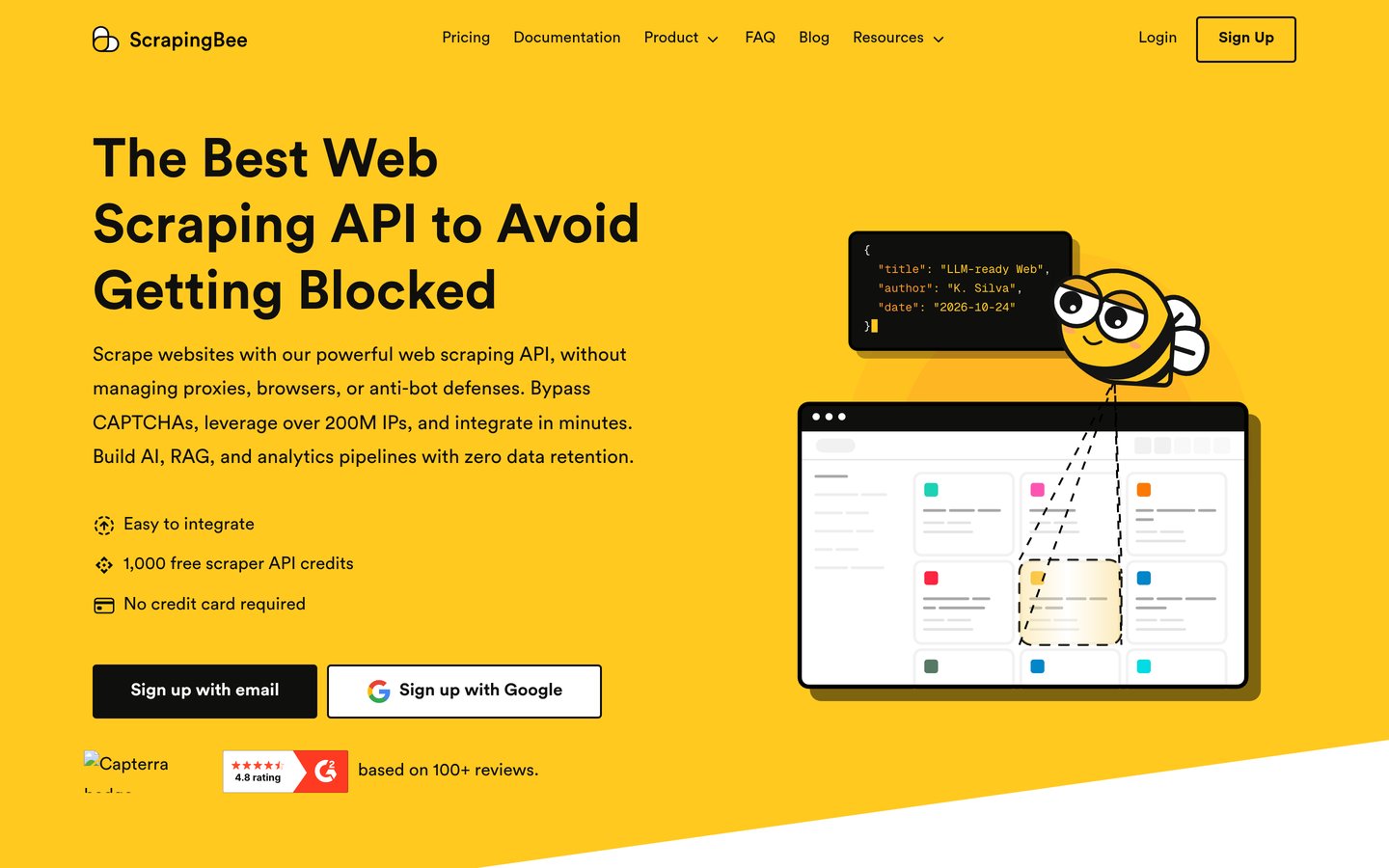
ScrapingBee and Browse AI both start at $19 a month for developer and no-code use.
What data extraction software should do
Data extraction software pulls structured data from websites, documents and APIs, then delivers it as CSV, JSON or straight into a database or AI pipeline.
The hard part is not fetching a page. It is surviving layout changes, JavaScript rendering, IP blocks and CAPTCHAs, which is why managed tools beat raw scripts.
No-code tools suit analysts, while APIs suit developers building pipelines. Our guide on best analytics software covers what to do with extracted data.
Always check a target site's terms and robots file before scraping. Extraction tools are powerful, and the legal position varies by site and country.
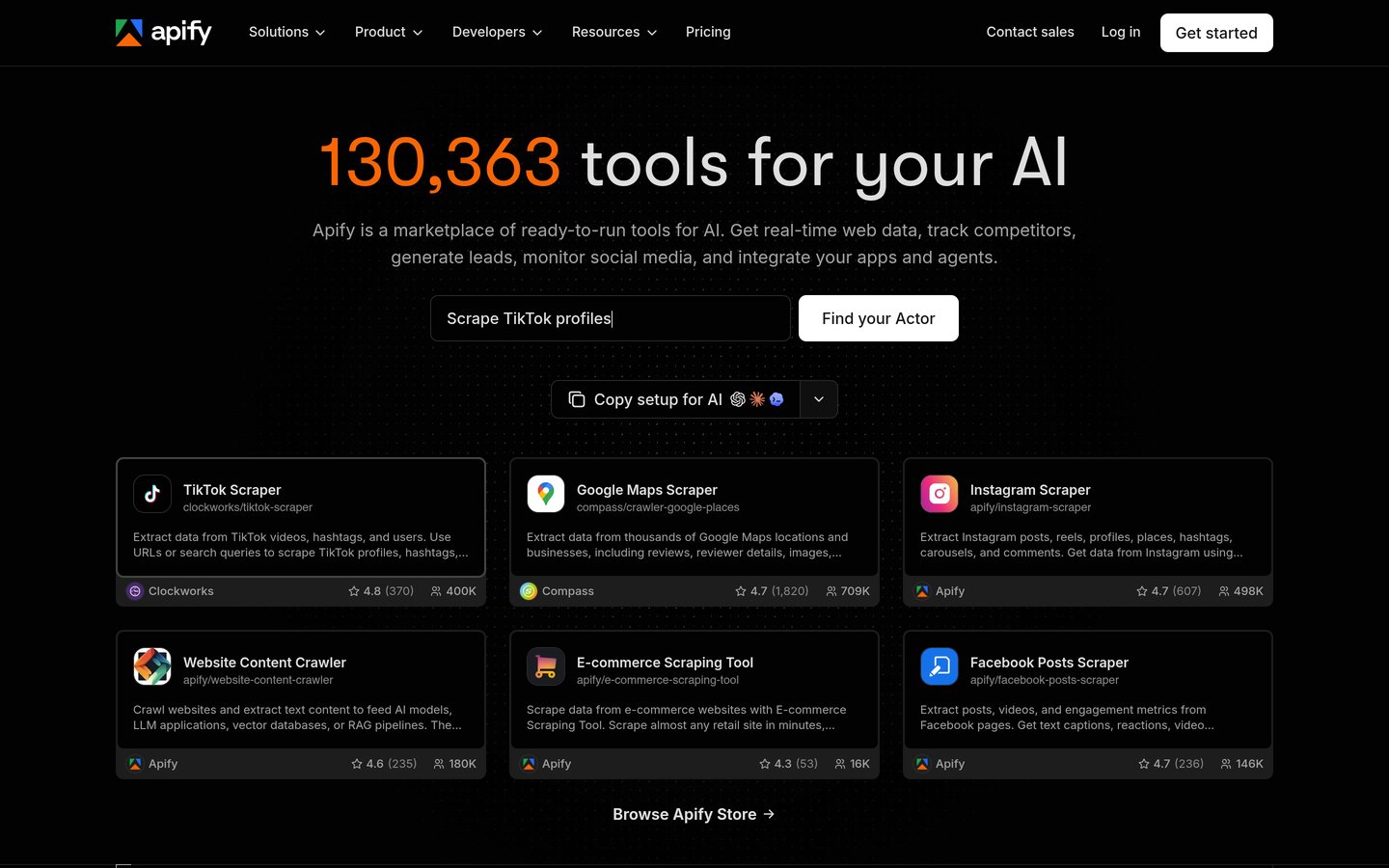
Apify is a scraping platform built around a marketplace of thousands of ready-made scrapers, called Actors, for common sites, plus custom code for the rest. It is rated 4.7 out of 5 on G2 from 676 reviews, and Starter costs $19 a month.
The trade off is the credit model. Compute, proxies and storage bill separately, and a misconfigured Actor can burn credit fast. It suits developers and analysts who want data quickly without building a crawler.
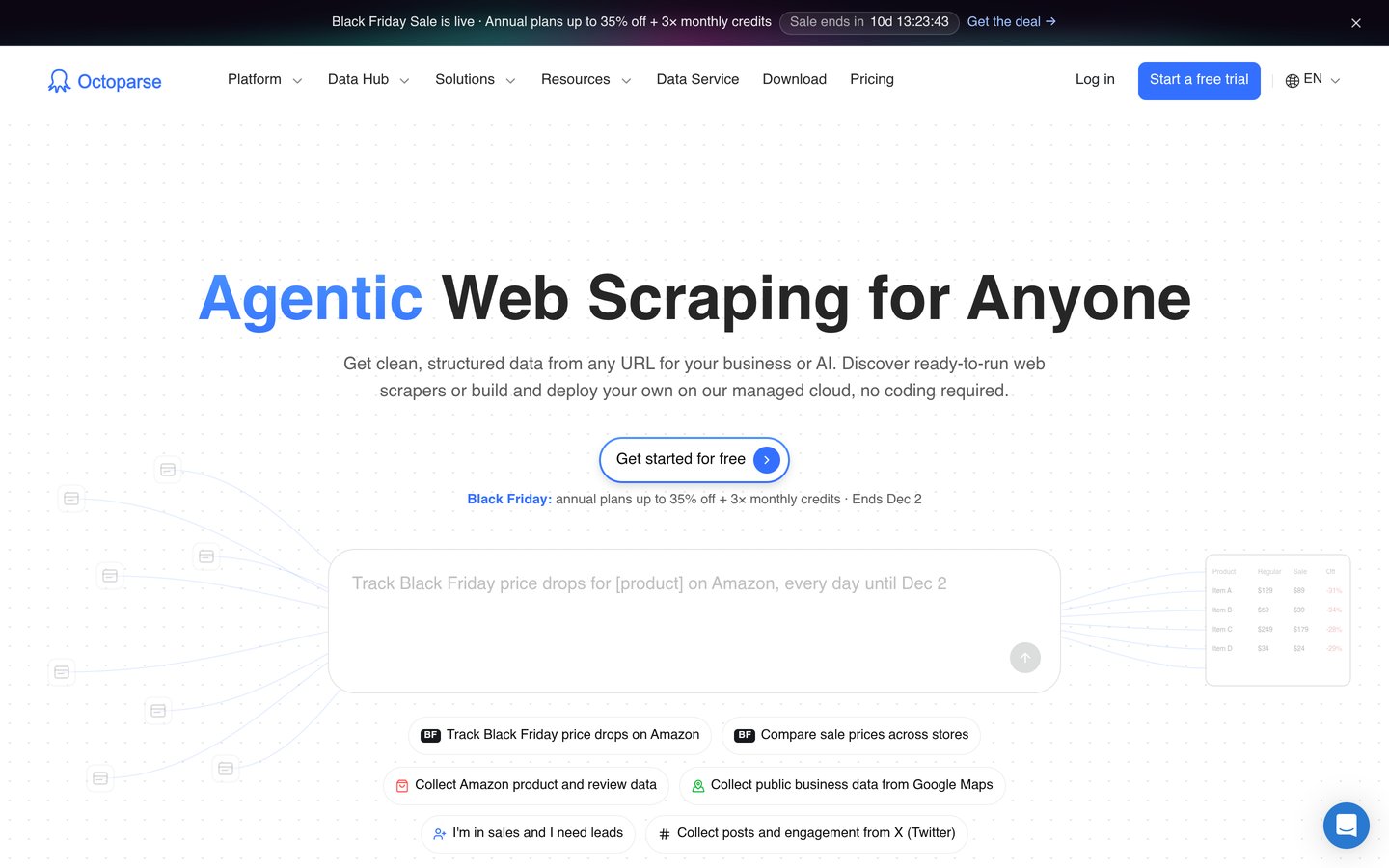
Octoparse is a no-code scraping tool with a visual builder: click the fields you want on a page, and its template library covers more than 500 popular sites. It is rated 4.8 out of 5 on G2 from 52 reviews, and Standard costs $69 a month billed yearly.
The trade off is metered extras. Proxy and CAPTCHA handling bill on top of the plan, and the free plan caps exported rows. It suits non-developers who need data without writing code.
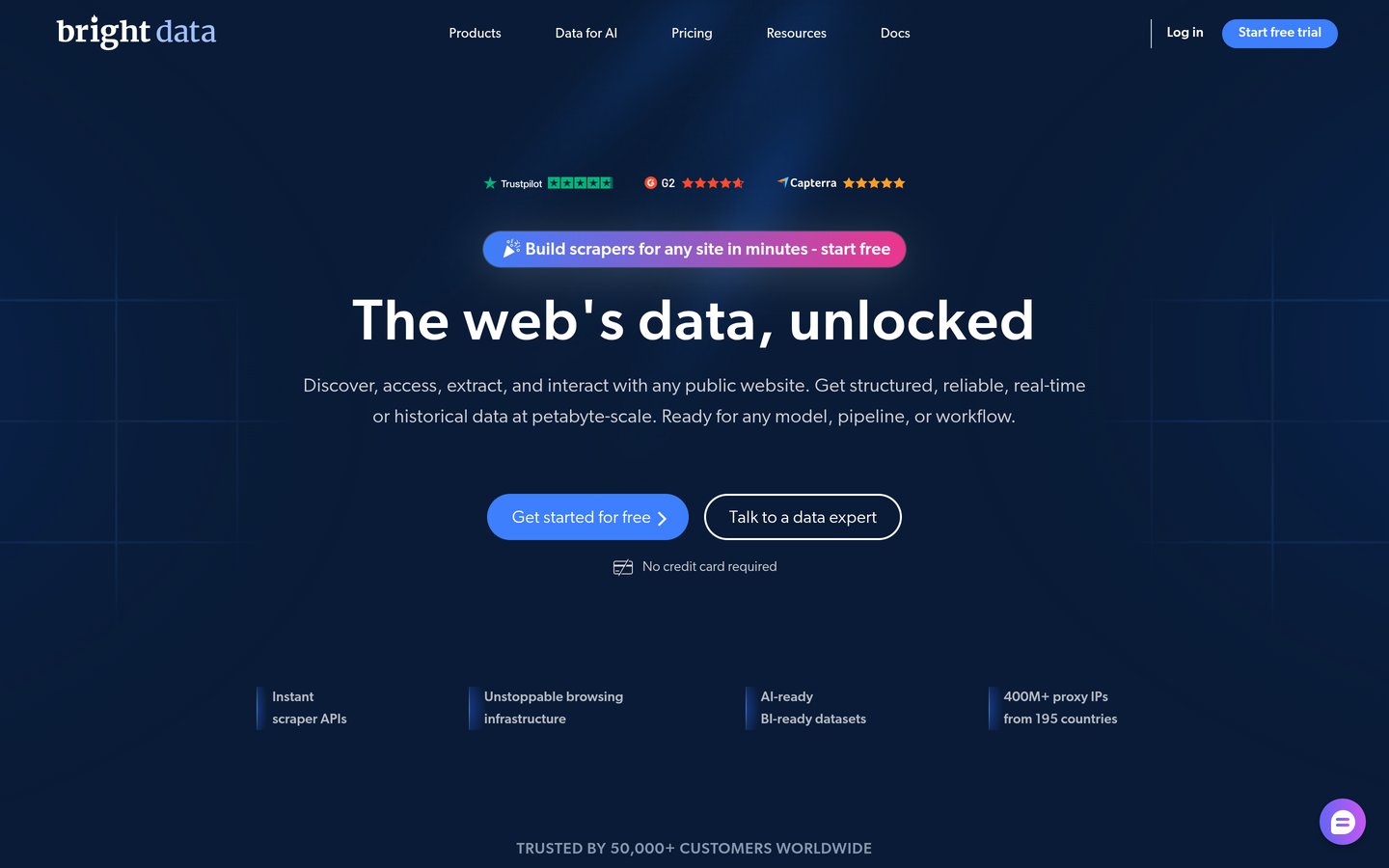
Bright Data is built around proxy infrastructure with a Web Scraper API that handles JavaScript rendering, CAPTCHA solving and geotargeting. It is rated 4.7 out of 5 on G2 from 348 reviews, and pay-as-you-go starts at $1.50 per 1,000 records.
The trade off is cost at scale. The free tier covers 5,000 records a month, but serious volume needs the $499 Scale plan or more. It suits teams collecting data at scale from sites with strong anti-bot defences.
Diffbot is an AI extraction platform that reads an article, product or discussion page and returns structured fields, with no selectors to fix when layouts change. It is rated 4.9 out of 5 on G2, but from only 29 reviews.
The trade off is price and sample size. Startup costs $299 a month, and the 4.9 score rests on a small base. It suits teams that want structured data and entity enrichment without selectors.
Browse AI is a no-code tool that trains robots by clicking, then extracts data and monitors pages for changes on a schedule. It is rated 4.8 out of 5 on G2 from 61 reviews, and Personal costs $19 a month.
The trade off is scale. It suits monitoring and small extraction jobs, not enterprise-scale collection. It suits non-developers who want to monitor prices or listings without code.
ScrapingBee is a developer-first scraping API: send a URL, get the rendered page back, with rotating proxies and headless browsers handled for you. It is rated 4.8 out of 5 on G2 from 33 reviews, and Hobby costs $19 a month.
The trade off is that it is an API, not a platform. There is no visual builder or marketplace of scrapers. It suits developers who want a simple API for fetching pages.
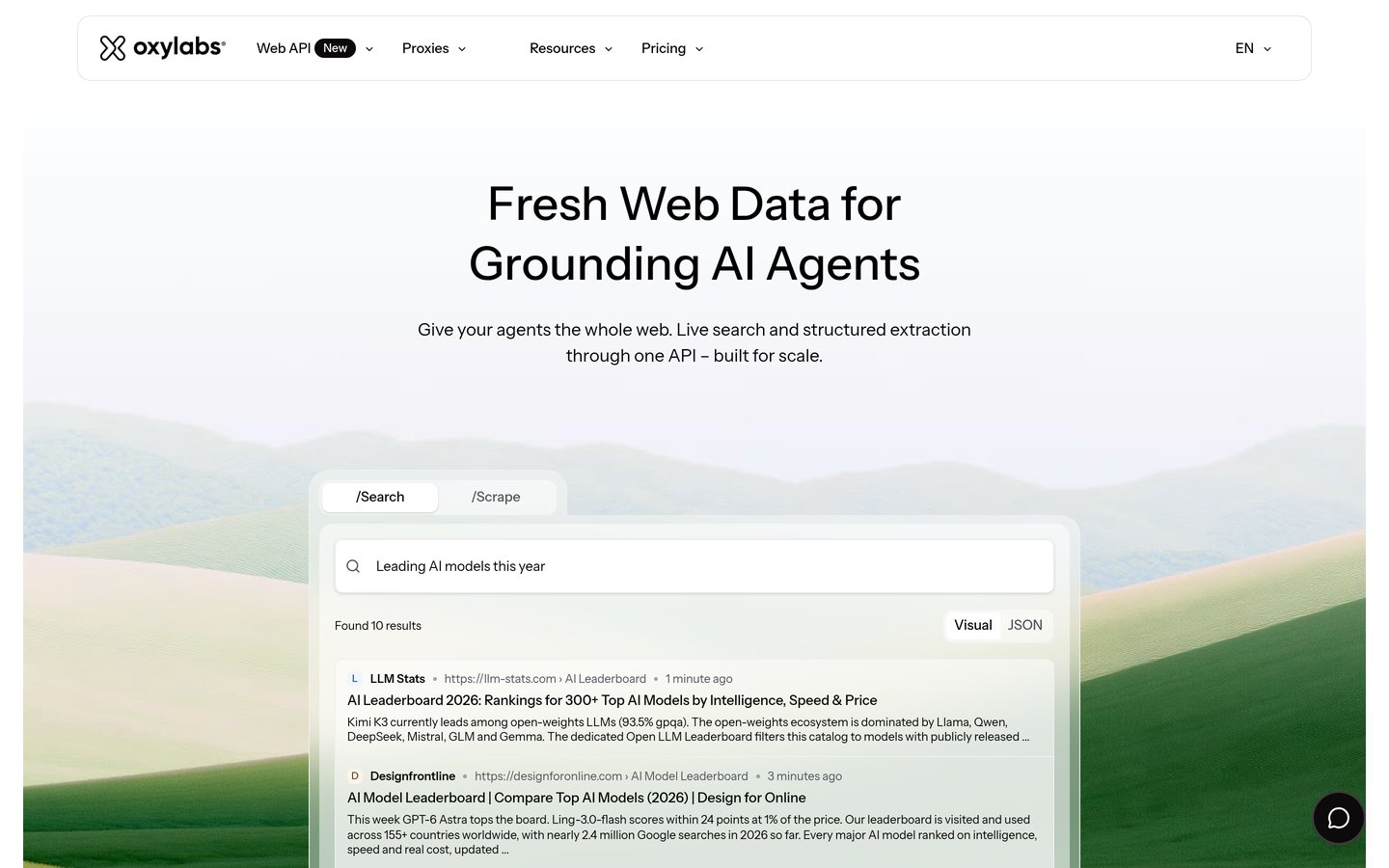
Oxylabs is a compliance-focused enterprise scraping platform with residential proxies, web scraping APIs and datasets for large-scale collection. It is rated 4.5 out of 5 on G2 from 420 reviews, and plans start at $49 a month.
The trade off is enterprise focus. Small teams pay for compliance and scale they may not need. It suits large companies collecting data where compliance matters.
ParseHub is a visual scraping tool for complex pages, letting users click elements to build extraction rules without code, with cloud scheduling. It is rated 4.4 out of 5 on G2, from a band of over 100 reviews, and pricing is quoted.
The trade off is pricing transparency. No public starting price is published, and support is limited on lower tiers. It suits analysts scraping complex pages without code.
Scraping public data is not automatically legal. A site's terms of service, its robots file and local law all matter, and the position varies by country.
Bright Data and Oxylabs put compliance front and centre for this reason. They document how they collect and what they will not touch.
Before any large job, check the target site's terms, respect rate limits, and avoid personal data unless you have a lawful basis.
How we chose
We started from the web scraping and extraction tools most often cited in 2026 comparisons, then kept those with a verifiable G2 rating and a live product.
Prices and ratings were checked on 25 November 2026. Ratings come from G2 on that day; published prices come from vendor pricing pages as cited in comparisons read that day.
We left out tools with no verifiable rating. No vendor paid for a place, and we do not claim hands-on testing for this list.
How to choose data extraction software
Start with the site you need data from.
Check if a ready-made scraper exists. Apify's marketplace may already cover your target, which saves days of building.
Test against the hardest page. Try a JavaScript-heavy page with anti-bot defences, not the easy one, before buying.
Decide no-code or API first. Analysts should pick Octoparse or Browse AI; developers building pipelines should pick Apify or ScrapingBee.
Price by volume, not by seat. Most tools charge per record, credit or compute unit, so estimate monthly volume first.
FAQ
What is the best data extraction software?
Apify is the best data extraction software for most teams. It is rated 4.7 out of 5 on G2 from 676 reviews, with thousands of ready-made scrapers and a free tier. Octoparse suits no-code users, and Bright Data suits blocked sites.
How much does data extraction software cost?
Apify Starter costs $19 a month, as do Browse AI Personal and ScrapingBee Hobby. Octoparse Standard is $69 a month, Diffbot Startup $299, and Bright Data pay-as-you-go starts at $1.50 per 1,000 records.
Is web scraping legal?
It depends on the site's terms, its robots file and local law, and the position varies by country. Check the target site's terms before collecting, respect rate limits, and avoid personal data unless you have a lawful basis.
What is the difference between Apify and Octoparse?
Apify is a platform with a marketplace of ready-made scrapers and an API for developers, while Octoparse is a no-code visual builder for non-developers. Apify suits pipelines; Octoparse suits analysts who want to click, not code.
Can data extraction tools handle JavaScript sites?
Yes, the tools here render JavaScript. Bright Data, ScrapingBee and Apify all handle JavaScript rendering, CAPTCHAs and proxies, while Octoparse and Browse AI handle it through their cloud runners.
Do I need to write code to extract data?
No, for common jobs. Octoparse, Browse AI and ParseHub are visual tools that need no code. Apify and ScrapingBee suit developers, but Apify's ready-made Actors also run without writing code.
SaaS SEO and WordPress specialist with about 8 years of experience. Rakib compares WordPress plugins, themes, hosting and software using public pricing, documentation and user reviews. See how we rank.