TalentLMS is the best customer education software for most teams, with a free plan for up to 5 users and paid plans from $119 a month. Pick 360Learning for peer-authored courses at $8 per user a month, or Teachfloor for cohort-based academies from $89 a month.
How we make this list: we compare pricing pages, product documentation and public user reviews, then re-check every price before each update. No product paid for a place. Disclosure.
TalentLMS is the only platform here with a free plan and published pricing, starting at $119 a month for up to 40 users.
Skilljar, Docebo, LearnUpon, Absorb and Thought Industries are quote-based enterprise platforms with no public price.
360Learning charges $8 per user a month on its Team plan, the lowest published entry price in this list.
Teachfloor is rated 5.0 out of 5 on G2, but from only 47 reviews, so treat the score as a small-sample signal.
Trainual no longer publishes prices, so budget for a sales quote even though older guides list $249 a month.
What customer education software should do
Customer education software runs the academy where customers learn your product. It hosts courses, tracks who finished them, issues certificates and shows whether training reduces support tickets or churn.
The best tools separate audiences cleanly. A customer academy, a partner portal and internal training should each have their own branding, catalog and permissions, even when they share one back end.
Pricing splits the market in two. Small-team tools publish a monthly price, while enterprise academies are quote-based and usually start in five figures a year, so shortlist by budget before you book demos.
Check the integrations before the feature list. Our guide to the best CRM software shows why academy data matters most when completions and certifications flow into the CRM your success team already uses.
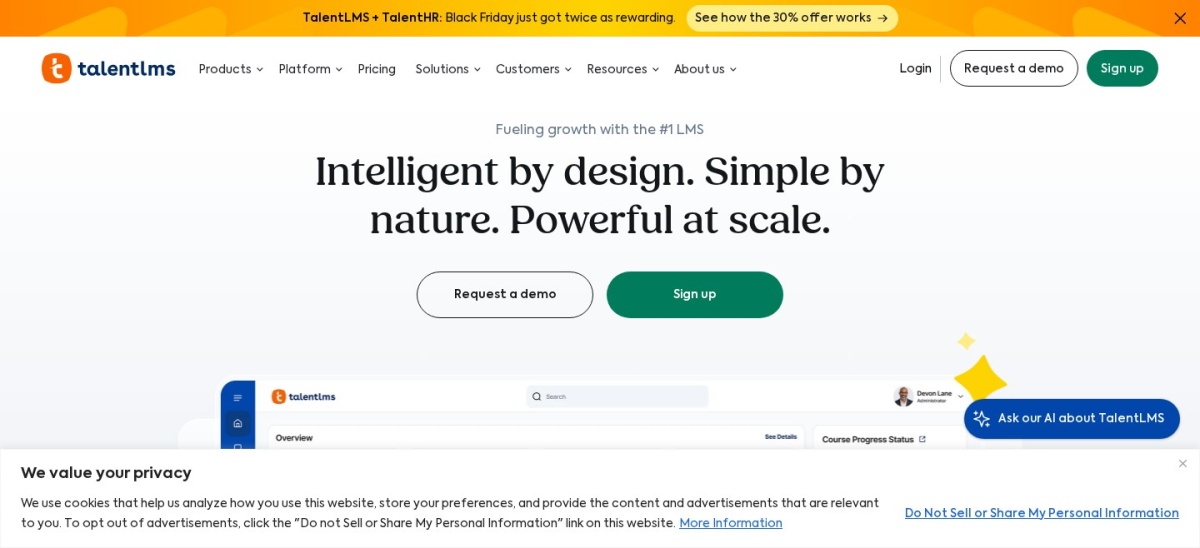
TalentLMS is a cloud learning platform for employee, customer and partner training, used by more than 70,000 teams. The free plan covers up to 5 users and 10 courses, while paid plans add unlimited courses, branches, single sign-on and AI-assisted course creation.
The trade off is depth. Enterprise academies that need advanced certification workflows, deep CRM reporting or monetized course sales will outgrow it. It suits small and mid-size teams that want a live academy fast without a sales cycle.
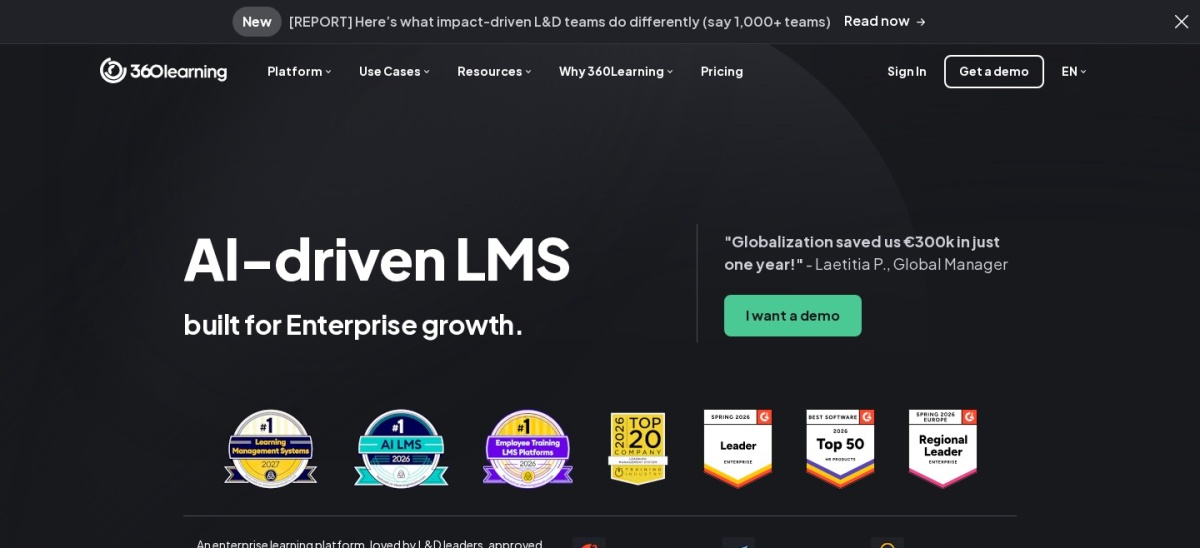
360Learning is a collaborative learning platform where subject experts across the business write and update courses, instead of one central team. The Team plan costs $8 per active user a month for up to 100 users, with learning paths, skills tracking and AI-assisted authoring.
The trade off is structure. It is built for internal experts sharing knowledge, so customer-facing academies need extra work on branding and certification. It suits teams whose best training material lives in the heads of their own experts.
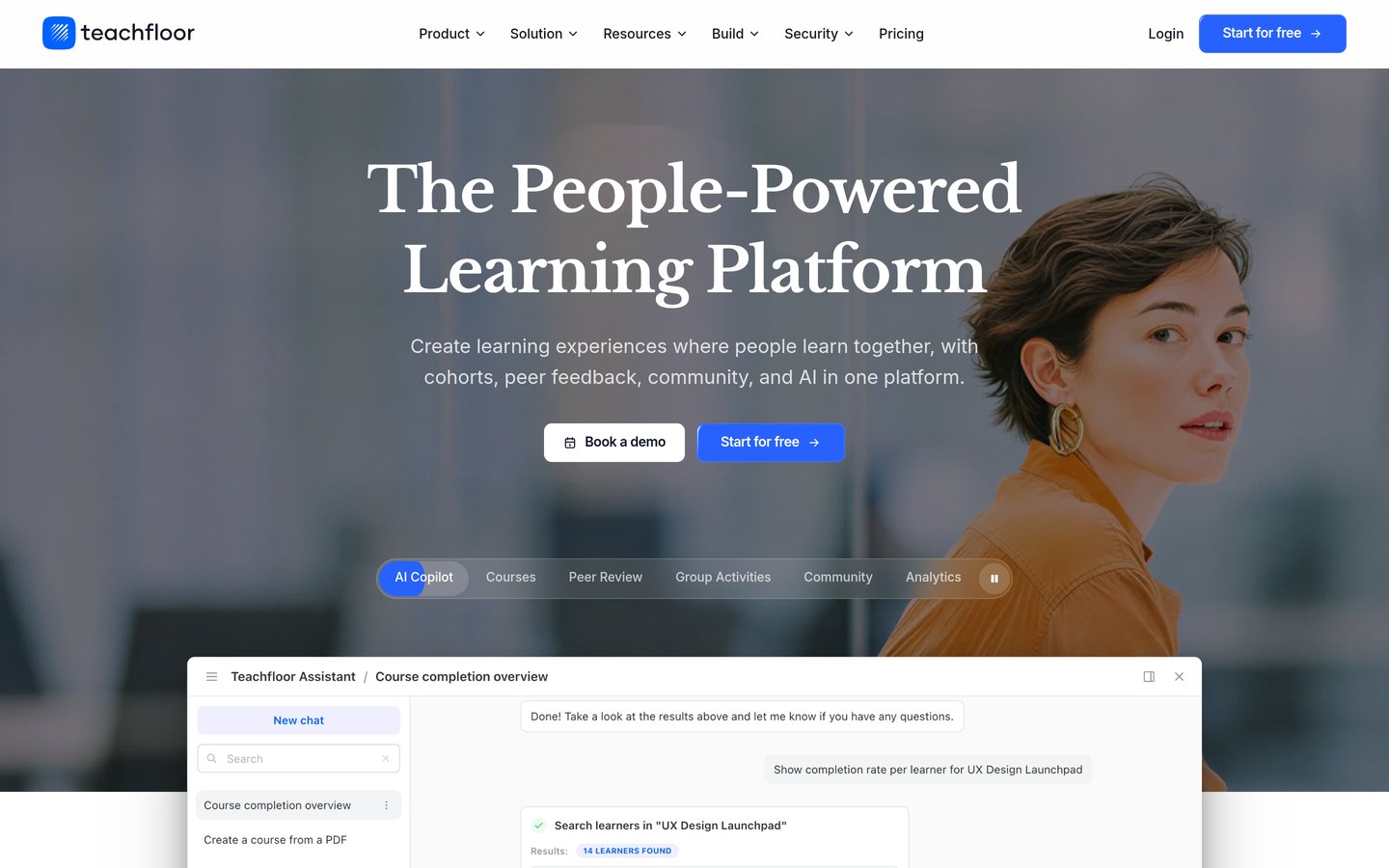
Teachfloor is a cohort-based learning platform that runs customer academies as group programs, with live sessions, peer review, group activities and community built in. The Startup plan costs $89 a month for 50 seats, with unlimited courses, SCORM import and Zoom integration.
The trade off is scale. It is built for structured academies rather than large self-serve content libraries, and the ecosystem is newer than the incumbents. It suits teams that teach in cohorts and want discussion, not just video playback.
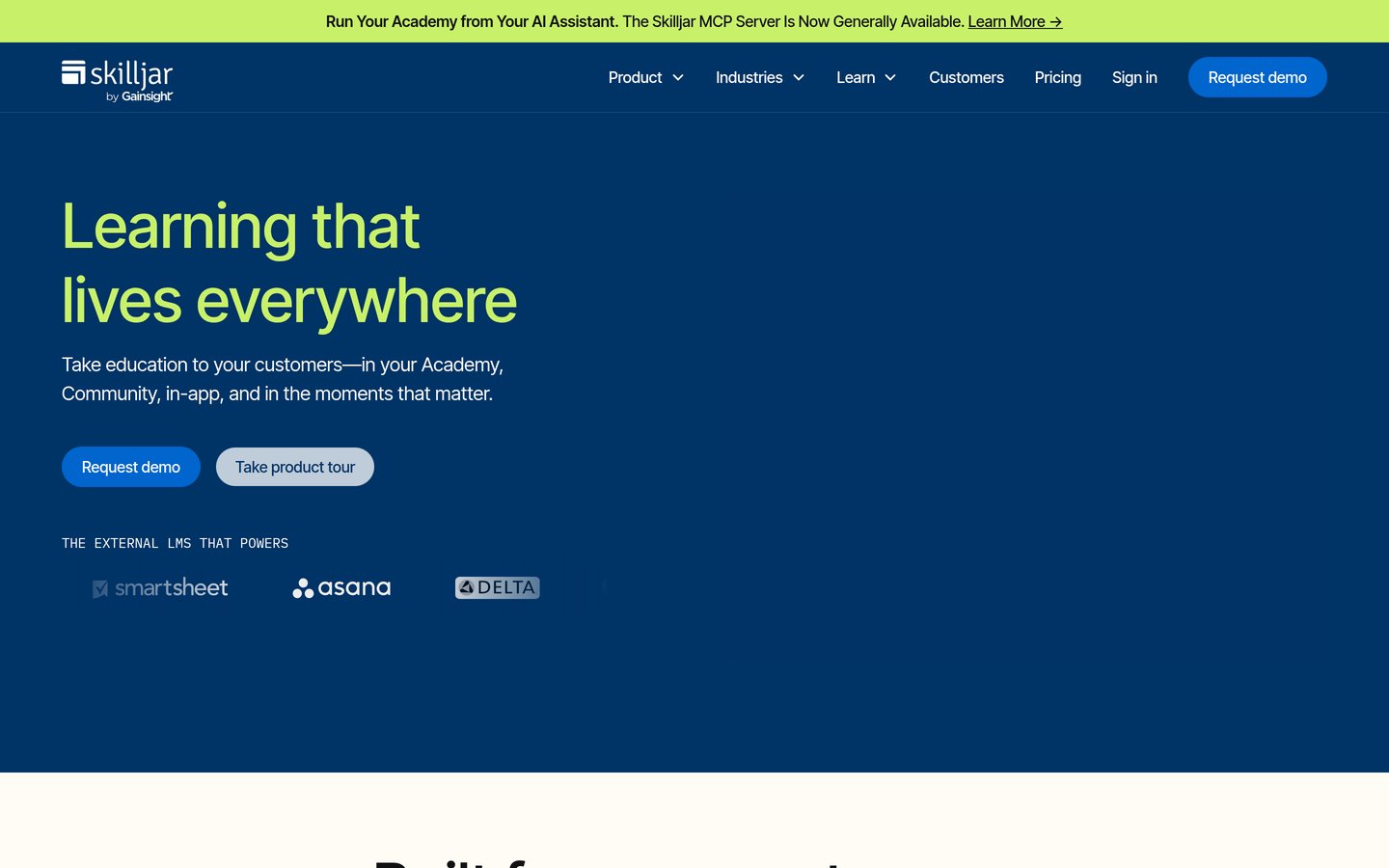
Skilljar is a purpose-built customer education platform for B2B software companies running academies at scale, now part of Gainsight. It supports branded academy sites, certifications, learning paths and deep Salesforce and Gainsight integrations for tying training to adoption and renewals.
The trade off is access. Pricing is quote-based with no public figures, and third-party estimates start around $30,000 a year. It suits larger SaaS teams that treat customer education as a retention program, not a side project.
What we like
Built for external academies, not repurposed HR training
Docebo is an AI-powered learning platform for training employees, partners and customers from one system. It uses AI to personalize content recommendations, automate enrolment and reporting, and connects with Salesforce, Zendesk and hundreds of other tools.
The trade off is cost and complexity. Pricing is quote-based, with buyer data pointing to median contracts around $42,000 a year. It suits large organizations training several audiences at scale that need AI personalization.
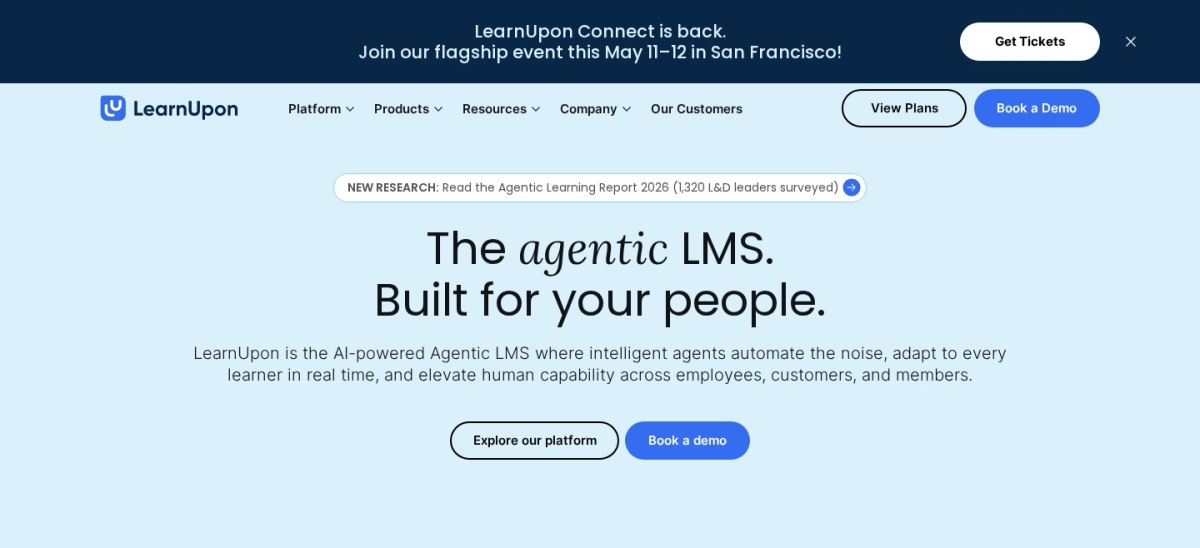
LearnUpon is a cloud LMS that runs separate branded portals for customers, partners and employees from a single back end. It covers learning paths, gamification, webinars, exams and reporting, with messaging, chat rooms and forums for learner communication.
The trade off is pricing transparency. Plans are quote-based, with buyer data pointing to median contracts around $30,000 a year. It suits mid-market teams that train several audiences and want one admin view.
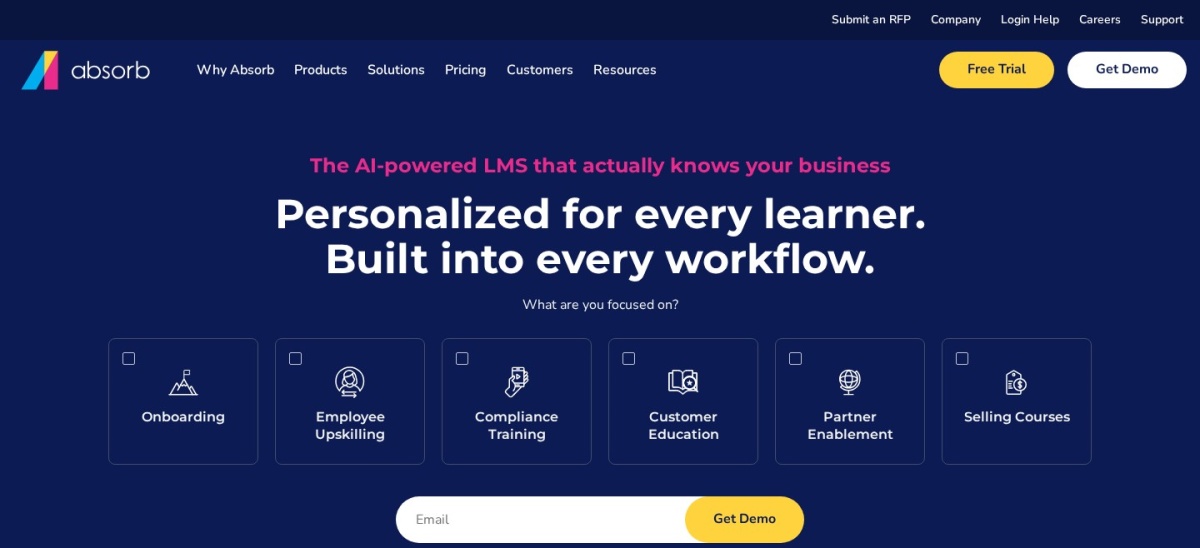
Absorb LMS is an enterprise learning platform known for a polished, branded learner experience and strong customer support. It handles external training, course authoring, automation and reporting, with AI-assisted content creation and personalization on higher tiers.
The trade off is that nothing is self-serve. Pricing is quote-based and implementation is a guided project. It suits organizations that want external training to feel like their own product, not a generic portal.
Thought Industries is a platform for branded, monetizable external training. Its Panorama multi-tenancy runs separate branded hubs for different customer and partner audiences, with e-commerce, subscriptions and learning paths for selling courses as a business.
The trade off is enterprise complexity and cost. Pricing is quote-based, with third-party estimates starting around $25,000 a year plus implementation fees. It suits training businesses and vendors that sell education, not just give it away.
Trainual is a platform that turns documented processes into role-based training, combining SOPs, onboarding paths, quizzes and completion tracking in one place. It fits teams whose customer training is really process training, such as franchises, agencies and service businesses with repeatable playbooks.
The trade off is that it is not a full customer education LMS, and it no longer publishes prices. Buyers report roughly $249 a month for a small Core plan, but confirm a quote first. It suits process-heavy teams more than course-catalog academies.
Only TalentLMS offers a real free plan here, and it caps at 5 users and 10 courses. That is enough to pilot an academy, but not to run one.
Paid plans mostly add scale and branding. You get more learners, separate portals, single sign-on, certificates and reporting that ties training to renewals.
Quote-based platforms add a sales cycle to every purchase. Ask for the full first-year cost, including implementation, before comparing a quote with a published price.
If training is a retention program, budget for the enterprise tier. A $119-a-month tool that nobody finishes is worse than a quote-based academy customers actually complete.
How we chose
We started from the customer education platforms that appear most often in 2026 comparisons, then kept those with a verifiable G2 rating and a live product for external training.
Prices come from each vendor's pricing page or a vendor-supplied G2 listing, checked on 25 November 2026. Ratings and review counts come from G2 on the same day. Where a vendor shows a sale or an old price, the list shows the regular price.
We left out tools with no verifiable rating on G2, Capterra or Trustpilot. No vendor paid for a place, and we do not claim hands-on testing for this list.
How to choose customer education software
Start with who you are teaching, then match the platform to that audience and budget.
Define the audience first. Customers, partners and employees need different catalogs, branding and permissions. A tool with separate portals saves rework later.
Set the budget band before demos. Published-price tools top out near $150 a month for small teams, while enterprise academies start in five figures a year. Do not demo across bands.
Check certification and CRM links. If you issue certificates or tie training to renewals, confirm those flows exist before you buy, not after implementation starts.
Pilot with one real course. Launch a single onboarding course to real customers and watch completion rates before migrating your whole catalog.
FAQ
What is the best customer education software?
TalentLMS is the best pick for most teams, with a free plan for up to 5 users and paid plans from $119 a month. Larger B2B SaaS teams should shortlist Skilljar or Docebo, while cohort-based academies fit Teachfloor at $89 a month.
How much does customer education software cost?
Small-team tools cost $8 to $119 a month, with 360Learning cheapest at $8 per user a month and TalentLMS at $119 a month. Enterprise academies such as Skilljar and Docebo are quote-based, with buyer data pointing to $30,000 to $42,000 a year.
Is there free customer education software?
TalentLMS is the only platform in this list with a free plan, covering up to 5 users and 10 courses. 360Learning and Teachfloor offer free trials instead, while the enterprise platforms require a sales quote with no free tier.
What is the difference between an LMS and customer education software?
A general LMS trains anyone, while customer education software is built for external learners. It adds branded academies, separate customer portals, certifications and CRM links that tie training to adoption, support volume and renewals.
Which platform is best for selling training courses?
Thought Industries is the strongest pick for selling training, with monetized hubs, subscriptions and e-commerce built in. Teachfloor also supports paid courses through Stripe, while TalentLMS and 360Learning focus more on free customer training.
Do I need an enterprise platform for a small academy?
No. A small academy runs well on TalentLMS, 360Learning or Teachfloor, all with published prices under $120 a month. Move to Skilljar, Docebo or LearnUpon when you need multiple branded portals, deep CRM reporting or formal certification programs.
SaaS SEO and WordPress specialist with about 8 years of experience. Rakib compares WordPress plugins, themes, hosting and software using public pricing, documentation and user reviews. See how we rank.