Best API Monitoring Tools in 2026: 9 Tools Compared
WLWPLegible EditorsLast verified 24 Nov 2026How we rank12 min read
★ Short answer
Checkly is the best API monitoring tool for most teams, with code-defined API and browser checks from $24 a month and a strong G2 rating. UptimeRobot is the cheapest way to watch many endpoints at $12 a month, while Better Stack suits teams that want monitoring, incidents and status pages in one place.
How we make this list: we compare pricing pages, product documentation and public user reviews, then re-check every price before each update. No product paid for a place. Disclosure.
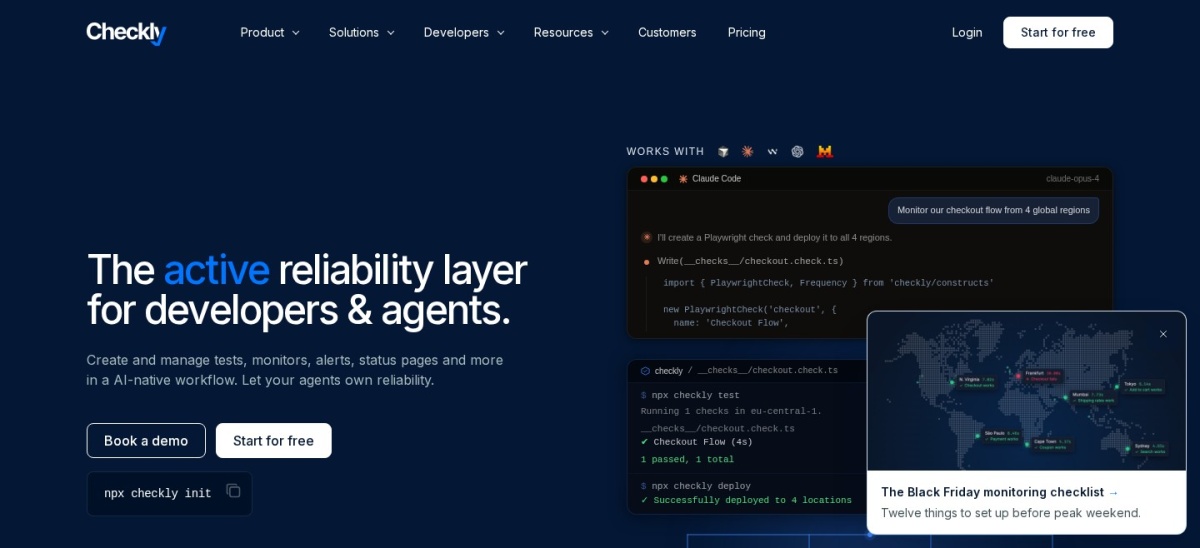
Checkly defines API and browser checks in code, so monitoring changes go through the same review process as application code.
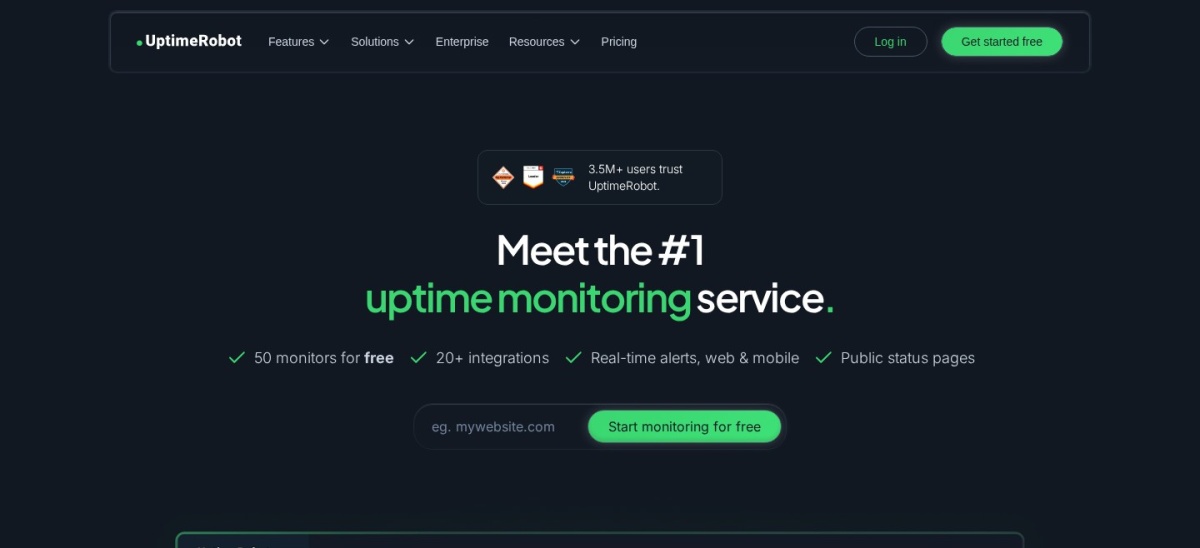
UptimeRobot is the cheapest paid start at $12 a month billed annually, with a free plan covering 50 monitors at 5-minute intervals.
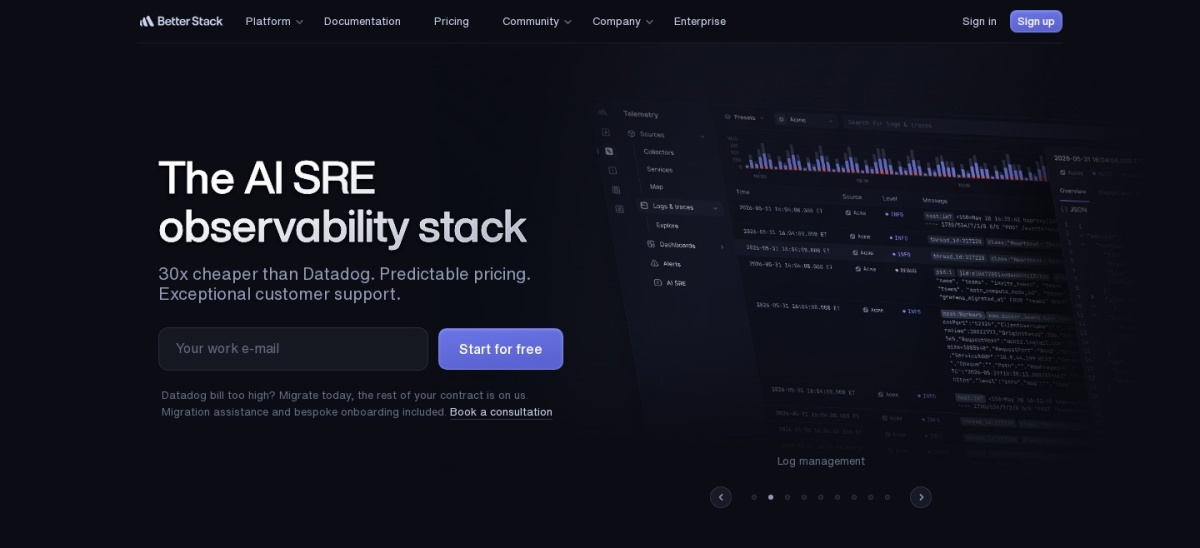
Better Stack combines uptime checks, incident management, on-call schedules and status pages from $29 a month per responder.
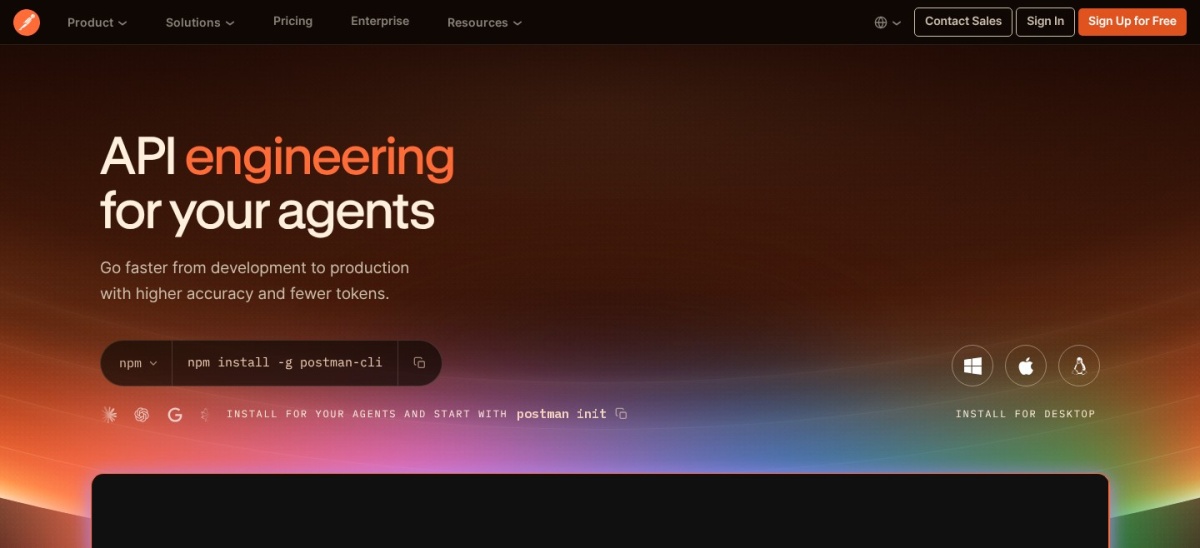
Postman fits teams whose API requests already live in Postman collections, with monitors included from the $14 Basic plan.
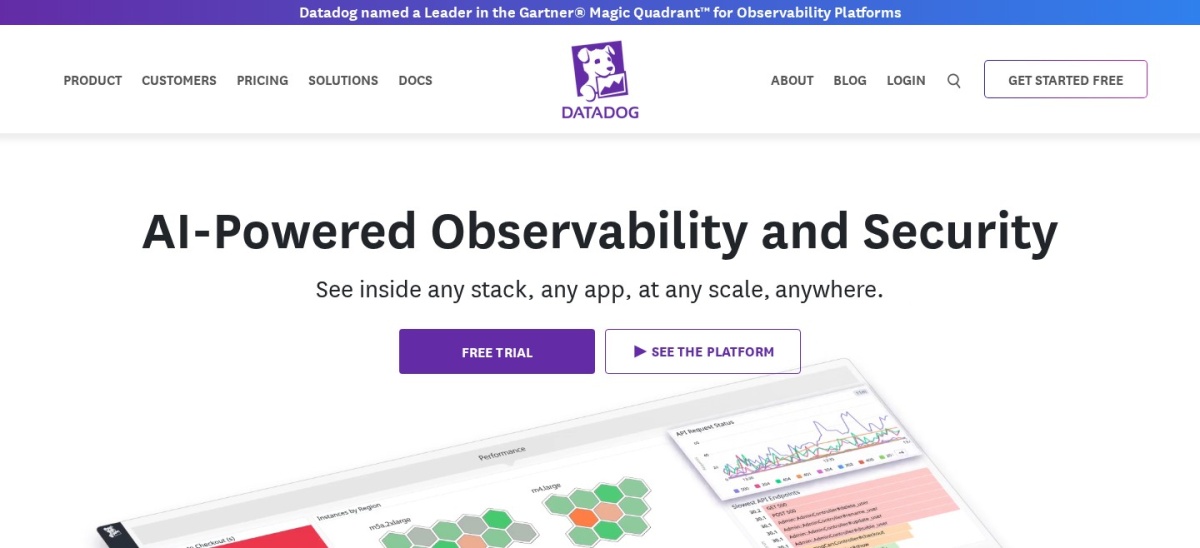
Datadog bills API tests per run at $5 per 10,000 runs, so costs rise with check frequency and the number of locations.
What to look for in an API monitoring tool
An API monitor calls your endpoints on a schedule and alerts you when a response is slow, wrong or missing. The best tools check more than uptime: they assert on status codes, response bodies and latency.
Check frequency and locations matter as much as price. A check every minute from three locations runs far more often than one every five minutes from a single location, and usage-based tools bill for every run.
Alerting is where cheap tools show their limits. Look for escalation, on-call schedules and integrations with Slack, PagerDuty or your incident tool before you commit.
Free plans are useful for a handful of endpoints, but paid plans add shorter intervals, more locations, status pages and longer history. Pick the tool that matches how many endpoints you run and how fast you need to know.
Checkly is a synthetic monitoring platform that treats checks as code. API checks are written in JavaScript or TypeScript, stored in Git and deployed through the normal pipeline, and Playwright browser checks run beside them. The free Hobby plan covers 10 uptime monitors, 10,000 API check runs and 1,000 browser runs a month.
The trade off is that it is a monitoring tool, not a full incident platform. Status pages exist but are not the focus, and on-call handling is basic. Starter costs $24 a month for 50 monitors, 25,000 API runs and 3,000 browser runs. It suits developer-led teams that already keep infrastructure in code.
UptimeRobot is the cheapest way to watch many endpoints. The free plan covers 50 monitors at 5-minute intervals, including HTTP, keyword, SSL and DNS checks, and API monitoring with custom headers and JSON field checks. Paid Solo costs $12 a month billed annually and cuts checks to 60 seconds with 3 status pages.
The trade off is depth. There are no browser checks, no transaction flows and no on-call scheduling, so a team that outgrows simple availability checks will need a second tool. It suits small teams and solo developers who want to know quickly when an endpoint goes down.
Better Stack is a monitoring platform that combines uptime monitoring, incident management, on-call schedules, status pages and logs in one place. The free plan covers 10 monitors at 3-minute intervals with a status page, and the paid Responder plan at $29 a month per responder adds 30-second checks, unlimited phone and SMS alerts and Playwright browser checks.
The trade off is per-responder pricing. The bill grows with every person on call, and log and page extras can add up on top. It suits small teams that want the whole incident workflow in one place instead of wiring three tools together.
Postman is the API platform most development teams already use for building and testing requests, and its monitors run collections on a schedule with alerts on failure. The free plan supports up to 3 collaborators, and the Basic plan at $14 a user a month billed annually adds unlimited collaboration and 10,000 monitor requests a team a month.
The trade off is that monitoring is one feature among many, and advanced collaboration, private workspaces and role controls sit on higher plans. Per-user pricing also climbs fast as the team grows. It suits API teams whose requests already live in Postman collections.
Datadog is a full observability platform, and its synthetic monitoring runs API tests from managed locations around the world or private locations inside your network. A failed API check sits beside the same service traces, logs and metrics, so the cause is often visible without switching tools. API tests list at $5 per 10,000 runs on annual billing.
The trade off is usage-based billing. Every run from every location counts, so one check every minute from three locations is about 129,600 runs a month. It suits platform teams that already run Datadog and want API failures linked to traces and logs.
New Relic is an all-in-one observability platform, and its synthetic monitoring adds API and browser checks to the same dashboards as APM, logs and infrastructure. The free tier covers 500 synthetic checks a month, and extra checks cost $0.005 each, with full platform users from $49 a month.
The trade off is that it is a large platform to adopt for monitoring alone, and pricing has several moving parts. It suits software teams that already use New Relic and want API checks in the same place as the rest of their observability.
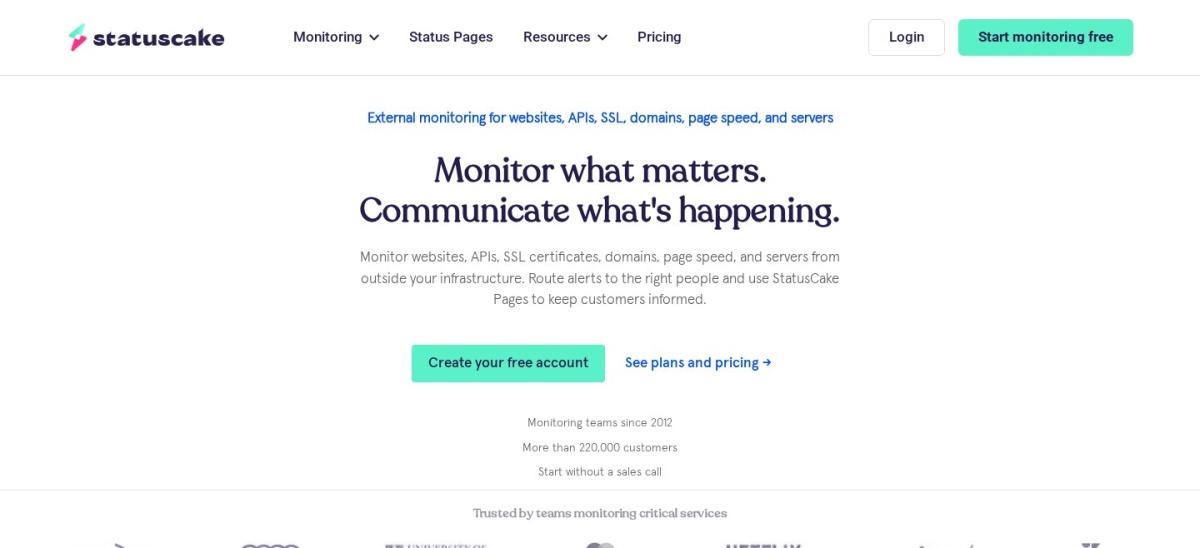
StatusCake is a monitoring service that bundles uptime, page speed, SSL and domain checks into one monthly price. The free plan covers 10 uptime monitors at 5-minute intervals, and the Superior plan costs $20.41 a month billed annually for 100 monitors at 1-minute intervals, 15 page speed monitors, 50 domain monitors and 50 SSL monitors.
The trade off is that status pages are a separate product, and there are no transaction checks or on-call schedules. It suits site owners who want several check types on one bill without paying for a full observability platform.
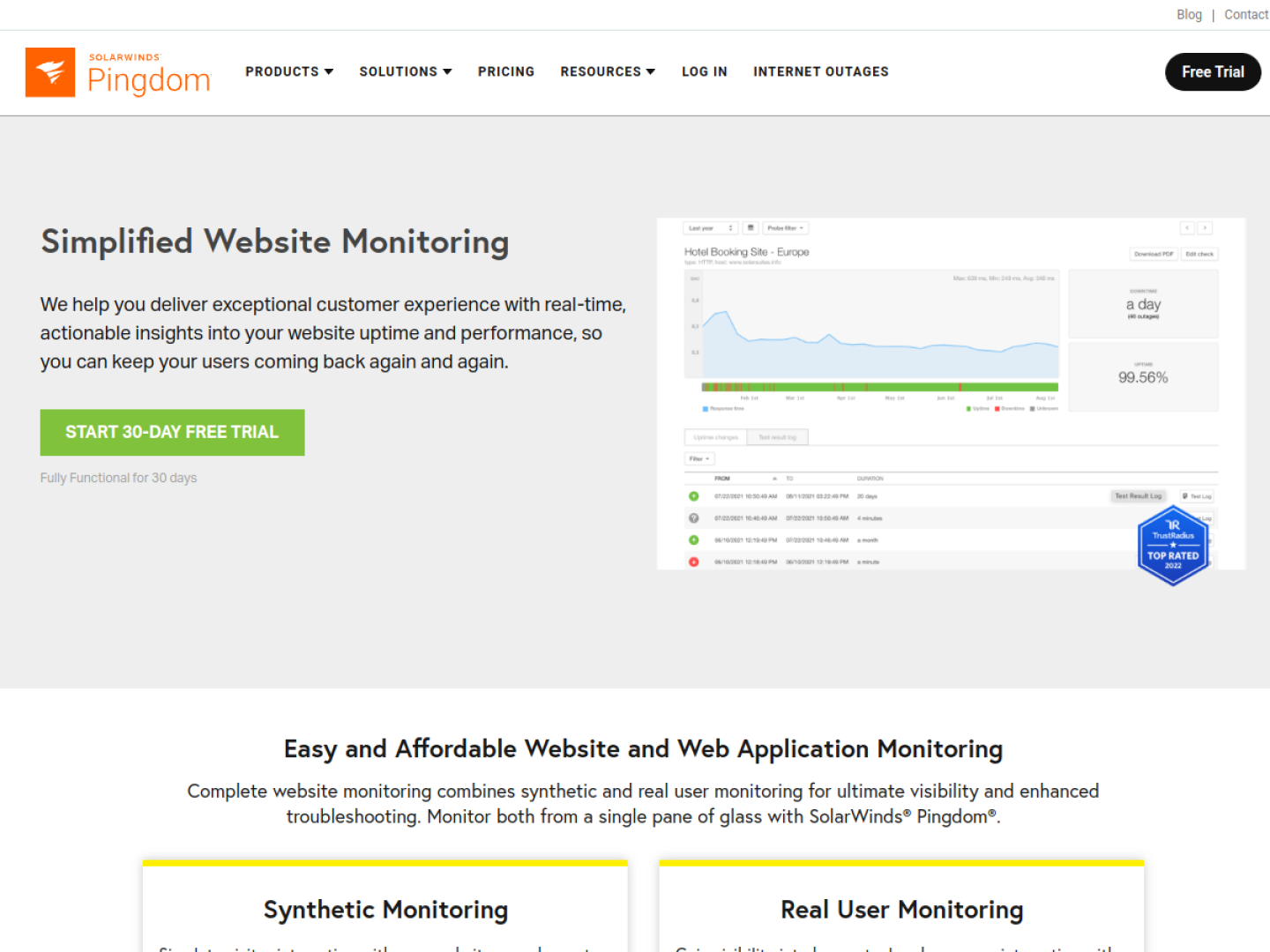
Pingdom is a website monitoring service that has watched sites since 2005 and is now part of SolarWinds. Its synthetic plan costs $16.50 a month billed annually for 10 uptime checks and 1 transaction check that runs a real browser through a checkout or login flow, with 1-minute intervals and 50 SMS credits.
The trade off is price growth. Fifty uptime checks cost $71.50 a month billed annually, real user monitoring is a separate subscription, and there is no free plan. It suits teams whose checkout must work end to end and who value a long track record.
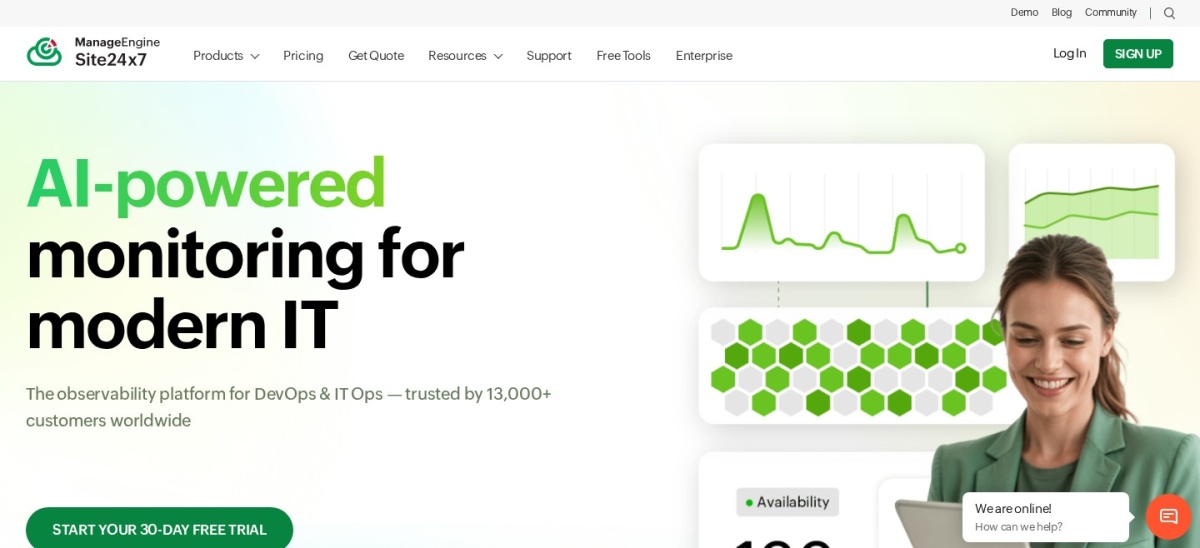
Site24x7 is a full monitoring suite from Zoho, and its Web Uptime pack is the cheapest entry in this list at $9 a month billed annually. It covers 25 websites at 1-minute intervals from one location, with 3 status pages included, and the same account can later add servers, networks, APM and logs.
The trade off is a crowded console that takes time to learn, and faster checks and add-ons raise the bill quickly. It suits IT teams that may later add server, application or network monitoring from the same vendor.
Flat-rate tools such as Checkly, UptimeRobot and Site24x7 charge by plan, so the bill stays the same whether a check runs every minute or every hour.
Usage-based tools such as Datadog charge per run. A single API check every minute from one location is about 43,800 runs a month, or about $22 at $5 per 10,000 runs.
Count your endpoints, intervals and locations before choosing. Ten checks every minute from three locations is over 1.2 million runs a month on a per-run plan.
How we chose
We started from the API and synthetic monitoring tools that appear most often in current comparisons and G2 categories, then kept those with a verifiable rating and a published price.
Prices come from each vendor's pricing page or vendor-supplied G2 pricing, checked on 24 November 2026. Ratings and review counts come from G2 or Capterra on the same day. Where a vendor shows a sale, the list shows the regular price.
We left out tools with no verifiable rating on G2, Capterra or Trustpilot. No vendor paid for a place, and we do not claim hands-on testing for this list.
How to choose an API monitoring tool
Start by counting your endpoints and how fast you need to know when one fails.
List every endpoint that matters. Include login, checkout and payment endpoints, not just the homepage. Each one needs its own check with assertions on the response.
Pick a check interval and locations. Five-minute checks miss short outages. One-minute checks from two locations catch more, but cost more on usage-based plans.
Check the alerting path. Make sure alerts reach the person on call through email, SMS, Slack or PagerDuty, with escalation when nobody answers.
Try the free plan first. Run your real endpoints on the free tier for a week and confirm the alerts arrive before you pay for a plan.
FAQ
What is the best API monitoring tool?
Checkly is the best pick for most teams, with API and browser checks defined in code from $24 a month and a 4.6 out of 5 G2 rating. UptimeRobot is the cheapest option at $12 a month, and Better Stack suits teams that want incidents and status pages included.
What is the cheapest API monitoring tool?
UptimeRobot is the cheapest paid option in this list at $12 a month billed annually, with a free plan covering 50 monitors. Site24x7 is cheaper still at $9 a month for 25 websites, though its console is built for wider IT monitoring.
How often should API checks run?
One-minute checks catch short outages that five-minute checks miss, but they cost more on usage-based plans. Start with one-minute checks for payment and login endpoints, and five-minute checks for less critical endpoints.
Do I need browser checks as well as API checks?
API checks confirm an endpoint answers correctly, while browser checks confirm a real user can complete a flow such as checkout. Teams that run a store or a login flow should use both, because an API can answer while the page still fails.
Can I monitor APIs for free?
Yes. Checkly, UptimeRobot, Better Stack, Postman, New Relic, StatusCake and Site24x7 all offer free plans or free tiers. Free plans limit the number of monitors, the check interval or the history, so they suit a handful of endpoints.
Why does Datadog charge per test run?
Datadog bills synthetic monitoring by the number of test executions, at $5 per 10,000 API runs on annual billing. Every location and every retry counts as a run, so the bill grows with check frequency, locations and the number of endpoints.