WLWPLegible EditorsLast verified 24 Nov 2026How we rank9 min read
★ Short answer
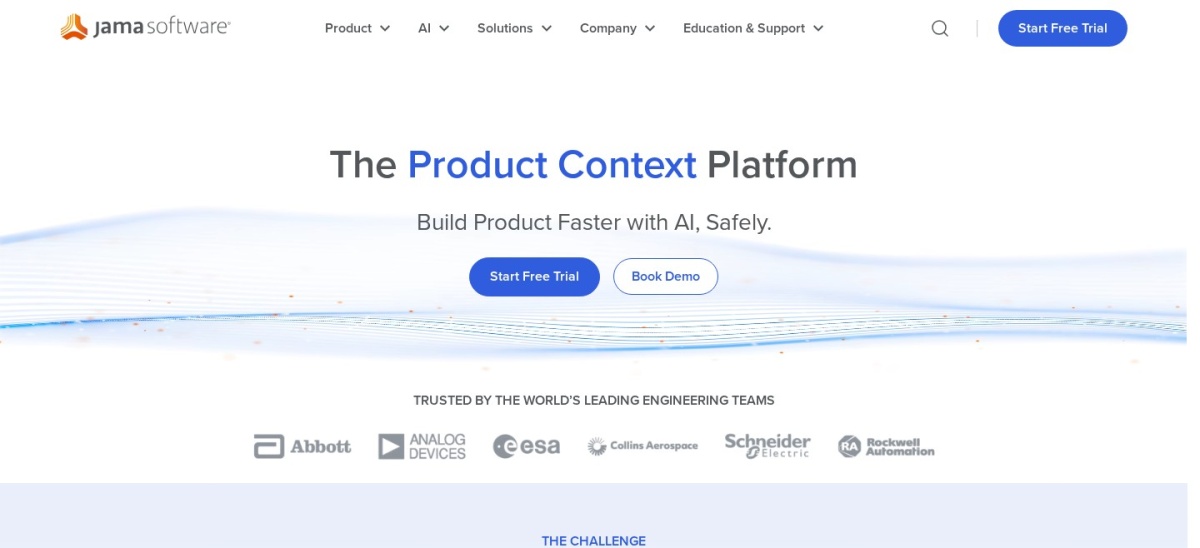
Jama Connect is the best ALM software for requirements-led product teams, with live traceability across requirements, risks and tests. Codebeamer suits safety-critical work, while Azure DevOps is the cheapest real option at $6 a user a month.
How we make this list: we compare pricing pages, product documentation and public user reviews, then re-check every price before each update. No product paid for a place. Disclosure.
Jama Connect leads on requirements, with live traceability across requirements, risks and tests.
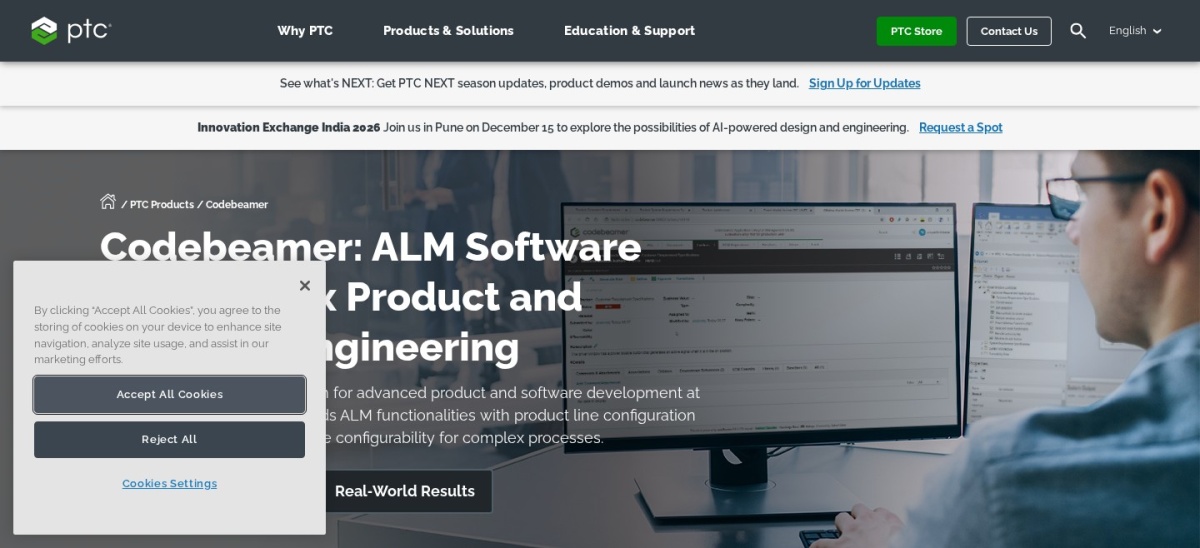
Codebeamer is the pick for safety-critical work, with ASPICE templates and risk management built in.
Azure DevOps is the cheapest real option, free for five users and $6 per user a month after that.
The enterprise leaders all price by quote, so expect a sales cycle, not a buy button.
Jira and Azure DevOps cover delivery well, but the compliance layer becomes your own build project.
What ALM means, and who actually needs it
Application lifecycle management covers requirements, design, testing, traceability and release in one governed system. It is not general project tracking: the point is proving that every requirement was built, tested and approved.
Regulated industries drive this category. Medical device, automotive and aerospace teams need traceability from a requirement to the test that proves it, plus baselined approvals that auditors can follow.
The enterprise leaders all price by quote. Jama Connect, Polarion, Codebeamer and IBM DOORS Next need a sales cycle, not a buy button, and implementations take planning.
Delivery platforms are the cheap alternative. Jira and Azure DevOps cover the build and test side for a few dollars per user, but the compliance layer becomes your own build project.
Jama Connect is a requirements management and ALM platform built for complex product development. It decomposes high-level needs into testable requirements, runs multi-stakeholder review cycles with comments, and keeps baselined approvals so auditors can follow every decision.
The trade off is price and scope. Pricing is quote-based and aimed at mid-size to enterprise programs, and quality management records usually live in a second system. It suits teams whose bottleneck is requirements agreement and review.
PTC Codebeamer is an agile-focused ALM platform for medical, automotive and pharmaceutical teams. It covers requirements, test and risk management plus demand and development management, with configurable workflows and ASPICE templates for regulated delivery.
The trade off is implementation. Codebeamer is a full platform, not a quick install, and pricing is quote-based with a sales cycle. It suits teams that need one repository for both the design record and the quality record.
What we like
ALM and QMS in one repository
ASPICE templates built in
Strong for automotive and medical work
Watch out for
Quote-based pricing, no public starting price
Needs planning and configuration to roll out
Trials available; pricing quoted per programVisit ptc.com
03
Siemens Polarion
4.2/5on G2 (142 reviews, checked Nov 2026)
PricingCustom/yr
Best for large systems engineering
PricingCustom, quote-based
StandardsISO 26262, IEC 62304
Configuration mgmtYes, built in
Free planNo, trial available
siemens.com
Siemens Polarion homepage, captured Nov 2026.
Siemens Polarion is the broadest ALM product here, covering requirements, test management, release management and configuration management in one system. It is built for large systems engineering programs, with strong support for ISO 26262, IEC 62304, DO-178C and ASPICE.
The trade off is price and weight. Polarion is quote-based and aimed at enterprise programs, so smaller teams will find it heavy. It suits large engineering organisations that need one governed system for the whole product.
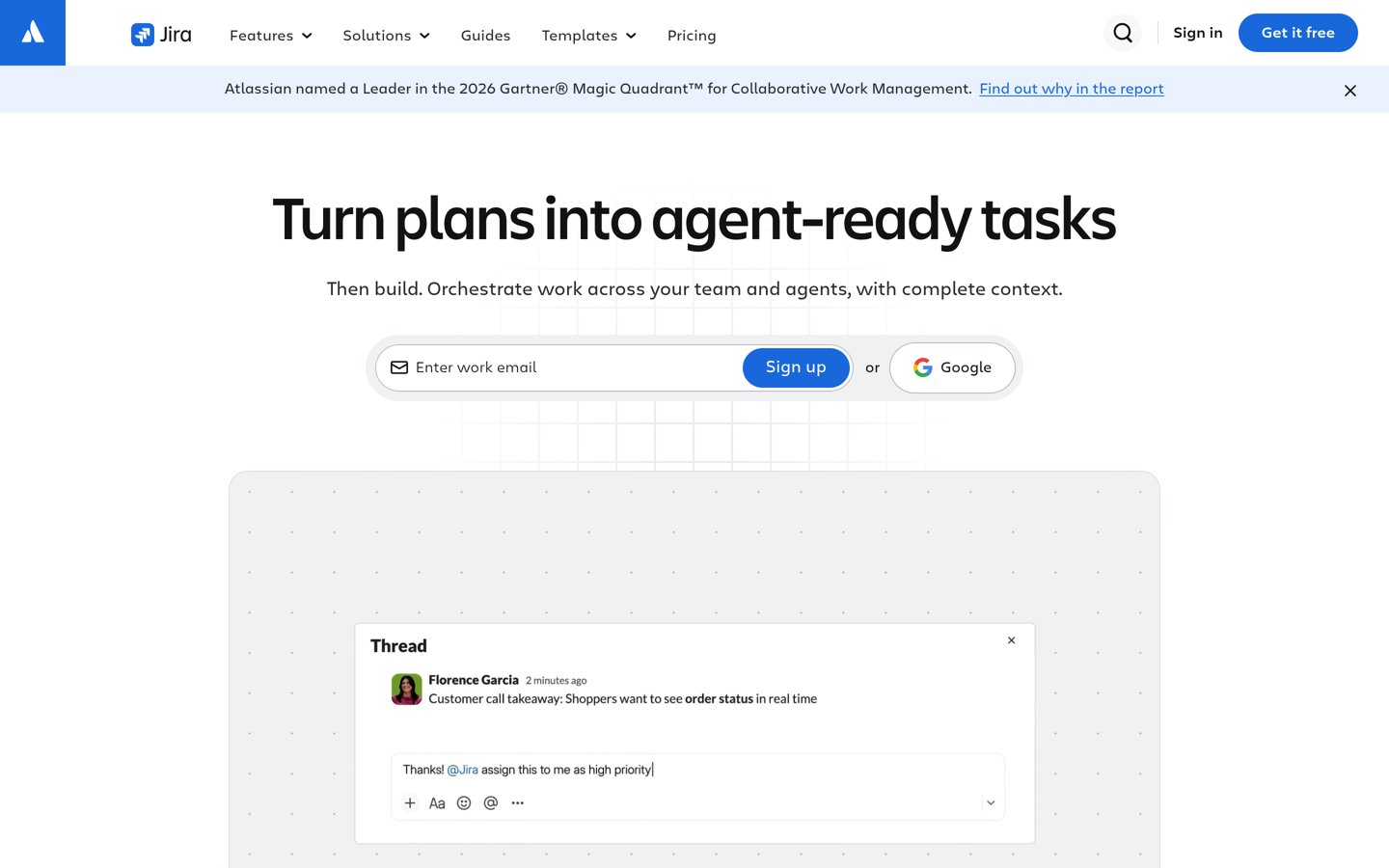
Jira is an issue and project tracker that most software teams already use for agile delivery. Standard costs $9.70 per user a month for teams of up to 100, with boards, backlogs, sprints and a huge integration marketplace that connects it to requirements and test tools.
The trade off is ALM depth. Jira tracks work well but does not manage formal requirements or baselined approvals on its own, so regulated teams pair it with a requirements tool. It suits agile software teams that need flexible delivery tracking.
4.4/5on G2 (Not published reviews, checked Nov 2026)
Paid from$6/user/mo
Cheapest real ALM option
Basic price$6/user/mo
Free planYes, 5 users free
CI/CDPipelines built in
Test PlansPaid add-on
azure.microsoft.com
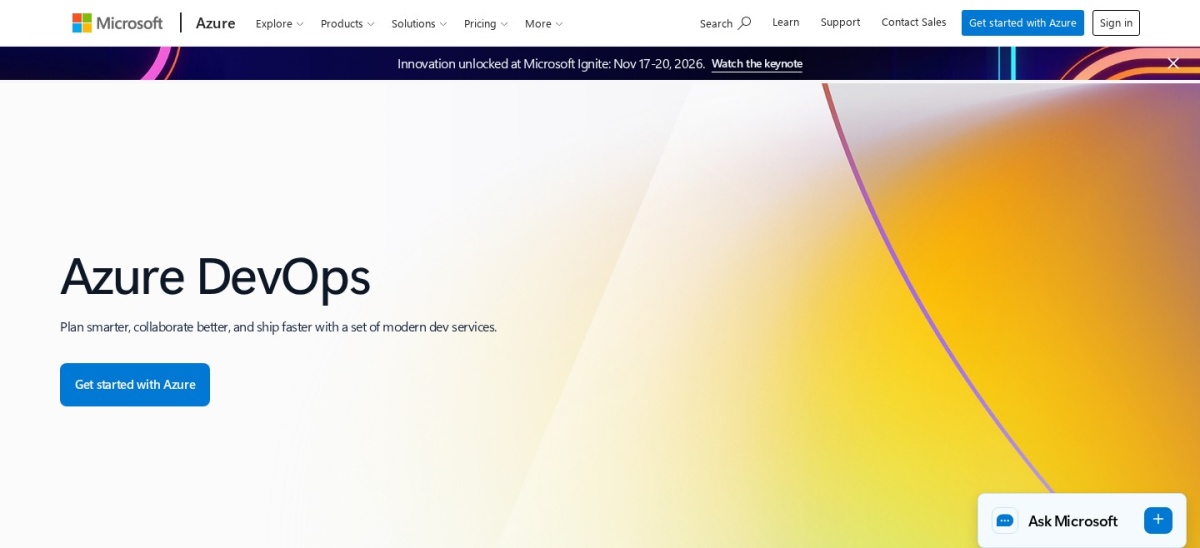
Azure DevOps homepage, captured Nov 2026.
Azure DevOps is a suite of delivery tools from Microsoft, covering boards, repos, pipelines, test plans and artefacts in one service. It is free for the first five users, and Basic costs $6 per user a month after that, which makes it the cheapest real option in this list.
The trade off is compliance depth. Azure DevOps covers delivery well, but the requirements and audit layer becomes your own build project. It suits Microsoft shops and teams that want delivery, CI and CD in one place.
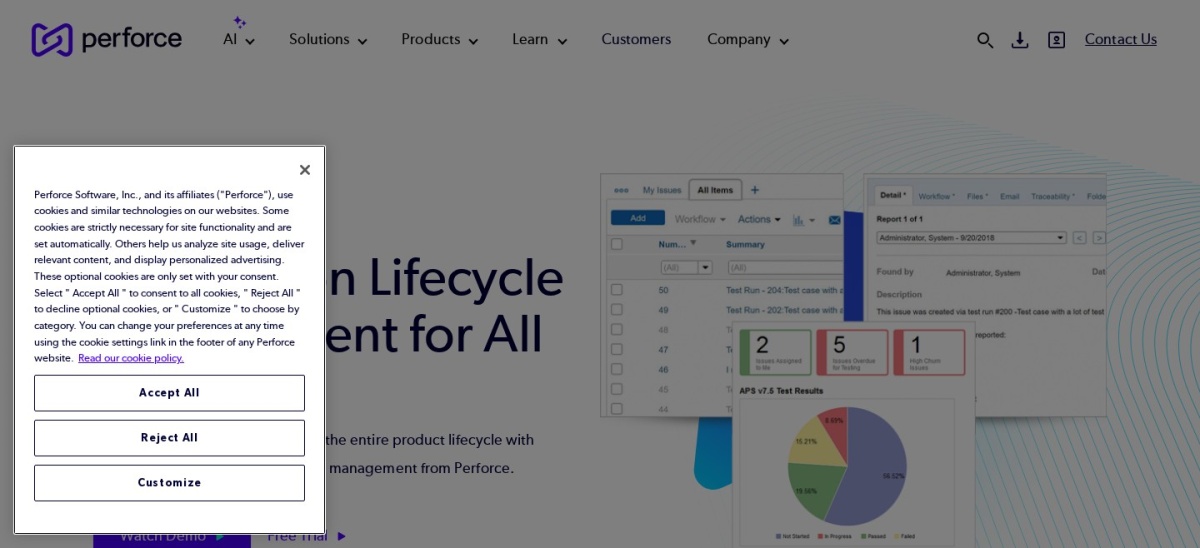
Perforce Helix ALM is a modular ALM suite for test-heavy engineering teams, with requirements, issue and test case management that can be bought together or separately. It is built for complex codebases where version control integration and traceability matter more than speed.
The trade off is price transparency. Helix ALM is listed at about $35 per user a month in secondary reports, with exact pricing quoted per team. It suits engineering teams that test heavily and need tight version control links.
4.4/5on G2 (Not published reviews, checked Nov 2026)
Starts at$30/user/mo
Best affordable ALM for small teams
PriceAbout $30/user/mo
Free planNo, trial available
Test managementYes, built in
DeploymentCloud or on-premise
inflectra.com
SpiraPlan homepage, captured Nov 2026.
SpiraPlan is an ALM platform from Inflectra that combines requirements, test management and agile planning with customisable workflows. It is priced for smaller teams than the enterprise leaders, at about $30 per user a month in secondary reports, with a free trial to test it.
The trade off is scale. SpiraPlan suits small and mid-size teams well, but very large regulated programs usually pick Jama Connect or Codebeamer instead. It suits teams that need affordable ALM without enterprise weight.
4/5on G2 (Not published reviews, checked Nov 2026)
PricingCustom/yr
Best for IBM engineering shops
PricingCustom, quote-based
PlatformIBM Jazz / ELM
TraceabilityDeep, across toolchain
Free planNo, trial available
ibm.com
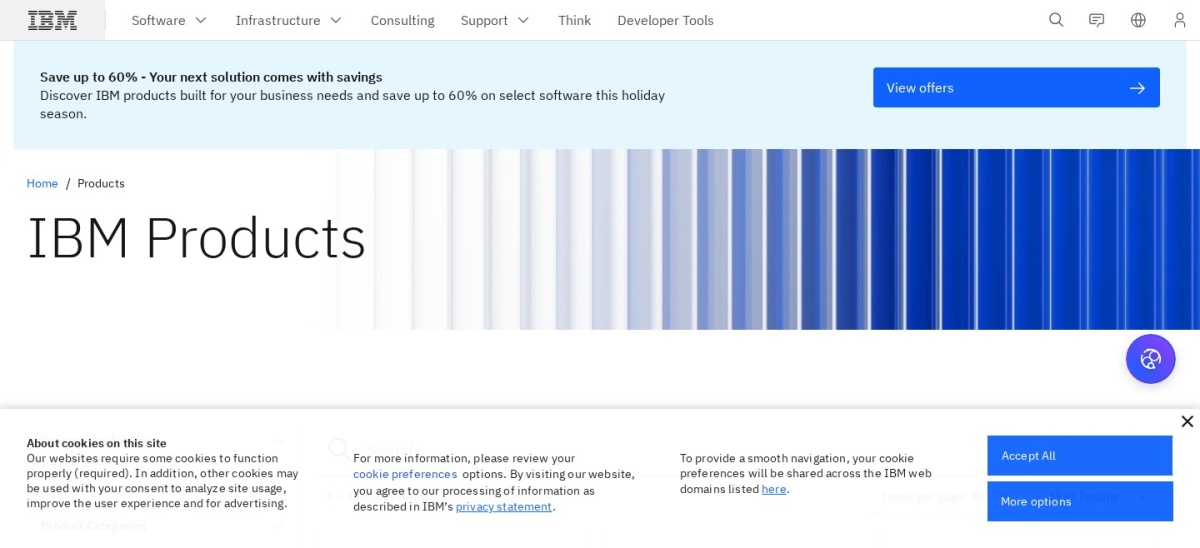
IBM DOORS Next homepage, captured Nov 2026.
IBM DOORS Next is the requirements tool of the IBM Engineering Lifecycle Management family. It offers deep traceability, a Jazz platform toolchain and strong data management, and it is the default pick for organisations already standardised on IBM engineering tools.
The trade off is price and lock-in. DOORS Next is quote-based, and it works best inside the wider IBM ELM toolchain rather than alone. It suits large engineering organisations that already run IBM tooling.
What we like
Deep traceability and data management
Strong in large engineering programs
Part of a full ELM toolchain
Watch out for
Quote-based pricing, no public starting price
Best inside the IBM toolchain, weaker alone
Part of IBM Engineering Lifecycle ManagementVisit ibm.com
09
Tuleap
4.3/5on G2 (Not published reviews, checked Nov 2026)
PriceFree
Best free ALM option
Price$0, open source
Free planYes, fully free
HostingSelf-host or paid
Agile planningYes, built in
tuleap.org
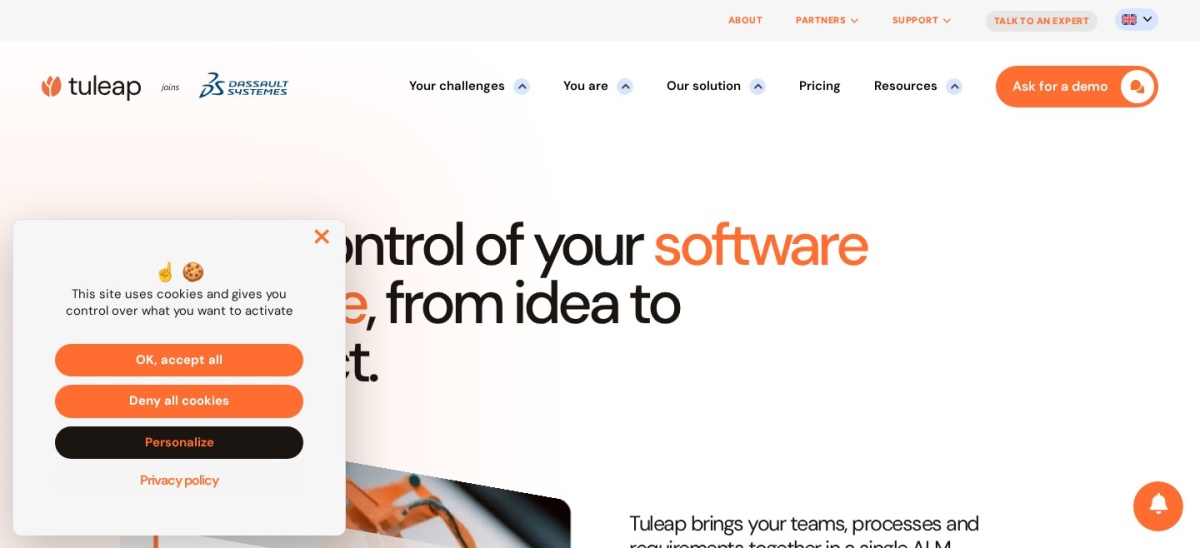
Tuleap homepage, captured Nov 2026.
Tuleap is an open-source ALM platform covering requirements, issue tracking, agile planning and document management. It is free to self-host, with paid support and hosting for teams that want it, and it is the only genuinely free ALM option in this list.
The trade off is polish and support. Tuleap is less refined than the enterprise leaders, and teams that need vendor support must pay for it. It suits startups, open-source projects and teams with technical staff who can self-host.
Requirements-led tools like Jama Connect start from the requirement and trace everything to it. They suit regulated products where the audit trail is the product.
Delivery-led tools like Jira and Azure DevOps start from the work item and trace up to the requirement. They suit software teams that ship fast and need light governance.
Many teams run both: a requirements tool for the regulated record and Jira for day-to-day delivery, with an integration between them.
How we chose
We started from every established ALM platform with a verifiable rating on G2, then kept the nine that cover requirements, traceability, testing and delivery between them.
Prices come from each vendor's pricing page, checked on 24 November 2026, with the regular price shown. Enterprise platforms that price by quote are shown as Custom, and second-hand figures are flagged in the notes.
We left out general project tools with no ALM depth and platforms with no verifiable rating. No vendor paid for a place, and we do not claim hands-on testing for this list.
How to choose ALM software
Start with your audit burden: regulated or not decides the whole shortlist.
Decide whether you are regulated. Medical, automotive and aerospace teams need traceability and baselined approvals. Everyone else can use a delivery platform.
Map your audit trail. List the artefacts an auditor asks for, from requirement to test result, then check the tool links them without manual work.
Price the whole rollout, not the licence. Quote-based ALM needs implementation, training and admin time, which usually costs more than the first year of licences.
Trial with a real requirement set. Import a small set of real requirements and run them through review, build and test before committing.
FAQ
What is the best ALM software?
Jama Connect is the best pick for requirements-led product teams, with live traceability across requirements, risks and tests. Codebeamer is the best alternative for safety-critical work, and Azure DevOps is the cheapest real option.
What does ALM software do?
ALM software manages the whole application lifecycle: requirements, design, development, testing, traceability and release in one governed system, so teams can prove every requirement was built and tested.
Is Jira an ALM tool?
Jira is a delivery and issue-tracking tool that many teams use as part of an ALM setup, but it is not a full ALM platform on its own. Regulated teams usually pair Jira with a requirements tool like Jama Connect or Codebeamer.
How much does ALM software cost?
The enterprise platforms price by quote, so expect a sales cycle. The published prices here are Azure DevOps at $6 per user a month, Jira Standard at $9.70 per user a month, and Tuleap free for open-source use.
Which ALM tool is best for medical devices?
Jama Connect and Codebeamer are the usual shortlist for medical device work, with traceability and risk management built for FDA and EU MDR rules. Polarion is the strongest pick for automotive safety standards like ISO 26262.
Is there a free ALM tool?
Tuleap is the main free option, with open-source ALM covering requirements, tracking and agile planning. Azure DevOps is free for the first five users, and Jira is free for up to ten users.