Unito is the best of the Asana Google Sheets integrations for project management, because it is the only tool here built for true two-way sync, rated 4.5 out of 5 on G2. Coupler.io is the cheaper reporting pick at $24 a month, and Make is the budget automation pick at $9 a month.
How we make this list: we compare pricing pages, product documentation and public user reviews, then re-check every price before each update. No product paid for a place. Disclosure.
Unito is the only tool here that syncs both ways between Asana and Google Sheets, so edits in either place flow to the other.
Coupler.io is the cheapest reporting pick at $24 a month, with daily refresh and 5,000 rows per run on Starter.
Make costs $9 a month billed annually, but its US price list shows $12, and credits run out fast on row-by-row scenarios.
Zapier and Integrately both start at $19.99 a month; Zapier has 7,000-plus apps, Integrately has 20 million-plus ready automations.
Asana's own Google Sheets connection needs no extra tool, but it is built for reporting, not general automation.
Cheapest paid plans in this list run from $108 a year for Make to $780 a year for Unito Basic.
How do you choose Asana Google Sheets integrations for project management?
Sync direction is the first decision. A one-way connector copies Asana tasks into a sheet for reports, while a two-way sync lets edits in the sheet flow back into Asana, and only Unito in this list is built for that.
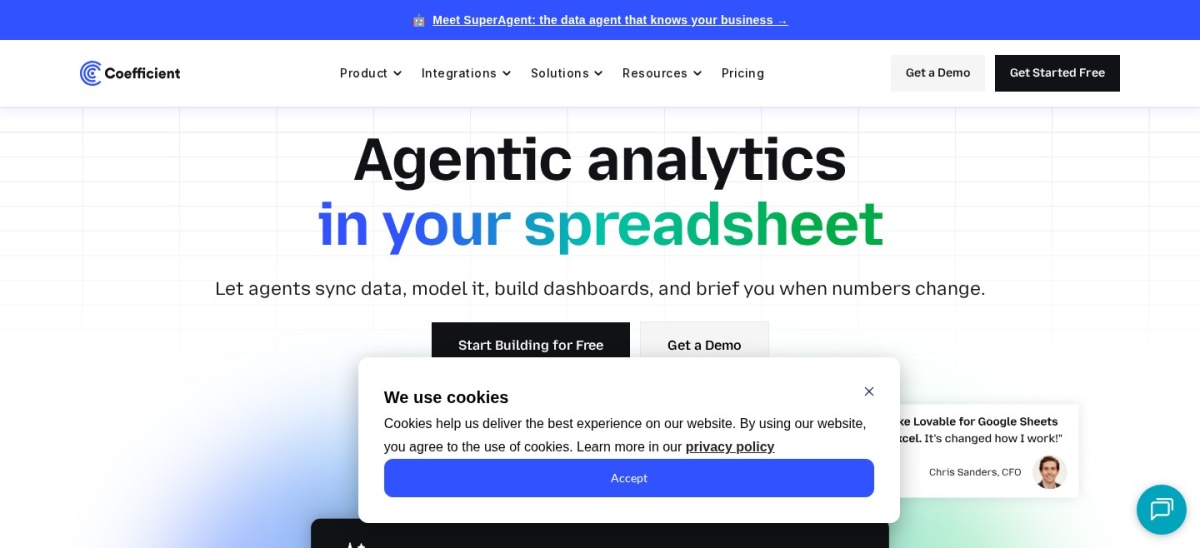
The second decision is what the sheet is for. Reporting tools such as Coupler.io and Coefficient keep dashboards fresh on a schedule, while automation tools such as Zapier, Make and n8n react when a task changes and can write rows, send alerts or update other apps.
Pricing models differ more than the monthly figures suggest. Unito charges by items in sync, Make and Zapier charge by tasks or credits, and Asana, Coefficient and Sheetgo charge per user, so the cheapest plan for one team can be the dearest for another.
Free plans are useful for proving the flow works. Seven of the nine tools here have a free plan or a free self-hosted edition, and the free tiers are enough to test one project before paying.
The 9 best Asana Google Sheets integrations for project management
01
Unito
4.5/5on G2 (90 reviews, checked Nov 2026)
Starts at$65/mo
Best Asana Google Sheets integration overall
Sync directionTwo-way
Fields per flow6 on Basic
Update speedEvery 15 min on Basic
Items in sync750 to 2,000 on Basic
unito.io
Unito homepage, captured Nov 2026.
Unito is a no-code sync platform that keeps Asana tasks and Google Sheets rows updated in both directions, so edits in either place flow to the other. Basic starts at $65 a month for 750 to 2,000 items in sync, maps 6 fields per flow and refreshes every 15 minutes.
The trade off is price and counting. Each task synced between two tools counts twice, so 1,000 Asana tasks use 2,000 items in sync, the top of Basic, and subtasks do not sync at all. It suits teams that need a live two-way bridge rather than a one-way export.
What we like
Only true two-way Asana to Sheets sync in this list
Coupler.io is a reporting connector that pulls Asana project data into Google Sheets on a schedule, alongside 400-plus other sources. The free plan covers 100 rows per run with manual refresh, and Starter costs $24 a month billed annually for daily refresh and 5,000 rows per run.
The trade off is direction. Coupler.io moves data into Sheets for reports and dashboards, it does not write edits back into Asana. It suits managers who want fresh project reports in a sheet without building automations.
Coefficient is a live-data connector that pulls Asana and 70-plus other systems into Google Sheets and Excel, with daily refresh on Starter. The free plan includes 3 sources and imports of up to 5,000 rows, and Starter costs $49 a month billed annually for one user.
The trade off is the per-user price. Starter covers a single user, so a second person building imports forces a move to Pro at $99 per user a month. It suits teams that already report from a CRM or finance system beside Asana.
Make is a visual automation platform that connects Asana and Google Sheets with branching scenarios, filters and error handling. The free plan includes 1,000 credits a month, and Core costs $9 a month billed annually for 10,000 credits and unlimited active scenarios.
The trade off is metering. Most actions cost one credit, so a scenario that processes rows one by one can burn through 10,000 credits fast, and its US price list shows Core at $12 a month instead of $9. It suits small teams that want real branching logic on a small budget.
What we like
Cheapest paid plan in this list at $9 a month
Branching, routers and error handling included
Unlimited users on every plan
Free plan covers 1,000 credits a month
Watch out for
Credits run out fast on row-by-row scenarios
US price list shows Core at $12, not $9
Trustpilot rating is far lower than G2 at 2.6 out of 5
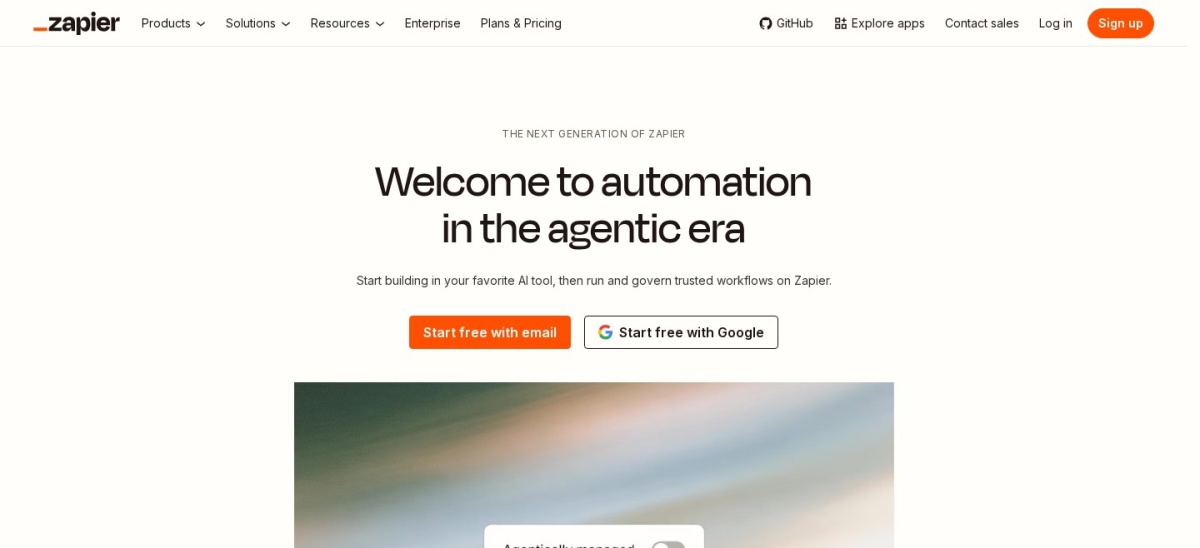
Zapier is the best-known automation platform, connecting Asana and Google Sheets through trigger-action Zaps across 7,000-plus apps. The free plan covers 100 tasks a month, and Starter costs $19.99 a month billed annually for 750 tasks and multi-step Zaps.
The trade off is task-based pricing. Heavy Asana projects burn through 750 tasks quickly, and the next step up is Professional at $49 a month. It suits teams that want the widest app coverage and the simplest builder.
What we like
Largest app library in this list at 7,000-plus
Simplest builder for non-technical teams
Rated 4.5 out of 5 from 2,071 G2 reviews
Multi-step Zaps from the cheapest paid plan
Watch out for
Task limits run out fast on busy projects
Professional at $49 a month is a big jump
Pricing is the most cited complaint in reviews
Professional adds 2,000 tasks and unlimited premium appsVisit zapier.com
06
Integrately
4.7/5on G2 (713 reviews, checked Nov 2026)
Paid from$19.99/mo
Best for one-click Asana to Sheets automations
Ready automations20 million+
Apps1,500+
Free plan100 tasks a month, 5 automations
Check interval5 minutes on Starter
integrately.com
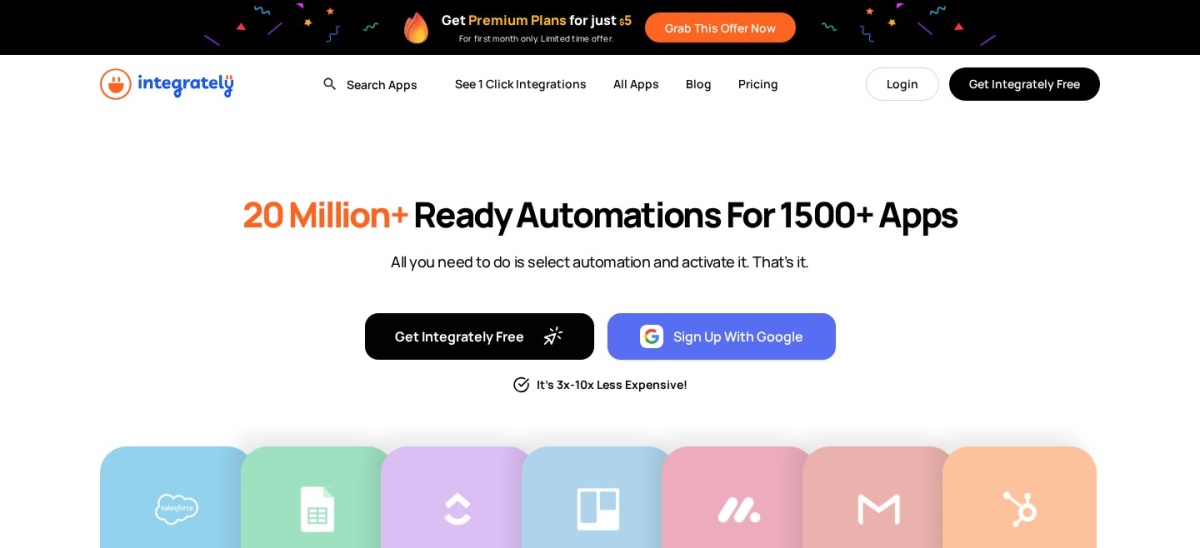
Integrately homepage, captured Nov 2026.
Integrately is an automation platform with 20 million-plus ready-made automations, including one-click Asana to Google Sheets flows. The free plan covers 100 tasks a month and 5 automations, and Starter costs $19.99 a month for multi-step automations and 5-minute checks.
The trade off is depth. One-click automations are fast to start, but complex branching and data shaping are thinner than in Make or n8n. It suits small teams that want a working Asana to Sheets flow in minutes.
What we like
One-click automations need almost no setup
Rated 4.7 out of 5 from 713 G2 reviews
Same Starter price as Zapier with more ready flows
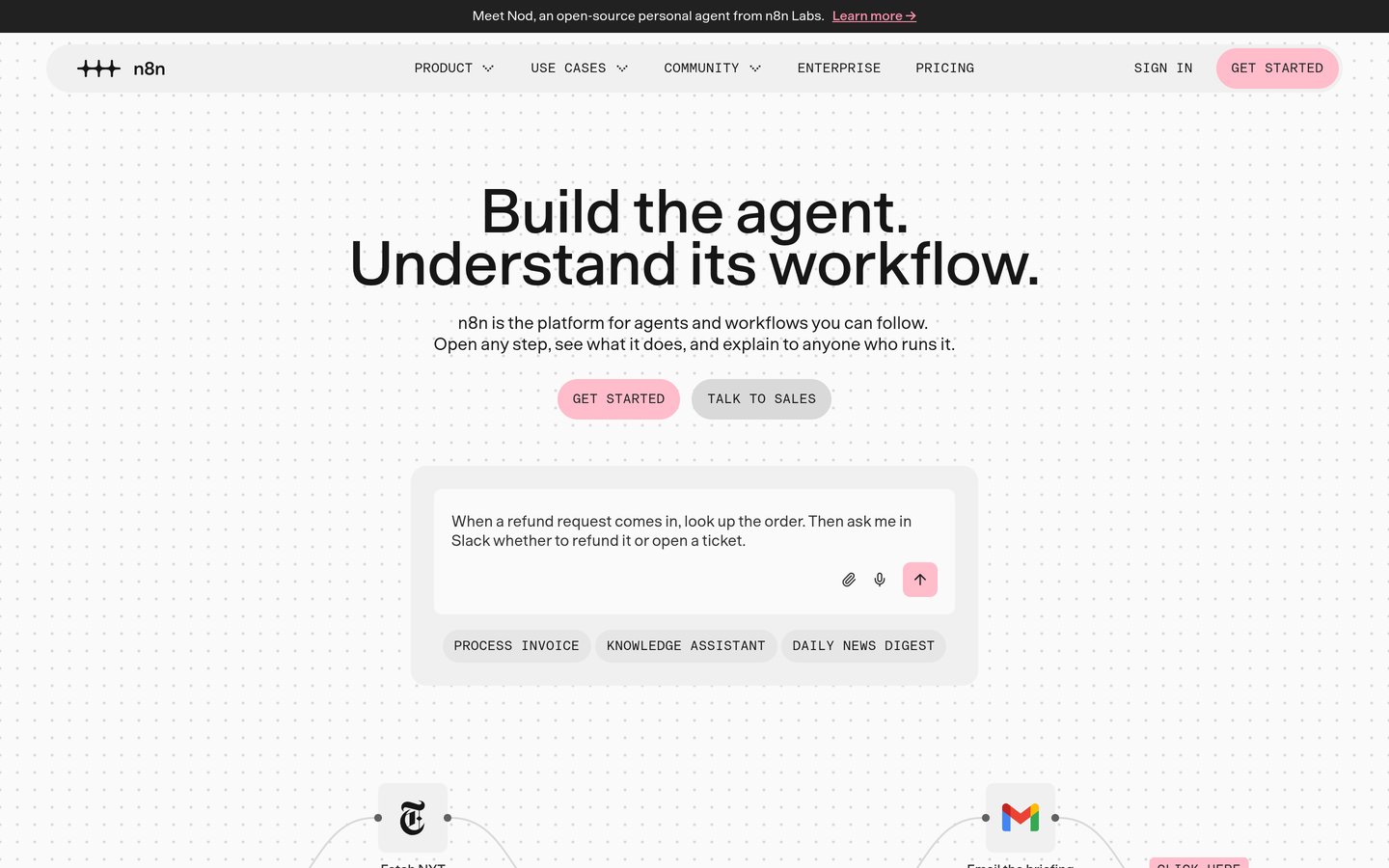
n8n is a node-based workflow platform with Asana and Google Sheets nodes, a visual builder and a free self-hosted edition with no execution cap. Cloud Starter costs $20 a month billed annually for 2,500 executions, with unlimited steps per execution and unlimited users.
The trade off is the learning curve. Building with nodes, expressions and JSON takes more skill than Zapier, and reviewers cite that curve as the main complaint. It suits technical teams that want deep control and no per-seat pricing.
What we like
Free self-hosted edition with no execution cap
Unlimited steps per execution on every plan
No per-seat pricing at any tier
Rated 4.7 out of 5 from 322 G2 reviews
Watch out for
Steepest learning curve in this list
Cloud Starter caps at 2,500 executions a month
Needs technical skill for expressions and JSON
Pro adds 10,000 executions and workflow historyVisit n8n.io
08
Sheetgo
4.3/5on G2 (23 reviews, checked Nov 2026)
Paid from$35/mo
Best spreadsheet-native Asana automation
Automation credits2,000 a month on Pro
Automations50 on Pro
Free planYes, simple automations
AI ProcessorIncluded on Pro
sheetgo.com
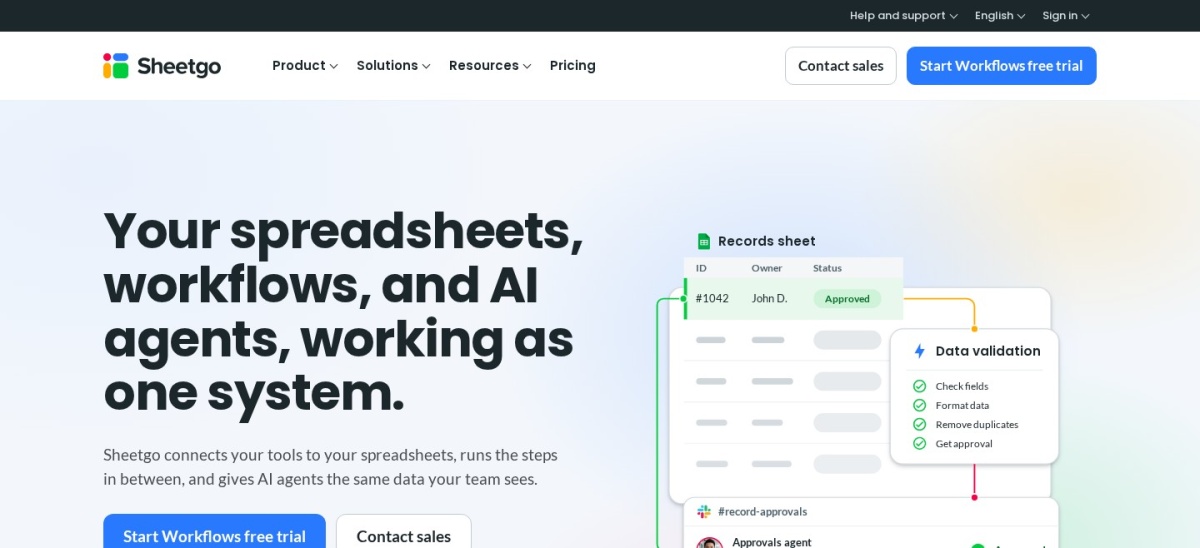
Sheetgo homepage, captured Nov 2026.
Sheetgo is a spreadsheet automation add-on that moves Asana data into Google Sheets on a schedule, merges files and runs data processors. The free plan covers simple automations, and Automations Pro costs $35 a month billed annually for 2,000 automation credits and 50 automations.
The trade off is that it is spreadsheet-first. Sheetgo is strong at moving and combining sheet data, but it is not a general automation platform with branching logic. It suits teams that live in Sheets and want Asana data there automatically.
What we like
Built for Sheets, not bolted on
Merges and splits up to 100 files per automation
AI Processor cleans and translates data in Sheets
Free plan for simple automations
Watch out for
No general branching logic like Make or n8n
G2 lists a stale $20 starting price, Pro is $35
Smallest review base in this list at 23 G2 reviews
Best no-extra-tool option for Asana data in Sheets
SyncNative Google Sheets connection
ExportCSV export on the free plan
Free planPersonal, up to 2 users
Integrations270+ apps
asana.com
Asana homepage, captured Nov 2026.
Asana is the work management platform itself, and its own Google Sheets connection syncs project data into a sheet without buying another tool. The free Personal plan covers up to 2 users, and Starter costs $10.99 per user a month billed annually, with a 2-seat minimum.
The trade off is scope. The native connection is built for reporting on Asana data, not for general automation, and CSV export is the fallback on the free plan. It suits teams that only need Asana data in Sheets and want no extra subscription.
What we like
No extra tool or subscription to manage
Largest review base in this list at 13,867 G2 reviews
One-way vs two-way: the choice that decides the shortlist
One-way tools copy Asana data into Sheets and stop there. That covers reporting, dashboards and weekly status sheets, and Coupler.io, Coefficient and Sheetgo all do it well.
Two-way tools let the sheet write back. Unito is the only tool here built for that, and it charges by items in sync, so count your tasks before you buy.
Automation tools sit in between. Zapier, Make, Integrately and n8n can push rows both ways through separate flows, but each direction is a flow you build and pay for in tasks or credits.
How we chose
We started from every tool with a named Asana and Google Sheets connection, then kept those with a public G2 rating and a published price.
Prices come from each vendor's pricing page, checked on 29 November 2026. Ratings and review counts come from G2 on the same day. Where a vendor shows a sale, the list shows the regular price.
We left out tools with no public rating, such as zzBots, and tools with no published price, such as Workato. No vendor paid for a place, and we do not claim hands-on testing for this list.
How to choose an Asana Google Sheets integration
Start with what the sheet has to do, then match the sync direction and the pricing model to it.
Decide the direction first. If the sheet only reports on Asana, pick a one-way connector such as Coupler.io. If edits in the sheet must reach Asana, Unito is the only purpose-built pick.
Count what you will pay for. Unito counts items in sync, Make counts credits, Zapier counts tasks and Asana charges per user. Estimate a month of real volume before choosing.
Test on one project with the free plan. Seven of these nine tools have a free plan or a free self-hosted edition. Run one live project through it before paying.
Check the refresh speed you need. Daily refresh is enough for weekly reports, but live dashboards need the faster updates on Unito Pro, Coefficient Pro or a 1-minute Make schedule.
FAQ
What is the best Asana Google Sheets integration for project management in 2026?
Unito is the best pick for most teams, because it is the only tool here built for true two-way sync between Asana and Google Sheets, and it is rated 4.5 out of 5 on G2. Coupler.io is the cheaper reporting pick at $24 a month.
Is there a free Asana Google Sheets integration?
Yes. Asana's own Google Sheets connection and CSV export work without another tool, and Coupler.io, Coefficient, Make, Zapier, Integrately, n8n and Sheetgo all have free plans. Unito has a free trial but no free plan.
Can Google Sheets update Asana tasks?
Yes, but only with a two-way tool. Unito syncs edits from a sheet back into Asana, and Make, Zapier, Integrately and n8n can write back through flows you build. Coupler.io, Coefficient and Sheetgo move data into Sheets only.
How much does an Asana Google Sheets integration cost?
Cheapest paid plans run from $9 a month for Make Core to $65 a month for Unito Basic, billed annually. Most teams pay between $20 and $49 a month, and per-user tools such as Asana Starter at $10.99 a user add up as the team grows.
Unito vs Zapier: which is better for Asana and Google Sheets?
Unito is better when the sheet and Asana must stay in sync both ways, because that is what it is built for. Zapier is better when Asana and Sheets are two of many apps in wider automations, with 7,000-plus apps against Unito's 60-plus connectors.
Which Asana Google Sheets integration is best for beginners?
Integrately is the easiest start, with one-click ready automations and live human support that helps build the flow. Zapier is the next easiest, with the simplest builder and the largest app library.
SaaS SEO and WordPress specialist with about 8 years of experience. Rakib compares WordPress plugins, themes, hosting and software using public pricing, documentation and user reviews. See how we rank.