Burp Suite Professional is the best Acunetix alternative for manual testing, at 499 dollars a user a year with the highest rating in this list. OWASP ZAP is the free option for teams on a zero budget, while Intruder suits teams that want continuous cloud scanning.
How we make this list: we compare pricing pages, product documentation and public user reviews, then re-check every price before each update. No product paid for a place. Disclosure.
Burp Suite Professional leads for manual testing at $499 a user a year, with the highest G2 rating here.
OWASP ZAP is completely free and open source, though it needs tuning and its rating rests on 14 reviews.
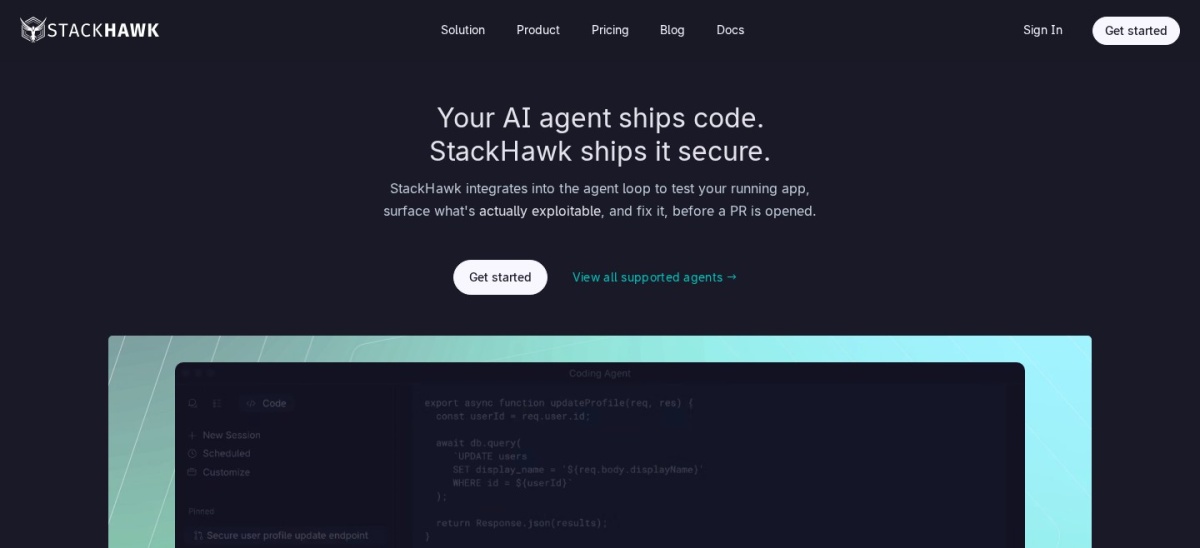
StackHawk is the clearest-priced developer tool at $10 a user a month, with findings in pull requests.
Invicti, Bright Security, Qualys WAS and InsightAppSec all sell by quote, so budget them from a sales conversation.
Six of the nine tools publish no list price, and four have fewer than 30 G2 reviews, so treat the smaller ratings with care.
How do you choose the best Acunetix alternative?
Acunetix is an automated web scanner, so the first question is whether you want automation, manual testing or both. Burp Suite suits manual testers, Intruder and other cloud scanners suit always-on monitoring, and StackHawk suits developers who fix findings in code.
Price by target, user or scan volume before you choose. Burp Suite charges per user, StackHawk per person, Acunetix per target and Bright Security per scan, so the same tool can be cheap for one team and expensive for another. Our guide on DAST tools compares the same scanners on depth and price.
Proof-based scanning is the accuracy question. Invicti and Acunetix use proof-based scanning to confirm flaws before reporting them, while ZAP and Bright need more tuning or AI validation to reach the same low false-positive rate.
Check CI support if developers own the fix. StackHawk, Bright Security and ZAP all plug into pipelines, while enterprise scanners like Invicti and Qualys WAS fit audit and compliance workflows better.
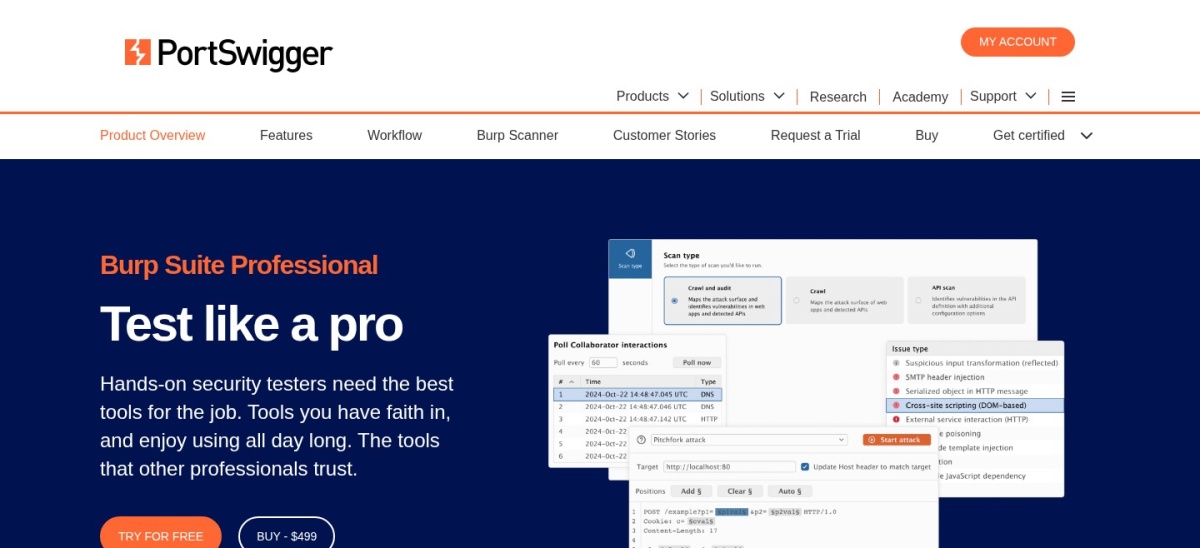
Burp Suite Professional homepage, captured Nov 2026.
Burp Suite Professional is the tool most penetration testers reach for first, with a proxy, repeater, intruder and scanner that work together for manual testing of web applications and APIs. The free Community Edition covers the proxy basics, and Professional costs $499 a user a year.
The trade off is skill and price. It assumes the tester knows how to drive a proxy, and the per-user licence adds up for a team. It suits professional testers who want depth no automated scanner matches.
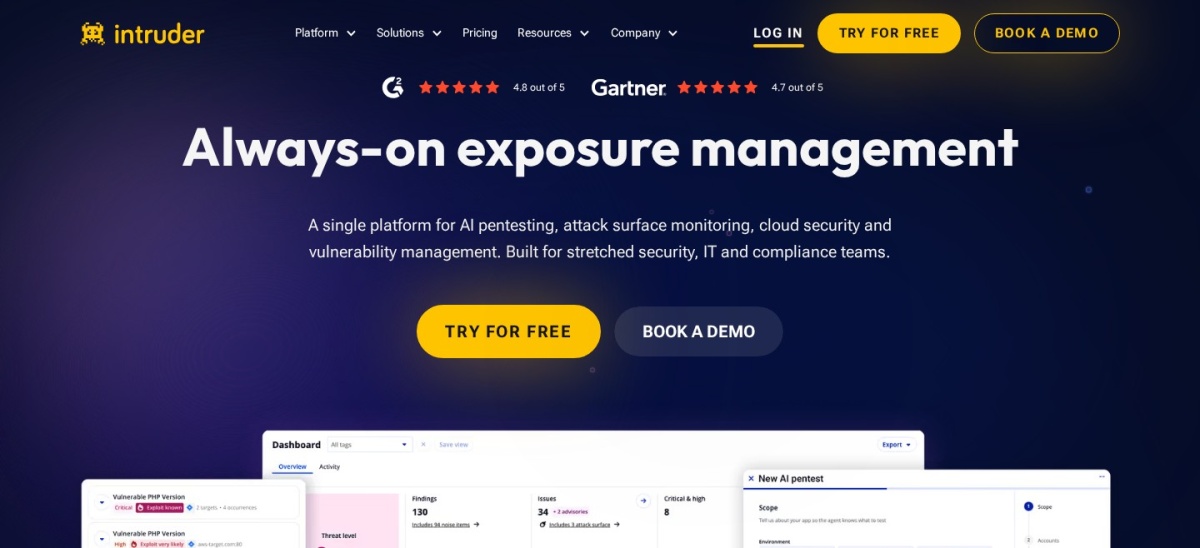
Intruder is a cloud vulnerability scanner that watches your external systems around the clock and reports new flaws soon after they appear, instead of waiting for a weekly scan window. A free tier covers basic external checks, and the paid Essential plan starts at $99 a month.
The trade off is tiering. The Cloud plan with web app scanning costs more than Essential, and the bill rises with targets. It suits small teams that want set-and-forget scanning.
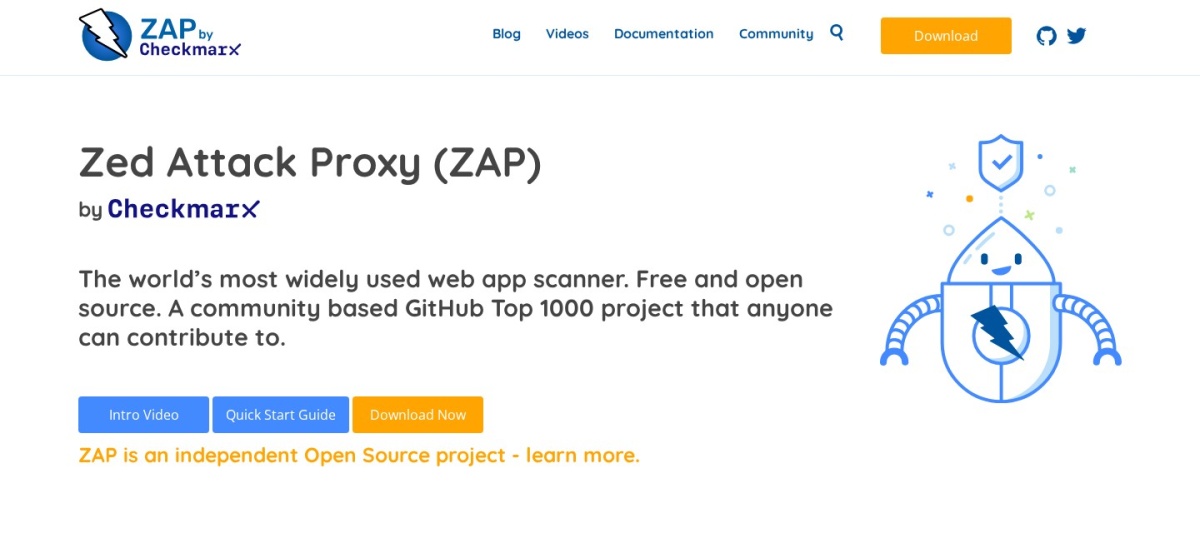
OWASP ZAP is a free, open-source scanner maintained by volunteers, with an automated scanner, a proxy and an API that suit teams on a zero budget. It runs unlimited scans, plugs into CI pipelines and has an add-on marketplace for extra checks.
The trade off is tuning. ZAP needs setup and triage to keep false positives down, and its G2 rating rests on only 14 reviews. It suits teams with the skill to tune it.
StackHawk is a developer-first scanner that runs inside the build pipeline, so findings reach developers before code merges instead of landing in a security queue weeks later. Wingman costs $10 a user a month with 50 scans per user a month and findings linked to pull requests.
The trade off is scope. It is built for modern web apps and APIs, not for broad network scanning, and there is no free plan. It suits engineering teams that fix findings in code.
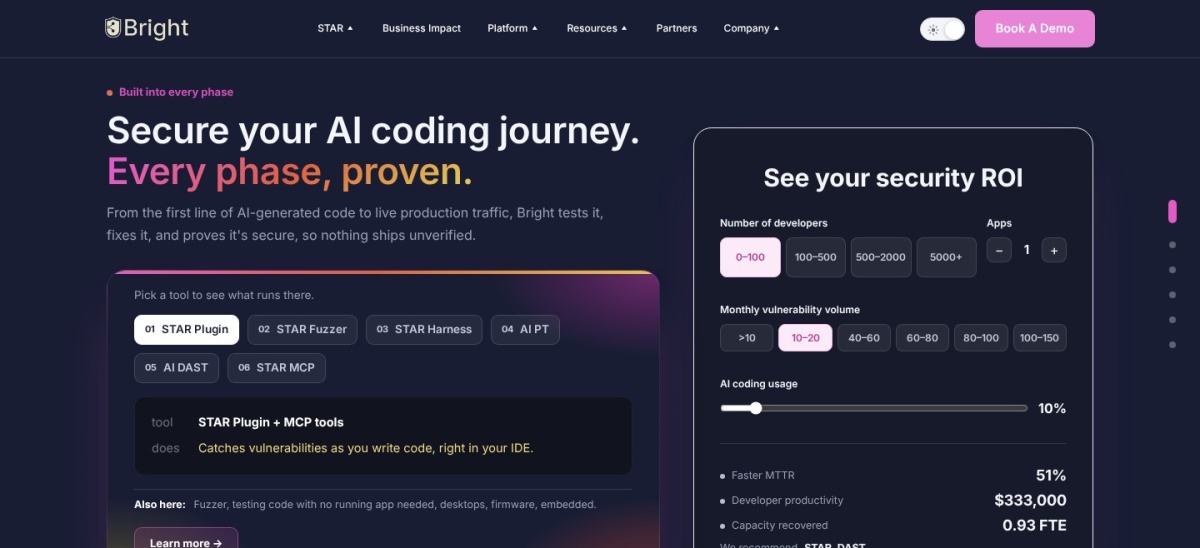
Bright Security is a developer-led scanning platform that tests running web applications and APIs, with an AI layer that validates findings and explains fixes in context. It reports under 3% false positives on validated findings and plugs into CI/CD with a command-line scanner.
The trade off is price. Bright sells by quote with no published starting price, and its rating rests on only 31 G2 reviews. It suits teams that want low-noise results.
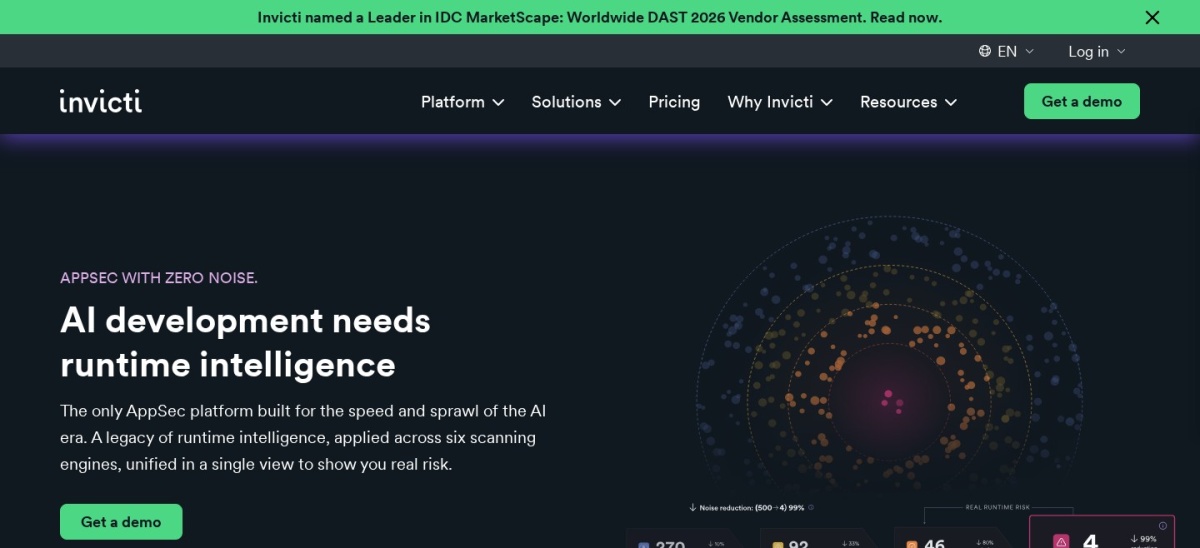
Invicti is the enterprise scanner behind Acunetix, using proof-based scanning that re-checks findings to confirm flaws before reporting them, which keeps false positives low. It covers web applications and APIs with audit-ready reports and broad authentication support.
The trade off is access. Pricing is quote-only with no published starting price, so small teams cannot budget it from the website. It suits enterprises that need accuracy at scale.
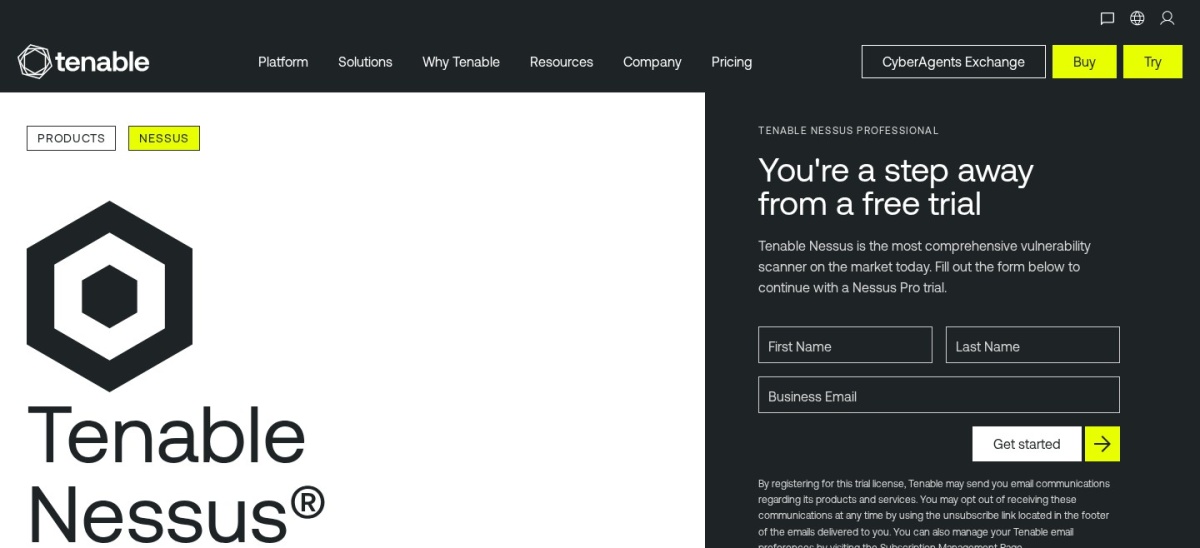
Tenable Nessus is the most widely deployed vulnerability scanner here, covering hosts, networks, cloud configurations and web applications from a single install. Nessus Essentials is free for non-commercial use, while Professional costs $4,790 a year for a 1-year licence.
The trade off is cost and shape. Professional is a point-in-time scanner with no remediation tracking, and web scanning needs the Expert tier. It suits teams that need broad coverage.
Qualys WAS is a cloud web scanner with deep crawling, authenticated scanning and compliance reporting, plus TruRisk scoring that ranks findings by real risk. It shares a console with the rest of the Qualys platform, so web results sit beside infrastructure data.
The trade off is ecosystem and price. It makes most sense for teams already on Qualys, and pricing is quote-only. It suits large organisations with compliance needs.
Rapid7 InsightAppSec is a cloud scanner whose main selling point is convenience for existing Rapid7 customers. Scans run from Rapid7's cloud, results flow into the same console as infrastructure data, and attack replay re-runs exploits to confirm vulnerabilities.
The trade off is value outside the Rapid7 ecosystem. Pricing is quote-based and charged by application, and its G2 rating rests on only 10 reviews. It suits Rapid7 platform teams.
Manual vs automated scanning: which fits your team
Manual tools like Burp Suite suit practitioners who probe logins, test business logic and chain flaws by hand. No automated scanner matches that depth, but it needs a skilled tester.
Automated scanners like Intruder, Invicti and Qualys WAS suit estates with many sites, because they scan on a schedule and report without a human in the loop.
Most teams end up with both: an automated scanner for coverage and Burp Suite or ZAP for the manual pass on the sites that matter most.
How we chose
We started from the web scanners that appear most often in G2's Acunetix alternatives list, then kept the nine with a public G2 rating and a real web scanning product.
Prices come from each vendor's pricing page, checked on 29 November 2026, and show the annual-billing rate where the vendor lists one. Ratings and review counts come from G2 on the same day.
We left out tools with no verifiable rating on G2, Capterra or Trustpilot. No vendor paid for a place, and we do not claim hands-on testing for this list.
How to choose an Acunetix alternative
Match the scanner to who fixes the findings, then check the billing unit against your estate.
Decide manual, automated or both. Burp Suite suits manual testers, cloud scanners suit always-on monitoring, and most teams need one of each.
Count what you will be billed for. Burp Suite bills per user, StackHawk per person and InsightAppSec per application, so model your real estate before you buy.
Test false positives on a real site. Run a trial scan on one of your own applications and check how many findings need manual review before you commit.
Confirm CI and reporting needs. Developers need pipeline findings, while auditors need compliance reports, and few tools do both well.
FAQ
What is the best Acunetix alternative in 2026?
Burp Suite Professional is the best Acunetix alternative for most teams that test by hand. It costs $499 a user a year, holds a 4.8 out of 5 G2 rating from 129 reviews, and its proxy, repeater and scanner cover manual and automated testing together.
What is the best free alternative to Acunetix?
OWASP ZAP is the best free alternative to Acunetix. It is open source, runs unlimited scans, plugs into CI pipelines and is rated 4.7 out of 5 on G2, though that rating rests on only 14 reviews and it needs tuning.
How much does Burp Suite Professional cost?
Burp Suite Professional costs $499 a user a year. The Community Edition is free and covers the proxy basics, while the Enterprise Edition for automated DAST sells at custom pricing.
Which Acunetix alternative is best for developers?
StackHawk is the best developer pick, at $10 a user a month with findings in pull requests and scans inside the build pipeline. Bright Security suits developers who want AI validation, while ZAP fits teams that want a free pipeline scanner.
Burp Suite or Intruder: which should I pick?
Pick Burp Suite if a person drives the testing, because its proxy and intruder tools go deeper than any automated scan. Pick Intruder if you want continuous cloud scanning that reports new flaws without a tester in the loop.
Do any Acunetix alternatives offer a free plan?
Yes. OWASP ZAP is fully free, Burp Suite has a free Community Edition, Intruder offers a free tier for basic checks, and Nessus Essentials is free for non-commercial use.
SaaS SEO and WordPress specialist with about 8 years of experience. Rakib compares WordPress plugins, themes, hosting and software using public pricing, documentation and user reviews. See how we rank.