Sage Intacct is the best Acumatica alternative for finance-led mid-market teams, with native multi-entity consolidation and more than four thousand G2 reviews behind it. NetSuite suits larger product companies that want a full ERP suite, while Odoo is the budget pick with a free plan.
How we make this list: we compare pricing pages, product documentation and public user reviews, then re-check every price before each update. No product paid for a place. Disclosure.
Sage Intacct is the finance-led pick: dimensional reporting and native consolidation, rated 4.3 out of 5 on G2.
NetSuite is the broadest ERP here, running finance, inventory, CRM and commerce on one data model.
Business Central is the clearest published price: Essentials at $80 per user a month.
Odoo is the budget pick, with one app free and Standard at $31.10 a user a month on renewal.
Most ERPs here are quote-only, so a shortlist needs a sales conversation before any budget is final.
How do you choose the best Acumatica alternatives for your ERP?
Pricing model is the first split. Acumatica charges by computing resources, not seats, so every user logs in without per-seat fees, while most rivals here charge per user or by quote.
Most ERPs in this list are quote-only. Only Business Central, Odoo and Xero publish prices, so compare the published three first and treat the rest as sales conversations.
Scope decides the shortlist. Sage Intacct and Xero are finance tools, NetSuite and Business Central are full ERPs, and SYSPRO and Epicor Kinetic are built for manufacturers.
Ratings are close across this list. The spread runs from 4.0 to 4.4 out of 5 on G2, so fit and price matter more than a tenth of a star.
Sage Intacct is a cloud financial management platform built for finance teams that need serious accounting depth, not general operations. It offers dimensional reporting, native multi-entity consolidation and native ASC 606 revenue recognition, with automation across payables, receivables and the close.
The trade off is that Sage Intacct is finance-led, so inventory, manufacturing and field service need other tools or add-ons, and pricing is by quote only. It suits mid-market finance teams that live in their books.
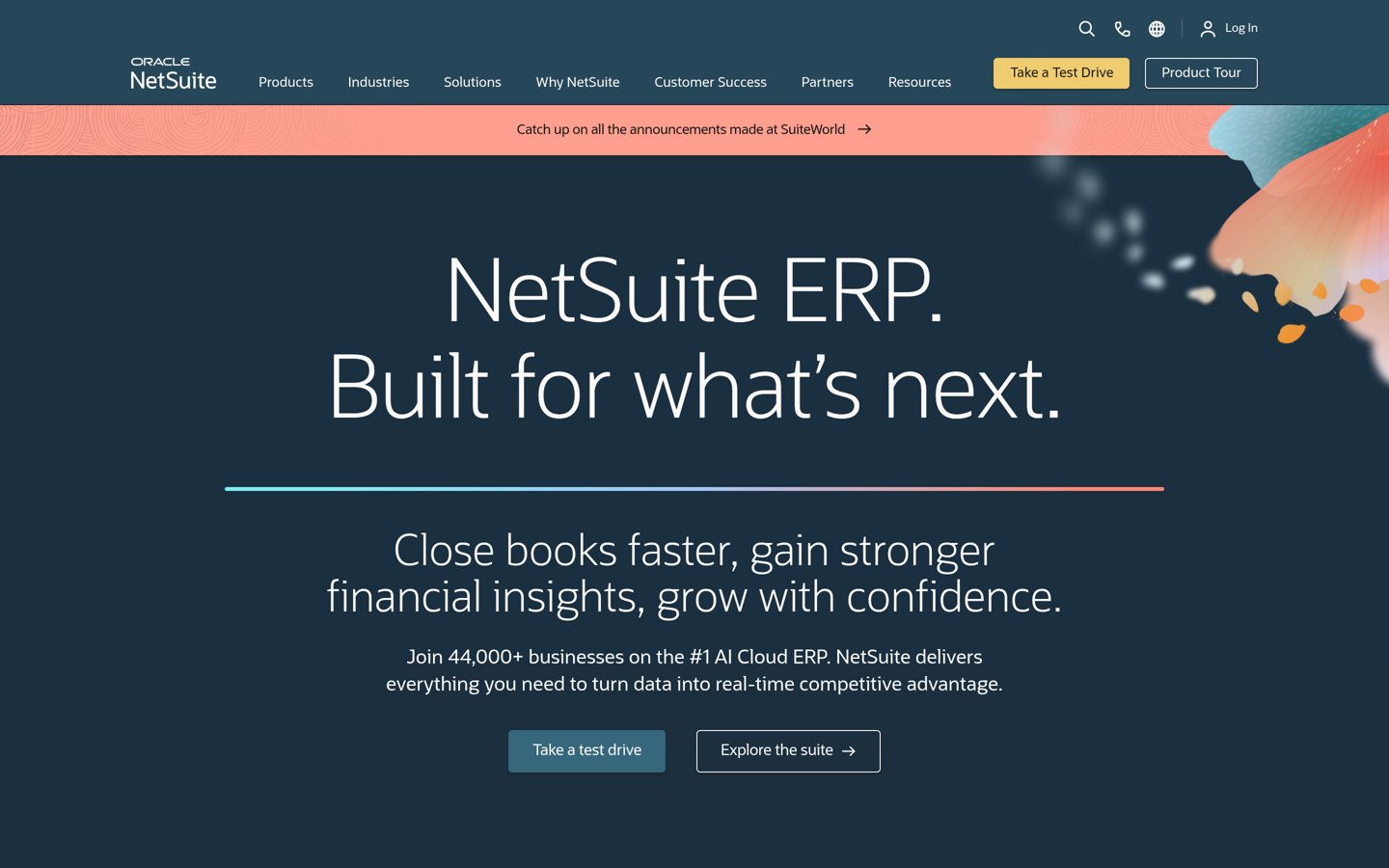
NetSuite is Oracle's cloud ERP suite, running financials, inventory, order management, CRM and e-commerce under one data model. It covers the widest ground in this list, with subsidiaries, multi-currency and multi-language support built in.
The trade off is cost and complexity. Pricing is by quote only, and NetSuite projects usually need a partner to implement, so small teams pay enterprise prices. It suits larger product companies that want one system for everything.
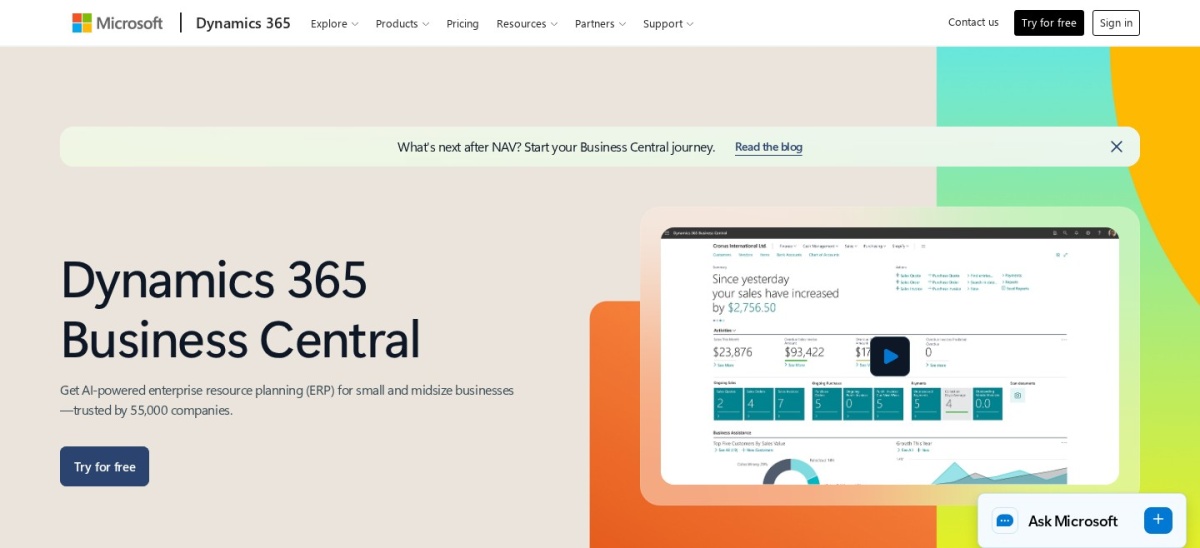
Microsoft Dynamics 365 Business Central homepage, captured Nov 2026.
Microsoft Dynamics 365 Business Central is a cloud ERP for finance, sales, purchasing, inventory and projects. Essentials at $80 per user a month covers core financials, multi-currency and job costing, and it links to Outlook, Excel, Teams and Power BI.
The trade off is per-user pricing, which gets expensive as headcount grows, and Premium at $100 a user a month is needed for manufacturing. It suits small and mid-size companies already on Microsoft 365.
What we like
Only published ERP price in this list besides Odoo and Xero
SAP Business One is SAP's ERP for smaller enterprises, covering finance, sales, purchasing, inventory and production in one system. It runs in the cloud or on-premise, and it carries the SAP name that many manufacturers and distributors already trust.
The trade off is that pricing is by quote only, and Business One projects usually need an SAP partner to implement. It suits smaller enterprises that want SAP without the cost of S/4HANA.
Odoo is a modular ERP where one subscription covers CRM, accounting, inventory, point of sale, e-commerce and projects, and you switch apps on as the business grows. One App Free gives a single app to unlimited users at no cost, while Standard unlocks every app.
The trade off is the first-year discount. Standard lists at $24.90 a user a month in year one and renews at $31.10, and setup usually needs a partner. It suits growing businesses that want a full ERP on a budget.
4.4/5on G2 (Not published reviews, checked Nov 2026)
Starts at$27/mo
Best for unlimited users at a flat price
Entry planEarly, $27/mo
UsersUnlimited on every plan
Growing$59/mo
Established$97/mo
xero.com
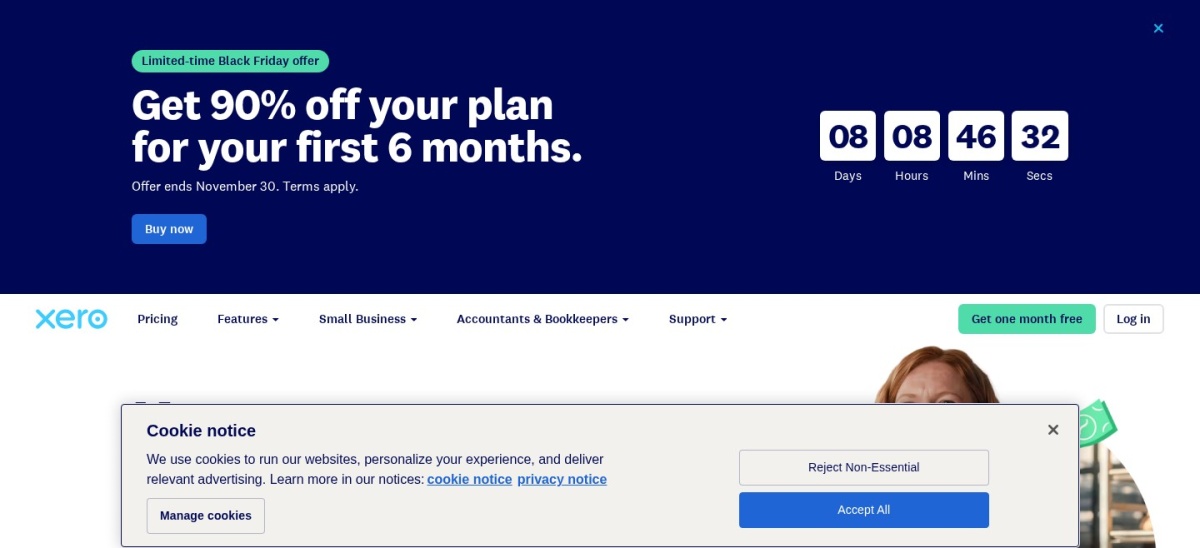
Xero homepage, captured Nov 2026.
Xero is a cloud accounting platform with invoicing, bank feeds, expenses and payroll add-ons, built for small businesses and their accountants. Early costs $27 a month, and every plan includes unlimited users, so the bill does not grow with headcount.
The trade off is scope. Xero is accounting, not a full ERP, so inventory, manufacturing and complex operations need add-ons or another system. It suits small businesses whose accountant already works in Xero.
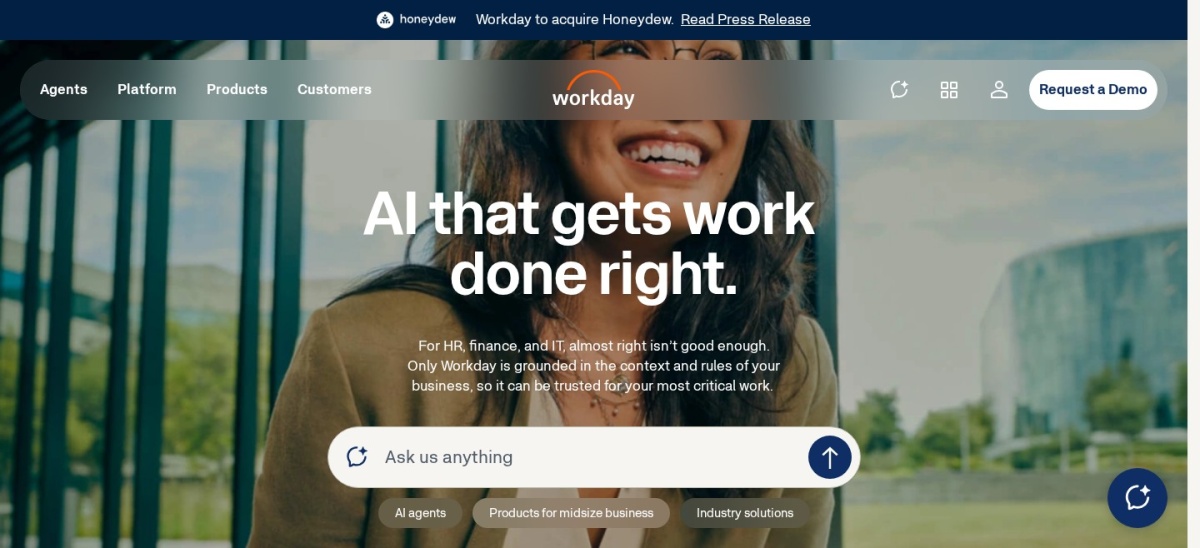
Workday Financial Management homepage, captured Nov 2026.
Workday Financial Management is an enterprise cloud finance platform that pairs accounting, close and reporting with Workday's HR system in one architecture. It is built for large companies that want finance and people data on the same record.
The trade off is that Workday is priced for enterprises, with quotes only and long implementations, so it is out of reach for mid-market teams. It suits large enterprises already running Workday HR.
SYSPRO is an ERP built for manufacturers and distributors, with inventory, production, purchasing and finance in one system. It is a focused alternative to the broad suites here, and it runs in the cloud or on-premise.
The trade off is reach. SYSPRO is strongest in manufacturing and distribution, and pricing is by quote only. It suits mid-market manufacturers that want an ERP shaped around the factory floor.
Epicor Kinetic is a cloud ERP for manufacturers, covering quoting, production, inventory, supply chain and finance for make-to-order and mixed-mode shops. It holds the largest review base in this list after NetSuite, with 2,557 G2 reviews.
The trade off is that Kinetic is built for manufacturing, so service and retail businesses will find better fits elsewhere, and pricing is by quote only. It suits mid-market manufacturers moving off legacy systems.
Six of the nine tools here publish no price, so the first sales call sets the budget. Ask for the price per user, the implementation fee and the annual uplift in writing.
Acumatica itself prices by computing resources, not seats, so a like-for-like quote needs your user count, transaction volume and data size, not just a headcount.
Published prices are the floor, not the total. Business Central at $80 a user a month excludes the partner implementation, which often costs more than the first year of licences.
Get three quotes before you decide. ERP prices move with negotiation, and a second quote is the cheapest leverage you have.
How we chose
We started from the ERP systems that appear most often in 2026 Acumatica alternative comparisons, then kept those with a verifiable rating on G2 and a published price or a confirmed quote-only model.
Prices come from each vendor's pricing page, checked on 29 November 2026. Ratings and review counts come from G2 on the same day. Where a vendor publishes no price, the list says so rather than guessing.
We left out tools with no verifiable rating on G2, Capterra or Trustpilot. No vendor paid for a place, and we do not claim hands-on testing for this list.
How to choose an Acumatica alternative
Start with what Acumatica does for you today, then match the replacement to that job.
List the modules you actually use. Acumatica covers finance, inventory, CRM and manufacturing, so a finance-only tool like Sage Intacct fits only if you do not need the rest.
Compare the published prices first. Business Central, Odoo and Xero publish prices, so they set the budget range before you take a single sales call.
Ask for three written quotes. Six tools here are quote-only, and ERP prices move with negotiation, so a second and third quote are your cheapest leverage.
Check the per-user maths. Acumatica charges by resources, not seats, so a per-user rival can cost more once every employee needs a login.
FAQ
What is the best Acumatica alternative in 2026?
Sage Intacct is the best Acumatica alternative for finance-led mid-market teams, with native multi-entity consolidation and a 4.3 out of 5 G2 rating from 4,433 reviews. NetSuite is the better pick for larger product companies.
Is there a free Acumatica alternative?
Yes, Odoo is the only free option here, with one app free for unlimited users. The other tools have no free plan, though Business Central offers a 30-day trial and most vendors run demos.
How much does an Acumatica alternative cost?
Published prices run from $27 a month for Xero to $80 per user a month for Business Central Essentials, with Odoo Standard at $31.10 a user a month on renewal. NetSuite, Sage Intacct and the rest are quote-only.
Is NetSuite better than Acumatica?
NetSuite is broader than Acumatica, with finance, inventory, CRM and commerce on one data model, but it is quote-only and usually needs a partner to implement. Acumatica charges by resources, not seats, which suits companies with many users.
Which Acumatica alternative is best for manufacturing?
Epicor Kinetic is the best pick for make-to-order manufacturers, with 2,557 G2 reviews behind it. SYSPRO suits mid-market manufacturers and distributors, while SAP Business One fits smaller enterprises on SAP.
Sage Intacct vs NetSuite: which is better?
Sage Intacct is better for finance-led teams that want deep reporting and native consolidation, while NetSuite is better for product companies that need inventory, orders and commerce in the same system.
SaaS SEO and WordPress specialist with about 8 years of experience. Rakib compares WordPress plugins, themes, hosting and software using public pricing, documentation and user reviews. See how we rank.