QuickBooks Online is the best accounting software for restaurants for most owners, starting at $38 a month with the ledger most accountants already know. Xero suits teams that want unlimited users at $27 a month, while Restaurant365 fits multi-unit groups that need recipe costing and inventory in one place.
How we make this list: we compare pricing pages, product documentation and public user reviews, then re-check every price before each update. No product paid for a place. Disclosure.
QuickBooks Online leads for most restaurants at $38 a month, with the ledger most accountants already know.
Xero suits teams that share the books, at $27 a month with unlimited users and no per-seat fees.
Restaurant365 is the strongest restaurant-specific platform, but it sells by quote and suits multi-unit groups.
MarginEdge adds invoice automation and food cost control at about $350 a month per location.
Wave is free for basic books, and Zoho Books starts at $15 a month billed annually for the smallest restaurants.
What should accounting software for restaurants actually do?
Restaurant accounting starts with the daily sales mess. POS sales, tips, fees, supplier invoices and payroll all land in different places, and the ledger has to turn them into numbers an owner can read at night.
Food cost is where restaurants differ from other small businesses. Recipe costing, inventory counts and supplier price changes decide margins, and a general ledger alone cannot track them.
POS integration decides whether the system works on day one. If daily sales do not post to the ledger automatically, someone types them in by hand, which is slow and easy to get wrong.
Size decides the right tool more than features do. A single cafe can run on QuickBooks or Xero, a three-location group usually needs Restaurant365 or Sage Intacct, and a food truck can often run on Wave for free.
QuickBooks Online is a cloud accounting platform with bank feeds, expense tracking, invoicing, bill pay and reporting, and it is the ledger most US accountants already know. Simple Start costs $38 a month for one user plus two accountants, with unlimited invoicing and profit and loss reports.
The trade off is restaurant depth. QuickBooks has no recipe costing or food cost tracking, so POS sales need a connector such as Synder, and inventory only arrives on Plus at $140 a month. It suits independent restaurants whose accountant already works in QuickBooks.
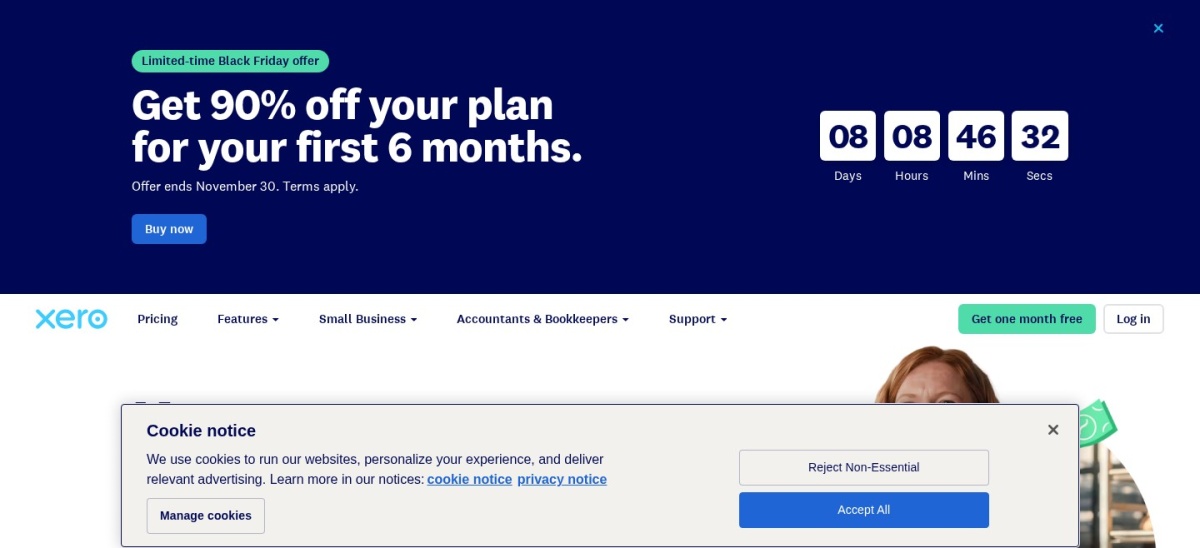
Xero is a cloud accounting platform with bank feeds, expense workflows, reporting and collaboration with an accountant or bookkeeper. Early costs $27 a month with 20 invoices and 5 bills a month, while Growing at $59 a month removes the caps, and every plan includes unlimited users.
The trade off is the invoice cap on Early. A busy restaurant that sends more than 20 invoices a month must move to Growing at $59, and multi-currency only arrives on Established at $97. It suits restaurant teams where the owner, bookkeeper and manager all need the same books.
What we like
Unlimited users on every plan
Clean bank reconciliation with rules
No per-seat fees as the team grows
Watch out for
Early caps invoices at 20 a month
Multi-currency only on Established at $97
No recipe costing or food cost tools
Growing at $59 a month removes the invoice capsVisit xero.com
03
Restaurant365
4.6/5on G2 (325 reviews, checked Nov 2026)
PricingCustom/yr
Best restaurant-specific platform for groups
PricingQuote only
POS links170+ systems
Recipe costingYes, built in
Best forMulti-unit groups
restaurant365.com
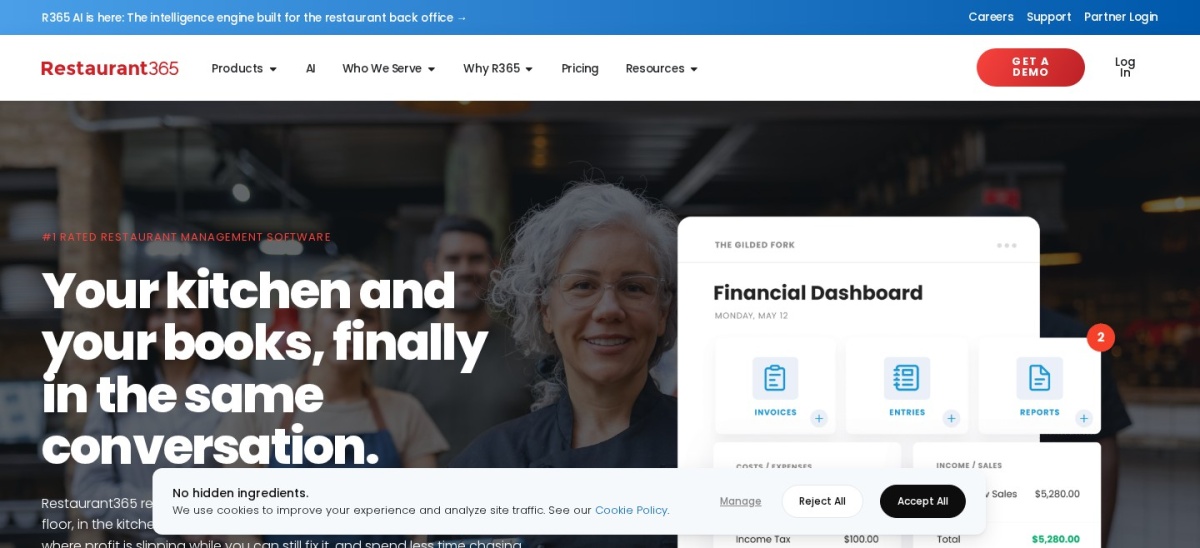
Restaurant365 homepage, captured Nov 2026.
Restaurant365 is an all-in-one platform that combines restaurant accounting with inventory, recipe costing, scheduling and payroll in one system. It connects to more than 170 POS systems and feeds recipe and item costing into location financials automatically.
The trade off is price and scale. Restaurant365 sells by quote, with third-party estimates near $435 to $499 a month per location, and it is overbuilt for a single restaurant. It suits multi-unit groups that want one system for the whole back office.
FreshBooks is an invoicing-first accounting tool with unlimited invoices, expense tracking, estimates and time tracking. Lite costs $23 a month for up to 5 billable clients, Plus at $43 a month covers 50 clients, and Premium at $70 a month covers unlimited clients.
The trade off is the client cap and the ledger depth. Lite stops fitting at a sixth client, and double-entry accounting only starts on Plus, so a restaurant with many suppliers will outgrow Lite fast. It suits small restaurants and caterers that bill a few clients.
Sage Intacct is a cloud financial platform for finance teams that need multi-entity consolidation, dimensional reporting, budgeting and stronger controls. It imports daily POS sales and handles bills, multi-entity consolidation and reporting across locations.
The trade off is price and complexity. Sage Intacct sells by quote and needs a finance team to run it, so it is too much for a single restaurant. It suits larger restaurant groups and hospitality companies with several legal entities to consolidate.
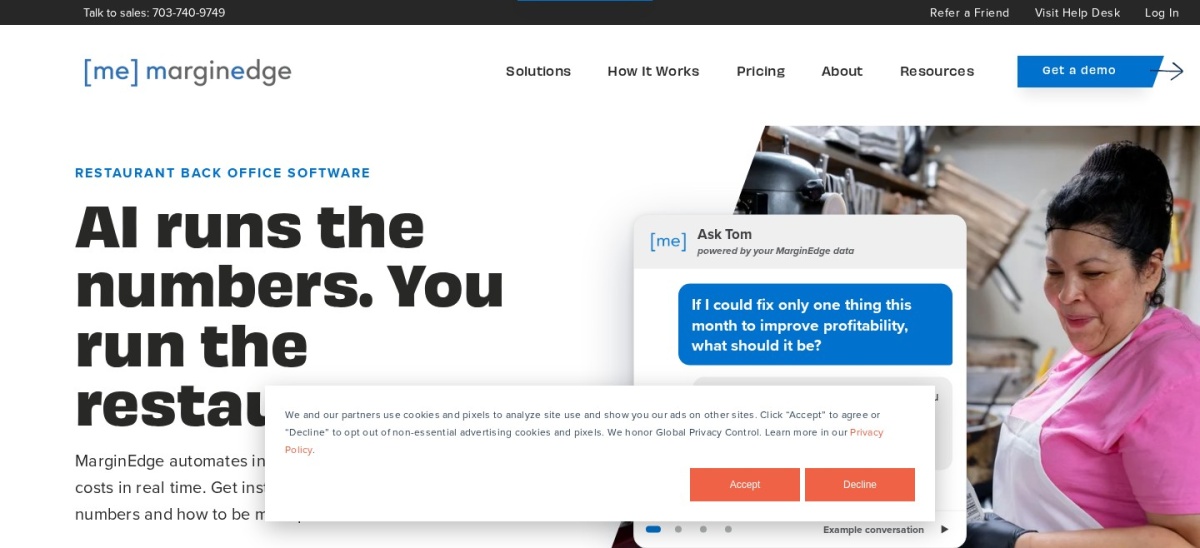
MarginEdge is a restaurant operations platform for invoice processing, food costs, inventory, bill payment and POS connections. It sits beside QuickBooks or Xero and costs about $350 a month per location, with invoice automation and recipe costing included.
The trade off is that it is not a ledger. MarginEdge needs QuickBooks or Xero underneath, so the combined bill runs near $390 a month for one location. It suits invoice-heavy kitchens that track food cost daily and want to stop typing supplier invoices by hand.
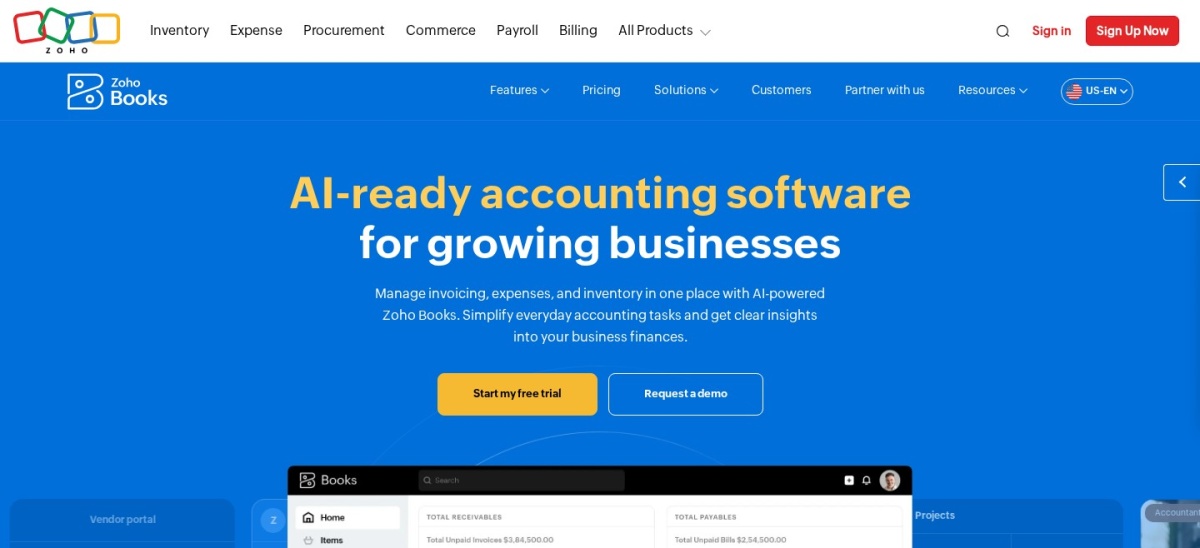
Zoho Books is a cloud accounting tool with invoicing, bank reconciliation, expense tracking and receipt autoscans, plus iOS and Android apps that sync with the desktop. It offers a free plan for businesses under $50,000 in annual revenue, and Standard costs $15 a month billed annually.
The trade off is scale and support depth. Zoho Books is a general ledger with no restaurant features, and the free plan only fits very small restaurants. It suits a small cafe or food truck that wants real double-entry books for little money.
What we like
Free plan for small businesses
Standard at $15 a month billed annually
Receipt autoscans and bank reconciliation
Watch out for
No restaurant-specific features
Free plan only under $50,000 revenue
Smaller accountant network than QuickBooks
Standard is $15 a month billed annually, $20 monthlyVisit zoho.com
08
Wave
4.3/5on G2 (328 reviews, checked Nov 2026)
Paid from$19/mo
Best free books for micro restaurants
Entry planStarter, free
Pro plan$19/mo, bank imports
AccountingDouble-entry, free
Best forFood trucks and stalls
waveapps.com
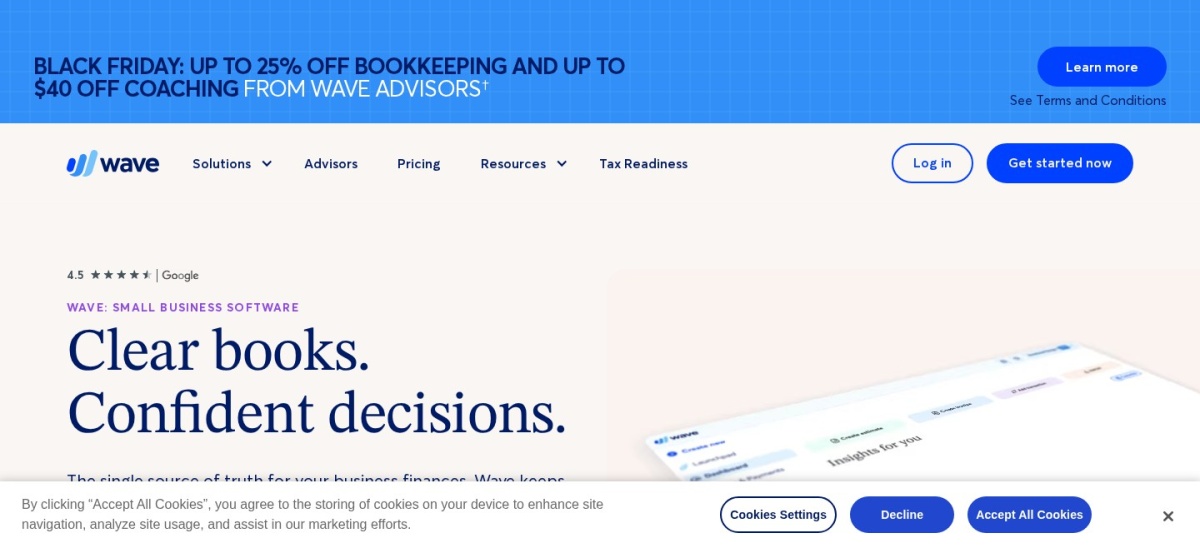
Wave homepage, captured Nov 2026.
Wave is a free bookkeeping tool for freelancers and micro-businesses, owned by H&R Block, with real double-entry accounting at no monthly cost. The free Starter plan covers basic bookkeeping, and Pro at $19 a month adds automatic bank imports and receipt capture.
The trade off is the missing pieces. Wave has no recipe costing, no inventory and no multi-location tools, and Pro is needed for automatic bank imports. It suits a food truck or market stall with simple books and few suppliers.
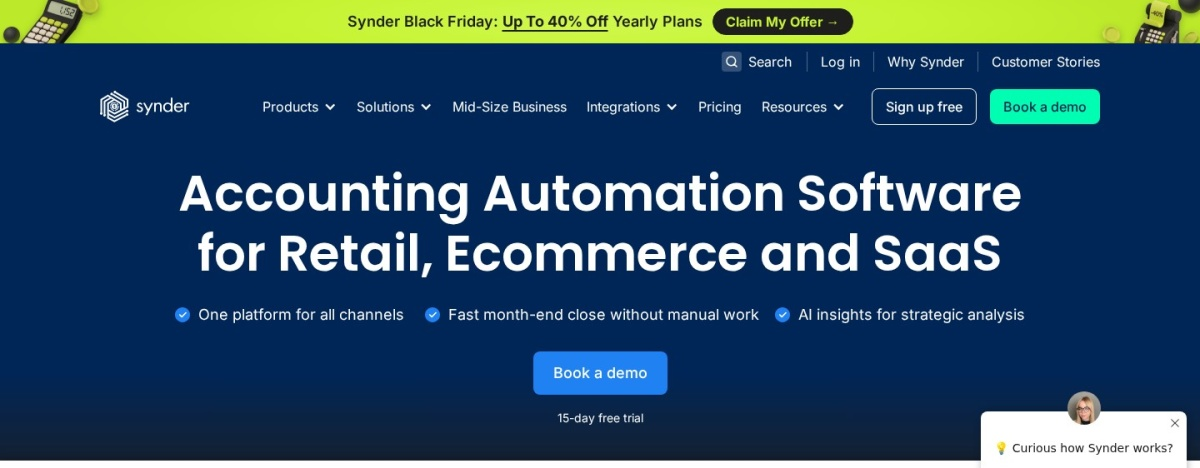
Synder is a connector that posts daily POS sales, fees, tips, sales tax and deposits from Toast, Square and Clover into QuickBooks Online or Xero. It costs $52 a month billed yearly and removes the manual entry of daily sales.
The trade off is that it is not accounting software. Synder needs a ledger underneath, so the combined bill is the ledger plus $52 a month, and it adds no recipe costing. It suits groups that keep QuickBooks or Xero and want to stop typing in daily POS sales.
A general ledger like QuickBooks Online or Xero keeps the books: chart of accounts, bills, bank feeds and reports. It does not do recipe costing or track food cost, so POS sales need a connector or manual entries.
A restaurant platform like Restaurant365 replaces the ledger with restaurant-specific accounting, adding inventory, recipe costing, scheduling and payroll in one system. It costs far more, roughly $435 to $499 a month per location in third-party estimates.
Most single restaurants should start with a general ledger plus a POS connector. Only move to a restaurant platform when the group has several locations and food cost work takes hours every week.
How we chose
We started from accounting tools used by restaurants, covering general ledgers, restaurant-specific platforms and AP automation, then kept those with a G2 rating and a published price or a strong market record.
Prices come from each vendor's pricing page, checked on 30 November 2026. Ratings and review counts come from G2 on the same day. Where a vendor publishes no price, the list shows Custom and says so plainly.
We left out tools with no restaurant use and tools with no aggregator rating. No vendor paid for a place, and we do not claim hands-on testing for this list.
How to choose accounting software for restaurants
Start with your POS and your accountant, then pick the ledger that fits both.
Check what your POS exports first. Toast, Square and Clover each connect to different ledgers. Pick a ledger with a working connector for your POS, or daily sales become manual entry.
Ask your accountant which ledger they use. Most accountants already work in QuickBooks Online or Xero. Matching their ledger saves fees and avoids a year-end migration.
Count locations and food cost work. One location with simple books fits QuickBooks or Xero. Several locations with recipe costing and inventory point to Restaurant365 or MarginEdge.
Price the connectors beside the ledger. A $38 ledger plus a $52 POS connector and a $350 invoice tool costs far more than the ledger alone. Add every connector before you compare prices.
FAQ
What is the best accounting software for restaurants in 2026?
QuickBooks Online is the best pick for most restaurants, starting at $38 a month with the ledger most accountants already know. Xero suits teams that want unlimited users at $27 a month, and Restaurant365 is the best restaurant-specific platform for multi-unit groups.
How much does accounting software for restaurants cost?
General ledgers run from $19 to $38 a month, with Wave free for basic books, Zoho Books from $15, FreshBooks from $23, Xero from $27 and QuickBooks Online from $38. Restaurant365 sells by quote, and MarginEdge costs about $350 a month per location.
Does QuickBooks Online work for restaurants?
Yes, QuickBooks Online is the most common ledger for independent restaurants, starting at $38 a month for Simple Start. It handles bills, bank feeds, reporting and payroll add-ons, but it has no recipe costing, so POS sales need a connector like Synder or MarginEdge.
What is the best accounting software for a small restaurant?
Xero Early at $27 a month suits a small restaurant that wants unlimited users and clean bank reconciliation. QuickBooks Online Simple Start at $38 a month suits owners whose accountant already works in QuickBooks, and Wave suits a food truck with simple books.
Is Restaurant365 worth it for a restaurant group?
Restaurant365 is worth it for groups with several locations that need recipe costing, inventory, scheduling and payroll in one system. It sells by quote, with third-party estimates near $435 to $499 a month per location, so a single restaurant will usually find it overbuilt.
QuickBooks Online vs Xero for restaurants: which is better?
QuickBooks Online is better when your accountant already works in QuickBooks, at $38 a month for one user. Xero is better for teams that share the books, at $27 a month with unlimited users and no per-seat fees. Both need a POS connector for daily sales.
SaaS SEO and WordPress specialist with about 8 years of experience. Rakib compares WordPress plugins, themes, hosting and software using public pricing, documentation and user reviews. See how we rank.